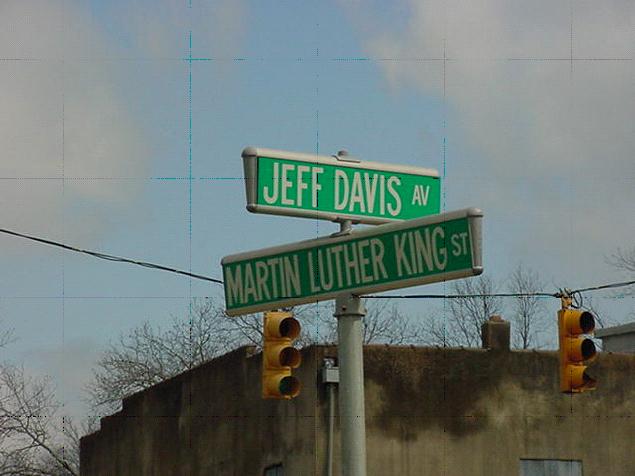
• About

The Strawfoot

~ a New Yorker's American History blog

The Strawfoot

Category Archives: The new South

Moving Midway: An interview

24 Wednesday Jul 2013

Posted by Keith Muchowski in Film, Sound, & Photography, Interviews, The new South

≈ Comments Off on Moving Midway: An interview

Earlier this month I mentioned re-watching Godfrey Cheshire’s Moving Midway. [Original review here.] Since then Mr. Cheshire kindly sat down to answer some questions:

The Strawfoot: The focus of the film is the physical relocation of your family’s ancestral home, Midway Plantation. Tell us about Midway and your cousin’s decision to move it.

Mary Hilliard Hinton (1869-1961), Midway Plantation matriarch, as she was in 1914

Mary Hilliard Hinton, 1869-1961: Midway  matriarch and family storyteller as she was in 1914

Godfrey Cheshire: Midway Plantation was built in 1848 on land in central North Carolina that my mother’s family, the Hintons, had occupied since getting a land grant from the British crown circa 1740. When I was a kid, it was this magical, ancient realm where I spent many weekends; it was also the center of our family’s memory and holiday gatherings. Flash forward to 2002, when my first cousin Charlie Silver and his wife Dena, who now own Midway, tell me they are thinking of moving all its buildings to a new location (if they can find one) in order to escape the urban sprawl that’s encroaching on the property and making it unpleasant to live there. At that point I began thinking of making a film that would not only document the family drama and logistical challenges of this project, but that would also look at the conflicted image of the Southern plantation in American history.

Who is Robert Hinton and what is his role in the story?

For me, Robert was a godsend. In early 2004 I shot some initial footage for the film at Midway. When I returned to New York, I saw a letter in the New York Times Book Review from a man named Robert Hinton who said he had grown up in Raleigh and was now a historian who taught African-American studies at NYU. You could have knocked me over with a feather when I read that. I contacted him and he said his grandfather was born a slave at Midway, and it turns out he had done lots of research about the Hintons and their history. So he came aboard as the film’s Chief Historian and Associate Producer, and made innumerable contributions to it. He is on camera a lot in the film, which is great since he’s as witty and charismatic as he is knowledgeable.

Robert Hinton is not your blood relation. You discovered in making the film, however, that you have numerous African American relatives. What has that experience been like?

Well, the initial experience was quite stunning. I had grown up never suspecting that I had any African-American blood relations, but in the early stages of shooting, Charlie told me of having been visited by a black man who showed him evidence that we had a common mixed-race ancestor, a man named Ruffin Hinton, who was born in 1848, the product of a liaison between the builder of Midway and a slave. Charlie accepted this evidence, but soon afterwards the black man died and I was unable to locate his family. Then, in 2006, in the latter stage of shooting the film, Robert received an email from a middle-school teacher in Brooklyn named Al Hinton who said he was researching family history online and believed that he was kin to the Hintons of Midway. This was how we connected with the roughly 100 descendents of Ruffin Hinton, most of whom still live in North Carolina. They invited me to one of their family reunions and I was quite moved by the experience. Obviously the whole issue of slavery is a complex and painful one, but they were very warm and welcoming. I felt a real connection with them that came from this shared history. This was very important not just to the film but also to me personally; I felt like I was discovering a part of myself that I’d never known. I’ve kept in touch with some of these “new” cousins and I value these relationships greatly.
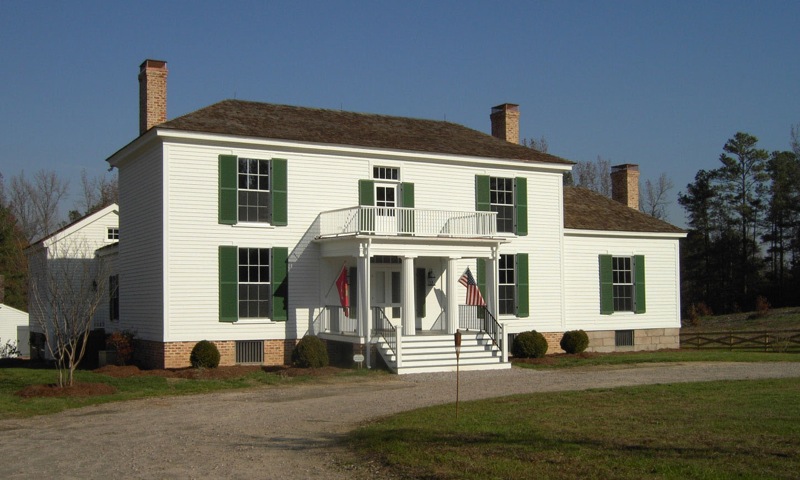
Midway in its new location, 2007

Midway in its new location, 2007

One of the film’s biggest strengths is the blending of the personal and the historical. How did the people depicted in the documentary react to the film?

For the most part, the reactions were very, very good. When we premiered the film at the 2007 Full Frame Documentary in Durham, N.C., members of the black and white sides of the family came for it, seemed to really enjoy the way the film explored the history and meaning of Midway, and met each other at the very celebratory party that was held afterwards. That’s been the general tenor of things since, too. However, I must note, rather sadly, that a few members of the white family seem to have been disaffected. They haven’t communicated with me, so I don’t know specifically what they’re upset about, but it’s too bad.

You are a film critic in your “day job.” In that capacity you were uniquely positioned to analyze the moonlight and magnolias interpretation of the Old South given to us in such films as Gone with the WInd. Was this Lost Cause narrative something you were always aware of, or did it become significant as the film project took off?

It was something I intended from the first, because I’ve always been interested in the image of the Southern plantation in popular culture, and I figured I couldn’t make a film about Midway without exploring the plantation’s meanings to Americans over the course of history. The “Lost Cause” mythology that you mention belongs to the late 19th/early 20th centuries and thus is only a part of the larger Plantation Myth, which started before the Civil War. When I began my research, I was surprised to find that the Encyclopedia of Southern Culture had a longer entry for “Plantation Myth” than it did for “Plantation,” suggesting that the imaginary plantation was even more important than the actual institution! In the film, I trace the evolution of the plantation’s image across several milestones of popular culture, from Uncle Tom’s Cabin through The Birth of a Nation and Gone with the Wind to Roots: an evolution that of course both mirrored and helped create a whole complex set of attitudes about race, politics and history.

Have different viewers–white/black; Northern/Southern; older/younger–responded differently to the film?

That’s a good question, because I was frankly more concerned about one side in each of those pairings you mention: that is, I was a bit nervous about the reactions of black people, non-Southerners, and young people. But in every case I was extremely pleased with the responses. I think this is because the film intends to be inclusive and to respect all the people and points of view it includes – even ones that we don’t necessarily like or agree with. In that way, it “depolarizes” issues that seem inherently polarizing. Black people like it I think because it recognizes their struggles and shows me and my black cousins trying to bridge our divided histories. Northerners appreciate that it presents Southerners black and white as real people rather than as abstractions connected to certain “issues.” But I must say I’ve been most gratified by the reactions of young people, who are often supposed not to be interested in history. I didn’t give a single thought to this while making the film, but teachers have told me that students love the film because it has colorful real-life characters and an engaging, even suspenseful story that brings to life issues that can seem dry and remote in textbooks. I tell people that the best Q&A I did was with a ninth grade class in Virginia. They “got” the film on every level and asked amazingly sophisticated and thoughtful questions. I would love other history teachers to discover and use the film as a classroom tool.

The plantation house, along with several outbuildings, have been in the new spot for a few years now. What has the experience been like in the new location?

When we shot the last scene in the film, Charlie and Dena had only been back in the house four days, and it was all so brand-new that it seemed like a stage set. But since then it has really come back to life, not only as a truly gorgeous restoration of a historic home, but as a place where people live, work and entertain. I love going out there now. It’s like Midway has been reborn.

(images/top, North Carolina Digital Collections; bottom, Preservation North Carolina)
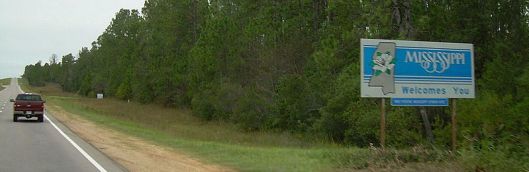
on the state of the State of Mississippi

11 Tuesday Dec 2012

Posted by Keith Muchowski in The new South

≈ Comments Off on on the state of the State of Mississippi

http://www.youtube.com/watch?v=miTnKS5ohRI

Last week I watched the documentary The Best that Never Was. The film is an installment in ESPN’s 30 for 30 franchise, and explores the life and times of legendary football player Marcus Dupree. Dupree is not a household name to most Americans, which is unfortunate. Had fate not intervened, Marcus Dupree would be mentioned today in the same conversation with Jim Brown, Tony Dorsett, Marcus Allen, Barry Sanders, and Emmitt Smith. He was that good. I say it was about the life and times of Marcus Dupree because it was just that. The best sports books and documentaries are not about balls and strikes, or touchdowns and extra points; done well they explain why one should care about sports, and that rarely has to do with the final score.

Marcus Dupree was born in Philadelphia Mississippi in May 1964, less than a month before the disappearance and murder of Civil Rights workers James Chaney, Andrew Goodman, and Michael Schwerner. It was these deaths that led President Johnson to sign the Civil Rights Act the following year. Dupree entered public school a few years later and was a member of the first class in Philadelphia to attend integrated classes from kindergarten through high school.

I found the film touching for a number of reasons. Dupree’s lack of bitterness is one reason. It also covers subjects I have always found interesting. Then there is the fact that Dupree is just a few years older than I am, and my recollections of the events is vivid. We remember what happened during our high schools years with great clarity, even when they happened to someone else. I will leave it to the film to explain how and why it all unravels for Dupree.

ErgoSum88

Mississippi has always been a place of intrigue and fascination for me. I went there several times on my own when I visited my father each summer at his home in Arkansas. In 2009 I took my soon-to-be bride there to see Graceland, among other things. Elvis, Faulkner, Muddy Waters go hand-in-hand with the Civil Rights Movement, poverty, illiteracy, and other social ills. Like America itself. Yesterday, December 10, was the anniversary of Mississippi statehood. The Magnolia State entered the Union 195 years ago. Of course, less than five decades later it would become the second state to leave the Union. Yesterday the former lieutenant governor spoke at the Old Capitol Museum in Jackson.

(image/ErgoSum88)

Shadows

08 Sunday Jul 2012

Posted by Keith Muchowski in Memory, The new South

≈ Comments Off on Shadows

Last night I watched a documentary called Long Shadows: The Legacy of the Civil War. The film was produced by Ross Spears, a documentarian whose focus is Southern literature and culture. Spears made the film in the mid 1980s and he interviewed a disparate collection of historians, journalists, novelists, and plain folks (Northern and Southern) about their views on the Civil War and its legacy. Part of what makes the film interesting is that for many of the talking heads the war was not “history” but a tradition passed on to them in their youths by living relatives, often grandfathers who fought in the war. Those interviewed include Jimmy Carter, Robert Penn Warren and C. Van Woodward (together), Tom Wicker, John Hope Frankiln, Studs Terkel, and the incomparable Albert Murray. (Quick digression: I once ran into Mr. Murray in the Strand bookstore and can attest that in person he indeed has that mischievous smile and graciousness one would expect.) Born in the first decades of the twentieth century, these individuals saw their region transform from a poor backwater region to the Sunbelt mecca it is today. The film captures some of the exhaustion that was prevalent in the decade after the energy crisis, the fall of Saigon, and immediate post Civil Rights Era. The film does and excellent job explaining how the Civil War is still very much a part of our lives and why we should care today. The past is never dead. It isn’t even past.

Originally released in 1987, Long Shadows is about due for a sequel or at least a postscript. Hopefully Mr. Ross will use the sesquicentennial to update his film and show us how the long shadow of the Civil War continues to offer shade and darkness a quarter century after its original release.

The creative economy

15 Wednesday Feb 2012

Posted by Keith Muchowski in The new South

≈ Comments Off on The creative economy

Clarksdale Passenger Depot, early 20th century

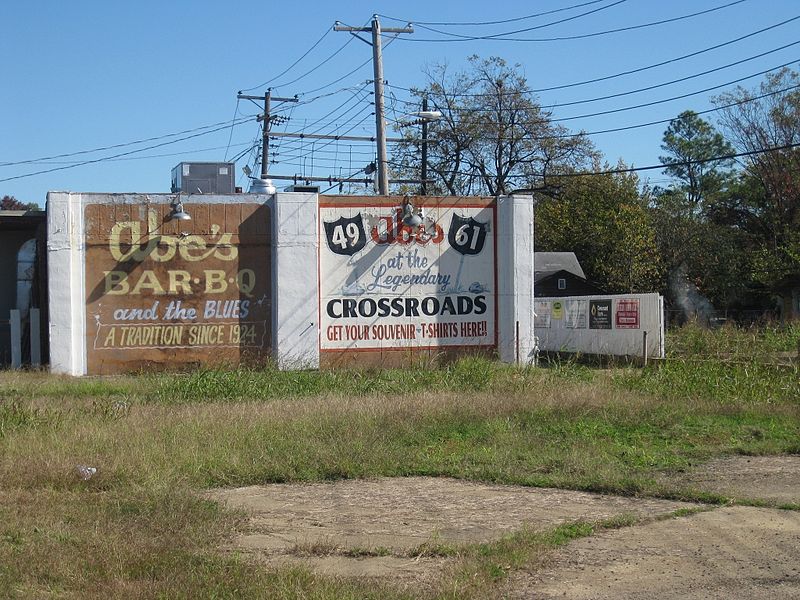
Until he died three years ago I visited my father every August in Arkansas, where he retired in the early 1990s. I always went for about 8-10 days and almost every year I borrowed his car and took a side trip to some locale. Memphis, Shiloh, Pea Ridge, and Clarksdale, Mississippi were a few of the places I visited, sometimes alone, sometimes with my father in tow. (In one of the trips where I went solo I got my dad’s Cadillac up to 95 mph on Highway 61 just outside Greenville. And yes, it felt great.) Every time I returned to New York friends would look at me incredulously when I told them where I went and what I saw and did. It would surprise many folks who live outside the Northeast how provincial this region can be, especially in Boston, where my family is originally from, and New York City, where I live today. Things to see and do west of the Hudson or Charles Rivers? Absurd. (See here and here.) People have literally told me that they could not imagine doing something in any part of what they dismiss as “the flyover.”

Many small towns I have visited were doing their best to capitalize on heritage tourism, some more successfully than others. The Civil War is just a small part of it. Music (jazz and the blues), literature (Faulkner, Tennessee Williams, Flannery O’Connor, et al), and other historical and cultural points of interest are also part of the equation. Towns such as Helena, Arkansas that boomed with Mississippi River commerce decades ago have been bypassed by changes in transportation. The city is too far off the highway to maintain its relevancy. One town that is succeeding is Clarksdale, Mississippi, home of the Delta Blues Museum. I knew the town was making it when I saw the thriving galleries in the small midtown. It’s the maxim that wherever the artists and gays go, the money follows. The rest of the state is catching on.

Clarksdale, 2009

(images/Mississippi Dept. of Archives & History; Thomas R. Machnitzki)

The not-so-new South

14 Friday Oct 2011

Posted by Keith Muchowski in The new South

≈ Comments Off on The not-so-new South

The South has changed in many ways over the past half century and my own family has been part of that change.  My parents, brother, sister and I moved to Florida in the early 1970s, where I grew up and graduated from high school.  Literally a week later I relocated to Texas where I went to college and lived for a decade.  Eventually I came full circle and moved back to the Northeast, but I never left entirely.  Until he died two years ago I regularly visited my father in Arkansas.  He and I traveled throughout Louisiana, Mississippi, and elsewhere during these visits.  Despite being a proud New Yorker, I still consider myself a Southerner in many ways.  My wife and I have many friends in the region and we often talk about moving back when we retire.

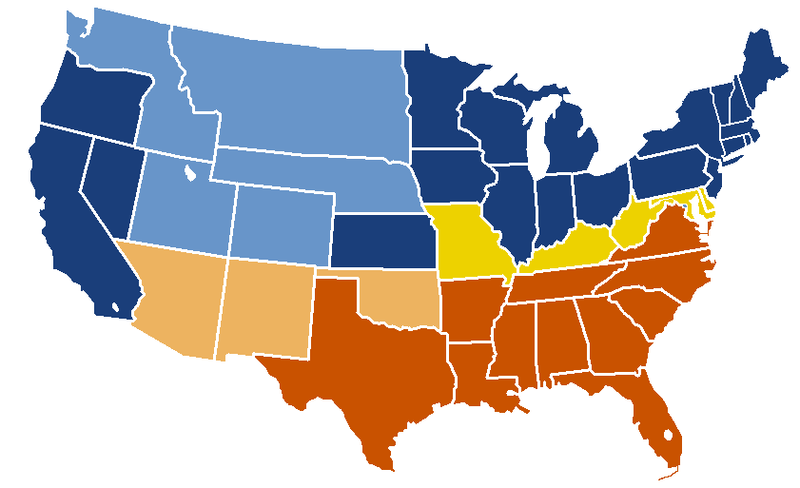
The demographic changes of which my family, and millions of others, were a part transformed the South from Heart of the Confederacy to Sunbelt Mecca.  Still, the South’s transformation is not as total as some might imagine.  The Center for a Better South has just released a report documenting the economic and other ways the region still lags behind the rest of the country.  Poor health and lower graduation rates are just two of the seemingly intractable problems found in pockets of the area.  The sobering report is here.

(Image/National Atlas of the United States)

Heading South

18 Monday Apr 2011

Posted by Keith Muchowski in The new South

≈ Comments Off on Heading South

I don’t know if the numbers are large enough to call it a mass movement but something interesting has been underway for at least a decade now: African-Americans are returning to the South decades after the Great Migration to the urban North, sometimes even returning to their ancestral lands.  It should be less surprising than it sounds.  The Rust Belt has been losing jobs and people to the Sun Belt for decades now.  Why shouldn’t African-Americans be part of the demographic trend?

Enter your email address to subscribe to this blog and receive notifications of new posts by email.

Join 258 other subscribers

Categories

Archives

  • November 2023 (1)
  • October 2023 (3)
  • September 2023 (3)
  • August 2023 (4)
  • July 2023 (7)
  • June 2023 (10)
  • May 2023 (8)
  • April 2023 (6)
  • March 2023 (5)
  • February 2023 (4)
  • January 2023 (4)
  • December 2022 (4)
  • November 2022 (8)
  • October 2022 (2)
  • September 2022 (4)
  • June 2022 (1)
  • May 2022 (1)
  • April 2022 (13)
  • January 2022 (1)
  • December 2021 (2)
  • November 2021 (1)
  • October 2021 (3)
  • September 2021 (3)
  • August 2021 (5)
  • July 2021 (1)
  • June 2021 (1)
  • May 2021 (4)
  • April 2021 (3)
  • March 2021 (4)
  • February 2021 (7)
  • January 2021 (4)
  • December 2020 (4)
  • November 2020 (3)
  • October 2020 (4)
  • September 2020 (7)
  • August 2020 (5)
  • July 2020 (7)
  • June 2020 (11)
  • May 2020 (7)
  • April 2020 (9)
  • March 2020 (9)
  • February 2020 (7)
  • January 2020 (6)
  • December 2019 (7)
  • November 2019 (9)
  • October 2019 (4)
  • September 2019 (6)
  • August 2019 (10)
  • July 2019 (8)
  • June 2019 (6)
  • May 2019 (9)
  • April 2019 (8)
  • March 2019 (6)
  • February 2019 (8)
  • January 2019 (5)
  • December 2018 (10)
  • November 2018 (6)
  • October 2018 (9)
  • September 2018 (11)
  • August 2018 (11)
  • July 2018 (17)
  • June 2018 (10)
  • May 2018 (8)
  • April 2018 (9)
  • March 2018 (8)
  • February 2018 (5)
  • January 2018 (7)
  • December 2017 (11)
  • November 2017 (8)
  • October 2017 (9)
  • September 2017 (11)
  • August 2017 (12)
  • July 2017 (14)
  • June 2017 (18)
  • May 2017 (11)
  • April 2017 (10)
  • March 2017 (9)
  • February 2017 (11)
  • January 2017 (14)
  • December 2016 (7)
  • November 2016 (8)
  • October 2016 (8)
  • September 2016 (9)
  • August 2016 (6)
  • July 2016 (12)
  • June 2016 (8)
  • May 2016 (9)
  • April 2016 (6)
  • March 2016 (12)
  • February 2016 (10)
  • January 2016 (9)
  • December 2015 (9)
  • November 2015 (11)
  • October 2015 (8)
  • September 2015 (9)
  • August 2015 (13)
  • July 2015 (14)
  • June 2015 (11)
  • May 2015 (11)
  • April 2015 (18)
  • March 2015 (10)
  • February 2015 (8)
  • January 2015 (8)
  • December 2014 (12)
  • November 2014 (13)
  • October 2014 (16)
  • September 2014 (11)
  • August 2014 (16)
  • July 2014 (12)
  • June 2014 (13)
  • May 2014 (10)
  • April 2014 (10)
  • March 2014 (11)
  • February 2014 (12)
  • January 2014 (10)
  • December 2013 (11)
  • November 2013 (14)
  • October 2013 (14)
  • September 2013 (14)
  • August 2013 (13)
  • July 2013 (17)
  • June 2013 (9)
  • May 2013 (13)
  • April 2013 (13)
  • March 2013 (16)
  • February 2013 (15)
  • January 2013 (15)
  • December 2012 (18)
  • November 2012 (18)
  • October 2012 (21)
  • September 2012 (14)
  • August 2012 (16)
  • July 2012 (21)
  • June 2012 (22)
  • May 2012 (24)
  • April 2012 (20)
  • March 2012 (23)
  • February 2012 (22)
  • January 2012 (15)
  • December 2011 (23)
  • November 2011 (22)
  • October 2011 (23)
  • September 2011 (18)
  • August 2011 (19)
  • July 2011 (20)
  • June 2011 (29)
  • May 2011 (25)
  • April 2011 (18)
  • March 2011 (21)
  • February 2011 (11)

Meta

  • Create account
  • Log in
  • Entries feed
  • Comments feed
  • WordPress.com
Creative Commons License
This work is licensed under a Creative Commons Attribution-NonCommercial-ShareAlike 4.0 International License.

Enter your email address to subscribe to this blog and receive notifications of new posts by email.

Join 258 other subscribers

Categories

Archives

  • November 2023 (1)
  • October 2023 (3)
  • September 2023 (3)
  • August 2023 (4)
  • July 2023 (7)
  • June 2023 (10)
  • May 2023 (8)
  • April 2023 (6)
  • March 2023 (5)
  • February 2023 (4)
  • January 2023 (4)
  • December 2022 (4)
  • November 2022 (8)
  • October 2022 (2)
  • September 2022 (4)
  • June 2022 (1)
  • May 2022 (1)
  • April 2022 (13)
  • January 2022 (1)
  • December 2021 (2)
  • November 2021 (1)
  • October 2021 (3)
  • September 2021 (3)
  • August 2021 (5)
  • July 2021 (1)
  • June 2021 (1)
  • May 2021 (4)
  • April 2021 (3)
  • March 2021 (4)
  • February 2021 (7)
  • January 2021 (4)
  • December 2020 (4)
  • November 2020 (3)
  • October 2020 (4)
  • September 2020 (7)
  • August 2020 (5)
  • July 2020 (7)
  • June 2020 (11)
  • May 2020 (7)
  • April 2020 (9)
  • March 2020 (9)
  • February 2020 (7)
  • January 2020 (6)
  • December 2019 (7)
  • November 2019 (9)
  • October 2019 (4)
  • September 2019 (6)
  • August 2019 (10)
  • July 2019 (8)
  • June 2019 (6)
  • May 2019 (9)
  • April 2019 (8)
  • March 2019 (6)
  • February 2019 (8)
  • January 2019 (5)
  • December 2018 (10)
  • November 2018 (6)
  • October 2018 (9)
  • September 2018 (11)
  • August 2018 (11)
  • July 2018 (17)
  • June 2018 (10)
  • May 2018 (8)
  • April 2018 (9)
  • March 2018 (8)
  • February 2018 (5)
  • January 2018 (7)
  • December 2017 (11)
  • November 2017 (8)
  • October 2017 (9)
  • September 2017 (11)
  • August 2017 (12)
  • July 2017 (14)
  • June 2017 (18)
  • May 2017 (11)
  • April 2017 (10)
  • March 2017 (9)
  • February 2017 (11)
  • January 2017 (14)
  • December 2016 (7)
  • November 2016 (8)
  • October 2016 (8)
  • September 2016 (9)
  • August 2016 (6)
  • July 2016 (12)
  • June 2016 (8)
  • May 2016 (9)
  • April 2016 (6)
  • March 2016 (12)
  • February 2016 (10)
  • January 2016 (9)
  • December 2015 (9)
  • November 2015 (11)
  • October 2015 (8)
  • September 2015 (9)
  • August 2015 (13)
  • July 2015 (14)
  • June 2015 (11)
  • May 2015 (11)
  • April 2015 (18)
  • March 2015 (10)
  • February 2015 (8)
  • January 2015 (8)
  • December 2014 (12)
  • November 2014 (13)
  • October 2014 (16)
  • September 2014 (11)
  • August 2014 (16)
  • July 2014 (12)
  • June 2014 (13)
  • May 2014 (10)
  • April 2014 (10)
  • March 2014 (11)
  • February 2014 (12)
  • January 2014 (10)
  • December 2013 (11)
  • November 2013 (14)
  • October 2013 (14)
  • September 2013 (14)
  • August 2013 (13)
  • July 2013 (17)
  • June 2013 (9)
  • May 2013 (13)
  • April 2013 (13)
  • March 2013 (16)
  • February 2013 (15)
  • January 2013 (15)
  • December 2012 (18)
  • November 2012 (18)
  • October 2012 (21)
  • September 2012 (14)
  • August 2012 (16)
  • July 2012 (21)
  • June 2012 (22)
  • May 2012 (24)
  • April 2012 (20)
  • March 2012 (23)
  • February 2012 (22)
  • January 2012 (15)
  • December 2011 (23)
  • November 2011 (22)
  • October 2011 (23)
  • September 2011 (18)
  • August 2011 (19)
  • July 2011 (20)
  • June 2011 (29)
  • May 2011 (25)
  • April 2011 (18)
  • March 2011 (21)
  • February 2011 (11)

Meta

  • Create account
  • Log in
  • Entries feed
  • Comments feed
  • WordPress.com
Creative Commons License
This work is licensed under a Creative Commons Attribution-NonCommercial-ShareAlike 4.0 International License.

Enter your email address to subscribe to this blog and receive notifications of new posts by email.

Join 258 other subscribers

Categories

Archives

  • November 2023 (1)
  • October 2023 (3)
  • September 2023 (3)
  • August 2023 (4)
  • July 2023 (7)
  • June 2023 (10)
  • May 2023 (8)
  • April 2023 (6)
  • March 2023 (5)
  • February 2023 (4)
  • January 2023 (4)
  • December 2022 (4)
  • November 2022 (8)
  • October 2022 (2)
  • September 2022 (4)
  • June 2022 (1)
  • May 2022 (1)
  • April 2022 (13)
  • January 2022 (1)
  • December 2021 (2)
  • November 2021 (1)
  • October 2021 (3)
  • September 2021 (3)
  • August 2021 (5)
  • July 2021 (1)
  • June 2021 (1)
  • May 2021 (4)
  • April 2021 (3)
  • March 2021 (4)
  • February 2021 (7)
  • January 2021 (4)
  • December 2020 (4)
  • November 2020 (3)
  • October 2020 (4)
  • September 2020 (7)
  • August 2020 (5)
  • July 2020 (7)
  • June 2020 (11)
  • May 2020 (7)
  • April 2020 (9)
  • March 2020 (9)
  • February 2020 (7)
  • January 2020 (6)
  • December 2019 (7)
  • November 2019 (9)
  • October 2019 (4)
  • September 2019 (6)
  • August 2019 (10)
  • July 2019 (8)
  • June 2019 (6)
  • May 2019 (9)
  • April 2019 (8)
  • March 2019 (6)
  • February 2019 (8)
  • January 2019 (5)
  • December 2018 (10)
  • November 2018 (6)
  • October 2018 (9)
  • September 2018 (11)
  • August 2018 (11)
  • July 2018 (17)
  • June 2018 (10)
  • May 2018 (8)
  • April 2018 (9)
  • March 2018 (8)
  • February 2018 (5)
  • January 2018 (7)
  • December 2017 (11)
  • November 2017 (8)
  • October 2017 (9)
  • September 2017 (11)
  • August 2017 (12)
  • July 2017 (14)
  • June 2017 (18)
  • May 2017 (11)
  • April 2017 (10)
  • March 2017 (9)
  • February 2017 (11)
  • January 2017 (14)
  • December 2016 (7)
  • November 2016 (8)
  • October 2016 (8)
  • September 2016 (9)
  • August 2016 (6)
  • July 2016 (12)
  • June 2016 (8)
  • May 2016 (9)
  • April 2016 (6)
  • March 2016 (12)
  • February 2016 (10)
  • January 2016 (9)
  • December 2015 (9)
  • November 2015 (11)
  • October 2015 (8)
  • September 2015 (9)
  • August 2015 (13)
  • July 2015 (14)
  • June 2015 (11)
  • May 2015 (11)
  • April 2015 (18)
  • March 2015 (10)
  • February 2015 (8)
  • January 2015 (8)
  • December 2014 (12)
  • November 2014 (13)
  • October 2014 (16)
  • September 2014 (11)
  • August 2014 (16)
  • July 2014 (12)
  • June 2014 (13)
  • May 2014 (10)
  • April 2014 (10)
  • March 2014 (11)
  • February 2014 (12)
  • January 2014 (10)
  • December 2013 (11)
  • November 2013 (14)
  • October 2013 (14)
  • September 2013 (14)
  • August 2013 (13)
  • July 2013 (17)
  • June 2013 (9)
  • May 2013 (13)
  • April 2013 (13)
  • March 2013 (16)
  • February 2013 (15)
  • January 2013 (15)
  • December 2012 (18)
  • November 2012 (18)
  • October 2012 (21)
  • September 2012 (14)
  • August 2012 (16)
  • July 2012 (21)
  • June 2012 (22)
  • May 2012 (24)
  • April 2012 (20)
  • March 2012 (23)
  • February 2012 (22)
  • January 2012 (15)
  • December 2011 (23)
  • November 2011 (22)
  • October 2011 (23)
  • September 2011 (18)
  • August 2011 (19)
  • July 2011 (20)
  • June 2011 (29)
  • May 2011 (25)
  • April 2011 (18)
  • March 2011 (21)
  • February 2011 (11)

Meta

  • Create account
  • Log in
  • Entries feed
  • Comments feed
  • WordPress.com
Creative Commons License
This work is licensed under a Creative Commons Attribution-NonCommercial-ShareAlike 4.0 International License.

Blog at WordPress.com.

  • Subscribe Subscribed
    • The Strawfoot
    • Join 229 other subscribers
    • Already have a WordPress.com account? Log in now.
    • The Strawfoot
    • Subscribe Subscribed
    • Sign up
    • Log in
    • Report this content
    • View site in Reader
    • Manage subscriptions
    • Collapse this bar
 

Loading Comments...