• About

The Strawfoot

~ a New Yorker's American History blog

The Strawfoot

Category Archives: Those we remember

Remembering my Aunt Carol

25 Sunday Oct 2015

Posted by Keith Muchowski in Genealogy, Those we remember

≈ 6 Comments

Gettysburg was one of Aunt Carol's favorite places.

Gettysburg was one of my Aunt Carol’s favorite places.

My mother’s older sister died this past week and I am still trying to process it all. Some may note that Carol Zurlo was a regular commenter here on this website. My aunt was born in Washington DC in 1935, where my grandfather worked in the Navy Yard during the Depression and then throughout the Second World War. The family moved back to Boston in 1945. My own parents lived in Connecticut until we all moved to South Florida in the mid 1970s. My brother and sister and I were cut off from the extended family for the next decade and more. Remember: there was not internet, no cell phones, no text messaging, and no anything else in these years. When you were cut off, you were cut off.

Her last several years were a struggle health-wise but Carol never failed to keep in touch. And it was not just about genealogy. She had an interest in art, history, crafts and quilting, and numerous other things. She was elementary school teacher for so long that she ended her career teaching the grandchildren of some of her original students. After retirement she supervised field trips for her own grandkids’ visits to Gettysburg and elsewhere. Naturally she always filled me in about these excursions. She was also a great Boston sports fan. Over the past dozen or so years each of the four Boston teams have won at least one title. The biggest one, at least as far as my extended family went, was when the Red Sox finally broke through in 2004. I have always been thankful that everyone from these two generations lived to see it. That may sound funny, but it is no small thing.

One of the best things about moving to Brooklyn in the late 1990s is that I was able to reacquaint myself with much of the extended family. When I began tracing my family history about a dozen years ago the two individuals who helped fill in the most about their respective sides of my family were my father and my Aunt Carol. Others filled in gaps as well, and have even generously taken me to the old schools, houses, and final resting places of our relatives. My dad and aunt were the foundation though. This made sense, as they were both the oldest siblings and so had the most memory to fall back on. Now both my father and Carol are gone, but what they passed on to me has been saved.
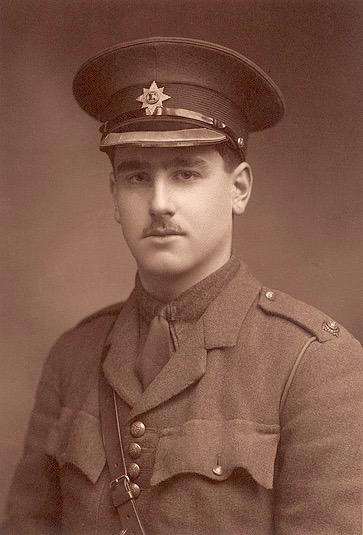
John Kipling, 1897-1915

27 Sunday Sep 2015

Posted by Keith Muchowski in Theodore Roosevelt Jr (President), Those we remember

≈ Comments Off on John Kipling, 1897-1915

What do Theodore Roosevelt, Herbert Asquith, Oscar Wilde and Rudyard Kipling have in common? They are just a few of the prominent fathers of their era to have had their sons killed in the First World War. This was not uncommon. If one visits the Union League or University Clubs here in New York, just to name one city, one see the names of the war dead from some of society’s most prominent families. Rudyard Kipling’s son was killed at the Battle of Loos one hundred years ago today. John Kipling, known as Jack in the family to differentiate him from his grandfather and namesake, was an eighteen-year-old second lieutenant in the Irish Guards fighting. It was the young lieutenant’s first engagement.

John ("Jack") Kipling died at the Battle of Loos 100 years ago today.

John (“Jack”) Kipling died at the Battle of Loos 100 years ago today.

Roosevelt and Kipling knew each other quite well and there are parallels and differences in the deaths of their sons in France. Jack and Quentin were both born in 1897, and each was the baby in his family. Like Quentin, Jack was a witty and inquisitive young man who invariably saw the glass as half full. Though they both died young and tragically there was a crucial difference between their deaths: when Quentin was shot down in 1918 the Germans gave him a full burial; Jack’s remains were not found, which caused his father no end of anguish. Rudyard Kipling did all he could to find his son’s remains–indeed he did not give up hope that Jack was still alive until after the Great War’s end–but it was all to no avail. He went to his own grave in 1936 never knowing for certain what happened to his youngest child.

In the early 1990s officials at the Commonwealth War Graves Commission announced that they were now certain Jack was interred in the St Mary’s field hospital cemetery in Loos. That seemed to end the mystery until, in the early 2000s, two scholars released their own research that brought the War Graves Commission’s findings into question. The truth is that we will probably never know for certain. Stalin’s cliché about one death being a tragedy while one million a statistic is as true as it is cynical. Kipling himself channeled his grief into his writing. Later that very year he “My Boy Jack.” The first stanza reads:

“Have you news of my boy Jack?”
Not this tide.
“When d’you think that he’ll come back?”
Not with this wind blowing, and this tide.

(image/Rudyard Kipling Papers, University of Sussex Library)

Harry Vardon, 1870-1937

19 Sunday Jul 2015

Posted by Keith Muchowski in Those we remember, WW1

≈ 2 Comments

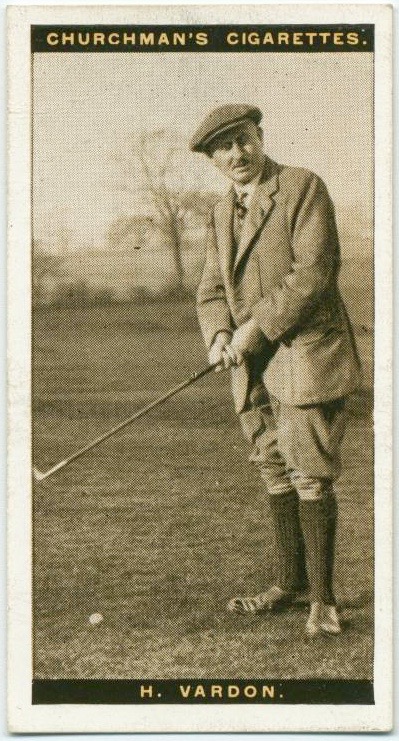
Best known today for the Vardon Grip, the overlapping technique commonly used today, Harry Vardon won six Open Championship prior to the First World War.

Best known today for his Vardon Grip, the overlapping technique commonly used today, Harry Vardon won six Open Championships prior to the First World War.

Watching Tom Watson finish out at his final British Open on Friday got me thinking about the only man to have won more Open Championships. That would be Harry Vardon, who captured his sixth Open title in June 1914 just prior to the onset of the Great War. (Three others are tied with Watson with five titles.) Vardon is less well-known today than Bobby Jones and Walter Hagen, much like tennis star Tony Wilding is less well-known than Bill Tilden and René Lacoste, but he deserves a better place in our consciousness. I suspect the reason men like these don’t get the credit they deserve is that the world they inhabited was swept away by the cataclysm of the Great War. Figures like Tilden, Lacoste, Jones, and Babe Ruth captured the zeitgeist of the Roaring Twenties and became superstars on a level unimaginable before the war. From the perspective of, say, 1924, everything that happened prior to the assassination of the Archduke Ferdinand must have seemed remote.

Vardon was a poor kid, a gardener’s son, from the island of Jersey. He, James Braid, and John Henry Taylor comprised the Great Triumvirate that ruled golf in the Victorian and Edwardian eras when the game was still centered in the British Isles. Braid and Taylor are two of the men tied with Tom Watson. All of their Open victories, like Vardon’s, came prior to the Great War. (Australian Peter Thomson is the fourth of the golfers with five Open titles, his victories coming in the 1950s and 60s.)

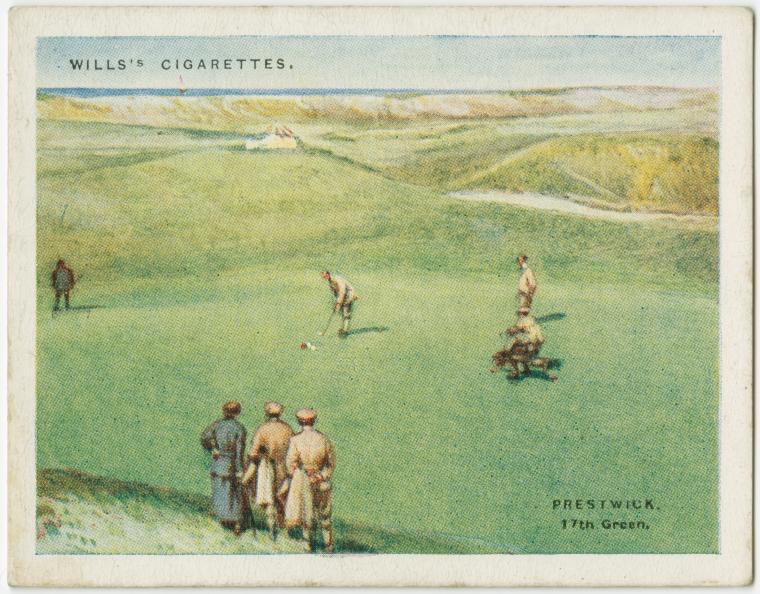
Today no longer part of the Open rotation, Prestwick was the scene of Vardon's 1914 Open victory.

Today no longer part of the Open rotation, Prestwick was the scene of Vardon’s 1914 Open victory.

Signs of change were in the air. The twenty year old American Francis Ouimet famously defeated Vardon in a playoff at the 1913 U.S. Open at The Country Club in Brookline, Massachusetts. It was a stunning and very public defeat. Still, Vardon rebounded. When he won at Prestwick in 1914, Ouimet finished well off the leaderboard in 56th place. In June 1914, the very month he won that sixth Open, Vardon was confident enough to pen an article for Everybody’s Magazine titled “What’s Wrong with American Golf?”

When Franz Ferdinand was killed at Sarajevo one week later Europe went on enjoying its golden summer. They played the French Open over the first week of July as if nothing had happened. Vardon finished in second in that tournament. The guns of August inevitably came and when they did the center of golf shifted to the United States. The subtitle of a March 1915 New York Times article captured the moment: “War puts the Game Back in Great Britain—Look to America.” They would not play the British or French Open again until 1920. Vardon and others kept busy, even playing in charity events at the front in Flanders in July 1917.

The Great War crippled British golf, at least for a time. Americans won eleven of the next fourteen Open Championships. The British rebounded during the Depression until the Second World War brought on another golf moratorium. By the late 1940s and early 1950s the transfer was complete. Americans Byron Nelson, Ben Hogan, and Same Snead were the golf world’s new Trio.

(images courtesy of the George Arents Collection, The New York Public Library Digital Collections:

“Harry Vardon.” http://digitalcollections.nypl.org/items/510d47e2-4666-a3d9-e040-e00a18064a99

“Prestwick.” http://digitalcollections.nypl.org/items/510d47e4-0e36-a3d9-e040-e00a18064a99)

Anthony Frederick Wilding, 1883-1915

12 Sunday Jul 2015

Posted by Keith Muchowski in Those we remember, WW1

≈ Comments Off on Anthony Frederick Wilding, 1883-1915

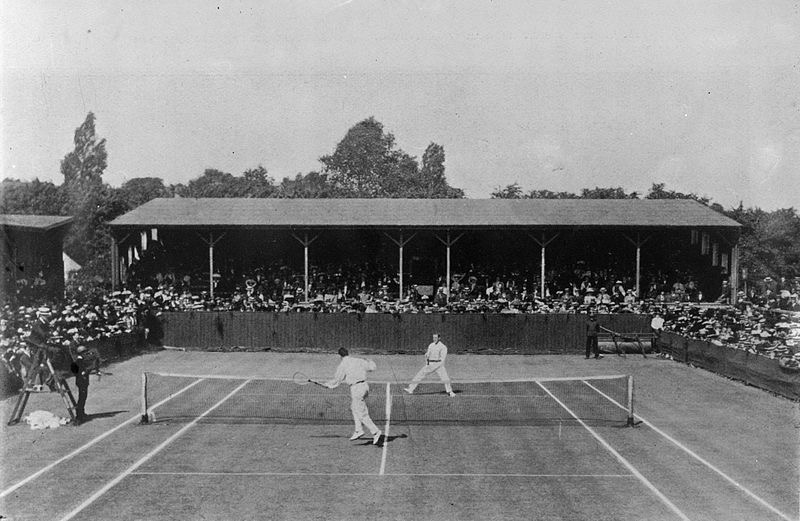
Anthony Wilding (far court) defeated fellow tennis hall-of-famer Beals Wright in the 1910 Wimbledon final. Note the all-white uniforms.

Anthony Wilding (far court) defeated fellow tennis hall-of-famer Beals Wright in the 1910 Wimbledon final. Note the all-white uniforms.

With this year’s Wimbledon final between Roger Federer and Novak Djokovic slated for this morning, it seems appropriate to look back at one of the greatest figures in the history of the All England Club. Anthony Frederick Wilding may not be familiar to contemporary audiences—especially outside the British Commonwealth—but, years before Bill Tilden and René Lacoste, there was Tony Wilding; this New Zealander won consecutive Wimbledon singles titles from 1910-13. To give some perspective, that feat was not surpassed again until Björn Borg won five consecutive titles from 1976-80. Wilding also reached the 1914 Wimbledon final, which coincided with the assassination of the Archduke Ferdinand and Europe’s Last Summer.

Wilding was a frequent winner in the Davis Cup as well; as late as August 1914 he led Australasia to victory in the finals of that event. The headline of the August 14, 1914 Brooklyn Daily Eagle mentions Wilding’s Davis Cup victory over Richard Norris Williams, below which in smaller type is a photograph and an article about British troops making their way to London’s Victoria Station. Wilding’s tennis career ended soon after that Davis Cup victory, however; he joined the Royal Marines and served as an officer on the Western Front.

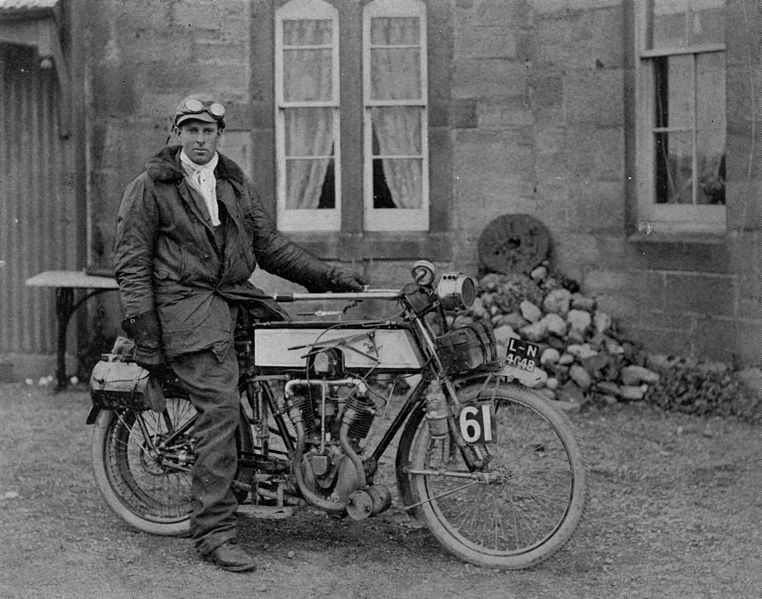
Lawyer, cricketer, motor enthusiast and tennis champion Anthony Frederick (Tony) Wilder as he was in 1908, seven years before he was killed on the Western Front.

Lawyer, cricketer, motor enthusiast and tennis champion Anthony Frederick (Tony) Wilding as he was in 1908, seven years before he was killed on the Western Front.

Anthony Wilding was born in Christchurch in 1883. His father was a lawyer and he too studied for the bar, reading law at Cambridge’s Trinity College before becoming both a solicitor and a barrister. It was as a sportsman however that Wilding made his reputation in the early 1900s. A star athlete with dashing good looks, he enjoyed London’s Edwardian society and seems to have a hit with the ladies. And why not?

Wilding also had a yen for mechanical things, especially motorcycles, automobiles, and aeroplanes. It is not surprising therefore that he quickly moved from the Royal Marines to the Royal Naval Air Service and eventually the Armoured Car Force. Among other duties he drove Rolls Royce vehicles to the front. He made captain in April 1915, but did not survive the spring. Wilding was killed in a bombardment at the the Battle of Aubers Ridge in Neuve-Chappelle on 9 May 1915. Tony Wilding is buried at the Rue-des-Berceaux Military Cemetery at Pas-de-Calais.

(top image by London: Methuen and bottom image of unknown origin, both via Wikimedia Commons)


William Zinsser, 1922-2015

23 Saturday May 2015

Posted by Keith Muchowski in Ellis Island, Those we remember, Writing

≈ Comments Off on William Zinsser, 1922-2015

In a piece about Ellis Island, William Zinsser famously took up the 300 word challenge to prove that a write need not be verbose to convey his message.

In a piece about Ellis Island William Zinsser famously took up the 300 word challenge to prove that a writer need not be verbose to convey his message.

The world became a smaller place this month with the passing of William Zinsser. A memorial service was held in his honor yesterday here in the city. I wrote about Zinsser way back in 2011 when he was still writing his weekly column for The American Scholar. Then in his late eighties, he was crafting 700 word pieces of grace and elegance on any topic he chose every Friday. A year after I wrote the vignette, Zinsser–then in his 90th year–won a National Magazine Award for digital commentary; he had mastered the internet just as he had mastered writing for newspapers and magazines in the heyday of periodical publishing in the middle of the twentieth century. The reason he stayed relevant is that he never strayed from his core belief: simplify your writing and thereby find your humanity.

I could go on, but won’t. Here is the homage I wrote in March 2011:

For several years in the mid-2000s I collaborated with two teachers and a librarian on a writing and research module at a local high school. The four of us taught the basics of scholarship to a group of Advanced Placement English and History juniors. The final assignment was a five-six page paper. I continually stressed the importance of writing clearly and concisely. We kicked things off each term with a reading and discussion of George Orwell’s “Politics and the English Language.” One school year, when the budget permitted, we distributed copies of Strunk and White’s The Elements of Style to each student that were theirs to keep. Most students eventually “got it,” but I was always struck by how tenaciously some clung to the belief that pretentious, ornate prose was the way to the teacher’s heart and a good grade. In his most recent “Zinsser on Friday” posting, the incomparable William Zinsser recounts a challenge once posed to him by an editor: submit a travel piece not to exceed 300 words. Not wanting to stray too far from home, he selected a certain island “a mere subway and ferry ride away.”  Read the results.

(Note that the link immediately above is now dead. Because The American Scholar may link to it again, I am going to leave it there. Here is the Ellis Island piece.)

(image/Library of Congress; permalink: http://www.loc.gov/pictures/item/97501086/)

Sunday morning coffee

12 Sunday Apr 2015

Posted by Keith Muchowski in Eleanor Roosevelt, Franklin Delano Roosevelt, Those we remember

≈ 5 Comments

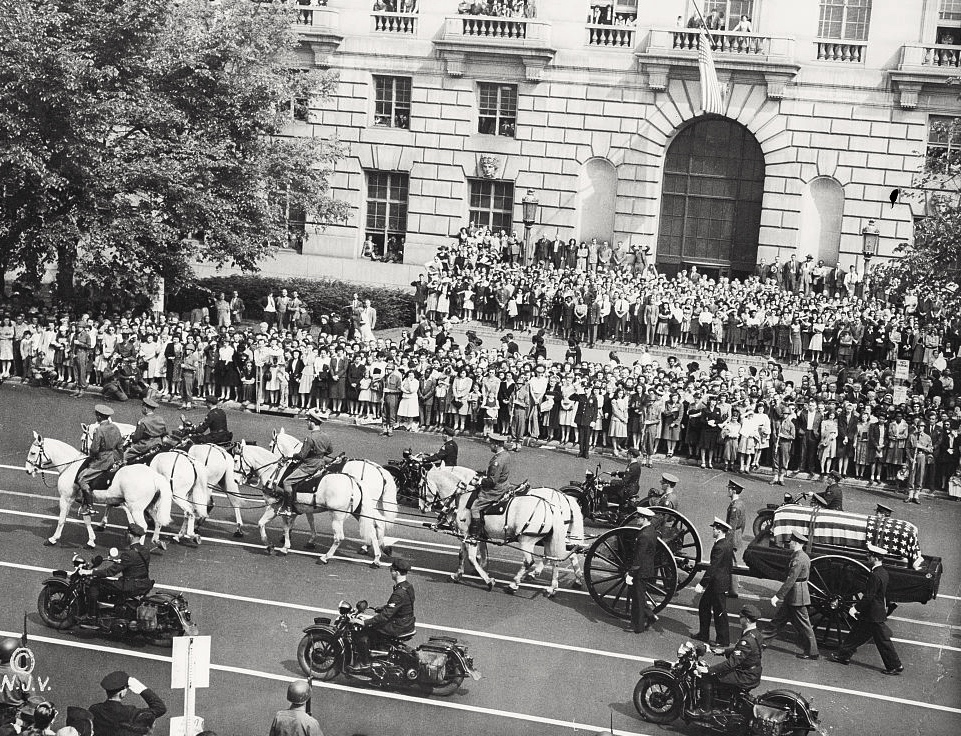
Eighty Aprils after Lincoln's funeral the country mourned the death of Franklin Delano Roosevelt. Note the bloom on the trees in the upper left hand corner.

Eighty Aprils after Lincoln’s funeral Americans mourned the death of Franklin Delano Roosevelt. Note the bloom on the trees in the upper left hand corner.

Doing my tours at the Theodore Roosevelt Birthplace yesterday I did not fail to mention that April 12–today–marks the 70th anniversary of Franklin Roosevelt’s passing.

It was not until I began volunteering at the TRB that I realized how intertwined the two sides of the family were, and indeed remain today. To give one example: when Franklin was himself assistant secretary of the navy, in the Wilson Administration, he and Eleanor rented a Dupont Circle house from Anna Roosevelt Cowles. Mrs. Cowles was Theodore’s older sister and Eleanor’s aunt. Throughout much of World War One, Theodore himself used to drop in to that N Street home to discuss preparedness and how the war was going. FDR learned much in Washington from 1913-1921 that served him well as commander-in-chief thirty years later.

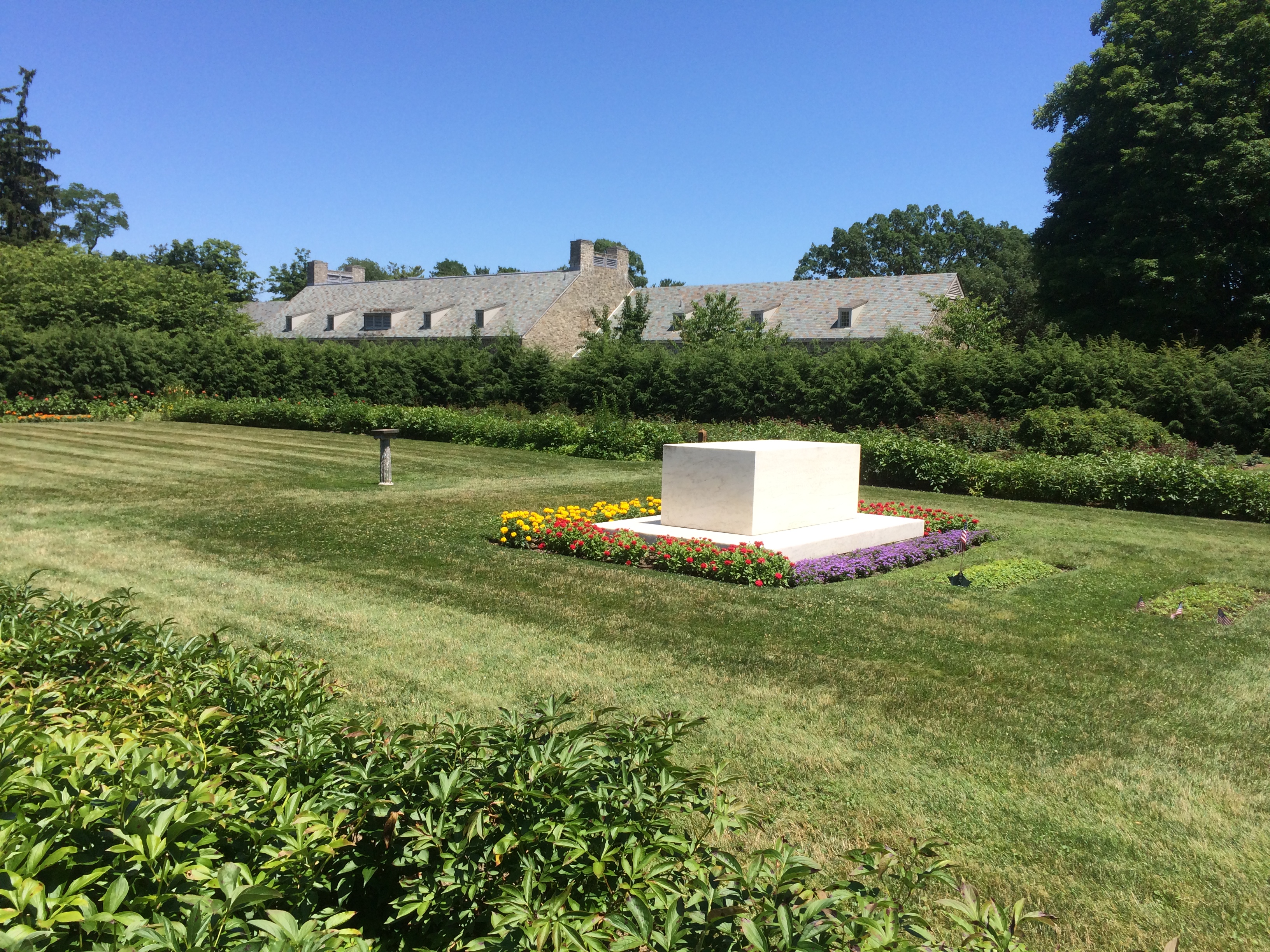
Franklin and Eleanor Roosevelt's final resting place, Hyde Park, New York. The Roosevelt Library and Museum are in the background.

Franklin and Eleanor Roosevelt’s final resting place, Hyde Park, New York. The Roosevelt Library and Museum are in the background.

One thing I always mention is how young many of the Roosevelts were when they died. Theodore Roosevelt Sr. was 46 and his wife Martha Bullock just 48. Their son Elliott, Eleanor’s father, was all of 34 when his demons finally caught up with him. Elliott’s son Hall had just turned 50 when his own difficult life came to an end in 1941. Theodore Roosevelt was a mere 60. Then there was FDR himself. All presidents age while in office but Franklin Delano Roosevelt looked considerably older than his 63 years when, after months of failing health, he succumbed to a cerebral hemorrhage at his Warm Springs, Georgia retreat seventy years ago today.

(top image/Library of Congress)

Spottswood Poles, 1887-1962

30 Monday Mar 2015

Posted by Keith Muchowski in Baseball, Great War centennial, Historiography, Those we remember

≈ Comments Off on Spottswood Poles, 1887-1962

Spottswood Poles, upper right, with the New York Lincoln Giants: May 1912

Spottswood Poles, upper right, with the New York Lincoln Giants: May 1912

As a general practice I do not link to things I write for the Park Service or WW1 Centennial Commission’s social media platforms. Tonight though I made an exception for a small piece about ball player and Harlem Hellfighter Spot Poles. It is up on the Strawfoot Facebook page on the left.

I have been reading Lawrence Ritter’s The Glory of Their Times over the past few weeks. Ritter’s oral history was a seminal event in baseball historiography, coming as it did in the mid-1960s when many of the early players were disappearing. Poles does not appear in the book and his name was only slightly familiar to me until recently. I suspect that he never got his due because he died in 1962, just before many of the players from organized Negro baseball were being rediscovered. Ritter published Glory in 1966. That same year Ted Williams famously said during his Hall of Fame induction that he hoped some day the old Negro players could be represented in Cooperstown in some way. Poles was four years gone by then and there was no one left to speak for him. He nearly did get in to the Hall some years later on the old timers ballot but fell short.

I did not know until writing the vignette that there were over 500 professional ball players who fought in the Great War. When we think of ball players and military service we think of WW2, because we always think of WW2 before WW1. Williams of course was one of the great war heroes of the Second World War. Poles too was a war hero. He reached France around New Years 1918 and fought in all of the major battles through the Armistice.

(image/By Staff Photographer (New York Lincoln Giants Publicity Office) [Public domain], via Wikimedia Commons)

Clark Terry, 1920-2015

23 Monday Feb 2015

Posted by Keith Muchowski in Jazz, Those we remember

≈ Comments Off on Clark Terry, 1920-2015

I was saddened to read the other day of the passing of Clark Terry. The great trumpeter was ninety-four and had been active well into his 10th decade. Just last fall he was the subject of a documentary, Keep On Keepin’ On. That film captures Mr. Terry mentoring a young protege, a role to which Terry was well suited. He was a mentor to many of the leading jazz figures of the day. Pupils included Quincy Jones and Miles Davis. Terry he had an illustrious career in his own right also. Over the decades he worked with Duke Ellington and Frank Sinatra to name two.

Terry was born in 1920. To put this in perspective: this was one year after the Harlem Hellfighters returned from France. James Reese Europe, the leader of the 369th Regimental Band that had done so much to bring jazz across the Atlantic during the Great War, died just a few months after the Hellfighters returned to the United States. During the Second World War Terry himself would play in a military jazz band, just as Europe and his men had done during the First. Terry went through basic training in Waukegan, Illinois, the site north of Chicago on Lake Michigan reserved for the training of African-American troops. He then played in bands on bases throughout the country.

After the war Terry settled in New York and was part of the jazz scene. He joined what one might call the African-American expatriate community in Corona, Queens. Corona in the 1940s-50s was an enclave of detached houses to which many black musicians moved to enjoy a quieter lifestyle away from the nightclubs of the city. Neighbors included Louis Armstrong, Dizzy Gillespie, Ella Fitzgerald, and saxophonist Cannonball Adderley.

Here is some hot music for a cold evening.


Remembering Charles, one year on

25 Tuesday Nov 2014

Posted by Keith Muchowski in Those we remember

≈ Comments Off on Remembering Charles, one year on

It is hard to believe it has been a full year since the death of our great friend Charles Hirsch. Sometimes I still think he is here. I may see a person on the street with his familiar gait. Or maybe it is someone on the subway wearing a fedora like the one he himself wore. It is still strange not getting a text containing his excitement about how the Packers just won. Some may remember this piece that I wrote last year …

I just came from the funeral of our great friend Charles Hirsch. Charles was a professor in the English Department at the college where I work. He was so many other things as well. In years past he had worked for the Muppets and was a writer/editor at the magazine Highlights for Children. Unafraid to take chances, he often moved to different parts of the country and even the world, certain that his charm, talents, and intellect would allow him to succeed anywhere he went. Of course he was right.

Charles and the Hayfoot at the Gettysburg First Shot marker

Charles and the Hayfoot at the Gettysburg First Shot marker

The word brilliant came up more than once during the ceremony. I am glad it did; I don’t think I ever won a debate with Charles. And yet his personality was such that you never felt he was showing you up. His was the kind of intelligence that lifted those around him. As the priest pointed out, Charles was so dynamic that when you were in his presence you felt like the most important person in the world. Fittingly there was a huge, disparate, turnout for his service, a cross-section of the multitudes of lives Charles lived in his sixty-six years.

I cannot believe we live in a world without Charles Hirsch. I am grateful for times we all had together, at our wedding in Florida where it was freezing cold, in Gettysburg, Yankee Stadium, and so many other places besides. I wanted him to live long enough to see me accomplish some of the projects on which I am currently working. Alas, that was not meant to be. Still, I will carry on with the knowledge that he believed I have what it takes to do them. It meant the world to me when he said that.

We will miss you, Charles. Yours was a life well lived.

Hermann Hagedorn, 1882-1964

27 Sunday Jul 2014

Posted by Keith Muchowski in Historiography, Libraries, Memory, Theodore Roosevelt Birthplace (NPS), Theodore Roosevelt Jr (President), Those we remember, WW1

≈ 2 Comments

Hermann Hagedorn died fifty years ago today. The name may not ring many bells within the general populace. Hagedorn, however, was a towering figure within the world of Theodore Roosevelt memory and historiography. When the Roosevelt Memorial Association was formed weeks after the former president’s death, Hagedorn became the group’s first acting secretary. He eventually became the RMA’s executive director. Hagedorn dedicated a significant portion of his life to the Roosevelt legacy; the RMA formed in 1919 and Hagedorn was still going strong during the Roosevelt Centennial in the late 1950s.

13834Hagedorn met Theodore Roosevelt in 1916 when a small group of supporters were trying to convince him to make one final run at the White House. That of course did not come to pass. The son of a German immigrant, Hagedorn was born in New York City. Though the United States was not yet involved the Great War, the fighting was raging in Europe when Hagedorn and Roosevelt first met. One can see why they were drawn to each other. Roosevelt was advocating for Preparedness while Hagedorn was extolling the virtues of Americanism, especially with the German-American community.

The Men’s and Women’s Roosevelt Memorial Associations were responsible for rebuilding Roosevelt’s boyhood home on East 20th Street. As I often emphasize on tours this was a time before presidential libraries. In addition to the house itself there was, and is, a museum and substantial library on site. Hagedorn claimed in the August 1929 Bulletin of the American Library Association that officials from the New York Public Library had told him that the Theodore Roosevelt Birthplace’s collection was “the most extensive library built around one individual in the United States.” The library indeed includes a substantial collection of books and other materials. It is worth noting that the Birthplace library collected not just photographs but moving imagery as well. This was pioneering stuff in the 1920s.

The RMA and Hagedorn did a lot more than just the Birthplace though. They were responsible for constructing Roosevelt Island in Washington DC and transforming Sagamore Hill into the historic site it is today. These are just a few of their accomplishments.

Hagedorn wrote a number of biographies of Roosevelt written for children and adults. He authored his first Roosevelt biography, The Boys’ Life of Theodore Roosevelt,  in 1918 while the former president was still alive. In the mid 1920s Hagedorn edited Roosevelt’s Complete Works, a substantial undertaking given that Theodore Roosevelt authored over thirty books. Some people believed that Hagedorn became too involved in the Roosevelt legacy and that he sometimes stepped over the line into idolatry. Lewis Mumford and Oswald Garrison Villard were two of Hagedorn’s harshest critics. Hagedorn did sometimes lapse into hagiography but some of the criticism was shrill and unfair.

Hermann Hagedorn accomplished many things in his lifetime. There were plays, poetry, biographies of such figures as Leonard Wood and Albert Schweitzer, and other projects over his long life. Still, he is now most associated with the life and times of Theodore Roosevelt. So much of what Hagedorn did is still here today.

← Older posts
Newer posts →

Enter your email address to subscribe to this blog and receive notifications of new posts by email.

Join 258 other subscribers

Categories

Archives

  • November 2023 (1)
  • October 2023 (3)
  • September 2023 (3)
  • August 2023 (4)
  • July 2023 (7)
  • June 2023 (10)
  • May 2023 (8)
  • April 2023 (6)
  • March 2023 (5)
  • February 2023 (4)
  • January 2023 (4)
  • December 2022 (4)
  • November 2022 (8)
  • October 2022 (2)
  • September 2022 (4)
  • June 2022 (1)
  • May 2022 (1)
  • April 2022 (13)
  • January 2022 (1)
  • December 2021 (2)
  • November 2021 (1)
  • October 2021 (3)
  • September 2021 (3)
  • August 2021 (5)
  • July 2021 (1)
  • June 2021 (1)
  • May 2021 (4)
  • April 2021 (3)
  • March 2021 (4)
  • February 2021 (7)
  • January 2021 (4)
  • December 2020 (4)
  • November 2020 (3)
  • October 2020 (4)
  • September 2020 (7)
  • August 2020 (5)
  • July 2020 (7)
  • June 2020 (11)
  • May 2020 (7)
  • April 2020 (9)
  • March 2020 (9)
  • February 2020 (7)
  • January 2020 (6)
  • December 2019 (7)
  • November 2019 (9)
  • October 2019 (4)
  • September 2019 (6)
  • August 2019 (10)
  • July 2019 (8)
  • June 2019 (6)
  • May 2019 (9)
  • April 2019 (8)
  • March 2019 (6)
  • February 2019 (8)
  • January 2019 (5)
  • December 2018 (10)
  • November 2018 (6)
  • October 2018 (9)
  • September 2018 (11)
  • August 2018 (11)
  • July 2018 (17)
  • June 2018 (10)
  • May 2018 (8)
  • April 2018 (9)
  • March 2018 (8)
  • February 2018 (5)
  • January 2018 (7)
  • December 2017 (11)
  • November 2017 (8)
  • October 2017 (9)
  • September 2017 (11)
  • August 2017 (12)
  • July 2017 (14)
  • June 2017 (18)
  • May 2017 (11)
  • April 2017 (10)
  • March 2017 (9)
  • February 2017 (11)
  • January 2017 (14)
  • December 2016 (7)
  • November 2016 (8)
  • October 2016 (8)
  • September 2016 (9)
  • August 2016 (6)
  • July 2016 (12)
  • June 2016 (8)
  • May 2016 (9)
  • April 2016 (6)
  • March 2016 (12)
  • February 2016 (10)
  • January 2016 (9)
  • December 2015 (9)
  • November 2015 (11)
  • October 2015 (8)
  • September 2015 (9)
  • August 2015 (13)
  • July 2015 (14)
  • June 2015 (11)
  • May 2015 (11)
  • April 2015 (18)
  • March 2015 (10)
  • February 2015 (8)
  • January 2015 (8)
  • December 2014 (12)
  • November 2014 (13)
  • October 2014 (16)
  • September 2014 (11)
  • August 2014 (16)
  • July 2014 (12)
  • June 2014 (13)
  • May 2014 (10)
  • April 2014 (10)
  • March 2014 (11)
  • February 2014 (12)
  • January 2014 (10)
  • December 2013 (11)
  • November 2013 (14)
  • October 2013 (14)
  • September 2013 (14)
  • August 2013 (13)
  • July 2013 (17)
  • June 2013 (9)
  • May 2013 (13)
  • April 2013 (13)
  • March 2013 (16)
  • February 2013 (15)
  • January 2013 (15)
  • December 2012 (18)
  • November 2012 (18)
  • October 2012 (21)
  • September 2012 (14)
  • August 2012 (16)
  • July 2012 (21)
  • June 2012 (22)
  • May 2012 (24)
  • April 2012 (20)
  • March 2012 (23)
  • February 2012 (22)
  • January 2012 (15)
  • December 2011 (23)
  • November 2011 (22)
  • October 2011 (23)
  • September 2011 (18)
  • August 2011 (19)
  • July 2011 (20)
  • June 2011 (29)
  • May 2011 (25)
  • April 2011 (18)
  • March 2011 (21)
  • February 2011 (11)

Meta

  • Create account
  • Log in
  • Entries feed
  • Comments feed
  • WordPress.com
Creative Commons License
This work is licensed under a Creative Commons Attribution-NonCommercial-ShareAlike 4.0 International License.

Enter your email address to subscribe to this blog and receive notifications of new posts by email.

Join 258 other subscribers

Categories

Archives

  • November 2023 (1)
  • October 2023 (3)
  • September 2023 (3)
  • August 2023 (4)
  • July 2023 (7)
  • June 2023 (10)
  • May 2023 (8)
  • April 2023 (6)
  • March 2023 (5)
  • February 2023 (4)
  • January 2023 (4)
  • December 2022 (4)
  • November 2022 (8)
  • October 2022 (2)
  • September 2022 (4)
  • June 2022 (1)
  • May 2022 (1)
  • April 2022 (13)
  • January 2022 (1)
  • December 2021 (2)
  • November 2021 (1)
  • October 2021 (3)
  • September 2021 (3)
  • August 2021 (5)
  • July 2021 (1)
  • June 2021 (1)
  • May 2021 (4)
  • April 2021 (3)
  • March 2021 (4)
  • February 2021 (7)
  • January 2021 (4)
  • December 2020 (4)
  • November 2020 (3)
  • October 2020 (4)
  • September 2020 (7)
  • August 2020 (5)
  • July 2020 (7)
  • June 2020 (11)
  • May 2020 (7)
  • April 2020 (9)
  • March 2020 (9)
  • February 2020 (7)
  • January 2020 (6)
  • December 2019 (7)
  • November 2019 (9)
  • October 2019 (4)
  • September 2019 (6)
  • August 2019 (10)
  • July 2019 (8)
  • June 2019 (6)
  • May 2019 (9)
  • April 2019 (8)
  • March 2019 (6)
  • February 2019 (8)
  • January 2019 (5)
  • December 2018 (10)
  • November 2018 (6)
  • October 2018 (9)
  • September 2018 (11)
  • August 2018 (11)
  • July 2018 (17)
  • June 2018 (10)
  • May 2018 (8)
  • April 2018 (9)
  • March 2018 (8)
  • February 2018 (5)
  • January 2018 (7)
  • December 2017 (11)
  • November 2017 (8)
  • October 2017 (9)
  • September 2017 (11)
  • August 2017 (12)
  • July 2017 (14)
  • June 2017 (18)
  • May 2017 (11)
  • April 2017 (10)
  • March 2017 (9)
  • February 2017 (11)
  • January 2017 (14)
  • December 2016 (7)
  • November 2016 (8)
  • October 2016 (8)
  • September 2016 (9)
  • August 2016 (6)
  • July 2016 (12)
  • June 2016 (8)
  • May 2016 (9)
  • April 2016 (6)
  • March 2016 (12)
  • February 2016 (10)
  • January 2016 (9)
  • December 2015 (9)
  • November 2015 (11)
  • October 2015 (8)
  • September 2015 (9)
  • August 2015 (13)
  • July 2015 (14)
  • June 2015 (11)
  • May 2015 (11)
  • April 2015 (18)
  • March 2015 (10)
  • February 2015 (8)
  • January 2015 (8)
  • December 2014 (12)
  • November 2014 (13)
  • October 2014 (16)
  • September 2014 (11)
  • August 2014 (16)
  • July 2014 (12)
  • June 2014 (13)
  • May 2014 (10)
  • April 2014 (10)
  • March 2014 (11)
  • February 2014 (12)
  • January 2014 (10)
  • December 2013 (11)
  • November 2013 (14)
  • October 2013 (14)
  • September 2013 (14)
  • August 2013 (13)
  • July 2013 (17)
  • June 2013 (9)
  • May 2013 (13)
  • April 2013 (13)
  • March 2013 (16)
  • February 2013 (15)
  • January 2013 (15)
  • December 2012 (18)
  • November 2012 (18)
  • October 2012 (21)
  • September 2012 (14)
  • August 2012 (16)
  • July 2012 (21)
  • June 2012 (22)
  • May 2012 (24)
  • April 2012 (20)
  • March 2012 (23)
  • February 2012 (22)
  • January 2012 (15)
  • December 2011 (23)
  • November 2011 (22)
  • October 2011 (23)
  • September 2011 (18)
  • August 2011 (19)
  • July 2011 (20)
  • June 2011 (29)
  • May 2011 (25)
  • April 2011 (18)
  • March 2011 (21)
  • February 2011 (11)

Meta

  • Create account
  • Log in
  • Entries feed
  • Comments feed
  • WordPress.com
Creative Commons License
This work is licensed under a Creative Commons Attribution-NonCommercial-ShareAlike 4.0 International License.

Enter your email address to subscribe to this blog and receive notifications of new posts by email.

Join 258 other subscribers

Categories

Archives

  • November 2023 (1)
  • October 2023 (3)
  • September 2023 (3)
  • August 2023 (4)
  • July 2023 (7)
  • June 2023 (10)
  • May 2023 (8)
  • April 2023 (6)
  • March 2023 (5)
  • February 2023 (4)
  • January 2023 (4)
  • December 2022 (4)
  • November 2022 (8)
  • October 2022 (2)
  • September 2022 (4)
  • June 2022 (1)
  • May 2022 (1)
  • April 2022 (13)
  • January 2022 (1)
  • December 2021 (2)
  • November 2021 (1)
  • October 2021 (3)
  • September 2021 (3)
  • August 2021 (5)
  • July 2021 (1)
  • June 2021 (1)
  • May 2021 (4)
  • April 2021 (3)
  • March 2021 (4)
  • February 2021 (7)
  • January 2021 (4)
  • December 2020 (4)
  • November 2020 (3)
  • October 2020 (4)
  • September 2020 (7)
  • August 2020 (5)
  • July 2020 (7)
  • June 2020 (11)
  • May 2020 (7)
  • April 2020 (9)
  • March 2020 (9)
  • February 2020 (7)
  • January 2020 (6)
  • December 2019 (7)
  • November 2019 (9)
  • October 2019 (4)
  • September 2019 (6)
  • August 2019 (10)
  • July 2019 (8)
  • June 2019 (6)
  • May 2019 (9)
  • April 2019 (8)
  • March 2019 (6)
  • February 2019 (8)
  • January 2019 (5)
  • December 2018 (10)
  • November 2018 (6)
  • October 2018 (9)
  • September 2018 (11)
  • August 2018 (11)
  • July 2018 (17)
  • June 2018 (10)
  • May 2018 (8)
  • April 2018 (9)
  • March 2018 (8)
  • February 2018 (5)
  • January 2018 (7)
  • December 2017 (11)
  • November 2017 (8)
  • October 2017 (9)
  • September 2017 (11)
  • August 2017 (12)
  • July 2017 (14)
  • June 2017 (18)
  • May 2017 (11)
  • April 2017 (10)
  • March 2017 (9)
  • February 2017 (11)
  • January 2017 (14)
  • December 2016 (7)
  • November 2016 (8)
  • October 2016 (8)
  • September 2016 (9)
  • August 2016 (6)
  • July 2016 (12)
  • June 2016 (8)
  • May 2016 (9)
  • April 2016 (6)
  • March 2016 (12)
  • February 2016 (10)
  • January 2016 (9)
  • December 2015 (9)
  • November 2015 (11)
  • October 2015 (8)
  • September 2015 (9)
  • August 2015 (13)
  • July 2015 (14)
  • June 2015 (11)
  • May 2015 (11)
  • April 2015 (18)
  • March 2015 (10)
  • February 2015 (8)
  • January 2015 (8)
  • December 2014 (12)
  • November 2014 (13)
  • October 2014 (16)
  • September 2014 (11)
  • August 2014 (16)
  • July 2014 (12)
  • June 2014 (13)
  • May 2014 (10)
  • April 2014 (10)
  • March 2014 (11)
  • February 2014 (12)
  • January 2014 (10)
  • December 2013 (11)
  • November 2013 (14)
  • October 2013 (14)
  • September 2013 (14)
  • August 2013 (13)
  • July 2013 (17)
  • June 2013 (9)
  • May 2013 (13)
  • April 2013 (13)
  • March 2013 (16)
  • February 2013 (15)
  • January 2013 (15)
  • December 2012 (18)
  • November 2012 (18)
  • October 2012 (21)
  • September 2012 (14)
  • August 2012 (16)
  • July 2012 (21)
  • June 2012 (22)
  • May 2012 (24)
  • April 2012 (20)
  • March 2012 (23)
  • February 2012 (22)
  • January 2012 (15)
  • December 2011 (23)
  • November 2011 (22)
  • October 2011 (23)
  • September 2011 (18)
  • August 2011 (19)
  • July 2011 (20)
  • June 2011 (29)
  • May 2011 (25)
  • April 2011 (18)
  • March 2011 (21)
  • February 2011 (11)

Meta

  • Create account
  • Log in
  • Entries feed
  • Comments feed
  • WordPress.com
Creative Commons License
This work is licensed under a Creative Commons Attribution-NonCommercial-ShareAlike 4.0 International License.

Blog at WordPress.com.

  • Subscribe Subscribed
    • The Strawfoot
    • Join 229 other subscribers
    • Already have a WordPress.com account? Log in now.
    • The Strawfoot
    • Subscribe Subscribed
    • Sign up
    • Log in
    • Report this content
    • View site in Reader
    • Manage subscriptions
    • Collapse this bar
 

Loading Comments...