Seventy-one Decembers ago, during the German occupation of the British isle of Jersey, soldiers sent Christmas greetings home to their loved ones. This week the cards are being delivered.
The Hayfoot and I are having a cup of coffee in front of our tree. We just got back from a showing of A Civil War Christmas at the New York Theatre Workshop in the East Village. The lateness of the hour prevents me from giving a full review here and now, but suffice it to say that we enjoyed it very much. The musical focuses on events in and around Washington, DC on Christmas Eve 1864. It covers multiple perspectives, including Lee, Grant, the Lincolns, Elizabeth Keckley, John Wilkes Booth, Walt Whitman, and many otherwise regular folk who were observing their fourth Christmas of war. The production has been around for several years and is something one should keep an eye out for in future holiday seasons. I read about it coming to New York way back in June and marked it on the calendar thinking how far into the future December would be. We got a kick out of seeing a high school contingent of approximately fifty students there to see the play. At first we thought they might make noise and disrupt the action, but when the curtain went up they watched and listened attentively. I like to think it will be one of those sesquicentennial events at least some of them will look back on years, even decades, from now. As a cohort, today’s high schoolers will be around for the bicentennial. The play captivated the entire audience for its entire 2 1/2 hours. Try to catch this one if you can.
I do not own a television and so could not have watched anyways, but last night Turner Classic Movies aired Rod Serling’s A Carol for Another Christmas. I know a fair amount about Rod Serling and the Twilight Zone, but my first thought when I read about this was: Rod Serling once made a tv movie called A Carol for Another Christmas? Indeed he did, in 1964 to be exact. Maybe I am wrong–it was over 25 years ago–but I do not recall any reference to this in the well-thumbed copy of Marc Scott Zicree’s The Twilight Zone Companion that I carried around in high school. According to the movie’s Wikipedia page–yes, it warranted its own Wikipedia page–the film aired on December 26, 1964 and was subsequently put into the vault.
Serling covered the Christmas theme a few years earlier on Twilight Zone, when Art Carney played a skid row Santa in Season Two’s “The Night of the Meek.” I’ll be pulling out my box-set over the next few days to watch that one as I do every year around this time.
Serling was involved in many projects in the decade after TZ and before his 1975 death; Night Gallery, Liar’s Club, and Planet of the Apes are three that come to mind. It is no secret that Serling was looking beyond TZ during its final season, but I find it interesting that Serling did this in 1964, the same year Twilight Zone ended its five-year run. How such a project could be sitting in the can for nearly half a century is beyond me. For one thing it starred Peter Sellers, Sterling Hayden (The Godfather; Dr. Strangelove, with Sellers, Eva Marie Saint (North by Northwest; On the Waterfront), and other notables. Henry Mancini did the score. Hollywood lined up to work with Rod Serling.
Who knows, maybe the film was a turkey and was justifiably consigned to the dustbin of history. If nothing else though, it would deserve to be remembered as both an artifact of the Cold War and part of the Serling catalog. Viewers will have one more chance to find out for themselves when TCM re-airs A Carol for Another Christmas on Saturday December 22nd.
You may or may not have been following the recent story regarding the auctioning of a photograph thought to be the iceberg that sunk the Titanic. (Did you get all that?) The sale is apparently still ongoing, but does end today. Here are the details.
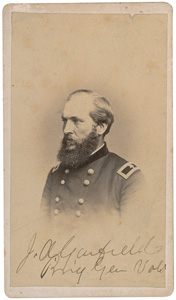
As it turns out the same auction house, RR Auction, is also selling a cache of Civil War photographs and documents. This collection of American Civil War iconography is rare enough to be be making news across the pond. Lee, Grant, McClellan, Jeff Davis, Sumter’s Robert Anderson, and James Garfield are just a few of the notables on the block.It is indeed a stunning trove that you can check out for yourself. Yours truly will not be bidding, but it is fun to window-shop. Enjoy.
There was a cheering crowd at the Auburn train station in August 1870 to send Seward and the Risleys on their way. In Salt Lake City, Brigham Young introduced them to eleven of his sixteen wives and almost all of his forty-nine living childrem.
–Walter Stahr, Seward: Lincoln’s Indispensable Man
≈ Comments Off on on the state of the State of Mississippi
Last week I watched the documentary The Best that Never Was. The film is an installment in ESPN’s 30 for 30 franchise, and explores the life and times of legendary football player Marcus Dupree. Dupree is not a household name to most Americans, which is unfortunate. Had fate not intervened, Marcus Dupree would be mentioned today in the same conversation with Jim Brown, Tony Dorsett, Marcus Allen, Barry Sanders, and Emmitt Smith. He was that good. I say it was about the life and times of Marcus Dupree because it was just that. The best sports books and documentaries are not about balls and strikes, or touchdowns and extra points; done well they explain why one should care about sports, and that rarely has to do with the final score.
Marcus Dupree was born in Philadelphia Mississippi in May 1964, less than a month before the disappearance and murder of Civil Rights workers James Chaney, Andrew Goodman, and Michael Schwerner. It was these deaths that led President Johnson to sign the Civil Rights Act the following year. Dupree entered public school a few years later and was a member of the first class in Philadelphia to attend integrated classes from kindergarten through high school.
I found the film touching for a number of reasons. Dupree’s lack of bitterness is one reason. It also covers subjects I have always found interesting. Then there is the fact that Dupree is just a few years older than I am, and my recollections of the events is vivid. We remember what happened during our high schools years with great clarity, even when they happened to someone else. I will leave it to the film to explain how and why it all unravels for Dupree.
Mississippi has always been a place of intrigue and fascination for me. I went there several times on my own when I visited my father each summer at his home in Arkansas. In 2009 I took my soon-to-be bride there to see Graceland, among other things. Elvis, Faulkner, Muddy Waters go hand-in-hand with the Civil Rights Movement, poverty, illiteracy, and other social ills. Like America itself. Yesterday, December 10, was the anniversary of Mississippi statehood. The Magnolia State entered the Union 195 years ago. Of course, less than five decades later it would become the second state to leave the Union. Yesterday the former lieutenant governor spoke at the Old Capitol Museum in Jackson.
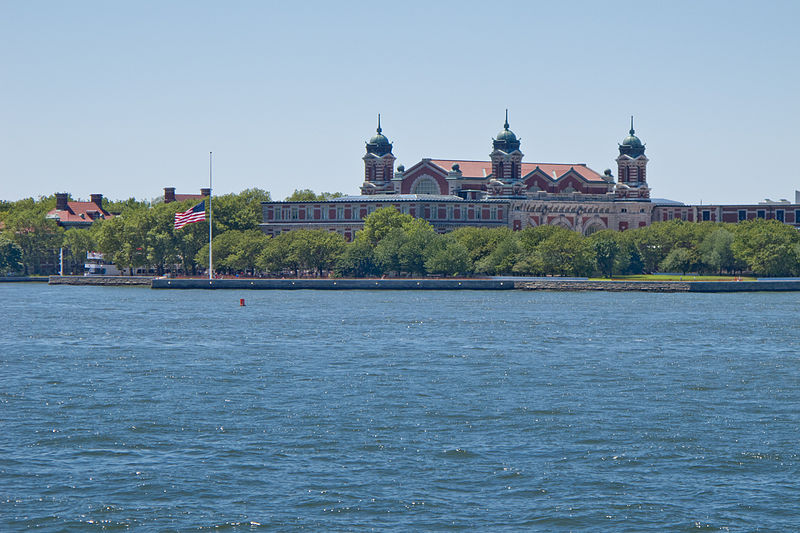
About two weeks ago I mentioned the layoffs at Ellis Island National Monument. At first I was cautiously hopeful that Ellis would not be closed to the public for the six months the Park Service originally estimated. Apparently it will indeed be off limits until Spring 2013. Now federal officials are saying that they must move 1.7 million artifacts from the island to prevent their damage. These items, relating to the arrival in America of nearly 12 million immigrants between 1892-1924, will be held in Maryland. No word yet on when they may be returning, but I imagine it will not be until late 2013 at the earliest. The biggest objective right now is rebuilding the island’s infrastructure and making the buildings safe for visitors. This is a really sad story.
I am no longer a volunteer at Ellis Island National Monument and so don’t have the inside bead on the extent of the damage caused by Superstorm Sandy I once might have. All I’ve had to go on has been a phone call from a friend saying that he has been laid off for an indefinite period and what I can glean from the news. Last week it was announced that the Liberty and Ellis Islands would remain closed through the end of the year. Today the news is that 400 have been laid off, perhaps though April 2013. That would be a full six months closed to the public. I cannot tell you how sad this makes me. What hurts the most is that the it is now the holiday season–the busiest time of the year at Ellis. I know that by the end of the year is unrealistic but I hope they can manage to get at least partial visitation up-and-running in early 2013. For one thing this touches a great deal of the New York economy, as anyone who as ever been to the Battery knows. We shall see.
Pearl Harbor 2011, the final gathering of the Pearl Harbor Survivors Association
I wrote the piece below for the 70th anniversary of the Pearl Harbor attack and am posting it again. As I said last year, I will always remember anniversaries such as December 7, June 6, and May 8 though they no longer resonate in the way they once did. I have been watching Eric Sevareid’s magnificent Between the Wars over the past several days.The sixteen part documentary, produced in 1978, provides a remarkable overview of the 1918-1941 period. What I find most striking is how recent the war, even the lead-up to the war, was as late as the 1970s. (One gets the same impression watching Lawrence Olivier narrate A World at Arms as well.) The Second World War was almost still current events in a way it obviously is not today. The highest leadership had died off by this time, but the majority of the people who fought in the war were now in full blown middle age and in the prime of their careers. Now those people have pretty much died off, or have aged considerably. I couldn’t help but think about this when I learned about the death of Congressman Jack Brooks earlier in the week. Maybe it is my own sense of aging, but I am not sure how I feel about this. Anyways, from Pearl Harbor Day 2011 . . .
A few years ago the father of a good friend of mine happened to be in the food court of a shopping mall on Memorial Day. This is a man, now in his eighties, who served in the Air Force and later played semi-professional football. He still has his leather cleats. Lou is the essence of Old School. Like shopping mall food courts throughout the country, this one was full of teenagers. Striking up a conversation with the 4-5 at the neighboring table he asked them if they knew what Memorial Day was. After the blank stares, one offered that it was a day off from school. My friend’s dad was not impressed.
When I was in school in the seventies and eighties a visit from a World War 2 vet was a HUGE deal, even in the most cynical of times just after Vietnam. (I graduated high school just a decade after the Fall of Saigon.) One vet recounted today that during a recent school visit a girl asked who Pearl Harbor was and why he was there to talk about her.
I offer these stories not to blame our country’s historical amnesia on young people, but to emphasize the educational crisis we face.
I have written about the significance to me of D-Day and aging veterans before. Personally, Pearl Harbor Day 2011 is the end of something tangible, akin to the 75th anniversary of Gettysburg in July 1938 when aged veterans turned out for one final gathering. President Roosevelt was in attendance; three years after dedicating the Eternal Peace Light Memorial in front of the 1,800 veterans and 150,000 citizens that summer day he would tell the country that December 7 would forever live in infamy. Today in Hawaii the Pearl Harbor Survivors Association held its final gathering. There are just too few Pearl Harbor survivors left seventy years later to justify a seventy-first. There will be more World War 2 anniversaries between today and the commemoration of V-J Day in 2015, but for me they will no longer seem the same. By 2015 there will be fewer WW2 veterans, and those remaining will likely be too infirm to participate in any meaningful fashion. Time moves on. It was ever thus.





 The Strawfoot