Sunday morning coffee

U.S. marines move through the streets of Hue during the Tet Offensive, 1968

I had an extraordinary experience this past Friday. I was at a local coffee shop after work when a man came in and sat down at the table next to me. I was looking at my Kindle and he asked me what I was reading. When I answer Michael Herr’s Dispatches he told me had been a marine in Vietnam. I asked what years, knowing full well that a Vietnam veteran’s period of service usually says a great deal about his experience and, more often than not, his outlook on his experience. He responded late 1967 through 1968, about fifteen months all told. I then had to ask where he was during the Tet Offensive, and he answered Hue. This was tough urban warfare. All of this led to an hour and a half conversation about not just Vietnam but current events and twentieth century history. Whether it was Mao’s Cultural Revolution or the World Wars, his thoughts were subtle and well-considered. Listening to him was humbling. His parents had come to Brooklyn from Great Britain in the late 1930s and he told me that his mother used to cry upon receiving letters from family back home during the Second World War. An uncle served under Montgomery in North Africa. At around ten in the late 1940s, he lived overseas with his family for about 7-8 months during the height of Austerity Britain. Really it was quite an extraordinary conversation.

When I mentioned that some colleagues and I are making a film about WW1 and veterans from today’s military he responded with enthusiasm. We got into a discussion about the GI Bill during which I mentioned that I have been discussing the Servicemen’s Readjustment Act with the classes with which I have been working as part of our Library of America/Gilder Lehrman grant. I go into the GI Bill with students to emphasize that the measure did not become reality until 1944 and was a direct result of the Bonus Army and the general poor treatment of World War One veterans in the 1920s and 1930s. He told me attended NYU Film School in the 1970s on the GI Bill. This was after several years of difficult readjustment in the wake of his return from Southeast Asia. This included overseeing the transport of his best friend’s remains from Vietnam to Arizona for burial. His friend was a Native American and the burial ceremony was conducted accordingly. They had promised each other that if one were killed the other would ensure the deceased’s safe passage home.

Naturally I gave him my phone number as well as the name and link to the website here. I have no doubt I will see him again. I really want to continue the conversation.

(image by Captain T. Cummins/United States Marine Corps Archives, Quantico)

Hemingway the Vulnerable

Ernest Hemingway, still a teenager, as he was upon his return to Oak Park, Illinois in late 1918 or early 1919. Note the cane. He had just spent the previous six months recuperating in a Milanese hospital from injuries incurred in Italy in July 1918. It was there that Hemingway fell in love with the nurse Agnes von Kurowsky, his muse for A Farewell to Arms and several short stories.

I am sorry for the lack of posts in recent days. With the semester in full swing things have been hectic. Enjoyable and busy. Yesterday the English professor and I wrapped up with one class the World War One module in which students watched our film and then read passages from the Library of America WW1 anthology edited by A. Scott Berg. Next week we continue and conclude in the other English 101 section. I will talk more about the readings after we totally finish. On the first day for each English section students read Ernest Hemingway’s “Soldier’s Home.” Hemingway has proved to be a strong thread running through the module. It worked out neatly that the class sessions ran concurrently with the writer’s stint at the Kansas City Star in 1917-18. Students were duly impressed by Hemingway’s conviction that all he needed to know as a writer he learned from the Kansas City Star style sheet. I always stress to students the importance of keeping one’s writing as simple as possible. The irony is that the reader does not see the hard work that goes into making it look effortless. Duke Ellington often spoke about this very thing as a composer. The listener doesn’t see the effort. A student came up to me after class and said she was going to read The Star Copy Style and incorporate its ideas into her own writing. I warned that, while it still has much to offer, the writing guide was written a century ago and so is a bit dated. Still, there is still much there to go on.

Earlier in October I was doing a bibliographic session for another English class with a different instructor that was also studying Hemingway. The instructor mentioned in the class that the Hemingway scholarship used to emphasize Hemingway as a masculine figure. The drinking, boxing, womanizing, war corresponding, hunting, fishing, and the rest of it. Today it is the inverse. Hemingway scholars concentrate more on Hemingway as a vulnerable figure. The family suicides, including his own. The automobile and airplane accidents that damaged him physically. The drinking, now seen from a different perspective than half a century ago. The depression. The struggle with familial relationships. Messy divorces. And love both requited and unrequited. I came across a recent article the other day in which a doctor speculates that Hemingway may have suffered from Chronic Traumatic Encephalopathy (CTE), the degenerative brain disease increasingly found in football players due to repeated head trauma. I suppose the intellectual shift in the Hemgingway scholarship is indicative of how every generation must interpret its historical and cultural figures for its own needs and purposes.

(image/Hemingway collection, JFK Presidential Library)


The Dirty Secret of War

This past week we showed to a class the first cut of our World War One film. For homework the students are now reading a series of excerpts from the Library of America’s World War I and America: Told by the Americans who Lived It. Historian A. Scott Berg, the author of a 2013 biography of Woodrow Wilson, edited the work. For Thursday the students read Hemingway’s “Soldier’s Home,” which appeared originally in Hemingway’s 1925 collection In Our Time. While preparing for the class I came across an essay by Philip Caputo that appeared this month in the online journal Literary Hub. Caputo was a marine who in 1965 landed at Da Nang during Lyndon Johnson’s escalation of American involvement in Vietnam. In 1977 he published his seminal memoir A Rumor of War. That book secured Caputo’s reputation as a writer. Now in his seventies he has written many more works since the publication of Rumor forty years ago. He published a new novel just this year.

Ernest Hemingway in an American Red Cross ambulance, Italy 1918. Though he spent just two weeks at the front, the intensity of the experience influenced Hemingway deeply.

The reason I say all this is because Caputo makes an interesting point in his essay: many of the best war writers actually spent only a small amount of time in combat. The reason these are the writers who write most eloquently about the combat experience, Caputo speculates, is because warfare is just that intense. Endure it too long and it becomes too much a part of you. Caputo uses Ernest Hemingway as the most striking example. For all we associate him with war, Hemingway spent just two weeks on the front lines during the Great War. He graduated high school in June 1917, wrote for the Kansas City Star from that October to April 1918, quit the paper and volunteered for ambulance duty that spring, sailed in May, worked in war torn Paris for much of June, was wounded in Italy on July 8, coalesced in a Milanese hospital for six months, and was home in Oak Park, Illinois by January 1919.

Chronologically the time may have been short, but the intensity of it led to his incredible output over the next decade. A husband and father by the early 1920s, he paid the bills as a foreign correspondent in Europe for the Toronto Star, where among other things he covered the Genoa Conference in 1922; met leaders such as David Lloyd George, Benito Mussolini, and Georges Clemenceau among others; covered the rise of Fascism and Bolshevism; and witnessed the general anomie of European society in the wake of the Great War. In this same decade he published In Our Time (1925), The Sun Also Rises (1926), and A Farewell to Arms (1929), all of which draw to greater or lesser extent on what he witnessed and experienced during his short time in the war zone.

(image/Ernest Hemingway Photograph Collection, JFK Library)

The Vietnam War: a learnable moment?

Lions led by donkeys? Despite many worthwhile books and public programs in recent years, the conventional understanding of the Great War has remained surprisingly static even during the Great War centennial.

An interesting article appeared in the New York Times a few weeks back about the Ken Burns/Lynn Novick Vietnam War documentary. Its authors, Andrew Wiest and Susannah Ural, wonder if the eighteen hour documentary will be a historiographical turning point in our understanding of the war in Southeast Asia. Or, they continue, will it be the culmination of the narrative we have been telling ourselves for the past four–five decades? The answer to that doesn’t lie with Burns and Novick, who with their colleagues have already done their part by giving us the film. As they themselves have said, the documentary’s ultimate purpose is to ask more question than provide answers.

Wiest and Ural draw an interesting comparison, arguing that the documentary might do for Vietnam what historians did for World War One historiography in the early 1990s. Others are better positioned than I am to make the call, but personally I don’t see the needle as having having moved that much over the past 20-25 years. Yes, some archives have opened up and that sort of thing, but our understanding of the Great War remains much as it has since at least the 1960s. The current narrative is still very much the “lions led by donkeys” story line that has been with us for at least half a century. Perhaps a better comparison for The Vietnam War might be The Sorrow and the Pity, the 1969 documentary that nearly thirty years after the fact led the French to more closely examine their role in the Second World War.

Wars often lead citizens to question their societies, often vehemently. Americans examined their country during and immediately after the Great War, which led Prohibition, Women’s Suffrage, and the New Negro Movement in the 1920s. The same thing happened in different ways in the 1960s and early 1970s. Civil Rights, Women’s Rights, Gay Rights, and much more all came out of the social upheaval. In addition it led to rifts that have yet to heal. So many of our current political and cultural divisions have their roots in the Vietnam War Era. Even militarily there is much that remains to explore regarding the Vietnam War. Time will tell over the next few years if we reach any new consensus on that turbulent period. Wiest and Ural make a strong case that this is the opportune time.

(image by Clara E. Laughlin from Foch: The Man)

The Ladies of the Senate

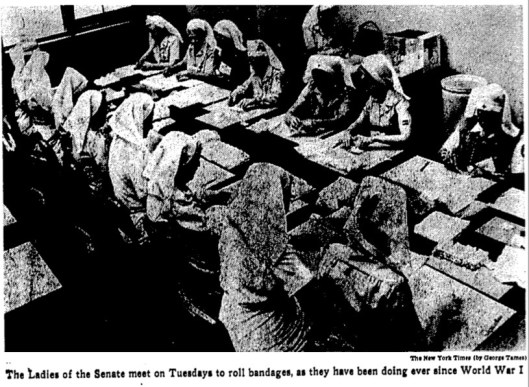
In the year of Sgt Pepper the Ladies of the Senate in dress whites rolled bandages for the wounded in Vietnam. The group was founded half a century earlier during the First Wold War for the same purpose.

I came across this fascinating photo not long ago and wanted to share. It shows the Ladies of the Senate, a volunteer organization founded in 1917 to help the Red Cross during the Great War. Here are members of that organization doing that same work in June 1967 during the Vietnam War. The image is so striking not least because it was taken in what we now call the Summer of Love. The year this photo was taken young people were listening to The Beatles’s Sgt. Pepper, The Rolling Stones’s Between the Buttons, Jimi Hendrix’s Are Your Experienced?, The Doors’s first two albums, Janis Joplin’s nascent stirrings with Big Brother and the Holding CompanyCream’s Disraeli Gears, Jefferson Airplane’s Surrealistic Pillow and so much more than time permits me to document here. With Psychedelia in full plumage, these volunteer bandage rollers are wearing the same white dresses and head coverings as their forbears had half a century earlier.

As mentioned, the Ladies of the Senate came into being when the United States entered the First World War. Their proper name was the Senate Ladies Red Cross Unit. During the Meuse-Argonne Offensive and other campaigns, Senate wives rolled bandages in the basement of what is now the Russell Building. The group turned into a more general charity group in the interwar years but recommitted to rolling bandages during the Second World War. Eleanor Roosevelt was an ally. Here are striking images of Jacqueline Kennedy with the group in April 1961. Some, such as Marion Ann Borris Javits, wife on New York Senator Jacob K. Javits, believed the group had become anachronistic by the late 1940s and 1950s. Most critics, including Mrs. Javits, changed their minds however by the time of the Vietnam escalation in 1965. By Vietnam the process of manufacturing bandages could have been done completely through mechanization. Some insisted however that the hand-rolled versions were more absorbent and thus helped save blood and lives. The Ladies of the Senate became the Senate Spouses Membership in the 1990s.

(image/New York Times)


Lights, camera . . .

I have not mentioned it in a while but my friends/colleagues and I are still plugging away on our Great War documentary. We intend to wrap up in the next 7-10 days, after which we will show it two two English classes at my college and at various other venues this fall. Today I met with our editor Tim, who interviewed me for the film and recorded my narration. I mentioned this in the summer but, again, I can’t express how much Tim has brought to the project. He has such professionalism in the technical aspects of the craft and an incredible sense of narrative as well. In addition to being a film editor, he is musician and novelist. We know we have to finish this one first, but as we were wrapping up today we were already talking about potentially working on another project. I hope that comes to pass.

We really think we’re on our way to tell a story about the Great War, contemporary veterans, and New York City all rolled into one. When our film is finally in the can, I will share it here and elsewhere. In the meantime, here are some photos from today’s effort.

“A strange class reunion”

John Paul Vann headstone, Arlington National Cemetery, October 2017. It is interesting that his years of service in Vietnam are not on the tablet.

The Hayfoot and I went yesterday to Arlington National Cemetery. While she was taking in an event at Arlington House I ventured out to find the headstone of Lieutenant Colonel John Paul Vann. Neil Sheehan’s A Bright Shining Lie: John Paul Vann and America in Vietnam has been on my reading list for some time. I have always put it off, probably because it logs in at nearly 900 pages and with everything else going on in life it seems like a large time investment. I began thinking about Vann again when reading David Hackworth’s About Face. Vann also plays a big role in the Lynn Novick/Ken Burns documentary about the Vietnam War, which is how I really go to thinking about him again. I have spent a chunk of this three-day weekend reading old newspaper articles about Vann, and watching interviews with Neil Sheehan about the lieutenant colonel’s life and times. When I decided to visit Arlington while here in DC for the weekend, I knew I had to track John Paul Vann.

One sees the overlap of America’s twentieth century campaigns in Vann’s and the neighboring tablets.

Vann arrived in Vietnam in 1962 and retired from the Army in summer 1963. He had done his twenty years but the real reason he retired was for having the temerity of explaining to his bosses why the war, still in its earliest stages, was not going well. Like moth to a flame he returned to Vietnam in 1965, working for the U.S. Agency for International Development. By 1971 he was with the State Department, having taken the job as director of the Second Regional Assistance Group in Vietnam’s Central Highlands. It was a big position: Vann was the civilian equivalent of a major general. He died in a helicopter crash in Kontum in 9 June 1972. Journalist Neil Sheehan attended Vann’s funeral at the Fort Myer Army Chapel on 16 June, and later remembered the event as like “a strange class reunion.” General William Westmoreland, in June 1972 in his last week’s as Army Chief of Staff before his retirement, was a pallbearer. So was William Colby was another. In attendance were Senator Edward Kennedy; Daniel Ellsberg, who in 1971 had given Sheehan what we now call the Pentagon Papers; columnist Joseph Alsop; Defense Secretary Melvin Laird; Secretary of State William P. Rogers; and General Edward Lansdale among others. They say one judges a man by the company he keeps and this is a disparate lot to say the least.

John Paul Vann in Vietnam

It was interesting to see Vann’s headstone in juxtaposition to the markers around it. Vann was in the Army during the Second World War, though he did not see combat. He was part of the corps on Army officers who served in WW2 and Korea and brought their institutional memory with them to Vietnam in the war’s earliest stages. There were strengths and drawback to that, though Vann seemed to have better knowledge and awareness of the facts on the ground than others, especially those in Saigon not in the field. Vann believed until the end that the war was winnable. How much of that was wishful thinking due to all he had sacrificed is something I do not know. John Paul Vann is one of the most fascinating Americans from that challenging era in our history.

(bottom image:USOM/Office of Rural Affairs, Saigon. Photograph VA041055, Ogden Williams Collection, The Vietnam Archive, Texas Tech University, via Wikimedia Commons)

The Great War in Broad Outlines continues

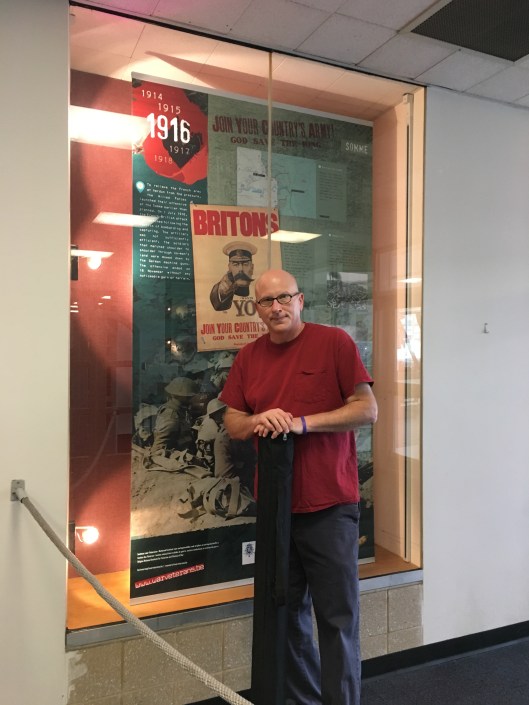
The other day I donned a t-shirt to work with my colleagues in installing part three of the “Great War in Broad Outlines” exhibit we are hosting over September and October. The exhibit is on loan to us from the Belgian Embassy in Washington. This was Part 3, which will be on display through October 10. The event is open to the public during regular library hour. These panels focus on the contributions of colonial troops fighting on the Western Front and the war in Africa.

The state of Philately in 2017

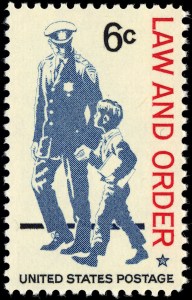
The Post Office Department issued Scott number 1343 in May 1968 during the 1960s unrest.

I was having lunch with someone a few weeks back who mentioned in passing that it seemed I was not as active with my stamp collection as I had been. It was pretty much true. The past few years have been so busy there was been little time. Now that the cooler months are here again I am going to carve some out. My interest in philately has always come in fits and bursts depending on where I am in my life, what I am doing, and how much physical and mental energy I have to expend on it. Last year I did manage to get to the World Stamp Show at the Javits Center here in New York City. About two years ago for the World War One Centennial Commission I wrote a pitch for a particular stamp, which then went into a larger packet that was sent off to the USPS for consideration. We’ll see what happens.

Over the weekend the same friend forwarded to me this New York Times article about a downsizing onetime stamp collector who donated his collection to Stamps for Veterans, a non-profit that sends donated stamp albums to VA hospitals. Like most collections, this one was not worth a great deal monetarily; the value, such as it was, rested in the hours put into gathering and sorting the stamps. That is no small thing and it’s no wonder the owner held onto his album as long as he did, even if it was just stuck in a closet. Hopefully some veteran is enjoying it right now.

When I was young I would go to the stamp store once every few Saturdays and sort through the bargain tins for what I might find. Ten bucks or so was about my limit. I have still them today. What makes stamp collecting unique is that there is no wrong way to do it. It is entirely up to the individual. Done well, a collection can become a manifestation of the individual himself. It is pastime that is going away. Email has largely replaced the letter as the form of communication. Bill paying too is largely done online and over the phone. Stamps today are mostly self-adhesive, which are not conducive to mounting. Personally, with contemporary stamps I buy for posterity, I stick mainly to First Day Covers. Most importantly however, has been the change in culture. Kids have more options with their time nowadays. Video games and other alternatives have diminished the interest in philately. Even the Stamps for Veterans program reflects this. It is primarily Korean and Vietnam War veterans, not contemporary vets, who are interested in receiving stamp albums under the program.

(image/Bureau of Engraving and Printing; Designed by Edward Vebell)