• About

The Strawfoot

~ a New Yorker's American History blog

The Strawfoot

Author Archives: Keith Muchowski

Harry Vardon, 1870-1937

19 Sunday Jul 2015

Posted by Keith Muchowski in Those we remember, WW1

≈ 2 Comments

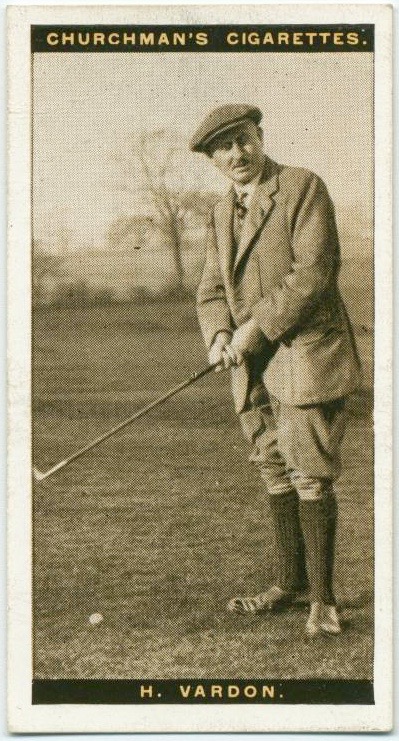
Best known today for the Vardon Grip, the overlapping technique commonly used today, Harry Vardon won six Open Championship prior to the First World War.

Best known today for his Vardon Grip, the overlapping technique commonly used today, Harry Vardon won six Open Championships prior to the First World War.

Watching Tom Watson finish out at his final British Open on Friday got me thinking about the only man to have won more Open Championships. That would be Harry Vardon, who captured his sixth Open title in June 1914 just prior to the onset of the Great War. (Three others are tied with Watson with five titles.) Vardon is less well-known today than Bobby Jones and Walter Hagen, much like tennis star Tony Wilding is less well-known than Bill Tilden and René Lacoste, but he deserves a better place in our consciousness. I suspect the reason men like these don’t get the credit they deserve is that the world they inhabited was swept away by the cataclysm of the Great War. Figures like Tilden, Lacoste, Jones, and Babe Ruth captured the zeitgeist of the Roaring Twenties and became superstars on a level unimaginable before the war. From the perspective of, say, 1924, everything that happened prior to the assassination of the Archduke Ferdinand must have seemed remote.

Vardon was a poor kid, a gardener’s son, from the island of Jersey. He, James Braid, and John Henry Taylor comprised the Great Triumvirate that ruled golf in the Victorian and Edwardian eras when the game was still centered in the British Isles. Braid and Taylor are two of the men tied with Tom Watson. All of their Open victories, like Vardon’s, came prior to the Great War. (Australian Peter Thomson is the fourth of the golfers with five Open titles, his victories coming in the 1950s and 60s.)
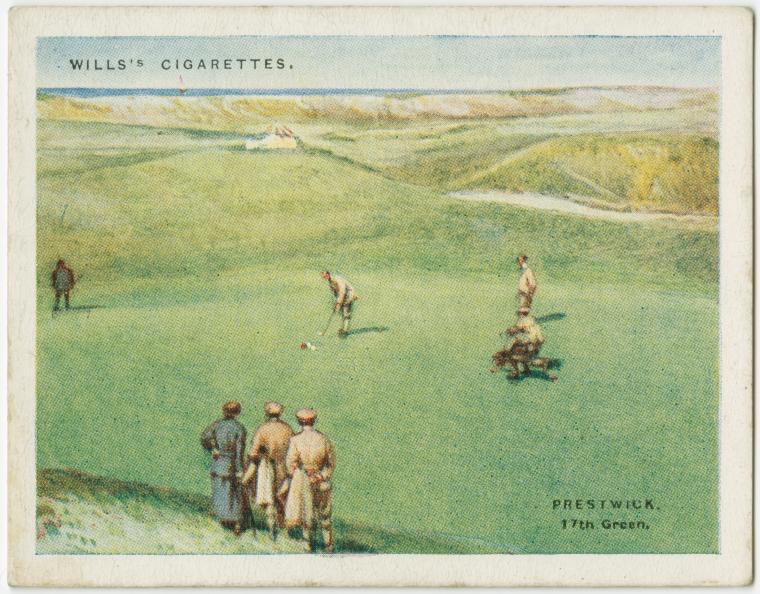
Today no longer part of the Open rotation, Prestwick was the scene of Vardon's 1914 Open victory.

Today no longer part of the Open rotation, Prestwick was the scene of Vardon’s 1914 Open victory.

Signs of change were in the air. The twenty year old American Francis Ouimet famously defeated Vardon in a playoff at the 1913 U.S. Open at The Country Club in Brookline, Massachusetts. It was a stunning and very public defeat. Still, Vardon rebounded. When he won at Prestwick in 1914, Ouimet finished well off the leaderboard in 56th place. In June 1914, the very month he won that sixth Open, Vardon was confident enough to pen an article for Everybody’s Magazine titled “What’s Wrong with American Golf?”

When Franz Ferdinand was killed at Sarajevo one week later Europe went on enjoying its golden summer. They played the French Open over the first week of July as if nothing had happened. Vardon finished in second in that tournament. The guns of August inevitably came and when they did the center of golf shifted to the United States. The subtitle of a March 1915 New York Times article captured the moment: “War puts the Game Back in Great Britain—Look to America.” They would not play the British or French Open again until 1920. Vardon and others kept busy, even playing in charity events at the front in Flanders in July 1917.

The Great War crippled British golf, at least for a time. Americans won eleven of the next fourteen Open Championships. The British rebounded during the Depression until the Second World War brought on another golf moratorium. By the late 1940s and early 1950s the transfer was complete. Americans Byron Nelson, Ben Hogan, and Same Snead were the golf world’s new Trio.

(images courtesy of the George Arents Collection, The New York Public Library Digital Collections:

“Harry Vardon.” http://digitalcollections.nypl.org/items/510d47e2-4666-a3d9-e040-e00a18064a99

“Prestwick.” http://digitalcollections.nypl.org/items/510d47e4-0e36-a3d9-e040-e00a18064a99)

The effort to preserve the Waikiki War Memorial Natatorium

17 Friday Jul 2015

Posted by Keith Muchowski in Great War centennial, Memory, Monuments and Statuary

≈ Comments Off on The effort to preserve the Waikiki War Memorial Natatorium

The Waikiki War Memorial Natatorium as it is today.

The Waikiki War Memorial Natatorium as it is today.

Since the start of the WW1 centennial there has been a great deal of effort to inventory and/or preserve the roughly 10,000 Great War memorials spread across the United States. One of the most unique is the Waikiki War Memorial Natatorium. Hawaii was a territory in 1917 and would not become a state until 1959. Still, nearly 10,000 Hawaiians fought in World War One, and 101 of them would lose their lives. That is itself a story that someone will hopefully tell over these next few years.

One effort that has been underway for some time is to save the natatorium. Hawaiians opened this memorial in 1927 and used it for decades in ways that reflect its island provenance. Olympian Duke Kahanamoku himself swam and surfed there, as did thousands of other Hawaiians. It eventually fell into disrepair and closed in 1979. Though the natatorium closed, its location is still an active place for memorial ceremonies and other events of the like.

Here is a recent video that depicts the current effort to preserve the natatorium. Note that my sending it does not automatically imply any position on the preservation effort. That is something the people of Hawaii will decide for themselves. It is a story that nonetheless needs to be told.

(image By Waikiki Natatorium [CC BY 2.0 (http://creativecommons.org/licenses/by/2.0)%5D, via Wikimedia Commons)


Quentin Roosevelt lantern slides

15 Wednesday Jul 2015

Posted by Keith Muchowski in Film, Sound, & Photography, Libraries

≈ 2 Comments

One of my favorite things in the Theodore Roosevelt Birthplace is the stereoscope in the family library. Stereography was a major medium until moving imagery rendered it obsolete in the early twentieth century. An even earlier method for conveying imagery was the magic lantern. Magic lanterns date back to the seventeenth century and could even depict the illusion of movement by projecting images drawn on glass slides on to a screen via candle light. When daguerreotypes and film came along in the nineteenth century magic lanterns adapted and thrived. Enthusiasts still practice the craft in its many forms today in the digital age.

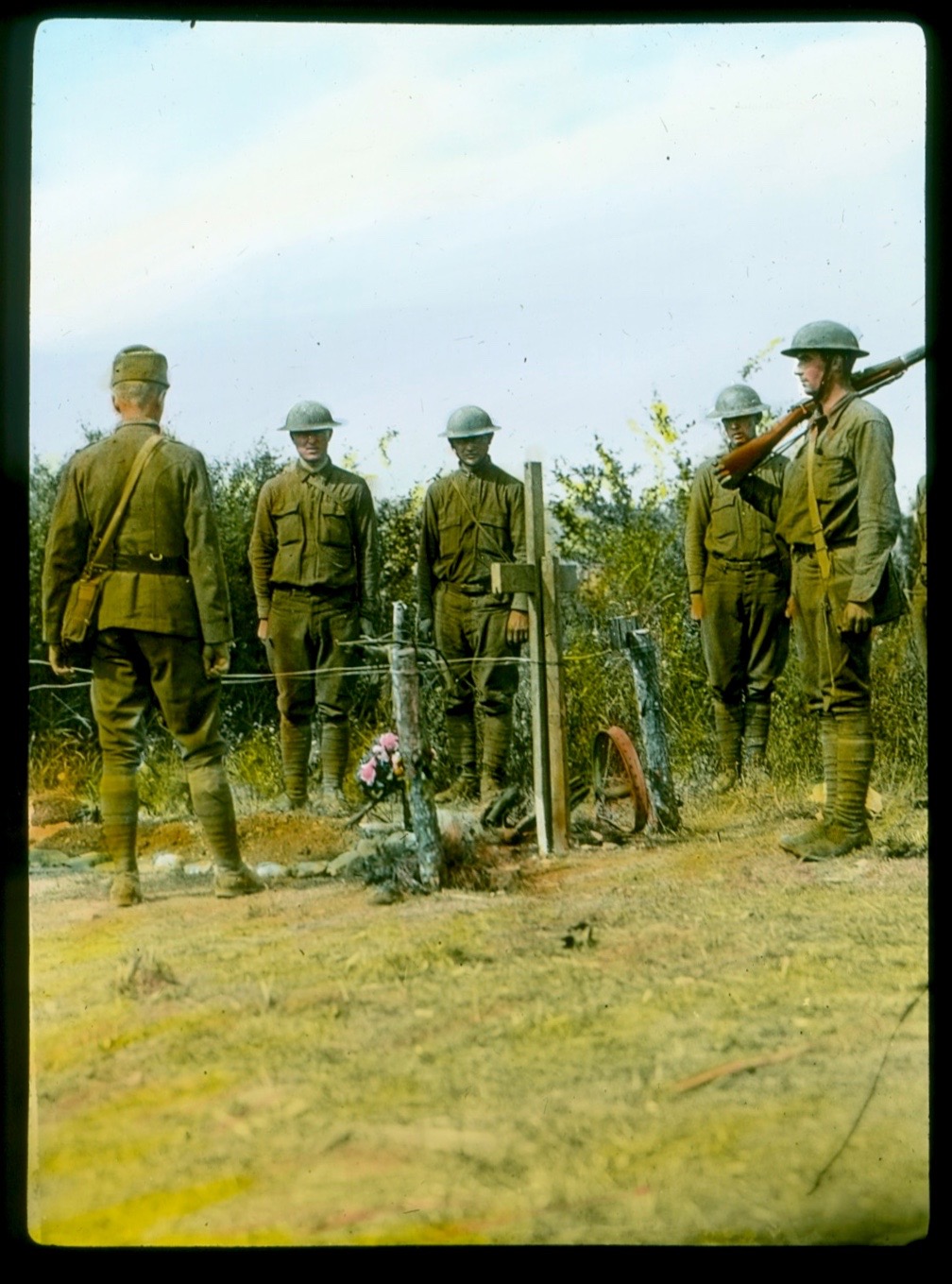
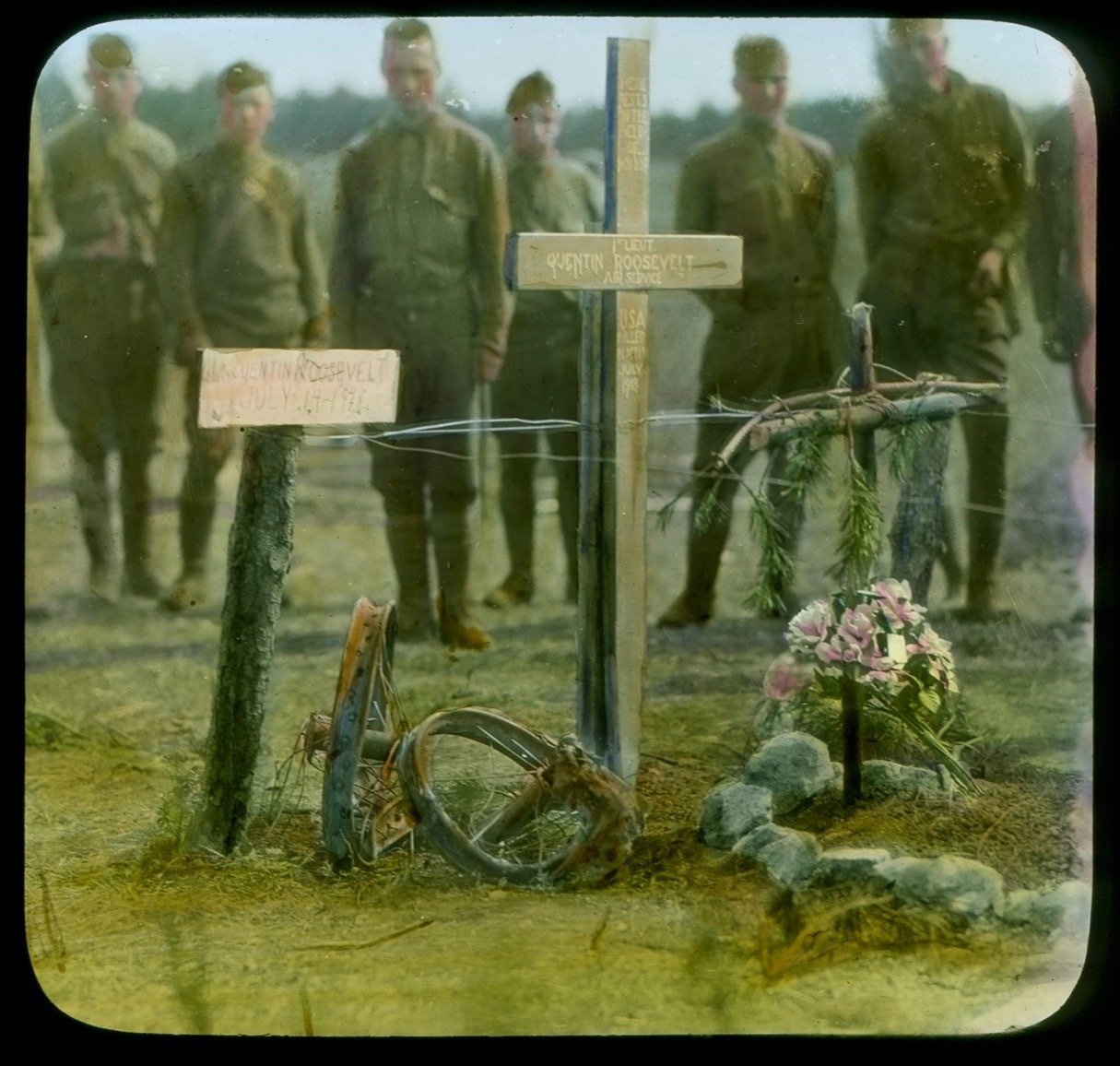
I say all this because, in response to a post on the WW1 Centennial Commission Facebook page, Susan Mitchem of the The Salvation Army National Archives in Virginia noted that her repository holds several lantern slides of Quentin Roosevelt’s original resting place in Chambray, France. You may know that Lieutenant Roosevelt was shot down of Bastille Day 1918, the anniversary of which was yesterday. (In the 1950s Quentin was reinterred in Normandy American Cemetery next to his older brother Ted. Quentin Roosevelt is the only soldier of the Great War to be buried in this cemetery overlooking Omaha Beach.)

Ms. Mitchem said she would be interested in sharing the slides and so I contacted her seeking permission to show them here on The Strawfoot. And so, here you go: two lantern slides of Quentin Roosevelt’s original resting place. The Germans buried him with full military honors and, when the Allies re-took this area shortly thereafter, this site became something of a shrine for soldiers and civilians alike. Pilgrimages such as you see here were quite common.

lantern 3

lantern 1

(images courtesy of The Salvation Army Archives)

Anthony Frederick Wilding, 1883-1915

12 Sunday Jul 2015

Posted by Keith Muchowski in Those we remember, WW1

≈ Comments Off on Anthony Frederick Wilding, 1883-1915

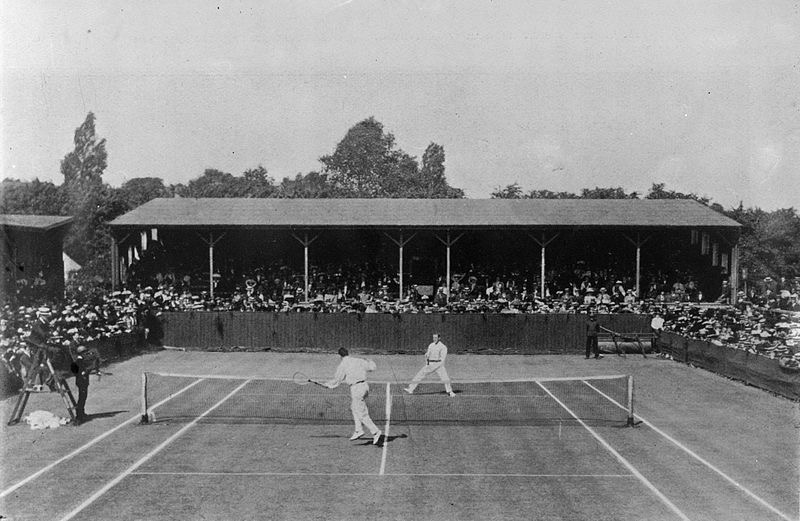
Anthony Wilding (far court) defeated fellow tennis hall-of-famer Beals Wright in the 1910 Wimbledon final. Note the all-white uniforms.

Anthony Wilding (far court) defeated fellow tennis hall-of-famer Beals Wright in the 1910 Wimbledon final. Note the all-white uniforms.

With this year’s Wimbledon final between Roger Federer and Novak Djokovic slated for this morning, it seems appropriate to look back at one of the greatest figures in the history of the All England Club. Anthony Frederick Wilding may not be familiar to contemporary audiences—especially outside the British Commonwealth—but, years before Bill Tilden and René Lacoste, there was Tony Wilding; this New Zealander won consecutive Wimbledon singles titles from 1910-13. To give some perspective, that feat was not surpassed again until Björn Borg won five consecutive titles from 1976-80. Wilding also reached the 1914 Wimbledon final, which coincided with the assassination of the Archduke Ferdinand and Europe’s Last Summer.

Wilding was a frequent winner in the Davis Cup as well; as late as August 1914 he led Australasia to victory in the finals of that event. The headline of the August 14, 1914 Brooklyn Daily Eagle mentions Wilding’s Davis Cup victory over Richard Norris Williams, below which in smaller type is a photograph and an article about British troops making their way to London’s Victoria Station. Wilding’s tennis career ended soon after that Davis Cup victory, however; he joined the Royal Marines and served as an officer on the Western Front.

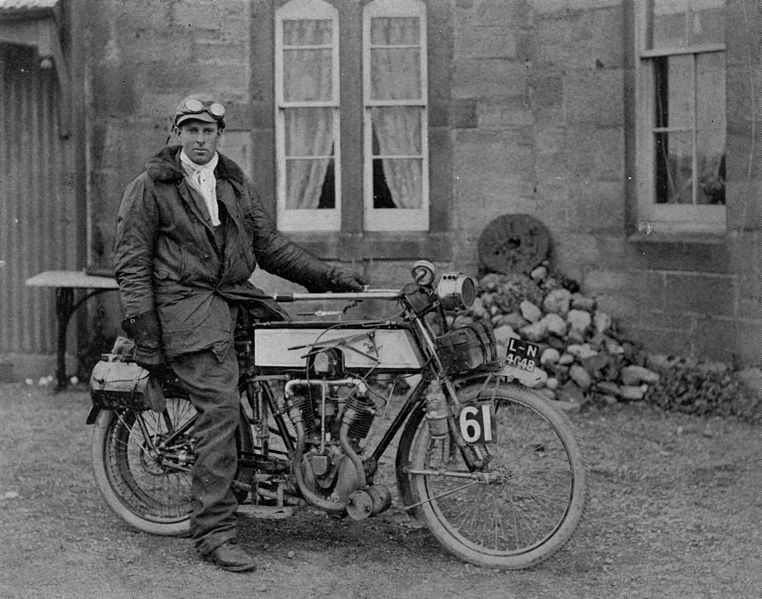
Lawyer, cricketer, motor enthusiast and tennis champion Anthony Frederick (Tony) Wilder as he was in 1908, seven years before he was killed on the Western Front.

Lawyer, cricketer, motor enthusiast and tennis champion Anthony Frederick (Tony) Wilding as he was in 1908, seven years before he was killed on the Western Front.

Anthony Wilding was born in Christchurch in 1883. His father was a lawyer and he too studied for the bar, reading law at Cambridge’s Trinity College before becoming both a solicitor and a barrister. It was as a sportsman however that Wilding made his reputation in the early 1900s. A star athlete with dashing good looks, he enjoyed London’s Edwardian society and seems to have a hit with the ladies. And why not?

Wilding also had a yen for mechanical things, especially motorcycles, automobiles, and aeroplanes. It is not surprising therefore that he quickly moved from the Royal Marines to the Royal Naval Air Service and eventually the Armoured Car Force. Among other duties he drove Rolls Royce vehicles to the front. He made captain in April 1915, but did not survive the spring. Wilding was killed in a bombardment at the the Battle of Aubers Ridge in Neuve-Chappelle on 9 May 1915. Tony Wilding is buried at the Rue-des-Berceaux Military Cemetery at Pas-de-Calais.

(top image by London: Methuen and bottom image of unknown origin, both via Wikimedia Commons)


Sagamore Hill set to reopen

10 Friday Jul 2015

Posted by Keith Muchowski in National Park Service, Theodore Roosevelt Birthplace (NPS)

≈ Comments Off on Sagamore Hill set to reopen

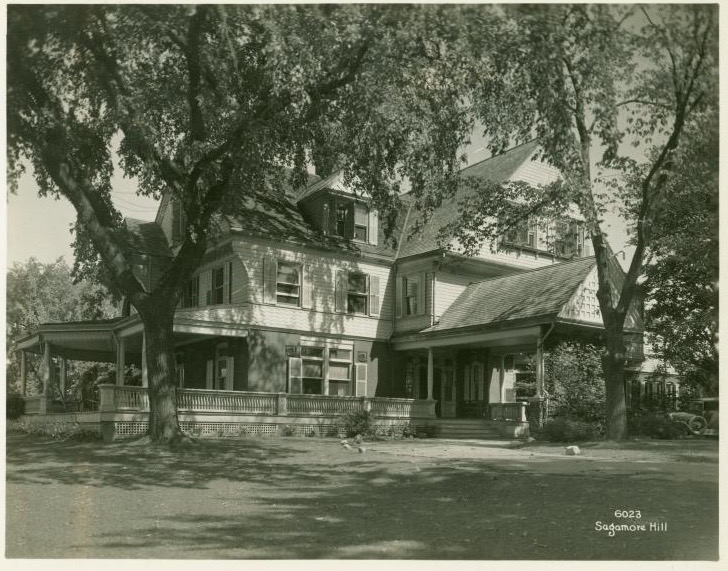
index.phpYesterday’s New York Times had a write-up about Sunday’s reopening of Sagamore Hill. I will probably visit sometime in early fall. Like the restoration of the Lee Mansion in Arlington that took place a few years ago, much of the Sagamore restoration work was gritty and unglamorous. It was about the infrastructure–electricity, duct work, cleaning the taxidermy–and things of that nature. Sexy or not that is what needs to be done to keep such treasures functioning for future generations. The latest rehabilitation is now itself a part of the story of the 130-year-old home.

The excitement around Sagamore has been building for months. We certainly talked about it with visitors at the Roosevelt Birthplace on a daily basis.

Find your Park.

(image/Irma and Paul Milstein Division of United States History, Local History and Genealogy, The New York Public Library. “Sagamore Hill, home of President Theodore Roosevelt at Oyster Bay, L. I.” The New York Public Library Digital Collections. http://digitalcollections.nypl.org/items/510d47e4-83e5-a3d9-e040-e00a18064a99)

Robert Roosevelt’s Brooklyn Bridge

09 Thursday Jul 2015

Posted by Keith Muchowski in Roeblings

≈ 1 Comment

484px-Robert_Roosevelt_-_Brady-HandyThe Roeblings and the Roosevelts are two of the most prestigious families in American history. There was also a connection between the two clans: Robert Roosevelt, Teddy’s uncle, was a trustee in the Brooklyn Bridge Company. Today Robert is less well-known than other Roosevelts, but he was a very prominent figure in Gilded Age America . He was a U.S. Congressman in the early 1870s and later an alderman and diplomat. Roosevelt was a Tammany Democrat, but also a reformer. He helped take down Boss Tweed’s infamous Ring.

Roosevelt joined the trustees in June 1879 when the construction of the bridge was already very much underway. He was an active member of the board who attended meetings and read financial documents with a lawyer’s care. Roosevelt was involved in a very public dispute with the Edgemoor Iron Company over the business’s inability to provide material in a timely manner. He even challenged Washington A. Roebling’s abilities as Chief Engineer, insisting that he file regular reports to the trustees. Roebling dutifully complied. Roosevelt was occasionally too clever for his own good. He once innocently wondered if the extra steel in the bridge might make it more susceptible to collapse. Roebling explained that the added weight provided additional, not less, stability. The Brooklyn Bridge opened to great fanfare in May 1883. When it did however, Robert Roosevelt was not involved in any official capacity; he had very resigned at a trustee’s meeting on June 12, 1882.

(Matthew Brady image/Theodore Roosevelt’s uncle Robert was an important lawyer, politician, and reformer. Roosevelt was a conscientious trustee, but his passion for weeding out municipal corruption sometimes led him to challenge the Roeblings unfairly.)

Who will be the last remaining WW2 veteran?

05 Sunday Jul 2015

Posted by Keith Muchowski in Memory, WW2

≈ 1 Comment

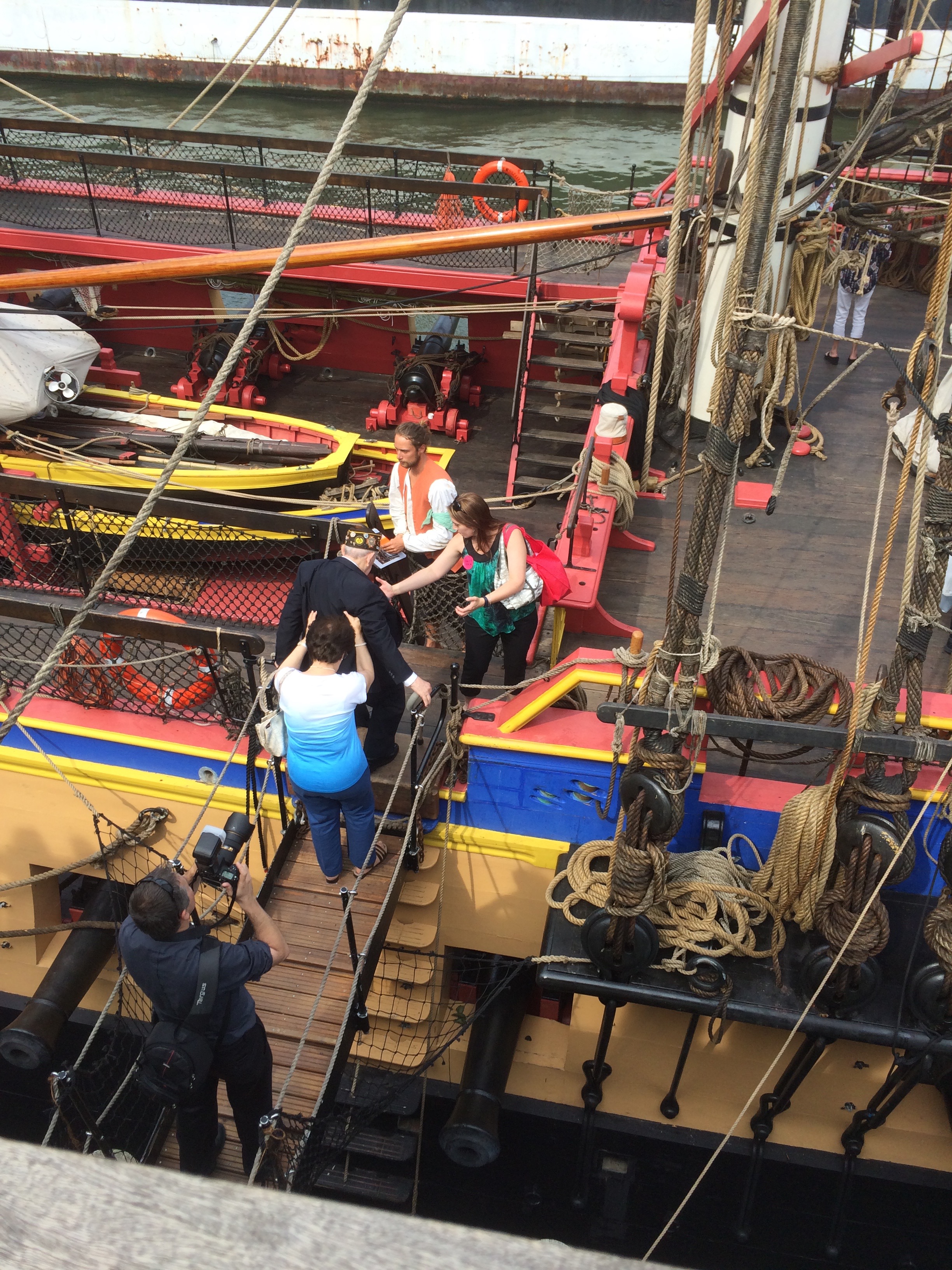
An aging WW2 veterans is escorted onto the Hermione, July 3, 2015

Here and below aging WW2 veterans are escorted onto the Hermione, July 3, 2015. Note the cameraman in the bottom image.

Some readers know of my fascination with aging soldiers. On Friday another volunteer and I conducted an oral history at Governors Island with a former trumpeter in the First Army Band. He told us that in the mid-1950s he and the band gigged in Vermont at a ceremony for a handful of aging Civil War veterans. This was on my mind a few hours later when I was at the South Street Seaport to see the Hermione. There were many things going on for the July 4th weekend, including something for World War II veterans. There is still a ways to go before the WW2 soldiers are finally no more. Generationally they are at the point where Civil War veterans were in the 1920s-30s. There were then still many thousands, which got down to the hundreds, and then finally just a handful over the next 15-20 years. I am too young to remember that, but I do remember a time when soldiers of the Great War were not that uncommon. Seeing these two being escorted onto the Hermione I could not help but wonder who will be the Frank Buckles of the Greatest Generation.

IMG_2450

Thinking of the French this 4th

04 Saturday Jul 2015

Posted by Keith Muchowski in Governors Island, New York City, Theodore Roosevelt Birthplace (NPS)

≈ Comments Off on Thinking of the French this 4th

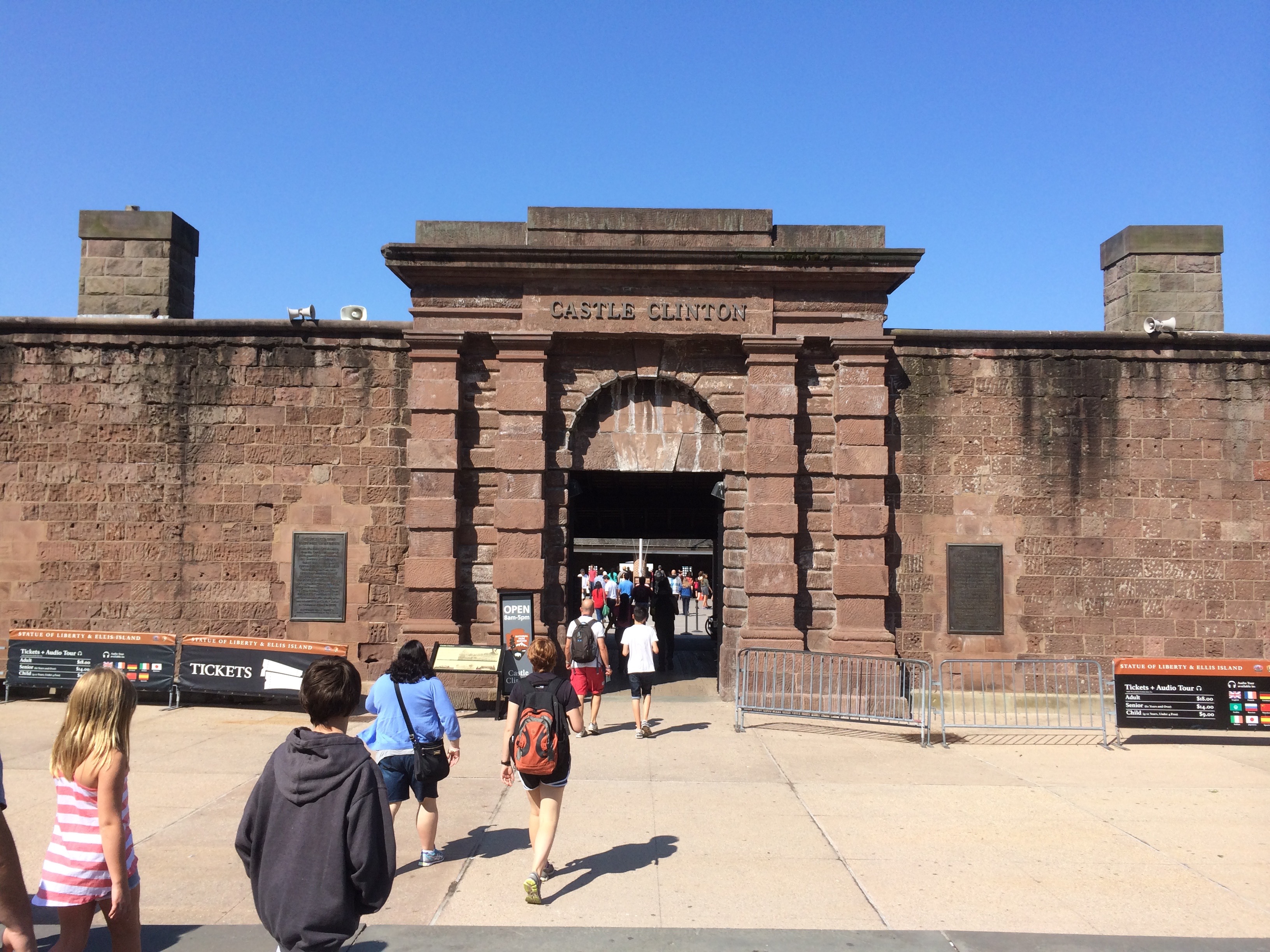
The Marquis de Lafayette arrived in Castle Garden, also called Castle Clinton in 1824. Today this is a unit of the National Park Service.

The Marquis de Lafayette arrived in Castle Garden, also called Castle Clinton in 1824. Today this is a unit of the National Park Service.

On my tours at the Roosevelt Birthplace I always told the story of Marshal Ferdinand Foch’s 1921 visit to the site, which was then still under reconstruction. The Great War had been over for three years and Foch was on East 20th Street paying his respects to Theodore and Quentin Roosevelt. Many of you will know that young Airman Quentin died in France on Bastille Day 1918. The wider story is that Foch was in the United States on a goodwill tour modeled in part on Marquis de Lafayette’s goodwill tour of 1824-25. Lafayette arrived in New York and landed at Castle Garden to great fanfare before venturing out across the still-young nation whose independence he had helped win.

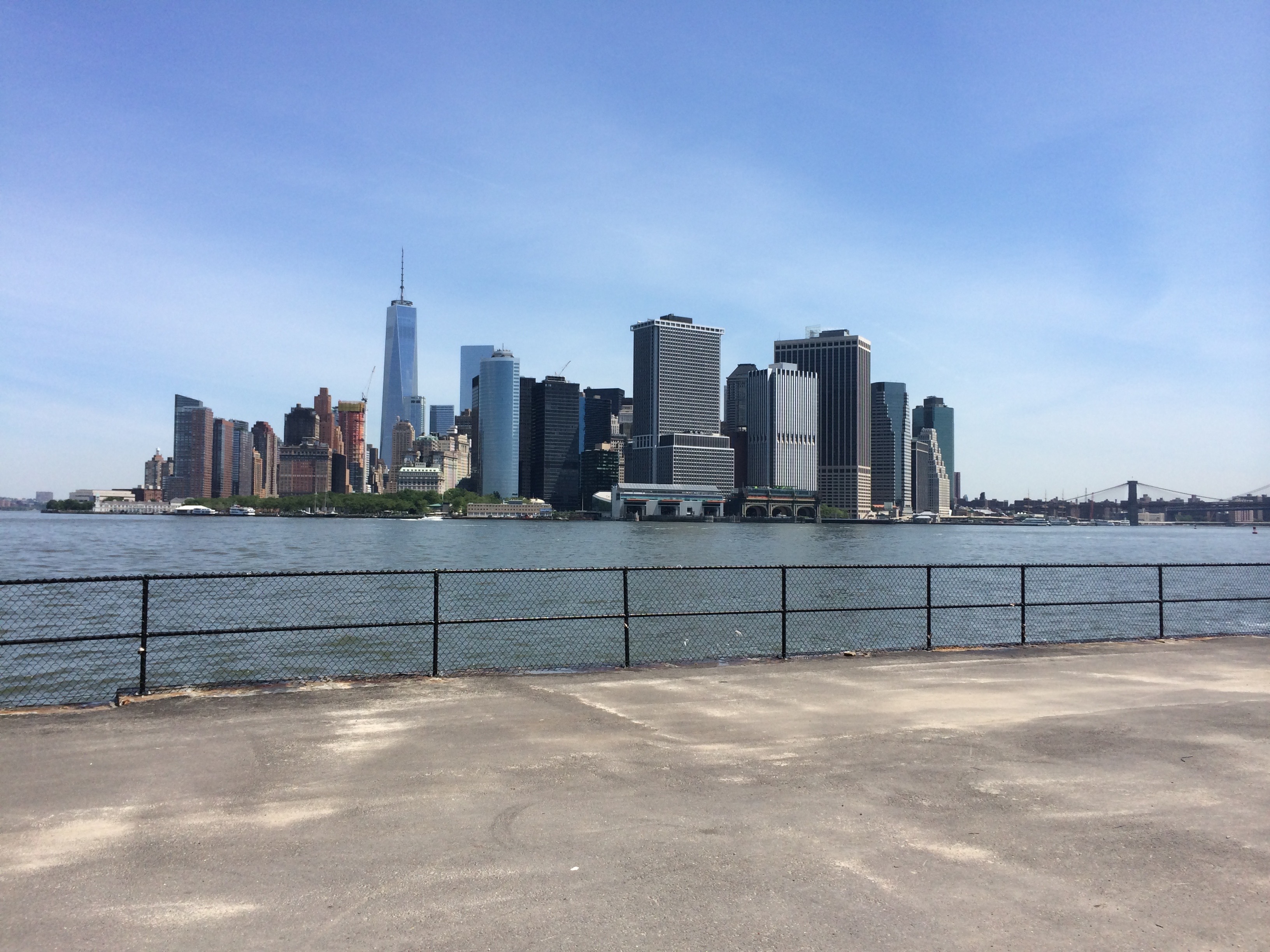
One of the beautiful things about the Battery is its sense of the old and the modern, as this image of the castle with the Manhattan skyline attests.

One of the beautiful things about the Battery is its sense of the historic and the modern, as this image of the castle with the Manhattan skyline attests.

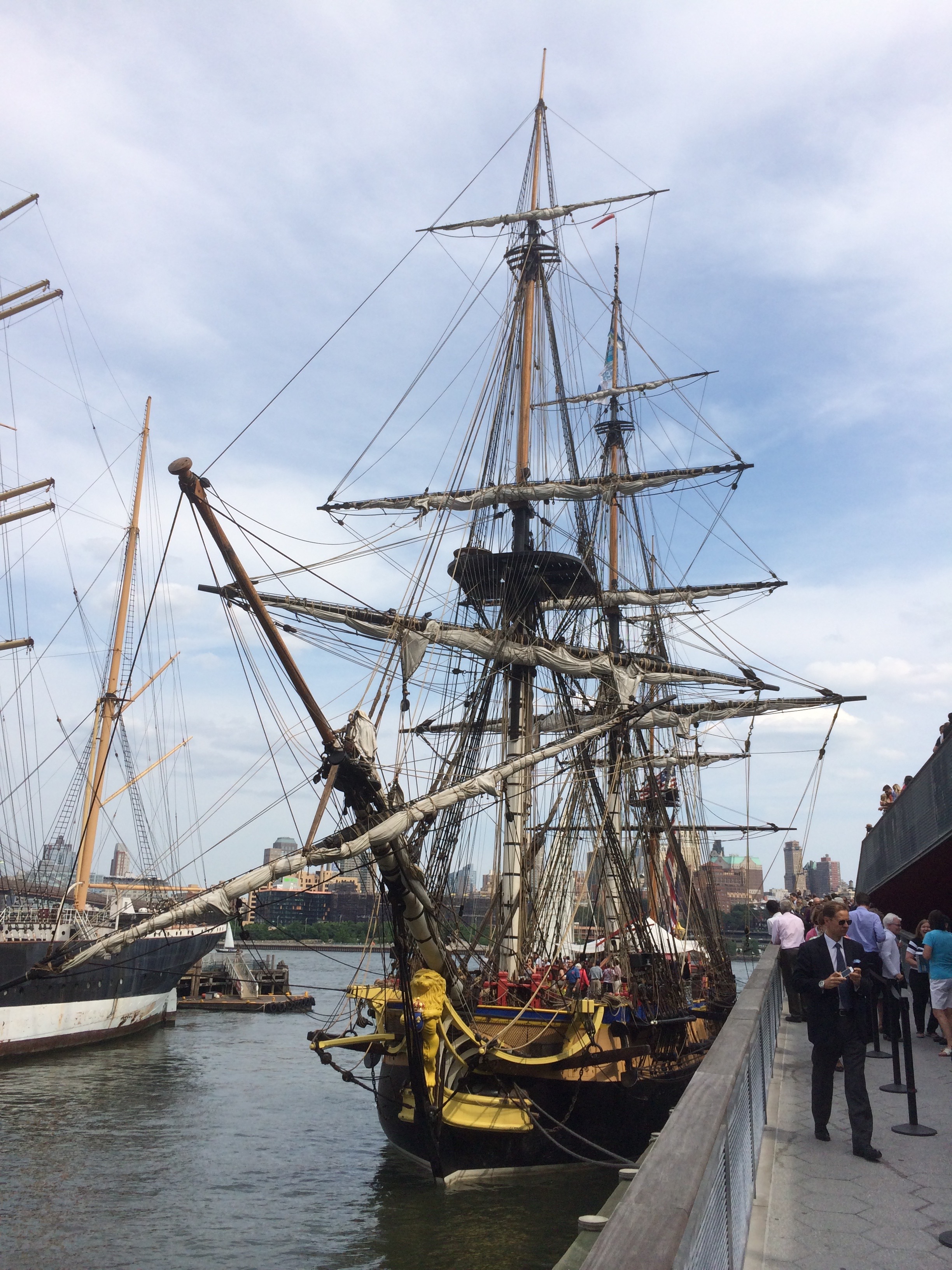
This all came back to me yesterday when, after the day at Governors Island, I ventured up to the South Street Seaport to see the Hermione. For those not aware, this is a reconstruction of the frigate that took Lafayette here. The ship sailed into New York earlier this week to mark the 4th of July. Interest was high and there were many people out enjoying the scene.

The Hermione docked at the South Street Seaport, July 2015

The Hermione docked at the South Street Seaport, July 3, 2015

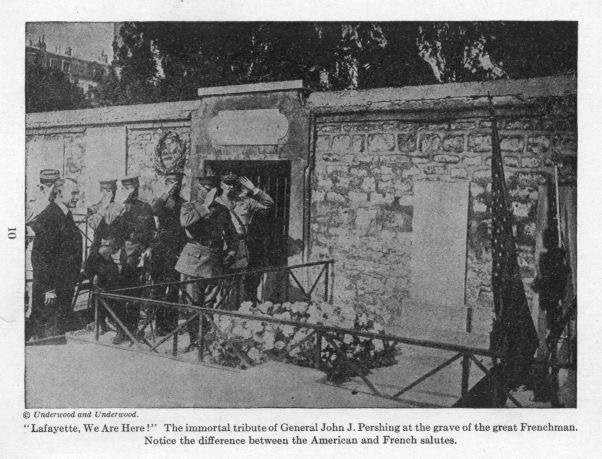
One of the most symbolic acts of the Great War took place on a Fourth of July. In 1917 members of the 16th Infantry Regiment led a contingent that included General Pershing on a five mile march ending at Lafayette’s tomb at Picpus Cemetery. The arrival of the Americans in summer 1917, though largely symbolic at this point in the war, could not have come a better time for the flagging morale of the French people. It was at Lafayette’s grave that Colonel Charles E. Stanton said the famous line: “Nous sommes ici, Lafayette.”

As the caption on this old photograph indicates, Colonel Stanton's famous words are often misattributed to John Pershing. General Pershing was in attendance and had previously approved Colonel Stanton's speech, including its most famous line. The 16th Infantry, part of the First Infantry Division, had led the highly publicized march.

As the caption on this old photograph indicates, Colonel Stanton’s words are often misattributed to John Pershing. General Pershing was in attendance however and had previously approved Colonel Stanton’s speech, including its most famous line. The 16th Infantry, part of the First Infantry Division, had led the highly publicized 4th of July march.

Happy 4th.


Robert Bullard’s interwar years

01 Wednesday Jul 2015

Posted by Keith Muchowski in Governors Island, Robert Lee Bullard (General)

≈ 6 Comments

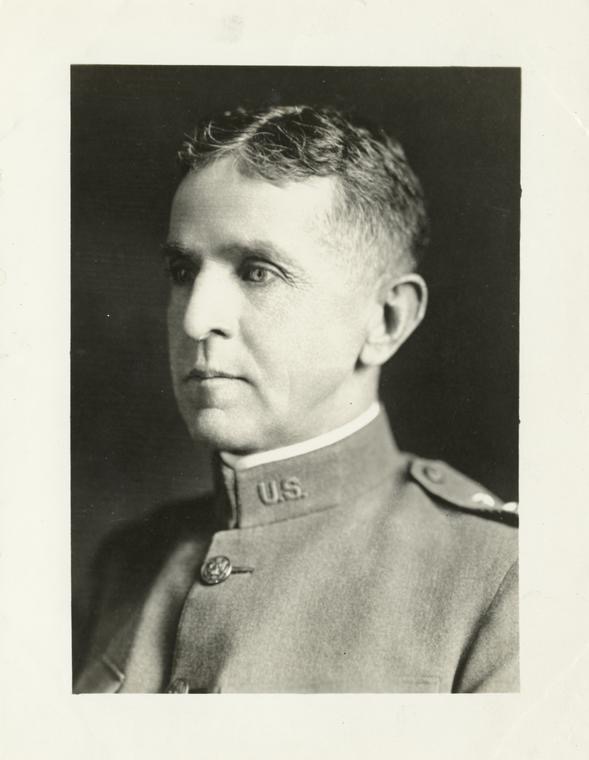
Robert Lee Bullard commanded the First Division, the Second Army, and the III Corps over the course of World War One.

Robert Lee Bullard commanded the First Division, the III Corps, and the Second Army over the course of World War One. He lived until 1947.

A few weeks ago I mentioned that I have been reading some of the first-hand accounts of the Great War. Last night I began Robert Lee Bullard’s American Soldiers Also Fought. As it title suggests the book is a response to those, especially those Europeans, who downplayed America’s contribution to the war effort. That is a subject I will tackle in future posts. What I am most interested in here is Bullard’s introductory statement. On page one he writes:

We did not go into the war, as has been contended, to support “government of the people, by the people and for the people.” Nor did we go in to support democracy against autocracy: the President of the United States was in that war a greater autocrat than the Kaiser.

Plainly it was because our rights were being violated worse by Germany than by England. If Germany won we’d be “next” on their list.

I find the first paragraph striking on several levels. If I am reading it correctly–and I don’t know that I am–Bullard seems to be taking the Wilson Administration to task for its numerous misdeeds during the war. The zeal with which A. Mitchell Palmer scapegoated German-Americans comes to mind. The Creel Committee did some important work, but it too frequently succumbed to reactionary impulses. Bullard is going deeper though. As he saw it, Wilson’s failures also included the flawed outcome at Versailles and his advocacy for the League of Nations.

What is interesting is that in this small treatise Bullard is looking backward and forward at the same time. In the next line he is warning his readers about the German threat. The timing is important here. Bullard published Americans Soldiers Also Fought in 1936, just over a decade after he retired as commander of the Department of the East on Governors Island. After his retirement Bullard had become head of the National Security League, a preparedness organization begun by Leonard Wood and others just after the outbreak of the Great War. The group was still around decades later, taking on challenges wherever it saw them. By 1936 Hitler was entrenched in power and the Kaiser was still very much alive, living in exile in a manor in Holland. Wilhelm II lived another five years, long enough to see the Germans take Paris in 1940.

(image/The Miriam and Ira D. Wallach Division of Art, Prints and Photographs: Photography Collection, The New York Public Library. “Corps Commander Bullard” The New York Public Library Digital Collections. 1860 – 1920. http://digitalcollections.nypl.org/items/510d47d9-b337-a3d9-e040-e00a18064a99)

Sunday evening winding down

28 Sunday Jun 2015

Posted by Keith Muchowski in Governors Island

≈ Comments Off on Sunday evening winding down

IMG_2329Hey all, I’m sorry about the lack of posts this past week. It was kind of a hectic one. We had a good weekend at Governors Island. On Friday another volunteer and I interviewed a lady who worked as a civilian employee in the Adjutant General’s Office during the Korean Conflict. She was an amazing lady in her eighties who took the LIRR from Long Island and then 4 train from Grand Central to meet us on the Governors Island side of the ferry. It was something for us to interview her and then take her to the building where she once worked. She vividly recalled seeing the harbor from the second story window where she worked for two years just after graduating from high school in 1950.

This morning we spoke to another woman who lived in Fort Jay itself when her father was a colonel in the First Army. This woman lives in Texas and was in town for a wedding. She was nine when the family moved here and thirteen when they left; so, her recollections were very strong. Sitting in for the interview were her husband, children and grandchildren. It was obvious how much admiration her family had for her and what the trip meant to all of them. I love meeting people like this because it makes the story of Governors Island that much more immediate. It is one thing to hear that people served in Liggett Hall. It is another to walk the grounds with someone whose father worked in the building and have her tell you all about it. At one time she was pointing to individual homes on Colonel’s Row and recalling the names of those who lived there in the early Fifties. This was really a privilege.

This woman’s father was a career man and an officer on Patton’s staff during WW2. After that war the lived in Paris when she was still very young. Sadly most of his military paperwork was lost in the National Personnel Records Center fire of 1973. This terrible event destroyed the records of generations of uniformed service persons going back to the years just prior to World War 1. I have always known a little bit about the Records Fire, but had never met anyone touched by the event. It was all so unfortunate.

So, that was my weekend. You never know what you might see at Governors Island National Monument. If you know anyone who lived or worked there. we’d love to hear their story.

← Older posts
Newer posts →

Enter your email address to subscribe to this blog and receive notifications of new posts by email.

Join 255 other subscribers

Categories

Archives

  • November 2023 (1)
  • October 2023 (3)
  • September 2023 (3)
  • August 2023 (4)
  • July 2023 (7)
  • June 2023 (10)
  • May 2023 (8)
  • April 2023 (6)
  • March 2023 (5)
  • February 2023 (4)
  • January 2023 (4)
  • December 2022 (4)
  • November 2022 (8)
  • October 2022 (2)
  • September 2022 (4)
  • June 2022 (1)
  • May 2022 (1)
  • April 2022 (13)
  • January 2022 (1)
  • December 2021 (2)
  • November 2021 (1)
  • October 2021 (3)
  • September 2021 (3)
  • August 2021 (5)
  • July 2021 (1)
  • June 2021 (1)
  • May 2021 (4)
  • April 2021 (3)
  • March 2021 (4)
  • February 2021 (7)
  • January 2021 (4)
  • December 2020 (4)
  • November 2020 (3)
  • October 2020 (4)
  • September 2020 (7)
  • August 2020 (5)
  • July 2020 (7)
  • June 2020 (11)
  • May 2020 (7)
  • April 2020 (9)
  • March 2020 (9)
  • February 2020 (7)
  • January 2020 (6)
  • December 2019 (7)
  • November 2019 (9)
  • October 2019 (4)
  • September 2019 (6)
  • August 2019 (10)
  • July 2019 (8)
  • June 2019 (6)
  • May 2019 (9)
  • April 2019 (8)
  • March 2019 (6)
  • February 2019 (8)
  • January 2019 (5)
  • December 2018 (10)
  • November 2018 (6)
  • October 2018 (9)
  • September 2018 (11)
  • August 2018 (11)
  • July 2018 (17)
  • June 2018 (10)
  • May 2018 (8)
  • April 2018 (9)
  • March 2018 (8)
  • February 2018 (5)
  • January 2018 (7)
  • December 2017 (11)
  • November 2017 (8)
  • October 2017 (9)
  • September 2017 (11)
  • August 2017 (12)
  • July 2017 (14)
  • June 2017 (18)
  • May 2017 (11)
  • April 2017 (10)
  • March 2017 (9)
  • February 2017 (11)
  • January 2017 (14)
  • December 2016 (7)
  • November 2016 (8)
  • October 2016 (8)
  • September 2016 (9)
  • August 2016 (6)
  • July 2016 (12)
  • June 2016 (8)
  • May 2016 (9)
  • April 2016 (6)
  • March 2016 (12)
  • February 2016 (10)
  • January 2016 (9)
  • December 2015 (9)
  • November 2015 (11)
  • October 2015 (8)
  • September 2015 (9)
  • August 2015 (13)
  • July 2015 (14)
  • June 2015 (11)
  • May 2015 (11)
  • April 2015 (18)
  • March 2015 (10)
  • February 2015 (8)
  • January 2015 (8)
  • December 2014 (12)
  • November 2014 (13)
  • October 2014 (16)
  • September 2014 (11)
  • August 2014 (16)
  • July 2014 (12)
  • June 2014 (13)
  • May 2014 (10)
  • April 2014 (10)
  • March 2014 (11)
  • February 2014 (12)
  • January 2014 (10)
  • December 2013 (11)
  • November 2013 (14)
  • October 2013 (14)
  • September 2013 (14)
  • August 2013 (13)
  • July 2013 (17)
  • June 2013 (9)
  • May 2013 (13)
  • April 2013 (13)
  • March 2013 (16)
  • February 2013 (15)
  • January 2013 (15)
  • December 2012 (18)
  • November 2012 (18)
  • October 2012 (21)
  • September 2012 (14)
  • August 2012 (16)
  • July 2012 (21)
  • June 2012 (22)
  • May 2012 (24)
  • April 2012 (20)
  • March 2012 (23)
  • February 2012 (22)
  • January 2012 (15)
  • December 2011 (23)
  • November 2011 (22)
  • October 2011 (23)
  • September 2011 (18)
  • August 2011 (19)
  • July 2011 (20)
  • June 2011 (29)
  • May 2011 (25)
  • April 2011 (18)
  • March 2011 (21)
  • February 2011 (11)

Meta

  • Create account
  • Log in
  • Entries feed
  • Comments feed
  • WordPress.com
Creative Commons License
This work is licensed under a Creative Commons Attribution-NonCommercial-ShareAlike 4.0 International License.

Enter your email address to subscribe to this blog and receive notifications of new posts by email.

Join 255 other subscribers

Categories

Archives

  • November 2023 (1)
  • October 2023 (3)
  • September 2023 (3)
  • August 2023 (4)
  • July 2023 (7)
  • June 2023 (10)
  • May 2023 (8)
  • April 2023 (6)
  • March 2023 (5)
  • February 2023 (4)
  • January 2023 (4)
  • December 2022 (4)
  • November 2022 (8)
  • October 2022 (2)
  • September 2022 (4)
  • June 2022 (1)
  • May 2022 (1)
  • April 2022 (13)
  • January 2022 (1)
  • December 2021 (2)
  • November 2021 (1)
  • October 2021 (3)
  • September 2021 (3)
  • August 2021 (5)
  • July 2021 (1)
  • June 2021 (1)
  • May 2021 (4)
  • April 2021 (3)
  • March 2021 (4)
  • February 2021 (7)
  • January 2021 (4)
  • December 2020 (4)
  • November 2020 (3)
  • October 2020 (4)
  • September 2020 (7)
  • August 2020 (5)
  • July 2020 (7)
  • June 2020 (11)
  • May 2020 (7)
  • April 2020 (9)
  • March 2020 (9)
  • February 2020 (7)
  • January 2020 (6)
  • December 2019 (7)
  • November 2019 (9)
  • October 2019 (4)
  • September 2019 (6)
  • August 2019 (10)
  • July 2019 (8)
  • June 2019 (6)
  • May 2019 (9)
  • April 2019 (8)
  • March 2019 (6)
  • February 2019 (8)
  • January 2019 (5)
  • December 2018 (10)
  • November 2018 (6)
  • October 2018 (9)
  • September 2018 (11)
  • August 2018 (11)
  • July 2018 (17)
  • June 2018 (10)
  • May 2018 (8)
  • April 2018 (9)
  • March 2018 (8)
  • February 2018 (5)
  • January 2018 (7)
  • December 2017 (11)
  • November 2017 (8)
  • October 2017 (9)
  • September 2017 (11)
  • August 2017 (12)
  • July 2017 (14)
  • June 2017 (18)
  • May 2017 (11)
  • April 2017 (10)
  • March 2017 (9)
  • February 2017 (11)
  • January 2017 (14)
  • December 2016 (7)
  • November 2016 (8)
  • October 2016 (8)
  • September 2016 (9)
  • August 2016 (6)
  • July 2016 (12)
  • June 2016 (8)
  • May 2016 (9)
  • April 2016 (6)
  • March 2016 (12)
  • February 2016 (10)
  • January 2016 (9)
  • December 2015 (9)
  • November 2015 (11)
  • October 2015 (8)
  • September 2015 (9)
  • August 2015 (13)
  • July 2015 (14)
  • June 2015 (11)
  • May 2015 (11)
  • April 2015 (18)
  • March 2015 (10)
  • February 2015 (8)
  • January 2015 (8)
  • December 2014 (12)
  • November 2014 (13)
  • October 2014 (16)
  • September 2014 (11)
  • August 2014 (16)
  • July 2014 (12)
  • June 2014 (13)
  • May 2014 (10)
  • April 2014 (10)
  • March 2014 (11)
  • February 2014 (12)
  • January 2014 (10)
  • December 2013 (11)
  • November 2013 (14)
  • October 2013 (14)
  • September 2013 (14)
  • August 2013 (13)
  • July 2013 (17)
  • June 2013 (9)
  • May 2013 (13)
  • April 2013 (13)
  • March 2013 (16)
  • February 2013 (15)
  • January 2013 (15)
  • December 2012 (18)
  • November 2012 (18)
  • October 2012 (21)
  • September 2012 (14)
  • August 2012 (16)
  • July 2012 (21)
  • June 2012 (22)
  • May 2012 (24)
  • April 2012 (20)
  • March 2012 (23)
  • February 2012 (22)
  • January 2012 (15)
  • December 2011 (23)
  • November 2011 (22)
  • October 2011 (23)
  • September 2011 (18)
  • August 2011 (19)
  • July 2011 (20)
  • June 2011 (29)
  • May 2011 (25)
  • April 2011 (18)
  • March 2011 (21)
  • February 2011 (11)

Meta

  • Create account
  • Log in
  • Entries feed
  • Comments feed
  • WordPress.com
Creative Commons License
This work is licensed under a Creative Commons Attribution-NonCommercial-ShareAlike 4.0 International License.

Enter your email address to subscribe to this blog and receive notifications of new posts by email.

Join 255 other subscribers

Categories

Archives

  • November 2023 (1)
  • October 2023 (3)
  • September 2023 (3)
  • August 2023 (4)
  • July 2023 (7)
  • June 2023 (10)
  • May 2023 (8)
  • April 2023 (6)
  • March 2023 (5)
  • February 2023 (4)
  • January 2023 (4)
  • December 2022 (4)
  • November 2022 (8)
  • October 2022 (2)
  • September 2022 (4)
  • June 2022 (1)
  • May 2022 (1)
  • April 2022 (13)
  • January 2022 (1)
  • December 2021 (2)
  • November 2021 (1)
  • October 2021 (3)
  • September 2021 (3)
  • August 2021 (5)
  • July 2021 (1)
  • June 2021 (1)
  • May 2021 (4)
  • April 2021 (3)
  • March 2021 (4)
  • February 2021 (7)
  • January 2021 (4)
  • December 2020 (4)
  • November 2020 (3)
  • October 2020 (4)
  • September 2020 (7)
  • August 2020 (5)
  • July 2020 (7)
  • June 2020 (11)
  • May 2020 (7)
  • April 2020 (9)
  • March 2020 (9)
  • February 2020 (7)
  • January 2020 (6)
  • December 2019 (7)
  • November 2019 (9)
  • October 2019 (4)
  • September 2019 (6)
  • August 2019 (10)
  • July 2019 (8)
  • June 2019 (6)
  • May 2019 (9)
  • April 2019 (8)
  • March 2019 (6)
  • February 2019 (8)
  • January 2019 (5)
  • December 2018 (10)
  • November 2018 (6)
  • October 2018 (9)
  • September 2018 (11)
  • August 2018 (11)
  • July 2018 (17)
  • June 2018 (10)
  • May 2018 (8)
  • April 2018 (9)
  • March 2018 (8)
  • February 2018 (5)
  • January 2018 (7)
  • December 2017 (11)
  • November 2017 (8)
  • October 2017 (9)
  • September 2017 (11)
  • August 2017 (12)
  • July 2017 (14)
  • June 2017 (18)
  • May 2017 (11)
  • April 2017 (10)
  • March 2017 (9)
  • February 2017 (11)
  • January 2017 (14)
  • December 2016 (7)
  • November 2016 (8)
  • October 2016 (8)
  • September 2016 (9)
  • August 2016 (6)
  • July 2016 (12)
  • June 2016 (8)
  • May 2016 (9)
  • April 2016 (6)
  • March 2016 (12)
  • February 2016 (10)
  • January 2016 (9)
  • December 2015 (9)
  • November 2015 (11)
  • October 2015 (8)
  • September 2015 (9)
  • August 2015 (13)
  • July 2015 (14)
  • June 2015 (11)
  • May 2015 (11)
  • April 2015 (18)
  • March 2015 (10)
  • February 2015 (8)
  • January 2015 (8)
  • December 2014 (12)
  • November 2014 (13)
  • October 2014 (16)
  • September 2014 (11)
  • August 2014 (16)
  • July 2014 (12)
  • June 2014 (13)
  • May 2014 (10)
  • April 2014 (10)
  • March 2014 (11)
  • February 2014 (12)
  • January 2014 (10)
  • December 2013 (11)
  • November 2013 (14)
  • October 2013 (14)
  • September 2013 (14)
  • August 2013 (13)
  • July 2013 (17)
  • June 2013 (9)
  • May 2013 (13)
  • April 2013 (13)
  • March 2013 (16)
  • February 2013 (15)
  • January 2013 (15)
  • December 2012 (18)
  • November 2012 (18)
  • October 2012 (21)
  • September 2012 (14)
  • August 2012 (16)
  • July 2012 (21)
  • June 2012 (22)
  • May 2012 (24)
  • April 2012 (20)
  • March 2012 (23)
  • February 2012 (22)
  • January 2012 (15)
  • December 2011 (23)
  • November 2011 (22)
  • October 2011 (23)
  • September 2011 (18)
  • August 2011 (19)
  • July 2011 (20)
  • June 2011 (29)
  • May 2011 (25)
  • April 2011 (18)
  • March 2011 (21)
  • February 2011 (11)

Meta

  • Create account
  • Log in
  • Entries feed
  • Comments feed
  • WordPress.com
Creative Commons License
This work is licensed under a Creative Commons Attribution-NonCommercial-ShareAlike 4.0 International License.

Blog at WordPress.com.

  • Subscribe Subscribed
    • The Strawfoot
    • Join 226 other subscribers
    • Already have a WordPress.com account? Log in now.
    • The Strawfoot
    • Subscribe Subscribed
    • Sign up
    • Log in
    • Report this content
    • View site in Reader
    • Manage subscriptions
    • Collapse this bar

Loading Comments...