• About

The Strawfoot

~ a New Yorker's American History blog

The Strawfoot

Category Archives: Jazz

‘‘Frank Sinatra bought that one.’’

07 Saturday Dec 2019

Posted by Keith Muchowski in Jazz

≈ Comments Off on ‘‘Frank Sinatra bought that one.’’

Fox and Sutherland 1970s ad

I came across this article from The Atlantic and thought I would pass along. I googled the author and, based on his saying that he was twenty-three when he took the job, this story would have taken place around 1981 or ’82 depending on when Sinatra actually came in. I cannot say I am surprised he would buy $800 in books, as he did in this reminiscence told from the perspective of the sales clerk several decades later; largely self-taught, Sinatra was a more erudite and intellectually voracious guy than people might realize. Charlie Parker was the same way. And like Parker, Sinatra was a man of incredible flaws but who at his best could grasp the essence of a person or situation with just a quick glance. It is part of what made them the artists that they were. Anyways, in the lead-up to the anniversary of Sinatra’s birthday this coming week here is a little something to read for those so inclined.


Geoffrey C. Ward: “The fun is in the chase.”

28 Friday Sep 2018

Posted by Keith Muchowski in Franklin Delano Roosevelt, Jazz, Ulysses S. Grant (General and President), Writing

≈ 1 Comment

I was bemoaning the recent fallowness of the blog to a friend earlier this week. With the semester in full swing I haven’t had the time over the past ten days or so. Last night however a friend and I ventured up to the CUNY Graduate Center to watch Geoffrey C. Ward give the annual keynote for the Leon Levy Center for Biography. The Levy Center was founded by David Nasaw in 2007. While attending the Graduate Center in 2005 I took a class on the Gilded Age with Professor Nasaw in which I learned a great deal. At the time he was just about to release his biography of Andrew Carnegie. I can’t say I really know Professor Nasaw and I doubt he would remember me–I haven’t spoken with him in thirteen years for one thing–but as I understand it he founded the Levy Center because he believed that academics were not receiving professional credit for writing biographies. If that is indeed the case, and I suspect it is, I imagine it’s because tenure and promotion boards see biography as esoteric, which is misguided and unfortunate.

Geoffrey C. Ward, September 2018

Ward is the author or co-author of sixteen books but focused his keynote on his two-volume biography of FDR and his exposé of his great-grandfather Ferdinand Ward. This was of course the swindler who cheated Ulysses S. Grant and so many others in the ponzi scheme that took down Grant & Ward in 1884. Geoffrey Ward told the audience that while working on the book he concluded that his ancestor literally had no conscience and was probably a sociopath. Franklin Roosevelt however proved more inscrutable. Ward explained that when he began researching Roosevelt he wanted to know if the polio that touched Ward’s own life had taken away any of FDR’s optimism or indomitable spirit. Ward never found the answer during his research and writing but the answer may have appeared, he explained, in the diaries and letters of Margaret Suckley that turned up after her death in 1991 at the age of 99. In those pages Roosevelt confessed to his friend and confidante the depression and frustration to which he occasionally succumbed due to his physical impairment.

Ward gave a thoughtful presentation and had the audience’s attention. On the way out of the auditorium we ran into a mutual friend and the three of us talked on the Fifth Avenue sidewalk about the talk. I mentioned FDR’s public persona and compared it to the presentation of self of none other than Duke Ellington My friend look quizzical and so I repeated it. Strange as the comparison may seem, Roosevelt and Ellington in their individual ways presented impenetrable public versions of themselves. Of course everyone does this, especially public figures, but few are able to hold the visage together as tightly and for as long as Roosevelt and Ellington. Many people in their inner circles thought they understood the two men, when in reality the president and jazzman rarely gave all of themselves to any one individual. They both were, and to an extent still are, enigmas wrapped in puzzles. Geoffrey Ward collaborated with Ken Burns on the Jazz documentary twenty years ago and spoke of Ellington’s public countenance. This is entirely speculation on my part but I strongly suspect that when Ward was discussing Ellington he was comparing him to Franklin Roosevelt.

Sunday morning coffee

29 Sunday Jul 2018

Posted by Keith Muchowski in General Grant National Memorial (NPS), Jazz, New York City

≈ Comments Off on Sunday morning coffee

Grant’s Tomb from Sakura Park, July 2018

I took this photo last Sunday and thought I would share. From the view from my window right now it looks like it should be a beautiful if warm day. Today marks the start of Harlem Week. Apparently this event is also called A Great Day in Harlem, after the Art Kane photograph taken sixty years ago this August. The photo is actually called Harlem 58. If you have never seen it take a look at this Daily News article from a few years back.

When this photo was taken the Harlem Renaissance was still within living memory. Many of the musicians profiled probably played in Paris in this years just after the Great War. By the late 1950s New York City was already beginning its post-industrial decline, even if that was not readily apparent at the time. From the Daily News: “The world represented by those 57 men and women — a world of late-night clubs, of gents in suits and hats and ladies in gloves, of martinis and Lucky Strikes — was already vanishing in the rear-view mirror of popular culture.” It all sounds good to me, except for the martinis and Lucky Strikes. I remember when the documentary about the film shoot came out in the mid-1990s and even that seems like five eras ago. Many of the principals, like Dizzy Gillespie, were still alive to participate in the film. It is hard to believe Sonny Rollins and Benny Golson are the only two who remain.

Harlem Week began as Harlem Day in 1974. Someone was telling me that this event used to be more anarchic back in the wild years of the 1970s, 80s and early 90s, with people sleeping overnight on benches in Riverside Park and that type of thing. The beauty of this city is that it is constantly reinventing itself. Today Harlem Week stretches a month, through August 25 this year. Come to Harlem this Summer of 2018 and experience it for yourself.


Percy Grainger, 1882-1961

12 Thursday Jul 2018

Posted by Keith Muchowski in Governors Island, Guest Posts, Jazz, New York City, Those we remember

≈ Comments Off on Percy Grainger, 1882-1961

My good friend Molly Skardon, a fellow volunteer with the National Park Service here in New York City, wrote this guest piece about Percy Grainger, who was born this week in 1882. The musician and composer was already in his 30s when the war broke out in 1914. The next five years however would prove crucial in his personal and artistic development. Molly is uniquely suited to writing about Grainger. She has run the Oral History Project at Governors Island for many years and has interviewed many Army band musicians who were stationed on the island. She also works at Juilliard. New York City was the focal point for the American war effort, and even then becoming a nexus for the nascent jazz scene.
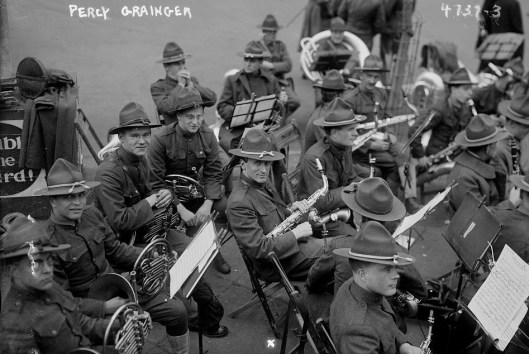
Happy Birthday to Australian musician Percy Grainger, born July 8, 1882. Grainger was pursuing an international career as a pianist and composer when the Great War began in Europe. Publicly criticized for not joining the British war effort, he sailed for America in 1915 and enlisted in the U.S. Army in June 1917, at age 34.

His first Army assignment was with the 15th Coast Artillery Band, stationed at Fort Hamilton, which is the ensemble pictured above. Grainger is the saxophonist in the center, above the small white X. Since it appears to have been chilly when the picture was taken, the time might be late 1917 or early 1918.

In June of 1918, Grainger came to Governors Island as an instructor in the program founded by the Institute of Musical Art (later part of what is now The Juilliard School) to train Army bandmasters and band musicians. Classroom instruction took place at the Institute, at Broadway and 122nd Street in Manhattan, and performing and conducting were taught on the Island.

Grainger was not particularly skilled on either the saxophone or the oboe, which he also played, but he was fascinated by wind, brass, and percussion instruments and wrote a great deal of music for them in various combinations, thus earning the gratitude of concert and military band players of succeeding generations. However, his most popularly known work is probably “Country Gardens,” an old English tune that he arranged for piano while at Fort Jay, as noted at the end of the published sheet music (“Written out, Fort Jay, Governor’s Island, N.Y., June 29, 1918”).

Grainger was discharged from the Army in 1919, and lived for the rest of his life in White Plains, New York just north of the city.

(image/Library of Congress Bain Collection)

Life’s small pleasures

29 Friday Jun 2018

Posted by Keith Muchowski in Jazz

≈ Comments Off on Life’s small pleasures

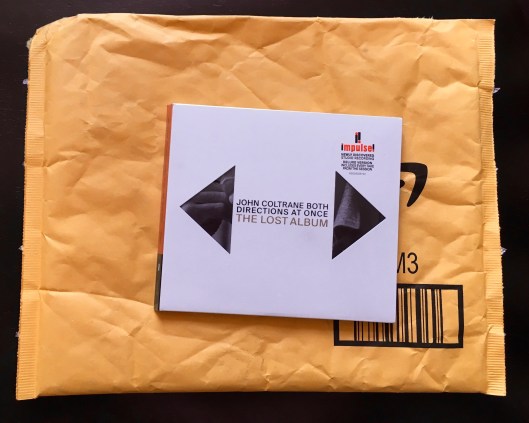
I spent a few hours walking Green-Wood Cemetery this morning with a friend. When I got home, there in the mailbox was the new John Coltrane cd waiting for me. I have it on right now. I love stories of “lost” audiotapes, manuscripts, archival photographs, and whatnot. It is easy to be cynical about these things–it is easy to be cynical about a lot of things–but this is no filler or outtakes that should have remained in the vaults. These lost tapes are the real thing, another tile in the mosaic to help us better understand Coltrane’s legacy. I have always believed that Coltrane’s output in the 1960s, when he began going more “out there,” has withstood the test of time when others’ has not is because his music is rooted in both blues and his time in a Navy band just after the Second World War. Whatever the era, military musicians usually bring a discipline to their work. They respect tradition. The Lost Album will take a while to fully absorb and I can already tell will be part of the soundtrack to the summer.

Cocaine and Rhinestones

08 Friday Jun 2018

Posted by Keith Muchowski in Film, Sound, & Photography, Jazz

≈ Comments Off on Cocaine and Rhinestones

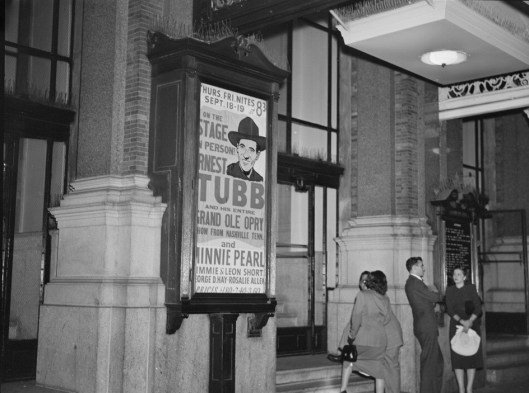
Ernest Tubb played Carnegie Hall in 1947.

When Charlie Parker hung out in the bars he was well known for putting his dimes in the jukebox and listening to country music. Because he was Bird, none of his fellow jazzmen dared try to stop him; if Yardbird Parker wanted to listen to country music, then that’s what was going to happen. When they asked incredulously why he spent his time listening to that genre, his answer was always the same: “Listen to the stories, man.” A great artist–and make no mistake, Charlie Parker is on the shortlist of great artists of the twentieth century–understands that inspiration can come from anywhere and through anyone, whether that be Louis Armstrong, Shostakovich or Hank Williams. The reason I say all this is to highlight a podcast that has been preoccupying me for much of the past week: Tyler Mahan Coe’s Cocaine and Rhinestones.

Tyler Mahan Coe is the son of outlaw country musician David Allan Coe. Tyler spent his childhood years on his father’s tour bus, partying and listening to the stories as he heard them coming from the stage and the back of the bus. Father and son had a falling out somewhere along the way and apparently are estranged today. As Coe points out, everyone in country music is a historian because the music references its antecedents much more than most other styles. Plus, musicians have a great deal of time on their hands and spend a great deal of it swapping stories of what they have seen and heard along the way. Cocaine and Rhinestones wrapped up its first season of fourteen episodes earlier this year. So far I have listened to about 1/3 of those, starting with episode one about Ernest Tubb but skipping around after that. One of the things I like most about Coe’s sensibility is that he states explicitly that there is no purity test for what is and is not country music. Race, region, economic status, educational level: none of these are barriers for who is and is not a “country” artist. The only litmus test is sincerity.

He did an extraordinary job breaking down Loretta Lynn’s mid-1970s hit “The Pill,” explaining the sexism and hypocrisy that went into why more than sixty radio stations across the country banned it. Another episode explores Merle Haggard’s “Okie from Muskogee.” The degrees to which Haggard is parodying and/or paying tribute to Richard Nixon’s Silent Majority has been lost on less reflective listeners for the half century since the song’s release in July 1969. Coe’s conclusions about Haggard’s “Okie” are surprising, and I for one found his argument convincing. I felt Coe was unduly harsh on Herbert Hoover in the early part of this episode however, where he describes the early years of the Depression and the flight of the Okies from Oklahoma and its neighboring states to California. Hoover didn’t cause the Depression and he wasn’t the ogre people made him out to be. Every good story deserves a villain and Hoover was, then and today, the ideal scapegoat for Depression Era America.

Americans in that decade after the First World War began buying radios in record numbers, which transformed our culture much like the internet has transformed our own time. Without the radio there would have been no Babe Ruth as we know him today. The same goes for the music people listened to and shared. Someone, I believe it was Kris Kristofferson, once said that he never worries about country music, that its death has been greatly exaggerated and that it will always be here and move forward. Tyler Mahan Coe does a good job putting the music into historical and cultural contexts and explaining that the music business has always been . . . wait for it . . . a business. Greed, lust, abuse in its many forms, envy, shallowness and vindictiveness have intertwined with moments of great generosity, clarity and understanding within various artists and producers to create the canon that is country music. It’s a human tale, as old as Adam. One would be wise to listen to the stories.

(image/Library of Congress)

Howard R. Haviland plays

03 Sunday Sep 2017

Posted by Keith Muchowski in Great War centennial, Jazz, New York City

≈ 2 Comments

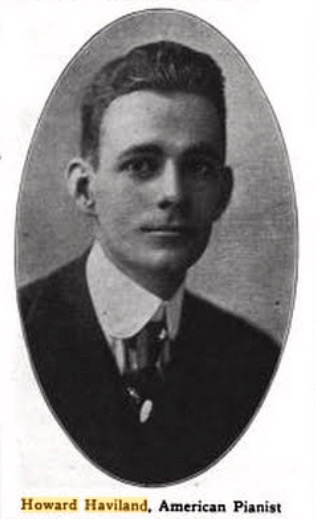
Howard R. Haviland of Brooklyn played and taught for the war effort.

Pianist Howard R. Haviland began a series of concerts one hundred years ago today at the Brooklyn Navy Yard. The show, put on for about 1200 workers and sailors, was the first in a series Haviland performed under the auspices of the YMCA’s National War Work Council. Haviland and the YMCA had set a high bar: to play at every camp in the United States over late summer and fall. Later that same week Haviland played at camps in Mineola and Hempstead, Long Island; Queens; and upstate at Plattsburg. Haviland was a Brooklynite who spent his summers playing in hotels in New Jersey. (Then and now New Yorkers got out of the Big City in July-August if they could.) Haviland had spent July playing at the Hotel Montclair, where he helped the Red Cross raise $100,000,000 for the war effort.

Haviland noted that “the boys” in the camps preferred lighter tunes to the classical stuff and wanted material with which they were familiar. His sets were heavy on light opera, which is a reminder that opera was not always Opera as we perceive it today: as a distant High Art, something for which you pay top dollar and put on a tuxedo to listen to. There was a time, not that long ago, when the genre was very much part of the popular vernacular. Think of the organ grinder and his monkey. Havilland’s tour was a smashing success. By early November he was back in Brooklyn at his parents house on Grand Avenue. Still he continued on with his war work. On behalf of the Red Cross he taught piano to advanced and beginning students alike to raise funds and awareness for the Allied war effort.

(image/Musical America)


Phil Chess, 1921-2016

23 Sunday Oct 2016

Posted by Keith Muchowski in Jazz, Those we remember

≈ Comments Off on Phil Chess, 1921-2016

I noted with interest the passing of Phil Chess earlier this week. Though I would not put too much into it, it was fitting that Chess, a fixture in the Chicago music scene for well over half a century, died the week the Cubs made it to the World Series for the first time since 1945. Phil and his older brother Leonard were the founders of Chess Records, one of the independent labels that sprung up after the Second World War to record the urban blues. The brothers started in what we’ll euphemistically call the entertainment industry when in 1938 they began operating juke joints catering to the South Side’s growing African-American community. I’m simplifying here but when their Macomba Lounge burned down in 1950 they used the insurance to fund what would become Chess. The brothers would spend the next decades recording Muddy Waters, Howlin’ Wolf, Chuck Berry, Sonny Boy Williamson, Little Walter, Etta James and scores of others.

Chess Records Studios as seen in 2012

Chess Records Studios as seen in 2012

The story truly began during World War One. In The Warmth of Other Sons Isabel Wilkerson notes that the Chicago Defender mentioned in passing in its February 5, 1916 edition that northern railroads were facilitating the movement of African-American laborers from the South to the North to work in the munitions plants. After the war the Chess brothers were part of that other Great Migration; their father, Yasef Czyz, came to the United States from Motal, Poland (today part of Belarus) just after the Great War. He soon sent for his wife and children. By the time Leonard and Philip reached their mid-twenties the blues too had come age. Leonard in particular spent much of the early 1950s traveling not only the South but through Northern industrial hubs such as Detroit, St. Louis and Gary, Indiana–essentially anywhere within driving distance from Chicago where Africans-Americans lived, worked, and socialized–to plug the Chess catalog and scout for new talent. Phil was the quieter, younger brother who kept things running.

I have always been conflicted about the Chess Brothers and their cohorts. On the one hand there is no question that they recorded, disseminated, and thus saved an essential component of American–and today, world–culture. On the other hand their enterprise was built on a foundation of exploitation of that talent. That exploitation became only more apparent when the Rolling Stones, Eric Clapton and others came along and began making real money; in the 1960s those once-pesky things like contracts, copyrights and royalties went from ancillary issues to matters of serious economic consequence. One can’t argue that it is not part of the story.

The Chess family has maintained–not without merit–that while their business practices were sometimes unorthodox, they looked after their artists in their own ways. This meant things like paying for funerals and medical expenses, occasionally bailing someone out of jail, and dirty work like paying for abortions in those years prior to Roe v Wade. Let’s not kid ourselves; we’re talking about bluesmen here. It is a messy and human story from a time when America was a harder place and people did what they had to do to get along. Today the blues is securely canonized, but such was not always the case. The life and times of Phil Chess were–and still are–part of why it is so mythologized.

(image/Steve Browne & John Verkleir via Wikimedia Commons)


Governors Island’s 52nd Street

13 Saturday Aug 2016

Posted by Keith Muchowski in Governors Island, Jazz

≈ 2 Comments

Swing Street was the scene for New York's jazz clubs and a hangout for GIs.

Swing Street was the scene for New York’s jazz clubs and a hangout for GIs.

I am sorry about the lack of posts recently. This is the time of year when I slow down a bit, relax, and prepare for the coming academic year. I’ve spent much of the past week and a half listening to the Mets lose night after night. Queens’ Major League Baseball Club has not won two game in a row since July 6.

I had an interesting experience at Governors Island last week. I was there this past Thursday to conduct two oral histories with another volunteer. The first one was with a gentleman who worked in the Military Police in the 1950s. I took the opportunity to ask him a question that had long bothered me. Some readers may know that Castle Williams served as an Army disciplinary barracks for many decades. In my reading of many jazz histories and biographies over the years a recurring theme that Miles Davis, Dizzy Gillespie and others repeatedly came back to was the considerable Military Police presence on 52nd Street. “The Street” as it was known–no number was required if you mentioned jazz–was notorious for men in uniform drinking, fighting and causing mayhem. (It is a story for another time, but in retrospect it seems obvious that many of these GIs were suffering from ptsd.)

It was always my speculation that when these servicemen got into trouble the place to which they were usually taken was Governors Island. The Army would have handled such matters, not the civilian NYPD. Still, this was all conjecture on my part; in all my reading on both jazz and Governors Island, I never saw anything in writing that backed up my educated guess. That is, I had no corroboration of this until last week, when during the oral history I asked the interviewee if such was indeed the case. To my great satisfaction he confirmed what I had long suspected: that the uniformed servicemen picked up for making trouble on 52nd Street back in the days of the great nightclubs were indeed brought to Castle Williams on Governors Island. It fits into the narrative of Castle Williams as a minimum security facility. These troublemakers would be brought to be processed, sleep it off, and wait for the next step in the process. I cannot tell you how pleased I was to hear this firsthand from the former MP himself.

(image/William P. Gottlieb Collection, Library of Congress)

Juilliard’s military tradition

03 Tuesday Nov 2015

Posted by Keith Muchowski in Governors Island, Jazz

≈ Comments Off on Juilliard’s military tradition

My good friend Molly Skardon, who is the driving force behind the Oral History Project at Governors Island National Monument, has published a piece about military musicians in this month’s edition of the Julliard Journal. I encourage you to check it out. When we think of music and the Great War we inevitably and properly think of James Reese Europe and his jazz men. That is just part of the story, however. Many of the A.E.F. bands have their roots in a program started just before the outbreak of the conflict. Music has always been important to the military. At Governors Island military bands trace their roots as far back as the 1830s. John Philip Sousa led the U.S. Marine Band for years before striking out on his own. It’s difficult for people in the twenty-first century to grasp the cultural impact he still has today. Molly informs us that the Army’s musical tradition began a new chapter in 1911 when the Institute of Musical Art–the institution that became Juilliard–founded the Military Band Department. Some of America’s greatest musicians have learned their art in this musical laboratory.

When the First Army was stationed on Governors Island its band was responsible for performances of all kinds–funerals, parades, state visits, and whatever else the brass came up with. Molly and I, with others, have interviewed some of these people as part of the OHP. Some of these guys are still active as well. We saw one of them play in Greenwich Village a few months back. We never had the good fortune of seeing Michael Rose play, but we did interview him over the summer. Up top is a video of him and his band which he posted just yesterday. Mr. Rose got his start playing as a young trumpeter stationed on Governors Island in the 1950s. He went on to play with Gene Krupa, Benny Goodman, and many others.

Remember that next week is Veterans Day. Here is a slightly different link to Molly’s article, with related links to other stories about Juilliard’s relationship with the military. And by the way if you are a veteran of Governors Island’s First Army Band, or were stationed there in any capacity, please contact me about setting up an oral history interview.

← Older posts
Newer posts →

Enter your email address to subscribe to this blog and receive notifications of new posts by email.

Join 258 other subscribers

Categories

Archives

  • November 2023 (1)
  • October 2023 (3)
  • September 2023 (3)
  • August 2023 (4)
  • July 2023 (7)
  • June 2023 (10)
  • May 2023 (8)
  • April 2023 (6)
  • March 2023 (5)
  • February 2023 (4)
  • January 2023 (4)
  • December 2022 (4)
  • November 2022 (8)
  • October 2022 (2)
  • September 2022 (4)
  • June 2022 (1)
  • May 2022 (1)
  • April 2022 (13)
  • January 2022 (1)
  • December 2021 (2)
  • November 2021 (1)
  • October 2021 (3)
  • September 2021 (3)
  • August 2021 (5)
  • July 2021 (1)
  • June 2021 (1)
  • May 2021 (4)
  • April 2021 (3)
  • March 2021 (4)
  • February 2021 (7)
  • January 2021 (4)
  • December 2020 (4)
  • November 2020 (3)
  • October 2020 (4)
  • September 2020 (7)
  • August 2020 (5)
  • July 2020 (7)
  • June 2020 (11)
  • May 2020 (7)
  • April 2020 (9)
  • March 2020 (9)
  • February 2020 (7)
  • January 2020 (6)
  • December 2019 (7)
  • November 2019 (9)
  • October 2019 (4)
  • September 2019 (6)
  • August 2019 (10)
  • July 2019 (8)
  • June 2019 (6)
  • May 2019 (9)
  • April 2019 (8)
  • March 2019 (6)
  • February 2019 (8)
  • January 2019 (5)
  • December 2018 (10)
  • November 2018 (6)
  • October 2018 (9)
  • September 2018 (11)
  • August 2018 (11)
  • July 2018 (17)
  • June 2018 (10)
  • May 2018 (8)
  • April 2018 (9)
  • March 2018 (8)
  • February 2018 (5)
  • January 2018 (7)
  • December 2017 (11)
  • November 2017 (8)
  • October 2017 (9)
  • September 2017 (11)
  • August 2017 (12)
  • July 2017 (14)
  • June 2017 (18)
  • May 2017 (11)
  • April 2017 (10)
  • March 2017 (9)
  • February 2017 (11)
  • January 2017 (14)
  • December 2016 (7)
  • November 2016 (8)
  • October 2016 (8)
  • September 2016 (9)
  • August 2016 (6)
  • July 2016 (12)
  • June 2016 (8)
  • May 2016 (9)
  • April 2016 (6)
  • March 2016 (12)
  • February 2016 (10)
  • January 2016 (9)
  • December 2015 (9)
  • November 2015 (11)
  • October 2015 (8)
  • September 2015 (9)
  • August 2015 (13)
  • July 2015 (14)
  • June 2015 (11)
  • May 2015 (11)
  • April 2015 (18)
  • March 2015 (10)
  • February 2015 (8)
  • January 2015 (8)
  • December 2014 (12)
  • November 2014 (13)
  • October 2014 (16)
  • September 2014 (11)
  • August 2014 (16)
  • July 2014 (12)
  • June 2014 (13)
  • May 2014 (10)
  • April 2014 (10)
  • March 2014 (11)
  • February 2014 (12)
  • January 2014 (10)
  • December 2013 (11)
  • November 2013 (14)
  • October 2013 (14)
  • September 2013 (14)
  • August 2013 (13)
  • July 2013 (17)
  • June 2013 (9)
  • May 2013 (13)
  • April 2013 (13)
  • March 2013 (16)
  • February 2013 (15)
  • January 2013 (15)
  • December 2012 (18)
  • November 2012 (18)
  • October 2012 (21)
  • September 2012 (14)
  • August 2012 (16)
  • July 2012 (21)
  • June 2012 (22)
  • May 2012 (24)
  • April 2012 (20)
  • March 2012 (23)
  • February 2012 (22)
  • January 2012 (15)
  • December 2011 (23)
  • November 2011 (22)
  • October 2011 (23)
  • September 2011 (18)
  • August 2011 (19)
  • July 2011 (20)
  • June 2011 (29)
  • May 2011 (25)
  • April 2011 (18)
  • March 2011 (21)
  • February 2011 (11)

Meta

  • Create account
  • Log in
  • Entries feed
  • Comments feed
  • WordPress.com
Creative Commons License
This work is licensed under a Creative Commons Attribution-NonCommercial-ShareAlike 4.0 International License.

Enter your email address to subscribe to this blog and receive notifications of new posts by email.

Join 258 other subscribers

Categories

Archives

  • November 2023 (1)
  • October 2023 (3)
  • September 2023 (3)
  • August 2023 (4)
  • July 2023 (7)
  • June 2023 (10)
  • May 2023 (8)
  • April 2023 (6)
  • March 2023 (5)
  • February 2023 (4)
  • January 2023 (4)
  • December 2022 (4)
  • November 2022 (8)
  • October 2022 (2)
  • September 2022 (4)
  • June 2022 (1)
  • May 2022 (1)
  • April 2022 (13)
  • January 2022 (1)
  • December 2021 (2)
  • November 2021 (1)
  • October 2021 (3)
  • September 2021 (3)
  • August 2021 (5)
  • July 2021 (1)
  • June 2021 (1)
  • May 2021 (4)
  • April 2021 (3)
  • March 2021 (4)
  • February 2021 (7)
  • January 2021 (4)
  • December 2020 (4)
  • November 2020 (3)
  • October 2020 (4)
  • September 2020 (7)
  • August 2020 (5)
  • July 2020 (7)
  • June 2020 (11)
  • May 2020 (7)
  • April 2020 (9)
  • March 2020 (9)
  • February 2020 (7)
  • January 2020 (6)
  • December 2019 (7)
  • November 2019 (9)
  • October 2019 (4)
  • September 2019 (6)
  • August 2019 (10)
  • July 2019 (8)
  • June 2019 (6)
  • May 2019 (9)
  • April 2019 (8)
  • March 2019 (6)
  • February 2019 (8)
  • January 2019 (5)
  • December 2018 (10)
  • November 2018 (6)
  • October 2018 (9)
  • September 2018 (11)
  • August 2018 (11)
  • July 2018 (17)
  • June 2018 (10)
  • May 2018 (8)
  • April 2018 (9)
  • March 2018 (8)
  • February 2018 (5)
  • January 2018 (7)
  • December 2017 (11)
  • November 2017 (8)
  • October 2017 (9)
  • September 2017 (11)
  • August 2017 (12)
  • July 2017 (14)
  • June 2017 (18)
  • May 2017 (11)
  • April 2017 (10)
  • March 2017 (9)
  • February 2017 (11)
  • January 2017 (14)
  • December 2016 (7)
  • November 2016 (8)
  • October 2016 (8)
  • September 2016 (9)
  • August 2016 (6)
  • July 2016 (12)
  • June 2016 (8)
  • May 2016 (9)
  • April 2016 (6)
  • March 2016 (12)
  • February 2016 (10)
  • January 2016 (9)
  • December 2015 (9)
  • November 2015 (11)
  • October 2015 (8)
  • September 2015 (9)
  • August 2015 (13)
  • July 2015 (14)
  • June 2015 (11)
  • May 2015 (11)
  • April 2015 (18)
  • March 2015 (10)
  • February 2015 (8)
  • January 2015 (8)
  • December 2014 (12)
  • November 2014 (13)
  • October 2014 (16)
  • September 2014 (11)
  • August 2014 (16)
  • July 2014 (12)
  • June 2014 (13)
  • May 2014 (10)
  • April 2014 (10)
  • March 2014 (11)
  • February 2014 (12)
  • January 2014 (10)
  • December 2013 (11)
  • November 2013 (14)
  • October 2013 (14)
  • September 2013 (14)
  • August 2013 (13)
  • July 2013 (17)
  • June 2013 (9)
  • May 2013 (13)
  • April 2013 (13)
  • March 2013 (16)
  • February 2013 (15)
  • January 2013 (15)
  • December 2012 (18)
  • November 2012 (18)
  • October 2012 (21)
  • September 2012 (14)
  • August 2012 (16)
  • July 2012 (21)
  • June 2012 (22)
  • May 2012 (24)
  • April 2012 (20)
  • March 2012 (23)
  • February 2012 (22)
  • January 2012 (15)
  • December 2011 (23)
  • November 2011 (22)
  • October 2011 (23)
  • September 2011 (18)
  • August 2011 (19)
  • July 2011 (20)
  • June 2011 (29)
  • May 2011 (25)
  • April 2011 (18)
  • March 2011 (21)
  • February 2011 (11)

Meta

  • Create account
  • Log in
  • Entries feed
  • Comments feed
  • WordPress.com
Creative Commons License
This work is licensed under a Creative Commons Attribution-NonCommercial-ShareAlike 4.0 International License.

Enter your email address to subscribe to this blog and receive notifications of new posts by email.

Join 258 other subscribers

Categories

Archives

  • November 2023 (1)
  • October 2023 (3)
  • September 2023 (3)
  • August 2023 (4)
  • July 2023 (7)
  • June 2023 (10)
  • May 2023 (8)
  • April 2023 (6)
  • March 2023 (5)
  • February 2023 (4)
  • January 2023 (4)
  • December 2022 (4)
  • November 2022 (8)
  • October 2022 (2)
  • September 2022 (4)
  • June 2022 (1)
  • May 2022 (1)
  • April 2022 (13)
  • January 2022 (1)
  • December 2021 (2)
  • November 2021 (1)
  • October 2021 (3)
  • September 2021 (3)
  • August 2021 (5)
  • July 2021 (1)
  • June 2021 (1)
  • May 2021 (4)
  • April 2021 (3)
  • March 2021 (4)
  • February 2021 (7)
  • January 2021 (4)
  • December 2020 (4)
  • November 2020 (3)
  • October 2020 (4)
  • September 2020 (7)
  • August 2020 (5)
  • July 2020 (7)
  • June 2020 (11)
  • May 2020 (7)
  • April 2020 (9)
  • March 2020 (9)
  • February 2020 (7)
  • January 2020 (6)
  • December 2019 (7)
  • November 2019 (9)
  • October 2019 (4)
  • September 2019 (6)
  • August 2019 (10)
  • July 2019 (8)
  • June 2019 (6)
  • May 2019 (9)
  • April 2019 (8)
  • March 2019 (6)
  • February 2019 (8)
  • January 2019 (5)
  • December 2018 (10)
  • November 2018 (6)
  • October 2018 (9)
  • September 2018 (11)
  • August 2018 (11)
  • July 2018 (17)
  • June 2018 (10)
  • May 2018 (8)
  • April 2018 (9)
  • March 2018 (8)
  • February 2018 (5)
  • January 2018 (7)
  • December 2017 (11)
  • November 2017 (8)
  • October 2017 (9)
  • September 2017 (11)
  • August 2017 (12)
  • July 2017 (14)
  • June 2017 (18)
  • May 2017 (11)
  • April 2017 (10)
  • March 2017 (9)
  • February 2017 (11)
  • January 2017 (14)
  • December 2016 (7)
  • November 2016 (8)
  • October 2016 (8)
  • September 2016 (9)
  • August 2016 (6)
  • July 2016 (12)
  • June 2016 (8)
  • May 2016 (9)
  • April 2016 (6)
  • March 2016 (12)
  • February 2016 (10)
  • January 2016 (9)
  • December 2015 (9)
  • November 2015 (11)
  • October 2015 (8)
  • September 2015 (9)
  • August 2015 (13)
  • July 2015 (14)
  • June 2015 (11)
  • May 2015 (11)
  • April 2015 (18)
  • March 2015 (10)
  • February 2015 (8)
  • January 2015 (8)
  • December 2014 (12)
  • November 2014 (13)
  • October 2014 (16)
  • September 2014 (11)
  • August 2014 (16)
  • July 2014 (12)
  • June 2014 (13)
  • May 2014 (10)
  • April 2014 (10)
  • March 2014 (11)
  • February 2014 (12)
  • January 2014 (10)
  • December 2013 (11)
  • November 2013 (14)
  • October 2013 (14)
  • September 2013 (14)
  • August 2013 (13)
  • July 2013 (17)
  • June 2013 (9)
  • May 2013 (13)
  • April 2013 (13)
  • March 2013 (16)
  • February 2013 (15)
  • January 2013 (15)
  • December 2012 (18)
  • November 2012 (18)
  • October 2012 (21)
  • September 2012 (14)
  • August 2012 (16)
  • July 2012 (21)
  • June 2012 (22)
  • May 2012 (24)
  • April 2012 (20)
  • March 2012 (23)
  • February 2012 (22)
  • January 2012 (15)
  • December 2011 (23)
  • November 2011 (22)
  • October 2011 (23)
  • September 2011 (18)
  • August 2011 (19)
  • July 2011 (20)
  • June 2011 (29)
  • May 2011 (25)
  • April 2011 (18)
  • March 2011 (21)
  • February 2011 (11)

Meta

  • Create account
  • Log in
  • Entries feed
  • Comments feed
  • WordPress.com
Creative Commons License
This work is licensed under a Creative Commons Attribution-NonCommercial-ShareAlike 4.0 International License.

Blog at WordPress.com.

  • Subscribe Subscribed
    • The Strawfoot
    • Join 229 other subscribers
    • Already have a WordPress.com account? Log in now.
    • The Strawfoot
    • Subscribe Subscribed
    • Sign up
    • Log in
    • Report this content
    • View site in Reader
    • Manage subscriptions
    • Collapse this bar
 

Loading Comments...