• About

The Strawfoot

~ a New Yorker's American History blog

The Strawfoot

Category Archives: Museums

A walk past the Newark Paramount

20 Sunday May 2018

Posted by Keith Muchowski in Film, Sound, & Photography, Memory, Museums, Ulysses S. Grant (General and President)

≈ Comments Off on A walk past the Newark Paramount

I am having my Sunday coffee and listening to Yusuf Lateef. With the semester in its final few days, it’s going to be a working Sunday. I have already sent a few emails and will tie up various loose ends over the course of the day. Yesterday a friend and I braved the rain and crossed the river to visit the Newark Museum of Art. I had not been there in 6-7 years and can say that officials there have been doing great work maintaining what has always been an outstanding cultural institution. If you live in New York City and are ever looking for a place to visit, I can attest that the Newark Museum is very easy to get to. Top it off with lunch or dinner in The Ironbound, as we did, and you’ve had a good day.
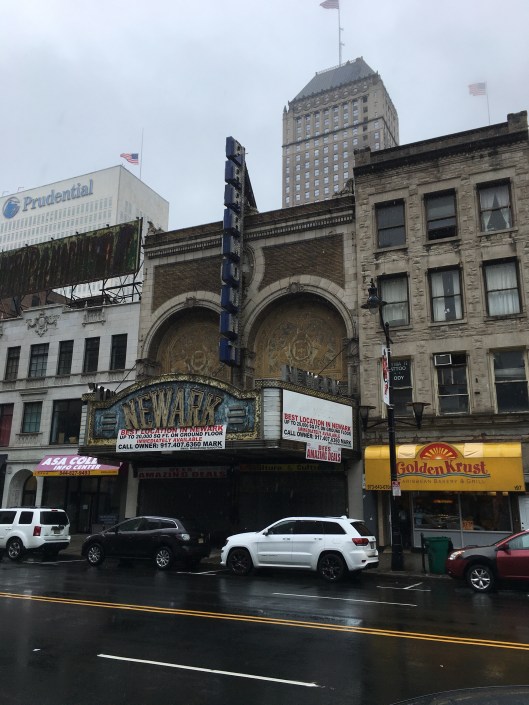
Paramount Theater, Newark, New Jersey

I took this photo of the Newark Paramount theater on the way to the museum. Some readers may know of the old Paramount Theater in Midtown Manhattan that they tore down decades ago. The reason there was “another” Paramount in Newark is because the movie studios owned their own theaters until losing a major antitrust case in 1948, after which Paramount and others had to divest themselves of their movie houses. As you can see, the Newark Paramount now stands empty. If my memory serves, the last time I was in the vicinity this was a storefront in which Rastafarians were selling oils and incense. Some rudimentary internet searching informs me that this opened as a vaudeville theater in 1886. To put that in perspective, that was the year after Ulysses S. Grant died.

The space in Newark came under new management and was expanded in 1916. Expansion in this period makes sense; in 1916 with the Great War raging in Europe there was a great deal of activity in Essex County, New Jersey. The docks were teeming and it makes sense that there would be entertainment options such as this. During and immediately after the First World War this would have meant live stage entertainment, and starting in the late 1920s moving pictures.

Last night on the train home I sent this photo to a friend who was born in the early 1960s and lived in this area until the mid-70s, when his family moved to a Sunbelt State. This led to a philosophical discussion over text messaging about loss and memory. My friend mentioned how this all seemed like eons in the past. The Newark Paramount closed as a movie theater in April 1986–itself now a lifetime ago–and while my friend in all likelihood never saw a film there, it is a good bet his mother and father did in their own early years.

I have a yen for these old theaters, having in the 1990s worked for a large chain bookstore based in old art deco move house that in the 2010s because a Trader Joe’s. The race seems to be on to save the Newark Paramount. A society cannot let things lie literally in ruins just for the sake of holding on to the past, but hopefully some vestige of this old treasure can be incorporated into Newark’s future as things continue to move forward. We’ll see how things develop, no pun intended.
 

A new museum for a new era

30 Saturday Dec 2017

Posted by Keith Muchowski in Incorporating New York (book manuscript project), Museums, New York City, Theodore Roosevelt Sr (Father)

≈ Comments Off on A new museum for a new era

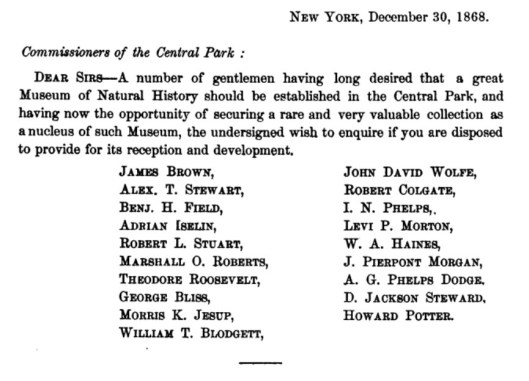
I have been working on the draft of Incorporating New York for much of these past several weeks. I am now in December 1868. The book ends in 1878. I thought I would share the document you see above, which was sent on 30 December 1868, 149 years ago today. The letter was written by a number of New Yorkers to the commissioners of Central Park seeking permission to place what would become The American Museum of Natural History within the grounds of the park. The signers include Theodore Roosevelt Sr., Howard Potter, J.P. Morgan, Levi P. Morton and others. This is an interesting period in the city and the nation’s history. Being the end of the year, the individuals were naturally in a mood of reflection and thinking about prospects for the future. It was more than that however. December 1868 is less than a month after the election of Ulysses S. Grant. The country had just gotten over the Andrew Johnson impeachment and trial. Johnson would leave office in just over three months. Just three weeks prior to this letter the Union League Club of New York held a reception for Grant at which many of these very were in attendance.

(image/1870 AMNH annual report)

The Brooklyn Museum’s Kaiser Wilhelm II

25 Monday Dec 2017

Posted by Keith Muchowski in Museums

≈ Comments Off on The Brooklyn Museum’s Kaiser Wilhelm II

This image of Corcos’s portrait of Kaiser Wilhelm II, perhaps from a 1907 New York Times clipping, shows the original painting upon which the Keinke in the Brooklyn Museum of Art was based.

A curious article appeared in the Brooklyn Daily Eagle on 26 December 1917 concerning a painting of Kaiser Wilhelm II in the possession of the Brooklyn Museum of Art. The letter was from a concerned citizen who wrote the newspaper wondering if, with the United States now at war with Germany, it was appropriate for the Kaiser’s likeness to remain in the museum’s collection. The portrait of the German leader had been given to the Brooklyn Museum of Art eleven year previously under happier circumstances; in a very public ceremony on 16 July 1906 Herr von Gneist, Consul General of the Port of New York, had presented the 6’ x 9’ full portrait to the Brooklyn Museum on behalf of the Kaiser and the German government. Accepting the work for the museum was the Prussian-born former mayor of Brooklyn, Charles Adolph Schieren. The Reverend Dr. S. Parkes Cadman gave an address to an assembled crowd. The Kaiser’s portrait held a prominent pride of place in the Brooklyn Museum for several years thereafter. The painting—a copy of a more famous work—had more historical than artistic merit however, and was later quietly relegated to a small cove and eventually the storage basement out of public view. This apparently all happened before the start of the war in 1914 and had nothing to do with the Kaiser’s damaged reputation once the conflict began. In the basement the portrait sat, unseen and all but forgotten until Boxing Day 1917.

This tempest all came about because, a few days before Christmas, Harvard theologian Francis Greenwood Peabody had very publicly returned to the Kaiser the Order of the Prussian Crown medal he had been awarded several years earlier while a visiting professor at the University of Berlin. Newspapers across the country had covered Peabody’s gesture and now, after reading about the theologian and how he returned his decoration, this Brooklyn Daily Eagle reader was calling on the museum to return its Wilhelm painting. On 28 December the newspaper ran a letter from someone using the pseudonym “Flatbush,” proposing a contest in which readers could suggest what might be done with the painting. The Eagle duly agreed and dozens of entries poured in over the next week. The winner was to win one ton of coal, which was no small thing.

The preponderance of the entries were banal; multiple readers argued for burning the art work while others suggested using it for target practice. Other suggestions were more imaginative and included hanging it upside down from the Statue of Liberty or giving it to Wisconsin’s isolationist Senator Robert M. La Follette. One of the best came from someone suggesting it should be sent to Buckingham Palace to be placed next to a portrait of the late Queen Victoria, the Kaiser’s grandmother; in an obvious dig at the inbred familial ties of the European royal rulers who had stumbled into the war, this individual noted wryly that “blood is thicker than water.”

A. Augustus Healy was president of the Brooklyn Institute of Arts & Sciences from 1895-1920 and helped build the Brooklyn Museum of Art. His wise and quick response to calls to destroy the portrait of Kaiser Wilhelm II helped prevent what would have been an unfortunate incident in New York City’s World War One experience.

The extent to which the Eagle and its readers were being sincere or ironic is difficult to gauge a century later, but the contest was representative of the wider anti-German sentiment common in America during the war. Museum officials responded to all this with a firm calmness and the painting was never in danger. On 31 December A. Augustus Healy, the president of the Brooklyn Institute of Arts & Sciences, the parent organization under whose auspices fell the Brooklyn Museum of Art, announced that it was the Insitute’s duty and responsibility to preserve the portrait. Healy averred that the museum’s stewardship of the suddenly-controversial artwork, like all the artwork in the museum, was “a perpetual trust.” Healy took his stewardship of that perpetual trust seriously. Born in 1850 and active in Brooklyn political and philanthropic causes throughout his life, Aaron Augustus Healy had been appointed president of the Brooklyn Institute of Arts & Sciences in October 1895 during the Institute’s crucial transitional decade when it founded and built the Brooklyn Museum of Art. On 14 December 1895 Healy presided over the laying of the cornerstone of the iconic McKim, Mead & White building that still stands on Eastern Parkway today. Mayor Schieren, who eleven years later as an Institute vice president accepted the Kaiser painting from the German Consul General, laid the cornerstone.

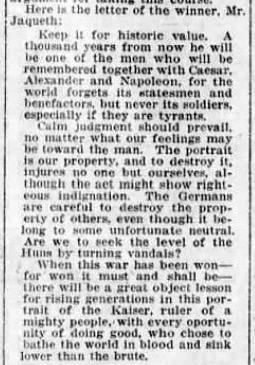
The contest over what to do with the Kaiser’s likeness came to its conclusion just after the New Year. The winner turned out to be one Charles A Jaqueth. In a moment of lucidity all the way around, Eagle editors agreed with Jaqueth that the painting should be kept in the museum for posterity. Jaqueth explains in this letter published in the Eagle on Thursday 3 January 1918:

Charles A. Jaqueth’s letter to the Brooklyn Daily Eagle, 3 Jan 1918

True to its word, the Brooklyn Daily Eagle paid up on the ton of coal; in its 10 January 1918 edition the newspaper published a letter from Jaqueth thanking it for the delivery. Jaqueth expressed his appreciation for the coal and noted that with the war on and it now being January: “the “black diamonds” are almost as difficult to obtain as those of fairer hue.”

(images/top, New York Public Library; bottom two, Brooklyn Daily Eagle)

World War I and the Visual Arts

20 Wednesday Dec 2017

Posted by Keith Muchowski in Film, Sound, & Photography, Great War centennial, Museums, Theodore Roosevelt Jr (President), Theodore Roosevelt Sr (Father)

≈ Comments Off on World War I and the Visual Arts

Last night was a special evening: a friend invited me to a group event at the Metropolitan Museum of Art for a private reviewing of the World War I and the Visual Arts exhibit currently on display through 7 January 2018. There were about a dozen of us on the tour, which took place after the Met Museum closed. To be in the Metropolitan Museum of Art is always special, and even more so when it is the holidays and the place is empty. We arrived a little before the tour when the museum was emptying out and got to take in the Neapolitan Christmas tree that is on display every year. Here are a few photos from the evening.

Walter Trier color lithograph, “Maps of Europe.” Look closely.

As with the lithograph above, these color postcards are that much more striking in juxtaposition to the black and white images one usually sees from the Great War.

The four helmets are prototypes designed by Met curator Dr. Bashford Dean during the war for the United States military. As you can tell from the bottom two in particular, they are influenced by medieval armor. Here is more, including a letter to Dean from Theodore Roosevelt. President Roosevelt’s father helped found the Metropolitan Museum of Art.

Our guide was the exhibition curator, seen here second from the right explaining this series.

Note the plea in the left hand portion asking the AEF to please rush. There were posters in the exhibit from all of the major nations.

It is not every day one sees the galleries empty at the Met. I snapped this one real fast as the group was heading out.

All in all this was a special night. Here is to good friends who think of you when opportunities such as this arise.


The Hemingway House

11 Monday Sep 2017

Posted by Keith Muchowski in Ernest Hemingway, Florida, Heritage tourism, Museums

≈ Comments Off on The Hemingway House

The Hemingway Home in Key West has survived Hurricane Irma.

Having lived big parts of my life in South Florida and Houston I watched Harvey and Irma unfold with intense concern. Thankfully everyone I know has emerged unscathed. We consider ourselves among the fortunate. I was watching too the fates of various cultural institutions that found themselves in harm’s way. The Menil Collection and Rothko Chapel in Houston seemed especially vulnerable but emerged with no flood damage from Harvey. As Irma bore down on Key West the Hemingway Home seemed destined for major damage or even outright destruction. Hemingway first started going to the Keys in the 1920s, after the First World War and his years in Paris as part of the Lost Generation. He wrote part of The Sun Also Rises in the Keys. It has now been several decades but I remember going there more than once back in the 1970s and 80s. Hemingway seemed so long gone but he had only committed suicide just 15-20 years earlier.

As Irma moved westward the Hemingway Home’s longtime caretakers decided to hold out, much to the consternation of Mariel Hemingway, who urged them to evacuate along with the rest of the residents of the Keys. The staff did not take that advice and held on. Irma is not yet over and many people are still facing serious threat. The assessment and clean-up have yet to begin in the areas that Irma has already touched. And of course it is not just Florida: Texas is still reeling from Harvey and the people of the Caribbean face incredible challenges from Irma. Thankfully there are a few, very few, things for which to be grateful right now. The Hemingway Home along with its dozens of six-toed cats has survived Irma thanks to the dedication of the staff who worked diligently to save the historic structure.

(image/Michelle Maria via Wikimedia Commons)


Artists and the Great War at the N-YHS

13 Sunday Aug 2017

Posted by Keith Muchowski in Base Hospital No. 9, Museums

≈ Comments Off on Artists and the Great War at the N-YHS

Hey all, blogging will continue to be light between now and the start of the academic year a week from this Friday. August and the end of the year holiday season are the times when I slow it down a bit. This past Friday I finally got up to the World War I: Beyond the Trenches exhibit at the New-York Historical Society. I did not realize that Childe Hassam was active in the Preparedness Movement prior to the war. I now see his Flag Series of paintings in better context. I have a feeling this might entail a deeper dive sometime in the coming months.

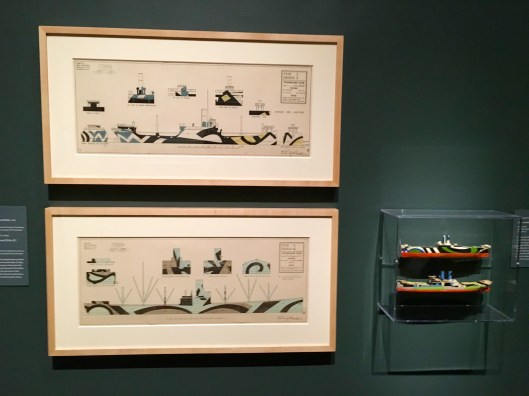
Dazzle camouflage drawings from the Rhode Island School of Design with ship models, part of the New-York Historical Society exhibit W​orld War I Beyond the Trenches​

These dazzle camouflage models from the N-YHS collection are a reminder that they didn’t fight the war in black and white.

Artists at the Rhode Island School of Design drew the sketches you see above during the war. They are examples of dazzle camouflage, in which paradoxically the goal is not to hide the subject but to highlight it in such a manner and degree that disorients the enemy. In my article about the USS Recruit I briefly mentioned how the National League for Woman’s Service sent its Camouflage Corps to paint that wooden vessel in Union Square as a demonstration of the technique. I don’t pretend to know that much about it, but camouflage has a more involved history than most people realize. It was very much part of the 20th century modern art movement. It wasn’t just a matter of painting disjointed shapes and varied colors. That is why they brought in the artists and graphic designers. Today designers are using digitization to take camo to a whole new level.

A leaf from Ivan Albright’s sketchbook during his service with Base Hospital No. 11. He drew these while the surgeons were working.

Ivan Albright sketched this medical drawing. The young artist was all of about twenty at the time of his service in the Great War and went on in the 1930s to become a renowned artist in the Magic Realism vernacular. During the war he was a draftsman with Base Hospital No. 11 stationed in Nantes. His job was to draw medical sketches in the operating rooms, which the surgeons could later reference in their work. It would be interesting to know how many of artists were used in the base hospitals and if their work survives today.

The exhibit is running through September 3, Labor Day, and so if your are interested you had better hurry. It is your last chance too to see John Singer Sargent’s Gassed before it returns to the Imperial War Museum in London.

Artists of the Sanitary Fair

19 Wednesday Jul 2017

Posted by Keith Muchowski in Film, Sound, & Photography, Museums, New York City

≈ Comments Off on Artists of the Sanitary Fair

I have been off this week and am trying to write 5000 word on my book project. I came across this photograph taken at the 1864 Metropolitan Sanitary Fair and thought I would share it before I sit down for my first wave of writing. I popped a jazz cd into the record player. I find I usually can’t write when music with vocals is playing. Today is Wednesday and thus getaway day for Major League Baseball; so there will be baseball on the radio here in a few hours.

The photograph above comes from a small work, what amounts to a scrapbook, that Matthew Brady published in small quantity in 1864 called Recollections of the Art Exhibition, Metropolitan Fair, New York. Many of the leading artists of the day may various various contributions to the April 1864 Metropolitan Fair, either putting works up for sale or on display where patrons who paid the fundraising entrance fee could see them. It was at the 1864 New York sanitary fair that New Yorkers saw Emanuel Gottlieb Leutze’s “Washington Crossing the Delaware.” What I am trying to do in my book make New York City a more central aspect of the American Civil War.

Unfortunately the artists listed here are not annotated. The one we do know for certain is Brady seated in the center. It was his studio’s photographs after the battle of Antietam, which were shown in his New York studio shortly after the engagement, that brought the war “home” to most New Yorkers, who lined up to see them in fall 1862.

(image/Library of Congress)


Grand Army Plaza, June 11

30 Tuesday May 2017

Posted by Keith Muchowski in Memory, Monuments and Statuary, Museums, New York City

≈ 1 Comment

I was at the Brooklyn Museum of Art this afternoon to meet with officials about the walking tour I am doing on Sunday 11 June from 12:00 – 1:00 pm for the museum. The idea was to do a walkthrough of the presentation to see if it fits into the time slot and to decide if any changes or additions might be in order. I ran two people though the walking tour, and we had a fun and productive time running though the thing. I got some good feedback as well. There is nothing like the live audience to keep you humble. Grand Army Plaza was laid out by Calvert Vaux and Frederick Law Olmsted in the years just after the Civil War. The area is one of the places of Civil War memory not just in New York but in the United States. So many people walk past it all every day with no idea. I am looking forward to this event.

Living–and telling–history

31 Tuesday Jan 2017

Posted by Keith Muchowski in Franklin Delano Roosevelt, Memory, Museums

≈ Comments Off on Living–and telling–history

Museum of Jewish Heritage, 29 January 2017

Museum of Jewish Heritage, 29 January 2017

This past Sunday morning I was at the Museum of Jewish Heritage on the Battery to see my friend Sami Steigmann participate in a ceremony to remember the Holocaust and other crimes committed in Europe in the twentieth century. Sami Steigmann was born in 1939 in Bukovina, one of those regions whose nation status changed hands numerous times in that span during and after the World Wars. The other day I wrote about the 135th anniversary of Franklin Delano Roosevelt. That may seem like ancient history, but it is incredibly humbling to meet people like Sami Steigmann, whose lives were changed through the decisions made by the leaders of the twentieth century. Sami and his parents were imprsoned in a concentration camp, where as a toddler he was the victim of medical experiments. Just typing these words is difficult.

Sami Steigmann being interview, January 2017We have known Mr. Steigmann for eight years now. I even wrote a book chapter about it that was published last year during the 100th anniversary of the founding of the National Park Service. I am glad to see that Sami is becoming an increasingly prominent national figure. Even while we are still early in the new year, his 2017 calendar is already filling up with speaking engagements. And why not? Still a relatively young man in his mid-seventies, he is uniquely positioned to tell a personal narrative of the mid twentieth century in a way that few people today can. Sunday’s event had just the right balance of seriousness and levity. There was even a young all-male song and dance troupe of boys strongly reminiscent of what one might have seen at a borscht belt camp ground circa 1955, and that’s a compliment. When it was all over I didn’t stay long. The crowd to meet Sami was so deep that I said a quick goodbye and headed out the door into the January light.

One Tuesday in January . . .

17 Tuesday Jan 2017

Posted by Keith Muchowski in Museums, Theodore Roosevelt Jr (President), Ulysses S. Grant (General and President)

≈ Comments Off on One Tuesday in January . . .

U.S. Grant bust, Met MuseumYesterday morning I submitted a piece (to which I will link when the time comes) and then headed to the Metropolitan Museum of Art for Holiday Monday. It was not as crowded as I thought it would be. I suppose the warmer weather had people outside. I saw this bust Grant that I had not previously seen before. I intentionally left a portion of the vase in the lower right hand corner for scale. In a sense he was an opponent of the Roosevelt family because Grant ally Roscoe Conkling vehemently opposed Theodore Roosevelt Senior’s 1877 nomination to lead the Port of New York. Perhaps that partially explaining the strained relationship between their sons, Theodore Roosevelt and Frederick Dent Grant, had a strained relationship when they were on the NYC Board of Police several decades later.

It is still the intersession and I am off this week to write. The original plan was to go to Washington and work but with the inaugural taking place it seemed wiser to stay away. They say it’s going to rain today and tomorrow, which makes for good writing weather.

← Older posts
Newer posts →

Enter your email address to subscribe to this blog and receive notifications of new posts by email.

Join 258 other subscribers

Categories

Archives

  • November 2023 (1)
  • October 2023 (3)
  • September 2023 (3)
  • August 2023 (4)
  • July 2023 (7)
  • June 2023 (10)
  • May 2023 (8)
  • April 2023 (6)
  • March 2023 (5)
  • February 2023 (4)
  • January 2023 (4)
  • December 2022 (4)
  • November 2022 (8)
  • October 2022 (2)
  • September 2022 (4)
  • June 2022 (1)
  • May 2022 (1)
  • April 2022 (13)
  • January 2022 (1)
  • December 2021 (2)
  • November 2021 (1)
  • October 2021 (3)
  • September 2021 (3)
  • August 2021 (5)
  • July 2021 (1)
  • June 2021 (1)
  • May 2021 (4)
  • April 2021 (3)
  • March 2021 (4)
  • February 2021 (7)
  • January 2021 (4)
  • December 2020 (4)
  • November 2020 (3)
  • October 2020 (4)
  • September 2020 (7)
  • August 2020 (5)
  • July 2020 (7)
  • June 2020 (11)
  • May 2020 (7)
  • April 2020 (9)
  • March 2020 (9)
  • February 2020 (7)
  • January 2020 (6)
  • December 2019 (7)
  • November 2019 (9)
  • October 2019 (4)
  • September 2019 (6)
  • August 2019 (10)
  • July 2019 (8)
  • June 2019 (6)
  • May 2019 (9)
  • April 2019 (8)
  • March 2019 (6)
  • February 2019 (8)
  • January 2019 (5)
  • December 2018 (10)
  • November 2018 (6)
  • October 2018 (9)
  • September 2018 (11)
  • August 2018 (11)
  • July 2018 (17)
  • June 2018 (10)
  • May 2018 (8)
  • April 2018 (9)
  • March 2018 (8)
  • February 2018 (5)
  • January 2018 (7)
  • December 2017 (11)
  • November 2017 (8)
  • October 2017 (9)
  • September 2017 (11)
  • August 2017 (12)
  • July 2017 (14)
  • June 2017 (18)
  • May 2017 (11)
  • April 2017 (10)
  • March 2017 (9)
  • February 2017 (11)
  • January 2017 (14)
  • December 2016 (7)
  • November 2016 (8)
  • October 2016 (8)
  • September 2016 (9)
  • August 2016 (6)
  • July 2016 (12)
  • June 2016 (8)
  • May 2016 (9)
  • April 2016 (6)
  • March 2016 (12)
  • February 2016 (10)
  • January 2016 (9)
  • December 2015 (9)
  • November 2015 (11)
  • October 2015 (8)
  • September 2015 (9)
  • August 2015 (13)
  • July 2015 (14)
  • June 2015 (11)
  • May 2015 (11)
  • April 2015 (18)
  • March 2015 (10)
  • February 2015 (8)
  • January 2015 (8)
  • December 2014 (12)
  • November 2014 (13)
  • October 2014 (16)
  • September 2014 (11)
  • August 2014 (16)
  • July 2014 (12)
  • June 2014 (13)
  • May 2014 (10)
  • April 2014 (10)
  • March 2014 (11)
  • February 2014 (12)
  • January 2014 (10)
  • December 2013 (11)
  • November 2013 (14)
  • October 2013 (14)
  • September 2013 (14)
  • August 2013 (13)
  • July 2013 (17)
  • June 2013 (9)
  • May 2013 (13)
  • April 2013 (13)
  • March 2013 (16)
  • February 2013 (15)
  • January 2013 (15)
  • December 2012 (18)
  • November 2012 (18)
  • October 2012 (21)
  • September 2012 (14)
  • August 2012 (16)
  • July 2012 (21)
  • June 2012 (22)
  • May 2012 (24)
  • April 2012 (20)
  • March 2012 (23)
  • February 2012 (22)
  • January 2012 (15)
  • December 2011 (23)
  • November 2011 (22)
  • October 2011 (23)
  • September 2011 (18)
  • August 2011 (19)
  • July 2011 (20)
  • June 2011 (29)
  • May 2011 (25)
  • April 2011 (18)
  • March 2011 (21)
  • February 2011 (11)

Meta

  • Create account
  • Log in
  • Entries feed
  • Comments feed
  • WordPress.com
Creative Commons License
This work is licensed under a Creative Commons Attribution-NonCommercial-ShareAlike 4.0 International License.

Enter your email address to subscribe to this blog and receive notifications of new posts by email.

Join 258 other subscribers

Categories

Archives

  • November 2023 (1)
  • October 2023 (3)
  • September 2023 (3)
  • August 2023 (4)
  • July 2023 (7)
  • June 2023 (10)
  • May 2023 (8)
  • April 2023 (6)
  • March 2023 (5)
  • February 2023 (4)
  • January 2023 (4)
  • December 2022 (4)
  • November 2022 (8)
  • October 2022 (2)
  • September 2022 (4)
  • June 2022 (1)
  • May 2022 (1)
  • April 2022 (13)
  • January 2022 (1)
  • December 2021 (2)
  • November 2021 (1)
  • October 2021 (3)
  • September 2021 (3)
  • August 2021 (5)
  • July 2021 (1)
  • June 2021 (1)
  • May 2021 (4)
  • April 2021 (3)
  • March 2021 (4)
  • February 2021 (7)
  • January 2021 (4)
  • December 2020 (4)
  • November 2020 (3)
  • October 2020 (4)
  • September 2020 (7)
  • August 2020 (5)
  • July 2020 (7)
  • June 2020 (11)
  • May 2020 (7)
  • April 2020 (9)
  • March 2020 (9)
  • February 2020 (7)
  • January 2020 (6)
  • December 2019 (7)
  • November 2019 (9)
  • October 2019 (4)
  • September 2019 (6)
  • August 2019 (10)
  • July 2019 (8)
  • June 2019 (6)
  • May 2019 (9)
  • April 2019 (8)
  • March 2019 (6)
  • February 2019 (8)
  • January 2019 (5)
  • December 2018 (10)
  • November 2018 (6)
  • October 2018 (9)
  • September 2018 (11)
  • August 2018 (11)
  • July 2018 (17)
  • June 2018 (10)
  • May 2018 (8)
  • April 2018 (9)
  • March 2018 (8)
  • February 2018 (5)
  • January 2018 (7)
  • December 2017 (11)
  • November 2017 (8)
  • October 2017 (9)
  • September 2017 (11)
  • August 2017 (12)
  • July 2017 (14)
  • June 2017 (18)
  • May 2017 (11)
  • April 2017 (10)
  • March 2017 (9)
  • February 2017 (11)
  • January 2017 (14)
  • December 2016 (7)
  • November 2016 (8)
  • October 2016 (8)
  • September 2016 (9)
  • August 2016 (6)
  • July 2016 (12)
  • June 2016 (8)
  • May 2016 (9)
  • April 2016 (6)
  • March 2016 (12)
  • February 2016 (10)
  • January 2016 (9)
  • December 2015 (9)
  • November 2015 (11)
  • October 2015 (8)
  • September 2015 (9)
  • August 2015 (13)
  • July 2015 (14)
  • June 2015 (11)
  • May 2015 (11)
  • April 2015 (18)
  • March 2015 (10)
  • February 2015 (8)
  • January 2015 (8)
  • December 2014 (12)
  • November 2014 (13)
  • October 2014 (16)
  • September 2014 (11)
  • August 2014 (16)
  • July 2014 (12)
  • June 2014 (13)
  • May 2014 (10)
  • April 2014 (10)
  • March 2014 (11)
  • February 2014 (12)
  • January 2014 (10)
  • December 2013 (11)
  • November 2013 (14)
  • October 2013 (14)
  • September 2013 (14)
  • August 2013 (13)
  • July 2013 (17)
  • June 2013 (9)
  • May 2013 (13)
  • April 2013 (13)
  • March 2013 (16)
  • February 2013 (15)
  • January 2013 (15)
  • December 2012 (18)
  • November 2012 (18)
  • October 2012 (21)
  • September 2012 (14)
  • August 2012 (16)
  • July 2012 (21)
  • June 2012 (22)
  • May 2012 (24)
  • April 2012 (20)
  • March 2012 (23)
  • February 2012 (22)
  • January 2012 (15)
  • December 2011 (23)
  • November 2011 (22)
  • October 2011 (23)
  • September 2011 (18)
  • August 2011 (19)
  • July 2011 (20)
  • June 2011 (29)
  • May 2011 (25)
  • April 2011 (18)
  • March 2011 (21)
  • February 2011 (11)

Meta

  • Create account
  • Log in
  • Entries feed
  • Comments feed
  • WordPress.com
Creative Commons License
This work is licensed under a Creative Commons Attribution-NonCommercial-ShareAlike 4.0 International License.

Enter your email address to subscribe to this blog and receive notifications of new posts by email.

Join 258 other subscribers

Categories

Archives

  • November 2023 (1)
  • October 2023 (3)
  • September 2023 (3)
  • August 2023 (4)
  • July 2023 (7)
  • June 2023 (10)
  • May 2023 (8)
  • April 2023 (6)
  • March 2023 (5)
  • February 2023 (4)
  • January 2023 (4)
  • December 2022 (4)
  • November 2022 (8)
  • October 2022 (2)
  • September 2022 (4)
  • June 2022 (1)
  • May 2022 (1)
  • April 2022 (13)
  • January 2022 (1)
  • December 2021 (2)
  • November 2021 (1)
  • October 2021 (3)
  • September 2021 (3)
  • August 2021 (5)
  • July 2021 (1)
  • June 2021 (1)
  • May 2021 (4)
  • April 2021 (3)
  • March 2021 (4)
  • February 2021 (7)
  • January 2021 (4)
  • December 2020 (4)
  • November 2020 (3)
  • October 2020 (4)
  • September 2020 (7)
  • August 2020 (5)
  • July 2020 (7)
  • June 2020 (11)
  • May 2020 (7)
  • April 2020 (9)
  • March 2020 (9)
  • February 2020 (7)
  • January 2020 (6)
  • December 2019 (7)
  • November 2019 (9)
  • October 2019 (4)
  • September 2019 (6)
  • August 2019 (10)
  • July 2019 (8)
  • June 2019 (6)
  • May 2019 (9)
  • April 2019 (8)
  • March 2019 (6)
  • February 2019 (8)
  • January 2019 (5)
  • December 2018 (10)
  • November 2018 (6)
  • October 2018 (9)
  • September 2018 (11)
  • August 2018 (11)
  • July 2018 (17)
  • June 2018 (10)
  • May 2018 (8)
  • April 2018 (9)
  • March 2018 (8)
  • February 2018 (5)
  • January 2018 (7)
  • December 2017 (11)
  • November 2017 (8)
  • October 2017 (9)
  • September 2017 (11)
  • August 2017 (12)
  • July 2017 (14)
  • June 2017 (18)
  • May 2017 (11)
  • April 2017 (10)
  • March 2017 (9)
  • February 2017 (11)
  • January 2017 (14)
  • December 2016 (7)
  • November 2016 (8)
  • October 2016 (8)
  • September 2016 (9)
  • August 2016 (6)
  • July 2016 (12)
  • June 2016 (8)
  • May 2016 (9)
  • April 2016 (6)
  • March 2016 (12)
  • February 2016 (10)
  • January 2016 (9)
  • December 2015 (9)
  • November 2015 (11)
  • October 2015 (8)
  • September 2015 (9)
  • August 2015 (13)
  • July 2015 (14)
  • June 2015 (11)
  • May 2015 (11)
  • April 2015 (18)
  • March 2015 (10)
  • February 2015 (8)
  • January 2015 (8)
  • December 2014 (12)
  • November 2014 (13)
  • October 2014 (16)
  • September 2014 (11)
  • August 2014 (16)
  • July 2014 (12)
  • June 2014 (13)
  • May 2014 (10)
  • April 2014 (10)
  • March 2014 (11)
  • February 2014 (12)
  • January 2014 (10)
  • December 2013 (11)
  • November 2013 (14)
  • October 2013 (14)
  • September 2013 (14)
  • August 2013 (13)
  • July 2013 (17)
  • June 2013 (9)
  • May 2013 (13)
  • April 2013 (13)
  • March 2013 (16)
  • February 2013 (15)
  • January 2013 (15)
  • December 2012 (18)
  • November 2012 (18)
  • October 2012 (21)
  • September 2012 (14)
  • August 2012 (16)
  • July 2012 (21)
  • June 2012 (22)
  • May 2012 (24)
  • April 2012 (20)
  • March 2012 (23)
  • February 2012 (22)
  • January 2012 (15)
  • December 2011 (23)
  • November 2011 (22)
  • October 2011 (23)
  • September 2011 (18)
  • August 2011 (19)
  • July 2011 (20)
  • June 2011 (29)
  • May 2011 (25)
  • April 2011 (18)
  • March 2011 (21)
  • February 2011 (11)

Meta

  • Create account
  • Log in
  • Entries feed
  • Comments feed
  • WordPress.com
Creative Commons License
This work is licensed under a Creative Commons Attribution-NonCommercial-ShareAlike 4.0 International License.

Blog at WordPress.com.

  • Subscribe Subscribed
    • The Strawfoot
    • Join 229 other subscribers
    • Already have a WordPress.com account? Log in now.
    • The Strawfoot
    • Subscribe Subscribed
    • Sign up
    • Log in
    • Report this content
    • View site in Reader
    • Manage subscriptions
    • Collapse this bar
 

Loading Comments...