My friend Susan Ingram sent me the above video.

12 Thursday Apr 2012
Posted in Museums
≈ Comments Off on The human toll, update
My friend Susan Ingram sent me the above video.
11 Wednesday Apr 2012
Posted in Museums
≈ Comments Off on The human toll
 Antietam dead and debris
This might sounds strange to some, but I firmly believe that many Americans have a hard time fathoming the reality of the American Civil War. It is one thing to say that 750,000 Americans were killed right here on the North American continent. It is another to grasp it. Even our nomenclature supports this tendency. To be a Civil War “buff” implies that the war is something one “does” for fun. How many times have you heard someone say that they “love” the Civil War? You can love jazz, or baseball, or impressionist art. Can you really love the American Civil War? To many Americans wars are something that happen someplace else, over there. That ours was as terrible as anything we might see on the evening news today is literally incomprehensible. I can’t say I have not succumbed to it myself, especially when I was younger. Ironically, visiting battlefields can reinforce this notion. Antietam, Gettysburg, Shiloh, and other places are so tranquil, so beautiful, so verdant and peaceful that it is difficult to believe when you are there that horrific events occurred there. Sometimes things happen that remind us of the war’s reality. In 2009 the remains of a soldier from New York State were found by a visitor at Antietam and returned to the Empire State for a proper burial, nearly a century and a half after the still unknown soldier was killed so far from home and left behind in a shallow grave. Now, an extraordinarily well-preserved arm that had been in a private museum for decades, has been donated to the National Museum of Civil War Medicine in Frederick, Maryland. I hope this is on display when my wife and I visit Antietam in June. For me, these are the most poignant reminders of the war’s cost.
(image/Library of Congress)
10 Tuesday Apr 2012
Posted in Florida
≈ Comments Off on Bucket list reading
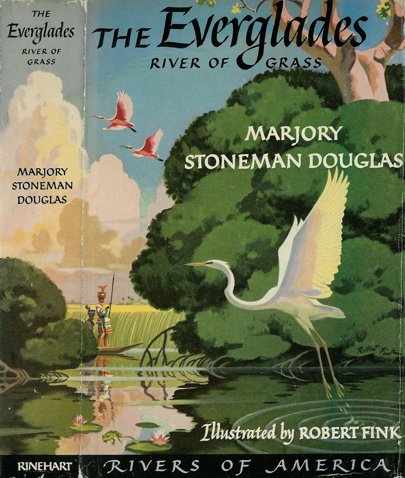 It is spring break at the college where I work and I am taking the next few days off to visit some museums, catch up on some things around the house, and just relax in general. Tonight I started a book I have wanted to read for years, decades actually: Marjory Stoneman Douglas’s The Everglades: River of Grass. I was raised in South Florida and my mother still lives there. Growing up, my friends and I went to the Everglades on an almost weekly basis, taking long hikes on the fire roads built by the Army Corps of Engineers in the middle part of the twentieth century. The Everglades have some of the most beautiful sunsets one could imagine.
I didn’t read Stoneman’s classic during my high school year because, well, I was too busy being a kid. I am not sure what I was expecting but the book offers a surprising amount of historical background on both the state and national level. I checked the book out of the library where I work because I recently agreed to write an encyclopedia article about the Miami Hurricane of 1926. Stoneman touches on it briefly. I thought writing the hurricane piece would help me learn more about Florida during the Reconstruction and Jim Crow eras, which it has. The Hayfoot and I have it on the 2-3 year plan to take a Civil War road trip through the Sunshine State. It is something I started thinking about more and more after visiting Gettysburg the first time and seeing the Florida monument on West Confederate Avenue. Maybe if I had grown up in the northern part of the state, which is ironically more “Southern” than south Florida, I would have had a better sense of these things. For whatever reason, it is something we never heard about growing up. It is funny how when we reach a certain age we go back and try to fill in the blanks we missed the first time around.
09 Monday Apr 2012
Posted in Museums, The lighter side
≈ Comments Off on If ever in Ames . . .
Some people dream of living on a plantation. Jerry Litzel of Ames, Iowa made it a reality. My favorite part are the pillars imported from Georgia.
I love stuff like this, where people take their passion and turn it into something unique and quirky and wonderful. I’m the guy who once made his not-yet-wife drive 1 1/2 hours out of the way, back and forth, to visit Graceland Too in Mississippi.
06 Friday Apr 2012
Posted in Media and Web 2.0, National Park Service
≈ Comments Off on The National Park Service’s Civil War
The National Park Service has had an active web presence for quite awhile now. This week the organization has taken it up a notch by unveiling its official site for the 150th anniversary. There are many worthwhile blogs and websites for information regarding the conflict. What is unique about the NPS is that it is the caretaker for many of the places where Civil War transpired. To put it mildly, this give the Park Service a unique perspective. All told, the Service protects and interprets over 100 parks related to the war and its legacy. Some (Gettysburg) are obvious; Others (Aspet, the home of sculptor Augustus Saint-Gaudens) less so. The one safe bet is that wherever you live you are close a national park or monument, and probably one related to the Civil War. The sesquicentennial is an exciting time because it is quite consciously an attempt to make up for the failures of the centennial fifty years ago. Nowhere is this more apparent than when visiting our parks. Visit if you can. Nothing beats the real thing.
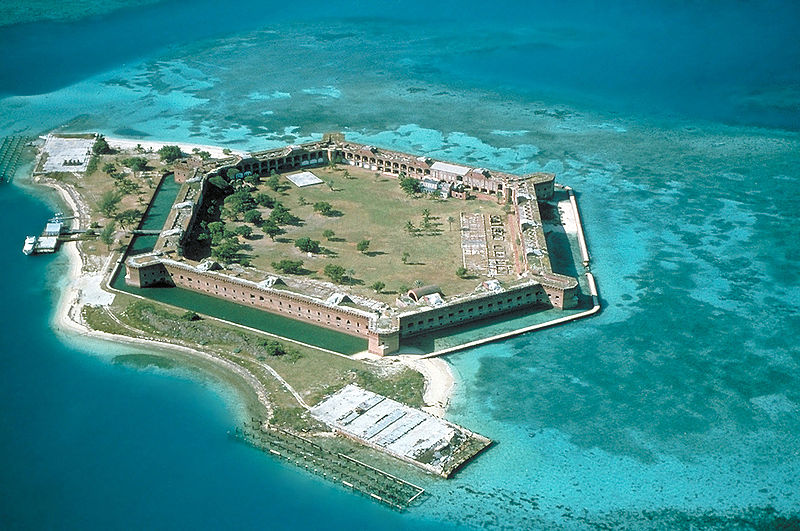 Fort Jefferson, Dry Tortugas National Park
(image/National Park Service)
05 Thursday Apr 2012
Posted in Heritage tourism
≈ Comments Off on The new siege of Petersburg
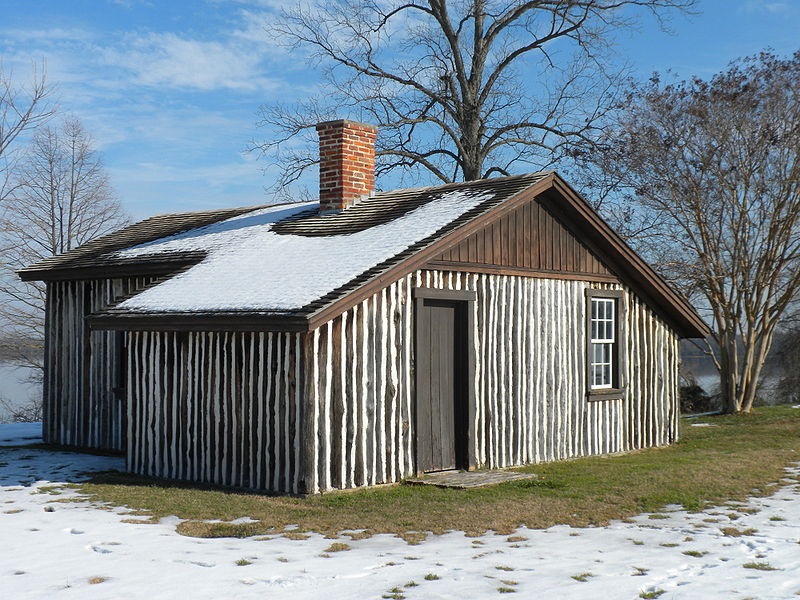 Grant’s Cabin, City Point, VA; Petersburg National Battlefield
How much can a Civil War battlefield mean monetarily to a local community? A lot. Visitation has been increasing at sites for the past several years, and is cresting now with the sesquicentennial. The best evidence of this is when trying to park at the new visitors center at Gettysburg, where the Hayfoot and I have often had to park in the far off auxiliary parking area on our way to the building. Crowds aside, you would hardly know you were in Pennsylvania what with so many of the cars having license plates from across the country. Roughly speaking, the typical visitor to the Civil War parks is a white male between 30-65. Slowly but surely this has been changing in recent years as the NPS and their state and local partners have actively reached out to a wider constituency. The best way to do this is to focus not merely on the minutaie of battle tactics and troop movements, but to interpret the causes and consequences of the war and discuss why the Civil War era matters today. Few places have done this as well as Petersburg National Battlefield. The hard work has been paying off. One of the biggest beneficiaries has been the local economy.
(image/Smallbones)
04 Wednesday Apr 2012
Posted in Film, Sound, & Photography, Heritage tourism, Media and Web 2.0, Museums
≈ Comments Off on Animating Monticello
Monticello’s Mulberry Row was the focal point of Thomas Jefferson’s estate. For much of the nineteenth and twentieth centuries, however, visitors paid little heed to this important part of the plantation. Most visitors wanted to see the main house. With the rise of African-American and social history in the past five decades, that has changed. Archaeologists and curators have done great work there to literally unearth the past. The trouble was that visitors could still do little more than imagine what life was like in the working parts of Monticello, especially those parts where the slaves lived and toiled. Professor Earl Mark of the University of Virginia is now trying to help us visualize what life was like there.
03 Tuesday Apr 2012
Posted in Ellis Island, National Park Service
≈ Comments Off on The field trip
A few weeks back I mentioned that Scholastic was hosting a virtual field trip at Ellis Island. Well, the field trip was held this past Thursday and was a tremendous success. Students from across the country submitted over 3,600 hundred questions, in advance and live during the event. Scholastic has more, lots more, on its website. I found the video especially informative. It is an excellent introduction for children and adult folks who may just want to brush up on this important part of our nation’s history. How much do you know about Ellis Island?
01 Sunday Apr 2012
Posted in Ellis Island, National Park Service
≈ Comments Off on Sunday morning coffee
 original Ellis Island graffiti
Hey everybody, it is Sunday morning. We are relaxing with our coffee and Ravi Shankar on the record player.
Last week when a good friend of ours was visiting from San Antonio the two of us visited Ellis Island. I made certain to point out the original graffiti written by the immigrants all those decades ago. Waiting in long lines, stressed individuals left a record of themselves on the walls of the immigration depot. During the renovation in the 1980s these marking were discovered and some, now behind plexiglass, were left for posterity. It is my favorite part of the museum. During a recent renovation of Constitution Hall in Topeka workers discovered graffiti dating back to the days of Bleeding Kansas in 1855. I am always captivated by these tangible remnants left by those who came before us. They are reminders that those who came before us were real people, not just stories in a book.
Enjoy your Sunday.
(image/National Park Service)
29 Thursday Mar 2012
Posted in Those we remember
≈ Comments Off on Earl Scruggs, 1924-2012
Musician Earl Scruggs has died. Scruggs was fortunate to see the musical style he helped create return to its rightful place in our culture not once but twice in his lifetime. Bluegrass had been overtaken by rock ‘n’ roll by the late 1950s when young, white kids began listening to the music of the 1920s and 1930s in suburban ranch houses and college dormitories across the United States. Thus the Folk-Blues Revival was born. Those country, folk, and blues musicians fortunate enough to be alive to see the renaissance suddenly found an audience they never previously enjoyed, or at least had not enjoyed for decades. When George Wein produced the first Newport Folk Festival in 1959 he made certain Scruggs and his band were on the bill.
The beatniks listening in the coffee shops of Greenwich Village, and their younger siblings still at home playing Leadbelly records on their hi fi’s, were going by a false premise. Mistakenly, the coming-of-age baby boomers believed they were returning to more pure and authentic musical styles. In reality, the songs of the Depression and the Roaring Twenties had been written, recorded, and marketed to the public with a great deal of thought and sophistication. The middle-aged bluesmen and folk singers were probably a little bemused by the whole thing, but there is something to be said for letting people believe what the want to believe.
The Second Coming came in 2000 after the release of the Coen Brothers’s O Brother, Where Art Though? The critically and commercially successful film brought bluegrass to yet another generation. Suddenly, Scruggs, Ralph Stanley, and others were again in the public eye. In part, it is what we have to thank for the popularity of such acts as Gillian Welch. That duo is itself a testament to the institutionalization of the music. David Rawlings is a New Englander from Rhode Island, and Welch herself grew up in California where her parents were staff writers on the Carol Burnett Show. The two met when studying at the Berklee College of Music in Boston.
Though its antecedents go back further, bluegrass itself dates to the mid-twentieth century. The term itself comes from the name for Bill Monroe’s ensemble, the Blue Grass Boys. Scruggs was one of the hundreds of musicians who passed through the temperamental, occasionally violent, and often angry Monroe’s band over the decades, and he was easily one of the most influential. He and Monroe alumnus Lester Flatt left the band in 1948 and founded the Foggy Mountain Boys. Scruggs did not create the famous three-finger style of banjo playing, but he did perfect it. Bluegrass is an astonishingly versatile music that is doing well today in the twenty-first century in large part thanks to Earl Scruggs and his colleagues. Thankfully, he lived to see it.
 The Strawfoot