The African American Guidebook

Cane River Creole National Historic Park, Natchitoches, Louisiana

The other day I received from Eastern National the Guidebook to African American History in the National Parks. The monograph was published last summer in conjunction with the dedication of the Martin Luther King, Jr. Memorial on the National Mall. The guidebook is not a comprehensive account of African American history as interpreted by the NPS, but it is extensive. Some sites, such as the African Burial Ground in Manhattan, are obvious inclusions; however some entries are less intuitive. Examples include the Jefferson National Expansion Memorial (the St. Louis arch), Port Chicago (California) Naval Magazine National Memorial, and Hot Spring (Arkansas) National Park. In addition to site information there are brief essays about the Civil War, Juneteenth, the Buffalo Soldiers, and other aspects of African American heritage. The book is insightful not just for the information it provides on the sites themselves, but for what it says about the Park Service’s efforts to tell a more inclusive version of our nation’s history. With Black History Month coming up there could not be a better time to read this new offering from the NPS.

(image/James W. Rosenthal)

Etta James, 1938-2012

Etta James has died. Incredibly the singer who began her career over half a century ago was only seventy-three. James was a diva in the time before that word meant more than “female singer.” She was known primarily as an R&B singer because of her work with Chess Records, but she was so much more than that. Jazz, blues, soul, gospel, rock & roll, and whatever else struck Ms. James’s fancy were all part of her body of work. As Duke Ellington would have noted approvingly, Etta James was Beyond Category. Unfortunately the public was not always so quick to catch up, with deleterious effects on her career.

Etta was about more than the music, however. With her curves, dyed platinum hair and feline eyes she oozed female sexuality in a way that was aggressive but never vulgar. Let’s just say it never would have occurred to Etta to flash her vagina in public the way so many of today’s singers and actresses do.

We will miss you Etta.

Johnny Otis, the man who discovered her, died on Tuesday at ninety. Like James, Otis worked in many genres. He started as a big band leader but was also one of the pioneers of early rock & roll. It was Otis who produced Leiber and Stoller’s “Hound Dog” for Big Mama Thornton before it was covered by Elvis and others.

Shipwreck project

Cape Coast Castle, Ghana

George Washington University anthropologist Stephen Lubkemann has received a grant from the school and the Smithsonian Institution to locate and hopefully study a slave ship that sank off the coast of South Africa in the late eighteenth century. Archaeologists have previously studied shipwrecks of vessels that had been used in the slave trade. What makes this unique, the researchers claim, is that this will be the first study of a ship that sank with slaves aboard. The Smithsonian hopes the project yields previously unknown details of how the trade was practiced and contribute to the museum’s educational programming.

(image/Hiyori13)

New beginnings at the Met

I went to the Metropolitan Museum of Art today for the opening of the third and final phase in the renovation of the American Wing. Today the new Galleries for Paintings, Sculpture, and Decorative Arts were opened to the public for the first time. The project was ten years in the making and began with rededications of the museum’s collection of American classical arts (2007) and period rooms (2009). It is a new era for one of the world’s great museums and you owe it to yourself to go if you are able.

Holiday Mondays, especially in the winter, are a great time to visit the museum. I thought it was going to be extremely crowded today. New Yorkers often leave the museums to the out-of-towners during the holiday season. I figured that the reopening, coinciding with a day off and a cold but otherwise fine day would have New Yorkers lining up to see the Gilbert Stuarts and Rembrandt Peales in their new surroundings. Surprisingly, this was not the case. Attendance was brisk but not unmanageable.

I intend to write more about art and history over the course of the year and so today will give only a brief overview:

Emanuel Gottlieb Leutze’s Washington Crossing the Delaware has again taken its proper place as the centerpiece of the American Wing. In the old gallery Washington was cramped in a small space unworthy of the masterpiece. Forced to compete with lesser works, the painting’s grandeur was diminished. This is no longer a problem. Entering the space one first sees a gallery of eighteenth century portraits. Turning down the hall to enter the next gallery one gets a partial, teasing glimpse of Washington several rooms down that just builds the excitement and expectation. Let’s just say there is a big wow factor when you finally get to it. I always tell people “Look at the frame. The frame is part of the story.” Here the Met has outdone itself. Washington is in a new frame based on a recently found Matthew Brady photograph of the painting taken during the 1864 Sanitary Fair that raised funds for the U.S. Sanitary Commission. A great touch.

The Met has always had an extensive collection of Augustus Saint-Gaudens and they have employed the sculptor’s works throughout the new galleries to great effect. Ones I noticed included a study for his David Farragut statue that sits in Madison Square Park, a Standing Lincoln like the one in Chicago’s Lincoln Park, a sculpture of Victory as also depicted atop the Sherman statue in Manhattan’s Grand Army Plaza, and the Lincoln that Saint-Gaudens created using the Volk life mask. A half hour later I saw the death mask of Lorenzo de’Medici from 1492 in an exhibit of Renaissance portraiture. It was one of those moments of serendipity and inspiration that can only happen in Met, the Louvre, and a handful of other institutions.

There are twenty-six rooms in the new space, each filled with little surprises that reward the close observer. When a person gets to the end he will have a good understanding of American history and society as depicted by its artists. The only thing missing today was the Hayfoot, who had to work. I am already counting down to President’s Day when we can go together.

Central Park from the Metropolitan Museum of Art

Art on the Mall, cont’d

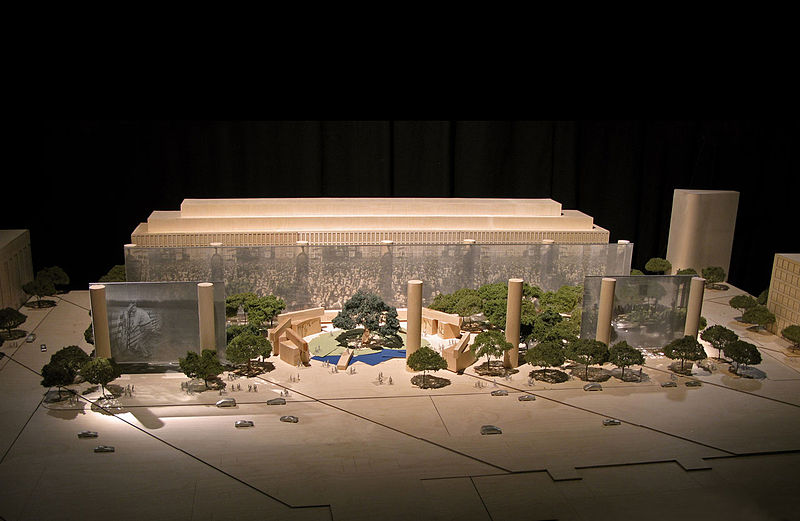
Frank Gehry’s proposed Eisenhower Memorial

In November I posted about the controversy surrounding the Eisenhower Memorial scheduled for groundbreaking early this year. The Frank Gehry designed monument will be directly on the Mall, near the Smithsonian Air and Space Museum and within easy view of the Capitol Building itself, some prime real estate to say the least. I wrote my masters thesis on Eisenhower and believe him to be worthy of this distinction. Public art is almost always fraught with controversy, something no one understood better that Ike himself. Speaking at the 25th anniversary of the founding of the Museum of Modern Art in 1954 President Eisenhower noted that “as long as artists are free to create with sincerity and conviction, there will be healthy controversy and progress in art.” Controversy can indeed be healthy, moving good ideas forward and pushing bad ones aside. Still, it is this writer’s humble opinion that the design does not suit the subject or the site. Modernity itself did not intimidate Dwight Eisenhower, but the avant garde memorial does not align with how the general and president lived and saw the world around him. Eisenhower’s family has become more vocal in their opposition. Grandson David stepped down from the Commission in December and last week the family issued a letter to the National Capital Planning Commission expressing its disapproval. It will be interesting to see if the projects moves ahead in the face of this opposition.

In other news concerning memorials on the National Mall, the Department of the Interior will change a quotation on the Martin Luther King, Jr. monument to better reflect Dr. King’s words. As currently written the inscription has King saying

“I was a drum major for justice, peace and righteousness.”

In a February 1968 sermon know as the “Drum Major Instinct,” King said

“Yes, if you want to say that I was a drum major, say that I was a drum major for justice. Say that I was a drum major for peace. I was a drum major for righteousness. And all of the other shallow things will not matter.”

Critics, including Maya Angelou, believe the paraphrase does not accurately reflect King’s statement. The Park Service will consult with the King family and scholars to create a new inscription.

(image/Eisenhower Memorial Commission)

That cure for the post holiday blues

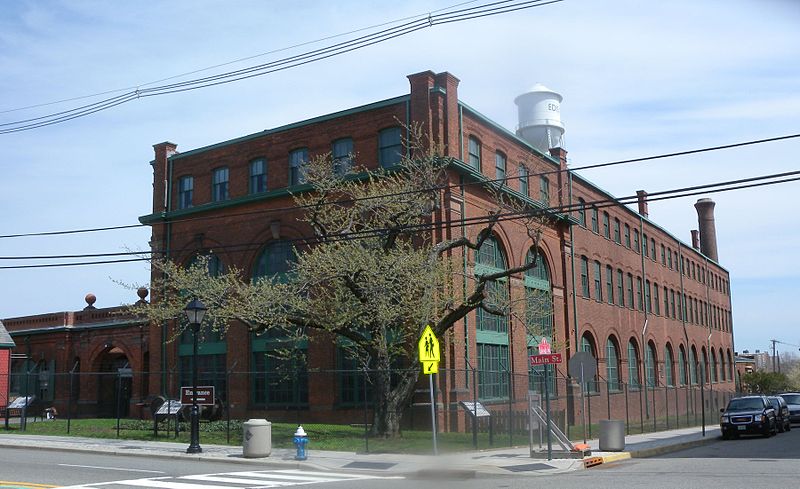
Looking for something to do this weekend but spent your allowance in December? The National Park Service has you covered. The NPS is waiving fees today through Monday in honor of Dr. Martin Luther King Jr. The winter is a great time to visit your national parks and monuments; crowds are smaller and the vistas are often greater because the foliage is off the trees. Visiting a park off-season makes me feel like a kid getting an extra day off school. The Park Service waives fees several times throughout the year, but keep in mind that many sites never charge for admission. With over 400 to choose from you cannot go wrong.

The Edison National Historic Site in New Jersey is just one national park waiving fees this weekend.

(image/Jim Henderson)

The Battle Abbey of the South

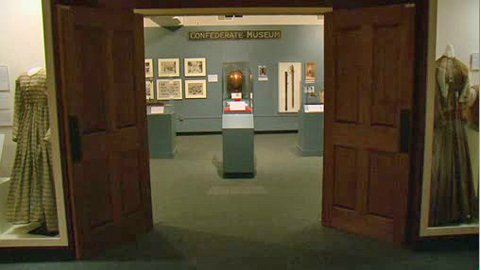
Museum of the Confederacy, Richmond, Virginia

Those who have been following the Civil War’s 150th anniversary know that the two major purposes of the Sesquicentennial are 1) to correct the mistakes made during the Centennial in the 1960s and, 2) to incorporate the historiographical shifts that have taken place since that time. Historians, park rangers, curators, and others have been working hard the last few years to make this a reality, and no one has faced a harder challenge in these endeavors than officials at museums dedicated to the history of the Confederacy. Some, such as the Museum of the Confederacy itself, have made great strides in recent years, doing much to abandon the Lost Cause narrative that was the original mission of these institutions. Others are working equally hard but finding it difficult to enact change. Budgets have shrunk due to the economic crisis; attendance, a chief source of revenue, has been down in recent decades as younger people have largely stayed away; corporate sponsorship, a staple of today’s museum experience, is next to impossible because sponsors do not want to associate their brand with the Confederate States of America. I have visited numerous such museums across the Deep South and can attest that many, even the smallest, contain valuable artifacts worth preserving. (The most poignant for me was the one in rural Arkansas that my father, who died three years ago, drove me sixty miles to visit.) I predict that those that refuse to change in any way–and there are many–will eventually become so anachronistic that they will disappear for good. Louisiana’s Civil War Museum at Confederate Memorial Hall is trying to make the transition.

(image/Voice of America)

Happy New Year

Everglades National Park

The Hayfoot and I returned from Florida this afternoon. We had a good time visiting my mother, laying on the beach, watching bad tv, and just relaxing after a long semester. Now we are ready for a good 2012. A few things I am looking forward to beyond blogging and spending more time with my wife now that she is out of grad school are

the reopening of The New American Wing at the Metropolitan Museum of Art,

visiting Gettysburg and Antietam in June,

catching the exhibit on Jews and the Civil War to be held at the American Jewish Historical Society/Yeshiva University this spring,

meeting my six week old niece for the first time later this winter.

Here is to a fun and productive 2012.

We interrupt this vacation…

Brooklyn Museum of Art

Hey everyone, I hope you are enjoying the remainder of your holidays. Today a friend and I ventured to the Brooklyn Museum to see the highly touted Youth and Beauty: Art of the American Twenties. Our expectations were high and I can only say that they were exceeded. It is not every day that one sees the works of Georgia O’Keeffe, Thomas Hart Benton, Alfred Stieglitz, Edward Hopper, Marsden Hartley, Aaron Douglas, and others all on display, and so intelligently. American is the key word in the exhibit’s title. While Europeans were exhausted and recovering from the slaughter of the Great War, artists on this side of the Atlantic were busy creating a uniquely American idiom. Incorporating photography, painting, sculpture, and mass media, it is the type of show that changes one’s ideas of what “modern” is. The exhibit was so overpowering that we took a break and went to Tom’s Restaurant for lunch before going back for more. I used to volunteer at the Brooklyn Museum and can tell you that it is one of our country’s leading cultural institutions. If you are hesitating to travel to the land of us bridge and tunnel folk, don’t. The museum is remarkably easy to get to from Manhattan. Any time is a good time to visit the Brooklyn Museum, but if you can see this show before it ends on January 29. And bring your appetite for Tom’s around the corner.

(image/Henrinator69)