Baptized by Fire

(Kurz & Allison; Library of Congress)

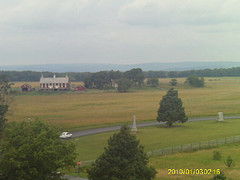
I am writing this from Washington, DC.  Today marks the 150th anniversary of the First Battle of Bull Run, which took place only about thirty miles down the road.  It was not until I began visiting DC regularly a few years ago that I realized just how close to the capital the Civil War occurred.  Fifty years ago today New York State made some history of its own when it donated one hundred and twenty six acres of Virginia countryside to the federal government.

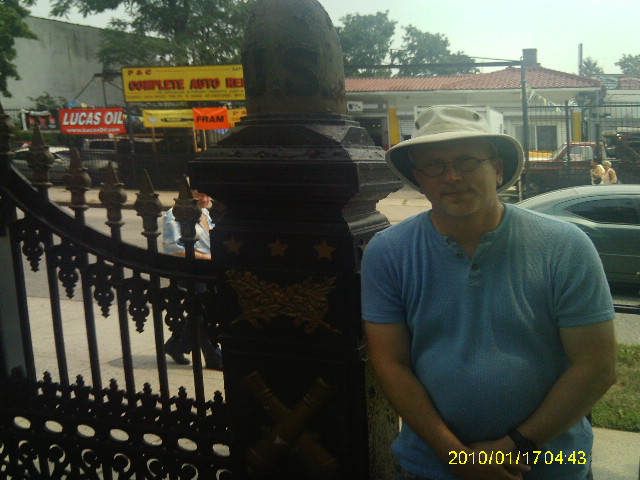
The monument to the Fourteenth Brooklyn was rededicated on July 21, 1961.  Thankfully it today lies within park boundaries.  (photo by William Fleitz, NPS)

In 1905 and 1906 the New State legislature authorized the purchase of six acres of land for the construction of monuments for the 14th Brooklyn (later renamed the 84th New York), the 5th New York (Duryee’s Zouaves), and the 10th New York (National Zouaves).  Each regiment was granted $1,500, which was the standard rate for such projects at the time.  (The monuments for the latter two regiments were in recognition of those units’ actions during Second Bull Run.)  The three monuments were dedicated together on October 20, 1906, with scores of veterans taking the train from New York City and elsewhere in a pounding rain.

Fast forward to the early 1950s, when New York State officials prepared to give the six acres to the Manassas National Battlefield Park.  The deal became complicated, however, when the legislative Committee to Study Historical Sites realized that encroaching development threatened to cut the three monuments off from the rest of the battlefield.  Chairman L. Judson Morhouse advised the state to buy an additional one hundred and twenty acres to ensure that the Empire State’s units would fall within the parkland.  The state agreed and purchased the acreage in 1952.  Later in the decade the New York State Civil War Centennial Commission, Bruce Catton Chairman, proposed to transfer the land to the Park Service during the 100th anniversary of First Manassas in 1961.  Not surprisingly, the NPS was amenable to this and so fifty years today Brigadier General Charles G. Stevenson, Adjutant General of New York, handed over the deed to Manassas superintendent Francis F. Wilshin.

German-born Corporal Ferdinand Zellinsky of the 14th now rests in Brooklyn’s Green-Wood Cemetery.
Franklin and Eleanor

Hey everybody, the Hayfoot and and I took some time off from the Civil War and ventured two hours north of the city to Hyde Park.

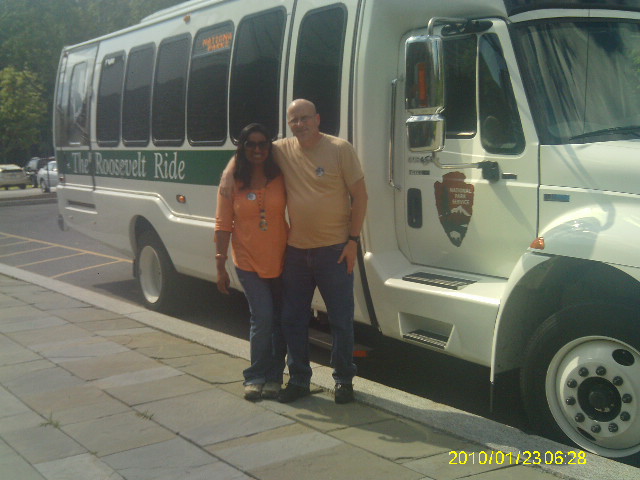
The Park Service has a great amenity called the Roosevelt Ride.  Once a day during the season this bus picks up visitors at the Poughkeepsie train station, takes them to the various Park sites in the area, and returns them in the early evening for the train back to Grand Central.

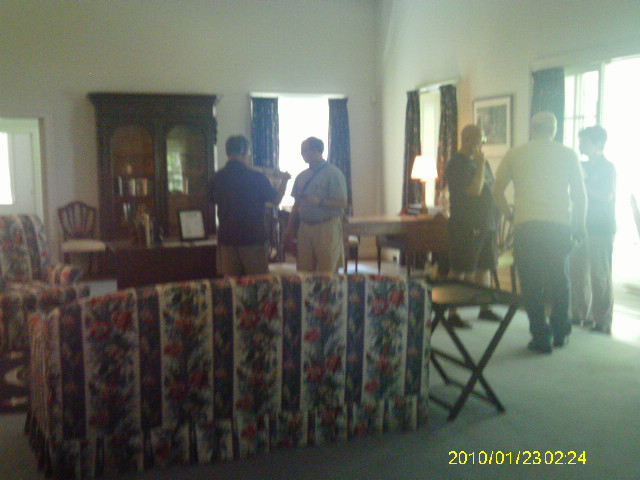
This is Top Cottage, Roosevelt’s retreat on the grounds of the estate.  I think mainly he was retreating from his mother Sara.

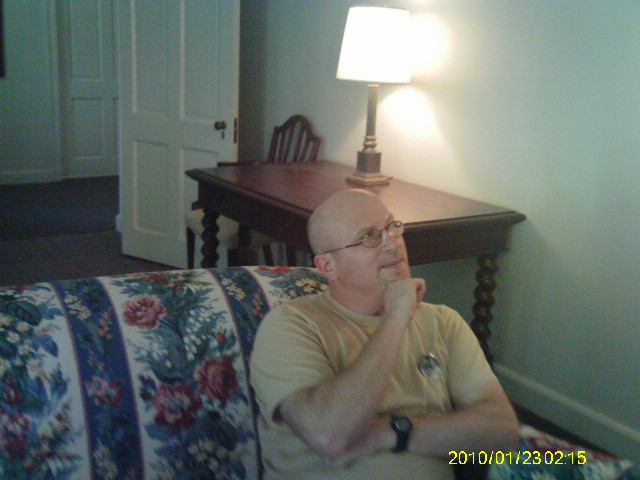
Yes, you were allowed to sit on the furniture.  This was FDR’s spot on the sofa, which is not the original.

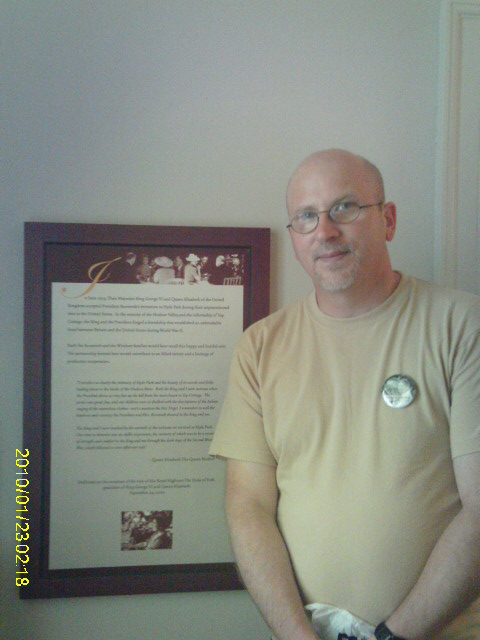
This is difficult to make out but it describes the visit of Queen Elizabeth and King George VI to Hyde Park.  Indeed, this was the royal figure depicted in The King’s Speech.  The Roosevelt Administration tactfully ensured that the king would not have to address a joint session of Congress.  The couple were on a goodwill tour of North America and traveled to Hyde Park to spend some informal time getting to know the the Roosevelts.  The king and queen visited Franklin and Eleanor in June 1939, less than three months before war broke out in Europe, and were the first British monarchs ever to visit the United States.  That they would go so far out of their way says something about the shifting balance of power in the Anglo-American alliance.

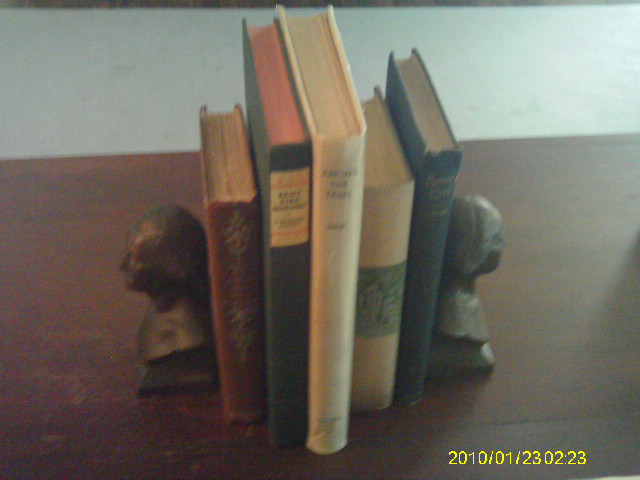
FDR’s personal effects

The Fala rug is a nice touch

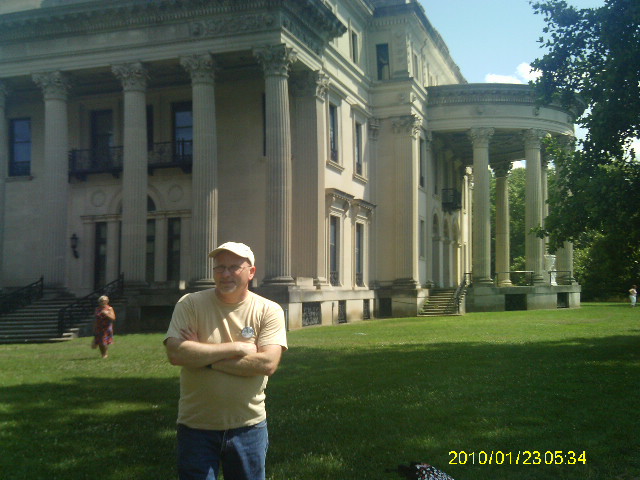
We also went to the nearby Vanderbilt Mansion, the inside of which was ghastly even by Gilded Age standards.

It does offer spectacular views of the Hudson, though.

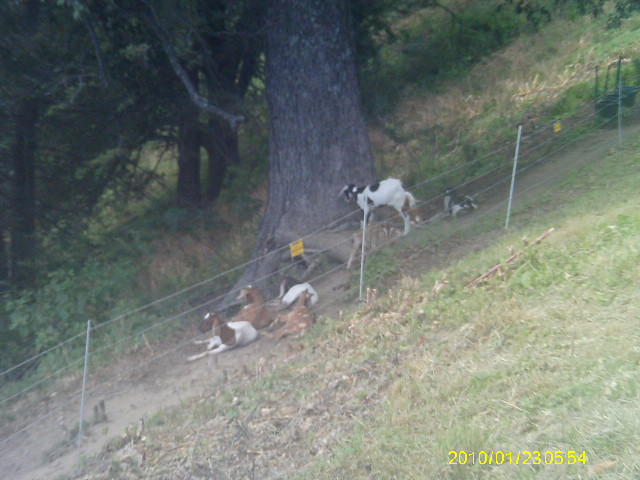
Here are some National Park rangers you don’t see every day.  In the distance we saw these goats and walked down to investigate.  As it turns out the Park uses goats to control the grass on the treacherous slopes.

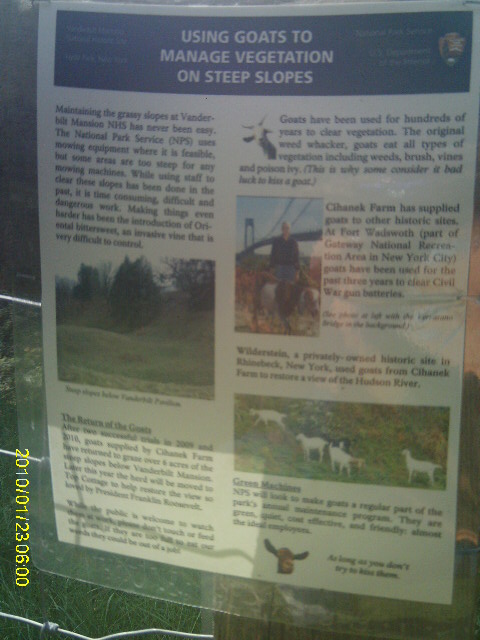
The sign explained the project.  If you look closely you will see that they are doing the same thing underneath the Verrazano-Narrows bridge at Ft. Wadsworth, something I did not know when we visited this past March.  The goats are only out during the grass growing season, which explains why we did not see them in the winter.  Leave it to the Park Service to come up with something like this.

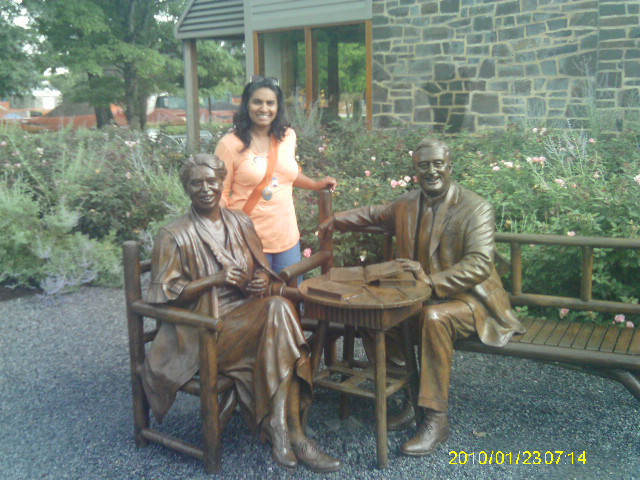
This is just one of the many books Eleanor Roosevelt wrote.  I was especially struck by this one, having written my masters thesis on relations between the United States and India during the Cold War.  In addition to her books, Mrs. Roosevelt published thousands of “My Day” columns over the decades.

Summer 2011: Taking our show on the road

“Did you go to the reenactment?”

When I return from a trip to a Civil War battlefield I often get asked the question above.  Contrary to what many believe, the National Park Service does not permit the reenacting of Civil War battles on Park property.  The Park Service does allow Living History programming, such as demonstrations of artillery and musketry (with blanks) and camp life.  To clear any confusion, the NPS has created this video.

Civil War subway trip

Hey everybody, last week we ventured to Cypress Hills and Cypress Hills National Cemeteries.  Here are a few photographs.

Cypress Hills Cemetery is a public burial ground on the Brooklyn-Queens border.  One takes the J train to nearly the end of the line.  The cemetery was established in 1848 and is the final resting place of musician Eubie Blake, artist Piet Mondian, and Mae West to name a few.

This is the War of 1812 memorial.  The bicentennial of our second war with England starts next year.

This is the Civil War section of the public cemetery.  As you can see, there are Union and Confederate dead interred here.

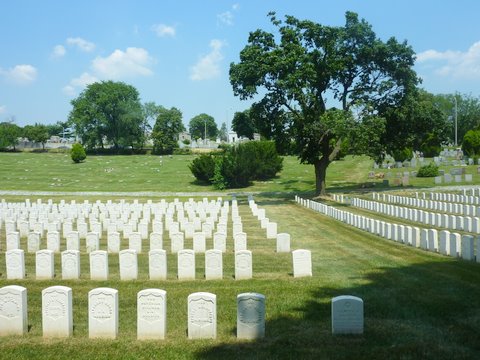
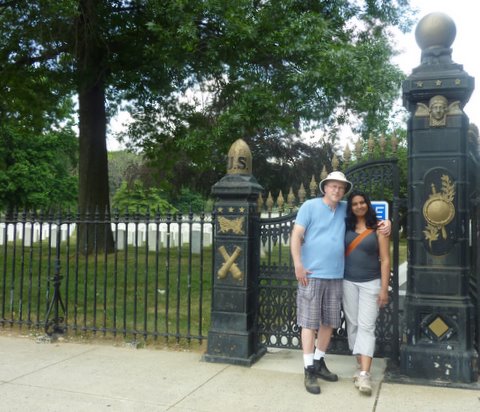
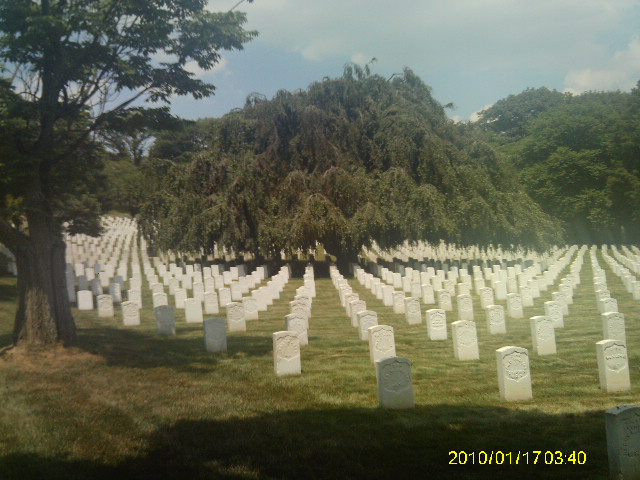
Down the street is Cypress Hills National Cemetery.  Not to be confused with the public facility, CHNC is one of the fourteen original national cemeteries created by President Lincoln in 1862.  With so many young men dying, there was no choice but to create such sites.

It is always moving to see the headstones lined up row after row.

(Robert N. Dennis collection of stereoscopic views, NYPL)

Like its counterparts at Gettysburg (stereoscope above) and Antietam, it has a rostrum.

Congressional Medal of Honor recipient Wilbur Colyer is buried here.  Colyer was born in Brooklyn and was a soldier in the Big Red One.  The Fighting First trained at Governors Island before shipping out to France during the Great War.  Sadly, Colyer died just one month before the Armistice.

Our good friend Sami accompanied us.  He too is a volunteer at Governors Island and knows a great deal about New York City history.

The cemetery is a simple one, but there is still detail to be seen if one looks closely.

One sees the changing dynamics of the neighborhood as well.

What a special day this was.


Wikipedian in Chief

(Photograph courtesy/Dan Smith)

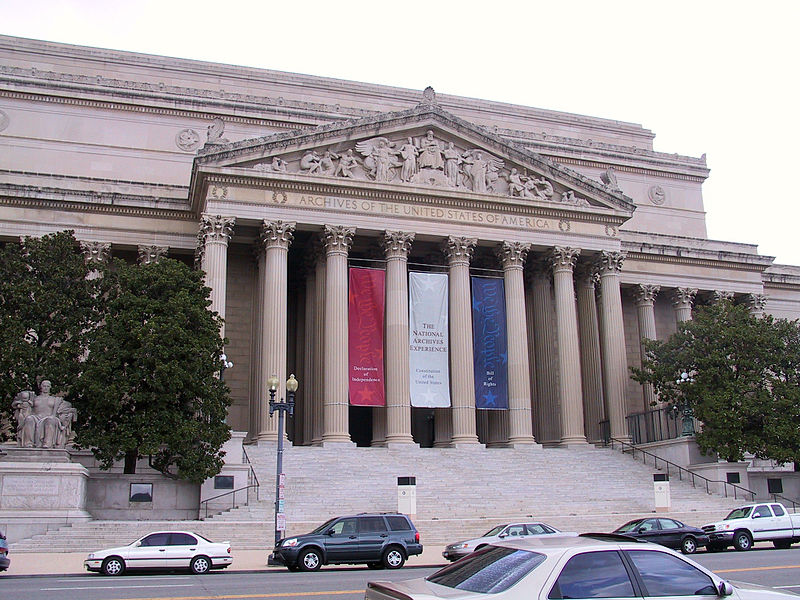
The National Archives has hired its first Wikipedian in Residence and so far the results have been impressive.  I was saying to someone just yesterday that the institutionalization of Wikipedia is all but complete.  Be honest.  Who among us does not use Wikipedia and Wikimedia Commons, at least for a quick overview of the subject at hand?  Obviously there will always be legitimate copyright issues to consider, but I can’t see the Open Access of historical photographs and documents as anything but a good thing.  After all, where do you think the above photo came from?

Abbey Road in pictures


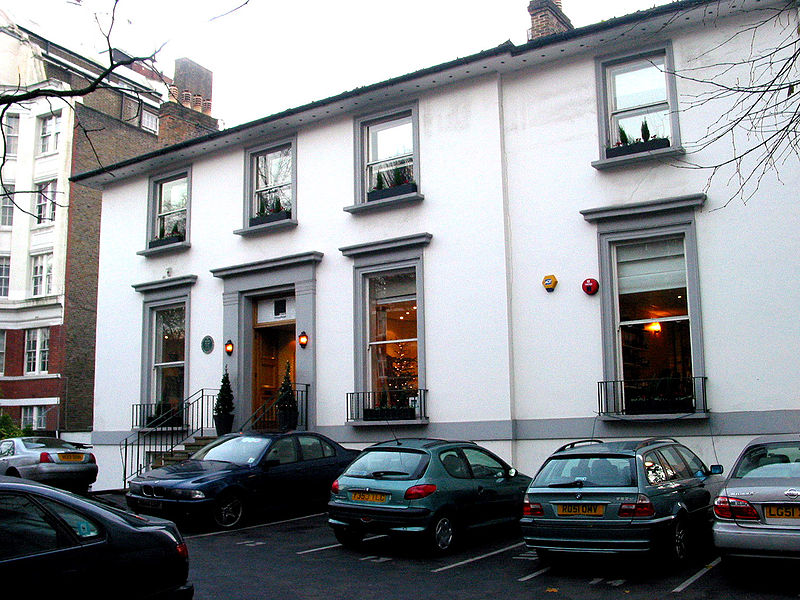
There has been much talk in the news recently about the possible closing of London’s Abbey Road Studios.  This shouldn’t be a surprise given the tenuous financial situation of EMI, the record company that owns the studio.  If anything, it is a wonder the facility has held on for eighty years.  Even when the Beatles were recording there 40+ years ago the studio had a reputation for being cramped and technologically obsolete.

The Quartermaster

There was a good piece in last Friday’s Washington Post about Union Quartermaster Montgomery Meigs.  The provisioning of the Union Army is an often overlooked component of the Civil War, probably because the story of how Billy Yank’s socks reached him during the Siege of Petersburg does not make for dramatic story telling.  Still, undramatic is not the same as unimportant.

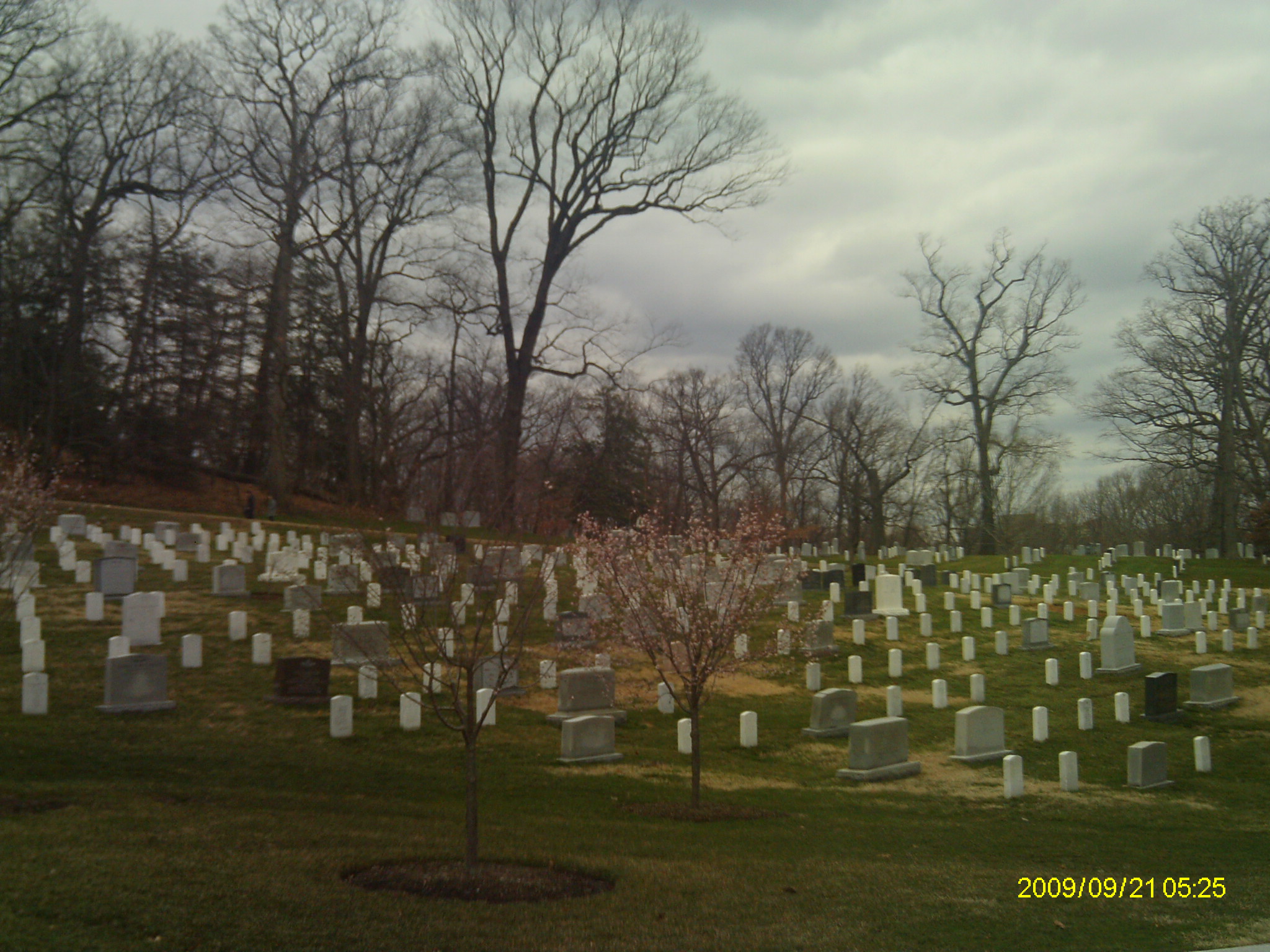
Meigs is of course most famous for creating Arlington National Cemetery in the flower garden of Robert E. Lee’s home.

Meigs, however, was responsible for much more than that.

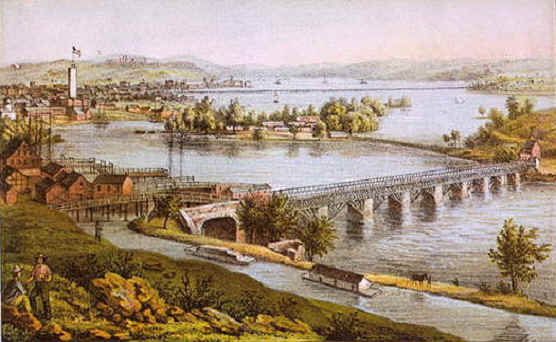
Even if the war had not come Meigs would have been justly famous for engineering the Washington Aqueduct, among other things.  This system of bridges and channels partially opened two years before the conflict started and was fully operational by 1864.  Given that Washington D.C. went from tidal backwater to armed fortress during the war, this is no small thing.  Ironically the war itself may be the reason we think so little of Meigs’s aqueduct today.  The mundane story of our drinking water, however important it obviously is, cannot compete with headlines from Chancellorsville and Gettysburg.

The aqueduct is still in use today, bringing millions of gallons of water to the region.

(Lithograph of the Washington Aqueduct, circa 1865; U.S. Army Corps of Engineers)

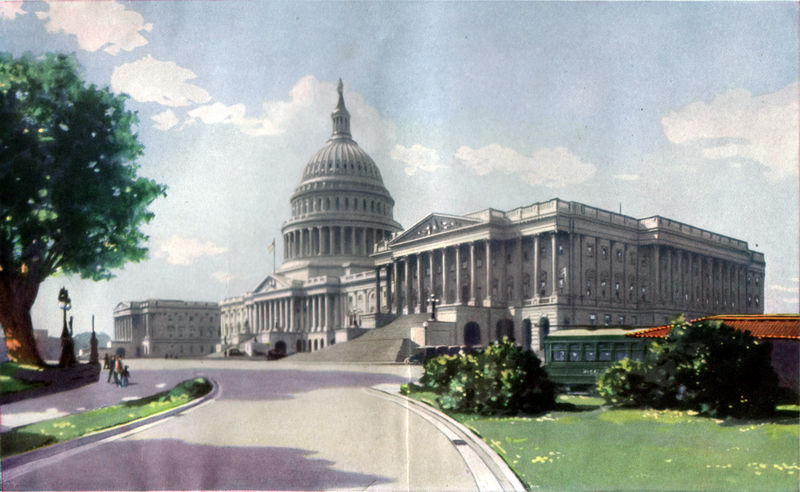
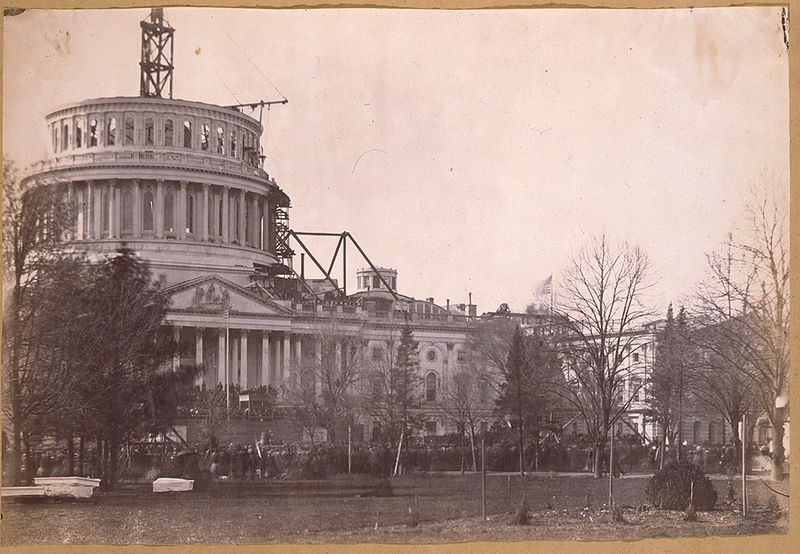
During this same period he was working on U.S. Capitol dome.

(Author: Harris & Ewing; Source: Collier’s New Encyclopedia, v. 1)

(Library of Congress)

The structure was famously incomplete during President Lincoln’s 1861 inaugural.

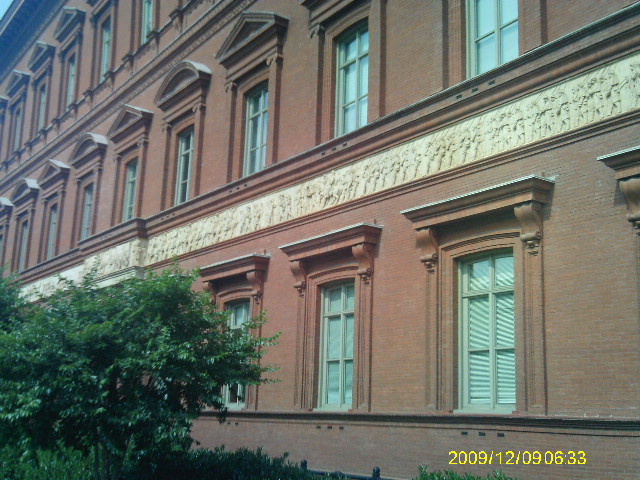
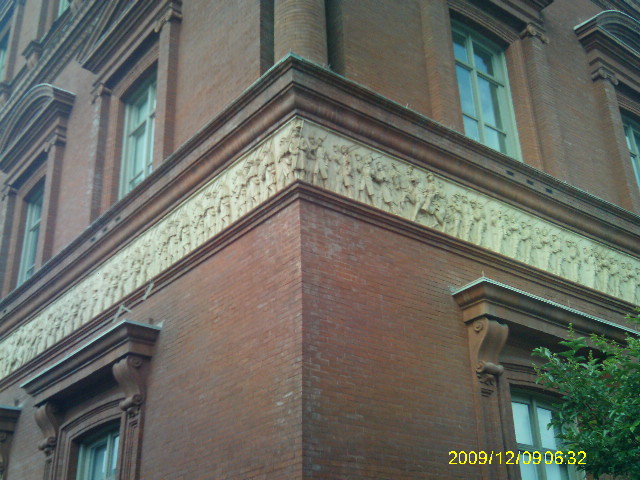
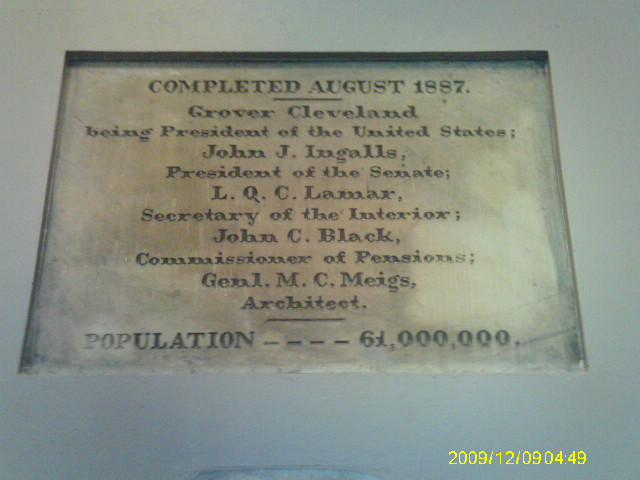
I began thinking more about Meigs’s role in the development of the nation’s capital during a visit to the National Building Museum this past Memorial Day weekend.  The museum is in what used to be the old Pension Building.  The mammoth edifice is testimony to the power Union veterans held for decades after the war.


This frieze runs the perimeter of the building.

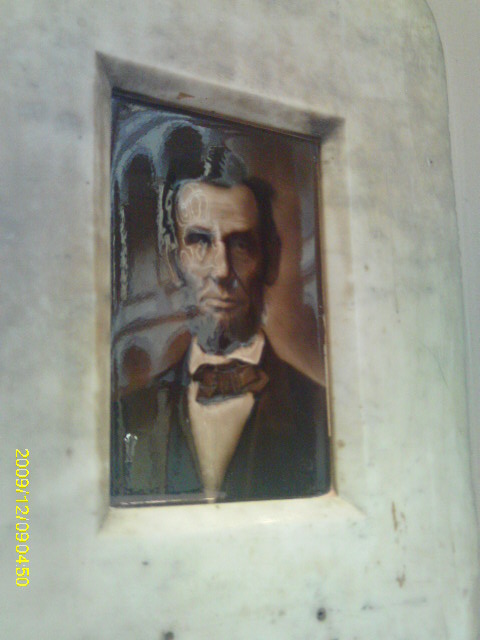
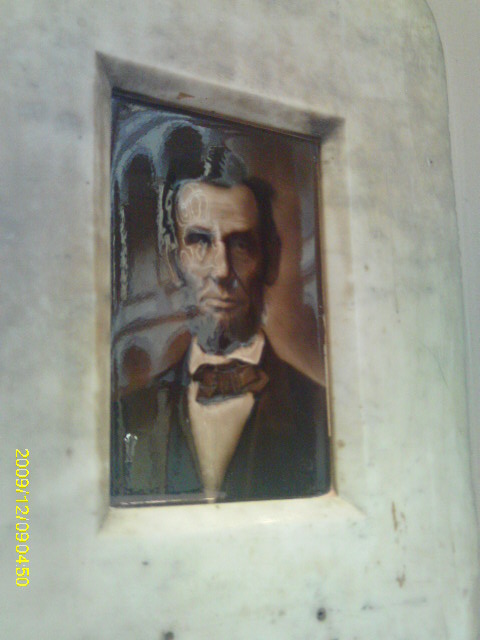
Meigs made sure to include this memorial to one of his strongest supporters.

If you want to see the man’s legacy, look around you.


The real Treme

Because we do not have a television in our home, my wife and I get our movies and tv shows through Netflix.  Usually we watch a full season of a particular show, mixing in a movie or two between dvds of whatever series we happen to be caught up in at the moment.  Most recently it has been Treme, David Simon and Eric Overmyer’s drama about post-Katrina New Orleans.  For those who have never seen the show, here is an excerpt:

Wanting to know more about the Treme neighborhood, I ordered journalist Lolis Eric Elie and filmmaker Dawn Logsdon’s documentary Faubourg Treme: The Untold Story of Black New Orleans.  The Hayfoot and I watched it last night and I cannot recommend it highly enough.  The film depicts the crisis caused by the hurricane while exploring the history of the community going back to the eighteenth century.  I had always known of course about the Crescent City’s jazz heritage; I was aware, too, that the Plessy vs. Ferguson case originated on a New Orleans railroad car.  I had never grasped the city’s full role in the nation’s history, however, until seeing this intelligent, unflinching paean to one of the world’s great cities.