• About

The Strawfoot

~ a New Yorker's American History blog

The Strawfoot

Category Archives: Film, Sound, & Photography

I read the news today, oh boy

08 Thursday Aug 2013

Posted by Keith Muchowski in Beatles, Film, Sound, & Photography

≈ Comments Off on I read the news today, oh boy

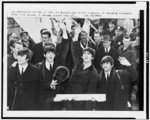
Kennedy Airport, 1964

Kennedy Airport, 1964

I received the fab news that Magnolia Pictures has set the date of release for Good Ol’ Freda. The documentary about the former assistant to the Beatles will be released in New York City on September 6 and go wide shortly thereafter. I am pleasantly surprised because I somehow figured it would be later in the year. 2013 is shaping up to be a good year for Beatle historiography. Freda promises to be better than the pablum we usually get regarding the group from former “insiders.” It is no different with Elvis, Sinatra, or fill-in-the-blank with any other large and important musical figure. I guess that is the price we and they pay. Six weeks later, on October 29, is the release of volume one of Mark Lewisohn’s eventual three volume history of the group. I wish the significantly longer “author’s cut” was being released in the United States, but alas it is not. I am dying to see what happens when Tune In hits the stores.

(image/Library of Congress)

Moving Midway: An interview

24 Wednesday Jul 2013

Posted by Keith Muchowski in Film, Sound, & Photography, Interviews, The new South

≈ Comments Off on Moving Midway: An interview

Earlier this month I mentioned re-watching Godfrey Cheshire’s Moving Midway. [Original review here.] Since then Mr. Cheshire kindly sat down to answer some questions:

The Strawfoot: The focus of the film is the physical relocation of your family’s ancestral home, Midway Plantation. Tell us about Midway and your cousin’s decision to move it.

Mary Hilliard Hinton (1869-1961), Midway Plantation matriarch, as she was in 1914

Mary Hilliard Hinton, 1869-1961: Midway  matriarch and family storyteller as she was in 1914

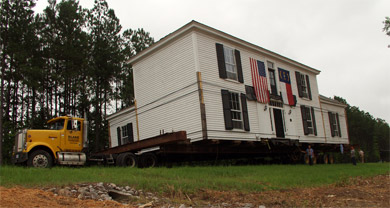
Godfrey Cheshire: Midway Plantation was built in 1848 on land in central North Carolina that my mother’s family, the Hintons, had occupied since getting a land grant from the British crown circa 1740. When I was a kid, it was this magical, ancient realm where I spent many weekends; it was also the center of our family’s memory and holiday gatherings. Flash forward to 2002, when my first cousin Charlie Silver and his wife Dena, who now own Midway, tell me they are thinking of moving all its buildings to a new location (if they can find one) in order to escape the urban sprawl that’s encroaching on the property and making it unpleasant to live there. At that point I began thinking of making a film that would not only document the family drama and logistical challenges of this project, but that would also look at the conflicted image of the Southern plantation in American history.

Who is Robert Hinton and what is his role in the story?

For me, Robert was a godsend. In early 2004 I shot some initial footage for the film at Midway. When I returned to New York, I saw a letter in the New York Times Book Review from a man named Robert Hinton who said he had grown up in Raleigh and was now a historian who taught African-American studies at NYU. You could have knocked me over with a feather when I read that. I contacted him and he said his grandfather was born a slave at Midway, and it turns out he had done lots of research about the Hintons and their history. So he came aboard as the film’s Chief Historian and Associate Producer, and made innumerable contributions to it. He is on camera a lot in the film, which is great since he’s as witty and charismatic as he is knowledgeable.

Robert Hinton is not your blood relation. You discovered in making the film, however, that you have numerous African American relatives. What has that experience been like?

Well, the initial experience was quite stunning. I had grown up never suspecting that I had any African-American blood relations, but in the early stages of shooting, Charlie told me of having been visited by a black man who showed him evidence that we had a common mixed-race ancestor, a man named Ruffin Hinton, who was born in 1848, the product of a liaison between the builder of Midway and a slave. Charlie accepted this evidence, but soon afterwards the black man died and I was unable to locate his family. Then, in 2006, in the latter stage of shooting the film, Robert received an email from a middle-school teacher in Brooklyn named Al Hinton who said he was researching family history online and believed that he was kin to the Hintons of Midway. This was how we connected with the roughly 100 descendents of Ruffin Hinton, most of whom still live in North Carolina. They invited me to one of their family reunions and I was quite moved by the experience. Obviously the whole issue of slavery is a complex and painful one, but they were very warm and welcoming. I felt a real connection with them that came from this shared history. This was very important not just to the film but also to me personally; I felt like I was discovering a part of myself that I’d never known. I’ve kept in touch with some of these “new” cousins and I value these relationships greatly.

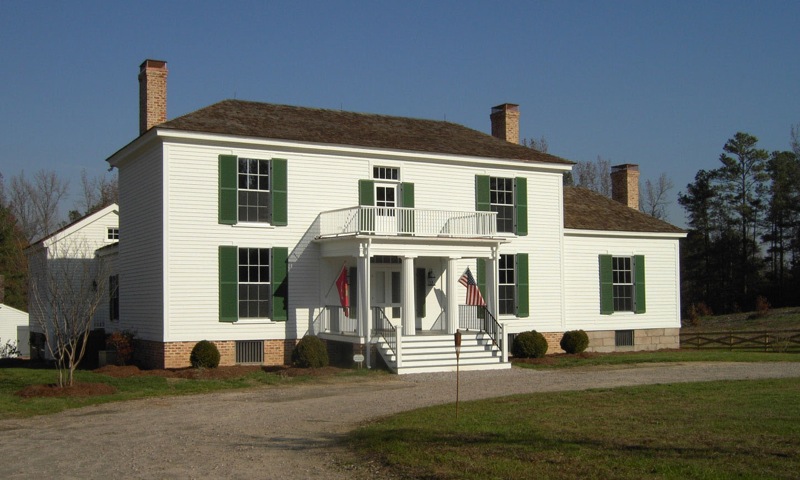
Midway in its new location, 2007

Midway in its new location, 2007

One of the film’s biggest strengths is the blending of the personal and the historical. How did the people depicted in the documentary react to the film?

For the most part, the reactions were very, very good. When we premiered the film at the 2007 Full Frame Documentary in Durham, N.C., members of the black and white sides of the family came for it, seemed to really enjoy the way the film explored the history and meaning of Midway, and met each other at the very celebratory party that was held afterwards. That’s been the general tenor of things since, too. However, I must note, rather sadly, that a few members of the white family seem to have been disaffected. They haven’t communicated with me, so I don’t know specifically what they’re upset about, but it’s too bad.

You are a film critic in your “day job.” In that capacity you were uniquely positioned to analyze the moonlight and magnolias interpretation of the Old South given to us in such films as Gone with the WInd. Was this Lost Cause narrative something you were always aware of, or did it become significant as the film project took off?

It was something I intended from the first, because I’ve always been interested in the image of the Southern plantation in popular culture, and I figured I couldn’t make a film about Midway without exploring the plantation’s meanings to Americans over the course of history. The “Lost Cause” mythology that you mention belongs to the late 19th/early 20th centuries and thus is only a part of the larger Plantation Myth, which started before the Civil War. When I began my research, I was surprised to find that the Encyclopedia of Southern Culture had a longer entry for “Plantation Myth” than it did for “Plantation,” suggesting that the imaginary plantation was even more important than the actual institution! In the film, I trace the evolution of the plantation’s image across several milestones of popular culture, from Uncle Tom’s Cabin through The Birth of a Nation and Gone with the Wind to Roots: an evolution that of course both mirrored and helped create a whole complex set of attitudes about race, politics and history.

Have different viewers–white/black; Northern/Southern; older/younger–responded differently to the film?

That’s a good question, because I was frankly more concerned about one side in each of those pairings you mention: that is, I was a bit nervous about the reactions of black people, non-Southerners, and young people. But in every case I was extremely pleased with the responses. I think this is because the film intends to be inclusive and to respect all the people and points of view it includes – even ones that we don’t necessarily like or agree with. In that way, it “depolarizes” issues that seem inherently polarizing. Black people like it I think because it recognizes their struggles and shows me and my black cousins trying to bridge our divided histories. Northerners appreciate that it presents Southerners black and white as real people rather than as abstractions connected to certain “issues.” But I must say I’ve been most gratified by the reactions of young people, who are often supposed not to be interested in history. I didn’t give a single thought to this while making the film, but teachers have told me that students love the film because it has colorful real-life characters and an engaging, even suspenseful story that brings to life issues that can seem dry and remote in textbooks. I tell people that the best Q&A I did was with a ninth grade class in Virginia. They “got” the film on every level and asked amazingly sophisticated and thoughtful questions. I would love other history teachers to discover and use the film as a classroom tool.

The plantation house, along with several outbuildings, have been in the new spot for a few years now. What has the experience been like in the new location?

When we shot the last scene in the film, Charlie and Dena had only been back in the house four days, and it was all so brand-new that it seemed like a stage set. But since then it has really come back to life, not only as a truly gorgeous restoration of a historic home, but as a place where people live, work and entertain. I love going out there now. It’s like Midway has been reborn.

(images/top, North Carolina Digital Collections; bottom, Preservation North Carolina)

Sucking in the 70s

23 Tuesday Jul 2013

Posted by Keith Muchowski in Film, Sound, & Photography, Museums, Washington, D.C.

≈ Comments Off on Sucking in the 70s

Twin Towers seen from New Jersey Turnpike, 1973

Twin Towers seen from New Jersey Turnpike, 1973

Since the financial meltdown of 2008, New York City has lost a little of the luster it had in the go, go 90s. The subway wait is a bit longer. Trash cans in the parks seem to be emptied a little less frequently, and the grass allowed to grow a little taller between cuts. Overall, everything is a little bit rougher around the edges. Still, it is nothing like the 1970s. It is difficult to convey to the under thirty-five crowd the depths to which New York City had fallen in that long time ago era. We are talking about the Big Apple as depicted in such films as Mean Streets, Midnight Cowboy, and Taxi Driver. One thing that is important to keep in mind about the 1970s, though, is that while the city was falling apart millions of people were still living happy and productive lives despite the crime, inflation, garbage strikes, and long gas lines. The Documerica Photo Project captured New Yorkers, and indeed millions of other Americans, as they went about their business. An exhibit of a portion of the nearly 22,000 photographs taken is currently on display at the Lawrence F. O’Brien Gallery of the National Archive Building in Washington D. C. through September 8. Check out some of the photos of that long ago New York here.

(image/National Archives)

Hot streets, Cool exhibits

08 Monday Jul 2013

Posted by Keith Muchowski in Film, Sound, & Photography, Museums

≈ Comments Off on Hot streets, Cool exhibits

If you are going to be in the Big Apple over the summer, you owe it to yourself to see the Civil War art and photography exhibits at the Met Museum. You will literally see the war in a new way. The best way to see them, if possible, is to come on different days; these are separate, distinct exhibits and each has so much to see you will be exhausted when leaving the gallery. Intellectually, we all know the importance photography played in public consciousness and opinion, especially when the first photographs were displayed at the Brady studio in Manhattan shortly after Antietam. Emotionally, the Met does a good job of capturing that shock of the new. If you cannot make it, here is a piece CBS ran yesterday morning. Both shows run through Labor Day, September 2nd.

Sunday morning coffee

07 Sunday Jul 2013

Posted by Keith Muchowski in Film, Sound, & Photography

≈ Comments Off on Sunday morning coffee

Midway Plantation

It is bright and early Sunday morning. I am off to Governors Island in a few minutes. It will be interesting to see how many people come out on what will be a steamy July day. It was so hot yesterday that I stayed in the house and watched the Gettysburg coverage I missed earlier in the week. I also re-watched Moving Midway, Godfrey Cheshire’s film about the moving of his family’s antebellum plantation. If you have not seen it, I recommend. Here is my review from a year or two back. Enjoy your Sunday.

My wife and I watched an extraordinary film last night called Moving Midway.  Midway is a plantation built in 1848 on land bequeathed to the Hinton family of North Carolina decades prior to the American Revolution.  Concerns over urban sprawl led the current owner, Charles Hinton Silver, to a dramatic decision in 2003: he would literally lift the house from its foundation and move it several miles across country to a more secluded spot.  The undertaking is documented by his cousin Godfrey Cheshire, a New York film critic who grew up in a Raleigh and cherishes the memories of his boyhood visits to the place his mother called “out home.”

Cheshire discovered something unexpected halfway through the project—he has over one hundred African American relatives.  Here the film takes a dramatic turn.

Cheshire is aided by Robert Hinton, a professor of Africana Studies who also grew up in Raleigh and whose ancestors were slaves on Midway Plantation.  The two did not meet until the relocation project was underway but share an immediate rapport.  Struggling to make sense of it all Hinton confesses to Cheshire that, “This would be easier if didn’t like you.”  Still, the underlying tension is at times palpable.  Robert and Godfrey do not appear to be themselves related.

Both men struggle with their identity.  Professor Hinton explains that he has always been conflicted between his African American and Southern identities, with the Southern often winning out.  He also recounts that as a young college student in the 1960s he felt more comfortable in the presence of white graduate students than the Black Power crowd he briefly embraced.  Cheshire’s struggles are only beginning, as he explores the implications of the complicated story for himself, his family, the region, and even the nation itself.  He concludes that the only way to see the South today is as a mixed race society.

Moving Midway is many things: a meditation on the meaning of home; an exploration of family; an examination of American history; and even a short course on cinematic history.  (As a film critic Cheshire is well positioned to examine the Moonlight and Magnolias version of the Plantation South offered up by Hollywood during the years of the Studio System.)  Above all it is an example of what some call courage history, the willingness to look closely even at the people and things we love and ask the difficult questions.

I could go on but won’t.  Moving Midway is available on dvd and Netflix.

LaGuardia’s New York, in technicolor

12 Wednesday Jun 2013

Posted by Keith Muchowski in Film, Sound, & Photography, New York City

≈ 2 Comments

I just got back from the Mets-Cardinals game at Citi Field. Not surprisingly the Mets lost, 8-2.

Earlier today I received an email from my good friend Susan in Oklahoma with a link to some recently found video of New York City life in 1939. This was an important year in the city’s history. For starters, the World’s Fair began that April. I always think about that when going to Citi Field/Shea Stadium because the fair took place in Flushing Meadows-Corona Park, located at the same subway station for what is now the ballpark. (The 1964 World’s Fair was held there as well.) April 1939 was the same month Lou Gehrig retired from the Yankees; three months later he made his “luckiest man on the face of the earth” speech on the Fourth of July. That September Germany and the Soviet Union invaded Poland, increasing tension in the city, though as you will see life as always has a way of going on. My favorite part of the video is the footage of the elevated subway lines (now gone in Manhattan) and the line of passenger cruise ships along the Hudson (gone as well) seen from atop Rockefeller Center. Still, much remains as it did seventy-four years ago. Alas I could not embed the video so check it out here. It is all of three minutes.

And Susan, we have not forgotten about visiting Oklahoma, and when we do we expect to be given the grand tour of the CIvil War sites. So start brushing up.

Coming soon: Good Ol’ Freda

04 Monday Mar 2013

Posted by Keith Muchowski in Beatles, Film, Sound, & Photography

≈ Comments Off on Coming soon: Good Ol’ Freda

I had not heard until just a few days ago that a documentary is in the works about Freda Kelly. For those who don’t know, Ms. Kelly was the young woman responsible for running the Beatles Fan Club from its creation in the early 1960s until its dissolution in 1972. (They had not recorded since 1970, but for legal and financial reasons the band downplayed its breakup as long as it could.) Freda answered to Brian Epstein and was responsible for managing a great deal of the band’s public relations. And the film is not merely in the works, as of today it is in the can and will appear at South by Southwest on March 9. In one of the film’s just-completed final touches, the Beatles’s Apple Corps granted the filmmakers permission to use four cuts in the documentary, including “I Saw Her Standing There” and Love Me Do.” This is exceptionally rare; the Fabs hardly ever allow their catalog to be used in this way. The only instance I know of when a Beatle tune (not a cover) was used onscreen was when Mad Men’s Don Draper played “Tomorrow Never Knows” on his office turntable to better understand the younger generation. And that was after much bargaining and considerable cash–reportedly $250,000–was procured from Lionsgate for that bit of psychedelia. All you need is love, indeed. Still, one can’t blame the Stakeholders (Paul, Starkey, Yoko, Olivia) for controlling the legacy the way they do. Check out the film’s Facebook page.

Speaking of controlling, or not controlling, the Beatles legacy, the website for historian Mark Lewisohn’s upcoming three-volume opus, The Beatles: All These Years, is up and running. I was glad to hear Lewisohn say in an interview that he stopped doing liner notes and other such work for various Beatle-related projects in order to maintain his autonomy. I never held it against him or Bruce Spizer for writing content for Apple’s myriad reissues, but I always thought it compromised their scholarship if only to a small degree. Saying “no” would have been difficult, but they each lost a little something when they did such work. When you work for the Beatles, you work for the Beatles. This is not going to be a problem in what will certainly be the authoritative word on the band for the next 20-30 years. Lewisohn is following his own vision and is letting the facts lead where they may. He has said there will be quite a few interactive features on the book’s website. I am going to add The Beatles: All These Years to the blogroll and see what happens between now and October.

Weekend reading, cont’d

15 Tuesday Jan 2013

Posted by Keith Muchowski in Film, Sound, & Photography

≈ Comments Off on Weekend reading, cont’d

Tony Kushner responds.

The votes are in and Steven Spielberg’s Lincoln has been nominated for no less than twelve Academy awards. I have never thought too much about such things–don’t get me started on the less than useless Grammies, which are too irrelevant to get worked up about anyway. Still, to the extent that these things matter it seems right that Lincoln should sweep the nominations. One of the nominees is Tony Kushner, for Best Adapted Screenplay. Kushner is deserving; whatever else one might say about him, he is a fine playwright and screenwriter. Those following closely know that the book Kushner is credited with adapting into film is Doris Kearns Goodwin’s Team of Rivals. I never understood this because the film focuses upon the tiniest fraction of Goodwin’s 800+ page monograph. I say this not as criticism. She certainly advised Kushner here-and-there along the way as he prepared the manuscript. The film is better for this. It just seemed that the relationship between the film and book was tenuous. The New Republic’s Timothy Noah informs us that the book most directly responsible for Spielberg & Kushner’s Lincoln is in all likelihood Michael Vorenberg’s Final Freedom: The Civil War, The Abolition of Slavery, and the Thirteenth Amendment. Noah’s article is a reminder that politics, including passage of the 13th Amendment, is a messier process than even can ever be depicted  on celluloid. And yes, if you have not seen Lincoln you should do so before it leaves the big screen.

Weekend reading

11 Friday Jan 2013

Posted by Keith Muchowski in Film, Sound, & Photography

≈ Comments Off on Weekend reading

The votes are in and Steven Spielberg’s Lincoln has been nominated for no less than twelve Academy awards. I have never thought too much about such things–don’t get me started on the less than useless Grammies, which are too irrelevant to get worked up about anyway. Still, to the extent that these things matter it seems right that Lincoln should sweep the nominations. One of the nominees is Tony Kushner, for Best Adapted Screenplay. Kushner is deserving; whatever else one might say about him, he is a fine playwright and screenwriter. Those following closely know that the book Kushner is credited with adapting into film is Doris Kearns Goodwin’s Team of Rivals. I never understood this because the film focuses upon the tiniest fraction of Goodwin’s 800+ page monograph. I say this not as criticism. She certainly advised Kushner here-and-there along the way as he prepared the manuscript. The film is better for this. It just seemed that the relationship between the film and book was tenuous. The New Republic’s Timothy Noah informs us that the book most directly responsible for Spielberg & Kushner’s Lincoln is in all likelihood Michael Vorenberg’s Final Freedom: The Civil War, The Abolition of Slavery, and the Thirteenth Amendment. Noah’s article is a reminder that politics, including passage of the 13th Amendment, is a messier process than even can ever be depicted  on celluloid. And yes, if you have not seen Lincoln you should do so before it leaves the big screen.

Christmas 1864

18 Tuesday Dec 2012

Posted by Keith Muchowski in Film, Sound, & Photography

≈ Comments Off on Christmas 1864

How did you like the play, Mrs. Lincoln?

How did you like the play, Mrs. Lincoln?

The Hayfoot and I are having a cup of coffee in front of our tree. We just got back from a showing of A Civil War Christmas at the New York Theatre Workshop in the East Village. The lateness of the hour prevents me from giving a full review here and now, but suffice it to say that we enjoyed it very much. The musical focuses on events in and around Washington, DC on Christmas Eve 1864. It covers multiple perspectives, including Lee, Grant, the Lincolns, Elizabeth Keckley, John Wilkes Booth, Walt Whitman, and many otherwise regular folk who were observing their fourth Christmas of war. The production has been around for several years and is something one should keep an eye out for in future holiday seasons. I read about it coming to New York way back in June and marked it on the calendar thinking how far into the future December would be. We got a kick out of seeing a high school contingent of approximately fifty students there to see the play. At first we thought they might make noise and disrupt the action, but when the curtain went up they watched and listened attentively. I like to think it will be one of those sesquicentennial events at least some of them will look back on years, even decades, from now. As a cohort, today’s high schoolers will be around for the bicentennial. The play captivated the entire audience for its entire 2 1/2 hours. Try to catch this one if you can.

← Older posts
Newer posts →

Enter your email address to subscribe to this blog and receive notifications of new posts by email.

Join 258 other subscribers

Categories

Archives

  • November 2023 (1)
  • October 2023 (3)
  • September 2023 (3)
  • August 2023 (4)
  • July 2023 (7)
  • June 2023 (10)
  • May 2023 (8)
  • April 2023 (6)
  • March 2023 (5)
  • February 2023 (4)
  • January 2023 (4)
  • December 2022 (4)
  • November 2022 (8)
  • October 2022 (2)
  • September 2022 (4)
  • June 2022 (1)
  • May 2022 (1)
  • April 2022 (13)
  • January 2022 (1)
  • December 2021 (2)
  • November 2021 (1)
  • October 2021 (3)
  • September 2021 (3)
  • August 2021 (5)
  • July 2021 (1)
  • June 2021 (1)
  • May 2021 (4)
  • April 2021 (3)
  • March 2021 (4)
  • February 2021 (7)
  • January 2021 (4)
  • December 2020 (4)
  • November 2020 (3)
  • October 2020 (4)
  • September 2020 (7)
  • August 2020 (5)
  • July 2020 (7)
  • June 2020 (11)
  • May 2020 (7)
  • April 2020 (9)
  • March 2020 (9)
  • February 2020 (7)
  • January 2020 (6)
  • December 2019 (7)
  • November 2019 (9)
  • October 2019 (4)
  • September 2019 (6)
  • August 2019 (10)
  • July 2019 (8)
  • June 2019 (6)
  • May 2019 (9)
  • April 2019 (8)
  • March 2019 (6)
  • February 2019 (8)
  • January 2019 (5)
  • December 2018 (10)
  • November 2018 (6)
  • October 2018 (9)
  • September 2018 (11)
  • August 2018 (11)
  • July 2018 (17)
  • June 2018 (10)
  • May 2018 (8)
  • April 2018 (9)
  • March 2018 (8)
  • February 2018 (5)
  • January 2018 (7)
  • December 2017 (11)
  • November 2017 (8)
  • October 2017 (9)
  • September 2017 (11)
  • August 2017 (12)
  • July 2017 (14)
  • June 2017 (18)
  • May 2017 (11)
  • April 2017 (10)
  • March 2017 (9)
  • February 2017 (11)
  • January 2017 (14)
  • December 2016 (7)
  • November 2016 (8)
  • October 2016 (8)
  • September 2016 (9)
  • August 2016 (6)
  • July 2016 (12)
  • June 2016 (8)
  • May 2016 (9)
  • April 2016 (6)
  • March 2016 (12)
  • February 2016 (10)
  • January 2016 (9)
  • December 2015 (9)
  • November 2015 (11)
  • October 2015 (8)
  • September 2015 (9)
  • August 2015 (13)
  • July 2015 (14)
  • June 2015 (11)
  • May 2015 (11)
  • April 2015 (18)
  • March 2015 (10)
  • February 2015 (8)
  • January 2015 (8)
  • December 2014 (12)
  • November 2014 (13)
  • October 2014 (16)
  • September 2014 (11)
  • August 2014 (16)
  • July 2014 (12)
  • June 2014 (13)
  • May 2014 (10)
  • April 2014 (10)
  • March 2014 (11)
  • February 2014 (12)
  • January 2014 (10)
  • December 2013 (11)
  • November 2013 (14)
  • October 2013 (14)
  • September 2013 (14)
  • August 2013 (13)
  • July 2013 (17)
  • June 2013 (9)
  • May 2013 (13)
  • April 2013 (13)
  • March 2013 (16)
  • February 2013 (15)
  • January 2013 (15)
  • December 2012 (18)
  • November 2012 (18)
  • October 2012 (21)
  • September 2012 (14)
  • August 2012 (16)
  • July 2012 (21)
  • June 2012 (22)
  • May 2012 (24)
  • April 2012 (20)
  • March 2012 (23)
  • February 2012 (22)
  • January 2012 (15)
  • December 2011 (23)
  • November 2011 (22)
  • October 2011 (23)
  • September 2011 (18)
  • August 2011 (19)
  • July 2011 (20)
  • June 2011 (29)
  • May 2011 (25)
  • April 2011 (18)
  • March 2011 (21)
  • February 2011 (11)

Meta

  • Create account
  • Log in
  • Entries feed
  • Comments feed
  • WordPress.com
Creative Commons License
This work is licensed under a Creative Commons Attribution-NonCommercial-ShareAlike 4.0 International License.

Enter your email address to subscribe to this blog and receive notifications of new posts by email.

Join 258 other subscribers

Categories

Archives

  • November 2023 (1)
  • October 2023 (3)
  • September 2023 (3)
  • August 2023 (4)
  • July 2023 (7)
  • June 2023 (10)
  • May 2023 (8)
  • April 2023 (6)
  • March 2023 (5)
  • February 2023 (4)
  • January 2023 (4)
  • December 2022 (4)
  • November 2022 (8)
  • October 2022 (2)
  • September 2022 (4)
  • June 2022 (1)
  • May 2022 (1)
  • April 2022 (13)
  • January 2022 (1)
  • December 2021 (2)
  • November 2021 (1)
  • October 2021 (3)
  • September 2021 (3)
  • August 2021 (5)
  • July 2021 (1)
  • June 2021 (1)
  • May 2021 (4)
  • April 2021 (3)
  • March 2021 (4)
  • February 2021 (7)
  • January 2021 (4)
  • December 2020 (4)
  • November 2020 (3)
  • October 2020 (4)
  • September 2020 (7)
  • August 2020 (5)
  • July 2020 (7)
  • June 2020 (11)
  • May 2020 (7)
  • April 2020 (9)
  • March 2020 (9)
  • February 2020 (7)
  • January 2020 (6)
  • December 2019 (7)
  • November 2019 (9)
  • October 2019 (4)
  • September 2019 (6)
  • August 2019 (10)
  • July 2019 (8)
  • June 2019 (6)
  • May 2019 (9)
  • April 2019 (8)
  • March 2019 (6)
  • February 2019 (8)
  • January 2019 (5)
  • December 2018 (10)
  • November 2018 (6)
  • October 2018 (9)
  • September 2018 (11)
  • August 2018 (11)
  • July 2018 (17)
  • June 2018 (10)
  • May 2018 (8)
  • April 2018 (9)
  • March 2018 (8)
  • February 2018 (5)
  • January 2018 (7)
  • December 2017 (11)
  • November 2017 (8)
  • October 2017 (9)
  • September 2017 (11)
  • August 2017 (12)
  • July 2017 (14)
  • June 2017 (18)
  • May 2017 (11)
  • April 2017 (10)
  • March 2017 (9)
  • February 2017 (11)
  • January 2017 (14)
  • December 2016 (7)
  • November 2016 (8)
  • October 2016 (8)
  • September 2016 (9)
  • August 2016 (6)
  • July 2016 (12)
  • June 2016 (8)
  • May 2016 (9)
  • April 2016 (6)
  • March 2016 (12)
  • February 2016 (10)
  • January 2016 (9)
  • December 2015 (9)
  • November 2015 (11)
  • October 2015 (8)
  • September 2015 (9)
  • August 2015 (13)
  • July 2015 (14)
  • June 2015 (11)
  • May 2015 (11)
  • April 2015 (18)
  • March 2015 (10)
  • February 2015 (8)
  • January 2015 (8)
  • December 2014 (12)
  • November 2014 (13)
  • October 2014 (16)
  • September 2014 (11)
  • August 2014 (16)
  • July 2014 (12)
  • June 2014 (13)
  • May 2014 (10)
  • April 2014 (10)
  • March 2014 (11)
  • February 2014 (12)
  • January 2014 (10)
  • December 2013 (11)
  • November 2013 (14)
  • October 2013 (14)
  • September 2013 (14)
  • August 2013 (13)
  • July 2013 (17)
  • June 2013 (9)
  • May 2013 (13)
  • April 2013 (13)
  • March 2013 (16)
  • February 2013 (15)
  • January 2013 (15)
  • December 2012 (18)
  • November 2012 (18)
  • October 2012 (21)
  • September 2012 (14)
  • August 2012 (16)
  • July 2012 (21)
  • June 2012 (22)
  • May 2012 (24)
  • April 2012 (20)
  • March 2012 (23)
  • February 2012 (22)
  • January 2012 (15)
  • December 2011 (23)
  • November 2011 (22)
  • October 2011 (23)
  • September 2011 (18)
  • August 2011 (19)
  • July 2011 (20)
  • June 2011 (29)
  • May 2011 (25)
  • April 2011 (18)
  • March 2011 (21)
  • February 2011 (11)

Meta

  • Create account
  • Log in
  • Entries feed
  • Comments feed
  • WordPress.com
Creative Commons License
This work is licensed under a Creative Commons Attribution-NonCommercial-ShareAlike 4.0 International License.

Enter your email address to subscribe to this blog and receive notifications of new posts by email.

Join 258 other subscribers

Categories

Archives

  • November 2023 (1)
  • October 2023 (3)
  • September 2023 (3)
  • August 2023 (4)
  • July 2023 (7)
  • June 2023 (10)
  • May 2023 (8)
  • April 2023 (6)
  • March 2023 (5)
  • February 2023 (4)
  • January 2023 (4)
  • December 2022 (4)
  • November 2022 (8)
  • October 2022 (2)
  • September 2022 (4)
  • June 2022 (1)
  • May 2022 (1)
  • April 2022 (13)
  • January 2022 (1)
  • December 2021 (2)
  • November 2021 (1)
  • October 2021 (3)
  • September 2021 (3)
  • August 2021 (5)
  • July 2021 (1)
  • June 2021 (1)
  • May 2021 (4)
  • April 2021 (3)
  • March 2021 (4)
  • February 2021 (7)
  • January 2021 (4)
  • December 2020 (4)
  • November 2020 (3)
  • October 2020 (4)
  • September 2020 (7)
  • August 2020 (5)
  • July 2020 (7)
  • June 2020 (11)
  • May 2020 (7)
  • April 2020 (9)
  • March 2020 (9)
  • February 2020 (7)
  • January 2020 (6)
  • December 2019 (7)
  • November 2019 (9)
  • October 2019 (4)
  • September 2019 (6)
  • August 2019 (10)
  • July 2019 (8)
  • June 2019 (6)
  • May 2019 (9)
  • April 2019 (8)
  • March 2019 (6)
  • February 2019 (8)
  • January 2019 (5)
  • December 2018 (10)
  • November 2018 (6)
  • October 2018 (9)
  • September 2018 (11)
  • August 2018 (11)
  • July 2018 (17)
  • June 2018 (10)
  • May 2018 (8)
  • April 2018 (9)
  • March 2018 (8)
  • February 2018 (5)
  • January 2018 (7)
  • December 2017 (11)
  • November 2017 (8)
  • October 2017 (9)
  • September 2017 (11)
  • August 2017 (12)
  • July 2017 (14)
  • June 2017 (18)
  • May 2017 (11)
  • April 2017 (10)
  • March 2017 (9)
  • February 2017 (11)
  • January 2017 (14)
  • December 2016 (7)
  • November 2016 (8)
  • October 2016 (8)
  • September 2016 (9)
  • August 2016 (6)
  • July 2016 (12)
  • June 2016 (8)
  • May 2016 (9)
  • April 2016 (6)
  • March 2016 (12)
  • February 2016 (10)
  • January 2016 (9)
  • December 2015 (9)
  • November 2015 (11)
  • October 2015 (8)
  • September 2015 (9)
  • August 2015 (13)
  • July 2015 (14)
  • June 2015 (11)
  • May 2015 (11)
  • April 2015 (18)
  • March 2015 (10)
  • February 2015 (8)
  • January 2015 (8)
  • December 2014 (12)
  • November 2014 (13)
  • October 2014 (16)
  • September 2014 (11)
  • August 2014 (16)
  • July 2014 (12)
  • June 2014 (13)
  • May 2014 (10)
  • April 2014 (10)
  • March 2014 (11)
  • February 2014 (12)
  • January 2014 (10)
  • December 2013 (11)
  • November 2013 (14)
  • October 2013 (14)
  • September 2013 (14)
  • August 2013 (13)
  • July 2013 (17)
  • June 2013 (9)
  • May 2013 (13)
  • April 2013 (13)
  • March 2013 (16)
  • February 2013 (15)
  • January 2013 (15)
  • December 2012 (18)
  • November 2012 (18)
  • October 2012 (21)
  • September 2012 (14)
  • August 2012 (16)
  • July 2012 (21)
  • June 2012 (22)
  • May 2012 (24)
  • April 2012 (20)
  • March 2012 (23)
  • February 2012 (22)
  • January 2012 (15)
  • December 2011 (23)
  • November 2011 (22)
  • October 2011 (23)
  • September 2011 (18)
  • August 2011 (19)
  • July 2011 (20)
  • June 2011 (29)
  • May 2011 (25)
  • April 2011 (18)
  • March 2011 (21)
  • February 2011 (11)

Meta

  • Create account
  • Log in
  • Entries feed
  • Comments feed
  • WordPress.com
Creative Commons License
This work is licensed under a Creative Commons Attribution-NonCommercial-ShareAlike 4.0 International License.

Blog at WordPress.com.

  • Subscribe Subscribed
    • The Strawfoot
    • Join 229 other subscribers
    • Already have a WordPress.com account? Log in now.
    • The Strawfoot
    • Subscribe Subscribed
    • Sign up
    • Log in
    • Report this content
    • View site in Reader
    • Manage subscriptions
    • Collapse this bar
 

Loading Comments...