• About

The Strawfoot

~ a New Yorker's American History blog

The Strawfoot

Category Archives: Interpretation

Carpenters’ Hall reopens

03 Monday Jul 2023

Posted by Keith Muchowski in Heritage tourism, Interpretation, Philadelphia

≈ Comments Off on Carpenters’ Hall reopens

It was so great to be in Philadelphia for Fourth of July weekend. The crowds were big and wherever I went the tours given by NPS rangers and museum officials were uniformly excellent. I got a lot to go on for some projects in the works. This was the scene earlier today at the reopening ceremony for Carpenters’ Hall. I’m glad they managed to get the site open by the Fourth of July after an extensive renovation complicated by an arson fire this past December that destroyed some of the mechanical infrastructure in the basement. As time passes I increasingly internalize history’s Rule #1: Go there. There is no substitute.

Independence NHP turns 75

28 Wednesday Jun 2023

Posted by Keith Muchowski in Harry S. Truman, Herbert Hoover, Heritage tourism, Interpretation, Morristown National Historical Park, National Park Service, Philadelphia

≈ Comments Off on Independence NHP turns 75

President Truman (right) and Philadelphia Mayor Bernard Samuel, October 1948

Morristown was the first national historical park in the NPS system, created via a bill signed by Herbert Hoover on March 2, 1933. Fifteen years later President Harry S. Truman created Independence National Historical Park in Philadelphia when on June 28, 1948 he signed Public Law 795, seventy-five (75) years ago today. The development of Independence Hall and associated structures as a tourist site just after the Second World War was greatly influenced by the work of John D. Rockefeller Jr. and others at Colonial Williamsburg around the time of the Revolutionary War sesquicentennial in the 1920s and 1930s. One really cannot understand historic sites as historic sites without understanding the provenance behind how they got that way. The photograph we see here was taken in early October 1948, just over three months after Truman signed the Independence NHP enabling legislation. He is of course the one on the right and standing with Philadelphia Mayor Bernard Samuel. This visit was a campaign stop in the middle of his re-election bid that one month later would produce the famous “Dewey Defeats Truman” headline in the Chicago Daily Tribune. When this photo was taken that autumn day in 1948 he signed the visitor log: “Harry S. Truman, Independence, Mo.: temporary address: 1600 Pennsylvania Avenue, Washington, D.C.”

(image/Harry S. Truman Library & Museum)

Holiday morning coffee

19 Monday Jun 2023

Posted by Keith Muchowski in Interpretation, Morristown National Historical Park

≈ Comments Off on Holiday morning coffee

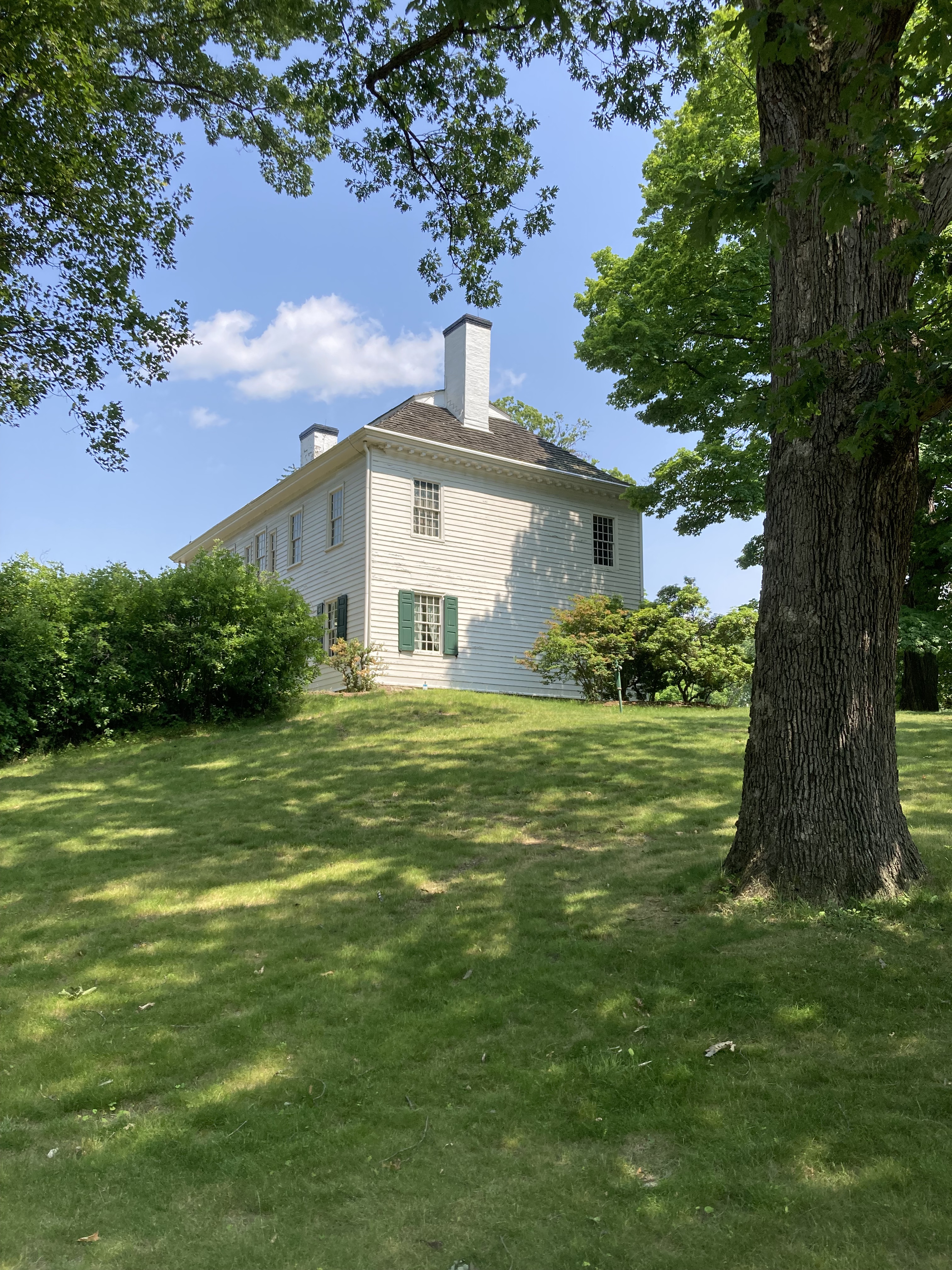
Ford Mansion, Morristown National Historical Park

I’m starting my day here with a cup of coffee while listening to a podcast. Juneteenth has become one of favorite holidays for a number of different reasons. I’m using the day to do a little work adding records for an upcoming project to a citation generator, and preparing for a big project coming this fall to my school. It has become more involved than I had originally imagined and been more than a little stressful. It’s been good to have a long weekend to replenish a bit.

I took the picture above in Morristown this past Saturday on my way back to the train station after my talk. We had a small but engaged audience for my talk about the the Brooklyn Daily Eagle National Park Service Development Tours of the 1910s and 1920s. It was a story I had wanted to tell for several years, and finally did in an article last year and this weekend’s accompanying talk. One woman in the audience had a brother who delivered the Eagle back in the day. Another had a father who helped build Jockey Hollow as a laborer in the Civilian Conservation Corps in the 1930s. These are things you get only by engaging with the public. It’s why I love interpretation so much.

Enjoy your day.

The life and times of Edward M. Riley

07 Thursday Nov 2019

Posted by Keith Muchowski in Independence National Historical Park, Interpretation, National Park Service, Philadelphia

≈ Comments Off on The life and times of Edward M. Riley

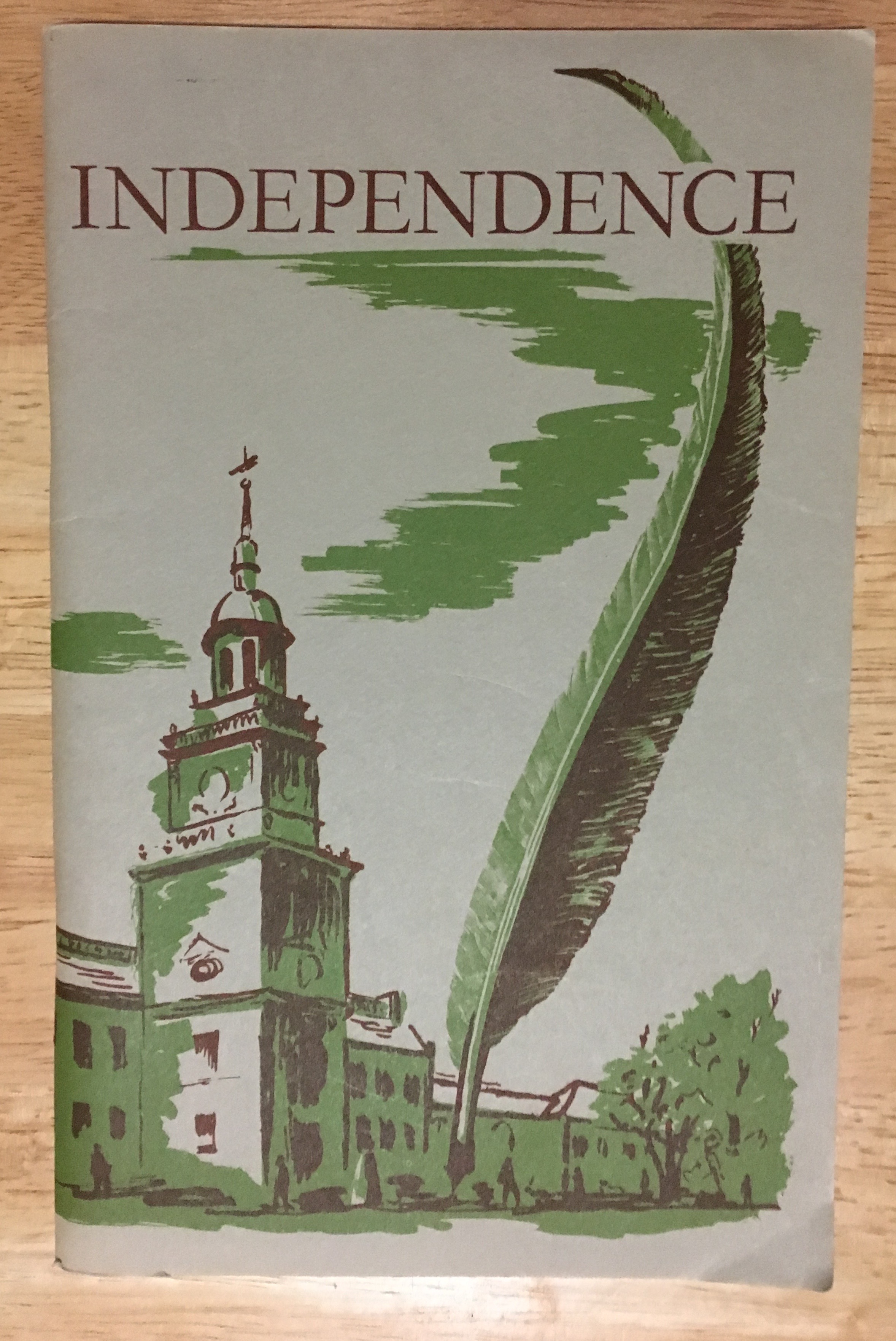
I was up and out of the house early this past Sunday to attend the Hackensack Toy Soldier show in New Jersey. One of the things that came home with me, purchased for a mere $1, is this 1956 National Park Service handbook about Independence National Historical Park. I have a number of modern NPS handbooks that I have purchased over the past several years for the Civil War sesquicentennial and War of 1812 bicentennial. Last year when a friend and I visited Philadelphia I bought The American Revolution handbook as well. The one we see here was written by Park Service historian Edward M. Riley, who authored a number of similar booklets on other sites in this period when the Eisenhower Administration was starting the Mission 66 initiative. One can actually read his tome on Independence National Historical Park online here. Yes, the scholarship moves on–we’re talking two decades prior even to the Bicentennial here–but in addition to keeping up with current progress in my fields of interest I am always intrigued by how historians in the past, in this case the 1950s, handled the topic at hand.
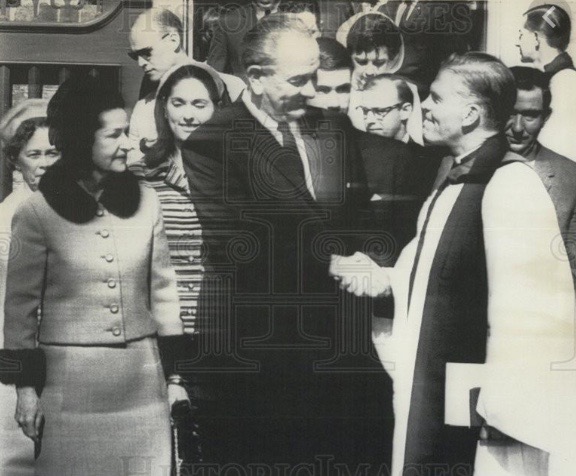
Ladybird and President Johnson with the Reverend Cotesworth Pinckney Lewis, November 1967. Days after this photograph was taken Riley telegrammed Johnson an apology for Lewis’s statements concerning the Vietnam War.

A Proquest search pulls up a small but interesting series of takes on Edward M. Riley’s life and career. In 1955 he had just left his position as historian at Independence Hall and was now at Colonial Williamsburg about to take part in a five-year, $500,000 project to study life in Colonial America. Clearly his mission was to do at Williamsburg what he had done in Philadelphia. In 1959 he is found still at Colonial Williamsburg, serving as director of research, and giving the government of Bermuda a trove of 650 letters related to that nation on the 350th anniversary of the founding of the Colony of Bermuda. In October 1963 Riley comes to Oyster Bay, Long Island to give a talk to raise funds for the renovation of Raynham Hall, a Revolutionary War site. That event was held at Christ Protestant Episcopal Church.

The reason I mention the location is because of the final piece that mentions Riley. In November 1967, Edward M. Riley, a senior warden in the Bruton Parish Episcopal Church of Williamsburg, telegramms President Lyndon B. Johnson an apology after the Rev. Cotesworth Pinckney Lewis challenged the president, who had been at the Virginia church’s service the week previously, from the pulpit on his Vietnam War policies. Riley’s role in the apology is unclear; the article seems to imply that the Bruton Parish leadership were sending the missive on orders from the Episcopal Church’s more senior leadership. Public pressure was certainly intense, with over 10,000 calls and letters coming in from around the world. Johnson was furious. It’s an extraordinary story and part of the life of an extraordinary historian and figure.

(bottom image/Historic Images Outlet)

Talking Hart Island podcast

17 Tuesday Sep 2019

Posted by Keith Muchowski in Historiography, Interpretation, Media and Web 2.0, Memory, New York City

≈ Comments Off on Talking Hart Island podcast

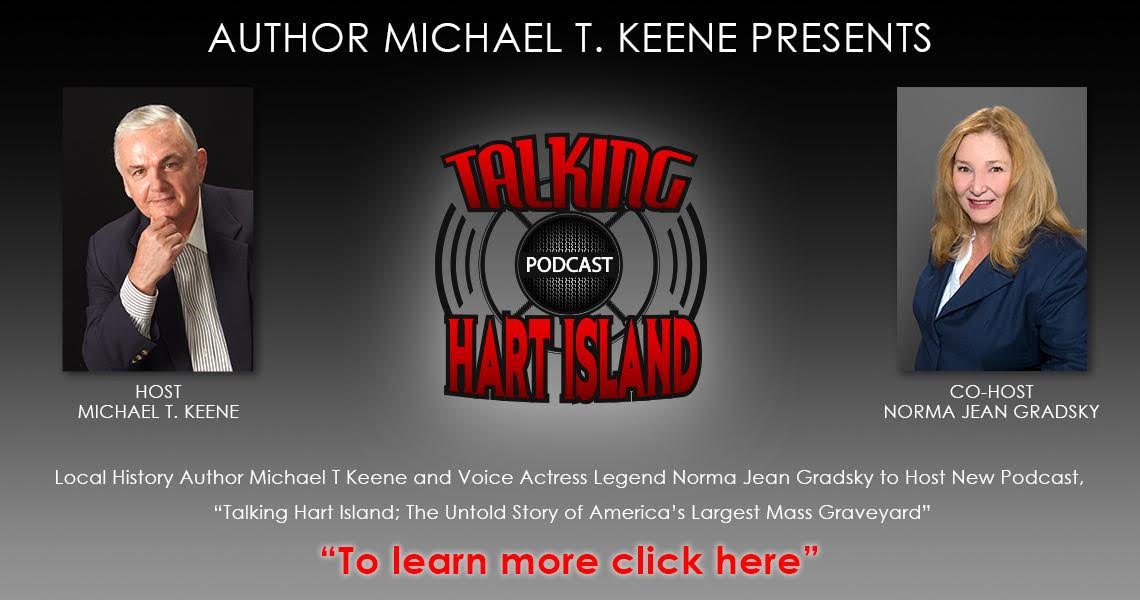
I received an email recently from author and podcaster Michael T. Keene, who introduced himself and told me of his exciting new project: the Talking Hart Island podcast. For those who may not know, Hart Island is located in Long Island Sound near the Bronx and since 1869 has served as New York City’s potters field. It is the largest public burial ground in the United States. Approximately one million souls rest there today. Hart Island is still very much a working cemetery; officials estimate it has about another decade to go before reaching full capacity. One hundred and fifty years of burials dating back the days of Tammany offer many exciting interpretive possibilities for a podcast.

Today is an exciting time in the long history of Hart Island. Currently run by the NYC Department of Correction and tended by inmates from Rikers, Hart Island may soon open as a public park if the city council votes to change the island’s jurisdiction to the Parks Department. DNA is now making it possible to identify some of the unknown. These are the stories Mike Keene and his team are telling. Today I listened to the segment one featuring Russell Shorto, To start at the very beginning was a great move. Too often when the public thinks of the history of New York they think it begins with the British. In reality it was the Dutch who set the tone and character of what they called New Netherland. Much of that Dutch ethos remains with us today.

There are already three episodes of Talking Hart Island available for listening, with a new episode coming weekly. Give it a listen by clicking on the image above.

The King Manor of Jamaica, Queens

07 Wednesday Aug 2019

Posted by Keith Muchowski in Federal Hall National Memorial, Founding Fathers, Heritage tourism, Incorporating New York (book manuscript project), Interpretation, John Alsop King (1788-1867), Philip Schuyler, Rufus King

≈ Comments Off on The King Manor of Jamaica, Queens

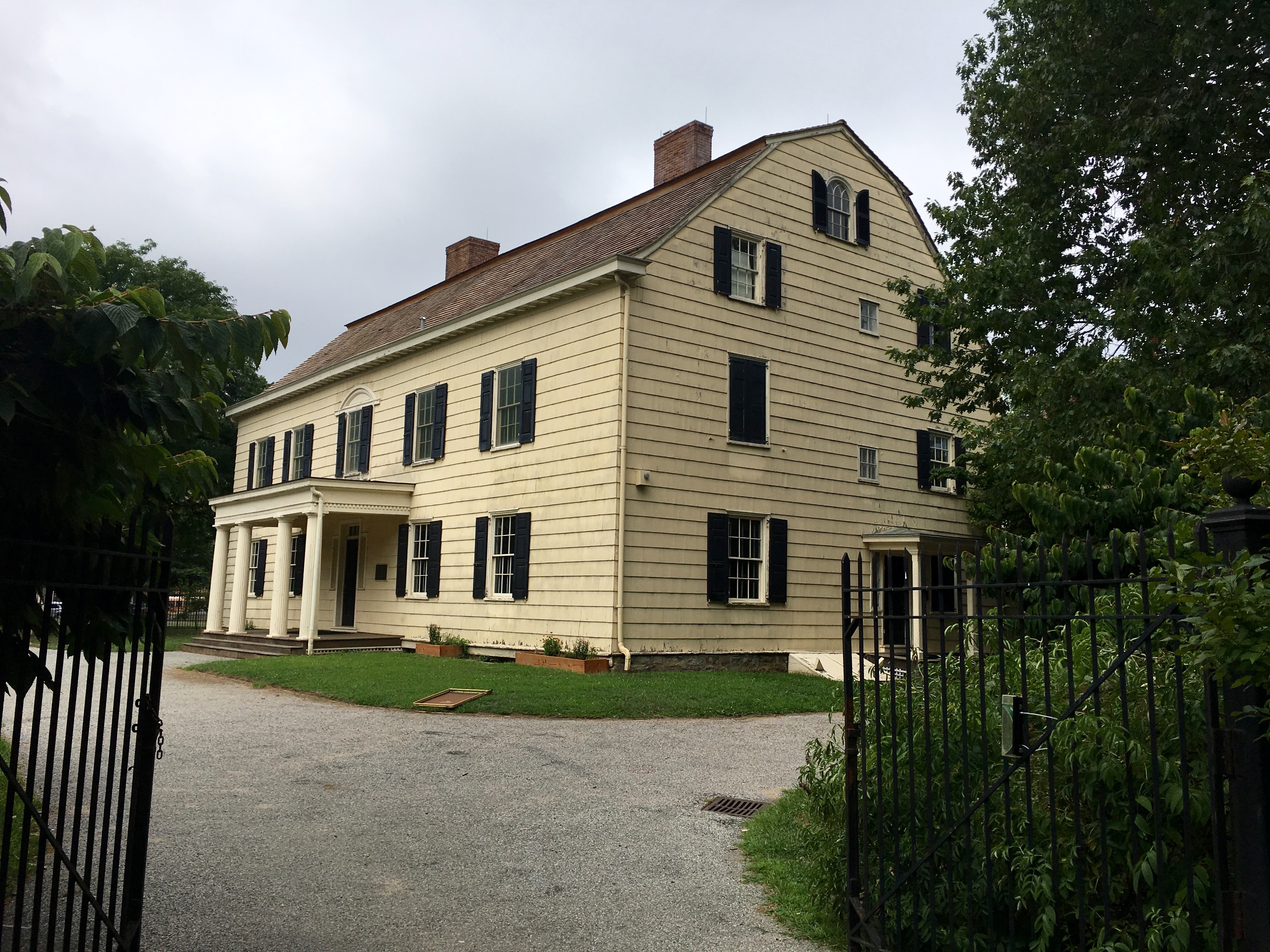
King Manor, Jamaica Queens

I ventured to Queens today for a visit to the King Manor. It is part of my wider project to visit places affiliated in one manner or another with Federal Hall. The home belonged to Rufus King, one of the lesser known but well-deserving Founding Fathers. King was born in what is now Maine and fought in the Revolutionary War before serving in the Confederation Congress. He helped write the Constitution and then served in the First Congress, where he worked in the upper chamber alongside Philip Schuyler as a New York senator. His son John Alsop King took over the house after his father’s death in 1827. The name John A. King fang faintly familiar and when I got home I checked the draft of “Incorporating New York,” my manuscript about Civil War Era New York City, and realized he was a minor figure in my narrative; King the Younger was defeated by Edwin D. Morgan in the 1858 New York gubernatorial election. Until today though the name John A. King had just been a name in a history book. That’s why place is so important.

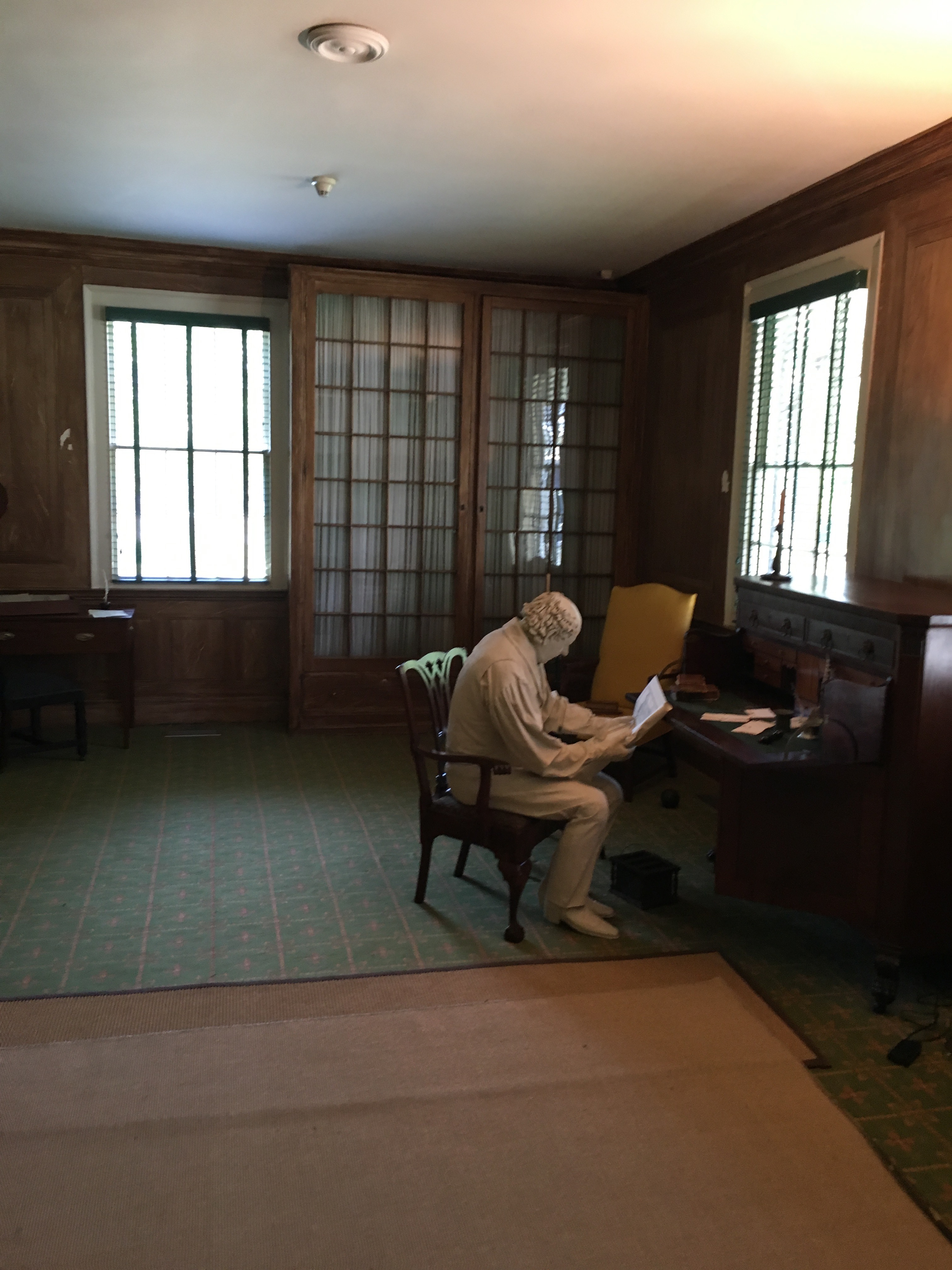
King Manor library

King Manor became a historic site in 1900, the house itself owned by the New York City Parks Department and managed by the King Manor Association. As best I can tell, this is still the arrangement 120 years on. A perusal of online newspapers shows the house was used rigorously for various things and by various organizations over the decades. This would make sense. Queens developed later than the other buroughs and there probably much less infrastructure where groups could have gathered. Jamaica was more Long Island than New York City. The Daughters of the American Revolution, for one, created a Rufus King Chapter in 1918 during the Great War that met at the spacious house. The D.A.R. met there for decades. Like much of New York King Manor struggled in the harsh years before gentrification. In 1973 some punk teenagers started a fire on the porch that almost burned down the then-almost 250-year-old house. Thankfully the custodian kept it in check before the firemen arrived and put it out.

The tour was led by an extraordinary young person who incredibly is still in high school. There is no way I could have pulled off something like that when I was that age. I asked the person when they began at the house and the answer was July, just last month. I had to ask again because I thought I’d heard wrong. The is something about watching Interpretation done well. And when it’s done by a person so young and just starting out, it is that much more incredible.


James Monroe’s Ash Lawn – Highland

10 Wednesday Jul 2019

Posted by Keith Muchowski in Federal Hall National Memorial, Florida, George Washington's Mount Vernon, Heritage tourism, Interpretation, James Monroe, Thomas Jefferson

≈ Comments Off on James Monroe’s Ash Lawn – Highland

Scholars at James Monroe’s Ash Lawn – Highland are incorporating the stories of the local African-American community into the history of the historic site. Many local residents descend from the original enslaved community at the Monroe estate.

One of the most fortunate things about volunteering at Federal Hall National Memorial this summer has been its broadening of my interests. The experience has less taken me in a different direction than expanded my awareness of American and even international history. This is especially true of the Revolutionary and Early American periods. I have a larger, more holistic approach to my scholarship than I did at the start of the summer, and really dating back to the beginning of the calendar year when we became members of George Washington’s Mount Vernon. Among other things I have been following the social media pages and online resources of various people and institutions with which I was unfamiliar just two months ago. One of them linked the other day to this extraordinary New York Times piece about James Monroe and the enslaved persons who lived and worked on his Virginia estate.

The parlor of Casa Bianca near Monticello, Florida. Some enslaved persons from Ash Lawn – Highland lived and worked here.

In a living example of Faulkner’s notion about the past being neither over nor past, it has developed that upwards of one hundred African Americans still live within a short distance of Ash Lawn – Highland, the 3,500 acre property Monroe purchased in 1793 while a U.S. senator from Virginia. Highland is adjacent to Jefferson’s Monticello. By all accounts as known today, Monroe did not father children in the manner Jefferson did with Sally Hemings; the Monroe connections to this local community relate to the conditions of servitude. Scholars have been piecing the history together over the past several years and adding this new knowledge to the interpretive experience at Ash Lawn – Highland, which is today owned by James Monroe’s alma mater William & Mary. The story extends further than Virginia however; to pay off debts Monroe sold some of his enslaved persons to an estate near Monticello, Florida in Jefferson County called Casa Bianca. Some of them, or more likely their descendants, showed up on census records and voter rolls after the Civil War. Read the whole thing.

(top image, RebelAt via Wikimedia Commons; bottom, State Archives of Florida, Florida Memory)

Mount Vernon, Easter Sunday

21 Sunday Apr 2019

Posted by Keith Muchowski in George Washington's Mount Vernon, Interpretation, New Deal

≈ Comments Off on Mount Vernon, Easter Sunday

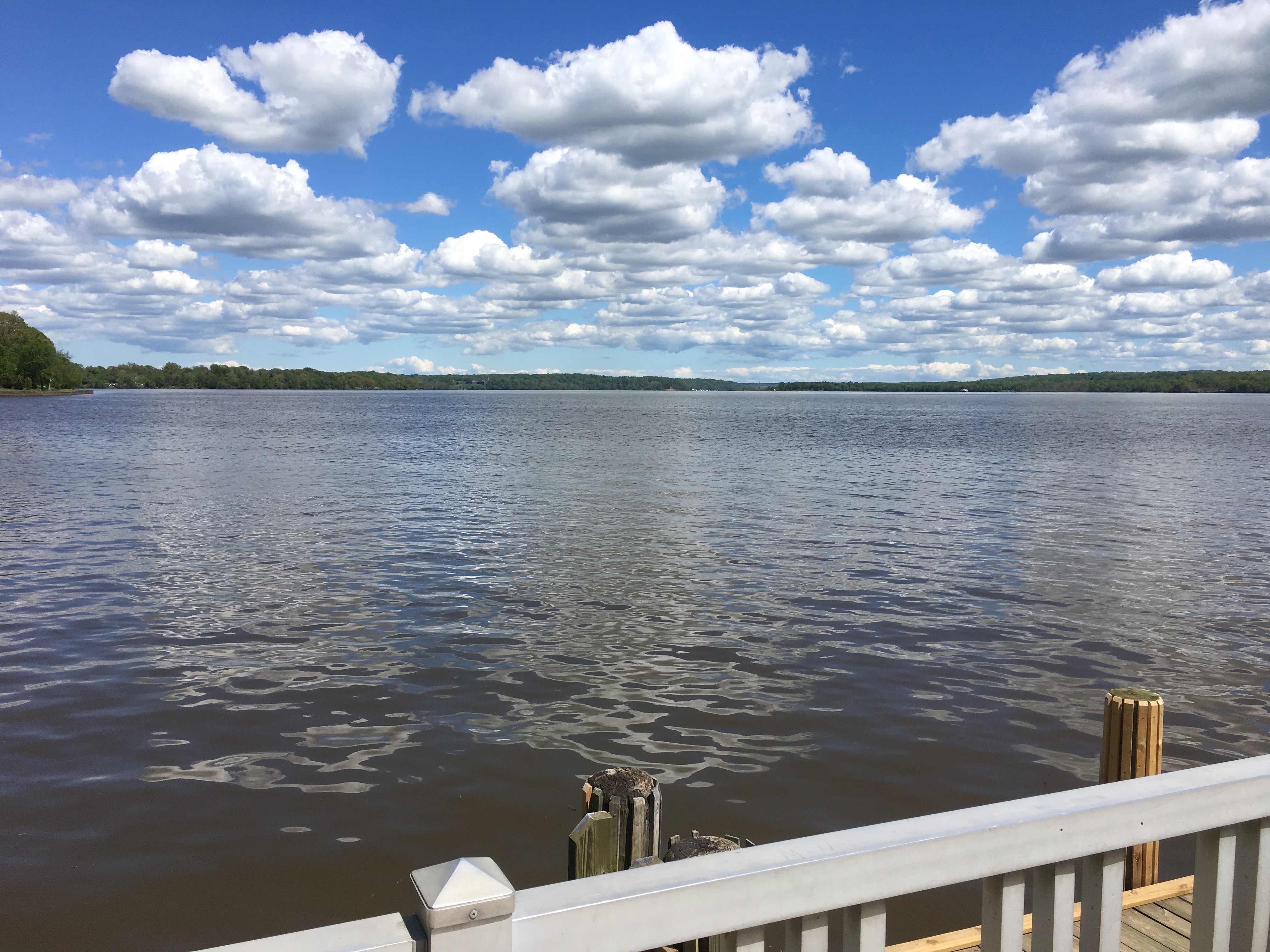
The Potomac from the Mount Vernon shoreline, Easter Sunday 2019

I hope everyone had an enjoyable Easter or Passover. I’m watching the beautiful sunset as I type this.

We indeed went to Mount Vernon today. We were questioning our decision halfway there because mass transit proved difficult this holiday weekend. Still, when we arrived we had a good time. (Not wanting a repeat of the frustrating arrival, we took an Uber back to our destination.) The grounds were crowded, which was great. It’s always good seeing people experiencing historic sites. It was warmer than when we were there in January and more of the grounds were thus accessible. The gardens were blooming and the animals–sheep and even cattle–were out. We took in quite a bit. I also had many conversations with the living historians who work there. My strategy on these things is: jump in. At the shoreline not far from where I took the above image I had a conversation with a staffer about how Washington used these low-lying grounds. She replied that it was basically swampland and thus not especially productive. She then added that the flood walls in the Potomac were constructed in the 1930s. This naturally led to a conversation about how and why that happened, with yours truly speculating that it probably happened as part of the New Deal’s Civilian Conservation Corps. I intend to dig a little more on this when I get home.

In the gift ship I bought a copy of Ron Chernow’s Washington: A Life. I don’t want to go into specifics right now, but Chernow and Thomas Flexner will play into some Interpretive projects I hope to work on this summer. It’s only about six weeks away now.

Twain, Stowe, & Hawley

22 Monday Oct 2018

Posted by Keith Muchowski in Incorporating New York (book manuscript project), Interpretation, Joseph Roswell Hawley, Ulysses S. Grant (General and President), Writing

≈ Comments Off on Twain, Stowe, & Hawley

Mark Twain house, Hartford

I hope everyone had a good weekend. I’m sorry about the lack of posts recently but with the semester in full swing things have been busy. This past Saturday I was up and out of the house at 6:00 am to meet a friend at Grand Central, from where we took the train to Hartford. There we were met by a friend who was our guide for the day. We visited the Mark Twain house and adjacent Harriet Beecher Stowe Center. Literally they are right next each other. Both tours were distinctly different but uniformly excellent. I love to watch interpreters perform their craft. Twain’s house was obviously an anchor for a man who traveled so extensively, both as a younger man finding his way and later as a famous writer supplementing his income on the lecture circuit. Twain often lived out of a suitcase and the house there in Hartford was the place to which he and his family, who often accompanied him abroad, could return. He did most of his writing on the third floor. While up there I mentioned his publishing Ulysses S. Grant’s Memoirs. The guide turned to his immediate left and pointed out a beautiful bust of Grant on the mantel. I so wanted to take a picture but photography was not permitted in the house.

I had never been to either site before. The one that seems to have undergone the most change in recent years has been the Stowe Center. They used to give a more conventional overview of the house itself and Stowe’s time there later in her life. This is what friends of mine and I call a “furniture tour,” in which a guide focuses more on the make and model of a home’s accoutrements instead of the historical figures who lived there. The Stowe Center, thankfully, has changed its interpretive model to discuss not only Stowe’s life and times but the social and cultural issues that faced our nation then and now. We were even told beforehand when buying out tickets that it would be such. Apparently people have gotten angry during tours in the past.

Joseph Roswell Hawley headstone, Cedar Hill Cemetery

Our guide was so generous. I had mentioned a few days earlier that perhaps we might go to Cedar Hill Cemetery, to which none of us had ever been before. It is one of the old garden cemeteries and among other Connecticut luminaries is the final resting place of Joseph Roswell Hawley. We got there late in the day, as dusk was about to settle in. We had a great time driving and taking in the scenery. We had some difficulty finding Hawley however but as you can see here we eventually found him. With the Roosevelt Sr. manuscript complete I intend to spend the rest of this year and probably all of 2019 engaged in the Joseph Hawley project. It was so great to see his headstone and gives me the impetus to return to this fascinating topic.

I had not been to Hartford in several decades, when I was a very young child and my father would occasionally take us in on a Saturday to see the phone company building with its big computers and switchboards where he worked. Being there this Saturday was almost like coming home in a way. Here is to good friends who through their kindness and generosity help make our lives more meaningful.

John Howland Lathrop’s Unitarian Church

20 Monday Apr 2015

Posted by Keith Muchowski in Heritage tourism, Historiography, Interpretation, Monuments and Statuary, New York City

≈ 2 Comments

IMG_2089Late last week I was walking though Brooklyn Heights on my way to meet a friend for lunch when I saw that the gates of the First Unitarian Congregational Society Church were open. I love to visit the many places of worship here in New York City, which depending on the era might have been built by Italian craftsmen who came through Ellis Island or were centers of Abolition during the Civil War Era. No, not all of them have such a dramatic provenance but one gets the idea. I had never been in the First Unitarian before, though I had walked past it dozens of times. The neo-gothic structure dates to 1844 and carries the years well.

IMG_2096I was only there for all of five minutes when, heading toward the door, I noticed a Great War marker on the wall in the vestibule. Of course I took a few pictures to research and submit to the World War 1 Memorial Inventory Project. The plaque itself was nothing out of the ordinary, nor would one expect it to be. With simple dignity it marked the contributions of those from the the congregation who served in war from 1917-18. A few of them made the ultimate sacrifice. I could not find too much information about when the plaque was dedicated. The church leader though turned out to be an interesting individual.

HowlandThe Reverend Dr. John Howland Lathrop led the First Unitarian from 1911-57. He was against American involvement in the war but when it came in April 1917 he made his own contribution: Lathrop helped bring the Red Cross into the United States Navy. When that initial work was done he led the Red Cross’s WW1 initiative within the Third Naval District. That jurisdiction covered most of the Northeast. He was successful in these endeavors and continued a life of public service until his retirement in the late 1950s. A lot of that work involved cleaning up the mess in Europe that resulted from the chaos and destruction of the Great War.

I intend t do a little more with Lathrop in the coming months. A little digging revealed that his papers are at the Brooklyn Historical Society, which is across the street from the church that he served for nearly half a century.


← Older posts

Enter your email address to subscribe to this blog and receive notifications of new posts by email.

Join 258 other subscribers

Categories

Archives

  • November 2023 (1)
  • October 2023 (3)
  • September 2023 (3)
  • August 2023 (4)
  • July 2023 (7)
  • June 2023 (10)
  • May 2023 (8)
  • April 2023 (6)
  • March 2023 (5)
  • February 2023 (4)
  • January 2023 (4)
  • December 2022 (4)
  • November 2022 (8)
  • October 2022 (2)
  • September 2022 (4)
  • June 2022 (1)
  • May 2022 (1)
  • April 2022 (13)
  • January 2022 (1)
  • December 2021 (2)
  • November 2021 (1)
  • October 2021 (3)
  • September 2021 (3)
  • August 2021 (5)
  • July 2021 (1)
  • June 2021 (1)
  • May 2021 (4)
  • April 2021 (3)
  • March 2021 (4)
  • February 2021 (7)
  • January 2021 (4)
  • December 2020 (4)
  • November 2020 (3)
  • October 2020 (4)
  • September 2020 (7)
  • August 2020 (5)
  • July 2020 (7)
  • June 2020 (11)
  • May 2020 (7)
  • April 2020 (9)
  • March 2020 (9)
  • February 2020 (7)
  • January 2020 (6)
  • December 2019 (7)
  • November 2019 (9)
  • October 2019 (4)
  • September 2019 (6)
  • August 2019 (10)
  • July 2019 (8)
  • June 2019 (6)
  • May 2019 (9)
  • April 2019 (8)
  • March 2019 (6)
  • February 2019 (8)
  • January 2019 (5)
  • December 2018 (10)
  • November 2018 (6)
  • October 2018 (9)
  • September 2018 (11)
  • August 2018 (11)
  • July 2018 (17)
  • June 2018 (10)
  • May 2018 (8)
  • April 2018 (9)
  • March 2018 (8)
  • February 2018 (5)
  • January 2018 (7)
  • December 2017 (11)
  • November 2017 (8)
  • October 2017 (9)
  • September 2017 (11)
  • August 2017 (12)
  • July 2017 (14)
  • June 2017 (18)
  • May 2017 (11)
  • April 2017 (10)
  • March 2017 (9)
  • February 2017 (11)
  • January 2017 (14)
  • December 2016 (7)
  • November 2016 (8)
  • October 2016 (8)
  • September 2016 (9)
  • August 2016 (6)
  • July 2016 (12)
  • June 2016 (8)
  • May 2016 (9)
  • April 2016 (6)
  • March 2016 (12)
  • February 2016 (10)
  • January 2016 (9)
  • December 2015 (9)
  • November 2015 (11)
  • October 2015 (8)
  • September 2015 (9)
  • August 2015 (13)
  • July 2015 (14)
  • June 2015 (11)
  • May 2015 (11)
  • April 2015 (18)
  • March 2015 (10)
  • February 2015 (8)
  • January 2015 (8)
  • December 2014 (12)
  • November 2014 (13)
  • October 2014 (16)
  • September 2014 (11)
  • August 2014 (16)
  • July 2014 (12)
  • June 2014 (13)
  • May 2014 (10)
  • April 2014 (10)
  • March 2014 (11)
  • February 2014 (12)
  • January 2014 (10)
  • December 2013 (11)
  • November 2013 (14)
  • October 2013 (14)
  • September 2013 (14)
  • August 2013 (13)
  • July 2013 (17)
  • June 2013 (9)
  • May 2013 (13)
  • April 2013 (13)
  • March 2013 (16)
  • February 2013 (15)
  • January 2013 (15)
  • December 2012 (18)
  • November 2012 (18)
  • October 2012 (21)
  • September 2012 (14)
  • August 2012 (16)
  • July 2012 (21)
  • June 2012 (22)
  • May 2012 (24)
  • April 2012 (20)
  • March 2012 (23)
  • February 2012 (22)
  • January 2012 (15)
  • December 2011 (23)
  • November 2011 (22)
  • October 2011 (23)
  • September 2011 (18)
  • August 2011 (19)
  • July 2011 (20)
  • June 2011 (29)
  • May 2011 (25)
  • April 2011 (18)
  • March 2011 (21)
  • February 2011 (11)

Meta

  • Create account
  • Log in
  • Entries feed
  • Comments feed
  • WordPress.com
Creative Commons License
This work is licensed under a Creative Commons Attribution-NonCommercial-ShareAlike 4.0 International License.

Enter your email address to subscribe to this blog and receive notifications of new posts by email.

Join 258 other subscribers

Categories

Archives

  • November 2023 (1)
  • October 2023 (3)
  • September 2023 (3)
  • August 2023 (4)
  • July 2023 (7)
  • June 2023 (10)
  • May 2023 (8)
  • April 2023 (6)
  • March 2023 (5)
  • February 2023 (4)
  • January 2023 (4)
  • December 2022 (4)
  • November 2022 (8)
  • October 2022 (2)
  • September 2022 (4)
  • June 2022 (1)
  • May 2022 (1)
  • April 2022 (13)
  • January 2022 (1)
  • December 2021 (2)
  • November 2021 (1)
  • October 2021 (3)
  • September 2021 (3)
  • August 2021 (5)
  • July 2021 (1)
  • June 2021 (1)
  • May 2021 (4)
  • April 2021 (3)
  • March 2021 (4)
  • February 2021 (7)
  • January 2021 (4)
  • December 2020 (4)
  • November 2020 (3)
  • October 2020 (4)
  • September 2020 (7)
  • August 2020 (5)
  • July 2020 (7)
  • June 2020 (11)
  • May 2020 (7)
  • April 2020 (9)
  • March 2020 (9)
  • February 2020 (7)
  • January 2020 (6)
  • December 2019 (7)
  • November 2019 (9)
  • October 2019 (4)
  • September 2019 (6)
  • August 2019 (10)
  • July 2019 (8)
  • June 2019 (6)
  • May 2019 (9)
  • April 2019 (8)
  • March 2019 (6)
  • February 2019 (8)
  • January 2019 (5)
  • December 2018 (10)
  • November 2018 (6)
  • October 2018 (9)
  • September 2018 (11)
  • August 2018 (11)
  • July 2018 (17)
  • June 2018 (10)
  • May 2018 (8)
  • April 2018 (9)
  • March 2018 (8)
  • February 2018 (5)
  • January 2018 (7)
  • December 2017 (11)
  • November 2017 (8)
  • October 2017 (9)
  • September 2017 (11)
  • August 2017 (12)
  • July 2017 (14)
  • June 2017 (18)
  • May 2017 (11)
  • April 2017 (10)
  • March 2017 (9)
  • February 2017 (11)
  • January 2017 (14)
  • December 2016 (7)
  • November 2016 (8)
  • October 2016 (8)
  • September 2016 (9)
  • August 2016 (6)
  • July 2016 (12)
  • June 2016 (8)
  • May 2016 (9)
  • April 2016 (6)
  • March 2016 (12)
  • February 2016 (10)
  • January 2016 (9)
  • December 2015 (9)
  • November 2015 (11)
  • October 2015 (8)
  • September 2015 (9)
  • August 2015 (13)
  • July 2015 (14)
  • June 2015 (11)
  • May 2015 (11)
  • April 2015 (18)
  • March 2015 (10)
  • February 2015 (8)
  • January 2015 (8)
  • December 2014 (12)
  • November 2014 (13)
  • October 2014 (16)
  • September 2014 (11)
  • August 2014 (16)
  • July 2014 (12)
  • June 2014 (13)
  • May 2014 (10)
  • April 2014 (10)
  • March 2014 (11)
  • February 2014 (12)
  • January 2014 (10)
  • December 2013 (11)
  • November 2013 (14)
  • October 2013 (14)
  • September 2013 (14)
  • August 2013 (13)
  • July 2013 (17)
  • June 2013 (9)
  • May 2013 (13)
  • April 2013 (13)
  • March 2013 (16)
  • February 2013 (15)
  • January 2013 (15)
  • December 2012 (18)
  • November 2012 (18)
  • October 2012 (21)
  • September 2012 (14)
  • August 2012 (16)
  • July 2012 (21)
  • June 2012 (22)
  • May 2012 (24)
  • April 2012 (20)
  • March 2012 (23)
  • February 2012 (22)
  • January 2012 (15)
  • December 2011 (23)
  • November 2011 (22)
  • October 2011 (23)
  • September 2011 (18)
  • August 2011 (19)
  • July 2011 (20)
  • June 2011 (29)
  • May 2011 (25)
  • April 2011 (18)
  • March 2011 (21)
  • February 2011 (11)

Meta

  • Create account
  • Log in
  • Entries feed
  • Comments feed
  • WordPress.com
Creative Commons License
This work is licensed under a Creative Commons Attribution-NonCommercial-ShareAlike 4.0 International License.

Enter your email address to subscribe to this blog and receive notifications of new posts by email.

Join 258 other subscribers

Categories

Archives

  • November 2023 (1)
  • October 2023 (3)
  • September 2023 (3)
  • August 2023 (4)
  • July 2023 (7)
  • June 2023 (10)
  • May 2023 (8)
  • April 2023 (6)
  • March 2023 (5)
  • February 2023 (4)
  • January 2023 (4)
  • December 2022 (4)
  • November 2022 (8)
  • October 2022 (2)
  • September 2022 (4)
  • June 2022 (1)
  • May 2022 (1)
  • April 2022 (13)
  • January 2022 (1)
  • December 2021 (2)
  • November 2021 (1)
  • October 2021 (3)
  • September 2021 (3)
  • August 2021 (5)
  • July 2021 (1)
  • June 2021 (1)
  • May 2021 (4)
  • April 2021 (3)
  • March 2021 (4)
  • February 2021 (7)
  • January 2021 (4)
  • December 2020 (4)
  • November 2020 (3)
  • October 2020 (4)
  • September 2020 (7)
  • August 2020 (5)
  • July 2020 (7)
  • June 2020 (11)
  • May 2020 (7)
  • April 2020 (9)
  • March 2020 (9)
  • February 2020 (7)
  • January 2020 (6)
  • December 2019 (7)
  • November 2019 (9)
  • October 2019 (4)
  • September 2019 (6)
  • August 2019 (10)
  • July 2019 (8)
  • June 2019 (6)
  • May 2019 (9)
  • April 2019 (8)
  • March 2019 (6)
  • February 2019 (8)
  • January 2019 (5)
  • December 2018 (10)
  • November 2018 (6)
  • October 2018 (9)
  • September 2018 (11)
  • August 2018 (11)
  • July 2018 (17)
  • June 2018 (10)
  • May 2018 (8)
  • April 2018 (9)
  • March 2018 (8)
  • February 2018 (5)
  • January 2018 (7)
  • December 2017 (11)
  • November 2017 (8)
  • October 2017 (9)
  • September 2017 (11)
  • August 2017 (12)
  • July 2017 (14)
  • June 2017 (18)
  • May 2017 (11)
  • April 2017 (10)
  • March 2017 (9)
  • February 2017 (11)
  • January 2017 (14)
  • December 2016 (7)
  • November 2016 (8)
  • October 2016 (8)
  • September 2016 (9)
  • August 2016 (6)
  • July 2016 (12)
  • June 2016 (8)
  • May 2016 (9)
  • April 2016 (6)
  • March 2016 (12)
  • February 2016 (10)
  • January 2016 (9)
  • December 2015 (9)
  • November 2015 (11)
  • October 2015 (8)
  • September 2015 (9)
  • August 2015 (13)
  • July 2015 (14)
  • June 2015 (11)
  • May 2015 (11)
  • April 2015 (18)
  • March 2015 (10)
  • February 2015 (8)
  • January 2015 (8)
  • December 2014 (12)
  • November 2014 (13)
  • October 2014 (16)
  • September 2014 (11)
  • August 2014 (16)
  • July 2014 (12)
  • June 2014 (13)
  • May 2014 (10)
  • April 2014 (10)
  • March 2014 (11)
  • February 2014 (12)
  • January 2014 (10)
  • December 2013 (11)
  • November 2013 (14)
  • October 2013 (14)
  • September 2013 (14)
  • August 2013 (13)
  • July 2013 (17)
  • June 2013 (9)
  • May 2013 (13)
  • April 2013 (13)
  • March 2013 (16)
  • February 2013 (15)
  • January 2013 (15)
  • December 2012 (18)
  • November 2012 (18)
  • October 2012 (21)
  • September 2012 (14)
  • August 2012 (16)
  • July 2012 (21)
  • June 2012 (22)
  • May 2012 (24)
  • April 2012 (20)
  • March 2012 (23)
  • February 2012 (22)
  • January 2012 (15)
  • December 2011 (23)
  • November 2011 (22)
  • October 2011 (23)
  • September 2011 (18)
  • August 2011 (19)
  • July 2011 (20)
  • June 2011 (29)
  • May 2011 (25)
  • April 2011 (18)
  • March 2011 (21)
  • February 2011 (11)

Meta

  • Create account
  • Log in
  • Entries feed
  • Comments feed
  • WordPress.com
Creative Commons License
This work is licensed under a Creative Commons Attribution-NonCommercial-ShareAlike 4.0 International License.

Blog at WordPress.com.

  • Subscribe Subscribed
    • The Strawfoot
    • Join 229 other subscribers
    • Already have a WordPress.com account? Log in now.
    • The Strawfoot
    • Subscribe Subscribed
    • Sign up
    • Log in
    • Report this content
    • View site in Reader
    • Manage subscriptions
    • Collapse this bar
 

Loading Comments...