• About

The Strawfoot

~ a New Yorker's American History blog

The Strawfoot

Category Archives: Memory

The Civil War in my life

01 Monday Jul 2013

Posted by Keith Muchowski in Civil War sesquicentennial, Gettysburg, Memory

≈ Comments Off on The Civil War in my life

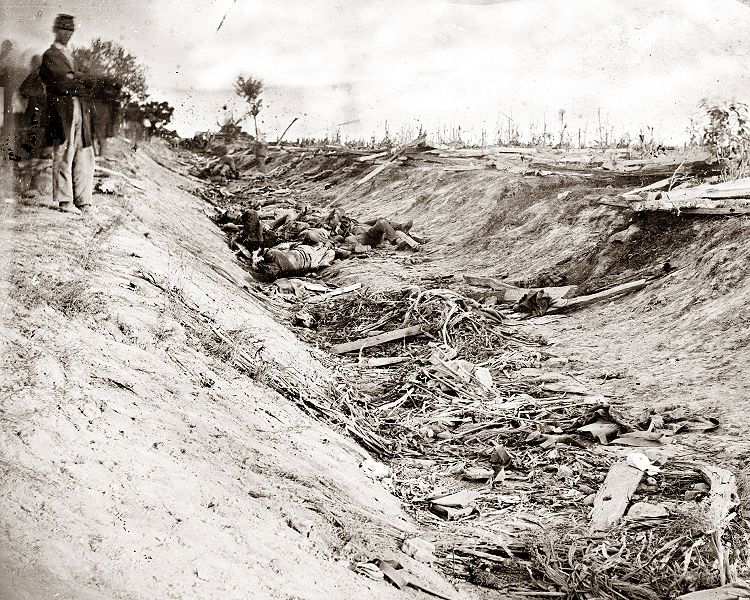
Alexander Gardner image of Antietam’s Sunken Road

I wrote the piece below for the Antietam 150th and decided to republish it today for the anniversary of the Battle of Gettysburg. Between now and 2015 I will probably re-post it yet again for the remaining major milestones of the war. It is hard to believe that the sesquicentennial is more than half over.

Today is the 150th anniversary of the Battle of Antietam, the bloodiest day in American history. Last night my wife and I were watching some of the C-SPAN and other coverage, which led to a conversation about the Civil War’s role in my life. Some things have the ability to captivate us always. My list includes the Beatles, New York City, Elvis, both World Wars, Rod Serling’s The Twilight Zone, Sinatra, and the American Civil War. Don’t ask me to explain; how does anyone know from where in the human imagination such interests arise? Now middle-aged, I have nonetheless reached that point where I am so removed from the events of my younger days to see where the roads turned. For me, the Civil War path has taken several twists.

The first was when I was ten and my uncle gave me a book of Matthew Brady photographs. I was too young to pick up on at the time but the book was a reprint of Benson J. Lossing’s History of the Civil War. Thankfully I was also too young to read the dense prose. If I had I might still be influenced by its early 20th century take on the War of the Rebellion. It was something like the Time-Life books about the Second World War many people had in their living rooms in the 1970s and 80s. Fun to look at, but not especially reliable. Still, the Civil War photo were captivating, especially to a latchkey kid whose parents had uprooted him from his home in Connecticut and transplanted to Florida before divorcing two years later. I lost the book over the years until seeing it again for $10 in a Border’s a few years ago. I shelled out the money but eventually gave the book away, worried about the accuracy not just of the text but even the captions on the photographs themselves. For starters, we now know that many “Brady” photos were actually taken by Alexander Gardner, Timothy H. O’Sullivan, or other members of Brady’s studio. The captions on old photographs are often wrong as well. I have read my Frassanito.

I got away from the Civil War during my high school and college years but had my interest piqued again when Ken Burns’s documentary was released in 1990. It is a dramatic film, beautifully choreographed, that inspired many of us to delve more into the literature. This in turn led me to purchase Bruce Catton’s American Heritage Picture History of the Civil War when it was re-released with updated maps, art work, and photographs in 1996. At this time I was going to graduate school and working fullltime at a large chain bookstore to make ends meet. Often I worked until midnight and came home too wound up to go to sleep immediately. I would sit at my tiny kitchen table eating my 1:00 am dinner and reading Catton’s lyrical prose. I was still too young and unaware that Catton was part of any historiographical “school.” Ironically, I never took a Civil War class in either grad or undergraduate school. This is especially unfortunate because I did my undergraduate work at the University of Houston and could have studied with Joseph Glatthaar.

The next turn came with the release of Tony Horowitz’s Confederates in the Attic in 1998. Many readers enjoyed it for its anecdotes about the levels of farbiness one finds at Civil War reenactments. What I most took from the book though was how little we know about the war, despite the tens of thousands of books written on the subject. Self serving regimental histories. Lost Cause mythology. The foggy memories of aging veterans visiting the battlefields of their youth. Flaws in the Official Records of the War of the Rebellion. It was all new to me. It was (and is) terrifying also to think that everything one knows about something could be wrong. Even worse is realizing that there might be no way ever to know the full story of something, even by extension one’s own life. The next year I visited Shiloh for the first time when I went out to visit my dad. Other than a quick one hour stop at Fredericksburg in 1997 when I got off the freeway during my move to New York, I had never visited a Civil War battlefield before. After that we visited Pea Ridge, Vicksburg, and Shiloh again. This is where I became fixated on the myths and memory of the war.

In 2008 I visited Gettysburg for the time, and the following year I went back with the woman who became my wife a few months later. That year we also went to Sharpsburg in what has become something of an annual pilgrimage. There is no substitute to walking a Civil War battlefield. On that same trip we also visited Harper’s Ferry on what was the anniversary year of John Brown’s raid. This got me thinking harder about the sesquicentennial and the opportunity it presented to think harder about American Civil War and its place in our history. I never romanticized the Civil War–and I was certainly never a Lost Causer–but I believe I think more critically and less sentimentally about that conflict than I might have when I was younger. This in turn led to another path, the one I am on now, where I started this blog to make the leap from buff to serious writer. I feel I am now finding my niche, which include the Civil War in New York, and Civil War veterans in the Gilded Age among other aspects.

In a nutshell that is the Civil War in my life. Last night, looking at the images from over the weekend on the Antietam NPS Facebook page, I couldn’t help but wonder how many of the children taken to the event by their parents will become captivated by this tragic event in our history. Some will forget almost immediately, but years from now others will look back on the commemoration of 2011-2015 as the spark that started it all.

D-Day plus 69 years

06 Thursday Jun 2013

Posted by Keith Muchowski in Dwight D. Eisenhower, Memory, WW2

≈ Comments Off on D-Day plus 69 years

WW2 ration book found on commuter train, July 1943

WW2 ration book found on commuter train, July 1943

I know I have been at this blogging this awhile now because I am again re-posting this piece about the Normandy landings I wrote in 2011. The passing of the WW2 cohort is a common theme of mine, in part because I am old enough to remember veterans not as infirm geriatrics but as robust, neighbors, teachers, and just general folks you saw everyday without thinking much about. The death earlier this week of Senator Frank Lautenberg only made their passing that much more real. He was the last sitting senator who also served in the war, following the death of Daniel Inouye late last year. (Bob Dole was a WW2 veteran as well, having served in Italy, though he of course left the Senate to run for the White House in 1996. He is still practicing law in DC a month away from his 90th birthday.) I believe we are diminished with no more of these individuals serving in the U.S. Senate. Part of our institutional memory is gone with them.

I was in Grand Central Station earlier today and in their small museum space they had an exhibit of items lost-and-found by a family whose members have served as conductors for four generations over the past century, since Grand Central’s founding in 1913. I could not resist taking the above photo of this ration card that some unfortunate commuter left behind on a train in July 1943.

And, again, from 2011:

I could not let the 67th anniversary of D-Day go unnoticed.  When I was younger this was a much bigger deal than it is today.  It is only a bit of a stretch to say that I have measured the events of my life according to the anniversaries of the Normandy invasion.  In June 1984 I was still in high school, getting ready to start my senior year at the end of the summer.  Ten years later I had graduated from college, but was unsettled and still trying to figure out what I wanted to do with my life.  By 2004 I had gone to graduate school and moved to New York City.  Now I am married and in full middle age.

The arc of D-Day presidential ceremonies, or lack thereof, paints a fascinating portrait of the postwar decades.  In 1954 President Eisenhower, the Supreme Allied Commander of the invasion a decade earlier, skipped France altogether and instead vacationed at Camp David.  His only public comment was a small proclamation about the Grand Alliance.  For the 20th anniversary Ike did record a television special with Walter Cronkite entitled D-Day Plus Twenty Years: Eisenhower Returns to Normandy.  The footage of the journalist and the retired president was filmed in August 1963 and is quite moving.  On June 6, 1964 Johnson, who had taken office only seven months earlier after the Kennedy assassination, was in New York City speaking to the Ladies Garment Workers Union.  In the waning days of Vietnam and the Nixon Administration in 1974 Americans were too tired and cynical to care about World War 2.  Reagan’s address in 1984 remains the most memorable of the anniversaries.  At Pointe du Hoc he addressed a sizable audience of veterans still young enough to travel but old enough to appreciate their own mortality.  President Clinton’s address on the beaches of Normandy during the 50th anniversary symbolized the passing of the baton from the Greatest Generation to the Baby Boomers.  In 2004 current events overshadowed the 60th anniversary and the ceremony painfully underscored tensions in the trans-Atlantic alliance.

Today only one person mentioned it to me.  Alas we have reached the tipping point where most of the veterans have either passed on or are too aged and infirm to participate in the observance.  In other words it has become part of history.  Makes me feel old and a little sad.

A Beautiful Way to Go

16 Thursday May 2013

Posted by Keith Muchowski in Memory, Monuments and Statuary, Museums, New York City

≈ Comments Off on A Beautiful Way to Go

Four years ago, just prior to getting married, I moved from an apartment I had lived in for twelve years to another about five blocks away. Overall, the move wasn’t much: same grocery store, post office, dry cleaner, etc, etc. The big change (other than the marriage) was that I was no longer so close to Prospect Park. An extra twenty minutes each way may not seem like much, but it adds an almost-prohibitive amount of time to a potential weekend walk or evening stroll after work. Brooklyn’s Prospect Park was designed by Frederick Law Olmsted and Calvert Vaux and, though not as well-maintained, is very much the equal of their earlier Central Park. (Central Park is better maintained because the rich folks who live along its perimeter give piles of private money for its maintenance.) For me it was a big loss, though one that came with an equally big win: I am now just five minutes away from the gates of Green-Wood Cemetery. Green-Wood is one of the original garden cemeteries and is currently celebrating its 175th anniversary. To mark the occasion the Museum of the City of New York is hosting an exhibit titled A Beautiful Way to Go: New York’s Green-Wood Cemetery. It opened yesterday and runs through October 13.

Brooklyn's Green-Wood Cemetery

Brooklyn’s Green-Wood Cemetery

Garden cemeteries, sometimes called rural cemeteries, were a phenomenon of the nineteenth century, when American and European societies were industrializing rapidly and green space was becoming scarcer and scarcer for city dwellers. It may surprise you to know that in the late nineteenth century Green-Wood was the most-visited place in New York State after Niagara Falls. Graveyards are for the dead, final resting places for those who came before us and have now passed on; cemeteries are for the living, places to commune with nature and the past. One hundred and seventy-five years later Green-Wood is still serving this function. No matter how many times I have been there–and it is in the hundreds by now–I always see something new on each visit. It is not hard to do, whether it’s reading the many freshly-planted headstones of the 4,000 Civil War soldiers buried there, poking my head into the bars of a mausoleum to peek at the Tiffany windows, or seeing the sun hitting a familiar vista at a different angle during the change of seasons. I am looking forward to catching this show in the coming weeks, and will have more to say about it here on the blog after I do.

The Antietam Plan

30 Tuesday Apr 2013

Posted by Keith Muchowski in Memory, National Park Service

≈ 1 Comment

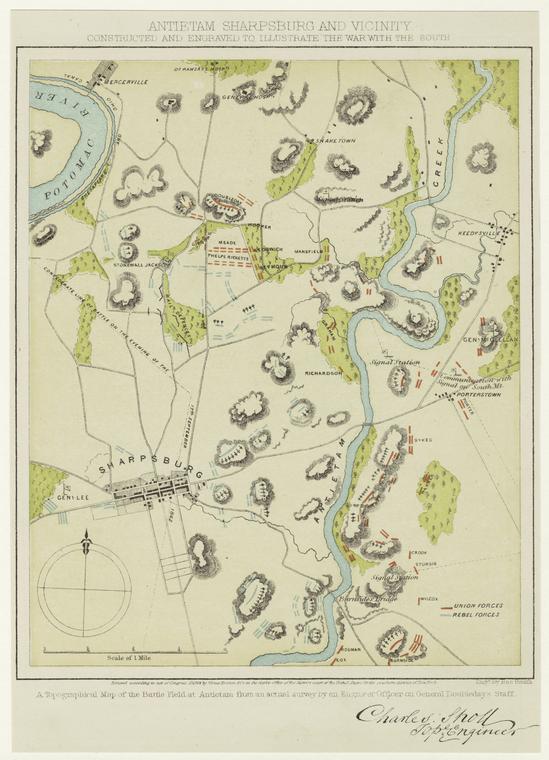
mapPhilip Kennicott of the Washington Post has written a lengthy piece worth the time of anyone interested in the history and fate of our national battlefields. A cottage industry has arisen in the last ten-fifteen years that analyzes the fascinating topic. It is more complicated than this, but one of the problems with battlefield preservation was the implementation of the so-called Antietam Plan in the late nineteenth century. In a nutshell: the Federal government, unwilling to take on new expenses and liabilities, created a barebones Antietam military park, laying a ribbon of right-of-way surrounded by existing farms. With a few exceptions, the Antietam Plan was the norm at all new parks in the coming decades. This was not so much of a problem in, say 1925, when the population of the Greater Washington DC area was still minimal. The land where the fighting took place looked much the same during the Coolidge Administration as it did in 1862. Things changed dramatically in the Automobile Age. For heritage tourism this was not entirely bad. How many anecdotes have you heard from people who remembered visiting a Civil War battlefield during the Centennial? Dad’s Buick is what made that happen. However, the rise of the automobile also led to the building of the interstates, which in turn led to suburbia, which led to encroachment into areas surrounding once untouched battlefields. Now, the Antietam Plan is creating challenges as sprawl shows no signs of abating.

For reasons that need no explanation, most of the battles in the Eastern Theater were fought in the 100 miles or so between Washington and Richmond. The DC area has changed markedly in recent decades. One sees the changing demographics all around. None of this is “wrong.” My family is part of these changes. We rent an apartment in Virginia, shop at the local big box stores to buy our paper towels and other housewares, and are figuring out little-by-little where to find the small pleasures of modern life we have come to expect and enjoy. We live in the twenty-first century. This past Sunday friends visited the Hayfoot at our apartment and said the area had evolved a great deal in just the few years since they themselves moved to a different part of the region. The extension of the Metro will accelerate the change even more. There are no easy answers when it comes to preservation.

(image courtesy NYPL)

Stalingrad plus 70 years

02 Saturday Feb 2013

Posted by Keith Muchowski in Memory, WW2

≈ Comments Off on Stalingrad plus 70 years

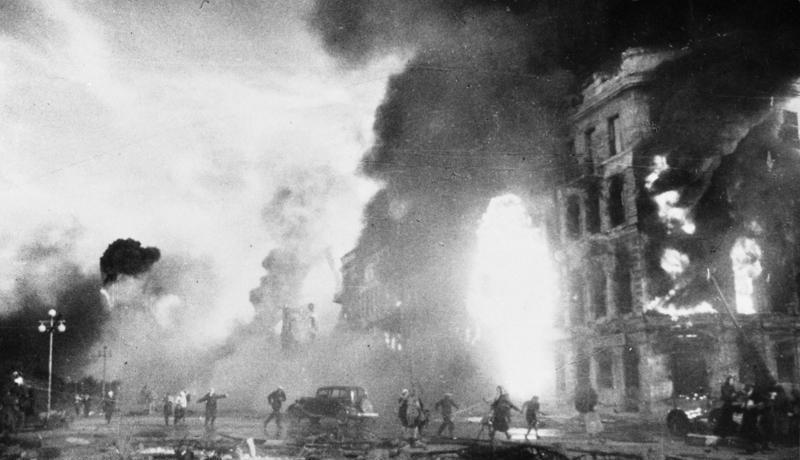
Battle of Stalingrad, 1942-1943

Battle of Stalingrad, 1942-1943

In October-November 1989 my brother and I took a month long tour of Europe. It was an organized affair with a European-based company in which there were many well-educated and well-travelled people from around the world. We were by far the youngest ones along for the ride, which gave us a sense of gravitas and cachet among the older crowd. People enjoy being around the young. Many of the people from that tour are gone now, which fills me with sadness. The trip started in London, continued by ferry to the Continent, on through Holland, into Germany, Poland, the Soviet Union, FInland, Sweden, and back to Britain. We had the good fortune of seeing the Berlin Wall the week before it came down. I remember getting the news from one of our fellow travelers (no pun intended) that they were tearing it in the lobby of our St. Petersburg hotel. Who could have known just the week before that such events were about to take place?

The most lasting impression of the trip was the ubiquity of the WW2 memorials seemingly present in every town along the way. This was nearly a quarter century ago, and for many WW2 was still as much current events as it was history; the candle laid on a Warsaw street corner to remember a loved one on All Saints Day might have been placed for a sister or father, not some distant ancestor never met. Seeing hundreds of such candles clustered together where some massacre had taken place was something I will never forget. In the Soviet Union memorials to the Great Patriotic War were equally ubiquitous. We saw them in Minsk, Smolensk, Moscow, St. Petersburg, and every other stop along the way. So much has happened in the world between 1989 and today. The Berlin Wall. The end of the Soviet Union in 1991. The 50th anniversary of the Second Word War. The rise of the internet and digital technology. These moments from the late fall of 1989 are embedded in my memory not just because they were turning points in 20th century history–which of course they were–but because they coincided with my own rise to adulthood. It is very much a before and after. We remember most what happens when we were young.

I have mentioned many times that I no longer recognize the anniversaries of Second World War the way I once did because the WW2 generation has all but stepped off the stage. Today the WW2 anniversaries commemorate historical, not current, events, which is not to say there are not many in the world for whom the events of 1939-1945 are not still deeply personal and individual tragedies. That’s something to think about when we throw around phrases like “fifty million people were killed in the war.” February 2 is on of the most meaningful dates of the conflict. Seventy years ago today the Battle of Stalingrad ended after 200 bloody days and two million individuals perished.

(image/German Federal Archives)

“Pearl Harbor? Who’s she?”

07 Friday Dec 2012

Posted by Keith Muchowski in Memory, WW2

≈ Comments Off on “Pearl Harbor? Who’s she?”

Pearl Harbor 2011, the final gathering of the Pearl Harbor Survivors Association

I wrote the piece below for the 70th anniversary of the Pearl Harbor attack and am posting it again. As I said last year, I will always remember  anniversaries such as December 7, June 6, and May 8 though they no longer resonate in the way they once did. I have been watching Eric Sevareid’s magnificent Between the Wars over the past several days.The sixteen part documentary, produced in 1978, provides a remarkable overview of the 1918-1941 period. What I find most striking is how recent the war, even the lead-up to the war, was as late as the 1970s. (One gets the same impression watching Lawrence Olivier narrate A World at Arms as well.) The Second World War was almost still current events in a way it obviously is not today. The highest leadership had died off by this time, but the majority of the people who fought in the war were now in full blown middle age and in the prime of their careers. Now those people have pretty much died off, or have aged considerably. I couldn’t help but think about this when I learned about the death of Congressman Jack Brooks earlier in the week. Maybe it is my own sense of aging, but I am not sure how I feel about this. Anyways, from Pearl Harbor Day 2011 . . .


A few years ago the father of a good friend of mine happened to be in the food court of a shopping mall on Memorial Day. This is a man, now in his eighties, who served in the Air Force and later played semi-professional football. He still has his leather cleats. Lou is the essence of Old School. Like shopping mall food courts throughout the country, this one was full of teenagers. Striking up a conversation with the 4-5 at the neighboring table he asked them if they knew what Memorial Day was. After the blank stares, one offered that it was a day off from school. My friend’s dad was not impressed.

When I was in school in the seventies and eighties a visit from a World War 2 vet was a HUGE deal, even in the most cynical of times just after Vietnam. (I graduated high school just a decade after the Fall of Saigon.) One vet recounted today that during a recent school visit a girl asked who Pearl Harbor was and why he was there to talk about her.

I offer these stories not to blame our country’s historical amnesia on young people, but to emphasize the educational crisis we face.

I have written about the significance to me of D-Day and aging veterans before. Personally, Pearl Harbor Day 2011 is the end of something tangible, akin to the 75th anniversary of Gettysburg in July 1938 when aged veterans turned out for one final gathering. President Roosevelt was in attendance; three years after dedicating the Eternal Peace Light Memorial in front of the 1,800 veterans and 150,000 citizens that summer day he would tell the country that December 7 would forever live in infamy. Today in Hawaii the Pearl Harbor Survivors Association held its final gathering. There are just too few Pearl Harbor survivors left seventy years later to justify a seventy-first. There will be more World War 2 anniversaries between today and the commemoration of V-J Day in 2015, but for me they will no longer seem the same. By 2015 there will be fewer WW2 veterans, and those remaining will likely be too infirm to participate in any meaningful fashion. Time moves on. It was ever thus.

(image/U.S. Navy)

How long ago was the Civil War?

04 Tuesday Dec 2012

Posted by Keith Muchowski in Memory

≈ Comments Off on How long ago was the Civil War?

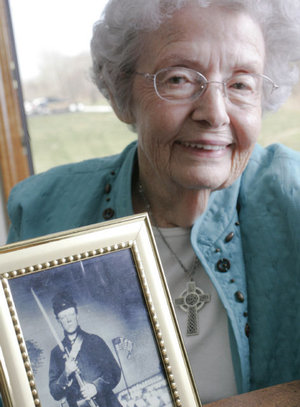
LowreyHere is a reminder that our great civil war was not that long ago in the grand scheme of things. Juanita Tudor Lowrey, she of Kearney, Missouri, is the daughter of one Hugh Tudor, who fought in the Union Army’s Fourteenth Corps. Apparently he was one the young men, described by Bruce Catton, who wrote “18” on a piece of paper, stuck it in his shoe, and told the technical truth to the draft board that he was “over eighteen.” I have always suspected that there are a larger number of veterans’ children still among the living than we might believe. In the 1920s and 1930s there were a surprising number of May-December relationships between veterans and young women. A young woman might marry an aged veteran, take care of him in his final years,  and then become eligible for his pension when he died. These were difficult times. Remember, the Depression began in the early 1920s in many parts of the country, not with the Wall Street Crash and Dust Bowl as our collective memory has it today. There was no Social Security yet either. People do what they have to do to get by. It probably did not happen that often, but enough for it be a phenomenon worth noting. At least often enough to produce Ms. Lowrey.

(image courtesy Kansas City Star)

Remembering Harriet Tubman

01 Monday Oct 2012

Posted by Keith Muchowski in Memory

≈ Comments Off on Remembering Harriet Tubman

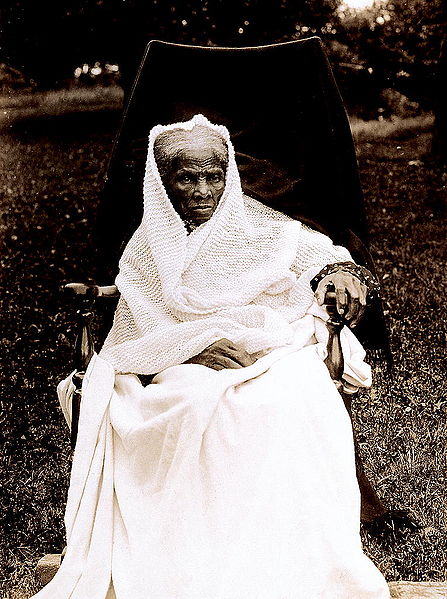
I have always been captivated by the lives and stories of the descendants of historical figures. For one thing, it is a reminder that those we read about were real people, not figures who existed for our entertainment and edification. They lived lives, had families, and struggled just like the rest of us. The phenomenon was captured well in this USA Today piece that appeared last year. What is intriguing, among other things, is the way descendants either embrace or shun the situation. Avoiding the shame of having an infamous ancestor is one thing. To pick a drastic example, we don’t see Hitler’s extended clan drawing attention to themselves, do we? Still, reflected glory can be just as big a burden for the children, grandchildren, etc. of those known for great deeds, perhaps even more so. How do you live up to the legacy of being the kid of a Martin Luther King, Jr, Abraham Lincoln, or Frederick Douglass? Some eschew the situation and avoid the limelight entirely. Go too far in the other direction, embracing the name and privilege it allegedly bestows a little too much, and you get accused of being a professional widow. An individual who has played it about right is Ulysses Grant Dietz, the great-great grandson of the general/president who lives primarily out of the limelight but involves himself just enough to defend Ulysses S. Grant’s legacy. Most famously he threatened to move Grant’s remains to Illinois in the 1990s if the government did not improve the grounds at the tomb in upper Manhattan. It is a difficult balancing act that is more difficult than the rest of us can imagine. This past weekend descendants of Harriet Tubman met in Baltimore to prepare for the 2013 Centennial of her death.

The Civil War in my life

17 Monday Sep 2012

Posted by Keith Muchowski in Antietam, Memory

≈ 1 Comment

Alexander Gardner image of Antietam’s Sunken Road

Today is the 150th anniversary of the Battle of Antietam, the bloodiest day in American history. Last night my wife and I were watching some of the C-SPAN and other coverage, which led to a conversation about the Civil War’s role in my life. Some things have the ability to captivate us always. My list includes the Beatles, New York City, Elvis, both World Wars, Rod Serling’s The Twilight Zone, Sinatra, and the American Civil War. Don’t ask me to explain; how does anyone know from where in the human imagination such interests arise? Now middle-aged, I have nonetheless reached that point where I am so removed from the events of my younger days to see where the roads turned. For me, the Civil War path has taken several twists.

The first was when I was ten and my uncle gave me a book of Matthew Brady photographs. I was too young to pick up on at the time but the book was a reprint of Benson J. Lossing’s History of the Civil War. Thankfully I was also too young to read the dense prose. If I had I might still be influenced by its early 20th century take on the War of the Rebellion. It was something like the Time-Life books about the Second World War many people had in their living rooms in the 1970s and 80s. Fun to look at, but not especially reliable. Still, the Civil War photo were captivating, especially to a latchkey kid whose parents had uprooted him from his home in Connecticut and transplanted to Florida before divorcing two years later. I lost the book over the years until seeing it again for $10 in a Border’s a few years ago. I shelled out the money but eventually gave the book away, worried about the accuracy not just of the text but even the captions on the photographs themselves. For starters, we now know that many “Brady” photos were actually taken by Alexander Gardner, Timothy H. O’Sullivan, or other members of Brady’s studio. The captions on old photographs are often wrong as well. I have read my Frassanito.

I got away from the Civil War during my high school and college years but had my interest piqued again when Ken Burns’s documentary was released in 1990. It is a dramatic film, beautifully choreographed, that inspired many of us to delve more into the literature. This in turn led me to purchase Bruce Catton’s American Heritage Picture History of the Civil War when it was re-released with updated maps, art work, and photographs in 1996. At this time I was going to graduate school and working fullltime at a large chain bookstore to make ends meet. Often I worked until midnight and came home too wound up to go to sleep immediately. I would sit at my tiny kitchen table eating my 1:00 am dinner and reading Catton’s lyrical prose. I was still too young and unaware that Catton was part of any historiographical “school.” Ironically, I never took a Civil War class in either grad or undergraduate school. This is especially unfortunate because I did my undergraduate work at the University of Houston and could have studied with Joseph Glatthaar.

The next turn came with the release of Tony Horowitz’s Confederates in the Attic in 1998. Many readers enjoyed it for its anecdotes about the levels of farbiness one finds at Civil War reenactments. What I most took from the book though was how little we know about the war, despite the tens of thousands of books written on the subject. Self serving regimental histories. Lost Cause mythology. The foggy memories of aging veterans visiting the battlefields of their youth. Flaws in the Official Records of the War of the Rebellion. It was all new to me. It was (and is) terrifying also to think that everything one knows about something could be wrong. Even worse is realizing that there might be no way ever to know the full story of something, even by extension one’s own life. The next year I visited Shiloh for the first time when I went out to visit my dad. Other than a quick one hour stop at Fredericksburg in 1997 when I got off the freeway during my move to New York, I had never visited a Civil War battlefield before. After that we visited Pea Ridge, Vicksburg, and Shiloh again. This is where I became fixated on the myths and memory of the war.

In 2008 I visited Gettysburg for the time, and the following year I went back with the woman who became my wife a few months later. That year we also went to Sharpsburg in what has become something of an annual pilgrimage. There is no substitute to walking a Civil War battlefield. On that same trip we also visited Harper’s Ferry on what was the anniversary year of John Brown’s raid. This got me thinking harder about the sesquicentennial and the opportunity it presented to think harder about American Civil War and its place in our history. I never romanticized the Civil War–and I was certainly never a Lost Causer–but I believe I think more critically and less sentimentally about that conflict than I might have when I was younger. This in turn led to another path, the one I am on now, where I started this blog to make the leap from buff to serious writer. I feel I am now finding my niche, which include the Civil War in New York, and Civil War veterans in the Gilded Age among other aspects.

In a nutshell that is the Civil War in my life. Last night, looking at the images from over the weekend on the Antietam NPS Facebook page, I couldn’t help but wonder how many of the children taken to the event by their parents will become captivated by this tragic event in our history. Some will forget almost immediately, but years from now others will look back on the commemoration of 2011-2015 as the spark that started it all.
Who was the most important person in the Confederacy?

20 Friday Jul 2012

Posted by Keith Muchowski in Memory

≈ Comments Off on Who was the most important person in the Confederacy?

Temptations is a New Orleans strip joint whose neon sign declares it “The Gentlemens’ [sic] Club in a Class By Itself.” Open noon ’til dawn, it sits on a crowded stretch of Bourbon Street between the century-old Galatoire’s restaurant and Larry Flynt’s Barely Legal Club. Inside Temptations, the ground-floor parlor is done up in antebellum-period décor, with a pair of grand fireplaces and crystal chandeliers. The paint on the walls cracks with antiquarian charm. At the rear of the room, red velvet-upholstered stools line a bar that serves up chilled cocktails to cut the bayou heat. The parlor is centered around a stage with a dance pole, where, during a recent late-night visit, a stripper billed as “Ryan” Lockhart was hard at work, wriggling her g-string-clad body around the head of a bald man with a fist full of money.

When Lockhart finished her routine, redonning her leopard-print brassiere and shredded black dress and joining the half-dozen other ladies working the floor, I asked if she was aware of the building’s notable history as the former home of Judah P. Benjamin, the Confederate secretary of state and America’s first openly Jewish senator.

The answer given to the above question is usually either Jefferson Davis or Robert E. Lee. A compelling case can be made however for Judah Benjamin, the individual who served the Confederate States of America at various times during its short existence as attorney general and secretaries of war and state. Davis and Lee really would be his only competition, Davis by default as president and Lee for keeping the army in the field and serving as the nation’s face. Benjamin, though, did as much as anyone to keep the Confederacy afloat for as long as it did. While I do not think he has been as forgotten by history as the Tablet article excerpted above makes him out to be, Benjamin has been left out of the narrative somewhat. Diplomacy and the minutiae of supply procurement don’t make for the riveting reading that many Civil War “buffs” are looking for. The article does a good job of explaining why Benjamin is less know today than he should be. Reasons include anti-semitism or, conversely, embarrassment on the part of contemporary Jews at acknowledging his outsized role in secession and the South’s peculiar institution. Also, his relocation to France after the war left him far from the point of creation of the Lost Cause mythology. Another reason is that the notoriously private Benjamin may have been gay. Whatever the cause, Daniel Brook offers a fascinating account of the Benjamin historiography.

← Older posts
Newer posts →

Enter your email address to subscribe to this blog and receive notifications of new posts by email.

Join 258 other subscribers

Categories

Archives

  • November 2023 (1)
  • October 2023 (3)
  • September 2023 (3)
  • August 2023 (4)
  • July 2023 (7)
  • June 2023 (10)
  • May 2023 (8)
  • April 2023 (6)
  • March 2023 (5)
  • February 2023 (4)
  • January 2023 (4)
  • December 2022 (4)
  • November 2022 (8)
  • October 2022 (2)
  • September 2022 (4)
  • June 2022 (1)
  • May 2022 (1)
  • April 2022 (13)
  • January 2022 (1)
  • December 2021 (2)
  • November 2021 (1)
  • October 2021 (3)
  • September 2021 (3)
  • August 2021 (5)
  • July 2021 (1)
  • June 2021 (1)
  • May 2021 (4)
  • April 2021 (3)
  • March 2021 (4)
  • February 2021 (7)
  • January 2021 (4)
  • December 2020 (4)
  • November 2020 (3)
  • October 2020 (4)
  • September 2020 (7)
  • August 2020 (5)
  • July 2020 (7)
  • June 2020 (11)
  • May 2020 (7)
  • April 2020 (9)
  • March 2020 (9)
  • February 2020 (7)
  • January 2020 (6)
  • December 2019 (7)
  • November 2019 (9)
  • October 2019 (4)
  • September 2019 (6)
  • August 2019 (10)
  • July 2019 (8)
  • June 2019 (6)
  • May 2019 (9)
  • April 2019 (8)
  • March 2019 (6)
  • February 2019 (8)
  • January 2019 (5)
  • December 2018 (10)
  • November 2018 (6)
  • October 2018 (9)
  • September 2018 (11)
  • August 2018 (11)
  • July 2018 (17)
  • June 2018 (10)
  • May 2018 (8)
  • April 2018 (9)
  • March 2018 (8)
  • February 2018 (5)
  • January 2018 (7)
  • December 2017 (11)
  • November 2017 (8)
  • October 2017 (9)
  • September 2017 (11)
  • August 2017 (12)
  • July 2017 (14)
  • June 2017 (18)
  • May 2017 (11)
  • April 2017 (10)
  • March 2017 (9)
  • February 2017 (11)
  • January 2017 (14)
  • December 2016 (7)
  • November 2016 (8)
  • October 2016 (8)
  • September 2016 (9)
  • August 2016 (6)
  • July 2016 (12)
  • June 2016 (8)
  • May 2016 (9)
  • April 2016 (6)
  • March 2016 (12)
  • February 2016 (10)
  • January 2016 (9)
  • December 2015 (9)
  • November 2015 (11)
  • October 2015 (8)
  • September 2015 (9)
  • August 2015 (13)
  • July 2015 (14)
  • June 2015 (11)
  • May 2015 (11)
  • April 2015 (18)
  • March 2015 (10)
  • February 2015 (8)
  • January 2015 (8)
  • December 2014 (12)
  • November 2014 (13)
  • October 2014 (16)
  • September 2014 (11)
  • August 2014 (16)
  • July 2014 (12)
  • June 2014 (13)
  • May 2014 (10)
  • April 2014 (10)
  • March 2014 (11)
  • February 2014 (12)
  • January 2014 (10)
  • December 2013 (11)
  • November 2013 (14)
  • October 2013 (14)
  • September 2013 (14)
  • August 2013 (13)
  • July 2013 (17)
  • June 2013 (9)
  • May 2013 (13)
  • April 2013 (13)
  • March 2013 (16)
  • February 2013 (15)
  • January 2013 (15)
  • December 2012 (18)
  • November 2012 (18)
  • October 2012 (21)
  • September 2012 (14)
  • August 2012 (16)
  • July 2012 (21)
  • June 2012 (22)
  • May 2012 (24)
  • April 2012 (20)
  • March 2012 (23)
  • February 2012 (22)
  • January 2012 (15)
  • December 2011 (23)
  • November 2011 (22)
  • October 2011 (23)
  • September 2011 (18)
  • August 2011 (19)
  • July 2011 (20)
  • June 2011 (29)
  • May 2011 (25)
  • April 2011 (18)
  • March 2011 (21)
  • February 2011 (11)

Meta

  • Create account
  • Log in
  • Entries feed
  • Comments feed
  • WordPress.com
Creative Commons License
This work is licensed under a Creative Commons Attribution-NonCommercial-ShareAlike 4.0 International License.

Enter your email address to subscribe to this blog and receive notifications of new posts by email.

Join 258 other subscribers

Categories

Archives

  • November 2023 (1)
  • October 2023 (3)
  • September 2023 (3)
  • August 2023 (4)
  • July 2023 (7)
  • June 2023 (10)
  • May 2023 (8)
  • April 2023 (6)
  • March 2023 (5)
  • February 2023 (4)
  • January 2023 (4)
  • December 2022 (4)
  • November 2022 (8)
  • October 2022 (2)
  • September 2022 (4)
  • June 2022 (1)
  • May 2022 (1)
  • April 2022 (13)
  • January 2022 (1)
  • December 2021 (2)
  • November 2021 (1)
  • October 2021 (3)
  • September 2021 (3)
  • August 2021 (5)
  • July 2021 (1)
  • June 2021 (1)
  • May 2021 (4)
  • April 2021 (3)
  • March 2021 (4)
  • February 2021 (7)
  • January 2021 (4)
  • December 2020 (4)
  • November 2020 (3)
  • October 2020 (4)
  • September 2020 (7)
  • August 2020 (5)
  • July 2020 (7)
  • June 2020 (11)
  • May 2020 (7)
  • April 2020 (9)
  • March 2020 (9)
  • February 2020 (7)
  • January 2020 (6)
  • December 2019 (7)
  • November 2019 (9)
  • October 2019 (4)
  • September 2019 (6)
  • August 2019 (10)
  • July 2019 (8)
  • June 2019 (6)
  • May 2019 (9)
  • April 2019 (8)
  • March 2019 (6)
  • February 2019 (8)
  • January 2019 (5)
  • December 2018 (10)
  • November 2018 (6)
  • October 2018 (9)
  • September 2018 (11)
  • August 2018 (11)
  • July 2018 (17)
  • June 2018 (10)
  • May 2018 (8)
  • April 2018 (9)
  • March 2018 (8)
  • February 2018 (5)
  • January 2018 (7)
  • December 2017 (11)
  • November 2017 (8)
  • October 2017 (9)
  • September 2017 (11)
  • August 2017 (12)
  • July 2017 (14)
  • June 2017 (18)
  • May 2017 (11)
  • April 2017 (10)
  • March 2017 (9)
  • February 2017 (11)
  • January 2017 (14)
  • December 2016 (7)
  • November 2016 (8)
  • October 2016 (8)
  • September 2016 (9)
  • August 2016 (6)
  • July 2016 (12)
  • June 2016 (8)
  • May 2016 (9)
  • April 2016 (6)
  • March 2016 (12)
  • February 2016 (10)
  • January 2016 (9)
  • December 2015 (9)
  • November 2015 (11)
  • October 2015 (8)
  • September 2015 (9)
  • August 2015 (13)
  • July 2015 (14)
  • June 2015 (11)
  • May 2015 (11)
  • April 2015 (18)
  • March 2015 (10)
  • February 2015 (8)
  • January 2015 (8)
  • December 2014 (12)
  • November 2014 (13)
  • October 2014 (16)
  • September 2014 (11)
  • August 2014 (16)
  • July 2014 (12)
  • June 2014 (13)
  • May 2014 (10)
  • April 2014 (10)
  • March 2014 (11)
  • February 2014 (12)
  • January 2014 (10)
  • December 2013 (11)
  • November 2013 (14)
  • October 2013 (14)
  • September 2013 (14)
  • August 2013 (13)
  • July 2013 (17)
  • June 2013 (9)
  • May 2013 (13)
  • April 2013 (13)
  • March 2013 (16)
  • February 2013 (15)
  • January 2013 (15)
  • December 2012 (18)
  • November 2012 (18)
  • October 2012 (21)
  • September 2012 (14)
  • August 2012 (16)
  • July 2012 (21)
  • June 2012 (22)
  • May 2012 (24)
  • April 2012 (20)
  • March 2012 (23)
  • February 2012 (22)
  • January 2012 (15)
  • December 2011 (23)
  • November 2011 (22)
  • October 2011 (23)
  • September 2011 (18)
  • August 2011 (19)
  • July 2011 (20)
  • June 2011 (29)
  • May 2011 (25)
  • April 2011 (18)
  • March 2011 (21)
  • February 2011 (11)

Meta

  • Create account
  • Log in
  • Entries feed
  • Comments feed
  • WordPress.com
Creative Commons License
This work is licensed under a Creative Commons Attribution-NonCommercial-ShareAlike 4.0 International License.

Enter your email address to subscribe to this blog and receive notifications of new posts by email.

Join 258 other subscribers

Categories

Archives

  • November 2023 (1)
  • October 2023 (3)
  • September 2023 (3)
  • August 2023 (4)
  • July 2023 (7)
  • June 2023 (10)
  • May 2023 (8)
  • April 2023 (6)
  • March 2023 (5)
  • February 2023 (4)
  • January 2023 (4)
  • December 2022 (4)
  • November 2022 (8)
  • October 2022 (2)
  • September 2022 (4)
  • June 2022 (1)
  • May 2022 (1)
  • April 2022 (13)
  • January 2022 (1)
  • December 2021 (2)
  • November 2021 (1)
  • October 2021 (3)
  • September 2021 (3)
  • August 2021 (5)
  • July 2021 (1)
  • June 2021 (1)
  • May 2021 (4)
  • April 2021 (3)
  • March 2021 (4)
  • February 2021 (7)
  • January 2021 (4)
  • December 2020 (4)
  • November 2020 (3)
  • October 2020 (4)
  • September 2020 (7)
  • August 2020 (5)
  • July 2020 (7)
  • June 2020 (11)
  • May 2020 (7)
  • April 2020 (9)
  • March 2020 (9)
  • February 2020 (7)
  • January 2020 (6)
  • December 2019 (7)
  • November 2019 (9)
  • October 2019 (4)
  • September 2019 (6)
  • August 2019 (10)
  • July 2019 (8)
  • June 2019 (6)
  • May 2019 (9)
  • April 2019 (8)
  • March 2019 (6)
  • February 2019 (8)
  • January 2019 (5)
  • December 2018 (10)
  • November 2018 (6)
  • October 2018 (9)
  • September 2018 (11)
  • August 2018 (11)
  • July 2018 (17)
  • June 2018 (10)
  • May 2018 (8)
  • April 2018 (9)
  • March 2018 (8)
  • February 2018 (5)
  • January 2018 (7)
  • December 2017 (11)
  • November 2017 (8)
  • October 2017 (9)
  • September 2017 (11)
  • August 2017 (12)
  • July 2017 (14)
  • June 2017 (18)
  • May 2017 (11)
  • April 2017 (10)
  • March 2017 (9)
  • February 2017 (11)
  • January 2017 (14)
  • December 2016 (7)
  • November 2016 (8)
  • October 2016 (8)
  • September 2016 (9)
  • August 2016 (6)
  • July 2016 (12)
  • June 2016 (8)
  • May 2016 (9)
  • April 2016 (6)
  • March 2016 (12)
  • February 2016 (10)
  • January 2016 (9)
  • December 2015 (9)
  • November 2015 (11)
  • October 2015 (8)
  • September 2015 (9)
  • August 2015 (13)
  • July 2015 (14)
  • June 2015 (11)
  • May 2015 (11)
  • April 2015 (18)
  • March 2015 (10)
  • February 2015 (8)
  • January 2015 (8)
  • December 2014 (12)
  • November 2014 (13)
  • October 2014 (16)
  • September 2014 (11)
  • August 2014 (16)
  • July 2014 (12)
  • June 2014 (13)
  • May 2014 (10)
  • April 2014 (10)
  • March 2014 (11)
  • February 2014 (12)
  • January 2014 (10)
  • December 2013 (11)
  • November 2013 (14)
  • October 2013 (14)
  • September 2013 (14)
  • August 2013 (13)
  • July 2013 (17)
  • June 2013 (9)
  • May 2013 (13)
  • April 2013 (13)
  • March 2013 (16)
  • February 2013 (15)
  • January 2013 (15)
  • December 2012 (18)
  • November 2012 (18)
  • October 2012 (21)
  • September 2012 (14)
  • August 2012 (16)
  • July 2012 (21)
  • June 2012 (22)
  • May 2012 (24)
  • April 2012 (20)
  • March 2012 (23)
  • February 2012 (22)
  • January 2012 (15)
  • December 2011 (23)
  • November 2011 (22)
  • October 2011 (23)
  • September 2011 (18)
  • August 2011 (19)
  • July 2011 (20)
  • June 2011 (29)
  • May 2011 (25)
  • April 2011 (18)
  • March 2011 (21)
  • February 2011 (11)

Meta

  • Create account
  • Log in
  • Entries feed
  • Comments feed
  • WordPress.com
Creative Commons License
This work is licensed under a Creative Commons Attribution-NonCommercial-ShareAlike 4.0 International License.

Blog at WordPress.com.

  • Subscribe Subscribed
    • The Strawfoot
    • Join 229 other subscribers
    • Already have a WordPress.com account? Log in now.
    • The Strawfoot
    • Subscribe Subscribed
    • Sign up
    • Log in
    • Report this content
    • View site in Reader
    • Manage subscriptions
    • Collapse this bar
 

Loading Comments...