• About

The Strawfoot

~ a New Yorker's American History blog

The Strawfoot

Category Archives: New York City

LaGuardia’s New York, in technicolor

12 Wednesday Jun 2013

Posted by Keith Muchowski in Film, Sound, & Photography, New York City

≈ 2 Comments

I just got back from the Mets-Cardinals game at Citi Field. Not surprisingly the Mets lost, 8-2.

Earlier today I received an email from my good friend Susan in Oklahoma with a link to some recently found video of New York City life in 1939. This was an important year in the city’s history. For starters, the World’s Fair began that April. I always think about that when going to Citi Field/Shea Stadium because the fair took place in Flushing Meadows-Corona Park, located at the same subway station for what is now the ballpark. (The 1964 World’s Fair was held there as well.) April 1939 was the same month Lou Gehrig retired from the Yankees; three months later he made his “luckiest man on the face of the earth” speech on the Fourth of July. That September Germany and the Soviet Union invaded Poland, increasing tension in the city, though as you will see life as always has a way of going on. My favorite part of the video is the footage of the elevated subway lines (now gone in Manhattan) and the line of passenger cruise ships along the Hudson (gone as well) seen from atop Rockefeller Center. Still, much remains as it did seventy-four years ago. Alas I could not embed the video so check it out here. It is all of three minutes.

And Susan, we have not forgotten about visiting Oklahoma, and when we do we expect to be given the grand tour of the CIvil War sites. So start brushing up.

Dotting the I’s . . .

04 Tuesday Jun 2013

Posted by Keith Muchowski in Joseph Roswell Hawley, New York City

≈ Comments Off on Dotting the I’s . . .

The Union League Club of New York funded the 20th USCT, along with other Negro regiments

The Union League Club of New York funded the 20th USCT.

I have spent the last few days putting the final touches on my upcoming talk at the New York History conference later this week. There were two parts to put together, the photographs I will use as visuals and the outline of the presentation. Cooperstown should be fun. I will be speaking about Theodore Roosevelt Senior,Williams E. Dodge Junior, and their cohort of New Yorkers, many of them Union League Club members, who helped Lincoln fight the Confederates, and then helped fight Boss Tweed, Tammany Hall, and municipal, state, and federal corruption in the Gilded Age. Along the way they also created many of the institutions New Yorkers take for granted today, such as the Metropolitan Museum of Art and New York Botanical Garden. I just got off the phone with the Hayfoot, who looked at my outline and, as always, gave me some sage advice.

With some exceptions, Civil War New York is a story that has not been told well. The major contributor is of course Barnet Schecter, whose The Devil’s Own Work should be on everyone’s reading list.

Along with my Joseph Hawley biography, this will be my big project for the next few years. In a way they are even the same project. In both cases my emphasis will be on creation of the Republican Party in each state (Hawley helped found the Party in Connecticut in response to the Kansas-Nebraska Act, while Chester Arthur was doing the same in the Empire State.) and continue through the early years of the Progressive Era when that generation died off. You could say I am putting the “era” in Civil War Era. Really one has too, though. So many people focus on Fort Sumter to Appomattox as if those four years happened in a vacuum. You cannot understand the war with that approach. I am fortunate that most 0f the materials I need are located in repositories here in New York and in Washington where the Hayfoot is working for the time being.

(image/NYPL)

A Beautiful Way to Go

16 Thursday May 2013

Posted by Keith Muchowski in Memory, Monuments and Statuary, Museums, New York City

≈ Comments Off on A Beautiful Way to Go

Four years ago, just prior to getting married, I moved from an apartment I had lived in for twelve years to another about five blocks away. Overall, the move wasn’t much: same grocery store, post office, dry cleaner, etc, etc. The big change (other than the marriage) was that I was no longer so close to Prospect Park. An extra twenty minutes each way may not seem like much, but it adds an almost-prohibitive amount of time to a potential weekend walk or evening stroll after work. Brooklyn’s Prospect Park was designed by Frederick Law Olmsted and Calvert Vaux and, though not as well-maintained, is very much the equal of their earlier Central Park. (Central Park is better maintained because the rich folks who live along its perimeter give piles of private money for its maintenance.) For me it was a big loss, though one that came with an equally big win: I am now just five minutes away from the gates of Green-Wood Cemetery. Green-Wood is one of the original garden cemeteries and is currently celebrating its 175th anniversary. To mark the occasion the Museum of the City of New York is hosting an exhibit titled A Beautiful Way to Go: New York’s Green-Wood Cemetery. It opened yesterday and runs through October 13.

Brooklyn's Green-Wood Cemetery

Brooklyn’s Green-Wood Cemetery

Garden cemeteries, sometimes called rural cemeteries, were a phenomenon of the nineteenth century, when American and European societies were industrializing rapidly and green space was becoming scarcer and scarcer for city dwellers. It may surprise you to know that in the late nineteenth century Green-Wood was the most-visited place in New York State after Niagara Falls. Graveyards are for the dead, final resting places for those who came before us and have now passed on; cemeteries are for the living, places to commune with nature and the past. One hundred and seventy-five years later Green-Wood is still serving this function. No matter how many times I have been there–and it is in the hundreds by now–I always see something new on each visit. It is not hard to do, whether it’s reading the many freshly-planted headstones of the 4,000 Civil War soldiers buried there, poking my head into the bars of a mausoleum to peek at the Tiffany windows, or seeing the sun hitting a familiar vista at a different angle during the change of seasons. I am looking forward to catching this show in the coming weeks, and will have more to say about it here on the blog after I do.

The American Gateway

28 Sunday Apr 2013

Posted by Keith Muchowski in National Park Service, New York City

≈ Comments Off on The American Gateway

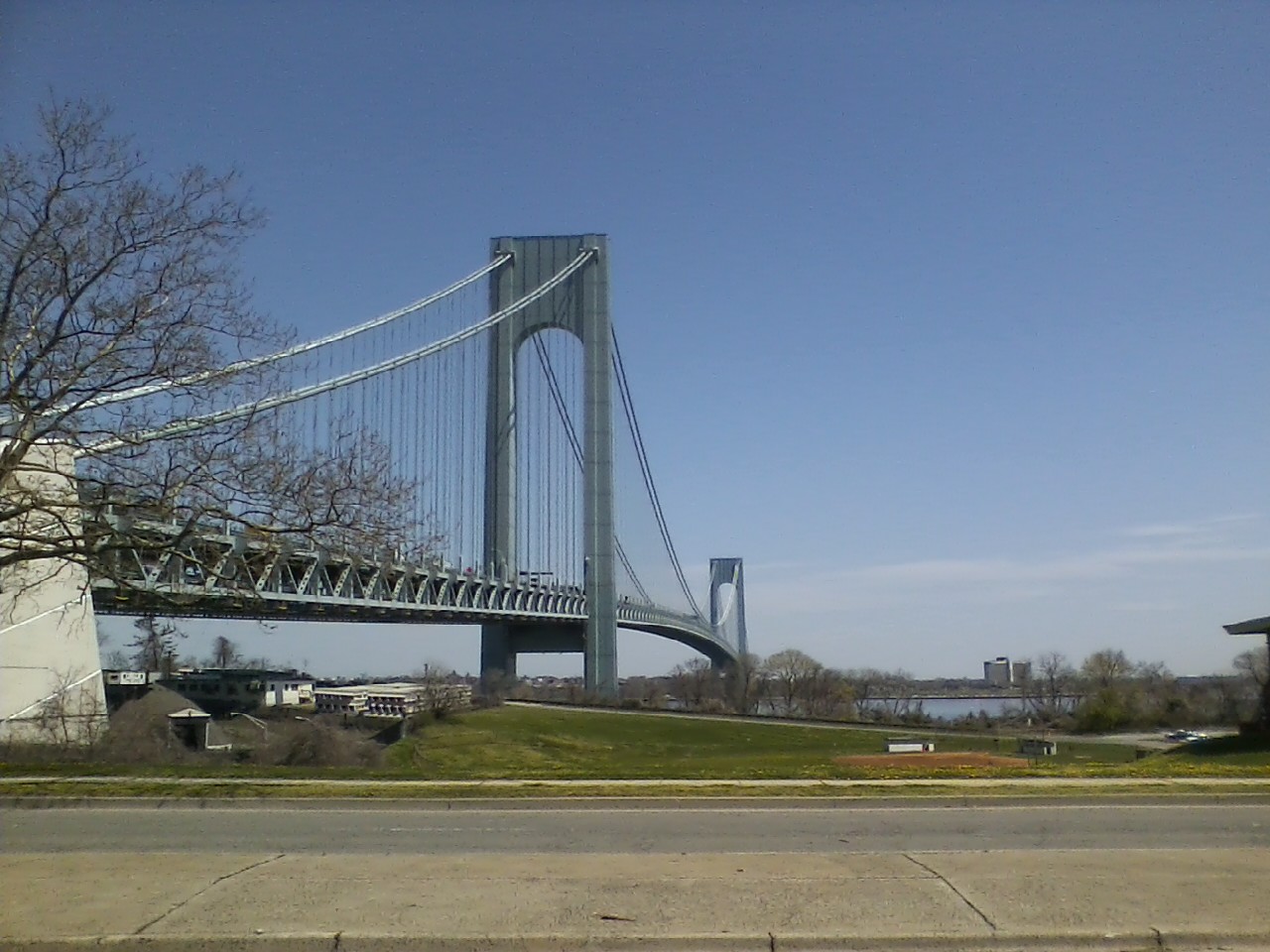
A friend and I went to Fort Wadsworth yesterday. The last time I was there was two years ago, when the Hayfoot and I visited the group of fortifications in Staten Island with someone we know. It is always a bit of a journey getting to these types of places in the outer boroughs. The way we go entails taking the subway to Bay Ridge and then a bus across the Verrazano. Bay Ridge is its own corner of New York City, and one that at least on the surface looks the same as it always did. You half expect to see Tony Manero strutting down the street eating two slices of pizza, stacked on top of each other of course.

Verrazano Bridge from Staten Island

Verrazano Bridge from Staten Island

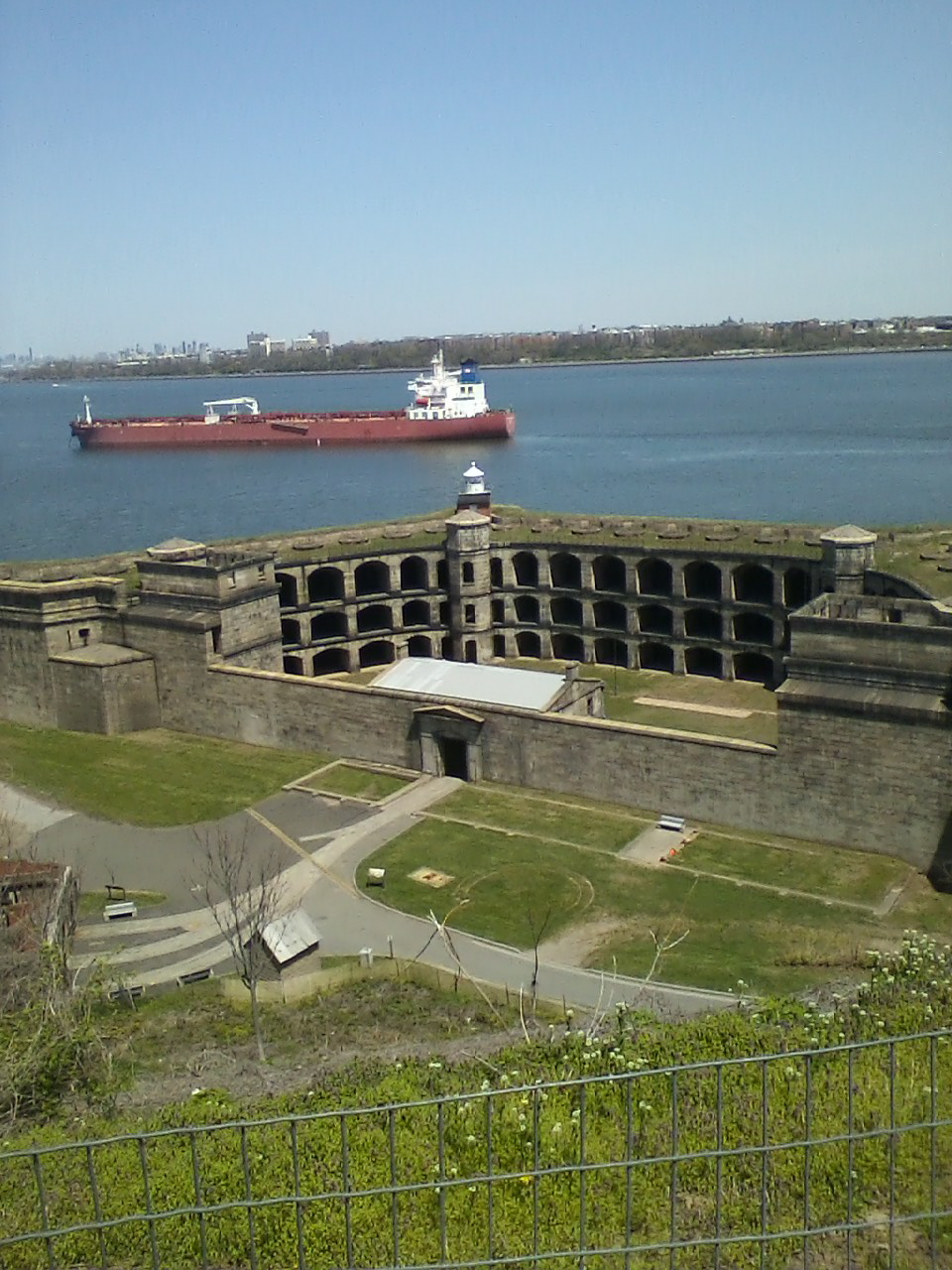
We had a great time yesterday visiting these New York Harbor forts whose history includes, among many other things, a young Captain Robert E. Lee working in the Narrows two decades before the Civil War. To our surprise and disappointment the Visitor Center was closed, due to Superstorm Sandy, sequestration, or something else I don’t know. Despite the disappointment we made the best of things and troopered on. It’s not tough when you have views like these:

Battery Weed and ship in New York Harbor

Battery Weed and ship in New York Harbor

Wadsworth is part of the Park Service’s Gateway National Recreation Area, which was created forty years ago to provide the ten million or so people in the Greater New York area with recreational and other opportunities. Golden Gate National Recreational Area was founded at the same time. Gateway success has been mixed. Millions visit its beaches every year, providing opportunities for those who otherwise might have to do without. It has also saved significant acreage of natural habitat, and created even more. It is strange to be hiking in marshland while seeing the Manhattan skyline in the far off distance. That’s Gateway. At the same time the consortium of sites has always had something of an identity crisis, struggling as it tries to be many things at once. Access is difficult. The infrastructure in many parts is aged and dilapidated, with predictable results on visitation statistics.

Gateway’s roots go back decades before the creation of the recreation area; in the 1930s and 1940s Robert Moses was active in many projects that eventually came under one umbrella in 1972. The storm of October 2012 is a tragedy and an opportunity for the various sites that make up the recreation area. Cathy Newman of National Geographic has more on the story. She won me over when she called Moses the “master builder,” and not the psychotic “power broker” we have been force fed by Robert Caro.

The Park Service, States of New York and New Jersey, and City of New York seem to be grasp the historical moment. There are significant challenges as well. It will be interesting to see what happens in the next few years.

Jews and the Civil War

10 Wednesday Apr 2013

Posted by Keith Muchowski in Museums, New York City

≈ 1 Comment

index

I just back from the city. This evening I went with a friend from work to see Passages through the Fire: Jews and the Civil War at the Jewish Museum on 16th Street. The recently opened exhibit is co-sponsored by Yeshiva University Museum and the American Jewish Historical Society. It was quite the New York evening, complete with dinner afterward at a coffee shop down the street from the museum as the rain pounded down outside. Tonight was actually the curator’s walk-through. Last month, a few days after the exhibit began, I tried to rsvp for what I thought was the only such event; to my surprise the coordinator emailed back to say they were booked. Again to my surprise, she said I could book for April. The curator talks are apparently once a month affairs. I was glad we went tonight to get the curator’s perspective. It is a part of Civil War and United States history we do not hear too much about. When we think “Jewish American history” we think Ellis Island, Lower East Side, and The Jazz Singer, not Shiloh, Chancellorsville, and the March to the Sea. The show is fascinating on its own. It is also a lesson in letting go of one’s preconceived notions whatever the topic.

I had been looking forward to Passages since hearing about it over two years ago. The show is a continuation of sorts of a similar exhibition put on by the Jewish Museum fifty years ago during the Centennial. That 60s show, The American Jew in the Civil War, was a pioneering exhibit that examined the role of American Jewry in the War of the Rebellion, borrowing heavily from the expertise of the late Rabbi Bertram Korn. His is still the authoritative book on the subject. There were 125,000 Jews living in the United States in 1860, up from the 15,000 twenty years earlier. Approximately 10,000 Jews, many of them recent immigrants, fought in the war. They fought for myriad reasons, and as with all other groups the Jewish community had its share of heroes and scoundrels. The exhibit does not shy away from the complicated story. I was already intending to go back in the summer before it ends in August. I was only more excited to do so after hearing that they will be tinkering with the artifacts and signage in the coming days. If in New York try to see this one before it ends.

Getting our sesquicentennial on, Gotham style . . .

(postcard circa 1907-1915, New York Public Library)

A Brooklyn Monitor museum?

04 Thursday Apr 2013

Posted by Keith Muchowski in New York City

≈ Comments Off on A Brooklyn Monitor museum?

When I first moved to Brooklyn 15+ years ago one of the signature aspects of the shoreline was the rotting piers that dotted both the East and Hudson rivers. The piers were remnants of the city’s past, when shipping and ocean lining were still major components of the local economy. The piers lay exposed to the wind and tides for decades after the airplane rendered the ocean liners obsolete and the container closed the Brooklyn docks, along with the jobs that went with them. It seems like so long ago and yet in the grand scheme of things it was not. It is still living memory for hundreds of thousands of New Yorkers. We are talking the Brooklyn as depicted in Marlon Brando’s On the Waterfront. In recent decades newer New Yorkers had become so removed from their shoreline that many didn’t realize in any real sense that they live on island, or more properly an archipelago. Now the rotted  piers are just about gone, themselves part of a New York City that is disappearing, the New York of post-industrial blight. People are finding the water again. I was on the Brooklyn Heights Promenade the other day on my lunch break for the first time since last autumn. I saw that the construction of the riverfront parkland is proceeding steadily. One of the victims of this progress may be a potential museum dedicated to the history of the U.S.S. Monitor on the site in Brooklyn where the ironclad was built. The museum is the dream of a husband and wife team, one of whom had an ancestor who served on the vessel. It will be interesting to see how this plays out.

News flash: Lady Liberty reopening July 4th

19 Tuesday Mar 2013

Posted by Keith Muchowski in Ellis Island, New York City

≈ Comments Off on News flash: Lady Liberty reopening July 4th

It was good news today when the Park Service announced that the Statue of Liberty will be reopening on the 4th of July. It sounds far off, what with snow and slush still on the ground here in the Big Apple, but summer will be here before we know it. I had a feeling an announcement might be coming soon based on what I had been reading online the past week or so. Local, state, and federal officials were pressing harder for a re-opening date. It is understandable. The Statue is a major tourist attraction and is important to the New York and New Jersey economies. I imagine the Ellis re-opening is still a ways off, probably early 2014, though that is just my guess. I’m looking forward to seeing the crowds again when the Governors Island season in late May and people are again flocking to the Battery as the summer moves along.

Civil War New York

22 Friday Feb 2013

Posted by Keith Muchowski in Heritage tourism, New York City

≈ Comments Off on Civil War New York

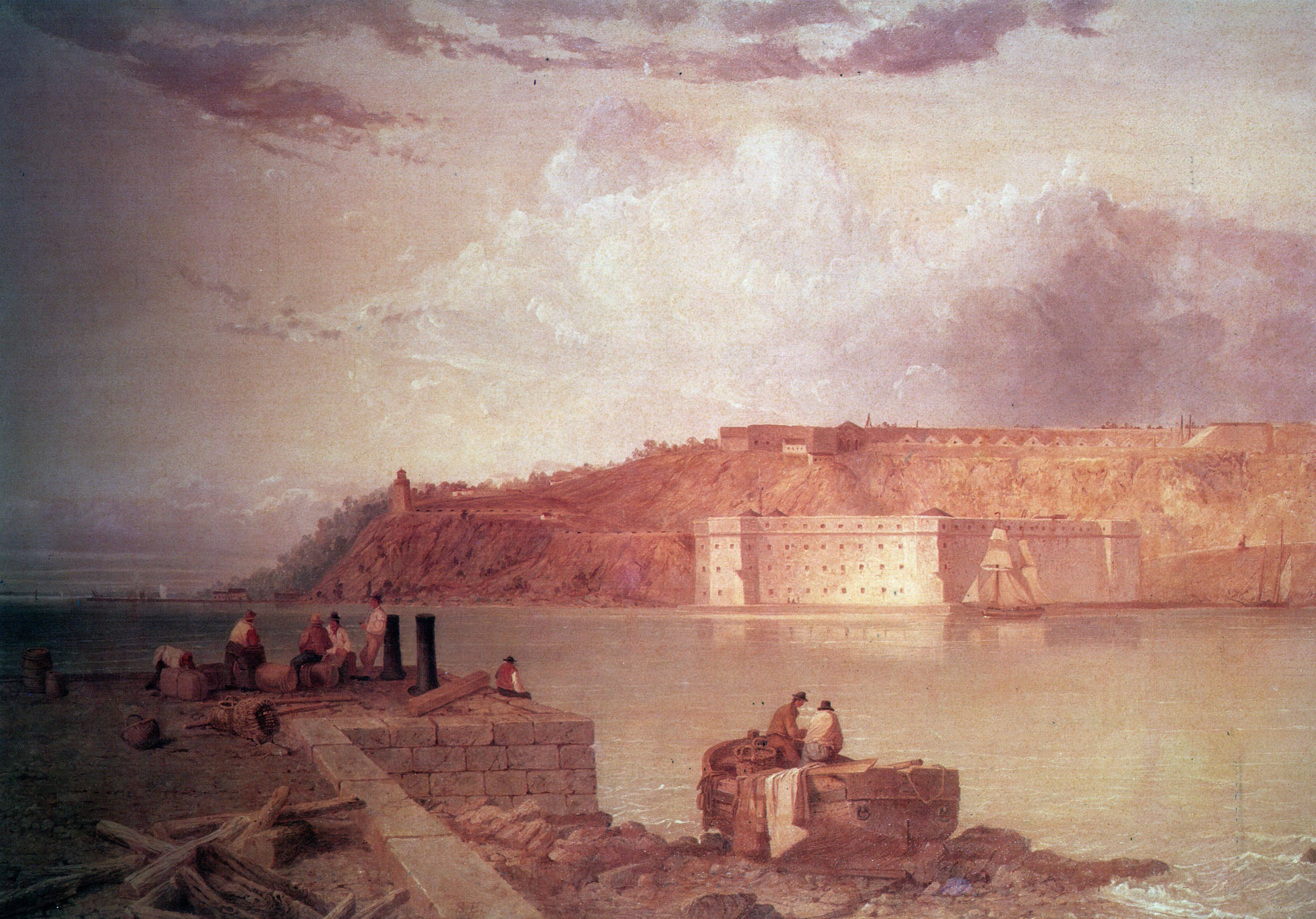
Forts Tompkins and Wadsworth, Staten Island

Forts Tompkins and Wadsworth, Staten Island

People are often surprised about how much Civil War history took place in New York City. Yes, with the major exception of the 1863 draft riots there was no fighting here, but the municipality was integral to the Union war effort on a number of political and economic levels. One should actually say municipalities, as Brooklyn was an independent city until 1898. If you look closely and know what you are looking at, you can see Brooklyn’s one-time independence reflected within the language of the many plaques and monuments sprinkled throughout our fine borough. Even militarily New York City was important, what with Governors Island, Fort Lafayette, the harbor defenses, and the Brooklyn Navy Yard right here. New York City was crucial to putting down the Rebellion. It was to Governors Island, for instance, that Major Anderson sailed after surrendering Fort Sumter. New York was important in the postwar period also. The Grants called New York City home after leaving the White House, and are buried there. The widowed Varina Davis moved to Manhattan, where she was active in political and social life until her death in 1906. And they are just a few names I am coming up with off the top of my head. One of my projects this winter is to create my own catalog of Civil War-related things to see and do in the five boroughs and beyond. Look for it soon. In the meantime here is a short list from NYCGO.

(painting by Seth Eastman, U.S. Army Center for Military History)

Presidents Day weekend

16 Saturday Feb 2013

Posted by Keith Muchowski in Monuments and Statuary, Museums, New York City

≈ Comments Off on Presidents Day weekend

I am on the Boltbus to DC. We just crossed under the Hudson into New Jersey.

I was having a conversation with someone the other day in which we were talking about the things that are uniquely of the 21st century. Hard as it is to believe, but we are now more than a full decade into the new millennium. The people of the 20th century saw the introduction of radio, television, and the personal computer. But what is new and unique so far to the 21st century? A few things we came up with were the eReader, the iPad and other tablet devices, and for those who live in the Northeast Corridor, the Boltbus. It has become such a part of the fabric of life in this region. I firmly believe that some filmmaker a half century from now will create a nostalgic scene in which two young lovers, circa 2010, head off for a weekend alone in the big city by taking this cheap and thoroughly enjoyable mass transit. Don’t laugh. Woody Allen did something similar in his depictions of, say, the Automat in Radio Days.

This weekend I am hoping to see the Civil War exhibit at the Library of Congress. Also on the list is the Civil War and American Art show at the Smithsonian’s  American Art Museum. This will actually be at the Met later this year, but there is going to be so much to it that I want to see it more than once; viewing art can be exhausting and emotionally draining. Speaking of the Met, this is a Holiday Monday coming up. Winter is a great time to visit, especially with the Matisse show set to run for one more month.

I have blogged about the Met’s New American Wing before. Here is a short video that PBS Channel Thirteen released this week about the works of Augustus Saint-Gaudens at the Metropolitan Museum. It is really something to live in New York and walk past these sculptures every day when going about your business. Yesterday morning I paused briefly in front of Saint-Gaudens’s statue of General Sherman while I was on my way to the dentist. No matter how long I live here, I will aways be a tourist. I love the still photograph in the video of what I assume was the dedication ceremony. It is lost on us today that people turned out by the thousands, even hundreds of thousands, for such occasions. Pretty wild.

Enjoy the video and your weekend.

The Loyal Publication Society, cont’d

07 Thursday Feb 2013

Posted by Keith Muchowski in New York City, Union League Club

≈ Comments Off on The Loyal Publication Society, cont’d

Here is the second in a two part series about the Loyal Publication Society of New York, which is part of a larger project I am working on about William E. Dodge Jr. and Theodore Roosevelt. Part one can be found here.

Soon after the founding of the Union League in February 1863 its Loyal Publication Society opened headquarters at 863 Broadway. Its mission was to counteract secessionist and Copperhead propaganda, bolster support in and for the Federal Army, and promote the Union cause among voters in the 1863 and 1864 elections. The reason it was necessary was because the Administration was not up to the task. Public outreach was a staple of the First and Second World Wars in the form of the Committee on Public Information and Office of War Information, but no such agencies existed during the War of the Rebellion. The Administration was just too overwhelmed with military and political matters to take on the added responsibility. Bolstering Union support was crucial in the early months of 1863, when the North was reeling from a string of military defeats and political crises, and the LPS wasted no time in getting down to business. The New York Loyal Publication Society was structured into three committees: a Publication committee that selected documents, an Executive that distributed them to the Army down south and to local communities in the north and west, and a Finance that collected the funds necessary to carry out these endeavors. Charles King was the Society’s first president but its driving force was Francis Lieber, the Society’s initial Publication Committee chairman, eventual chief executive, and overall driving force.

Solider, professor, and jurist Francis Lieber

Solider, professor, and jurist Francis Lieber

A great champion of human liberty, Lieber was born in Germany and had fought in the Prussian army against Napoleon at Waterloo. In 1829, after emigrating to the United States, the jurist became editor of the Encyclopedia Americana. Lieber had a deep understanding of the American South, having served as Professor of History and Political Economy at South Carolina College for twenty-two years before moving to Columbia University. In the months prior to the founding of the Union League and its Publication Society Lieber had authored General Order Number 100, or Instruction for the Government of Armies of the United States in the Field, the code that established laws for American soldiers during time of war. President Lincoln approved the Lieber Code on April 24, 1863.

The Publication Committee met thirty-nine times and considered just over one hundred publications in the Society’s first year. The Executive Committee eventually chose forty three pamphlets and twelve broadsides for distribution. The Society printed and distributed 400,000 copies of these items. Subjects were chosen to focus on the concerns of soldiers, women, immigrants, working-class men, Democrats, Catholics, abolitionists, and Southern Unionists. A representative sampling of titles includes: “A few words in behalf of Loyal Women of the United States,” by One of Themselves; “No Party now, but all for our Country,” by Francis Lieber; “Address to King Cotton,” by Eugene Pelletan; “Emancipation is Peace,” by Robert Dale Owen; and “Letters on our National Struggle,” by Brigadier General Thomas Francis Meagher.” The Meagher pamphlet is especially noteworthy. Like Lieber, Meagher was an immigrant who had been active in European affairs as a young man before settling in the United States. Meagher was a well-known Irish nationalist who eventually became a high-ranking officer in the Union Army. He appealed to religious and ethnic constituencies in both the Union Army and public-at-large, and his inclusion was quite intentional.

The New York Loyal Publication Society existed for three years and published eighty-nine pamphlets, broadsides, and reports during its lifetime. It collaborated closely with similar organization in Boston and Philadelphia as well, and together they distributed hundreds of thousands of publications to soldiers in the field and civilians on the home front.. The Society was instrumental in the 1863 re-election of Pennsylvania Governor Andrew Curtin, a key Lincoln supporter. In 1864 the Publication Society worked rigorously on behalf of Lincoln’s re-election. As the war wound down in 1865 the Society began publishing less and less. Lieber and his colleagues declared victory soon thereafter. At the annual meeting on February 27, 1866 the Society members voted to disband, secure in the knowledge that they had done their part for Union and Emancipation.

(image/Brady Studio, Library of Congress)

← Older posts
Newer posts →

Enter your email address to subscribe to this blog and receive notifications of new posts by email.

Join 258 other subscribers

Categories

Archives

  • November 2023 (1)
  • October 2023 (3)
  • September 2023 (3)
  • August 2023 (4)
  • July 2023 (7)
  • June 2023 (10)
  • May 2023 (8)
  • April 2023 (6)
  • March 2023 (5)
  • February 2023 (4)
  • January 2023 (4)
  • December 2022 (4)
  • November 2022 (8)
  • October 2022 (2)
  • September 2022 (4)
  • June 2022 (1)
  • May 2022 (1)
  • April 2022 (13)
  • January 2022 (1)
  • December 2021 (2)
  • November 2021 (1)
  • October 2021 (3)
  • September 2021 (3)
  • August 2021 (5)
  • July 2021 (1)
  • June 2021 (1)
  • May 2021 (4)
  • April 2021 (3)
  • March 2021 (4)
  • February 2021 (7)
  • January 2021 (4)
  • December 2020 (4)
  • November 2020 (3)
  • October 2020 (4)
  • September 2020 (7)
  • August 2020 (5)
  • July 2020 (7)
  • June 2020 (11)
  • May 2020 (7)
  • April 2020 (9)
  • March 2020 (9)
  • February 2020 (7)
  • January 2020 (6)
  • December 2019 (7)
  • November 2019 (9)
  • October 2019 (4)
  • September 2019 (6)
  • August 2019 (10)
  • July 2019 (8)
  • June 2019 (6)
  • May 2019 (9)
  • April 2019 (8)
  • March 2019 (6)
  • February 2019 (8)
  • January 2019 (5)
  • December 2018 (10)
  • November 2018 (6)
  • October 2018 (9)
  • September 2018 (11)
  • August 2018 (11)
  • July 2018 (17)
  • June 2018 (10)
  • May 2018 (8)
  • April 2018 (9)
  • March 2018 (8)
  • February 2018 (5)
  • January 2018 (7)
  • December 2017 (11)
  • November 2017 (8)
  • October 2017 (9)
  • September 2017 (11)
  • August 2017 (12)
  • July 2017 (14)
  • June 2017 (18)
  • May 2017 (11)
  • April 2017 (10)
  • March 2017 (9)
  • February 2017 (11)
  • January 2017 (14)
  • December 2016 (7)
  • November 2016 (8)
  • October 2016 (8)
  • September 2016 (9)
  • August 2016 (6)
  • July 2016 (12)
  • June 2016 (8)
  • May 2016 (9)
  • April 2016 (6)
  • March 2016 (12)
  • February 2016 (10)
  • January 2016 (9)
  • December 2015 (9)
  • November 2015 (11)
  • October 2015 (8)
  • September 2015 (9)
  • August 2015 (13)
  • July 2015 (14)
  • June 2015 (11)
  • May 2015 (11)
  • April 2015 (18)
  • March 2015 (10)
  • February 2015 (8)
  • January 2015 (8)
  • December 2014 (12)
  • November 2014 (13)
  • October 2014 (16)
  • September 2014 (11)
  • August 2014 (16)
  • July 2014 (12)
  • June 2014 (13)
  • May 2014 (10)
  • April 2014 (10)
  • March 2014 (11)
  • February 2014 (12)
  • January 2014 (10)
  • December 2013 (11)
  • November 2013 (14)
  • October 2013 (14)
  • September 2013 (14)
  • August 2013 (13)
  • July 2013 (17)
  • June 2013 (9)
  • May 2013 (13)
  • April 2013 (13)
  • March 2013 (16)
  • February 2013 (15)
  • January 2013 (15)
  • December 2012 (18)
  • November 2012 (18)
  • October 2012 (21)
  • September 2012 (14)
  • August 2012 (16)
  • July 2012 (21)
  • June 2012 (22)
  • May 2012 (24)
  • April 2012 (20)
  • March 2012 (23)
  • February 2012 (22)
  • January 2012 (15)
  • December 2011 (23)
  • November 2011 (22)
  • October 2011 (23)
  • September 2011 (18)
  • August 2011 (19)
  • July 2011 (20)
  • June 2011 (29)
  • May 2011 (25)
  • April 2011 (18)
  • March 2011 (21)
  • February 2011 (11)

Meta

  • Create account
  • Log in
  • Entries feed
  • Comments feed
  • WordPress.com
Creative Commons License
This work is licensed under a Creative Commons Attribution-NonCommercial-ShareAlike 4.0 International License.

Enter your email address to subscribe to this blog and receive notifications of new posts by email.

Join 258 other subscribers

Categories

Archives

  • November 2023 (1)
  • October 2023 (3)
  • September 2023 (3)
  • August 2023 (4)
  • July 2023 (7)
  • June 2023 (10)
  • May 2023 (8)
  • April 2023 (6)
  • March 2023 (5)
  • February 2023 (4)
  • January 2023 (4)
  • December 2022 (4)
  • November 2022 (8)
  • October 2022 (2)
  • September 2022 (4)
  • June 2022 (1)
  • May 2022 (1)
  • April 2022 (13)
  • January 2022 (1)
  • December 2021 (2)
  • November 2021 (1)
  • October 2021 (3)
  • September 2021 (3)
  • August 2021 (5)
  • July 2021 (1)
  • June 2021 (1)
  • May 2021 (4)
  • April 2021 (3)
  • March 2021 (4)
  • February 2021 (7)
  • January 2021 (4)
  • December 2020 (4)
  • November 2020 (3)
  • October 2020 (4)
  • September 2020 (7)
  • August 2020 (5)
  • July 2020 (7)
  • June 2020 (11)
  • May 2020 (7)
  • April 2020 (9)
  • March 2020 (9)
  • February 2020 (7)
  • January 2020 (6)
  • December 2019 (7)
  • November 2019 (9)
  • October 2019 (4)
  • September 2019 (6)
  • August 2019 (10)
  • July 2019 (8)
  • June 2019 (6)
  • May 2019 (9)
  • April 2019 (8)
  • March 2019 (6)
  • February 2019 (8)
  • January 2019 (5)
  • December 2018 (10)
  • November 2018 (6)
  • October 2018 (9)
  • September 2018 (11)
  • August 2018 (11)
  • July 2018 (17)
  • June 2018 (10)
  • May 2018 (8)
  • April 2018 (9)
  • March 2018 (8)
  • February 2018 (5)
  • January 2018 (7)
  • December 2017 (11)
  • November 2017 (8)
  • October 2017 (9)
  • September 2017 (11)
  • August 2017 (12)
  • July 2017 (14)
  • June 2017 (18)
  • May 2017 (11)
  • April 2017 (10)
  • March 2017 (9)
  • February 2017 (11)
  • January 2017 (14)
  • December 2016 (7)
  • November 2016 (8)
  • October 2016 (8)
  • September 2016 (9)
  • August 2016 (6)
  • July 2016 (12)
  • June 2016 (8)
  • May 2016 (9)
  • April 2016 (6)
  • March 2016 (12)
  • February 2016 (10)
  • January 2016 (9)
  • December 2015 (9)
  • November 2015 (11)
  • October 2015 (8)
  • September 2015 (9)
  • August 2015 (13)
  • July 2015 (14)
  • June 2015 (11)
  • May 2015 (11)
  • April 2015 (18)
  • March 2015 (10)
  • February 2015 (8)
  • January 2015 (8)
  • December 2014 (12)
  • November 2014 (13)
  • October 2014 (16)
  • September 2014 (11)
  • August 2014 (16)
  • July 2014 (12)
  • June 2014 (13)
  • May 2014 (10)
  • April 2014 (10)
  • March 2014 (11)
  • February 2014 (12)
  • January 2014 (10)
  • December 2013 (11)
  • November 2013 (14)
  • October 2013 (14)
  • September 2013 (14)
  • August 2013 (13)
  • July 2013 (17)
  • June 2013 (9)
  • May 2013 (13)
  • April 2013 (13)
  • March 2013 (16)
  • February 2013 (15)
  • January 2013 (15)
  • December 2012 (18)
  • November 2012 (18)
  • October 2012 (21)
  • September 2012 (14)
  • August 2012 (16)
  • July 2012 (21)
  • June 2012 (22)
  • May 2012 (24)
  • April 2012 (20)
  • March 2012 (23)
  • February 2012 (22)
  • January 2012 (15)
  • December 2011 (23)
  • November 2011 (22)
  • October 2011 (23)
  • September 2011 (18)
  • August 2011 (19)
  • July 2011 (20)
  • June 2011 (29)
  • May 2011 (25)
  • April 2011 (18)
  • March 2011 (21)
  • February 2011 (11)

Meta

  • Create account
  • Log in
  • Entries feed
  • Comments feed
  • WordPress.com
Creative Commons License
This work is licensed under a Creative Commons Attribution-NonCommercial-ShareAlike 4.0 International License.

Enter your email address to subscribe to this blog and receive notifications of new posts by email.

Join 258 other subscribers

Categories

Archives

  • November 2023 (1)
  • October 2023 (3)
  • September 2023 (3)
  • August 2023 (4)
  • July 2023 (7)
  • June 2023 (10)
  • May 2023 (8)
  • April 2023 (6)
  • March 2023 (5)
  • February 2023 (4)
  • January 2023 (4)
  • December 2022 (4)
  • November 2022 (8)
  • October 2022 (2)
  • September 2022 (4)
  • June 2022 (1)
  • May 2022 (1)
  • April 2022 (13)
  • January 2022 (1)
  • December 2021 (2)
  • November 2021 (1)
  • October 2021 (3)
  • September 2021 (3)
  • August 2021 (5)
  • July 2021 (1)
  • June 2021 (1)
  • May 2021 (4)
  • April 2021 (3)
  • March 2021 (4)
  • February 2021 (7)
  • January 2021 (4)
  • December 2020 (4)
  • November 2020 (3)
  • October 2020 (4)
  • September 2020 (7)
  • August 2020 (5)
  • July 2020 (7)
  • June 2020 (11)
  • May 2020 (7)
  • April 2020 (9)
  • March 2020 (9)
  • February 2020 (7)
  • January 2020 (6)
  • December 2019 (7)
  • November 2019 (9)
  • October 2019 (4)
  • September 2019 (6)
  • August 2019 (10)
  • July 2019 (8)
  • June 2019 (6)
  • May 2019 (9)
  • April 2019 (8)
  • March 2019 (6)
  • February 2019 (8)
  • January 2019 (5)
  • December 2018 (10)
  • November 2018 (6)
  • October 2018 (9)
  • September 2018 (11)
  • August 2018 (11)
  • July 2018 (17)
  • June 2018 (10)
  • May 2018 (8)
  • April 2018 (9)
  • March 2018 (8)
  • February 2018 (5)
  • January 2018 (7)
  • December 2017 (11)
  • November 2017 (8)
  • October 2017 (9)
  • September 2017 (11)
  • August 2017 (12)
  • July 2017 (14)
  • June 2017 (18)
  • May 2017 (11)
  • April 2017 (10)
  • March 2017 (9)
  • February 2017 (11)
  • January 2017 (14)
  • December 2016 (7)
  • November 2016 (8)
  • October 2016 (8)
  • September 2016 (9)
  • August 2016 (6)
  • July 2016 (12)
  • June 2016 (8)
  • May 2016 (9)
  • April 2016 (6)
  • March 2016 (12)
  • February 2016 (10)
  • January 2016 (9)
  • December 2015 (9)
  • November 2015 (11)
  • October 2015 (8)
  • September 2015 (9)
  • August 2015 (13)
  • July 2015 (14)
  • June 2015 (11)
  • May 2015 (11)
  • April 2015 (18)
  • March 2015 (10)
  • February 2015 (8)
  • January 2015 (8)
  • December 2014 (12)
  • November 2014 (13)
  • October 2014 (16)
  • September 2014 (11)
  • August 2014 (16)
  • July 2014 (12)
  • June 2014 (13)
  • May 2014 (10)
  • April 2014 (10)
  • March 2014 (11)
  • February 2014 (12)
  • January 2014 (10)
  • December 2013 (11)
  • November 2013 (14)
  • October 2013 (14)
  • September 2013 (14)
  • August 2013 (13)
  • July 2013 (17)
  • June 2013 (9)
  • May 2013 (13)
  • April 2013 (13)
  • March 2013 (16)
  • February 2013 (15)
  • January 2013 (15)
  • December 2012 (18)
  • November 2012 (18)
  • October 2012 (21)
  • September 2012 (14)
  • August 2012 (16)
  • July 2012 (21)
  • June 2012 (22)
  • May 2012 (24)
  • April 2012 (20)
  • March 2012 (23)
  • February 2012 (22)
  • January 2012 (15)
  • December 2011 (23)
  • November 2011 (22)
  • October 2011 (23)
  • September 2011 (18)
  • August 2011 (19)
  • July 2011 (20)
  • June 2011 (29)
  • May 2011 (25)
  • April 2011 (18)
  • March 2011 (21)
  • February 2011 (11)

Meta

  • Create account
  • Log in
  • Entries feed
  • Comments feed
  • WordPress.com
Creative Commons License
This work is licensed under a Creative Commons Attribution-NonCommercial-ShareAlike 4.0 International License.

Blog at WordPress.com.

  • Subscribe Subscribed
    • The Strawfoot
    • Join 229 other subscribers
    • Already have a WordPress.com account? Log in now.
    • The Strawfoot
    • Subscribe Subscribed
    • Sign up
    • Log in
    • Report this content
    • View site in Reader
    • Manage subscriptions
    • Collapse this bar
 

Loading Comments...