Summer rolls along

Yesterday I had an appointment at a cultural institution in one of the five boroughs of the city. This is an organization that goes back to the nineteenth century and maintains a strong sense of institutional memory. The purpose of my visit was to seek permission to research said institution’s archives this fall. It is hard to believe Labor Day is just five weeks away. My host was very gracious and knowledgeable, and showed me not only items that may be of interest on my subject but also gave me a quick look at some of the artwork and Americana on display. To say I was impressed would be an understatement. Officials will not be making any decisions until they meet in mid-August. It would be a privilege to research at this organization, and I am really hoping it goes through.

Earlier in the week I emailed the coordinator at a particular National Park Service site to see about volunteering there when the season ends at Governors Island. At the risk of getting ahead of myself, the idea would be to work at Governors Island during the season (May-September) and the other place the other months of the year. The duality would work seamlessly, with a great deal of interpretive overlap between the two sites. If the transfer goes through it would also tie in to the project I am currently working on.

I am off on Fridays in the summer, and instead of going to the Met Museum as I intended I spent the day cleaning out my email in-boxes. I have a tendency to send pertinent, or possibly pertinent, notes to myself at my different email accounts. The idea is to rebuild redundancy into the process, though more often I confuse myself by forgetting where I sent what. This is my self-intervention. From now on specific files go to specific accounts. I even trimmed down my seldom used Evernote account, which I am going to try to use more systematically as I begin these new things. I remember opening my Evernote account way back when, thinking it would change life as I knew it. It didn’t, but maybe that was my fault. The idea is to simplify and make the other stuff easier.

We shall see what happens.

Moving Midway: An interview

Earlier this month I mentioned re-watching Godfrey Cheshire’s Moving Midway. [Original review here.] Since then Mr. Cheshire kindly sat down to answer some questions:

The Strawfoot: The focus of the film is the physical relocation of your family’s ancestral home, Midway Plantation. Tell us about Midway and your cousin’s decision to move it.

Mary Hilliard Hinton (1869-1961), Midway Plantation matriarch, as she was in 1914

Mary Hilliard Hinton, 1869-1961: Midway  matriarch and family storyteller as she was in 1914

Godfrey Cheshire: Midway Plantation was built in 1848 on land in central North Carolina that my mother’s family, the Hintons, had occupied since getting a land grant from the British crown circa 1740. When I was a kid, it was this magical, ancient realm where I spent many weekends; it was also the center of our family’s memory and holiday gatherings. Flash forward to 2002, when my first cousin Charlie Silver and his wife Dena, who now own Midway, tell me they are thinking of moving all its buildings to a new location (if they can find one) in order to escape the urban sprawl that’s encroaching on the property and making it unpleasant to live there. At that point I began thinking of making a film that would not only document the family drama and logistical challenges of this project, but that would also look at the conflicted image of the Southern plantation in American history.

Who is Robert Hinton and what is his role in the story?

For me, Robert was a godsend. In early 2004 I shot some initial footage for the film at Midway. When I returned to New York, I saw a letter in the New York Times Book Review from a man named Robert Hinton who said he had grown up in Raleigh and was now a historian who taught African-American studies at NYU. You could have knocked me over with a feather when I read that. I contacted him and he said his grandfather was born a slave at Midway, and it turns out he had done lots of research about the Hintons and their history. So he came aboard as the film’s Chief Historian and Associate Producer, and made innumerable contributions to it. He is on camera a lot in the film, which is great since he’s as witty and charismatic as he is knowledgeable.

Robert Hinton is not your blood relation. You discovered in making the film, however, that you have numerous African American relatives. What has that experience been like?

Well, the initial experience was quite stunning. I had grown up never suspecting that I had any African-American blood relations, but in the early stages of shooting, Charlie told me of having been visited by a black man who showed him evidence that we had a common mixed-race ancestor, a man named Ruffin Hinton, who was born in 1848, the product of a liaison between the builder of Midway and a slave. Charlie accepted this evidence, but soon afterwards the black man died and I was unable to locate his family. Then, in 2006, in the latter stage of shooting the film, Robert received an email from a middle-school teacher in Brooklyn named Al Hinton who said he was researching family history online and believed that he was kin to the Hintons of Midway. This was how we connected with the roughly 100 descendents of Ruffin Hinton, most of whom still live in North Carolina. They invited me to one of their family reunions and I was quite moved by the experience. Obviously the whole issue of slavery is a complex and painful one, but they were very warm and welcoming. I felt a real connection with them that came from this shared history. This was very important not just to the film but also to me personally; I felt like I was discovering a part of myself that I’d never known. I’ve kept in touch with some of these “new” cousins and I value these relationships greatly.

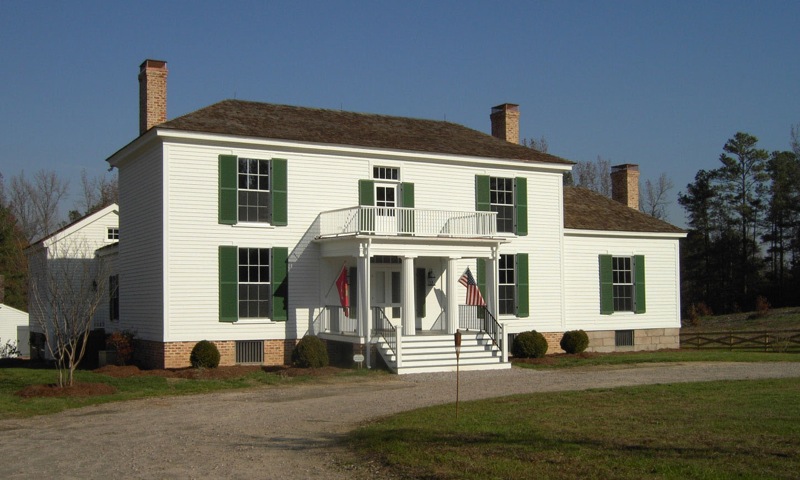
Midway in its new location, 2007

Midway in its new location, 2007

One of the film’s biggest strengths is the blending of the personal and the historical. How did the people depicted in the documentary react to the film?

For the most part, the reactions were very, very good. When we premiered the film at the 2007 Full Frame Documentary in Durham, N.C., members of the black and white sides of the family came for it, seemed to really enjoy the way the film explored the history and meaning of Midway, and met each other at the very celebratory party that was held afterwards. That’s been the general tenor of things since, too. However, I must note, rather sadly, that a few members of the white family seem to have been disaffected. They haven’t communicated with me, so I don’t know specifically what they’re upset about, but it’s too bad.

You are a film critic in your “day job.” In that capacity you were uniquely positioned to analyze the moonlight and magnolias interpretation of the Old South given to us in such films as Gone with the WInd. Was this Lost Cause narrative something you were always aware of, or did it become significant as the film project took off?

It was something I intended from the first, because I’ve always been interested in the image of the Southern plantation in popular culture, and I figured I couldn’t make a film about Midway without exploring the plantation’s meanings to Americans over the course of history. The “Lost Cause” mythology that you mention belongs to the late 19th/early 20th centuries and thus is only a part of the larger Plantation Myth, which started before the Civil War. When I began my research, I was surprised to find that the Encyclopedia of Southern Culture had a longer entry for “Plantation Myth” than it did for “Plantation,” suggesting that the imaginary plantation was even more important than the actual institution! In the film, I trace the evolution of the plantation’s image across several milestones of popular culture, from Uncle Tom’s Cabin through The Birth of a Nation and Gone with the Wind to Roots: an evolution that of course both mirrored and helped create a whole complex set of attitudes about race, politics and history.

Have different viewers–white/black; Northern/Southern; older/younger–responded differently to the film?

That’s a good question, because I was frankly more concerned about one side in each of those pairings you mention: that is, I was a bit nervous about the reactions of black people, non-Southerners, and young people. But in every case I was extremely pleased with the responses. I think this is because the film intends to be inclusive and to respect all the people and points of view it includes – even ones that we don’t necessarily like or agree with. In that way, it “depolarizes” issues that seem inherently polarizing. Black people like it I think because it recognizes their struggles and shows me and my black cousins trying to bridge our divided histories. Northerners appreciate that it presents Southerners black and white as real people rather than as abstractions connected to certain “issues.” But I must say I’ve been most gratified by the reactions of young people, who are often supposed not to be interested in history. I didn’t give a single thought to this while making the film, but teachers have told me that students love the film because it has colorful real-life characters and an engaging, even suspenseful story that brings to life issues that can seem dry and remote in textbooks. I tell people that the best Q&A I did was with a ninth grade class in Virginia. They “got” the film on every level and asked amazingly sophisticated and thoughtful questions. I would love other history teachers to discover and use the film as a classroom tool.

The plantation house, along with several outbuildings, have been in the new spot for a few years now. What has the experience been like in the new location?

When we shot the last scene in the film, Charlie and Dena had only been back in the house four days, and it was all so brand-new that it seemed like a stage set. But since then it has really come back to life, not only as a truly gorgeous restoration of a historic home, but as a place where people live, work and entertain. I love going out there now. It’s like Midway has been reborn.

(images/top, North Carolina Digital Collections; bottom, Preservation North Carolina)

Sucking in the 70s

Twin Towers seen from New Jersey Turnpike, 1973

Twin Towers seen from New Jersey Turnpike, 1973

Since the financial meltdown of 2008, New York City has lost a little of the luster it had in the go, go 90s. The subway wait is a bit longer. Trash cans in the parks seem to be emptied a little less frequently, and the grass allowed to grow a little taller between cuts. Overall, everything is a little bit rougher around the edges. Still, it is nothing like the 1970s. It is difficult to convey to the under thirty-five crowd the depths to which New York City had fallen in that long time ago era. We are talking about the Big Apple as depicted in such films as Mean Streets, Midnight Cowboy, and Taxi Driver. One thing that is important to keep in mind about the 1970s, though, is that while the city was falling apart millions of people were still living happy and productive lives despite the crime, inflation, garbage strikes, and long gas lines. The Documerica Photo Project captured New Yorkers, and indeed millions of other Americans, as they went about their business. An exhibit of a portion of the nearly 22,000 photographs taken is currently on display at the Lawrence F. O’Brien Gallery of the National Archive Building in Washington D. C. through September 8. Check out some of the photos of that long ago New York here.

(image/National Archives)

Brushing up

Freeman Tilden, dean of Interpretation

Freeman Tilden, dean of Interpretation

This morning I finished re-reading my already well-underlined copy of Freeman Tilden’s Interpreting Our Heritage. Freeman’s small classic is a must read for all who practice the interpretive craft. I re-visited it yet again in preparation for Governors Island’s annual Civil War Weekend, which is now just three weekends away, August 10-11. Last year I wrote  and delivered a program called The Civil War Generation’s Governors Island. That program focused on the many individuals who spent at least some time on the island before or after the war. A short list includes Winfield Scott, Lee, Grant, Sheridan, Oliver Howard, Arthur MacArthur, and, most importantly, Winfield Scott Hancock. Hancock ran the Division of the Atlantic from here; from his arrival in 1878 until his death in early 1886 he received an endless line of former friends and foes eager to reminisce while in town to do whatever business it was that took them to the city. It was from Governors Island that he organized Grant’s funeral, choosing to have Joe Johnston and Simon Bolivar Buckner serve with others as Grant’s pallbearers in a reconciliationist gesture toward the Old South. I felt my talk was pretty good last year. I delivered it three times on both the Saturday and Sunday, getting stronger each time as I figured out what worked and what didn’t. Such is the nature of public speaking. Still, this year I am revamping it to incorporate some different themes and to adjust the segues as we walk from stop to stop.

a New York Arsenal Building, Governors Island

a New York Arsenal Building, Governors Island

A second reason for re-reading IOH was to prepare for a new, second talk I will be doing this year on the 1863 draft riots. This is what I did not post about the riots during their anniversary this week. My talk, which I hope to expand into a post for the Governors Island website, is going to focus on the role the harbor forts, most obviously Governors Island, played in the defense of the city. The attempted seizure of the arsenal is one of the most intense stories of the draft riots. If I do it correctly my talk will tie the military in with the political at the local, state, and federal level. That’s a lot to do in 45-60 minutes; the point, though, is to tell a story that has a beginning, a middle, and an end. Thus, the re-reading of Tilden.

(top image/NPS)

The daily art

I am typing this from the public plaza at the National Portrait Gallery/American Art Museum. This was the site of the old Patent Office, where Walt Whitman and Clara Barton both worked at different times. I had an interesting conversation with the ladies in the Luce Foundation Center, during which they showed me some great turn of the twentieth century photographs of that portion of the building. The Smithsonian did an extensive renovation in the early 2,000s, but much remains the same. Even the Luce visible storage area has the look it did previously; if Patent Office officials could come back to life they would know where they are. Many visitors never make their way all the way up here.

One Life: Martin Luther King Jr. opened late last month and will be running through 1 June 2014. I was taken back by the immediacy of the photographs, most of which are now more than half a century old. For better or worse I have always interpreted art through a historical context and so these galleries are right up my alley. The Smithsonian staff have done a great job rotating the collection; each time I come there is always something new to see. Here were my two favorites for today:

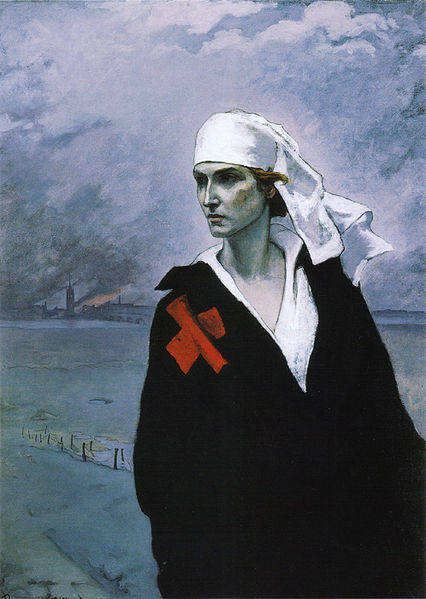
The France Croissee, Romaine Brooks

The France Croissee, by Romaine Brooks

I am hoping that the World War One centennial does for our understanding of the Great War what the sesquicentennial has been doing for the American Civil War. We deserve more than the lions led by donkeys interpretation of 1914-1918,  just as we deserved more than the moonlight and magnolias version of the War of the Rebellion we had to put up with until not that long ago. Oddly, Romaine Brooks was not American; she was born in Italy (1874) and died in France (1970). As much as I love the painting, I found it curious that it was in the American Art Museum until learning it was a gift of the artist. The Barton/Red Cross angle is a great piece of serendipity. The gauntness in the cheeks is haunting.

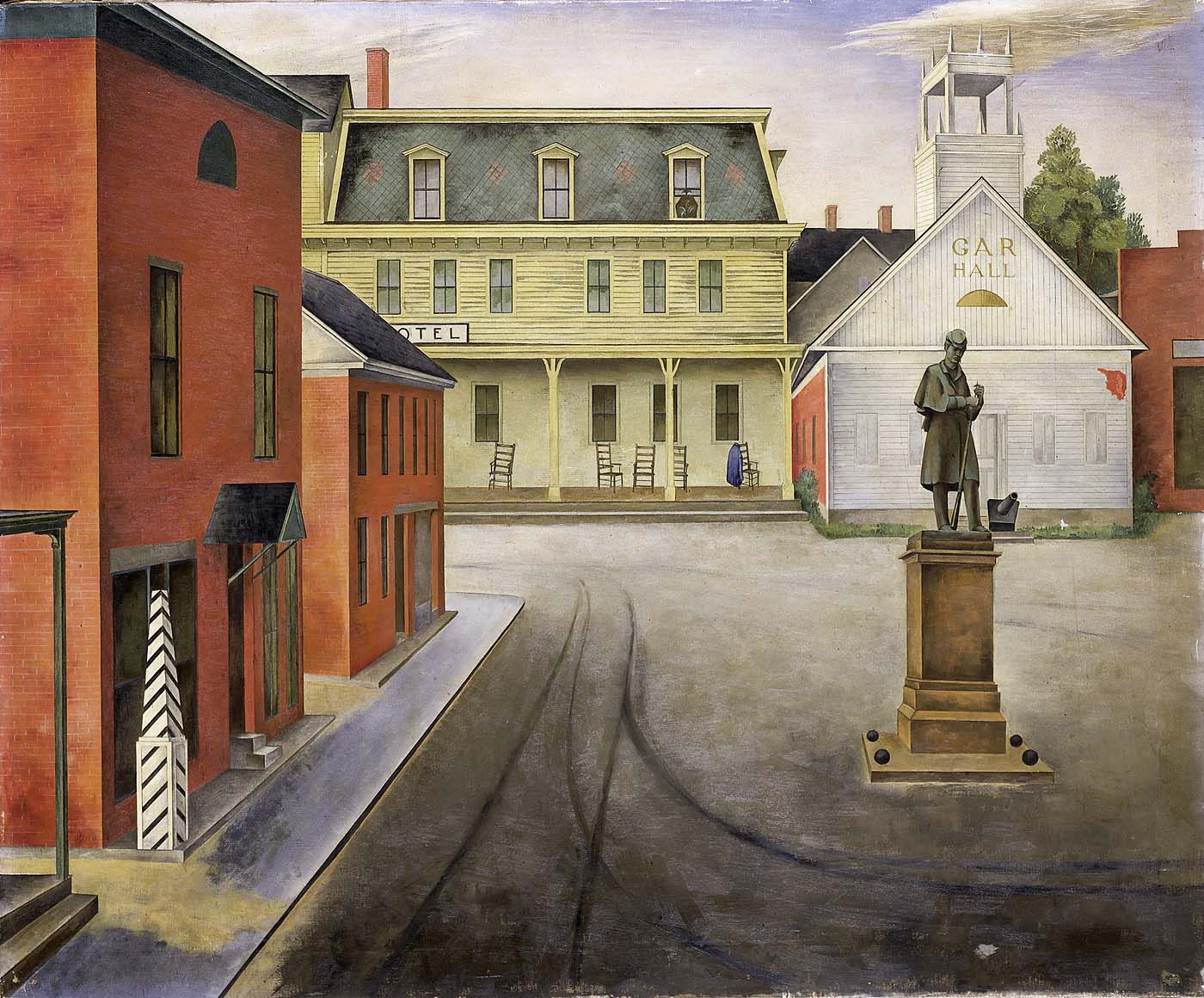
Town Square, by O. Louis Guglielmi

Town Square, by O. Louis Guglielmi

The Hopper-esque Town Square was painted by another artist not born the United States, though O. Louis Guglielmi eventually did move to America. It is not displayed here, but the painting is housed in a frame labeled WPA Federal Art Project. As you might guess, the statue and GAR Hall are what caught my attention. Painted in the mid-1930s, in the depth of the Depression, Town Square captures the bleakness of the era. Guglielmi seems to commenting on an America that is no more, economically and otherwise. The Civil War had been over for seventy years by this time, about the same amount of time as between WW2 and today. I don’t imagine there were too many GAR members left by this time, just as the Greatest Generation has now just about passed on.

(images/Smithsonian American Art Museum)

A busman’s holiday continues

The heat is on here in DC, though thankfully not before we squeezed in a trip to Antietam yesterday. Blogging will continue to be light the rest of the week, though I wanted to share a few pics.

We visited the Unites States Capitol on Saturday. A book I cannot recommend highly enough is Guy Gugliotta’s Freedom’s Cap: The United States Capitol and the Coming of the Civil War. Among the many ironies was Jefferson Davis’s outsized role in its creation. You can’t help but think of how much he must have wanted the Capitol for his own Confederate States of America.

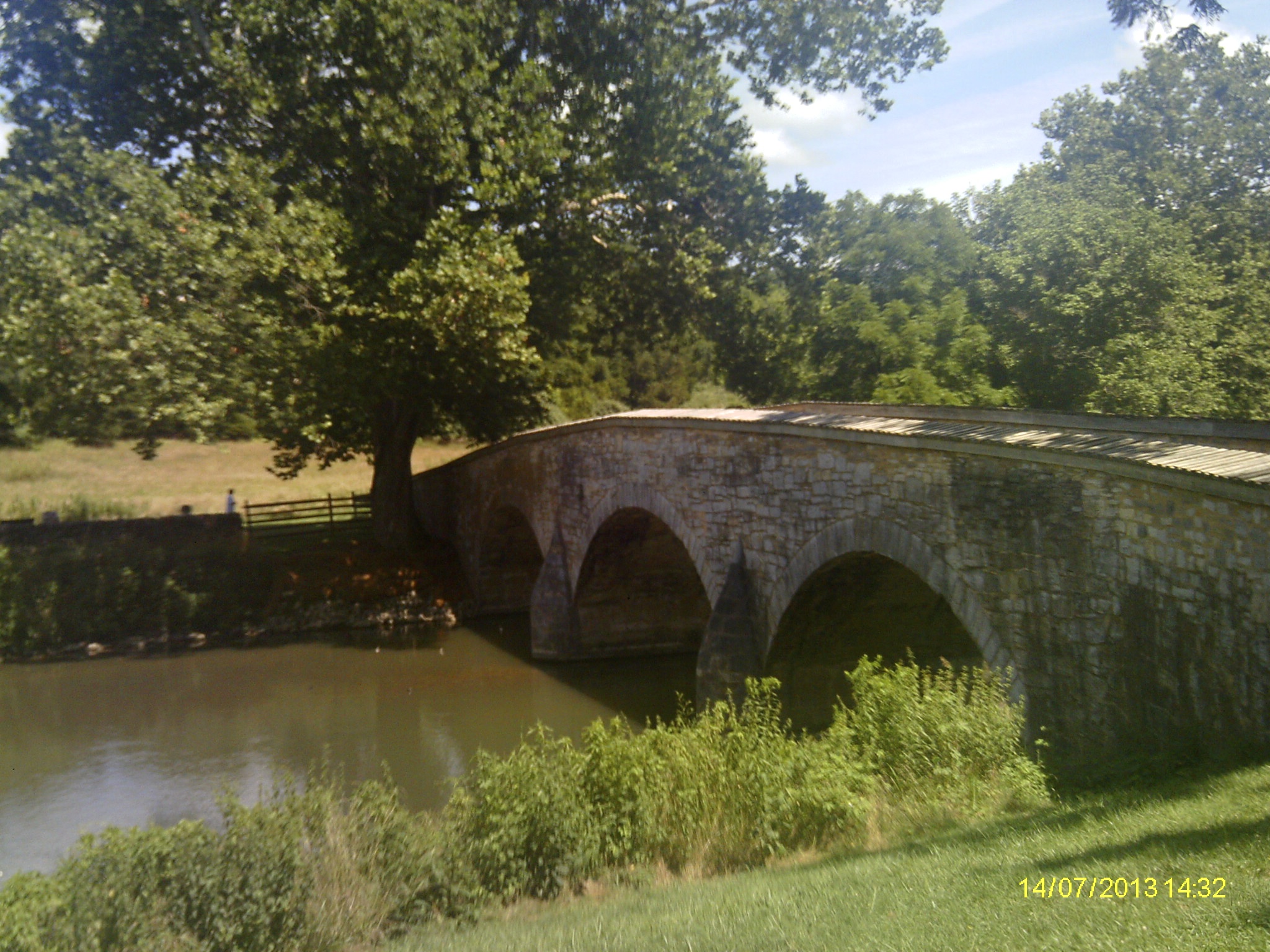
Burnside Bridge

Burnside Bridge

As I mentioned the other day, my first trip to Sharpsburg, in 2009, was one of the biggest turning points in my intellectual development. Seeing Burnside Bridge for myself forced me to challenge my assumptions about the war and by extension everything else. We had some interesting interactions at Antietam yesterday. We discussed the fighting in the West Wood with a twenty-one year veteran of the Army’s artillery branch, and met a couple from Wales who participated in the Pickett’s Charge hike two week’s ago on July 3rd. Apparently the American Civil War is part of their regular routine, because they mentioned being there for the 145th as well.

Speaking of challenging premises, a fascinating piece came through my in-box today about one man’s revelations about his Lost Cause assumptions after a recent visit to Gettysburg. It is worth reading the whole thing.

Bon weekend

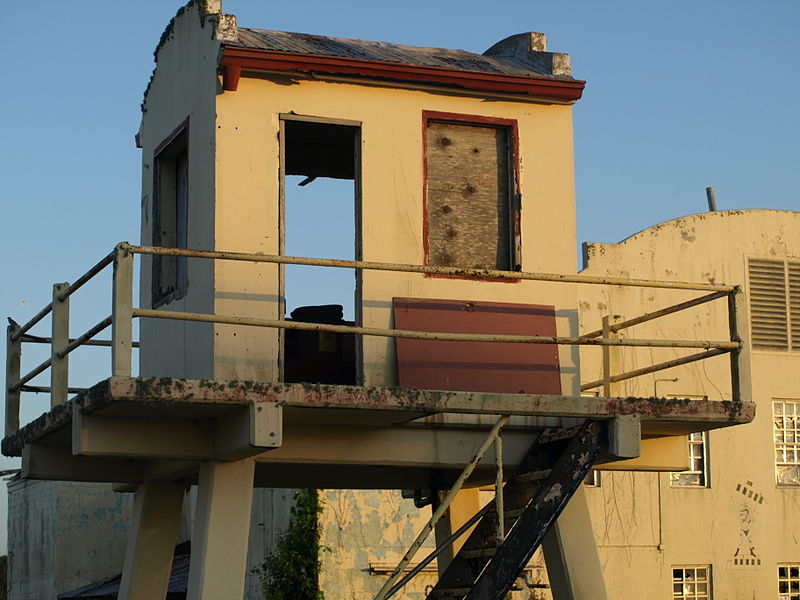
Angola (LA) prison tower similar to one recently donated to Smithsonian

Angola tower similar to one donated to Smithsonian

Hey all, I am typing this from a Dunkin Donuts in the DC area. It has been raining hard the past 24 hours, which has cooled things down nicely. It is still up n the air, but it looks like some friends and I may be squeezing in a quick trip to Antietam this weekend. I wanted to give those who live in the New York City area the heads-up that next Saturday, July 20th, the Brooklyn Museum of Art will be hosting a program in cooperation with the Smithsonian’s National Museum of African American History and Culture. When I was in DC a few months back I noted that the African American museum on the Mall is progressing smoothly; the building itself will open in 2015 and the staff is energetically collecting materials in the meantime. Just last week they acquired one of the guard towers from Angola (Louisiana) prison. To put it mildly, the tower will offer some unique interpretive opportunities.

The Smithsonian is coming to our fine borough next week to offer New Yorkers the opportunity to have Smithsonian appraisers examine their personal items. It is the latest in the museum’s “Save Our African American Treasures: A National Collections Initiative of Discovery and Preservation” series being held across the country. The event itself will last from 11:00-5:30. Don’t be surprised if you run into yours truly. The items brought in for consultation should be interesting and disparate. Brooklyn has not only a significant African American community, but sizable African and Afro-Caribbean communities as well. I am looking forward to seeing what comes through the door. The Brooklyn Museum itself is one of the great cultural institutions in New York; I have always maintained that if it were in Manhattan it would be widely recognized as one of the best museums in the nation. Whatever you do, have a good weekend.

(image/Lee Honeycutt)

Headstones project reaches brick wall

One of the new headstones at Brooklyn's Green-Wood Cemetery

One of the new headstones at Brooklyn’s Green-Wood Cemetery

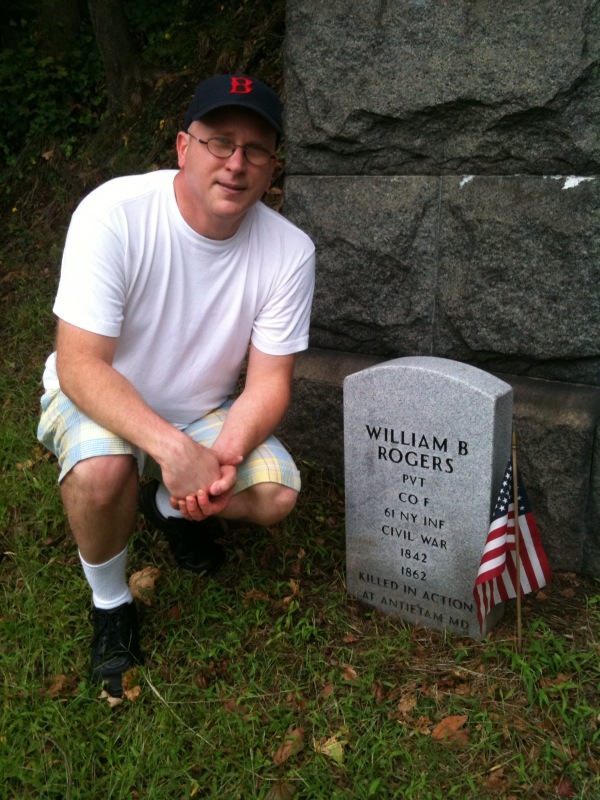
A strange story came to my attention today via the New York Daily News. Regular followers of the blog know how much Brooklyn’s Green-Wood’s Cemetery means to me, so much so that my wife knows to lay me there to rest when it’s time for my just reward. Green-Wood has many natural, historical, and cultural charms. Like all cemeteries–as opposed to graveyards–it is, paradoxically, a living place. One of the signs of life over the last decade has been the hundreds of Civil War headstones that have gone up in that time. The process takes place with volunteers, working with the cemetery historian, going through old military, pension, and burial records to ascertain the soldiers now resting there. It seems the Department of Veterans Affairs has instituted a rule change that only family can request headstones for loved ones. Needless to say, this will put a damper on the project; demographic changes over the last century and a half have taken many Brooklynites away from the borough. It is difficult to believe many will come forward to identify an ancestor who wore the Grey or Blue. Yes, there are a handful of Confederates buries in Green-Wood.

I really do not know a whole lot about the situation at the moment. My guess is that it is a budget thing. I know the VA has been very busy the past decade and more. Iraq. Afghanistan. Aging WW2 and now Korean and Vietnam vets. The agency has had its hands full. Still, it would seem a shame if this project, not just in Green-Wood but at similar places across the country, were to end. If anyone know more about this please feel free to enlighten us.

Hot streets, Cool exhibits

If you are going to be in the Big Apple over the summer, you owe it to yourself to see the Civil War art and photography exhibits at the Met Museum. You will literally see the war in a new way. The best way to see them, if possible, is to come on different days; these are separate, distinct exhibits and each has so much to see you will be exhausted when leaving the gallery. Intellectually, we all know the importance photography played in public consciousness and opinion, especially when the first photographs were displayed at the Brady studio in Manhattan shortly after Antietam. Emotionally, the Met does a good job of capturing that shock of the new. If you cannot make it, here is a piece CBS ran yesterday morning. Both shows run through Labor Day, September 2nd.