All roads lead to . . .

Hazel Grove, Chancellorsville

Hazel Grove, Chancellorsville

Over the past few years, in the time since I met my spouse, the two of us have been spending increasing amounts of time in the Greater Washington DC area. Now, personal events are going to find us increasingly commuting between the suburbs of Virginia and our home in New York City. This change poses numerous challenges, but includes a number of exciting possibilities as well. The region means a lot to us. For starters, my mother was born in Washington DC and every time I visit I cannot help but feel I am “coming home” in some way. It is also the city where I proposed to my wife, which obviously makes it more meaningful. Some of fondest memories involve the people and places we know there. One of my personal favorites was one that, oddly, I did not attend: the 150th commemoration of First Bull Run. I had taken the bus to Union Station early that morning, where I was met by the Hayfoot. You may remember that it was an incredibly hot weekend, with the heat index in the 120s. We ourselves went to the Library of Congress that day for the exhibition of the then just recently acquired Liljenquist collection. That night we watched much of the Bull Run coverage online. Knowing the commemoration was taking place just thirty miles or so down the road was enough for us.

We are still in the transition, but one thing we are eager to do is visit the Civil War battlefields in Virginia, among other, non-Civil War related things. I have been to a good many battlefields but the only one in the Old Dominion that I have visited as of yet is Fredericksburg, and that was only for an hour or so when I pulled off the highway on my way to live in New York in 1997. We are hoping to change that in the next 12-15 months with visits to Chancellorsville, the Wilderness, Manassas, and so forth. There is no substitute for walking the fields. Needless to say we are nervous during this period of change, but also excited and looking forward to spring and what it brings.

(image/Alana Iesu)
Reconsidering Ike

About a year ago I was chatting with a friend when we got on the subject of the Cold War era. I suggested that it wouldn’t be such a bad thing if we returned to some of the style and substance of President Dwight Eisenhower. Her response was worse than disagreement; it was dismissiveness. She literally rolled her eyes in derision. Though I didn’t like it, I understood. My friend grew up in the 1950s and came of age in the 1960s. She is of the generation for whom Eisenhower is an adjective–Eisenhower Era, Eisenhower Years, Eisenhower Conformity. You get the idea.

image001Some will probably never overcome such notions, but in recent years there has been a renaissance in the Eisenhower literature rehabilitating the reputation of the 34th president. The sharpest historians acknowledge his mistakes while recognizing the extraordinary pressures Eisenhower faced, and give him credit where it is due. Far from being the placid period caricatured in our popular culture, the Fifties and early Sixties were an extraordinarily complicated time both home and abroad. The Cold War, Third World independence movements, rehabilitation of the still recovering Europe and Japan, rapid scientific & technological change, and the Civil Rights movement right here in America were creating fear, hope, and cynicism in equal measure. What I was trying to explain to my friend was that Eisenhower was part of what we now call the Cold War Consensus. Briefly put, this is the notion that all of the presidents from 1945-1990, regardless of their party, shared common goals, insights, and assumptions about the world we were living in. Eisenhower fit neatly into this consensus. On the world stage, he was an internationalist trying to work within the frameworks of the UN, NATO, SEATO, and other coalitions. On the home front, he believed in tinkering with, not dismantling, the remnants of the New Deal that Americans had come to accept and rely upon. I would suggest that if he came back today he would be upset with the shabbiness of our discourse, not least that which is coming from within his own party. It is revealing–and tragic, on so many levels–that he is not held in higher esteem today within the Party of Lincoln. Just don’t blame him for it.

This Thursday and Friday, March 7th and 8th, there is going to be a conference reexamining the Eisenhower presidency at Hunter College’s Public Policy Institute. (The Institute is based in the Upper East Side townhouse once owned by Franklin and Eleanor Roosevelt.) Yours truly is especially excited about the public program on Thursday evening. Scheduled to appear are David Eisenhower, Evan Thomas (Ike’s Bluff), Jean Edward Smith (Eisenhower in War and Peace), Philip Zelikow, and others. Jim Newton (Eisenhower: The White House Years) will be the moderator. Tickets for Ike Reconsidered: Lessons from the Eisenhower Legacy for the 21st Century are free, but rsvp is required. It will be worth braving the rain for this one.

Coming soon: Good Ol’ Freda

I had not heard until just a few days ago that a documentary is in the works about Freda Kelly. For those who don’t know, Ms. Kelly was the young woman responsible for running the Beatles Fan Club from its creation in the early 1960s until its dissolution in 1972. (They had not recorded since 1970, but for legal and financial reasons the band downplayed its breakup as long as it could.) Freda answered to Brian Epstein and was responsible for managing a great deal of the band’s public relations. And the film is not merely in the works, as of today it is in the can and will appear at South by Southwest on March 9. In one of the film’s just-completed final touches, the Beatles’s Apple Corps granted the filmmakers permission to use four cuts in the documentary, including “I Saw Her Standing There” and Love Me Do.” This is exceptionally rare; the Fabs hardly ever allow their catalog to be used in this way. The only instance I know of when a Beatle tune (not a cover) was used onscreen was when Mad Men’s Don Draper played “Tomorrow Never Knows” on his office turntable to better understand the younger generation. And that was after much bargaining and considerable cash–reportedly $250,000–was procured from Lionsgate for that bit of psychedelia. All you need is love, indeed. Still, one can’t blame the Stakeholders (Paul, Starkey, Yoko, Olivia) for controlling the legacy the way they do. Check out the film’s Facebook page.

Speaking of controlling, or not controlling, the Beatles legacy, the website for historian Mark Lewisohn’s upcoming three-volume opus, The Beatles: All These Years, is up and running. I was glad to hear Lewisohn say in an interview that he stopped doing liner notes and other such work for various Beatle-related projects in order to maintain his autonomy. I never held it against him or Bruce Spizer for writing content for Apple’s myriad reissues, but I always thought it compromised their scholarship if only to a small degree. Saying “no” would have been difficult, but they each lost a little something when they did such work. When you work for the Beatles, you work for the Beatles. This is not going to be a problem in what will certainly be the authoritative word on the band for the next 20-30 years. Lewisohn is following his own vision and is letting the facts lead where they may. He has said there will be quite a few interactive features on the book’s website. I am going to add The Beatles: All These Years to the blogroll and see what happens between now and October.

Abe’s and my day off

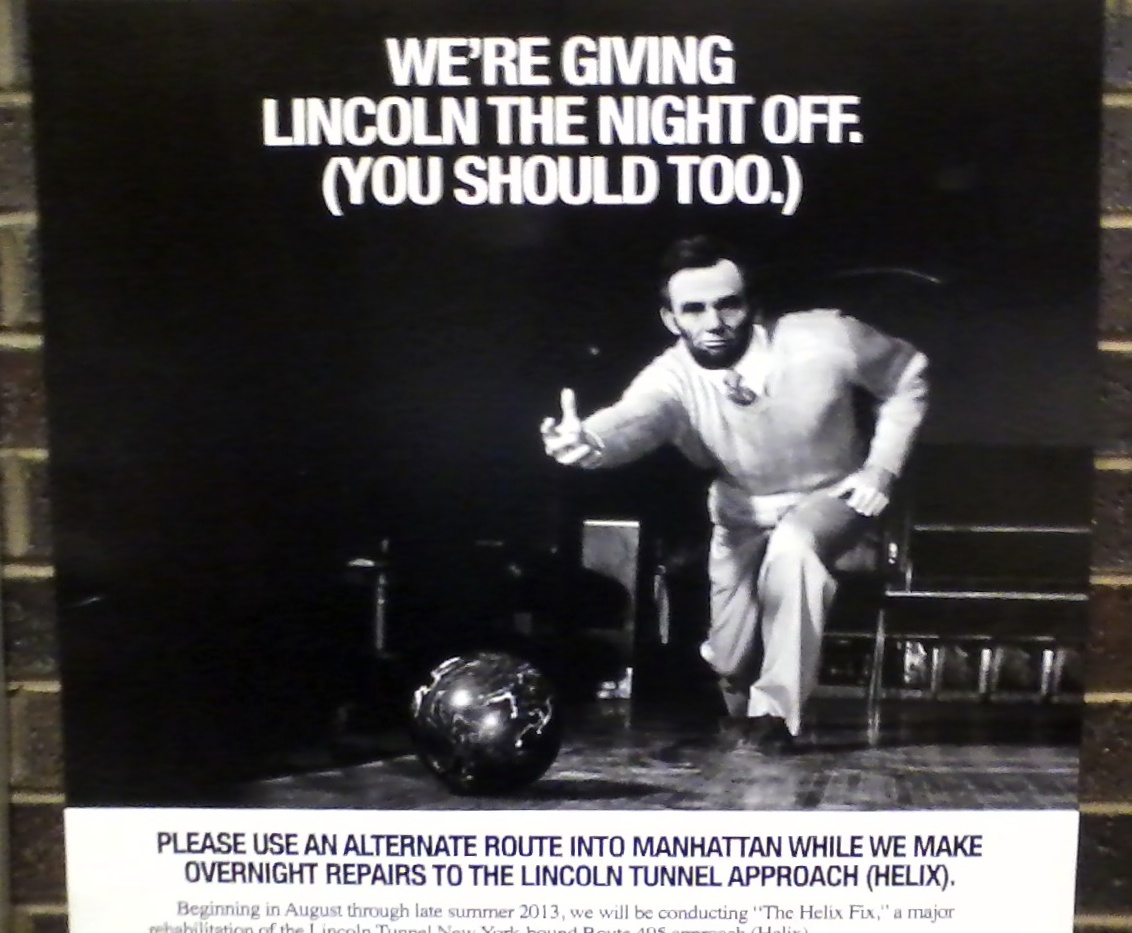
I woke up bright and early to go to the Secaucus toy solider show this morning. Few things can get me up at 6:30 on a Sunday morning to get myself to, of all places, the New York Port Authority, but this is one of them. It’s neat walking through an all but empty Times Square on a Sunday morning. There’s a thrill that comes from having the city to yourself, if just for a few fleeting moments. This is known as the Cabin Fever show because it falls in early March toward the end of winter. The crowds seemed bigger than usual because the big Hackensack show was cancelled last year due to Hurricane Sandy. I took these quick pics on my cellphone. The first is a public service announcement posted to the Port Authority stairwell. It caught my eye going up the escalator, and I of course had to back track to see what it said. The latter is the Manhattan skyline taken from across the Hudson. I was on the #129 bus at the time.

Abe says, "Stay home."

Abe says, “Take the GWB.”

New York skyline, 8:45 am March 3, 2013

New York skyline, 8:45 am, March 3, 2013

Gettysburg notes

Demolition of the Gettysburg cyclorama building, March 1, 2013

Demolition of the Gettysburg cyclorama building, March 1, 2013

As you can see, the demolition of the old Visitor Center and Cyclorama building has begun. I imagine all traces of the Mission 66 structure will be gone by the late June when the 150th anniversary gets underway. In other Gettysburg news, Superintendent Kirby announced that the sequestration will not impact the sesquicentennial events thanks to some advance planning and creative juggling. Other National Parks, Civil War and otherwise, have not been so fortunate, with many limiting hours and services during these difficult days.

(image by Matthew Amster, courtesy LA Mag)

Oh, the possibilities

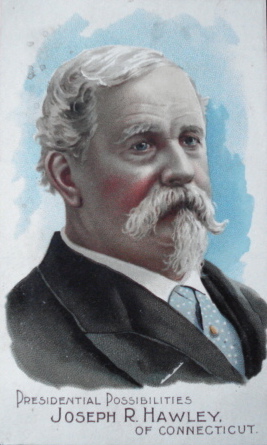
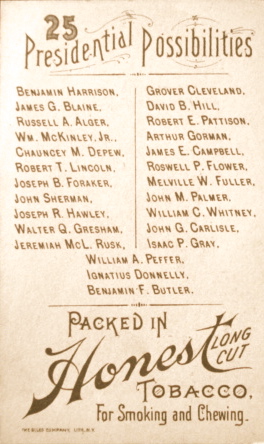
I came across this interesting depiction of Joseph Roswell Hawley today. I have not begun writing yet, but things are progressing readily enough with the research, literature review, and other aspects of the biography. This card was part of the 1888 Duke Honest Long Cut “Presidential Possibilities” series. Tobacco cards were not just for baseball players; Duke (the American Tobacco Company after a series of mergers in 1890) and its competitors manufactured cards for all types of events and programs for decades, well into the twentieth century. All told there were twenty-five cards in the 1888 set, which is probably a good ten to fifteen more candidates than was realistic. Every election usually starts off with ten to twelve hopefuls who then drop out along the way. They probably created so many to appeal to customers–and everyone smoked in this era–across the nation. That said, the selections are heavily skewed to candidates from the North, West, and Civil War border states. The Deep South is not represented at all.

In 1888 Hawley himself had already been in the Senate for seven years and was at the height of his powers. What I find interesting about the list are the other potential candidates. There was incumbent Grover Cleveland, eventual winner (but popular vote loser) Benjamin Harrison, William McKinley (the 1896 winner), John Sherman (brother of William Tecumseh and Senate colleague of Joseph R.), Gilded Age powerbroker and seemingly perennial candidate James Blaine (Ha!), Benjamin Butler, and even Robert Todd Lincoln (probably added for the cachet of his last name). The list speaks volumes about the influence of the Civil War generation decades after the war’s end, and are wonderful pieces of Americana.

Honest Long Cut 1888 presidential series

Honest Long Cut 1888 presidential series

The potential candidates

The potential candidates

Strike the tents

It was a necessary evil but one of the blights in Battery Park over the past decade has been the complex of white security tents through which visitors were required to pass on the way to Liberty and Ellis islands. The structures went up immediately after 9/11 and were originally supposed to be temporary. Nonetheless, in the manner that these things sometimes play out, they were still in use up until Hurricane Sandy in late 2012. In fairness security at the islands is extraordinarily complicated. Millions crowd onto ferries every year to visit the national monuments. There are overlapping local, state, and federal police jurisdictions. What’s more, the waters fall under the jurisdiction of the Coast Guard. People ferry from New Jersey as well, which adds another layer of complexity. It is all very professional. Most visitors took it in stride, but in the dog days of summer, especially, people were not always in the best of moods when finally reaching Liberty and Ellis. None other than Anthony Weiner–yes, the congressman who couldn’t keep it in his pants before hitting Send to his Twitter page–tried to have them removed a few years ago. His idea was a good one, but the plan he promoted was not feasible. Well, the Park Service announced the other day that the tents will be coming down for good when the islands re-open to the public. The bugs haven’t been entirely worked out yet, but a more steam-lined procedure will be carried out on the islands. Taking down these tents is good news for New Yorkers and for the people from around the world who visit every year.

Civil War New York

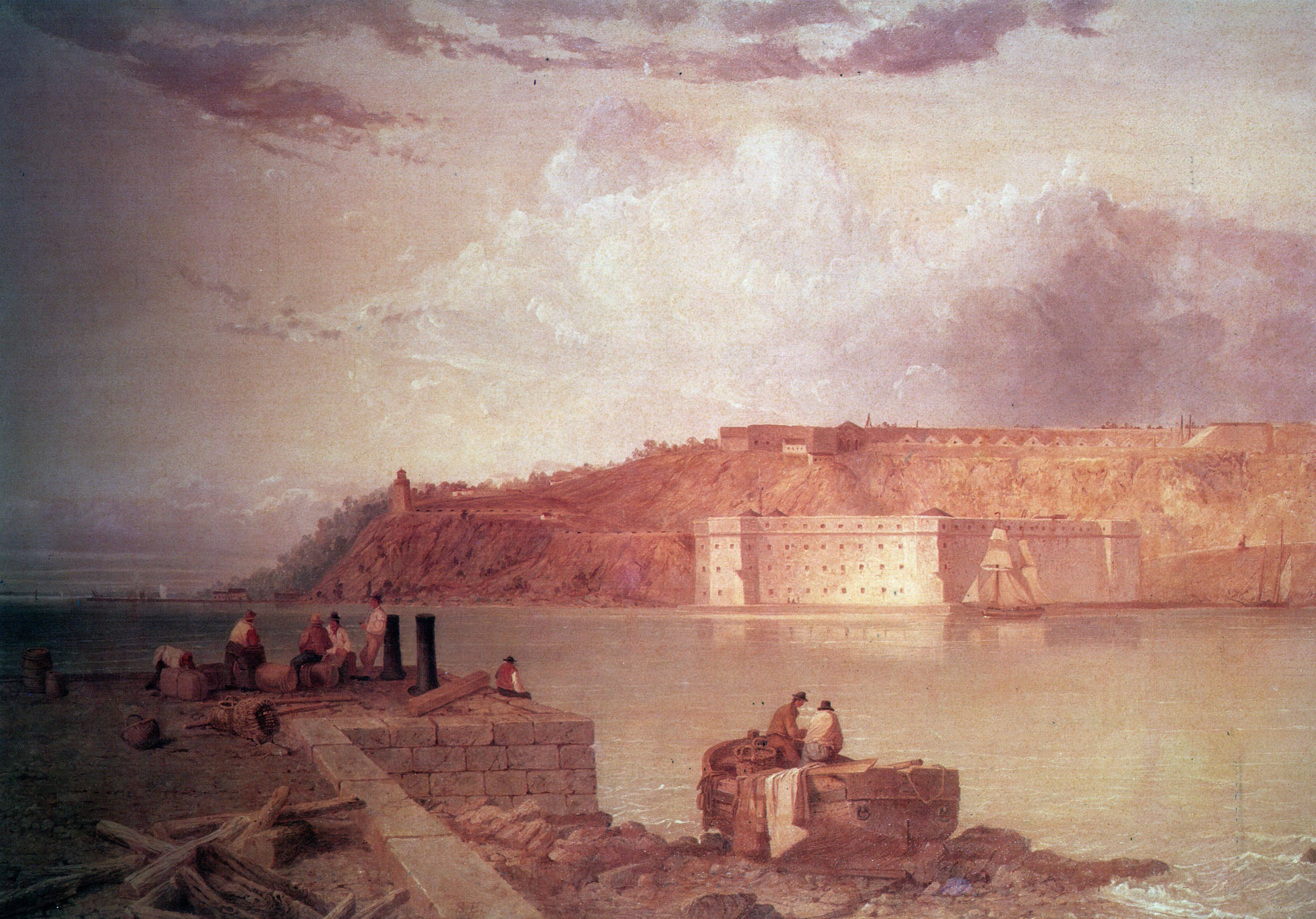
Forts Tompkins and Wadsworth, Staten Island

Forts Tompkins and Wadsworth, Staten Island

People are often surprised about how much Civil War history took place in New York City. Yes, with the major exception of the 1863 draft riots there was no fighting here, but the municipality was integral to the Union war effort on a number of political and economic levels. One should actually say municipalities, as Brooklyn was an independent city until 1898. If you look closely and know what you are looking at, you can see Brooklyn’s one-time independence reflected within the language of the many plaques and monuments sprinkled throughout our fine borough. Even militarily New York City was important, what with Governors Island, Fort Lafayette, the harbor defenses, and the Brooklyn Navy Yard right here. New York City was crucial to putting down the Rebellion. It was to Governors Island, for instance, that Major Anderson sailed after surrendering Fort Sumter. New York was important in the postwar period also. The Grants called New York City home after leaving the White House, and are buried there. The widowed Varina Davis moved to Manhattan, where she was active in political and social life until her death in 1906. And they are just a few names I am coming up with off the top of my head. One of my projects this winter is to create my own catalog of Civil War-related things to see and do in the five boroughs and beyond. Look for it soon. In the meantime here is a short list from NYCGO.

(painting by Seth Eastman, U.S. Army Center for Military History)

Five minutes with Grant

The narrative is a little easy for those already familiar with the story of General Grant’s final days, but I thought I would pass along this short video. I especially loved the footage of Ulysses Grant Dietz toward the end. Dietz is an interesting figure in his own right. He did us all a great service several years ago when, working with others, he pressured the powers-that-be to clean up the tomb of his great, great grandfather.


Looking to summer

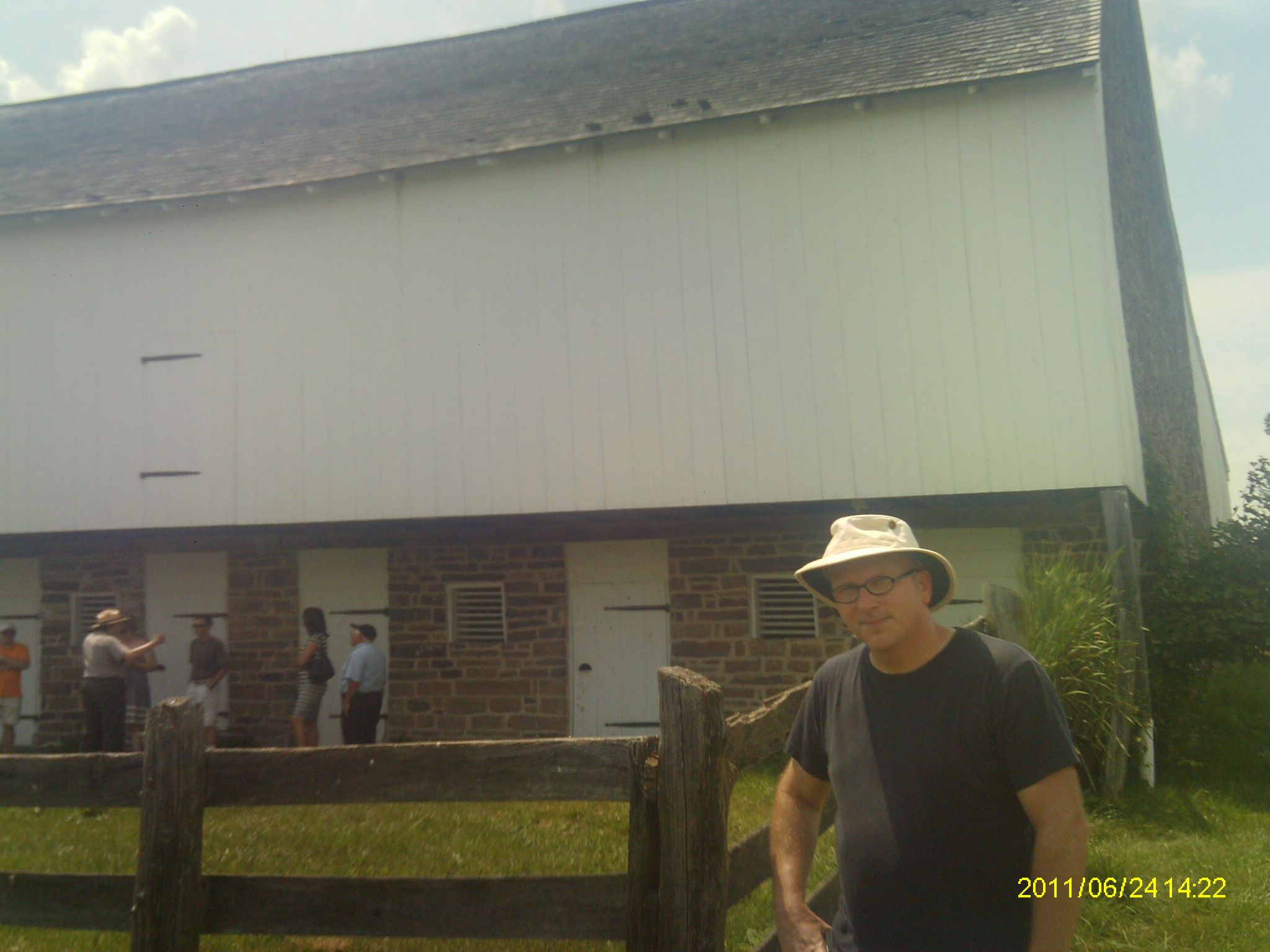
McPherson Barn, Gettysburg

McPherson Barn, Gettysburg

The Hayfoot and I started talking earnestly over the weekend about our annual pilgrimage to Gettysburg. Maybe it was the 20 degree February weather that got us thinking about late June. Last night I pulled out the booklet sent to me a few months back by a Civil War preservation group to which I am a member. It will be a busy season at Gettysburg to put it mildly. The Antietam anniversary last September was a huge deal, and this should be even bigger. It is always good seeing people soaking up their history and culture. We were happy to see the packed rooms at the National Portrait Gallery over Presidents Day Weekend. For one thing higher attendance at our museums and national parks means potentially better budgets, or at least fewer cuts. If you don’t stay relevant what have you got? Many of the activities at Gettysburg will be better than others. Some will be thought provoking, and some will be crass. It may surprise you to know that, unlike some, I don’t get too worked about the commercialism at Gettysburg or at any historical site. People have been cashing in on the Battle of Gettysburg since approximately July 4, 1863.

I first visited Gettysburg in July 2008, three months after the opening of the new visitor center, and so have no firsthand knowledge of the town as a tourist site prior to the new clubhouse. I do know that many business owners on Steinwehr Avenue were concerned about tourists finding their way to the commercial strip. These are not unreasonable concerns. The stakes are high, especially during the sesquicentennial. When I was in library school I volunteered in a small history museum that stood on a courthouse square in a small town in Texas. Surrounding the courthouse museum, on all four sides, were a number of restaurants and antique shops. The revenue they generated for the town in tourists dollars was considerable. What does 2013 mean for Gettysburg? The Hanover (PA) Evening Sun offers some insight.