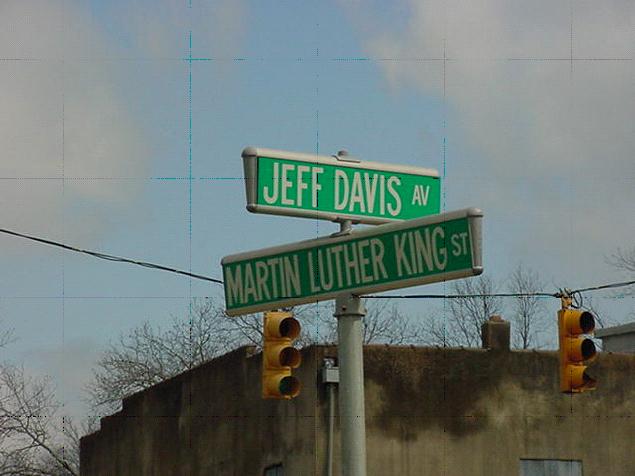
Who was the most important person in the Confederacy?

Temptations is a New Orleans strip joint whose neon sign declares it “The Gentlemens’ [sic] Club in a Class By Itself.” Open noon ’til dawn, it sits on a crowded stretch of Bourbon Street between the century-old Galatoire’s restaurant and Larry Flynt’s Barely Legal Club. Inside Temptations, the ground-floor parlor is done up in antebellum-period décor, with a pair of grand fireplaces and crystal chandeliers. The paint on the walls cracks with antiquarian charm. At the rear of the room, red velvet-upholstered stools line a bar that serves up chilled cocktails to cut the bayou heat. The parlor is centered around a stage with a dance pole, where, during a recent late-night visit, a stripper billed as “Ryan” Lockhart was hard at work, wriggling her g-string-clad body around the head of a bald man with a fist full of money.

When Lockhart finished her routine, redonning her leopard-print brassiere and shredded black dress and joining the half-dozen other ladies working the floor, I asked if she was aware of the building’s notable history as the former home of Judah P. Benjamin, the Confederate secretary of state and America’s first openly Jewish senator.

The answer given to the above question is usually either Jefferson Davis or Robert E. Lee. A compelling case can be made however for Judah Benjamin, the individual who served the Confederate States of America at various times during its short existence as attorney general and secretaries of war and state. Davis and Lee really would be his only competition, Davis by default as president and Lee for keeping the army in the field and serving as the nation’s face. Benjamin, though, did as much as anyone to keep the Confederacy afloat for as long as it did. While I do not think he has been as forgotten by history as the Tablet article excerpted above makes him out to be, Benjamin has been left out of the narrative somewhat. Diplomacy and the minutiae of supply procurement don’t make for the riveting reading that many Civil War “buffs” are looking for. The article does a good job of explaining why Benjamin is less know today than he should be. Reasons include anti-semitism or, conversely, embarrassment on the part of contemporary Jews at acknowledging his outsized role in secession and the South’s peculiar institution. Also, his relocation to France after the war left him far from the point of creation of the Lost Cause mythology. Another reason is that the notoriously private Benjamin may have been gay. Whatever the cause, Daniel Brook offers a fascinating account of the Benjamin historiography.

Evenings at Liberty and Ellis

Hey all, sorry about the dearth of posts recently. I just got back from DC, where I went to meet a friend and take in the sites. Among other things, I caught the Adalbert Volck exhibit, which I highly recommend. With a heat index of 105 all one could do was stay inside. Alas, no Mall this time around. I am now checking my inbox I received this notification that Ellis and Liberty Island, for the first time ever, are having extended summer hours. This is a great trip for those looking to get away from the city without leaving the city.

Enjoying summer here in Brooklyn…

Governors Island then and now

I am having my Sunday morning coffee and surfing the internet. Here is some amazing film footage of Governors Island from the 200th anniversary of the Coast Guard in 1990. Those who have been to the island will recognize many of the scenes. It is hard to believe that 1990 is now the “then” and no longer the “now.” Enjoy your Sunday.

Alternative Eisenhower

In the spring of 2011, the National Civic Art Society (NCAS) and the Institute for Classical Architecture & Art (ICA&A) Mid-Atlantic Chapter invited classical architects and artists to engage in a competition to design a counterproposal to Frank Gehry’s design of a national monument to President Dwight D. Eisenhower.

Next week the results go on display in Washington. The exhibit kicks off with a reception on Tuesday the 17th, and will then be on display until September. Conveniently it is close to the Union Station metro station. Unfortunately it is behind a paywall, but Vanity Fair has a piece by Paul Goldberger in the August issue about the Eisenhower memorial saga. The controversy has been heating u recently, with Congress threatening to withhold funds from the current incarnation of the memorial. I will be in DC next week but it doesn’t seem I will have time to catch the presentation. I am going to do everything I can to see this before the summer’s end. Next week I do hope to finally see the Martin Luther King Jr. memorial on the Mall, which I have been eager to see since its unveiling.

The NCAS competition results can also be viewed online.

(image courtesy National Civic Art Society)

Thinkin’ postal

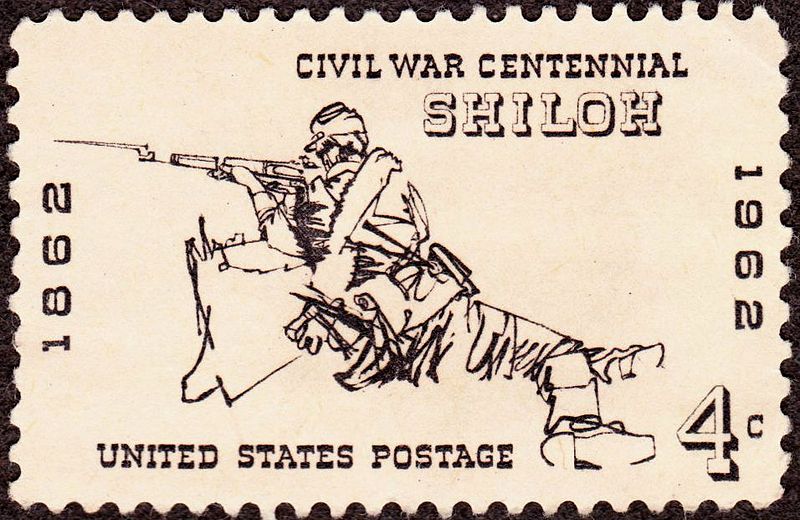
State and local officials in Tennessee are mounting a campaign to have the Battle of Franklin commemorated on one of the postage stamps in the Unites States Postal Service’s ongoing recognition of the Civil War sesquicentennial. I have blogged about this each of the past two years and will continue to do so through 2015. I think Franklin has a fighting chance. For one thing, hard as it is to believe, the last stamp commemorating Tennessee was the 1862 Shiloh stamp shown at right. The Centennial stamps were indeed beautiful and this one, elegant in its simplicity, was no exception. Franklin should also benefit from what I will call, for lack of a better term, strong competition relatively speaking. The Postal Service is issuing two stamps a year in the series, and so far the choices have been easy and obvious. For 2011 there was Fort Sumter and First Bull Run. Antietam and the Battle of New Orleans were the selections for 2012. Gettysburg would have to be a lock for 2013, with perhaps the Emancipation Proclamation filling out that set. I would imagine that for 2015 we will be looking at Appomattox and the Lincoln assassination as the selections. Obviously there were significant events in every year of the conflict, but what to choose for the sesquicentennial subjects of 2014? The Battle of the Wilderness and Fall of Atlanta would have to be the frontrunners. Franklin could be a good move because a) it is somewhat less obvious and, b) adds a Western motif to a series otherwise dominated by events in the Eastern theater. I don’t know if the design fits in esthetically with the sets we have seen so far, but perhaps the USPS will go in a different direction in the rest of the series. Whatever happens, I look forward to finding out.

Gettysburg’s Evergreen Cemetery

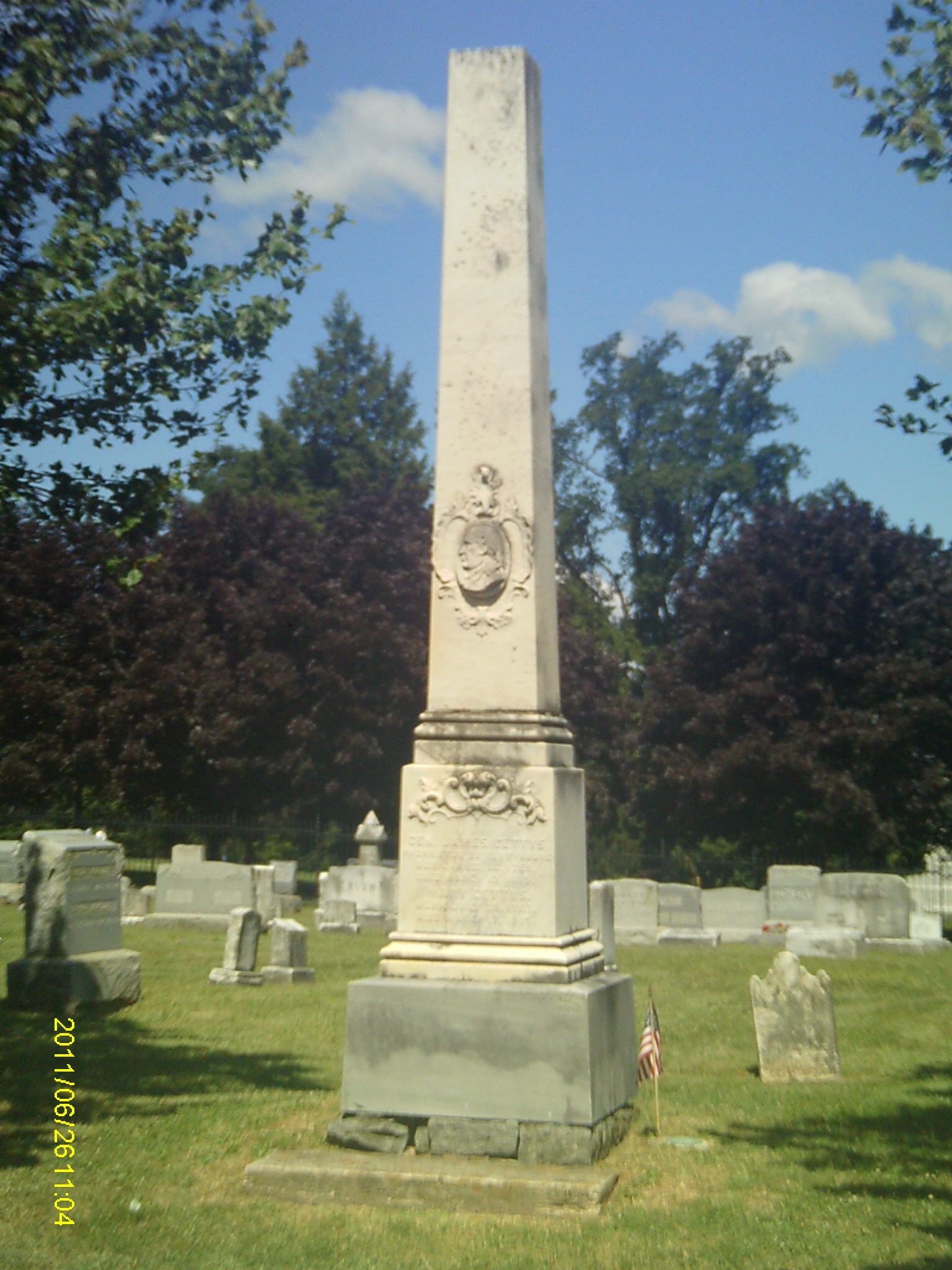
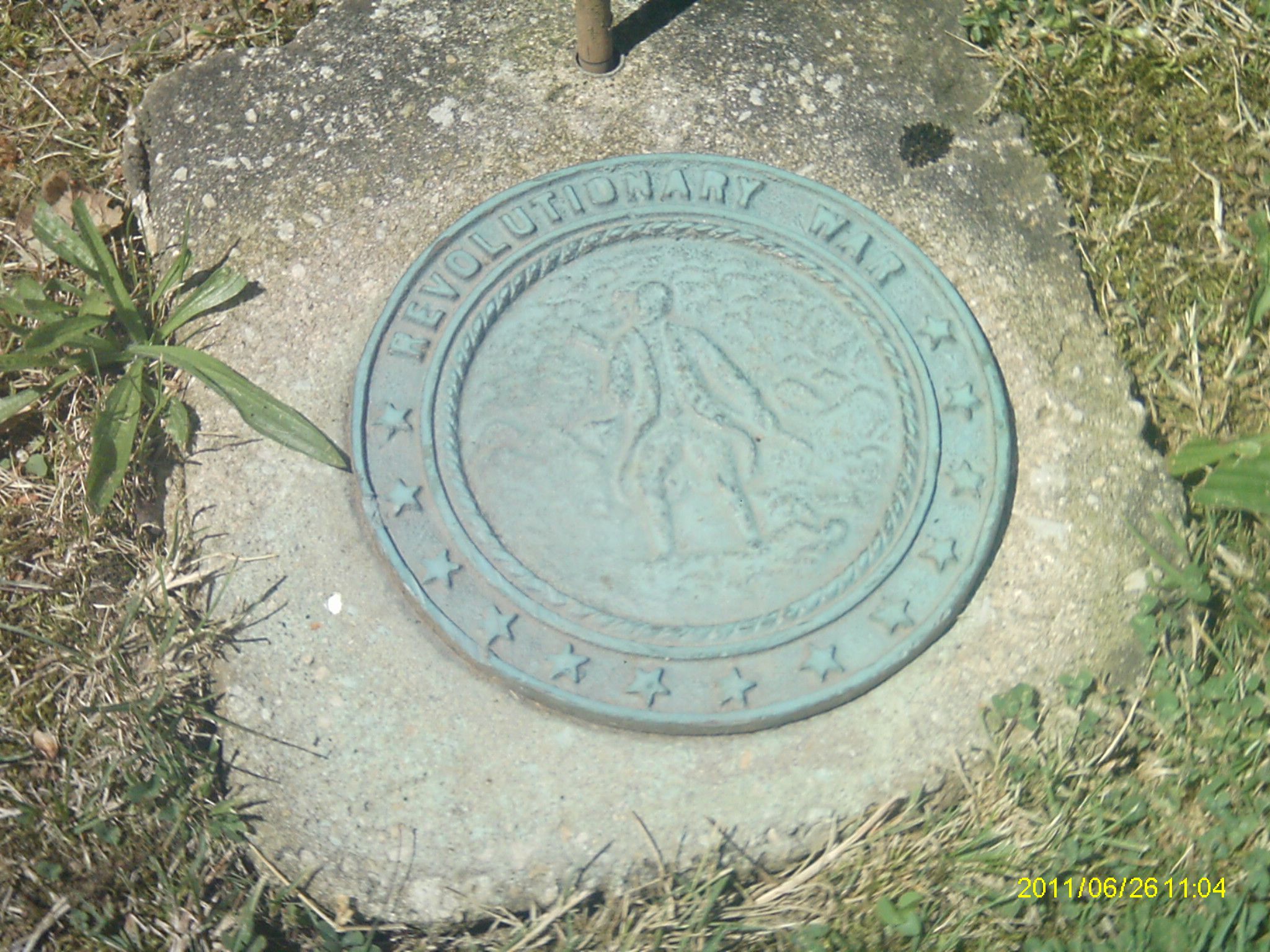
Since we returned from Gettysburg late last week people have been asking me what I most enjoyed about the trip. The answer, hands down, was the excursion we made one morning to Evergreen Cemetery. I had of course been to the National Cemetery several times, but until this June I had never been to the town resting place lying adjacent to it. Now that I have, I feel I understand the town and the battle in a way I had not previously. Here are a few photos. Note that all contemporary images were taken in June 2012. A frustrating snafu on my part caused me to program the wrong year in my digital camera. The Hayfoot can attest to how frustrated I was when I discovered my error.

One would have to start with James Gettys, founder of Gettysburg.

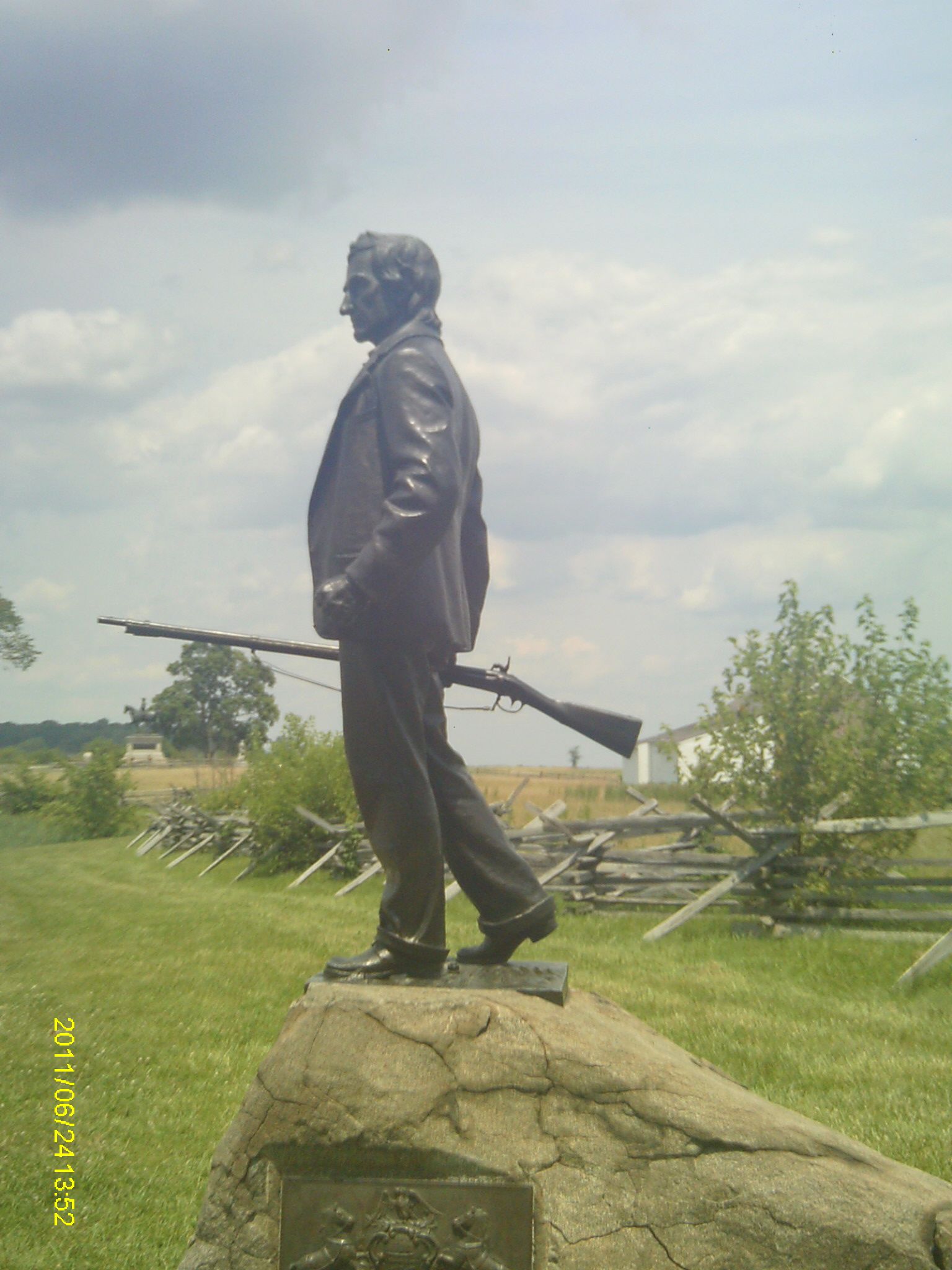
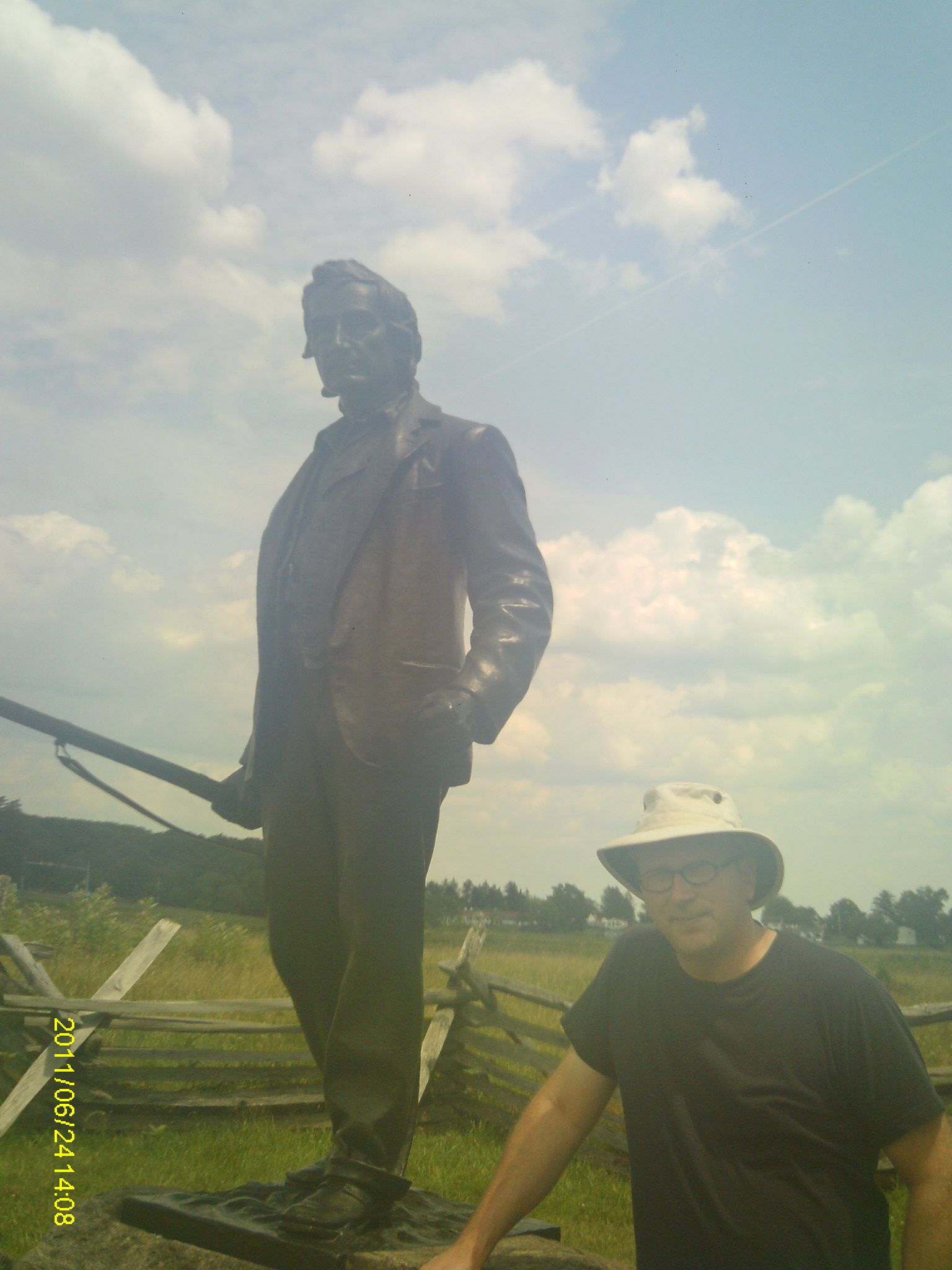
John Burns is one of the Battle of Gettysburg’s genuine characters. A veteran of the War of 1812, the aging Burns grabbed his musket and headed toward McPherson’s Ridge when he heard the sound of the guns.

Here he is looking west toward the Chambersburg Pike.

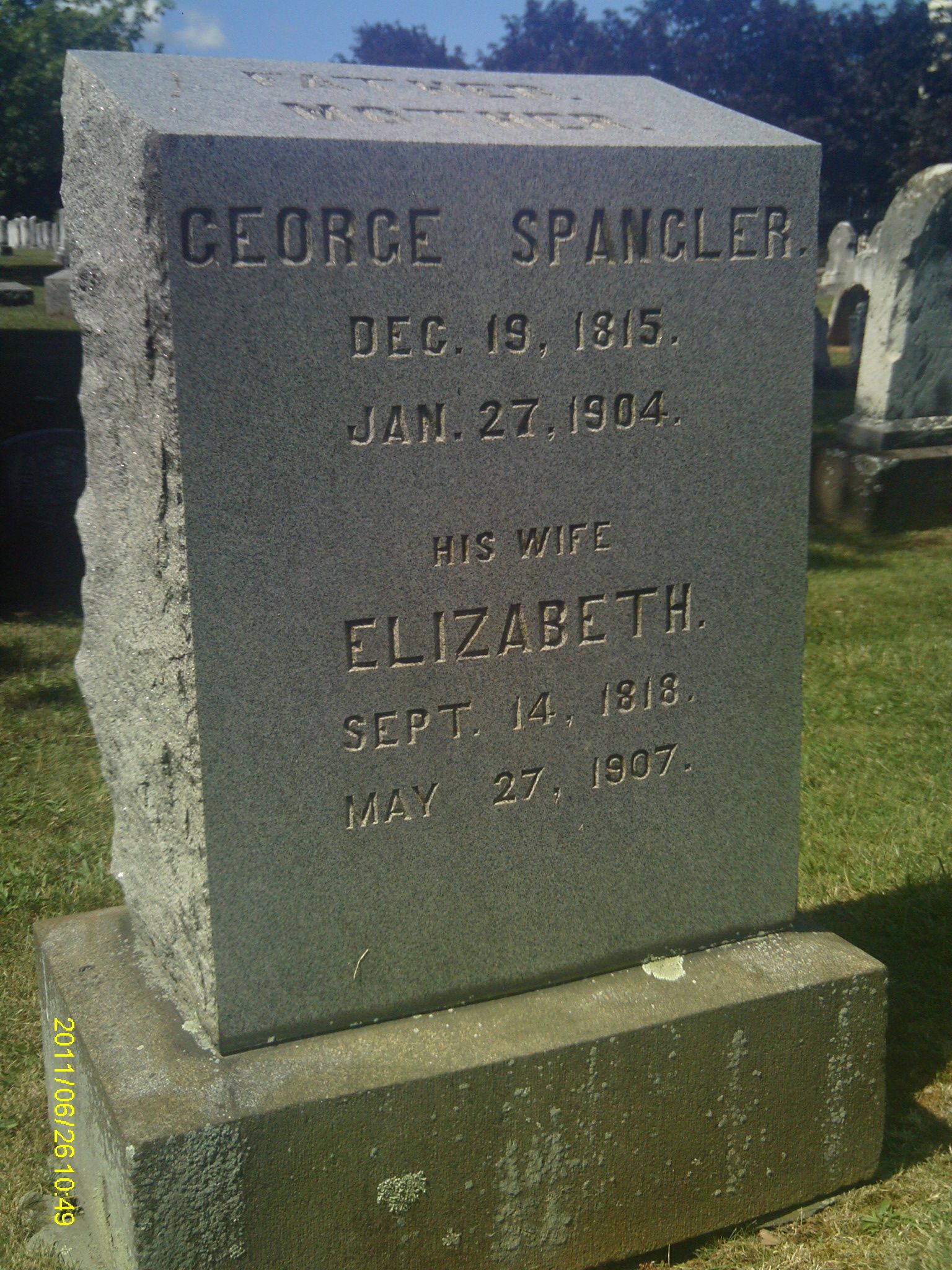
The battle becomes more immediate when one sees the headstones of individuals whose names gave their designations to some of the battle’s most important events. There is no substitute for getting out and seeing where history was made.

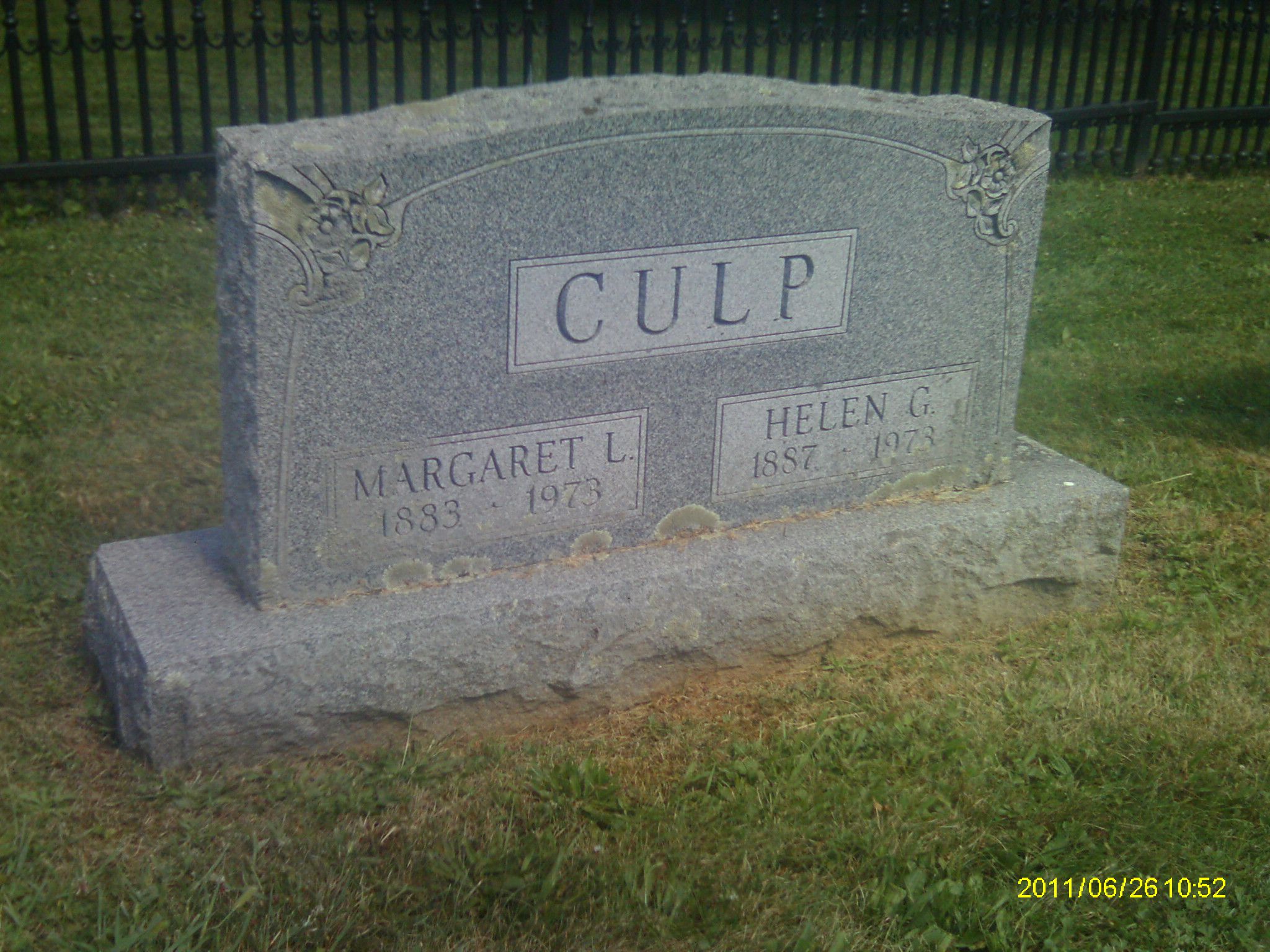
Above is another example.

Many of the families are still very much a part of the community. There were numerous plots of easily recognizable family names considerably more recent than these.

The Evergreen Cemetery Gateway

Gettin’ our sesquicentennial on…

Shadows

Last night I watched a documentary called Long Shadows: The Legacy of the Civil War. The film was produced by Ross Spears, a documentarian whose focus is Southern literature and culture. Spears made the film in the mid 1980s and he interviewed a disparate collection of historians, journalists, novelists, and plain folks (Northern and Southern) about their views on the Civil War and its legacy. Part of what makes the film interesting is that for many of the talking heads the war was not “history” but a tradition passed on to them in their youths by living relatives, often grandfathers who fought in the war. Those interviewed include Jimmy Carter, Robert Penn Warren and C. Van Woodward (together), Tom Wicker, John Hope Frankiln, Studs Terkel, and the incomparable Albert Murray. (Quick digression: I once ran into Mr. Murray in the Strand bookstore and can attest that in person he indeed has that mischievous smile and graciousness one would expect.) Born in the first decades of the twentieth century, these individuals saw their region transform from a poor backwater region to the Sunbelt mecca it is today. The film captures some of the exhaustion that was prevalent in the decade after the energy crisis, the fall of Saigon, and immediate post Civil Rights Era. The film does and excellent job explaining how the Civil War is still very much a part of our lives and why we should care today. The past is never dead. It isn’t even past.

Originally released in 1987, Long Shadows is about due for a sequel or at least a postscript. Hopefully Mr. Ross will use the sesquicentennial to update his film and show us how the long shadow of the Civil War continues to offer shade and darkness a quarter century after its original release.

Happy 4th

It is the 4th of July. The Hayfoot just returned from the store with charcoal for the grill. The potato salad is almost done. I hung the flag.

A few years ago I went to the Queens Museum of Art to see one of the several museum exhibits running concurrently about the legacy of Robert Moses. The exhibits, held in Queens and also at Columbia and the Museum of the City of New York, were offered a necessary corrective to Robert Caro’s valuable but flawed interpretation of the Master Builder. Moses was indeed a bully; he also gave New Yorkers the city that for better and worse–often better–they live in today in the twenty first century. The Queens exhibit focused on several aspects of the Moses legacy, including the swimming pools he designed and had built. The Wall Street Journal has more.

Thinking cool thoughts here in Brooklyn.

Enjoy your 4th.

(image/Swimming in Bed-Stuy, Danny Lyon)