“How much is my Bible worth?”

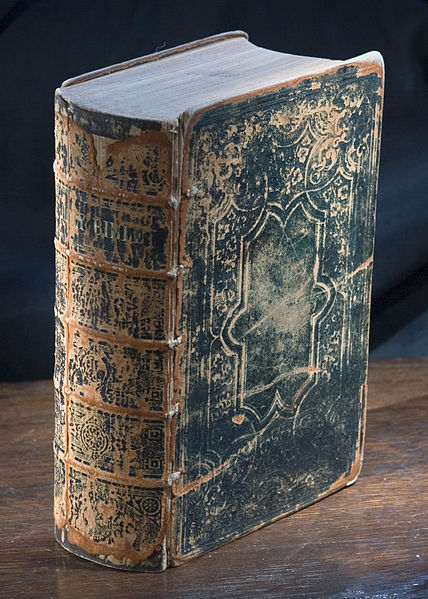
1859 family Bible

When I was getting my MLS in the mid-1990s our professor told the class one day with a laugh that the question he was asked the most was, “How much is my Bible worth?” The answer is usually, “Not much.” This is because the family Bible was a ubiquitous part of most American households in the nineteenth and early twentieth century. A book isn’t “rare” if millions of regular folk own one. Many American families had only two books in the home: the Bible and the Complete Works of Shakespeare. Family Bibles were especially plentiful in the north Texas town where I went to grad school. Though the area where I lived had transformed into a contemporary Sunbelt town, there were still a substantial number of Old Families in the community who traced their heritage back to the original settler families of the 1870s and immediately thereafter. I knew many of them through my volunteering at the local historical museum. No one will get rich on Antiques Roadshow selling their Bible, but they are nonetheless a fascinating part of our individual and collective heritage.

(image/David Ball)

Fire sale

In the 1990s Harrisburg, PA mayor Stephen Reed envisioned a campus of museums dedicated to the preservation and exhibition of artifacts going back to colonial times. To this end, the city spent millions collecting pieces from across the country. The idea, as I understand it, is that the city would profit in the long run through the tourist dollars the museums would attract. In 2001 the National Civil War Museum opened in Reservoir Park. Less than an hour’s ride from Gettysburg, the museum is worth adding to one’s itinerary. It is a beautiful, modern facility with a collection few others can match. The scope is equally impressive, covering the entire Civil War era from 1850 to 1876. In 2009 it became one of the Smithsonian affiliates I mentioned the other day. Sadly the plans for the additional museums never came to fruition, the economic crises and budget deficits of recent years having rendered these plans untenable. Now Harrisburg has commissioned a New York auction house to sell a signifacant portion of the city’s historical collections to pay off the municipal debt. The sale will be held across eight days this coming July after a full inventory.

I do not know enough about the city’s fiscal troubles, though I am sure they are severe. These are tough choices, but I hope city officials are thinking things through. They held a similar auction in 2007 that netted the city $1.4 million. It is not clear how large the city’s holdings will remain after this 2012 sale. During New York City’s darkest years in the 1970s some New York institutions resisted the temptation to sell despite the obvious short term gains. Today, these museums and repositories are enjoying a renaissance of record crowds despite Gotham’s own very real financial difficulties. Something to consider.

(image/Confederate Bowie (top) and Naval knives in NCWM collection, Claire H.)

Surrogate objects

Founded fifteen years before the onset of the American Civil War, the Smithsonian Institution has always managed to stay relevant by embracing change. This has never been truer than today, with the explosion of digital technology we have seen in recent decades. It is a daunting challenge. The Smithsonian operates nineteen museums and galleries, most of them in Washington but many spread out across the country. There are also the nine research institutes, as well as cooperative relationships with 168 affiliate institutions that also trace our country’s natural and historic legacy. One of my favorite outposts is the Rock ‘n’ Soul Museum. If ever in Memphis, just go. All told the Smithsonian holds about 137 million items, only about 2% of which are on display at any given time. When we were at the American History Museum last summer we missed seeing Fonzie’s leather jacket because it had been taken out of rotation to make way for Farrah Fawcett’s swimsuit. A small team of scientists is trying to solve this problem, or at least alleviate it somewhat. Their answer? 3D imagery of select items from the museums holdings. It has already begun with a 3D replica of a Jefferson statue that is on display at the current Slavery at Jefferson’s Monticello exhibit in Washington. I do not think 3D imagery will ever supplant actual existing objects and I would not want it to; the reason for visiting a museum in the first place is to witness the real thing. It is an intriguing project however, and one that has many possibilities if done wisely. It will be interesting to see where this leads.

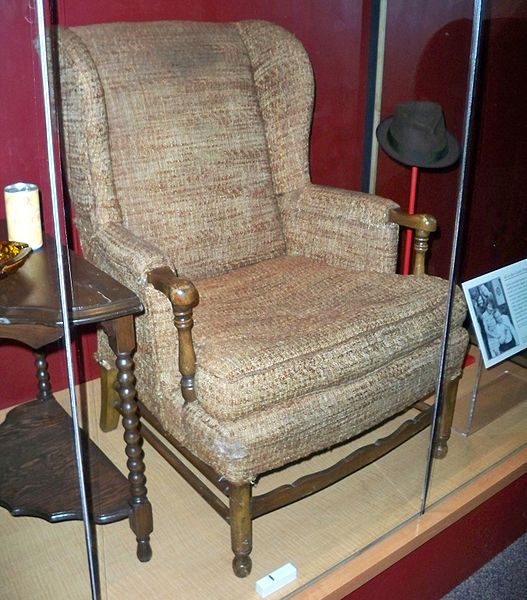
(image/Archie Bunker’s chair at American History Museum, Matthew G. Bisanz)

A new Arlington House

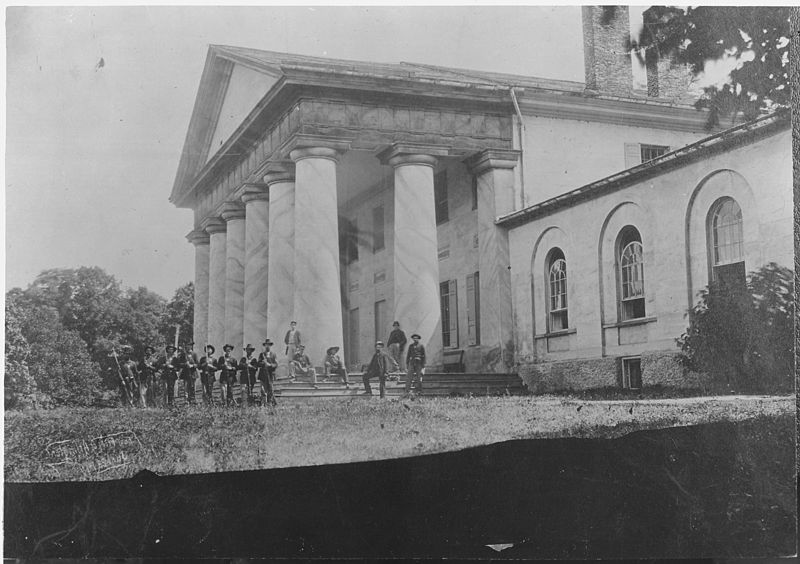
Union troops pose before Lee Mansion, June 1864

Regular readers of The Strawfoot may remember when I wrote last March about our trip Arlington House and Cemetery. It was my first visit to the site, and as you can imagine it was a moving experience. The Lee Mansion is undergoing extensive renovations and there wasn’t a whole lot to see on the day we were there. Much of the construction entails such glamorous details as new duct work and ventilation. Another aspect of the project, however, is focusing on updating the interpretive experience of the plantation. Visitors are now getting a more nuanced understanding of the house, the grounds, and the people who lived, worked, and died there. The story of Arlington House is a fascinating one and is something we are only just now beginning to understand in its entirety. The Park Service is currently collaborating with Arlington National Cemetery (which is run by the U.S. Army) to offer a number of unique programs at Arlington. Here is a brief clip from one.

I haven’t been back to Arlington since that visit almost a year ago, but I imagine things are progressing. I am looking forward to getting back when construction is complete.

(image/National Archives)

Chasing Liberty

A little bit of kitsch, even towards our most venerated symbols, isn’t such a bad thing. My wife can attest that no one loves the techotske stores on Gettysburg’s Steinwher Avenue, with their ghastly t-shirts, key chains, and coffee mugs, more than I do. Buying a trinket should never be the primary, or even secondary, purpose of visiting any historic site–though sadly, I have seen people for whom this is the case. When taken in the right spirit a little cheesiness can be a form of release, bringing us back down to earth after a day of walking Picketts’s Charge, visiting Mount Vernon, or hiking the Grand Canyon. All this said, I can’t say I was sad to see that Gold Leaf Corp. has filed Chapter 11.

Where soldiers left their mark

Andrew Johnson home, Greenville, Tennessee

When your humble writer was a volunteer at Ellis Island his favorite part of the museum was the graffiti written by immigrants waiting to be processed. In the tense, hurry-up-and-wait atmosphere of the immigration station people standing in line often sketched portraits of themselves, scribbled little vignettes of doggerel, or simply noted the time and day of their arrival. Of course, one cannot make out what the person was saying unless one reads Polish, Hungarian, Italian, or whatever language the scribbler happened to write in. Still, they are powerful testimonials that bear witness to the strength and perseverance of those who passed through the Golden Door. When the NPS renovated Ellis in the 1980s, Park officials wisely left some of these off-the-cuff testimonials, now behind plexiglass, for us to contemplate today.

A few years ago my brother and I were at the Museum of the Great War in Perrone where we saw similar works, written by poilus on wooden planks in trenches on the Western Front and now on permanent exhibit. (“Clemenceau the liar” read one in French, translated for me by my brother who has lived in Switzerland for nearly twenty years.)

When Andrew Johnson was serving as Union military governor of Tennessee during the Civil War his home was confiscated by rebel troops for the duration of the war. By the time he returned as former president in 1869, the home was back in family hands. Johnson’s daughter did her best to erase, or more precisely cover, all evidence of Confederate presence. She wallpapered over the graffiti left by Southern troops on walls throughout the house. The Park Service obtained the home in 1956 and soon discovered these remnants during renovations. Ironically, it is when building or rebuilding that we often rediscover the past. Words and drawings are spread liberally across the house. Rangers have even been able to trace the biographies of some of the soldiers who actually signed their names to the walls of Johnson’s home using the NPS’s Soldiers and Sailors System database.

See it for yourself. Park guide Daniel Luther has created this short video.

Pretty cool, huh?

(image/Brian Stansberry)

Breaking ground

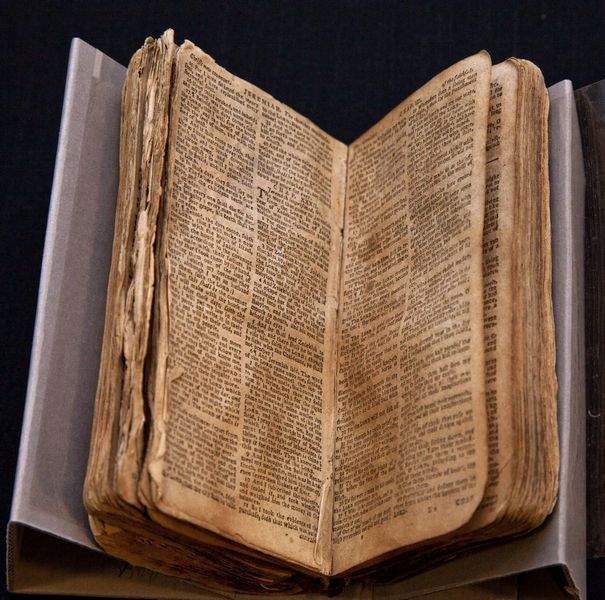
Regular readers of this blog know that I have been following the creation of the Smithsonian’s National Museum of African American History and Culture with keen interest. Today another milestone was reached when the groundbreaking was held in Washington. I am not a believer in ethnic museums because I believe they compartmentalize history and culture in a way I find inappropriate. The African American Museum is the exception to the rule, however. Museum officials have a vision that they seem to be carrying out with great planning and foresight. This is going to be a real addition to the Mall. The museum is also doing an excellent job building its collections. Just the other day a Virginia family donated Nat Turner’s Bible to the new museum.

I have no idea what museum adminsistrators are planning for the opening in 2015, but my hope is that they will tie it in with the ending of the Civil War sesquicentennial. I cannot think of a better “closing ceremony” for our remembrance of the war, though the museum of course will cover the entirety of the African American experience in all its human complexity.

Here are President Obama’s remarks from this morning.

Quote of the day

George Washington’s birthday ran a surprising close third to Thanksgiving and Christmas in soldiers’ affections. The holiday likely assumed greater importance in war than in peace because it reminded soldiers that they were fighting to preserve the nation’s Revolutionary heritage.

Defeating Lee: A History of the Second Corps, Army of the Potomac, Lawrence A. Kreiser

(image/Library of Congress)

Checks cached

Baseball great Ted Wiliams was such a notorious tightwad that when he shopped he often paid by check, hoping the store owner would keep the check as a souvenir, thus saving Williams the money not deducted from his bank account. It is not clear how many of our presidents were also cheapskates, but we now know that a good many of them also paid by check. Last year workers at an Ohio bank discovered a trove of checks collected by a former executive decades ago. The checks were last seen in 1983 after a takeover and presumed lost in the ensuing decades. All told, there are about seventy written by twenty-four presidents and other luminaries such as Charles Dickens, Mark Twain, and Thomas Edison. One was written by George Washington in 1799, the year he died; Lincoln wrote a check for $800 to “Self” on April 13, 1865, the day before he was mortally wounded at Ford’s Theater and two days before he died. Some speculate he cashed the funds to pay debts incurred by Mary Lincoln. For several months the bank displayed the items on a rotating basis at various branches in the six states where it does business. They are currently on display at the William McKinley Presidential Library and Museum through February 28th. Bank officials are considering donating these fascinating documents to a repository such as the Smithsonian.

These are the things that remind us that historical figures were real people who lived real lives, even performing that types of mundane tasks we each do every day.. Pics here.