When science, art, and history collide…

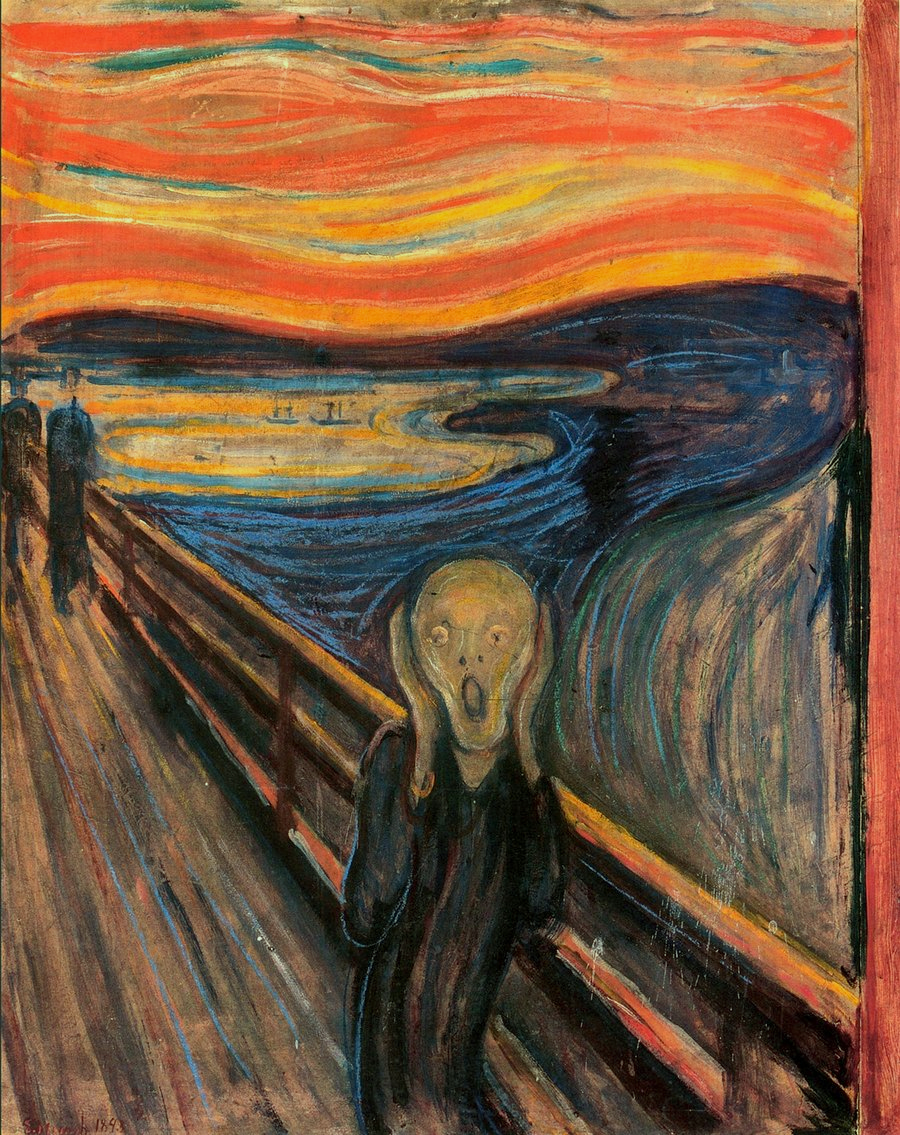
Munch’s The Scream

“I don’t want to say my work is dangerous,” Olson said. “But I would say it’s ambitious.”

Those are the words of Don Olson, a physics professor at Texas State University.  Since the late 1980s Professor Olson has been debunking various “facts” from the worlds of history, art, and literature.  His scholarship has examined Caesar’s crossing of the English Channel, the mortal wounding of Stonewall Jackson, and the artwork and alleged insanity of Edvard Munch.  One reason it is so exciting to be a writer and researcher today is the interdisciplinary nature of today’s scholarship.

Think globally

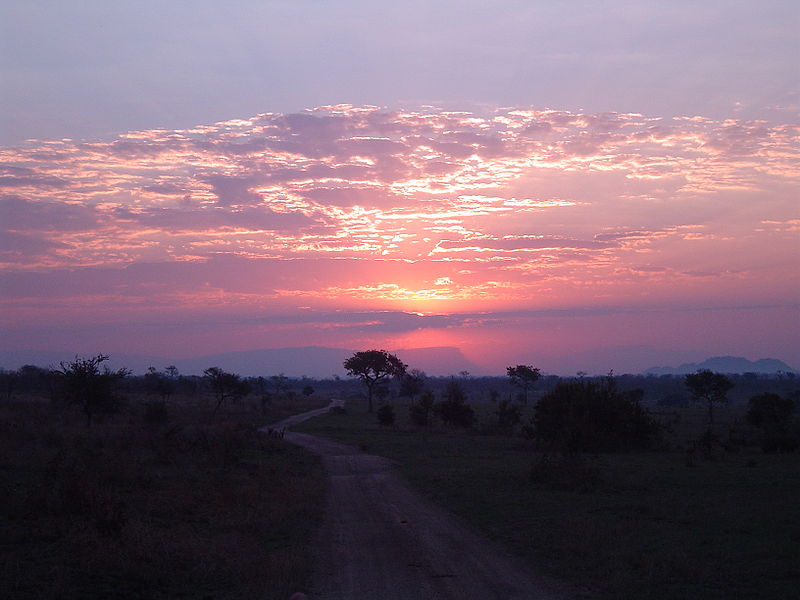
Kruger National Park, South Africa

For those of us who work, travel, and/or volunteer in our national parks there can be a tendency to think of our park system as a unique phenomenon.  It is helpful to be reminded that there are others working globally to protect and interpret the world’s natural and historic treasures.  These individuals are often toiling under the most extraordinary political, economic, and social circumstances.  This is one of their stories.

(Image/Gerald Wiblin)

Art on the Mall

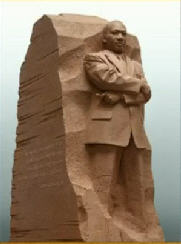
I have not seen the new Martin Luther King Jr. monument on the National Mall yet and am withholding judgement until I do. Based on what I have seen in the media however, artist Lei Yixin’s design seems a curious choice both for the subject and the location.  The statue is inspired more by the Socialist Realism one would expect to see in Red or Tiananmen Squares than by the man who asked us to judge people individually by the content of their character. Indeed, the sculptor’s resume includes monolithic renderings of Chairman Mao in the brutalist style.  Reviews have been mixed.  Again, without having seen it I am withholding judgement.

Preliminary model of MLK Jr. statue

Another artist, the architect Frank Gehry, is currently desiging a monument on the Mall for Dwight Eisenhower.  I wrote my masters thesis on Eisenhower and feel I know something about the man.  I admire Gehry’s architecture, but his vision for the Eisenhower memorial gives me pause.  His ideas include massive metal tapestries designed to look like the silos on the small Kansas farm where Eisenhower and his brothers grew up.  These would in turn be held up by massive steel columns. In mid October Gehry answered questions at a gathering at the Corcoran Gallery in Washington. Eisenhower’s family has reservations, and others have expressed concern as well.  Eisenhower was a more modern man than he is generally given credit for and he would not necessarily be against a contemporary interpretation of his legacy.  One hopes, however, that Gehry fully articulates his vision before the project continues.

(Image/C-SPAN)

Fortress Monroe, National Monument

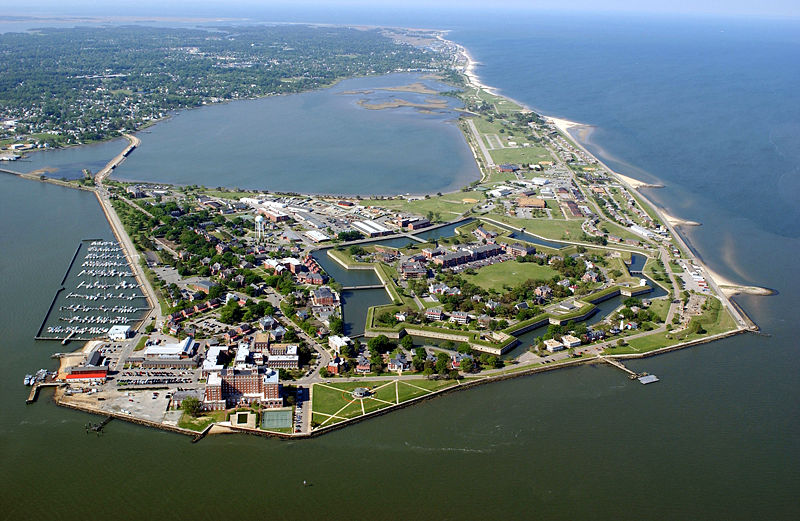
Fort Monroe (center right)

The list of national monuments will grow by one after President Obama signs the legislation designating Fortress Monroe as such later today.  Presidents are able to classify historic and culturally significant structures monuments under the Antiquities Act of 1906.  Fort Monroe certainly qualifies.  It was through this waterway that slaves were first brought to the United States in 1619.  The area played a role in the American Revolution and War of 1812 as well.  The current Vauban-style fort was completed in the 1830s; contraband slaves found protection here during the Civil War, and it was of course where President Jefferson Davis was imprisoned after the war.  Like other forts rendered obsolete in recent years, such as New York’s Governors Island, Fort Monroe was deemed superfluous and closed.  After nearly two centuries it shut down as a military base last year.  Though Monroe had already been on the National Register of Historic Places and registered a historic landmark, the new classification will give the fortress even more protection and save it from development.

(U.S. Army photograph)

Smithsonian Road Show

As a librarian myself I am aware of the wide range of initiatives taking place within our public, academic, and special libraries. Yesterday in my former hometown of Houston the Smithsonian held one of the most innovative .  Curators from the Smithsonian’s National Museum of African American History and Culture evaluated artifacts brought by local citizens to the downtown central library.  Unlike on such television shows as PBS’s Antiques Roadshow, Smithsonian officials examined items and offered guidance on their preservation but did not appraise their monetary value.  Houston was the eleventh stop in the museums’s ongoing “Save Our African American Treasures: A National Collections Initiative of Discovery and Preservation” program.  The event yielded some real finds, including a portion of a statue from 100 a.d. and poll tax receipts from the early 1900s.  Select items may go on display in Washington.

The New York armories

Regimental armories dot the various neighborhoods of New York City, especially in Brooklyn and Manhattan.  Though some are still used by National Guard units, they are today primarily centers for social and artistic gatherings.  Most famously, of course, there was the 1913 Armory Show at the home of the 69th Regiment.  It was at the Armory Show–no other adjectives necessary–that Americans got their first view of Modern Art prior to the First World War.  The 69th is on the East Side and still very much a functioning military post.  Every time I am in the neighborhood for a meeting I note the lists of battles the 69th engaged in during the Civil and Great Wars.  My favorite armory, however, is the structure built for the 14th Brooklyn in Park Slope.  The building was built decades after the Civil War but is nonetheless part of the institutional memory of that unit.  Like other armories, the Park Slope building has undergone an extensive facelift.  Morley Safer of 60 Minutes fame has produced a PBS documentary on another armory, the Park Avenue building in Manhattan.

The Armory Show, 1913

The 69th Regiment Armory today

(Images: top/Percy Rainford; bottom/Beyond My Ken)

Live from New York: the Statue of Liberty

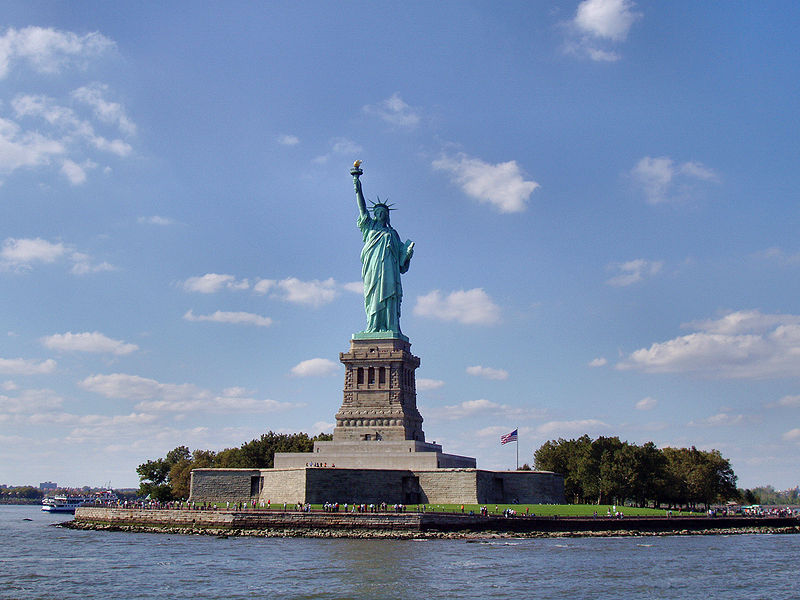
Today, October 28, 2011, is the 125th anniversary of the dedication of the Statue of Liberty.  Beginning tomorrow the statue–but not Liberty Island itself–will close for a well-needed renovation that will improve the infrastructure and bring some modern amenities to the nineteenth century edifice.  For the duration of the upgrades Earthcam.com has donated five webcams to the National Park Service to transmit live broadcasts of different vantage points of New York Harbor.  My favorite is the one showing the harbor with Ellis Island in the foreground.  New Jersey is behind it and Manhattan to the right.  The perfect experience for the insomniacs among us.  To view, go here.

(Image/Derek Jensen)

The outdoor classroom

When the first Civil War military parks were established in the 1890s one of their primary functions was to train active military personnel.  Indeed, until 1933 those Civil War battlefields protected by federal legislation were administered by the War Department, not the Department of the Interior as they are today.  “Training” meant two things. First well into the 20th century these battlefields quite literally served as training grounds for American soldiers.  A young Dwight Eisenhower, just three years out of West Point, commanded the tank training facility at Gettysburg’s Camp Colt in 1918.  Many of the men in his command would later fight in France. Today, basic and other training is not done in this manner.  However, battlefields like Gettysburg do offer lessons in leadership where today’s military learn how and why commanders like Lee, Sherman, and Grant made the decisions they did.  Visit Chickamauga, Antietam, or Shiloh today and chances are good that you will see a platoon or even an entire company of military personel on such an excursion.  My wife and I have seen it dozens of times.  One of the most pristine battlefields is Pea Ridge National Military Park, located in north Arkansas just outside of Bentonville.  A captain in the Arkansas National Guard made this short clip of one such excursion at that site.

(Image of Pea Ridge courtesy NPS)

One night at Shea

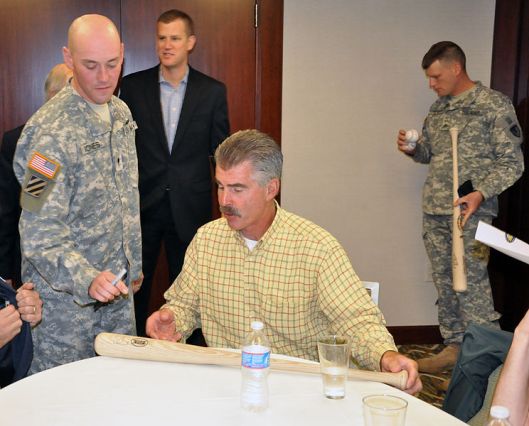
Bill Buckner at a recent autograph signing

Game Six of the 1986 World Series was twenty five years ago this evening.  It will always be known as the Bill Buckner Game, which is unfair to a player who had such a long, distinguished career.

One of the talking heads in Ken Burns’s Baseball documentary said that baseball is a place where memory gathers. That observation applies even to bad memories, I guess, because nowhere is it truer than in my recollection of where I was that night.  In fall 1986 I was in my first semester of college and very much a Major Undecided.  I was also mired in a tenuous living situation the details of which are painful to think about even today. Watching the Red Sox down the stretch, followed by the historic Championship Series against the Angels, and then the Red Sox first World Series appearance in eleven years was what kept us going.

My grandfather died that September.  Throughout his prolonged illness my father feigned indifference to the entire baseball season, and post-season.  A few years later his friends told me and my brother that he was in fact watching every game, turning down dinner invitations and leaving the office promptly on game days to get home in time for the first pitch.  He never knew that we knew that, but we had a good natured laugh behind his back. He was only three years older than I am today.

Does baseball still mean something to me?  Of course it does. But not to the same degree.  This past September the Red Sox had the largest collapse in baseball history.  It rankled me, but filled me with bemusement at the same time. Especially amusing was the finger pointing that lasted for weeks after that final, exclamation point of a loss in the season finale to the last place team in the division.  I am glad I am not the same guy I was a quarter of a century ago, who was still trying to figure out so many things.  At the same time part of me wishes I could return to that night when baseball meant the world to us, and every pitch mattered so much.

(Image/Bob Reinert)