“We Expect More Than Half a Million Visitors, Far Surpassing 2010 Record Attendance”

Okay this “immediate” press release is no longer so immediate, but I saw it for the first time today and wanted to share.  I remember visiting Governors Island for the first time in 2006 when it was still something of a ghost town.  One half expected to see a British redcoat galloping past on horseback.  I hope you are able to visit Governors Island during the 2011 season.

“Governors Island is truly an extension of Lower Manhattan and of our great city,” said Manhattan Community Board 1 Chair Julie Menin. “I am pleased that residents of Lower Manhattan neighborhoods and all New Yorkers will be able to enjoy free cultural, sports and recreational events on the Island this season.”

“This year, Governors Island will have more public art, lots of free bikes, and for the first time will be open on all holiday Mondays,” said Leslie Koch, president of The Trust for Governors Island. “We hope that all New Yorkers will come to the Island to experience a vacation without ever leaving the city.”

“The National Park Service looks forward to welcoming visitors to the reopening of Castle Williams later this season,” said Patti Reilly, Superintendent of the Governors Island National Monument. “We invite the public to come out to the Island and take part in all of the Park Service’s programs so that they can learn about the National Park System, the Island, its history and role in New York City.”

The roof of Castle Williams will indeed open this summer, in late July.  Yet one more reason to venture across the harbor.  Whatever you do, enjoy your summer.
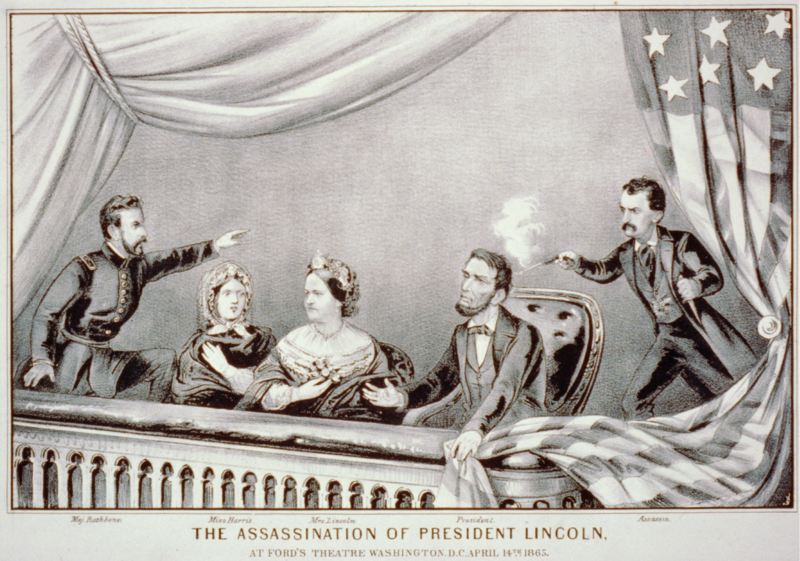
For the collectors among us…

Currier and Ives; Library of Congress Prints and Photographs Division

Next week, the black and gold theater glasses Lincoln is believed to have used the night before his death are going back on the auction block, where experts think they could fetch as much as $700,000.

The glasses are part of a June 17 Sotheby’s auction in New York that will include pricey Civil War items such as a handwritten letter from Robert E. Lee discussing his resignation from the U.S. Army and a flag from the famous Confederate warship CSS Alabama.

Brady’s Senate

Senator David Levy Yulee (D-Florida); Brady Studio; Library of Congress Prints and Photographs Division

From Princeton University:

Princeton’s graphic arts collection has acquired a salt print composite of the United States Senate; one of only three known imperial prints of this historic image. To create the print, Brady and his operators photographed each member of the Senate individually, then cut and collaged the photographs and finally, re-photographed the composite.

Ken Burns’s Civil War

As we commence our sesquicentennial retrospection on the Civil War, it is worth remembering that much of the enthusiasm for the anniversary derives from Burns’ film, which first aired on public television just over 20 years ago. Over the course of nine parts and 11 hours, Burns’ camera peers into thousands of ghostly faces and pans across faded images of body-strewn battlefields guided by David McCullough’s stately baritone and Foote’s oracular drawl. All the while, the unmistakable, melancholy strains of the series’ theme, “Ashokan Farewell” ring out—at times, it seems, from the nation’s collective heartstrings. Running on consecutive nights at the height of network television’s new season in the fall of 1990 (when network television’s new season still mattered), the series became an unlikely hit. Some 40 million people chose to forego Cheers, Roseanne, The Wonder Years, and America’s Funniest Home Videos for a PBS documentary featuring nothing more than old photographs, footage of empty battle fields, and talking heads they likely had never heard of.

This Slate piece is somewhat uncharitable but it does serve to remind us to think critically about the war and how we perceive it.  Burns’s film succeeds more often than not and despite its flaws the documentary holds up quite well two decades on.  Moreover, much of the interest in the Civil War since the early 1990s is attributable to Burns and his work.  Not such a bad thing.

Honoring their Sacrifice

The other day I finally made it to the “Honoring Their Sacrifice” exhibit at Brooklyn’s Green-Wood Cemetery.

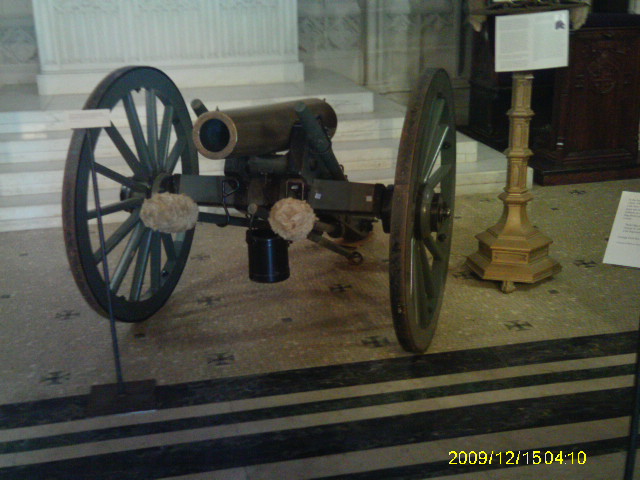
One of the most distinctive items was this Confederate field piece.  It is easily recognizable as such because of the short barrel.  Because raw materials were at a premium in the South during the war the Confederate States of America scrimped by making field pieces with shorter tubes.

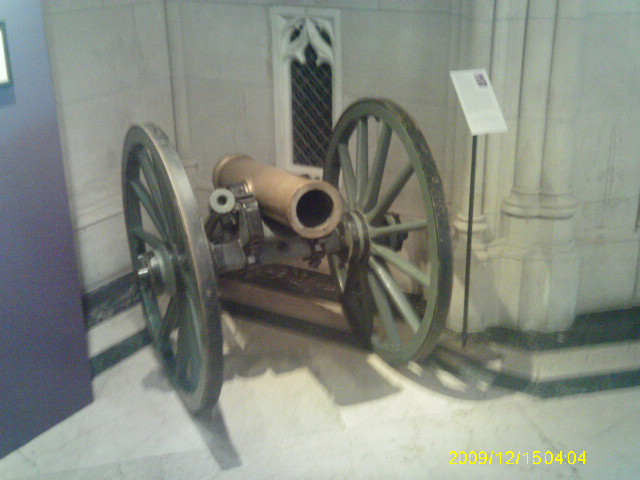
There was also this Union piece.  Charles Wainwright, an artillerist in the Army of the Potomac, is interred at Green-Wood.  Wainwright was a favorite of General Henry Jackson Hunt, the dean of Civil War artillery, and served the Union cause throughout the conflict.  He was also the author of A Diary of Battle: The Personal Journals of Colonel Charles S. Wainwright, 1861–1865, one of the best personal accounts of the war.

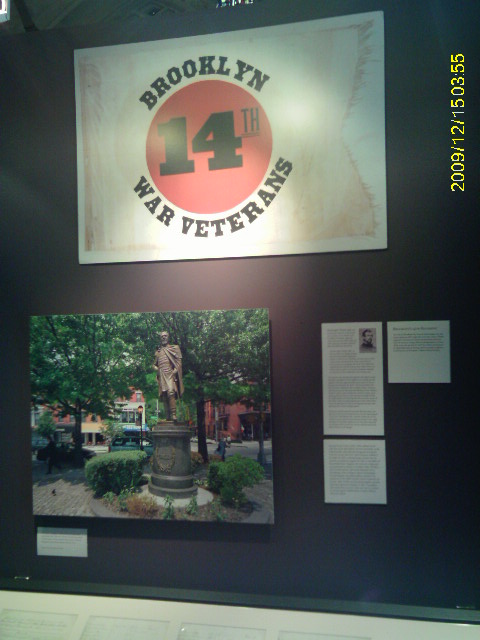
Trivia question:  What is the only regiment to have three monuments at Gettysburg?

Answer:  The 14th Brooklyn.

Their regimental commander, Colonel Fowler, too is buried in Green-Wood.

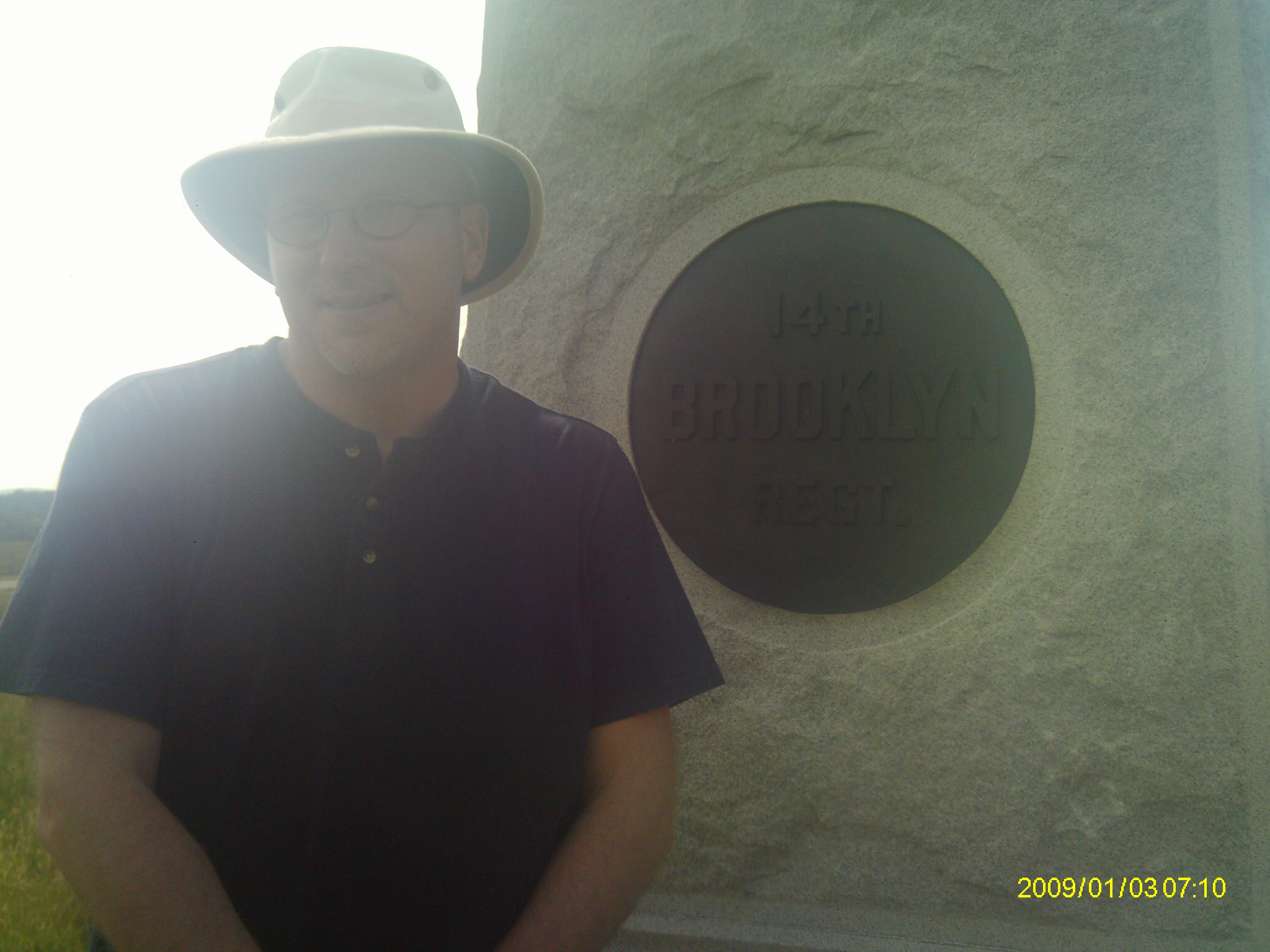
Here is yours truly in front of the 14th monument at the railroad cut in Gettysburg.

These headstones will eventually be placed on the grounds, just like the thousands already laid during the cemetery’s ongoing project.

Those of the Prentiss brothers are just two of them.

Clifton Kennedy Prentiss, USA

William S. Prentiss, CSA

The soldiers and sailors monument has also been restored and is another “must see.”

If you intend to go, you had better act fast.  The exhibit ends this Sunday, June 12th.


June 6, 1944

I could not let the 67th anniversary of D-Day go unnoticed.  When I was younger this was a much bigger deal than it is today.  It is only a bit of a stretch to say that I have measured the events of my life according to the anniversaries of the Normandy invasion.  In June 1984 I was still in high school, getting ready to start my senior year at the end of the summer.  Ten years later I had graduated from college, but was unsettled and still trying to figure out what I wanted to do with my life.  By 2004 I had gone to graduate school and moved to New York City.  Now I am married and in full middle age.

The arc of D-Day presidential ceremonies, or lack thereof, paints a fascinating portrait of the postwar decades.  In 1954 President Eisenhower, the Supreme Allied Commander of the invasion a decade earlier, skipped France altogether and instead vacationed at Camp David.  His only public comment was a small proclamation about the Grand Alliance.  For the 20th anniversary Ike did record a television special with Walter Cronkite entitled D-Day Plus Twenty Years: Eisenhower Returns to Normandy.  The footage of the journalist and the retired president was filmed in August 1963 and is quite moving.  On June 6, 1964 Johnson, who had taken office only seven months earlier after the Kennedy assassination, was in New York City speaking to the Ladies Garment Workers Union.  In the waning days of Vietnam and the Nixon Administration in 1974 Americans were too tired and cynical to care about World War 2.  Reagan’s address in 1984 remains the most memorable of the anniversaries.  At Pointe du Hoc he addressed a sizable audience of veterans still young enough to travel but old enough to appreciate their own mortality.  President Clinton’s address on the beaches of Normandy during the 50th anniversary symbolized the passing of the baton from the Greatest Generation to the Baby Boomers.  In 2004 current events overshadowed the 60th anniversary and the ceremony painfully underscored tensions in the trans-Atlantic alliance.

Today only one person mentioned it to me.  Alas we have reached the tipping point where most of the veterans have either passed on or are too aged and infirm to participate in the observance.  In other words it has become part of history.  Makes me feel old and a little sad.

Baseball and the Civil War

Baseball was still very much a developing sport when the war divided the nation. It was decidedly more popular in the Northern states, and many Southerners learned about the game watching Union soldiers play in Confederate POW camps. Soon both sides got into the game.

“It was played on both sides,” Fort Sumter historian Richard Hatcher said. “It wasn’t the game it is today in popularity, but it was one of many things soldiers did during long periods of inactivity.”

Enjoy your Sunday.

Museum Resource Center

When I was in Washington DC last week I was wondering to myself what happens to all the items left at the Vietnam Veterans Memorial.

The storage of museum materials is fascinating and has a history all its own.  One of my favorite things at the Brooklyn Museum, New-York Historical Society, and Metropolitan Museum of Art is the visible storage space where one can see items not currently on display in the collections.

Visitor Center, RIP?

I don’t see the visitor centers at our National Parks going anywhere anytime soon, but I can imagine fewer VCs being constructed and existing ones having shorter hours in the decades to come.  Increasingly, visitors are finding information (including ticket information) online before even setting out for their destination.  I myself spent the past few days searching Park websites to find the logistical details for our upcoming trip to Pennsylvania and Maryland, including the full complement of interpretive programming at Gettysburg for the summer season.  Social media have already changed the way the Park Service interacts with the public.  This trend will certainly continue and probably accelerate.

Digital technology increases the options of the consumer and puts the power in the hands of the customer, which are always good things.  My experience as a volunteer in the Interpretation Division at Ellis Island has taught me, however, that people still want that human interaction.  According to Laura Petersen:

. . . people still seek out rangers at parks they do not regularly visit. After pre-trip planning information was posted online for Yellowstone National Park, rangers expected a drop in visitor center activity, said Diane Chalfant, the agency’s deputy associate director of interpretation and education. “But what actually happened is the visitors came in more informed and curious because they had more in-depth questions to ask,” said Chalfant, who was Yellowstone’s chief of interpretation for 10 years.

The role of ranger is changing from providing basic facts and directions to discussing more detailed elements of the park. It means they have to know their subject matter in and out, Chalfant said.

Whatever does happen, it is safe to say that the NPS will look different even five short years from now when it celebrates its centennial.