Juneteenth 2020

Early afternoon yesterday we received news that our institution was closing for today, June 19, in observation of Juneteenth. Until this year this was not a day we received as a holiday. I wrote the post below for Juneteenth last year and am re-upping today.

Update: Just yesterday the National Archives found an original handwritten order from that original Juneteenth 155 years ago today.

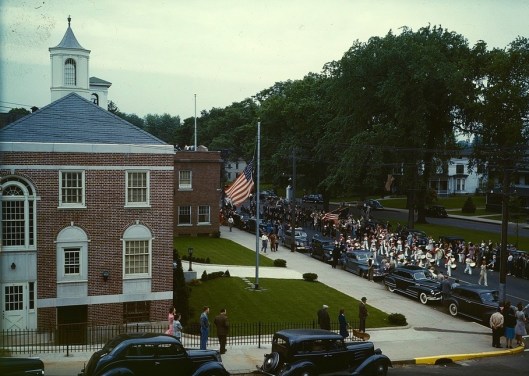
Citizens of Austin, TX observe Juneteenth, June 19, 1900. One would imagine these individuals remembered General Granger’s 1865 proclamation.

I was off today and spent a big chunk of the hours preparing for an event that will probably come to pass next month. If/when it does, I will write about it in this space. One of the best things about being off on a Wednesday is that this middle day of the work week is getaway day in Major League Baseball. What that means is that teams often play day games on this third day (Monday, Tuesday, Wednesday) of a series before quickly “getting away” to the next town for a weekend series. While working today I had the Astros/Reds game on. During the broadcast they mentioned that today is Juneteenth. I lived in Texas for many years and know what a big holiday this is in the Lone Star and neighboring states. Unfortunately it remained an exclusively regional affair for much of the next century; there is no mention of Juneteenth in the New York Times until 1933, and after that not until 1981. Over the past several decades Juneteenth has become more significant nationally. Awareness was aided by the 1999 publication of Ralph Ellison’s posthumous novel Juneteenth. Ellison was born in Oklahoma City, Oklahoma in 1914.

Gordon Granger, circa 1861-65

Juneteenth began in 1865 and marked the moment when on June 19th of that year Brevet Major General sailed into Galveston Bay and read his General Order #3, which began with the announcement that “The people are informed that in accordance with a Proclamation from the Executive of the United States, all slaves are free.” One must remember that Lincoln’s January 1, 1863 Emancipation Proclamation only applied to slaves within jurisdictions under Federal (Union) control. General Granger spent much of the next six weeks traveling within Texas to spread the news.

Holidays have a funny way of disappearing and coming back. Here in New York we used to have Evacuation Day every November 25. Evacuation Day marked the moment in 1783 when the British, acknowledging defeat, packed up and sailed from New York Harbor back to England. Evacuation Day petered out eventually, presumably because it fell so close to Thanksgiving. It was for Evacuation Day 1883 that they dedicated the John Quincy Adams Ward statue of George Washington on the steps of Federal Hall, then still the New York Sub-Treasury. I would argue that Juneteenth should become a national holiday, or at least a national observance. It is already officially commemorated in forty-five states.

(top image/Austin History Center and the Portal to Texas History; bottom/LOC)


The “American Kipling”

I spent a good portion of the day finding, reading, and saving various articles related to the King family as I gear up to begin writing my book manuscript in greater earnest over the summer. I am staying as organized as I can because my narrative will go from the early 1700s through the 1930s and cross several generations as they navigate their lives and times. I spent a good chunk of today on Charles King, who is credited with seventy years of military service starting in the 1860s through his involvement training troops that soon went off to France to fight in the Great War. He lived until March 15, 1933, dying after a fall two weeks into the Franklin Roosevelt administration. Charles was the great-grandson of Rufus King.

One of the key aspects to Charles King’s life, in addition to his long military service, was his other career as a writer. His work is little read today, but Charles King was the best-selling author of over five dozen books and 150 some odd magazine articles, working in short and long form fiction, non-fiction, and autobiography. Many called him the “American Kipling” because his life and work overlapped so neatly with that Englishman’s. They also covered many of the same topics and themes, King from and American perspective and Kipling from a British one as they bought their small war in the late nineteenth and early twentieth century. I do not yet know if the reason for Charles King’s current anonymity is due more to the possible outdatedness of his prose or the possible outdatedness of his ideas. Put another way: King’s triumphalist interpretation of how the west was won is looked upon unfavorably today. Here we see one of his stories as published in Lippincotts in 1888. This magazine work was hugely important to writers of all styles and genres in King’s time.

(image/J.B. Lippincott & Co, Philadelphia, PA, 1888)

Researching the American Revolution online

Once a month the editors of the Journal of the American Revolution ask contributors a different question related to some aspect of the era. This month’s question is about resources available online that scholars can thus use for their research even during the pandemic shutdown. Research has become much easier in recent years with the growing availability of material that can be found online. Still, doing research in this moment is difficult. Some colleagues and I are grappling with this very issue on a project unrelated to the period. For anyone interested in researching the Colonial and Early American period even in this moment when libraries, archives, and other repositories are still closed, this list is a good place to begin.

(image/Yale University Art Gallery)

Appreciating Al Jaffee

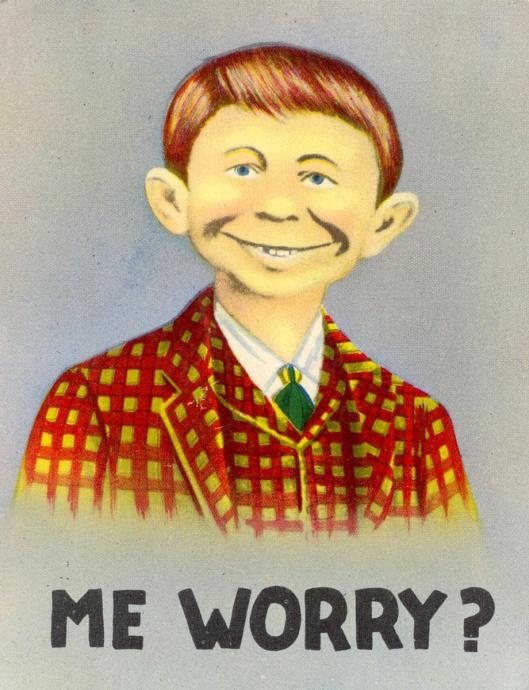
circa 1910 postcard that inspired the later creation of Alfred E. Neuman

I have not read Mad magazine for many years–decades–now, but read with great interest this Washington Post article about the impending retirement of Al Jaffee. For those who may not know, Jaffee was one of the early pioneers of Mad. In his 60+ years with the magazine he wrote and drew over five hundred of the fold-ins, which were something of a spoof of the Playboy centerfold in which one saw a question and accompanying drawing that, when folded it together, satirized some political figure or topic of the day. Jaffee was also a key figure in writing Snappy Answers to Stupid Questions, which my brother, sister, and I avidly read aloud in book form in the 1970s. Jaffee is 99 years old and–in the end of an era–next week’s tribute issue will be Mad’s final edition of new material.

Jaffee was born in Savannah, Georgia just after the end of the Great War but moved back and forth from the United States to Lithuania with his parents. I have always found it fascinating how immigrants created so much of the high, middle, and low American culture that we take for granted. We breathe it in like oxygen without even thinking about it. Vaudeville, Tin Pan Alley, Hollywood, and even Christmas carols are just a few examples. I imagine this insider-outsider identity gave Jaffee his unique perspective and ability to comfort the afflicted and afflict the comfortable, all while maintaining his sense of humor, intellectual curiosity, and generosity of spirit.

Popular culture can be a tricky thing. Done well, as it was for decades in Mad and is today in The Onion, it can inspire and educate. Done poorly or consumed in excess, it enervates one’s faculties. I was telling someone just last week that I can no longer watch the late night television shows because Neil Postman’s 1980s warning of the dangers of amusing ourselves to death has become reality. Our obsession with entertainment is the reason why actors and reality television personalities have in recent years become able to enter the public sphere in the manner that they have. If you are satirizing this or that figure in a late night sketch but then hanging out with that same figure at some after party two weeks later, what does your satire actually mean? These were hazards to which Jaffee and his Mad colleagues never succumbed.


“. . . the world situation is very serious.”

Seated from left: J. Robert Oppenheimer, unidentified, George C. Marshall, Harvard University President James B. Conant, Omar N. Bradley, T. S. Eliot, unidentified

The above quote comes from the opening lines of the speech Secretary of State George C. Marshall delivered at the Harvard University graduation commencement on July 5, 1947. Marshall had been the Secretary of State for all of about ten weeks when he showed up in Cambridge, Massachusetts to give the graduation commencement and receive an Honorary Doctor of Laws. As one can see from the list of names in the caption, a disparate mix of men received honorary degrees that day. George Marshall’s appointment was more controversial at the time than one might realize today; many Americans were concerned that a military man would be a bad fit to run American diplomacy. Menswear often coveys a message and Marshall is transmitting one here. In the photograph above we see the onetime five-star general sitting third from the left, pointedly wearing a crisp suit and avoiding any display of military display.

The war had been over for more than two years by this time but Europe was hardly at peace. V-E Day had been both and end and a beginning. Millions of Europeans now faced civil war, religious and ethnic strife, refugeeism, food insecurity, unemployment, homelessness, and other issues. Men like the late FDR, Marshall, Truman and others understood the failures of Versailles and what that led to in the 1920s and 1930s. This speech was the germination of Marshall Plan; the following April President Truman signed the Economic Recovery Act, one of the most generous and forward-thinking achievements in American statecraft.

(image/Los Alamos National Lab)


Reliving the 20th century

Today is the 52nd anniversary of the assassination of Robert F. Kennedy, who was mortally wounded just after midnight on June 5, 1968 at the Ambassador Hotel in downtown Los Angeles and died the following day. Various journalists and pundits today, in June 2020, are noting that our current year began like 1974, turned into 1918, and has since devolved into 1968. I received an email yesterday from someone who said they were so distraught that they were having difficulty processing what is happening and even functioning to a certain degree. I responded as best I could and offered Lincoln’s words from the American Civil War that sometimes events are so confusing and come so quickly that we simply cannot understand them. Our decisions and responses have weight. Contingency and agency matter. The people of Match 1865 did not know when and how the war would end. Lincoln went on though that it is up to us to do what is right as we see it.

The coming summer days, weeks, and months will be difficult on a number of levels. Memorial Day Weekend I came to the realization that the entire summer is going to be one of sheltering in place just like the last days of winter and all of spring. Alas I won’t be visiting many of the sites and places this summer I had planned to. I have resigned to this notion. Getting back to the idea of agency, a way to deal with the current moment is by focusing one’s energy in creative and productive ways. Take on a project, read some history and literature, watch and listen to historians online. Try to be in a different place, if not physically then intellectually and emotionally, come summer’s end.

(image by Boris Yaro for the Los Angeles Times)

Sunday morning coffee

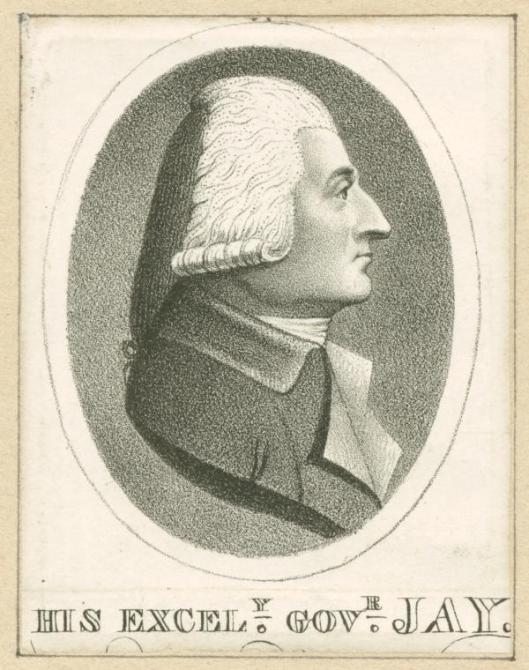
I have been trying this weekend to make some headway on a project that hopefully will come to fruition sometime this summer. Though there is still much to do, the writing is coming along. My goal is to finish the draft before Memorial Day. We’ll see if that comes to pass. One of the figures in the project is John Jay, who died on May 17, 1829. Jay was a governor, acting Secretary of State, and Supreme Court Chief Justice among other things. His grandson is a figure in Incorporating New York, my as-yet unpublished manuscript about Civil War Era New York City. It is often lost on us how little time passed between the Revolutionary and Civil War generations. I had hope to visit the Jay Heritage Center in Rye this summer but that is looking less likely given the current pandemic situation. This coming September there is a conference related to Jay at Columbia University to commemorate the completion of the seven-volume Jay Papers project. Hopefully that will still come to pass, if only in an online virtual context.

(image/NYPL)