National Hillbilly Music Day, 1953

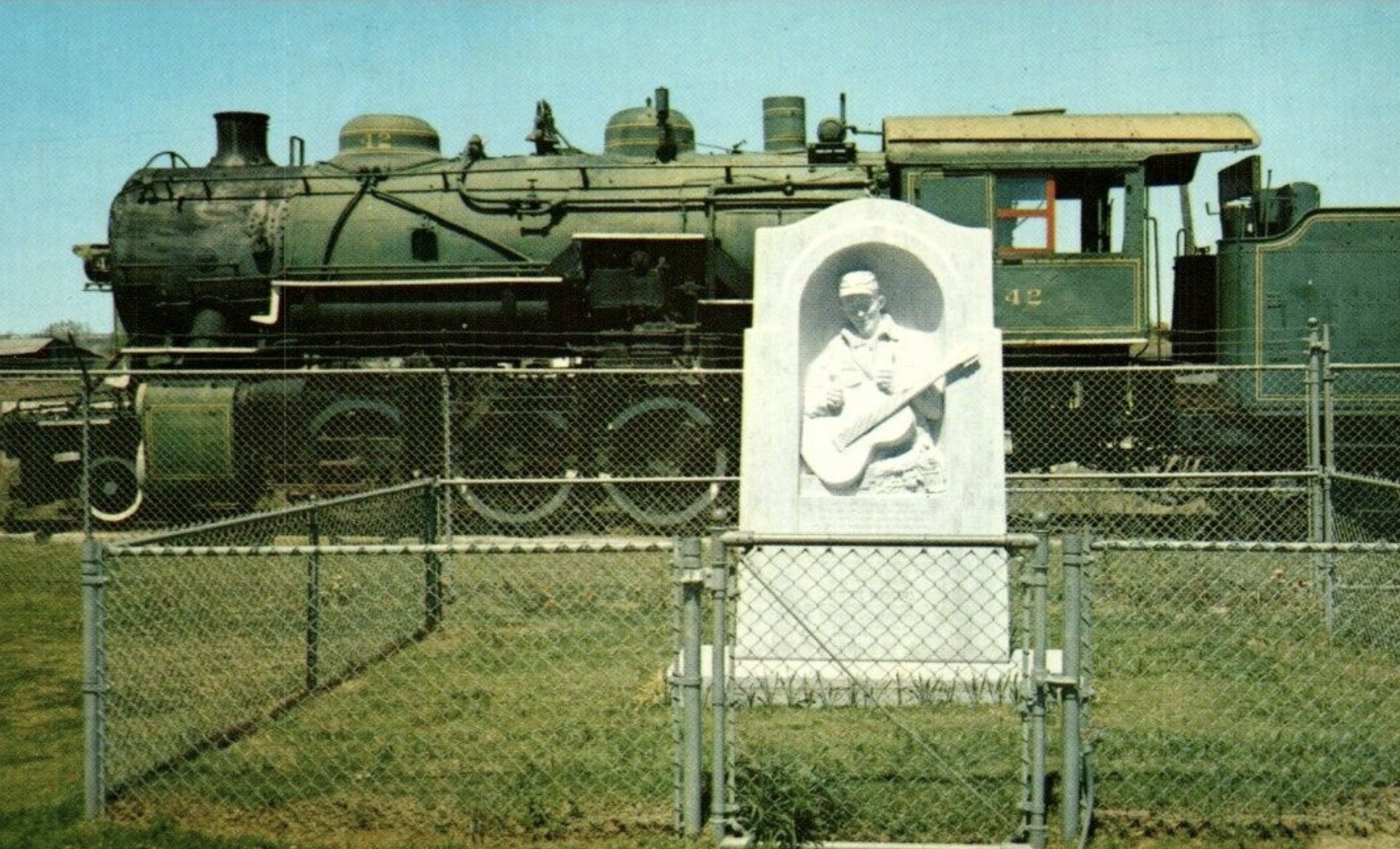
The Jimmie Rodgers Memorial was dedicated in Meridian, MS on May 26, 1953.

Jimmie Rodgers died in New York City in 1933 and was laid to rest in his hometown of Meridian, Mississippi shortly thereafter. Americans, especially Southerners, mourned Rodgers, but given his controversial nature and the tenuous economic conditions gripping the nation when he died there was much time for elaborate displays of commemoration. That changed twenty years later when on May 26, 1953—seventy years ago today—100,000 turned out on what was dubbed National Hillbilly Music Day to dedicate the monument you see here. Rodgers was know as “The Singing Brakeman,” and indeed for time he worked the rails as a member of Local Lodge 173 of the Brotherhood of Railroad Trainmen.

New York Times, May 27, 1953

I must say I came late to Jimmie Rodgers, and didn’t really get it until just a few years ago. I preferred the blue yodels as channeled through such Rodgers acolytes as Merle Haggard, whose covers paradoxically remained true to the originals while sounding more modern. Lynyrd Skynyrd, among of course many others, covered him too. I still appreciate Hag and Skynyrd’s loving homages, but have come to appreciate Rodgers on his own terms more and more in recent years as I’ve grown older. The music is just so . . . adult. It’s no wonder 100,000 people showed up. Meridian, Mississippi still commemorates the life and work of Jimmie Rodgers; the 70th annual music festival was held just a few weeks ago. Here are some stunning photos that the late Scotty Moore posted to his website in 2011 of events featuring Moore, the young Elvis, and others back in the mid-1950s. Please do click. Even better, listen to Jimmie Rodgers.
Sunday morning coffee

It is hard to believe Frank Sinatra has been gone a quarter century now. He died on this date in 1998. The late 1990s themselves feel like such a long time ago now, I suppose because they are. Here is a Sinatra’s song from one of his best and least appreciated albums, the 1967 bossa nova collaboration Francis Albert Sinatra & Antônio Carlos Jobim. It is the perfect complement to this Mothers Day. Enjoy the spring day.

Sunday morning coffee

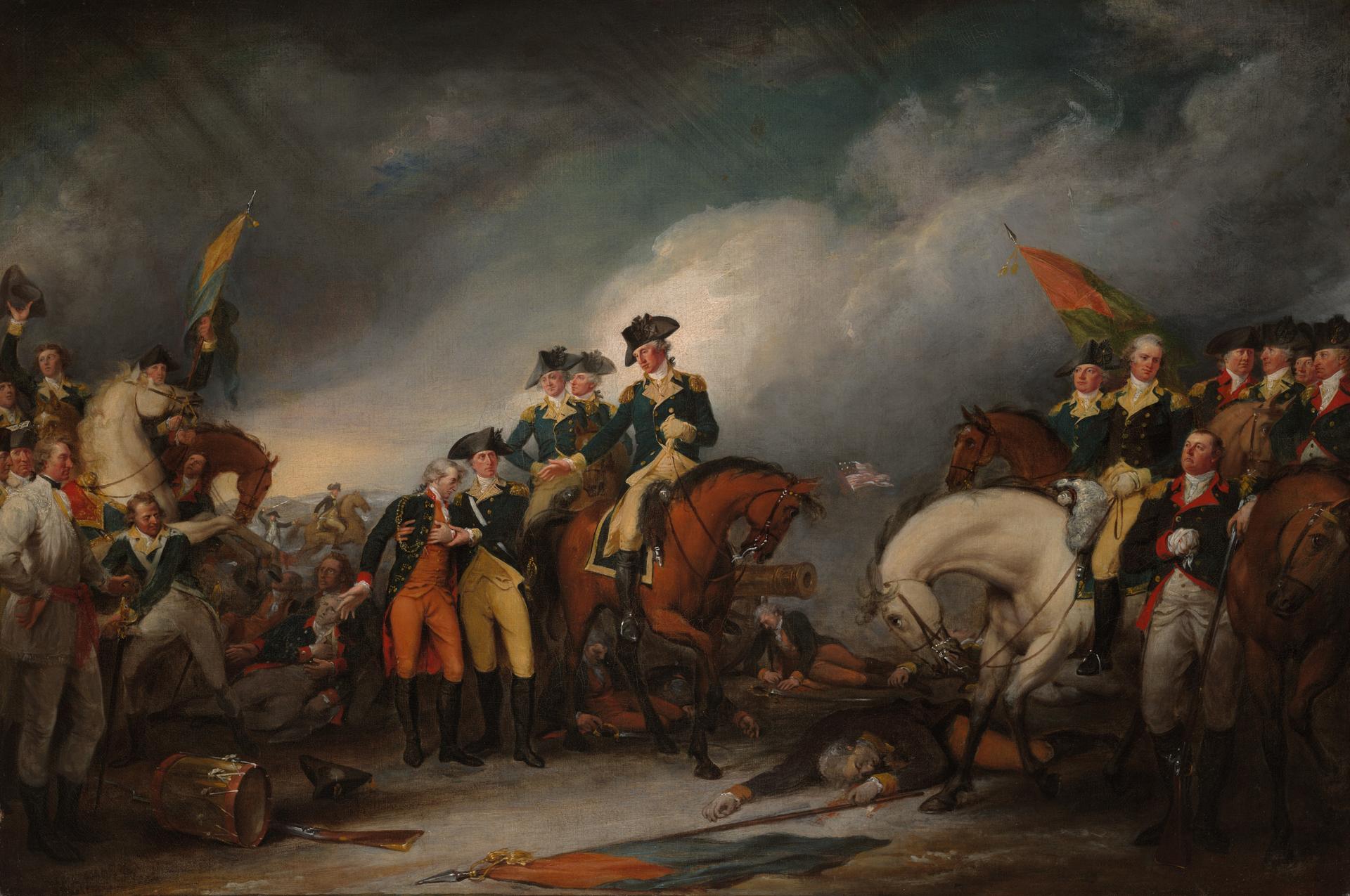
The Capture of the Hessians at Trenton, December 26, 1776 / Yale University Art Gallery

The Morristown National Historical Park Museum and Library has posted my article about John Glover and Loyalist William Browne. I’m not going into it here, but the hows and whys of this writing project have an interesting backstory. There was even a Brooklyn connection that I didn’t quite together until starting the work. There are many themes to discuss in the choices that Loyalists and Patriots made before and during the war. I’m going to continue with this story. Above in John Trumbull’s The Capture of the Hessians at Trenton, December 26, 1776 we see Glover second from the top right. The guy got around. When the people at Morristown uploaded the article they noted that I’ll be speaking there on Saturday June 17. The talk is part of the ongoing commemoration of the park’s 90th anniversary. My talk will be based on an article I wrote for the Fall 2022 edition of The Federalist, the quarterly newsletter of the Society for History in the Federal Government. I’ll be speaking about a travel series sponsored by the Brooklyn Daily Eagle in the 1910s and 1920s in which managing editor Hans von Kaltenborn annually led groups of 40-50 New Yorkers across the country, South America, North Africa, and Europe. National Park Service sites were the primary focus of the excursions. It’s a story I had always wanted to tell. I’ll tell it again in Morristown come June 17.

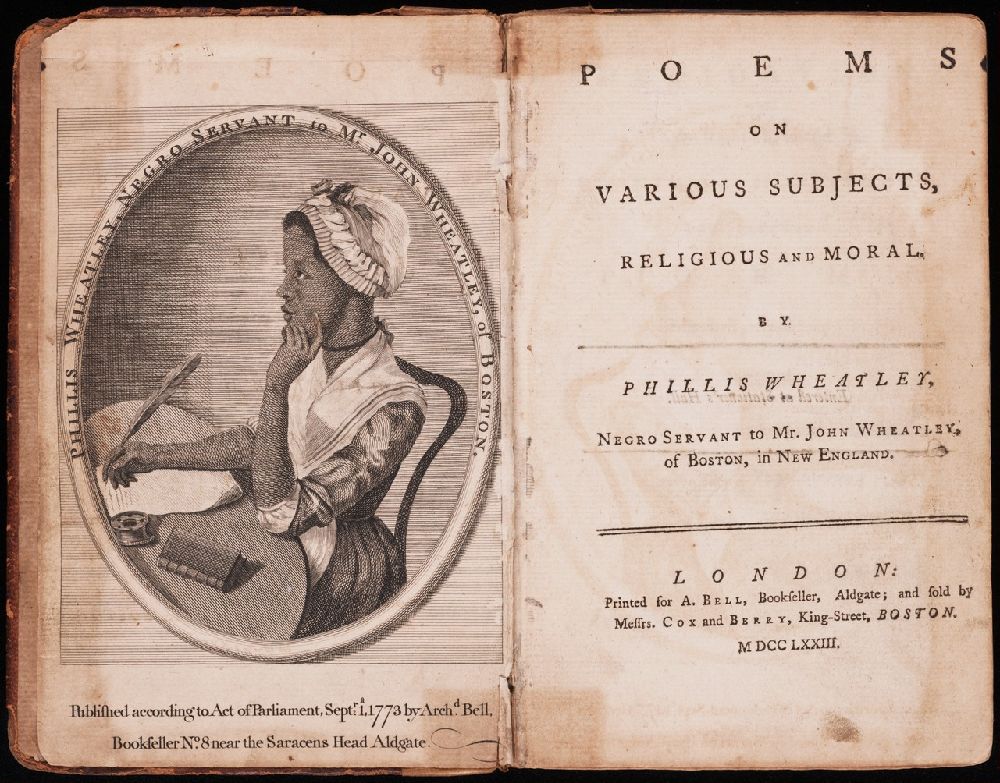
Poems on Various Subjects, Religious and Moral

A 1773 first edition of Phillis Wheatley’s Poems on Various Subjects, Religious and Moral sold at auction yesterday for $38,175. Three hundred copies were printed in London and crossed the Atlantic in a crate aboard the Dartmouth. Incredibly, on that same voyage the Dartmouth was also carrying 114 chests of the East India Company tea that would get tossed overboard that December. Thankfully the crate containing the books were not damaged in the Boston Tea Party. Above we see the Yale Beinecke Library’s copy from that first print run. The volume that sold yesterday had once belonged to Raymond Adams (1898-1987), a University of North Carolina English professor and co-founder in 1941 of the Thoreau Society.

It is a little unclear if the particular volume that sold yesterday was aboard the Dartmouth because a previous owner at some time had Wheatley’s poems bound with a collection of prose written by a Scottish poet. Though the three hundred copies of the Wheatley book had been printed in London specifically for sale in the colonies, could the original owner have purchased a lone volume in Great Britain before the Dartmouth sailed? That’s unlikely, but given the questions regarding its subsequent binding with the second item we’ll never know for certain. Whatever the provenance we are fortunate that this particular volume, and the one we see above from the Beinecke, have survived these past 250 years.

The French Alliance turns 245

Today is the 245th anniversary of the ratification of the Franco-American Alliance. This is a First Day Cover for a stamp dedicated in York, Pennsylvania forty-five years ago today on the bicentennial of that ratification. The Continental Congress was meeting there because they were basically on the run from the British, who still controlled Philadelphia. That says something about the tenuousness of the American position three full years into the war. Here is an excerpt from the Congressional journal as posted on Yale’s important Avalon Project website. The stamp itself is an interesting piece of material culture. I was having a conversation yesterday with someone about the upcoming 250th. This person was born in the 1980s and thus unaware of the cultural significance of the 1970s Bicentennial. The stamp is a reminder that the commemorations of half a century ago stretched beyond 1976.

Duke Ellington, 1899-1974

A friend emailed last night and reminded me that today, April 29, is Edward Kennedy Ellington’s birthday. The composer was born in Washington, D.C. on this date in 1899. I think I have said this before, but I have always wondered by artists in other genres such as Matisse (1869), Picasso (1881), and Braque (1882) are still considered Modern while jazzmen also born in the nineteenth century are regarded with nostalgia. Intellectually Ellington has had more influence on me than any other creative person. The reason I say this is because I internalized something he once said about the audience never knowing how hard you work to pull it off. I don’t compare myself to Duke Ellington, but I like to think those who read my work take from it what they do without thinking about the effort on the back end. What it takes to make it happen, the reader should never know. I remember seeing “Beyond Category: The Musical Genius of Duke Ellington,” a traveling exhibit sponsored by the Smithsonian Institution, when it was on view at the African American Museum of Dallas in 1996. When I visit Woodlawn Cemetery in the Bronx his modest resting place there on Jazz Corner is one of the places I alway visit.

Here is a little something for your Saturday.

The Triumvirate

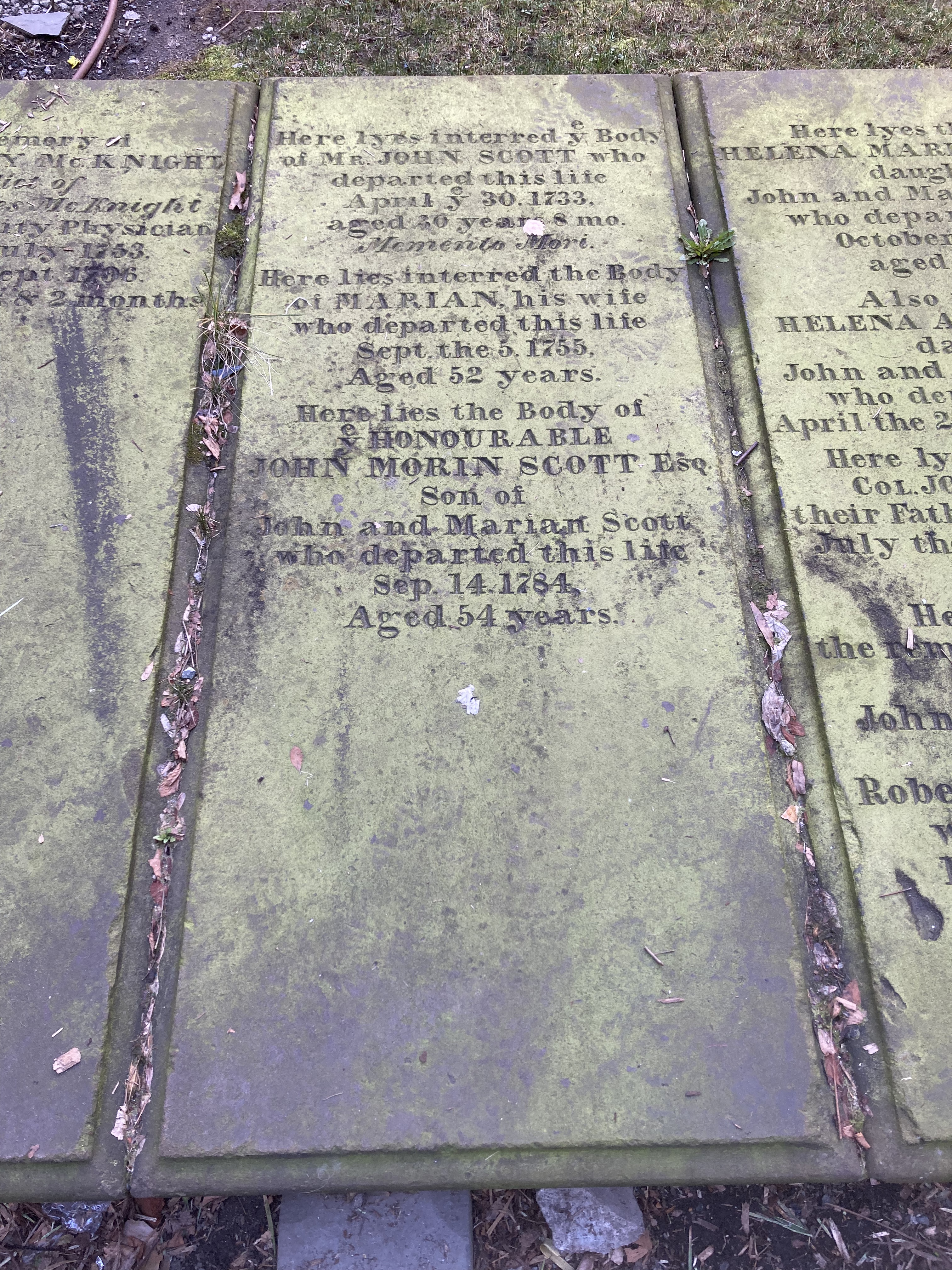
John Morin Scott resting place, Trinity Chuech

They have my article about the triumvirate of William Livingston, William Smith Jr., and John Morin Scott up and running at The Journal of the American Revolution. I am fascinated by the way New Yorkers have remembered and forgotten their colonial and revolutionary history and hope to delve deeper in the coming years during the 250th.

Sunday morning coffee

When people know of your interests in certain things they start sending news articles relating to those interests. Yesterday one came through my inbox about a dozen American American Revolutionary War soldiers whose remains were recently discovered in South Carolina. These were veterans of the Battle of Camden and likely from Maryland and Delaware. Those locales aren’t far from the Palmetto State, but to a young man who had likely never been more than 4-5 miles from the family farm it all would have all been distant and alien. For one thing, prior to the Revolution colonists paid more attention to events in London and the West Indies than they did to what was happening in the other North American colonies.

This is actually the second such story from the past year. Last August the remains of thirteen Hessians killed in the Battle of Red Bank were discovered in New Jersey. At the South Carolina battlefield, the remains of two soldiers fighting for the British—a Loyalist from North Carolina and Highlander from Scotland—were also discovered. Whether they were from the Carolinas, German principalities, France, Great Britain, the Six Iroquois Nations or somewhere else, one can only imagine what it’s like to lose your loved one so far from home. How much did the families ever even come to know?

One thing they have started doing with this more recent discoveries is taking DNA and other forensic samples in hopes of sharing the news with the descendants. Read more here and watch a brief video as well. Officials are having a ceremony this coming week. If there is coverage online, I will share it.

(image by Pi3.124 via Wikimedia Commons)

The Roosevelts’ New York

Brooklyn Daily Eagle, February 19, 1929

I am off today enjoying the waning days of spring break. The Mets are playing a get-away game this Wednesday afternoon against the Padres, which I have on the radio. I’m tidying up some notes, moving files around, and poking around in the Brooklyn Daily Eagle while listening to the game. Last week a friend and I went to Albany to take in a few museums. While there we encountered a woman working in a particular cultural institution whose family dates back centuries to the earliest days of the Dutch settlement in New Netherland. I was telling my friend that going to Albany expanded my sense of time and place for New York City and State history. In my newspaper queries I came across this fascinating small article from the February 19, 1929 edition of the Eagle in which officials gave to Governor Franklin Roosevelt deeds dating to the colonial and Federal periods for property owned in Lower Manhattan by his own Dutch ancestors. In an aside, I wrote an article about Isaac Roosevelt for the Journal of the American Revolution in 2019. I love how these things connect and wonder where these two deeds are today.