Artists and the Great War at the N-YHS

Hey all, blogging will continue to be light between now and the start of the academic year a week from this Friday. August and the end of the year holiday season are the times when I slow it down a bit. This past Friday I finally got up to the World War I: Beyond the Trenches exhibit at the New-York Historical Society. I did not realize that Childe Hassam was active in the Preparedness Movement prior to the war. I now see his Flag Series of paintings in better context. I have a feeling this might entail a deeper dive sometime in the coming months.
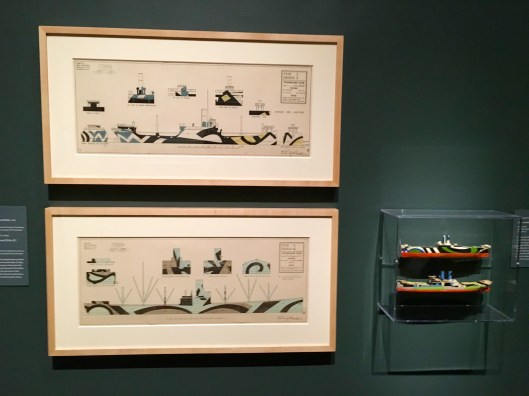
Dazzle camouflage drawings from the Rhode Island School of Design with ship models, part of the New-York Historical Society exhibit W​orld War I Beyond the Trenches​

These dazzle camouflage models from the N-YHS collection are a reminder that they didn’t fight the war in black and white.

Artists at the Rhode Island School of Design drew the sketches you see above during the war. They are examples of dazzle camouflage, in which paradoxically the goal is not to hide the subject but to highlight it in such a manner and degree that disorients the enemy. In my article about the USS Recruit I briefly mentioned how the National League for Woman’s Service sent its Camouflage Corps to paint that wooden vessel in Union Square as a demonstration of the technique. I don’t pretend to know that much about it, but camouflage has a more involved history than most people realize. It was very much part of the 20th century modern art movement. It wasn’t just a matter of painting disjointed shapes and varied colors. That is why they brought in the artists and graphic designers. Today designers are using digitization to take camo to a whole new level.

A leaf from Ivan Albright’s sketchbook during his service with Base Hospital No. 11. He drew these while the surgeons were working.

Ivan Albright sketched this medical drawing. The young artist was all of about twenty at the time of his service in the Great War and went on in the 1930s to become a renowned artist in the Magic Realism vernacular. During the war he was a draftsman with Base Hospital No. 11 stationed in Nantes. His job was to draw medical sketches in the operating rooms, which the surgeons could later reference in their work. It would be interesting to know how many of artists were used in the base hospitals and if their work survives today.

The exhibit is running through September 3, Labor Day, and so if your are interested you had better hurry. It is your last chance too to see John Singer Sargent’s Gassed before it returns to the Imperial War Museum in London.

The 27th readies

I wrote yesterday that the staff of Base Hospital No. 9 sailed for France one hundred years ago. There was a great deal of activity throughout New York City in the first days of August 1917. On August 5 all of the units of the New York State Militia were finally federalized, becoming the 27th Division. What made the 27th distinct during the Great War was that it was the only fully-formed division to have existed in whole prior to the war. The 28th Pennsylvania existed prior to the war too, but did not have all of its constituent units at that time. July and August were difficult months for the men of the New York Division. An engineering regiment of some 2000 men had traveled to Spartanburg, South Carolina to begin construction of Camp Wadsworth in late July. A lack of running water hndered their task. Back home, the division was already planning a going away parade for Thursday August 9, with the mayor, governor, and others to be in attendance. On August 6 the War Department called off the parade.

O’Ryan had a great deal on his mind in early August 1917 as he planned the logistics of sending his division to South Carolina. He also waited Senate confirmation of his Federal commission in the National Army that would allow him to remain in command.

The division’s departure was being postponed for three weeks, perhaps even into early September, due to shortages of guns, blankets, uniforms, and other accoutrements necessary to provision 27,000 men. Also, there was still a shortage of men to fill the ranks. Mayor John Purroy Mitchel and his Committee on National Defense were holding rallies across the boroughs to raise men for the Army and other service branches. Part of the problem was that many men from New York State had rushed out and joined the Regular Army, not the state militia that would eventually be federalized and made part of the National Army. It gives a sense of the challenges that Newton Baker and the War Department had to contend with.

Even the 27th Division’s senior leadership was tenuous. Major General John F. O’Ryan had commanded the unit since 1912, but that was when it was still the 6th Division and part of the state militia. Once Wilson federalized the militias, the generals of these state units had to be confirmed by the United States Senate. Wilson planned to send the names of these 120 or so senior officers to Capitol Hill sometime in mid-August. Most people assumed O’Ryan would remain in command, but until the Senate voted that was not a certainty.

(image/The Pictorial Record of the 27th Division)

The Base Hospital No. 9 contingent sails

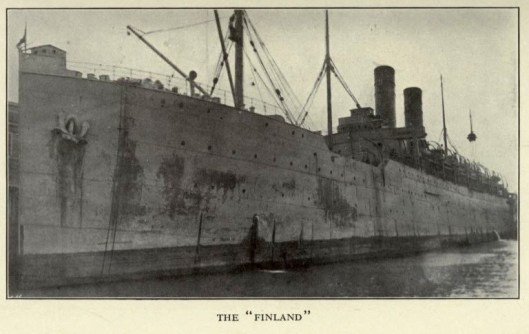
The Finland took the doctors, nurses, and medical staff to France.

I’m sure many remember my posts of a few weeks back about about Dr. Robert D. Schrock and the physicians and staff of Base Hospital No. 9. The men drilled for several weeks time at Governors Island through a brutal heatwave in July-August 1917. As far as basic training goes, they got off easily; it could have been much longer. There was just no time to waste in getting this medical contingent to Europe however. They were that needed and time was of the essence. Plus military authorities figured that hospital staff could train aboard the transport ship, honing the skills they would need in the hospitals tending the wounded.

Today marks the 100th anniversary of the doctors, nurses and corpsmen setting off. The doctors left Governors Island at about 4:00 am on 7 August 1917. Their ferry crossed the harbor and picked up the nurses at Ellis Island before cruising into the North (Hudson) River. There, the Finland was docked at Pier 11. The New York and New Jersey docks were filled with spies, and authorities did all they could to keep the departure as secret as possible. There is no mention of it in either the New York Times or the Brooklyn Daily Eagle. It was an uneventful day but represented over a year’s worth of work on the part of New York Hospital, getting permission, raising the funds, and choosing who would go to Europe. The Finland sailed in the early afternoon, made quarantine, and was off in the Atlantic to face any potential u-boats on the way to France.

(images/Base Hospital No. 9, A.E.F.)

Three years and counting

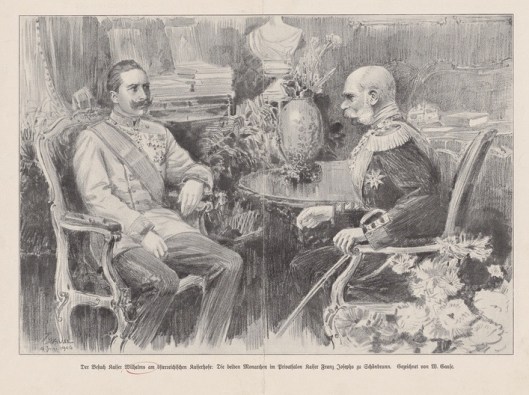
Kaiser Wilhelm II and Emperor Franz Josef

August 1, 1917 marked the three-year anniversary of Germany’s declaration of war on Russia. Austria-Hungary had declared war on Serbia on July 28, but Kaiser Wilhelm II’s announcement of hostilities took things to a new level. Armies across Europe were now mobilizing with even greater urgency. For the most part Europeans and Americans were not reflecting too much in the early dog days of August 1917. The British and their allies were fully occupied against the Huns in Flanders. Austro-Hungarian troops were driving the Russians back on the Eastern Front in Galicia. Meanwhile the Wilson Administration was doing all it could getting up to speed, which was taking more time than anyone would have liked. One can imagine that the fighting in Ypres, especially for the Germans, had taken on a sense of urgency with the realization that the Americans were already trickling in. Pershing was in Paris for a full month by this time.

Still, people did pause and meditate on the events of the past thirty-six months. Much had happened and millions were already killed. Franz Josef had died in 1916 after sixty-eight years on the Austro-Hungarian throne. By August 1917 Nicholas II of Russia had been deposed; he and his family were in exile in Tsarskoye Selo, the royal palace in St. Petersburg, where the  Romanoffs were a tourist attraction for curious gawkers who came to watch them garden. The Germans seemed to be the most invested in the third anniversary. Kaiser Wilhelm II was out in public a fair amount. By this time he had a collection of 10,000 books on the Great War to go along with his trove of photographs. If contemporary accounts are to believed, Berlin’s Royal Library now held 50,000 books on the Great War published just since the war began. Despite everything, optimism in Germany was apparently holding. At the time of the third anniversary enthusiasts in Germany formed a society within the Hindenburg Museum in Posen for members to share photographs, monographs, and Great War-related memorabilia.

(image/New York Public Library)

Passchendaele 1917-2017

I mentioned in a post the other day that American surgeon Dr. Robert D. Schrock worked for several weeks in the hospitals during the Battle of Passchendaele, or Third Ypres. Schrock and his colleagues were still at Governors Island at this point 100 years ago, but the Battle of Passchendaele began on 31 July 1917. It lasted well into November. It may be difficult for Americans to grasp the significance that the battles in Flanders have for the people of Great Britain, along with the Canadians, Aussies, and others who fought alongside them. It is analogous to Antietam and Gettysburg for Americans. I was watching some of the footage over the weekend and saw that Prince William and his wife attended the ceremonies in Flanders; today his father Prince Charles will be present. My brother took me to Belgian about ten years ago. We went to Cloth Hall and stayed not far from the Menin Gate. Britain’s Ministry of Defence made this short video to mark the 100th anniversary of the battle.

Great War film update

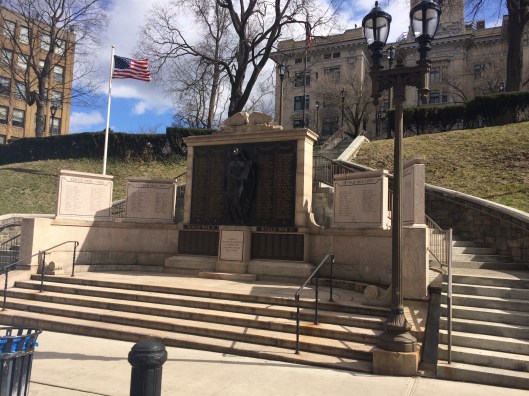
Yonkers, NY war memorial: the main subject of our film came from this town just north of New York City

If it seems like I went silent on the Great War film that I am making in cooperation with colleagues, that is because I did. We hit a snag in the production process in late spring and summer, and have gotten back on track over this past week. This past Thursday I had lunch here in Brooklyn with a friend of a friend. He was already on board with joining the project and we were meeting face-to-face for the first time to discuss it in detail, share audio and video files, and work out timelines. I had never meet him before but we hit it off immediately. He is a real professional, a musician and budding novelist who brings not just strong technical capabilities but an instinctive narrative sense to the film. I told him and others this morning as we were emailing some film-related news that it was destiny that he join the production. We will probably finish the film by Labor Day.

With that timeline in hand I have been planning and reaching out to various individuals about showing it this fall. The film will be 15-25 minutes. When I know more about where and when we will be showing the film, I will let everyone know here. I will also share more about the content itself. In keeping with the guidelines of the grant, all showing will be free and open to the public.

“a strenuous day on Governors Island”

This past Sunday I shared a letter written by Dr. Robert D. Schrock on the morning he and other physicians from Base Hospital No. 9 were to report to basic training on Governors Island. The officers and enlisted men drilled at Governors, while the nurses undertook instruction at Ellis Island. This training was actually quite brief; the personnel of Base Hospital No. 9 shipped out for France the first week in August. Dr. Schrock, now Lieutenant Schrock, wrote only letter from Governors Island. The one of 17 July he had penned early in the morning before he and the doctors reported for duty at 8:30 am. Note that this one, written from the Department of the East itself, says “checked” at the bottom. Schrock wrote the one below to the wife of his friend Chet Waters, to whom he had written the quick missive of 17 July. Here, a week into basic, Schrock mentions what a tenuous day it was. One can imagine him and the others marching in their heavy woolen uniforms under the late-July sun. There must have been a strong culture shock as well. Overall however, he seems to be holding up well under the difficult and uncertain circumstances.

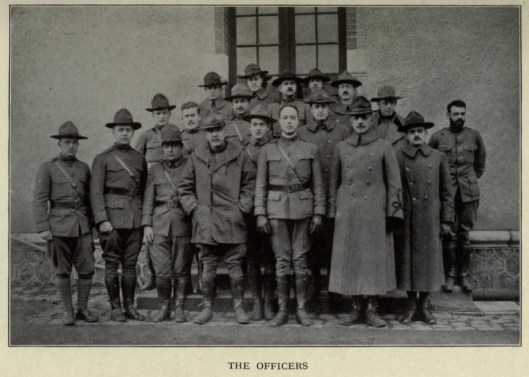
Officers of Base Hospital No. 9

The Society of New York Hospital
16 West 16th St
New York, New York
JULY 26, 1917
Dear Boss, (Dr. Chet Waters’ wife Marie)

The last five days have been quite a nightmare. But we’re here and by no means exhausted . Off duty until 8:45 AM. Then, a strenuous day on Governors Island. Imagine me teaching military tactics drill etc. to a squad of enlisted men – but that is what we are doing.

Shall send you a list of our crew this week. Due for dinner with the Ward’s and Goldie Monday night. Come on and join us.

Boss – your friends are thick here – large in numbers and stability from the number of interested inquiries of you

Cannot thank you enough for your goodness of Tuesday – but it wasn’t any different than what you have done for me in so many ways since the beginning of our East Side existence. Omaha to me means the Waters family. Tell the young man I couldn’t say goodbye to him at the station. There is too close an anatomic relation between my cerebral centers and lachrymal apparatus. Am a poor boob in that way–but couldn’t do it. Tomorrow am starting a little package to the boy– Of little value except in their significance. Put them on his shirt collar and shoulders for me. And praying that the world may never demand that he wear similar ones in later years and also that’s there may be no need of his father. Chet is anxious to go, I know and you know. The greater duty is with you all and it would require an heroic effort in this instance for Chet – And we know he will stay with you until the actual need is indicated. When that comes, if it does, I want to know. There maybe room with us.

Am sorry Bess could be so little with you. It’s the torture of the game. More later.

Ask ever Bob

checked

(image/Base Hospital No. 9, A.E.F.)

Sunday morning coffee

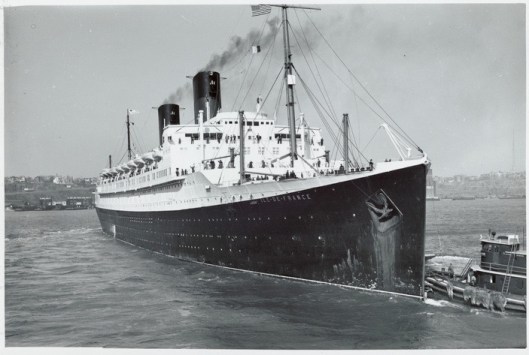
Dr. Schrock went back to France in 1928 and returned to the United States aboard the Ile de France.

I listened to the Mets come-from-behind, walk-off-with-a-homer win last night. They were down 4-0 in the first inning and won 6-5. Baseball is so conducive to listening on the radio. The Mets’ announcers got into a long discussion about the 1973 Mets-Athletics World Series, in which the As defeated the Mets in seven games. They had a good talk about Ray Fosse, the As All-Star catcher from the 1970s who currently does As radio broadcasts. Among other points, they noted that Fosse, Johnny Bench, Bob Boone, Carlton Fisk, and Thurman Munson were all born within nine months of each other in 1947.

Robert D Schrock as a young undergrad at Wabash College, circa 1905. He won an award for oratory at Wabash and later graduated with honors from Cornell Medical School before working as a doctor in the A.E.F.

While listening I was also doing a bit more digging on Dr. Robert D, Schrock and his World War I experience. He did his basic training at Governors Island in the middle of a heat wave in July-August 1917. Dr. Schrock was one of more than two dozen physicians at New York Hospital who in 1916 volunteered to go to Europe. By this time they fully understood what they would be getting into; it was the year of Verdun and the Somme. And it was not just the doctors; a full contingent of nurses, administrators, and orderlies all agreed to put on a uniform and go. It would have been more, but someone had to stay back and run New York Hospital itself. That is why the board of directors devised a plan deciding who would stay and who would go. Remember, the United States was not in the war yet. Nor was it a given that America would join the fight at all. Had they gone right away it would have been all about saving and repairing the lives of the various nations in the war at the time. Dr. Schrock and the rest of Base Hospital No. 9 arrived in St. Nazaire in late August 1917 and after a bit more training went to various facilities to attended the maimed. Schrock himself spent nearly three weeks in the front lines at the Battle of Passchendaele (Third Ypres), which was already in full swing when the New York Hospital Contingent arrived in France and lasted in November. He and two other doctors were thrown into saving the British, Indians, Canadians, and ANZACS.

Schrock arrived in France as a first lieutenant and returned to the United States as a major aboard the Wilhelmina in April 1919. One gets the impression that his Great War experience was a big influence in his life. An Ancestry search reveals that he traveled at least twice to Europe in the ensuing decades. At least twice. I found conclusively that he returned to France in 1928, presumably for the tenth anniversary of the Great War. He came home from that trip aboard the Ile de France, one of the great and less heralded luxury liners. In summer 1937 he and wife Elizabeth traveled to Germany, returning on the New York in early August. One can imagine the sobering realization that a second world war was imminent hanging over that trip. It’s an incredible story. I know a few people who have been preserving and organizing their relatives’ Great War letters. If someone in your family fought in the war and you have their photographs and letters, I encourage you to document it in some way. The Great War centennial is an opportune time to do it. Each story is another tile in the mosaic.

(image/top, New York Public Library; bottom, The Wabash)

Dr. Robert D. Schrock’s Great War

I have something special to share today. Earlier this month long time reader Robert D. Schrock emailed and shared a letter that his father had written from New York City in 1917, with the idea that I might post it here on the blog. Dr. Schrock is a retired orthopedic surgeon and for some time has been editing the Great War papers of his father, namesake, and fellow surgeon, Dr. Robert D. Schrock, Sr. He sent the two photographs you see here as well, which he found as print negatives in his father’s papers and had developed.

Robert D. Schrock was born in Delaware, Ohio in 1884, and when he was a young boy his family moved to Decatur, Indiana. Schrock graduated from Wabash College in Crawfordsville, after which he went on to study at Cornell University Medical School. There he met and befriended a fellow Midwesterner, Iowan Chester Hill Waters. The two graduated with honors from Cornell Medical School in 1912. Doctors Schrock and Waters next worked at Manhattan’s New York Hospital as young physicians. Soon they both returned to the Midwest, practicing medicine in Omaha, Nebraska. Waters married and had a child.

Shipping out: Dr. Robert D. Schrock took this picture as a first lieutenant and surgeon in the American Expeditionary Forces in 1917. He and the medical staff of Base Hospital No. 9 did their basic training at Governors Island.

Though the United States did not join the Great War until April 1917, many American people and organizations had contributed to the Allied cause in the time since the war began in summer 1914. As early as June 1916 the Red Cross organized base hospital units of 500 beds at various institutions, including at New York Hospital. It was called Base Hospital No. 9. Dr. Robert D. Schrock was involved in that project during his time at the facility, and when the United States entered the war Schrock put on a uniform and became a medical officer in the A.E.F. Competition among the medical staff to go to France was intense, and the board selected a mix of senior and younger physicians to go overseas. Before shipping out to France there was that small matter of basic training. That’s where the email I received from Bob Schrock a few weeks back comes in. It was on 21 July 1917—one hundred years ago today—that Robert D. Schrock reported for his basic training at Governors Island in New York Harbor. Below is an extraordinary letter that he wrote that morning to his friend Chester (Chet) Waters back in Nebraska on that very day.

At sea – U boats ahead: Another image taken by Dr. Robert D. Schrock, this one aboard the U.S.C.T. Finland sometime between August 7 – 20, 1917 en route to St. Nazaire, France.

The Society of the New York Hospital
6 to 16 W. 16th and 7 223 W. 18th Street, New York, New York
July 21, 1917

Dear Chet,

We go to Governors Island into camp at 8:30 AM. Just time for a note and breakfast. The gang looks good. You know practically everyone. Will send you details as I can. It is good, I tell you, to be around here again. Only, would exchange these trappings for white clothes for comfort. Walked up Third Avenue yesterday, saluting all the Lord and Taylor delivery boys. Probably shall pass up many Majors, etc without proper recognition. Our ignorance is amusing.

It looks very much like we are to get away the coming week. Somewhere in France.

Everyone asks of you and the family. Tell your young man it was not carelessness that kept me from seeing him at the station. He may not like it. Shall send him a later message.

Chet, don’t get panicky and jump into service. You have a greater duty right there. Thanks for the big help of Tuesday

Ever Bob.

R. D. Schrock
MC.USR.
Base Hospital #9
New York City

(images courtesy Robert D. Schrock)

Artists of the Sanitary Fair

I have been off this week and am trying to write 5000 word on my book project. I came across this photograph taken at the 1864 Metropolitan Sanitary Fair and thought I would share it before I sit down for my first wave of writing. I popped a jazz cd into the record player. I find I usually can’t write when music with vocals is playing. Today is Wednesday and thus getaway day for Major League Baseball; so there will be baseball on the radio here in a few hours.

The photograph above comes from a small work, what amounts to a scrapbook, that Matthew Brady published in small quantity in 1864 called Recollections of the Art Exhibition, Metropolitan Fair, New York. Many of the leading artists of the day may various various contributions to the April 1864 Metropolitan Fair, either putting works up for sale or on display where patrons who paid the fundraising entrance fee could see them. It was at the 1864 New York sanitary fair that New Yorkers saw Emanuel Gottlieb Leutze’s “Washington Crossing the Delaware.” What I am trying to do in my book make New York City a more central aspect of the American Civil War.

Unfortunately the artists listed here are not annotated. The one we do know for certain is Brady seated in the center. It was his studio’s photographs after the battle of Antietam, which were shown in his New York studio shortly after the engagement, that brought the war “home” to most New Yorkers, who lined up to see them in fall 1862.

(image/Library of Congress)