• About

The Strawfoot

~ a New Yorker's American History blog

The Strawfoot

Yearly Archives: 2012

Europe’s vanishing cafés

13 Wednesday Jun 2012

Posted by Keith Muchowski in Uncategorized

≈ Comments Off on Europe’s vanishing cafés

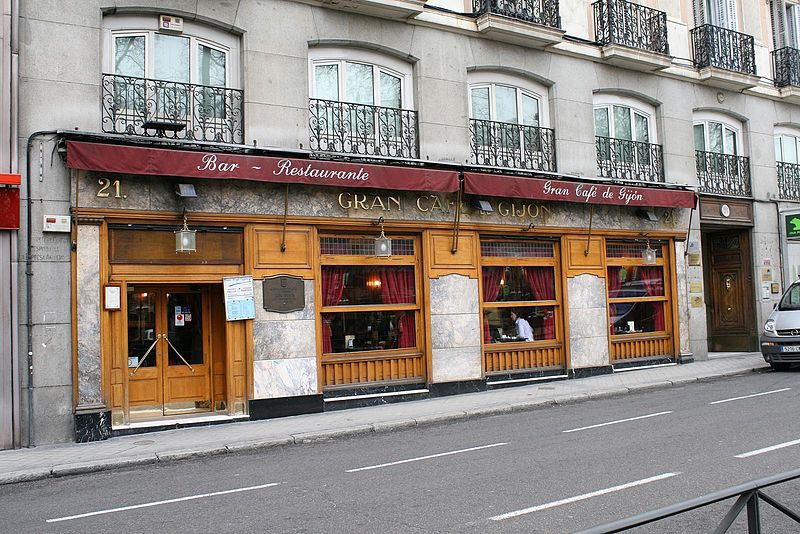
When I visit my brother in France our favorite thing to do is sit in a café, enjoy a coffee, and catch up. My brother has lived in Europe for close to two decades now; while its cafés will never go away entirely, I can attest that Europe’s sidewalk establishments are getting fewer and fewer in number. Myriad economic and cultural changes are rendering them, if not extinct, then certainly less relevant. The next’s victim may be Madrid’s Café Gijon, where Hemingway, Truman Capote, and so many others have congregated since the 1880s. The Gijon was where Eva Gardner sometimes hung out after splitting from Sinatra and relocating to Europe in the mid-50s. The cause is more immediate in this instance: the current financial crisis may force the city into selling the portion of the building it owns. We will see what happens.

(image/Roberto Garcia)

Brooklyn’s Little Drummer Boy: 2nd in a series

12 Tuesday Jun 2012

Posted by Keith Muchowski in Civil War sesquicentennial, Clarence D. McKenzie

≈ Comments Off on Brooklyn’s Little Drummer Boy: 2nd in a series

Last night I posted the first in what will be a multi-part series about Clarence McKenzie, the young boy who became the first Brooklynite to be killed in the American Civil War. Here is part two:

The war had begun two months earlier.  Fort Sumter officially surrendered on April 14th.  The next day President Lincoln called for 75,000 volunteer troops to suppress the rebellion and the 13th Regiment, N.G.S.N.Y., was one of the first units to answer the call.  The 13th was no novice unit; its roots traced back to the American Revolution.  It fought the British yet again during the War of 1812.  The 13th New York was similar to other regiments across the young country, part military unit, part social club, part networking association.  In times of peace the men of the unit were more likely to be found playing rounders or the new game of baseball than drilling and shooting.  In 1858 the unit standardized its uniform; borrowing heavily from the U.S. Military Academy it adopted the somber palette of the West Point cadets.  They were known colloquially thereafter as the National Greys.  In their crisp new uniforms they marched that August in celebration of the just completed Transatlantic Cable.  In a small irony the unit that had fought the Redcoats and helped sever the umbilical cord between the the Colonies and the British Crown now marched to commemorate a new cord tying America and Britain together via this scientific and engineering feat.  In April 1859 the13th marched to observe the introduction of another technological marvel–running water–into the country’s third largest city, Brooklyn.

Young Clarence McKenzie joined the regiment around this time.  He enlisted on July 9, 1860, perhaps inspired by a 4th of July display of pomp and circumstance.  The easy camaraderie of the soldiers was no doubt equally alluring.  The country was fracturing but still at peace.  Abraham Lincoln’s election victory would not come until November, South Carolina’s secession until December.  That fall the boy, all of eleven, drummed in his first parade; on October 12th he and the rest of the regiment marched for the Prince of Wales.

When the conflict came the following April New Yorkers and Brooklynites were swept with war fever just like most Americans.  And like their fellow citizens those who lived in what are now the five boroughs of New York City believed that the war would be a quick one.  This is why Lincoln initially called for a mere 75,000 men, and these to serve only for three months.  Certainly the war would be over by mid summer.  The 7th Regiment, based in Manhattan and comprised of the sons of Gotham’s wealthy elite, were the first New York unit to ship out, marching down Lower Broadway to wild applause on April 19th and embarking for the defense of Washington.  The following day a crowd of 100,000 crammed Union Square to hear the mayor and others  deliver patriotic speeches encouraging young men to enlist.  The 13th also volunteered immediately, though a frustrating  paperwork snafu in Albany delayed their passage.  On 23 April, 486 men, approximately half of the regiments strength, boarded the steamer Marion for Annapolis, Maryland.  With them was Clarence McKenzie, who literally banged the drum to which the regiment marched off to war.

Tomorrow: part three

Arsenals of adaptation

12 Tuesday Jun 2012

Posted by Keith Muchowski in Adaptive reuse, Museums, New York City, Subway trips

≈ Comments Off on Arsenals of adaptation

In May I posted the piece below about a trip a friend and I took to the Brooklyn Navy Yard. This month Architect: The Magazine of the American Institute of Architects has more on the BNY and similar facilities across the country. Adaptive reuse is a fascinating topic. Though I was not living in New York at the time, I am old enough to remember the bottom falling out here in the 1970s. Where I grew up in South Florida most of my classmates, including my best friend, were people whose families had escaped the Northeast. New York City was down for the count and whether it would ever revive was far from a forgone conclusion. I was at a gathering this past weekend and one of the guests, a delightful woman in her mid-60s, mentioned buying a Park Slope brownstone in 1968 for…$18,000. When she and her husband told their parents what they had done, the young couple’s folks laughed and laughed at their foolhardy decision.

When I moved to the city in 1997 the rotting piers were still a feature of the Brooklyn and Manhattan waterfronts. Fifteen years later that is just about a thing of the past. Much of the infrastructure in the Navy Yard dates to the Civil War. The site was still active in the decades after the Second World War until finally closing in the mid 1960s. Structural changes in the American economy had rendered it obsolete. It is good again see signs of life.


On what turned out to be the warmest day of the year so far, a friend and I ventured to the Brooklyn Navy Yard on Saturday. From 1801 until its closure in the mid-1960s the BNY was where most of the ships for the United States Navy were built and maintained. Its locale, Wallabout Bay, was also the site of the infamous British prison ships during the Revolutionary War. For decades the Navy Yard sat mostly vacant, but has been revitalized in recent years through adaptive reuse. The city of New York now owns the 300 acre site and has done much to lure local businesses. Furniture makers, high tech entrepreneurs, fashion designers, and even a movie studio are all part of the new economy.

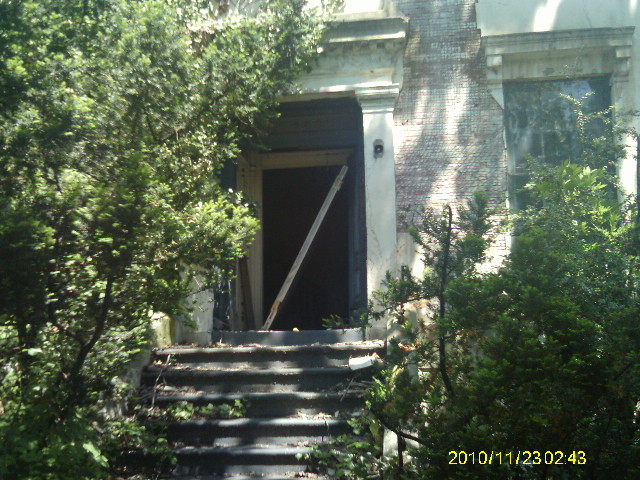
The site has come a long way, but you can still see the old Navy Yard if you look hard and pay attention. Here is a building waiting for renovation.

…and another. As you might imagine, I’m a big fan of ruin porn.

Here is an old pipe.

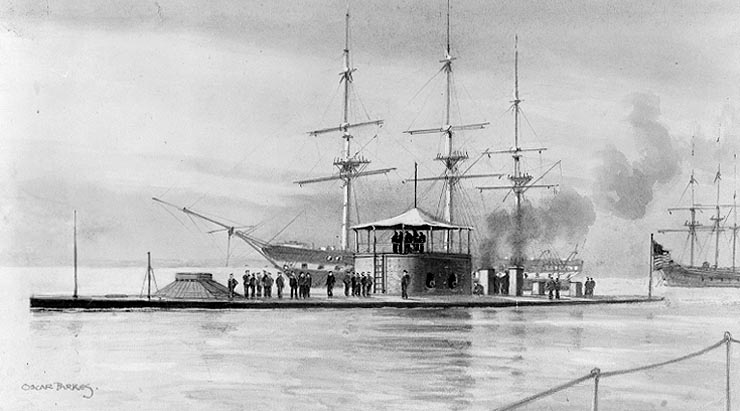
Many will know that the USS Monitor was built at the Navy Yard. It is worth noting that Brooklyn was its own city at this time. It did not became part of New York until the merger in 1898.

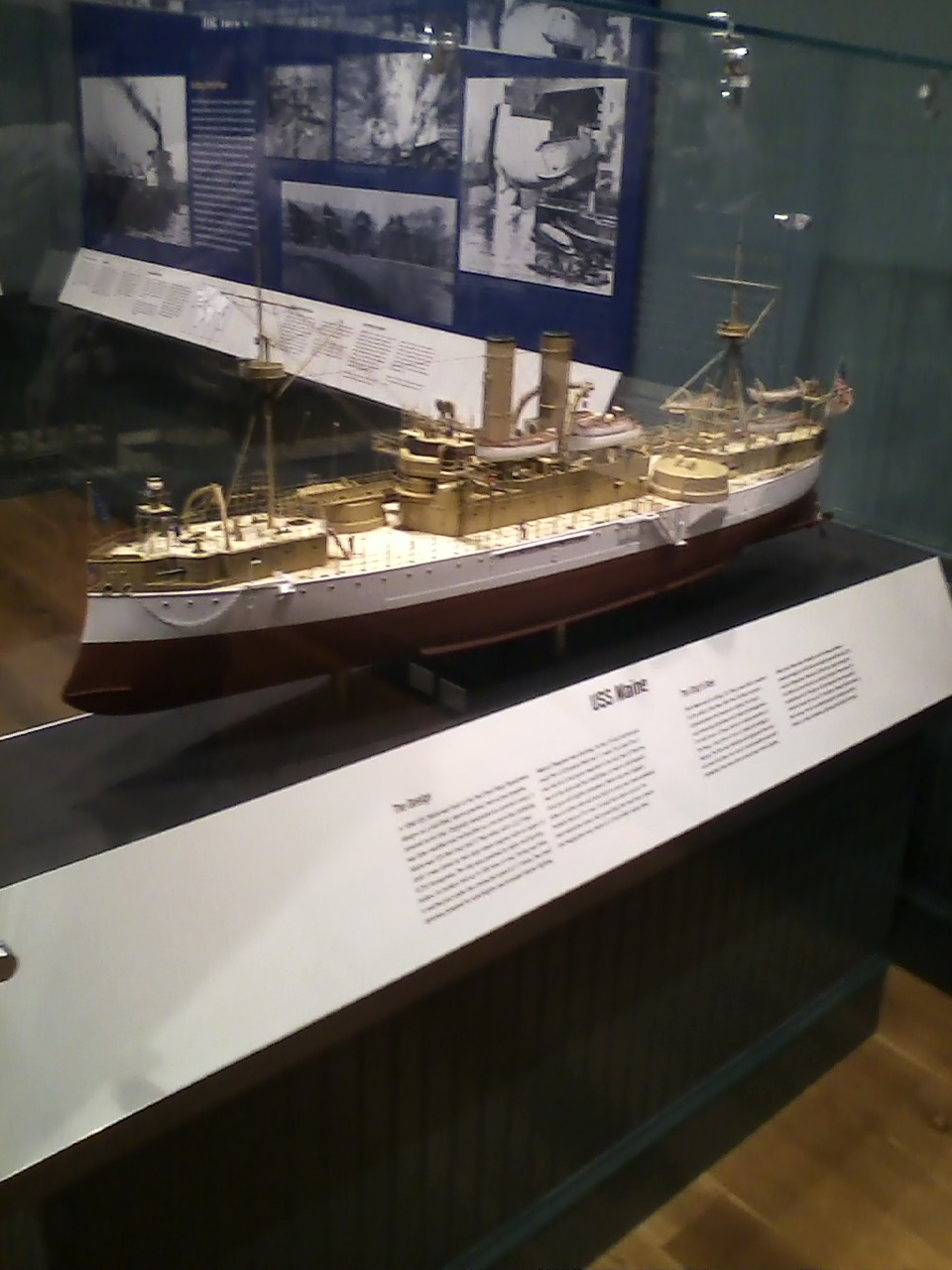
The same year as the consolidation another ship built in the Navy Yard made history…

…the USS Maine. The museum had beautiful models of a number of ships built by Brooklynites over the decades.

Assistant Secretary of the Navy Franklin Delano Roosevelt visited the Navy Yard in March 1914. Note that he is standing without the assistance of others; he did not contract polio for another seven years. I had no idea how tall he was. Roosevelt exudes strength and virility. If I am not mistaken that is Andrew Carnegie standing on his left. Carnegie campaigned hard for peace before and during the Great War, but in one of history’s cruel ironies it was his steel that built many of the ships used in the war.

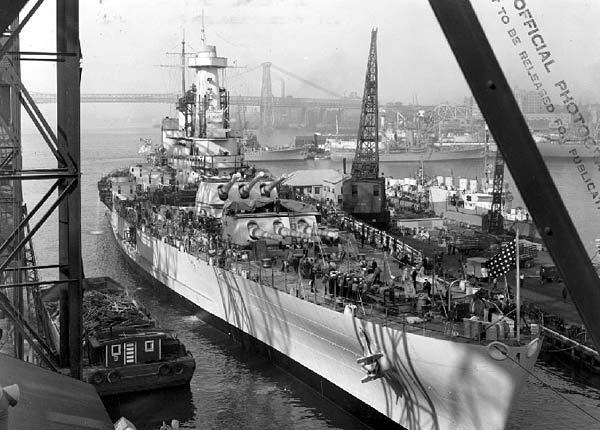
When Roosevelt talked about the Arsenal of Democracy as president he was referring in large part to the Navy Yard. This is the USS North Carolina on the site in April 1941. Navy Yard workers built the battleship in 1937.

And of course there was the USS Missouri, on whose decks the Japanese surrendered in September 1945.

This is the Navy Yard today.

(image/Jim Henderson)

Not a bad way to spend part of the weekend. We already have plans for other sites in the area. It is going to be a New York City summer for us.

Brooklyn’s Little Drummer Boy: 1st in a series

11 Monday Jun 2012

Posted by Keith Muchowski in Civil War sesquicentennial, Clarence D. McKenzie

≈ Comments Off on Brooklyn’s Little Drummer Boy: 1st in a series

Today is the 151st anniversary of the death of Clarence D. McKenzie, the young drummer boy from Brooklyn who was killed so far from home. Last year for the sesquicentennial of this event I pitched the idea of writing about young Clarence for an online magazine. The article did not quiet fit into the scope of the periodical but I plowed ahead knowing full well that the piece may or may not get published. Nothing ventured, Nothing gained. The article was eventually not picked up, but I did have a good exchange with the editor who was honest and forthright. It was a good experience and I enjoyed writing the piece. Now, in tribute, I am posting this in a series over the next several days. Here is part one:

The funeral procession left Brooklyn’s St. John’s Church late in the afternoon.  It was July 14th, just over a month after the boy was killed in his encampment in Annapolis, Maryland.  His body had made a circuitous route home, first being on display within camp for the men of regiment, 1,000 strong, to view before being transported by ship back to Brooklyn.  His remains were taken to his parents home, where his parents, older brother, and younger sister grieved privately.  It was time for the funeral.  A military escort carried his remains to St. Johns, while local schoolchildren, public officials, neighborhood friends, and the plain curious observed the solemn affair.  Three thousand persons crammed into the church to listen to the Reverend Dr. Guion of St. Johns and Reverend Mr. McClelland offer sermons.  It was a mixture of the earthly and the spiritual.  First, Reverend Guion discussed the gravity of the war now underway; next Reverend McLelland offered solace and inspiration to the schoolchildren in attendance.  He mentioned the Bible he had given to young Clarence just prior to his embarkation with the 13th Regiment.  How it was one of just two presentation bibles purchased by the church two years earlier to be given only on the most special occasions to the most worthy individuals.  The Bible was here now atop the casket, a symbol of the boy’s sacrifice.  After the orations the schoolchildren and others walked past the open casket for a final viewing.  A contingent from Company D carried the boy to the accompaniment of a funeral march played by four drummers to Green-Wood Cemetery.  He was buried in a modest grave, a small wooden headboard marking the grave of the Little Drummer Boy Clarence David McKenzie, the first Brooklyn casualty of the American Civil War.

Tomorrow: part two

Amelia the Play

10 Sunday Jun 2012

Posted by Keith Muchowski in Governors Island, Interviews

≈ Comments Off on Amelia the Play

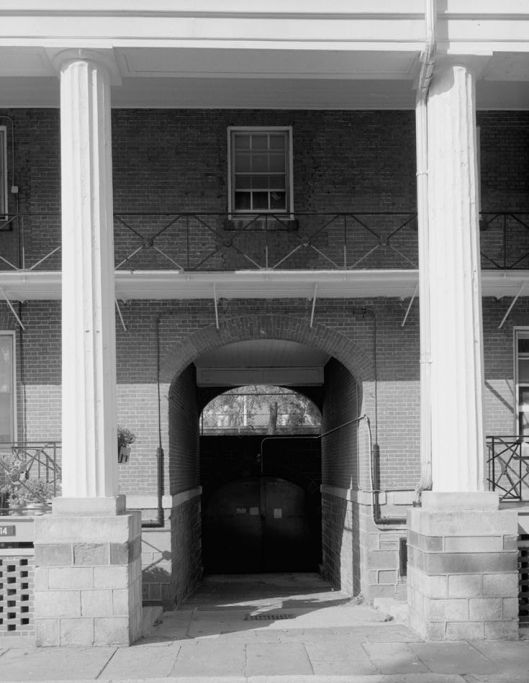
This past Friday my wife and I had the pleasure of seeing an original play called AMELIA. The work is the creation of actor/writer Alex Webb, who co-stars in the two-person production with his wife, the actress Shirleyann Kaladjian. One can currently see the play in a very special place: the powder magazine within Fort Jay on Governors Island. The fort has a long, distinguished history–Confederate soldiers were held here during the Civil War–and provides a unique theater experience. I advise you to attend while you can; the play will complete its Governors Island run this coming Sunday, June 17th. Admission is free, but ticketed due to space limitations.

I first met Alex on the ferry boat to the island and he graciously agreed to sit down and answer a few questions.

What inspired you to write Amelia? Had you had an interest in the Civil War, or history in general, before undertaking this project?

I was researching a play (as an actor) THE ANDERSONVILLE TRIAL and was reading journals of prisoners of Andersonville Prison and came across the entry “Rumor has it – a woman has come in here after her man.”  I was haunted by that journal entry for years.  Who would she have been?  What kind of courage would it take – to voluntarily walk into the Civil War equivalent of a Concentration Camp.   I always thought I would try and tell a fictional version of that intriguing mystery.  AMELIA is the result.

Describe the play and the role of women as soldiers in the War of the Rebellion.

AMELIA is an epic Civil War tale of one woman’s search for her husband across the battlefields of America.  The major turning point in the play comes when Amelia must don the union blue, disguising herself as a man, in order to continue her search south for her husband.  The story culminates at the gates of the notorious Andersonville prison camp. We now know that somewhere between 400 and 500 women fought, disguising themselves as men, in the Civil War and fired muskets, took bullets and won medals.  Some did it for the signing bounty, some for their husbands, some for the cause and some because the freedom they experienced as men was intoxicating and they continued disguising themselves long after the war was over.

Explain how the project developed.

We had a very successful world premiere of AMELIA in Washington DC at The Washington Stage Guild in January of 2012.  We wanted to bring the show to NYC and at first were wrestling with the typical questions – what would be a good theatre, who might be interested in producing, etc and then I stopped for a moment and tried to think of not what was possible but what would be ideal for the show.  At that point I realized that my true wish would be to perform it in a historically significant place and offer it to the public for free.  It was at that point that I remembered the Governors Island history and connection to the Civil War (my great, great, great grandfather was a confederate prisoner in the battery not far from Governors Island at the end of the war and escaped to Manhattan for the day at one point only to be disappointed and break back into prison so he could get a square meal!) and a six-month long negotiation with the National Park Service followed.  Thank you to Ranger Collin Bell and Superintendent Patti Reilly of the National Park Service for really taking a big leap of faith with the play and agreeing to let us be in Fort Jay for so long.  It has been a true honor and great responsibility to perform on that powerful and historic ground.  I have said more than once that I feel there are ghosts watching.

As for offering it for free – I wanted to attract an audience that normally might not be drawn to a story from the past and specifically from the Civil War.  I have found – that much like people who will not watch a black and white movie – just on the principle that it is somehow not as good as a new color film.  There is a group of people who associate the history of the Civil War with stern generals in great beards and a whole lot of “dusty” history.  Of course, AMELIA is all about telling another side of the war.  Telling the history of the “lost.”  I am passionate about telling history from the perspective of the little person.  Most history is written by the powerful and is written to glorify and sometimes twist the events in their favor.  I think the greatest courage was shown by the little people the ones who lost everything to protect their respective homelands.  Most of the southerners that died fighting for the confederacy were – as many know – not even slave owners.  The history is so much more complex than the few brief moments spent on it in high school.

The play has been getting much positive press from the theater community. Has what might be the Civil War community reached out to you as well? If so, what are they saying?  I have had some contact with the Civil War community but in large part because it is fictional, perhaps, there has not been as great a turnout as might be expected from them.  I’ve had great reactions from the Civil War community members who have come through and a couple of good tips, including the fact that we needed to fix our kepi!  I really work hard on the details but somehow that one got by us until recently.

The play had its world-wide premier in Washington DC this past January. This makes sense given the centrality of the nation’s capitol during the Civil War. Now it is being produced here in New York City, at Fort Jay in the harbor. It surprises many people to know that Confederate prisoners were held this far north. Describe the setting at Fort Jay and its impact on the theater experience.

Well it has been a privilege and truly amazing.  There are two air vents/ skylights in the Powder Magazine and, depending on the time of day, sometimes an amazing natural light cue will fall upon a scene in the play.  To be on a site with such historical significance has really made us examine the story we are telling.  It demands we step up our game, reminds us what was at stake for these people, these were real lives in the balance.

Where and how can the public see Amelia? (including in the future if it is being staged after its run at Governors Island)

Well with one week left, they can go to the website www.ameliatheplay.com and sign up for free tickets for one of our four performances left.  Thursday – Sunday at 3pm.  After our run in the Powder Magazine we will see … We have had a number of inquiries for productions around the country – we’ll see what happens.  The audience and critical response has been incredible.  I am also on the fifth draft of a novel version of this story.  I think this story still has quite a bit of life in it and a lot more people out there to share it with.

(image/Fort Jay powder magazine entrance; Historic American Buildings Survey, LOC)

“Food to match the scenery”

08 Friday Jun 2012

Posted by Keith Muchowski in National Park Service

≈ Comments Off on “Food to match the scenery”

Some friends and I were at the ballgame last night and one thing I could not help noticing was the wide selection of foods available. The hot dogs, peanuts, and cracker jacks are still there at the Old Ball Game. In addition, however, are a wide range of healthier fare such as fruit, frozen yogurt, and even sushi for those looking to watch what they eat. One of the intriguing aspects of Horace Albright’s memoir The Birth of the National Park Service is his account of the Service’s relationships with the various private vendors and concessionaires. This is no small thing. Places like Yosemite, Yellowstone, and the Grand Canyon are remote; visitors, far from home, are vulnerable to the cost and quality of the fare offered. The NPS has been conscious of this from the outset and did its best to ensure quality, consistency, and fairness, for the most part succeeding. Hamburgers and fries were once enough to satisfy most of the general population. Today the organization is focusing on providing options expected by a more health conscious clientele.

Pic of the day

08 Friday Jun 2012

Posted by Keith Muchowski in Baseball

≈ Comments Off on Pic of the day

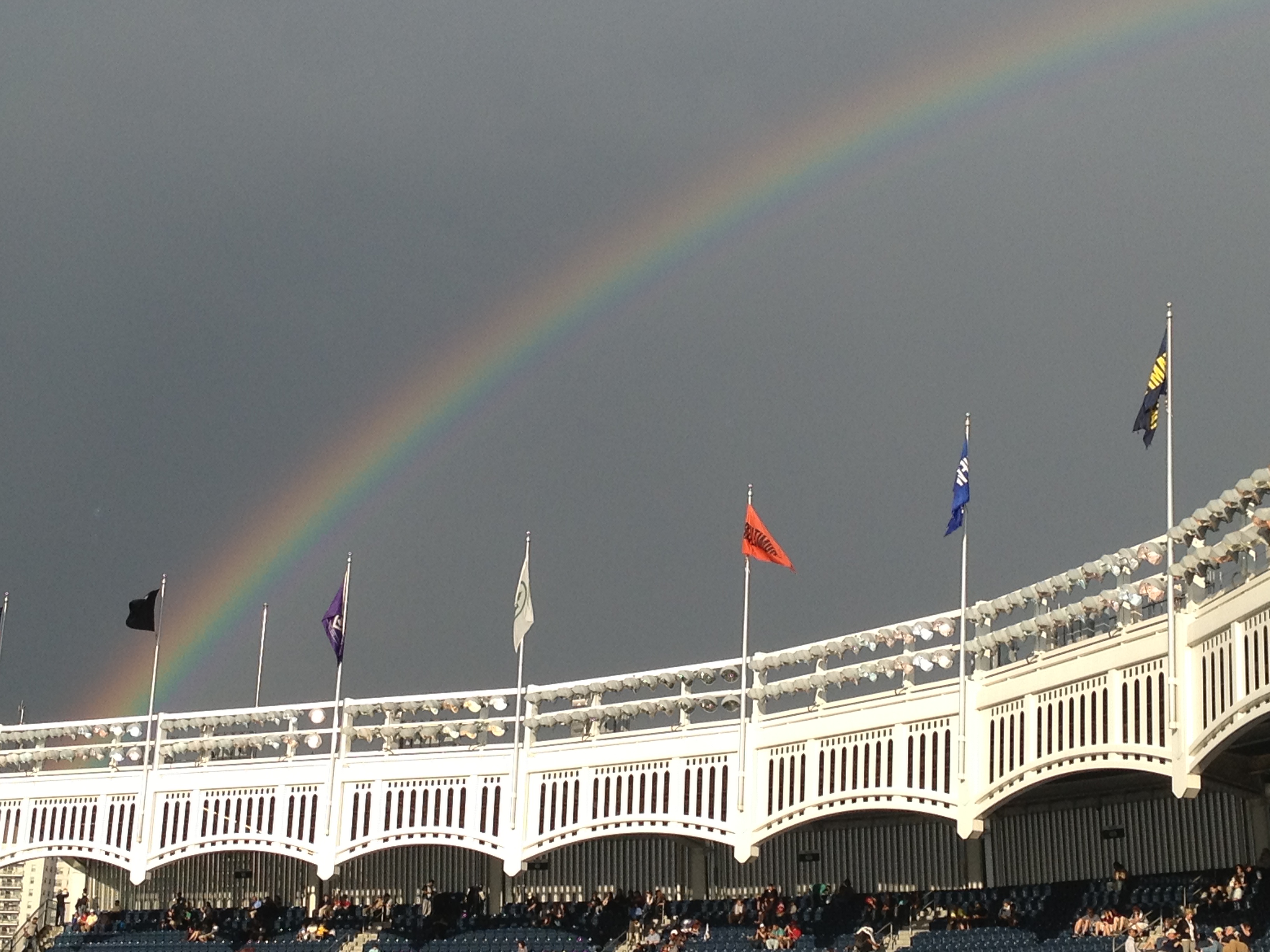
Yankee Stadium, 7 June 2012

June 6, 1944, redux

06 Wednesday Jun 2012

Posted by Keith Muchowski in Dwight D. Eisenhower, WW2

≈ Comments Off on June 6, 1944, redux

Today is the 68th anniversary of the Normandy Invasion. To mark the occasion I am re-posting this piece from last year:

I could not let the 67th anniversary of D-Day go unnoticed.  When I was younger this was a much bigger deal than it is today.  It is only a bit of a stretch to say that I have measured the events of my life according to the anniversaries of the Normandy invasion.  In June 1984 I was still in high school, getting ready to start my senior year at the end of the summer.  Ten years later I had graduated from college, but was unsettled and still trying to figure out what I wanted to do with my life.  By 2004 I had gone to graduate school and moved to New York City.  Now I am married and in full middle age.

The arc of D-Day presidential ceremonies, or lack thereof, paints a fascinating portrait of the postwar decades.  In 1954 President Eisenhower, the Supreme Allied Commander of the invasion a decade earlier, skipped France altogether and instead vacationed at Camp David.  His only public comment was a small proclamation about the Grand Alliance.  For the 20th anniversary Ike did record a television special with Walter Cronkite entitled D-Day Plus Twenty Years: Eisenhower Returns to Normandy.  The footage of the journalist and the retired president was filmed in August 1963 and is quite moving.  On June 6, 1964 Johnson, who had taken office only seven months earlier after the Kennedy assassination, was in New York City speaking to the Ladies Garment Workers Union.  In the waning days of Vietnam and the Nixon Administration in 1974 Americans were too tired and cynical to care about World War 2.  Reagan’s address in 1984 remains the most memorable of the anniversaries.  At Pointe du Hoc he addressed a sizable audience of veterans still young enough to travel but old enough to appreciate their own mortality.  President Clinton’s address on the beaches of Normandy during the 50th anniversary symbolized the passing of the baton from the Greatest Generation to the Baby Boomers.  In 2004 current events overshadowed the 60th anniversary and the ceremony painfully underscored tensions in the trans-Atlantic alliance.

Today only one person mentioned it to me.  Alas we have reached the tipping point where most of the veterans have either passed on or are too aged and infirm to participate in the observance.  In other words it has become part of history.  Makes me feel old and a little sad.

Creating America’s Best Idea

05 Tuesday Jun 2012

Posted by Keith Muchowski in National Park Service

≈ Comments Off on Creating America’s Best Idea

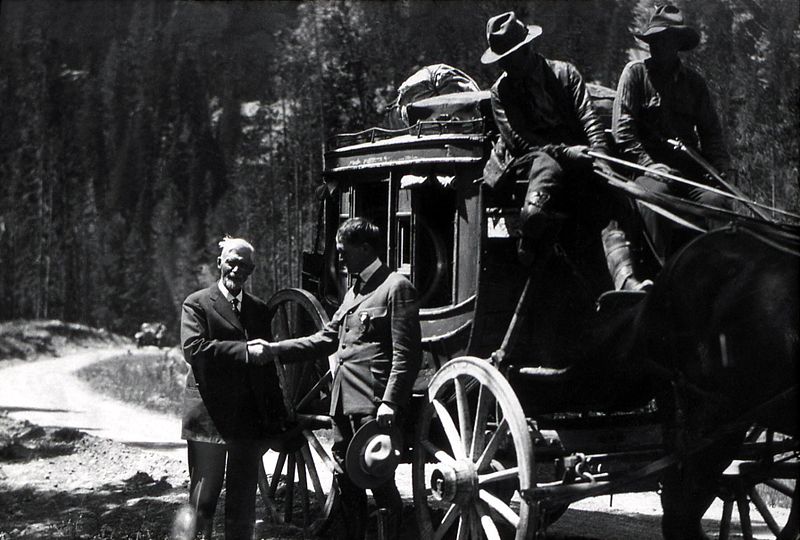
I am halfway through Horace Albright’s The Birth of the National Park Service: The Founding Years, 1913-1933. Albright was Assistant Director of the NPS at its founding and later served as the first superintendent of Yellowstone. In 1929 he replaced Stephen Mather as Park Service director. Each brought his own unique talents to the job and together they created the National Park Service as we know it. Albright published Birth in 1985, two years before he died at the age of 97. He seemed to have been aware since the 1910s that he and his colleagues were making history and he had copious resource material to fall back on when it came time to tell his story. Even better, because he outlived so many of the principals–we are going back here all the way to the Wilson Administration–he does not have to pull punches. He goes into detail of which congressman helped and which impeded the task of creating the various parks and monuments, and the various interests that lined up for and against the various NPS projects. Cattle grazing was a major bone of contention with ranchers whose spreads were adjacent to park lands. Mather and Albright were especially adept at marketing the new Park Service to public officials with political clout and wealthy potential donors such as John D. Rockefeller, Jr. Being early adopters, they were quick to use that new fangled machine the automobile to reach the faraway nooks and crannies of Yosemite, Yellowstone, and elsewhere. I have not gotten there yet, but Albright also into detail about how the Civil War battlefield, previously run by the War Department, came under the auspices of the Park Service through President Roosevelt’s Executive Order 6166 in 1933. Albright stepped down later that same year, but remained active inNPS-related work for the rest of his life, meeting, for instance, with President-elect Eisenhower at the Commodore Hotel in New York City in 1953. Jimmy Carter awarded him the Presidential Medal of Freedom in 1980. So many people think the National Parks, monuments, and other public spaces are “just there,” not realizing the time and forethought it has taken to preserve and protect them. Thankfully Albright took pen to paper near the end of his life to tell us his version of events.

(image/Albright (hat in left hand) at the 50th anniversary of Yellowstone’s founding, 1922)

A picture perfect Saturday

02 Saturday Jun 2012

Posted by Keith Muchowski in Governors Island

≈ Comments Off on A picture perfect Saturday

It was a beautiful day at Governors Island today. Here are a few photos I took, all with my cellphone.

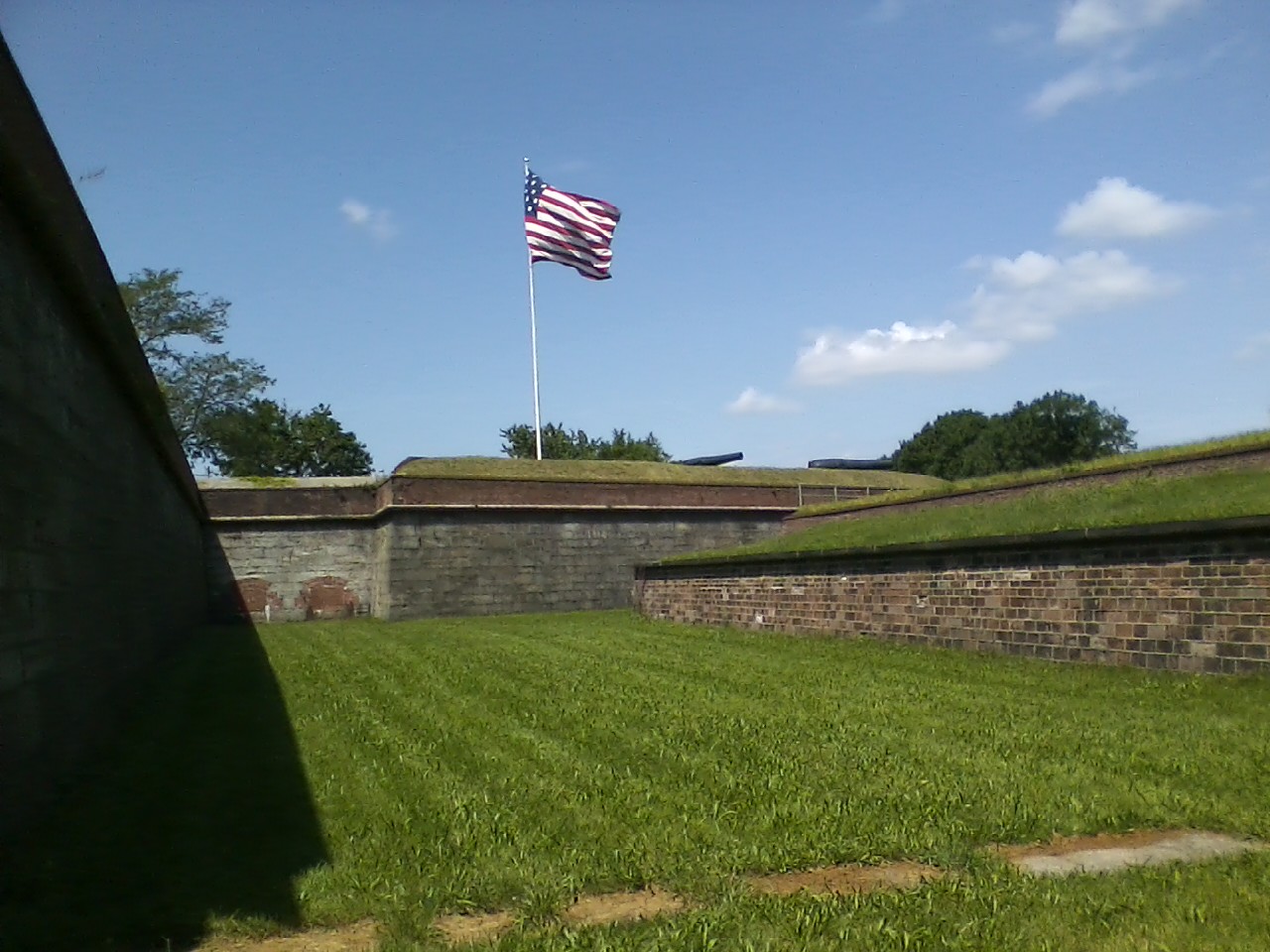
I took this from the dry moat in Fort Jay. It is classic Vauban-style fortification. I could not tell for certain, but I believe this a reproduction of the fifteen star flag in use during the War of 1812 . This would make sense given the history of the island.

Here is a closer look. I am going to ask about this next week.

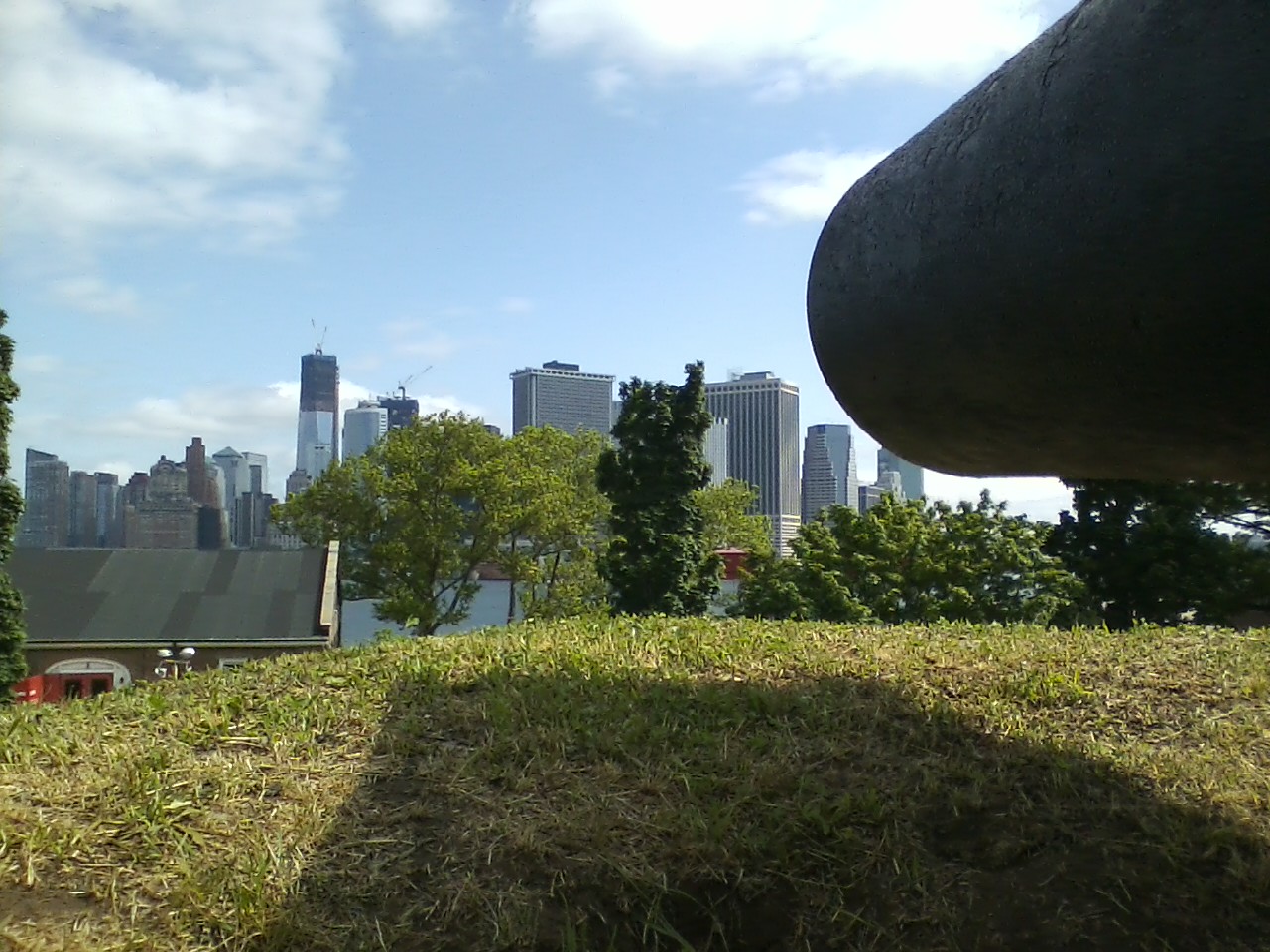
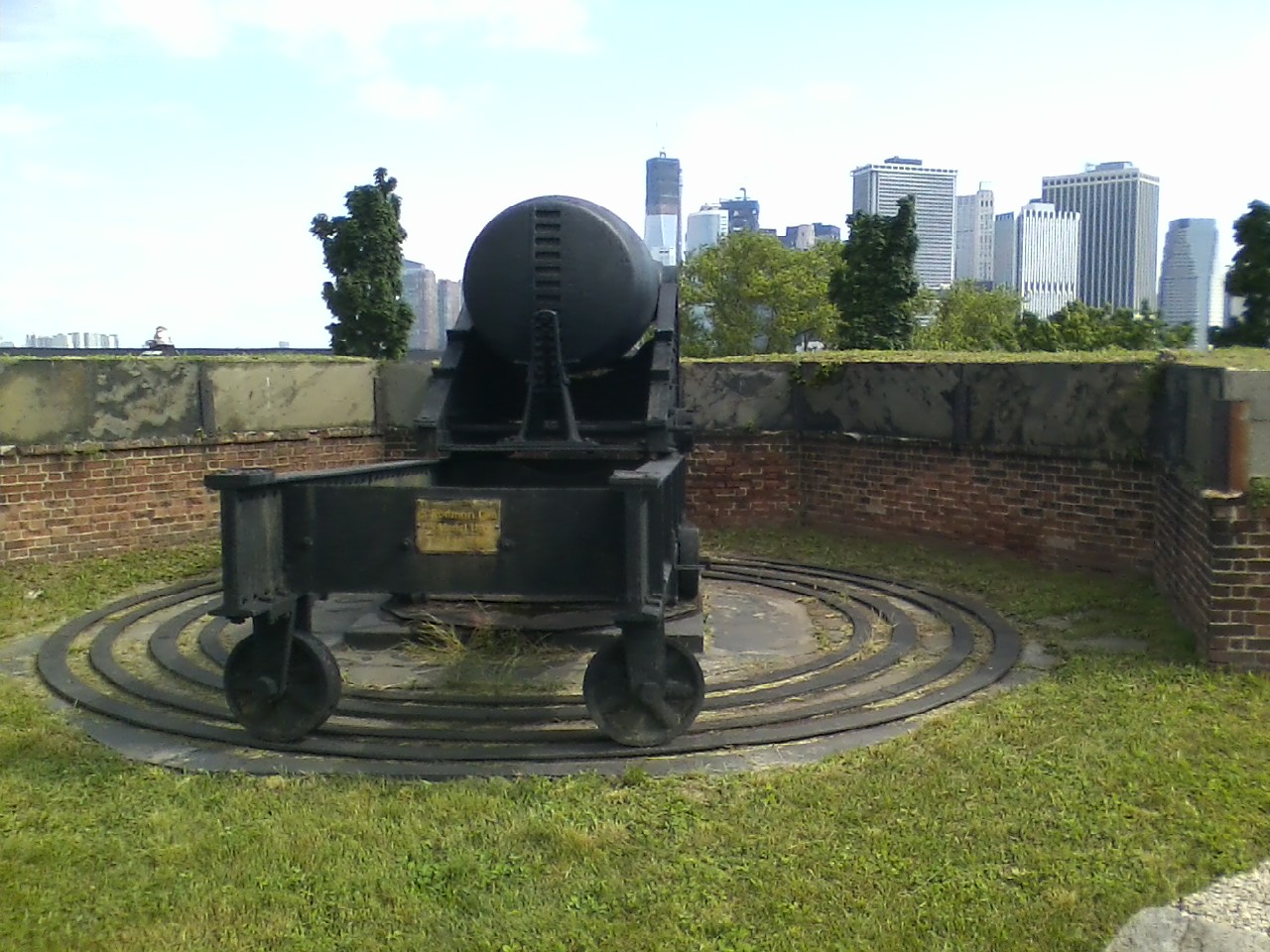
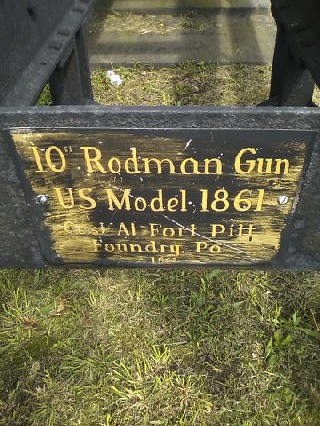
The shadow of a Rodman gun pointing at Lower Manhattan atop Fort Jay..

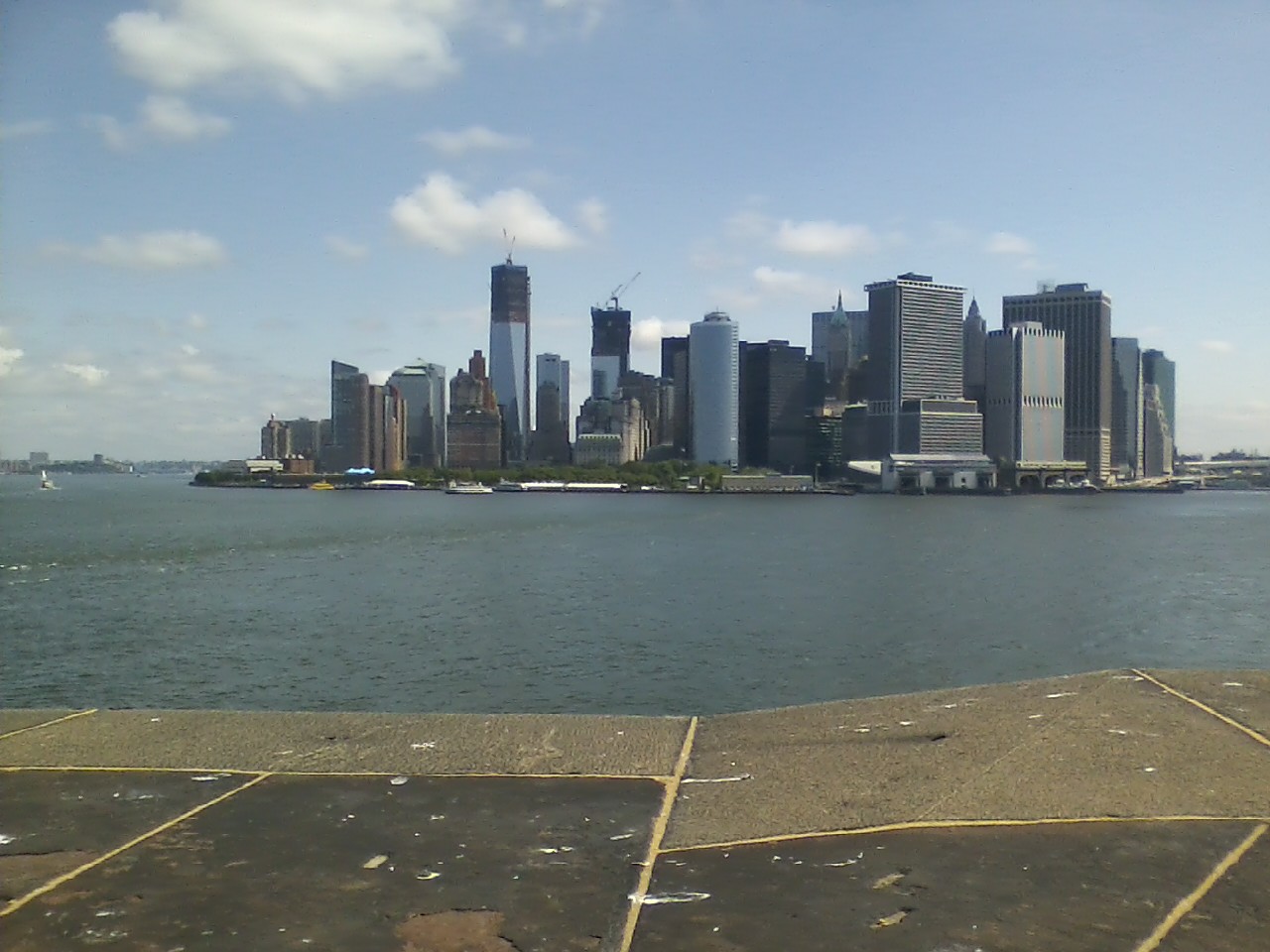
The only place better than Fort Jay to get a million dollar view of the New York City skyline is Castle Williams. The forts worked in unison with others in New York Harbor to protect the city. Note the new World Trade Center rising on the left.

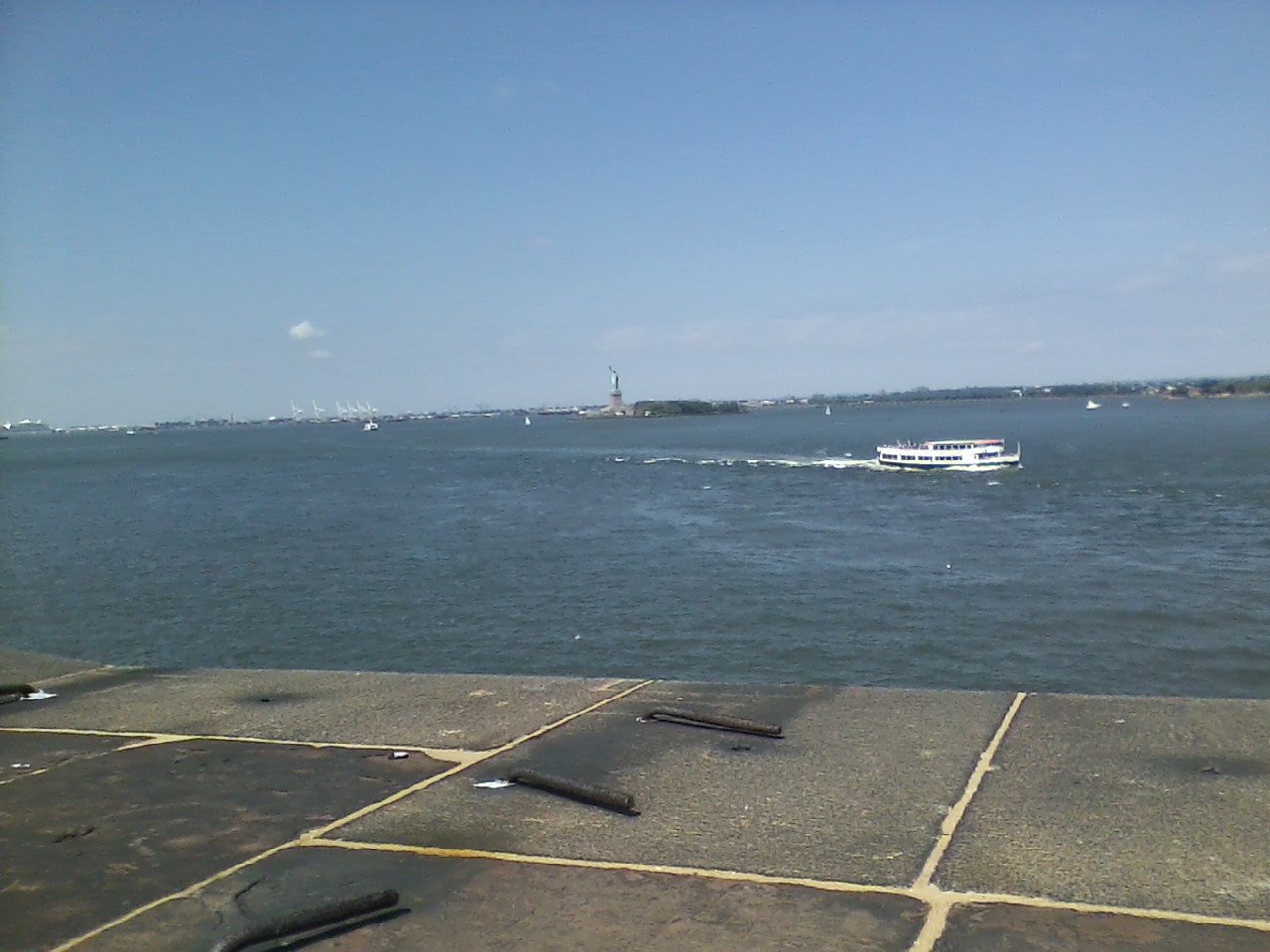
The Statue of Liberty, also from Castle Williams. Tours to the roof are free but ticketed due to space limitations. If you come to the island it is worth taking the time to do this. The views are breathtaking and the interpretive rangers do an amazing job explaining the history of the fortress and the island.

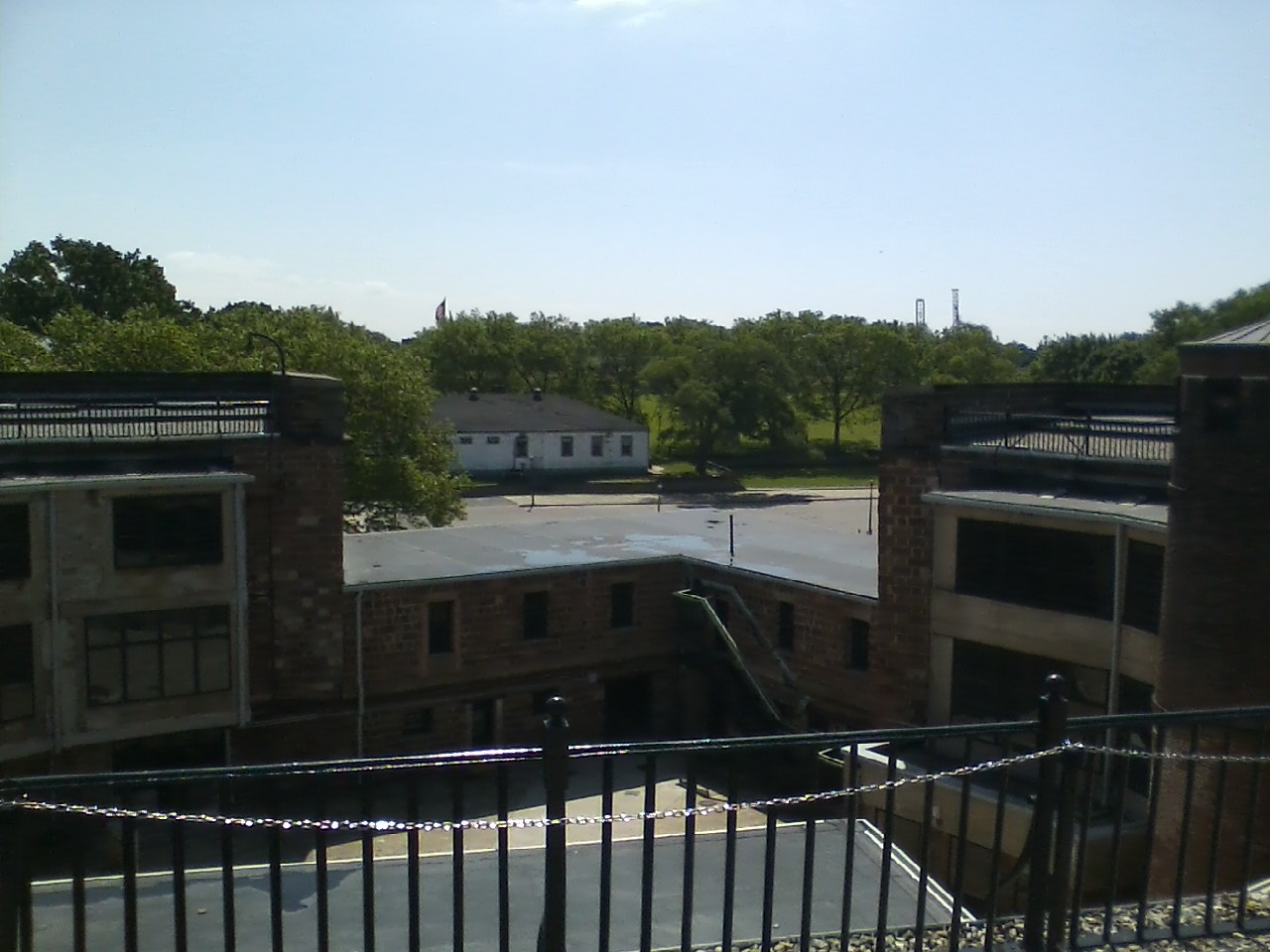
This is looking directly backward toward Fort Jay from the same spot as the photo above. You cannot see Fort Jay through the trees; if you look above the white building however, you will see the flag. The white building was the Coast Guard library. The CG left in 1996.

The sink is not from the Civil War period; when Confederate prisoners were housed at Castle Williams there was no running water. Yes, the bars indicate that this was indeed a jail.

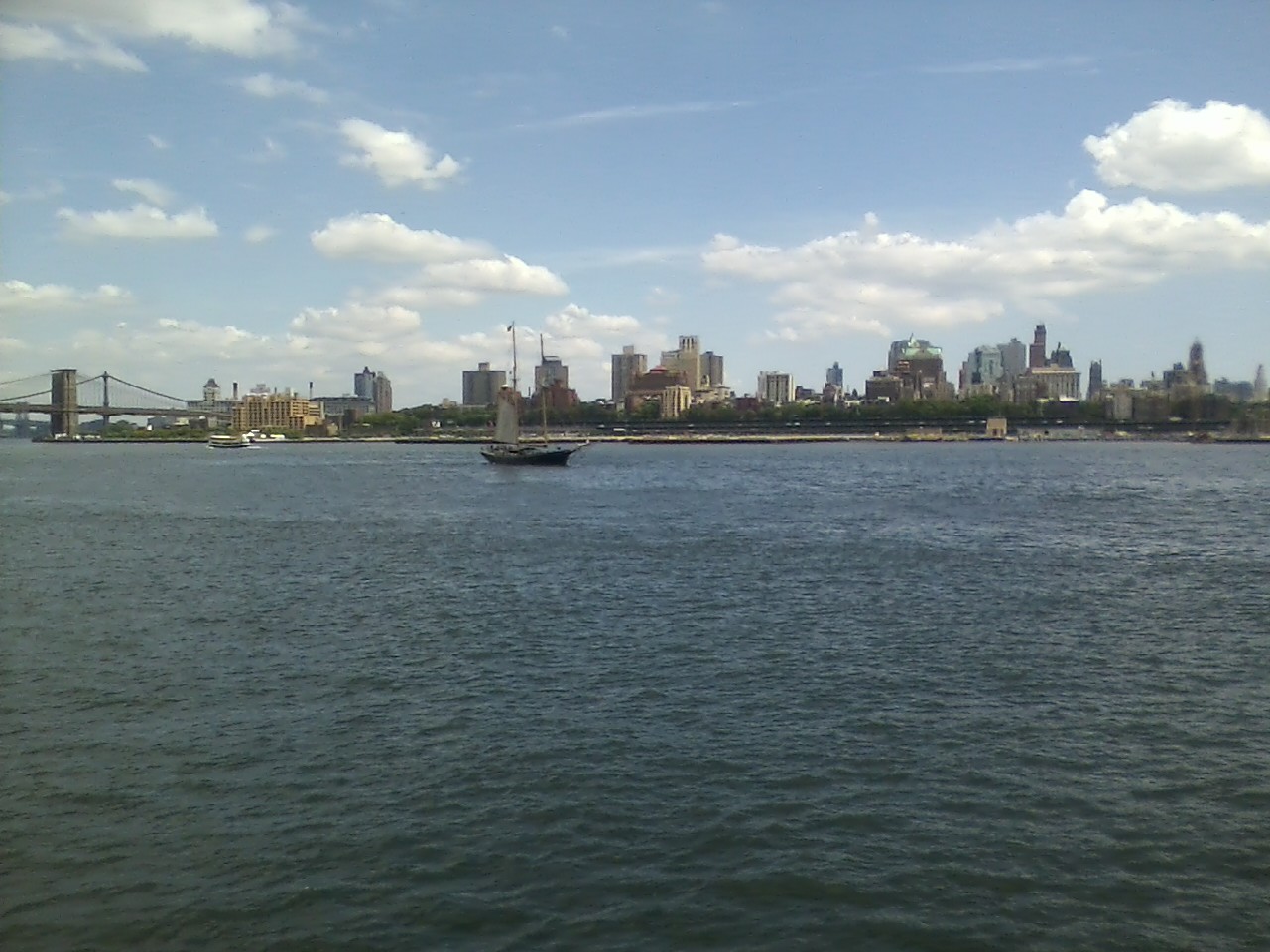
Brooklyn from the ferry heading back at the end of the day. You can see the east tower of the Brooklyn Bridge on the farthest left.

Summer is underway.

← Older posts
Newer posts →

Enter your email address to subscribe to this blog and receive notifications of new posts by email.

Join 255 other subscribers

Categories

Archives

  • November 2023 (1)
  • October 2023 (3)
  • September 2023 (3)
  • August 2023 (4)
  • July 2023 (7)
  • June 2023 (10)
  • May 2023 (8)
  • April 2023 (6)
  • March 2023 (5)
  • February 2023 (4)
  • January 2023 (4)
  • December 2022 (4)
  • November 2022 (8)
  • October 2022 (2)
  • September 2022 (4)
  • June 2022 (1)
  • May 2022 (1)
  • April 2022 (13)
  • January 2022 (1)
  • December 2021 (2)
  • November 2021 (1)
  • October 2021 (3)
  • September 2021 (3)
  • August 2021 (5)
  • July 2021 (1)
  • June 2021 (1)
  • May 2021 (4)
  • April 2021 (3)
  • March 2021 (4)
  • February 2021 (7)
  • January 2021 (4)
  • December 2020 (4)
  • November 2020 (3)
  • October 2020 (4)
  • September 2020 (7)
  • August 2020 (5)
  • July 2020 (7)
  • June 2020 (11)
  • May 2020 (7)
  • April 2020 (9)
  • March 2020 (9)
  • February 2020 (7)
  • January 2020 (6)
  • December 2019 (7)
  • November 2019 (9)
  • October 2019 (4)
  • September 2019 (6)
  • August 2019 (10)
  • July 2019 (8)
  • June 2019 (6)
  • May 2019 (9)
  • April 2019 (8)
  • March 2019 (6)
  • February 2019 (8)
  • January 2019 (5)
  • December 2018 (10)
  • November 2018 (6)
  • October 2018 (9)
  • September 2018 (11)
  • August 2018 (11)
  • July 2018 (17)
  • June 2018 (10)
  • May 2018 (8)
  • April 2018 (9)
  • March 2018 (8)
  • February 2018 (5)
  • January 2018 (7)
  • December 2017 (11)
  • November 2017 (8)
  • October 2017 (9)
  • September 2017 (11)
  • August 2017 (12)
  • July 2017 (14)
  • June 2017 (18)
  • May 2017 (11)
  • April 2017 (10)
  • March 2017 (9)
  • February 2017 (11)
  • January 2017 (14)
  • December 2016 (7)
  • November 2016 (8)
  • October 2016 (8)
  • September 2016 (9)
  • August 2016 (6)
  • July 2016 (12)
  • June 2016 (8)
  • May 2016 (9)
  • April 2016 (6)
  • March 2016 (12)
  • February 2016 (10)
  • January 2016 (9)
  • December 2015 (9)
  • November 2015 (11)
  • October 2015 (8)
  • September 2015 (9)
  • August 2015 (13)
  • July 2015 (14)
  • June 2015 (11)
  • May 2015 (11)
  • April 2015 (18)
  • March 2015 (10)
  • February 2015 (8)
  • January 2015 (8)
  • December 2014 (12)
  • November 2014 (13)
  • October 2014 (16)
  • September 2014 (11)
  • August 2014 (16)
  • July 2014 (12)
  • June 2014 (13)
  • May 2014 (10)
  • April 2014 (10)
  • March 2014 (11)
  • February 2014 (12)
  • January 2014 (10)
  • December 2013 (11)
  • November 2013 (14)
  • October 2013 (14)
  • September 2013 (14)
  • August 2013 (13)
  • July 2013 (17)
  • June 2013 (9)
  • May 2013 (13)
  • April 2013 (13)
  • March 2013 (16)
  • February 2013 (15)
  • January 2013 (15)
  • December 2012 (18)
  • November 2012 (18)
  • October 2012 (21)
  • September 2012 (14)
  • August 2012 (16)
  • July 2012 (21)
  • June 2012 (22)
  • May 2012 (24)
  • April 2012 (20)
  • March 2012 (23)
  • February 2012 (22)
  • January 2012 (15)
  • December 2011 (23)
  • November 2011 (22)
  • October 2011 (23)
  • September 2011 (18)
  • August 2011 (19)
  • July 2011 (20)
  • June 2011 (29)
  • May 2011 (25)
  • April 2011 (18)
  • March 2011 (21)
  • February 2011 (11)

Meta

  • Create account
  • Log in
  • Entries feed
  • Comments feed
  • WordPress.com
Creative Commons License
This work is licensed under a Creative Commons Attribution-NonCommercial-ShareAlike 4.0 International License.

Enter your email address to subscribe to this blog and receive notifications of new posts by email.

Join 255 other subscribers

Categories

Archives

  • November 2023 (1)
  • October 2023 (3)
  • September 2023 (3)
  • August 2023 (4)
  • July 2023 (7)
  • June 2023 (10)
  • May 2023 (8)
  • April 2023 (6)
  • March 2023 (5)
  • February 2023 (4)
  • January 2023 (4)
  • December 2022 (4)
  • November 2022 (8)
  • October 2022 (2)
  • September 2022 (4)
  • June 2022 (1)
  • May 2022 (1)
  • April 2022 (13)
  • January 2022 (1)
  • December 2021 (2)
  • November 2021 (1)
  • October 2021 (3)
  • September 2021 (3)
  • August 2021 (5)
  • July 2021 (1)
  • June 2021 (1)
  • May 2021 (4)
  • April 2021 (3)
  • March 2021 (4)
  • February 2021 (7)
  • January 2021 (4)
  • December 2020 (4)
  • November 2020 (3)
  • October 2020 (4)
  • September 2020 (7)
  • August 2020 (5)
  • July 2020 (7)
  • June 2020 (11)
  • May 2020 (7)
  • April 2020 (9)
  • March 2020 (9)
  • February 2020 (7)
  • January 2020 (6)
  • December 2019 (7)
  • November 2019 (9)
  • October 2019 (4)
  • September 2019 (6)
  • August 2019 (10)
  • July 2019 (8)
  • June 2019 (6)
  • May 2019 (9)
  • April 2019 (8)
  • March 2019 (6)
  • February 2019 (8)
  • January 2019 (5)
  • December 2018 (10)
  • November 2018 (6)
  • October 2018 (9)
  • September 2018 (11)
  • August 2018 (11)
  • July 2018 (17)
  • June 2018 (10)
  • May 2018 (8)
  • April 2018 (9)
  • March 2018 (8)
  • February 2018 (5)
  • January 2018 (7)
  • December 2017 (11)
  • November 2017 (8)
  • October 2017 (9)
  • September 2017 (11)
  • August 2017 (12)
  • July 2017 (14)
  • June 2017 (18)
  • May 2017 (11)
  • April 2017 (10)
  • March 2017 (9)
  • February 2017 (11)
  • January 2017 (14)
  • December 2016 (7)
  • November 2016 (8)
  • October 2016 (8)
  • September 2016 (9)
  • August 2016 (6)
  • July 2016 (12)
  • June 2016 (8)
  • May 2016 (9)
  • April 2016 (6)
  • March 2016 (12)
  • February 2016 (10)
  • January 2016 (9)
  • December 2015 (9)
  • November 2015 (11)
  • October 2015 (8)
  • September 2015 (9)
  • August 2015 (13)
  • July 2015 (14)
  • June 2015 (11)
  • May 2015 (11)
  • April 2015 (18)
  • March 2015 (10)
  • February 2015 (8)
  • January 2015 (8)
  • December 2014 (12)
  • November 2014 (13)
  • October 2014 (16)
  • September 2014 (11)
  • August 2014 (16)
  • July 2014 (12)
  • June 2014 (13)
  • May 2014 (10)
  • April 2014 (10)
  • March 2014 (11)
  • February 2014 (12)
  • January 2014 (10)
  • December 2013 (11)
  • November 2013 (14)
  • October 2013 (14)
  • September 2013 (14)
  • August 2013 (13)
  • July 2013 (17)
  • June 2013 (9)
  • May 2013 (13)
  • April 2013 (13)
  • March 2013 (16)
  • February 2013 (15)
  • January 2013 (15)
  • December 2012 (18)
  • November 2012 (18)
  • October 2012 (21)
  • September 2012 (14)
  • August 2012 (16)
  • July 2012 (21)
  • June 2012 (22)
  • May 2012 (24)
  • April 2012 (20)
  • March 2012 (23)
  • February 2012 (22)
  • January 2012 (15)
  • December 2011 (23)
  • November 2011 (22)
  • October 2011 (23)
  • September 2011 (18)
  • August 2011 (19)
  • July 2011 (20)
  • June 2011 (29)
  • May 2011 (25)
  • April 2011 (18)
  • March 2011 (21)
  • February 2011 (11)

Meta

  • Create account
  • Log in
  • Entries feed
  • Comments feed
  • WordPress.com
Creative Commons License
This work is licensed under a Creative Commons Attribution-NonCommercial-ShareAlike 4.0 International License.

Enter your email address to subscribe to this blog and receive notifications of new posts by email.

Join 255 other subscribers

Categories

Archives

  • November 2023 (1)
  • October 2023 (3)
  • September 2023 (3)
  • August 2023 (4)
  • July 2023 (7)
  • June 2023 (10)
  • May 2023 (8)
  • April 2023 (6)
  • March 2023 (5)
  • February 2023 (4)
  • January 2023 (4)
  • December 2022 (4)
  • November 2022 (8)
  • October 2022 (2)
  • September 2022 (4)
  • June 2022 (1)
  • May 2022 (1)
  • April 2022 (13)
  • January 2022 (1)
  • December 2021 (2)
  • November 2021 (1)
  • October 2021 (3)
  • September 2021 (3)
  • August 2021 (5)
  • July 2021 (1)
  • June 2021 (1)
  • May 2021 (4)
  • April 2021 (3)
  • March 2021 (4)
  • February 2021 (7)
  • January 2021 (4)
  • December 2020 (4)
  • November 2020 (3)
  • October 2020 (4)
  • September 2020 (7)
  • August 2020 (5)
  • July 2020 (7)
  • June 2020 (11)
  • May 2020 (7)
  • April 2020 (9)
  • March 2020 (9)
  • February 2020 (7)
  • January 2020 (6)
  • December 2019 (7)
  • November 2019 (9)
  • October 2019 (4)
  • September 2019 (6)
  • August 2019 (10)
  • July 2019 (8)
  • June 2019 (6)
  • May 2019 (9)
  • April 2019 (8)
  • March 2019 (6)
  • February 2019 (8)
  • January 2019 (5)
  • December 2018 (10)
  • November 2018 (6)
  • October 2018 (9)
  • September 2018 (11)
  • August 2018 (11)
  • July 2018 (17)
  • June 2018 (10)
  • May 2018 (8)
  • April 2018 (9)
  • March 2018 (8)
  • February 2018 (5)
  • January 2018 (7)
  • December 2017 (11)
  • November 2017 (8)
  • October 2017 (9)
  • September 2017 (11)
  • August 2017 (12)
  • July 2017 (14)
  • June 2017 (18)
  • May 2017 (11)
  • April 2017 (10)
  • March 2017 (9)
  • February 2017 (11)
  • January 2017 (14)
  • December 2016 (7)
  • November 2016 (8)
  • October 2016 (8)
  • September 2016 (9)
  • August 2016 (6)
  • July 2016 (12)
  • June 2016 (8)
  • May 2016 (9)
  • April 2016 (6)
  • March 2016 (12)
  • February 2016 (10)
  • January 2016 (9)
  • December 2015 (9)
  • November 2015 (11)
  • October 2015 (8)
  • September 2015 (9)
  • August 2015 (13)
  • July 2015 (14)
  • June 2015 (11)
  • May 2015 (11)
  • April 2015 (18)
  • March 2015 (10)
  • February 2015 (8)
  • January 2015 (8)
  • December 2014 (12)
  • November 2014 (13)
  • October 2014 (16)
  • September 2014 (11)
  • August 2014 (16)
  • July 2014 (12)
  • June 2014 (13)
  • May 2014 (10)
  • April 2014 (10)
  • March 2014 (11)
  • February 2014 (12)
  • January 2014 (10)
  • December 2013 (11)
  • November 2013 (14)
  • October 2013 (14)
  • September 2013 (14)
  • August 2013 (13)
  • July 2013 (17)
  • June 2013 (9)
  • May 2013 (13)
  • April 2013 (13)
  • March 2013 (16)
  • February 2013 (15)
  • January 2013 (15)
  • December 2012 (18)
  • November 2012 (18)
  • October 2012 (21)
  • September 2012 (14)
  • August 2012 (16)
  • July 2012 (21)
  • June 2012 (22)
  • May 2012 (24)
  • April 2012 (20)
  • March 2012 (23)
  • February 2012 (22)
  • January 2012 (15)
  • December 2011 (23)
  • November 2011 (22)
  • October 2011 (23)
  • September 2011 (18)
  • August 2011 (19)
  • July 2011 (20)
  • June 2011 (29)
  • May 2011 (25)
  • April 2011 (18)
  • March 2011 (21)
  • February 2011 (11)

Meta

  • Create account
  • Log in
  • Entries feed
  • Comments feed
  • WordPress.com
Creative Commons License
This work is licensed under a Creative Commons Attribution-NonCommercial-ShareAlike 4.0 International License.

Blog at WordPress.com.

  • Subscribe Subscribed
    • The Strawfoot
    • Join 226 other subscribers
    • Already have a WordPress.com account? Log in now.
    • The Strawfoot
    • Subscribe Subscribed
    • Sign up
    • Log in
    • Report this content
    • View site in Reader
    • Manage subscriptions
    • Collapse this bar

Loading Comments...