• About

The Strawfoot

~ a New Yorker's American History blog

The Strawfoot

Yearly Archives: 2020

Remembering the Negro Leagues, part one

15 Saturday Aug 2020

Posted by Keith Muchowski in Baseball

≈ Comments Off on Remembering the Negro Leagues, part one

Tomorrow, Sunday August 16, Major League Baseball is observing the 100th anniversary of the Negro Leagues. Part of that observation will include the wearing of throwback uniforms, which I love. In July 2018 I wrote an encyclopedia article on Negro baseball for a project that eventually got cancelled. For two years I have been waiting to find a spot for it somewhere, and that tine has come. Today is part one, which brings the story up to 1945; tomorrow will cover the succeeding seventy-five years. I hope you enjoy reading the piece as much as I enjoyed researching and writing it.

Bud Fowler (top middle) with Keokuk, Iowa professional baseball team, 1885

Baseball originated in America in the decades immediately prior to the Civil War. No one person invented the game. Instead players created different rules independently of each other in different locales. Baseball also evolved from such European games as cricket and rounders. African-Americans too enjoyed playing baseball and were active in the game’s growth. Freepersons and slaves fielded teams during the years of the game’s development. Union and Confederate alike played the game in their respective camps during the Civil War, further spreading and standardizing the game. Black and white squads barnstormed after the war, playing games as they could. In 1869 the first white professional team, the Cincinnati Red Stockings, was founded. The Cuban Giants, formed in 1885, were the first African-American professional team. As the game grew more institutionalized during the Gilded Age black and white players played in a number of predominantly segregated baseball leagues. Some of these now long gone affiliations of clubs are considered major leagues up to the present time.

In 1876 the National League came into being. The American League was founded in 1901. Determining the role of African-Americans in the early years of organized baseball can be difficult given the scarce data and varying criteria. John W. “Bud” Fowler is believed to be the first African-American to break professional baseball’s color barrier, playing for a number of minor league clubs from 1878 to at least 1895. Scholars usually credit Moses Fleetwood Walker, who played the 1884 season for a Toledo team in the American Association, with being the first African-American to play for a major league team.

Rube Foster (right) then of the Chicago American Giants playing against a white Joliet, Illinois team in 1916

Though there were six dozen African-Americans playing minor league or independent ball in the late nineteenth century, major league baseball, like the nation itself, was entirely segregated by this time due to the so-called “gentlemen’s agreement” among owners to exclude blacks. African-American teams and leagues nonetheless remained popular and were common in the early 1900s. African-American baseball began a new era when Andrew “Rube” Foster founded the National Negro League on February 13, 1920. Properly understood, Foster’s creation was the origin of what is today called the Negro Leagues. The Negro National League was initially quite successful with teams primarily in the Midwest fielding such stars as Leroy Robert “Satchel” Paige, third baseman William Julius “Judy” Johnson, slick fielding shortstop John Henry “Pop” Lloyd, and center fielders James Thomas “Cool Papa” Bell and Oscar McKinley Charleston. However, organized black baseball faced increasing hardship as African-American communities struggled financially in the late 1920s. The NNL further floundered with Foster’s declining health and eventual death in 1930. The Great Depression hit the Negro National League hard and the organization disbanded in 1931.

A newly reconstituted Negro National League began in 1933 and a competing Negro American League started play in 1937. The new Negro National League now played in the Northeast; the Negro American League was concentrated in the Midwest and South. The champions of these leagues played a Negro World Series from 1942-48. Previous African-American leagues in the 1920s had played what organizers called the Colored Championship of the World. The 1930s and 1940s are considered the golden age for Negro League baseball. Stars of this era included not only many holdovers from the previous era but new standouts such as slugger Walter “Buck” Leonard, Monford “Monty” Irvin, Roy Campanella, and Jack Roosevelt “Jackie” Robinson. The annual East-West All-Star game was an especially popular feature in Negro League baseball. Prominent Negro teams spanning various eras and leagues included the Birmingham Black Barons, Chicago American Giants, Hilldale (PA) Daisies, Homestead (PA) Grays, Indianapolis ABCs, Kansas City Monarchs, Newark Eagles, and Pittsburgh Crawfords.

Meanwhile baseball was growing beyond the borders of the United States as American influence expanded. Cubans had played baseball to a limited degree in the nineteenth century. Esteban Enrique  Bellán of Havana became the first Latino to play major league baseball in the United States when he played the 1871-1873 seasons for the Troy (NY) Haymakers and New York Mutuals of the National Association. Cubans in turn introduced the game in the Spanish-speaking country of the Dominican Republic. The game quickly gained popularity in other Latin American countries, across parts of the Caribbean, and in Mexico as well. Baseball in Cuba was waning by the time of the Spanish-American War. The American presence after the conflict rejuvenated interest in the game, leading to a baseball renaissance on the island that continues up to the present time.

Babe Ruth in Vancouver aboard the Empress of Japan on October 20, 1934 as part of all-star contingent heading to Asia

Baseball also spread across the Pacific. The Japanese began playing the game as early as the 1870s. American teams, usually comprised of all-stars, began visiting in the years shortly after the Russo-Japanese War. The most famous of these goodwill tours was a 22-game visit to the Far East featuring such American players as Jimmie Foxx, Vernon Louis “Lefty” Gomez, Lou Gehrig, and George Herman “Babe” Ruth playing against Japanese and other Asian all-stars in 1934. Many of these countries in the Caribbean, Latin America and the Far East developed their own leagues and built ballparks of professional standards. There were always at least a few Hispanic baseball players in the various major leagues from Bellán’s service in Troy in 1871 up through the full integration of colored players into Major League Baseball after the Second World War.

Click here for part two.

(image: top, National Baseball Hall of Fame, National Baseball Library; middle, RMY Auctions; bottom, Stuart Thomson photographer)


Hiroshima, August 6, 1945

06 Thursday Aug 2020

Posted by Keith Muchowski in Franklin Delano Roosevelt, Harry S. Truman, WW2

≈ 3 Comments

Hiroshima, 1945

I don’t know if I have anything particularly insightful, new, or especially revelatory to say about it, but I would be remiss if I did not mention that today is the 75th anniversary of the dropping of Little Boy on Hiroshima.

Truman had been in office less than four months at this time. Roosevelt had kept the Manhattan Project a secret from his vice-president, who learned of the race to build the atomic bomb only after Roosevelt’s death in April. Imagine hearing about such a thing for the first time, and knowing you would be the one who would have to make such a decision. The history, creation, and use of the atomic bomb is a story that resonates on the individual and universal level. Very rarely do tipping points in history come so sharply and clearly as they did seventy-five years ago today. There was no turning back or putting the genie back in the bottle for humankind after August 6, 1945. The world had unambiguously entered a new age.

(image/Truman Library Institute)

“Brown Broadway”

02 Sunday Aug 2020

Posted by Keith Muchowski in Jazz

≈ 3 Comments

Newsboys on LA’s Central Avenue, 1939

One Sunday afternoon in March 1989 my brother and I attended Kareem Abdul-Jabbar’s final game in Houston against the Rockets. That was now more than three decades ago and my memories are naturally fuzzy, but as I recall I don’t think we knew when we bought the tickets that it would be the great center’s final game in Space City. Before the game they had the typical ceremony where the aging soon-to-be-hall of famer receives accolades and usually some cheesy gifts. Abdul-Jabbar said a few uncomfortable words and then the game was on. Houston was an important city in Kareem’s career: in the 1980s his Lakers lost twice to the Rockets in the Western Conference playoffs and in January 1968 then-still Lew Alcindor’s #2 ranked UCLA Bruins lost to the #1 ranked Houston Cougars 71-69 in the so-called Game of the Century before a nationally televised audience before tens of thousands in the Astrodome. (In March the Bruins would defeat Dean Smith’s North Carolina Tar Heels in the NCAA Finals.)

Abdul-Jabbar has always played a role in my and my brother’s popular culture narrative. Though sports mean less to me than they once did, you could not be a Boston sports fan in the 1980s and not think of Los Angeles Lakers. In retrospect I understand that our infatuation was partly based on our being uprooted from the Northeast and transported to the grim, humid Sunbelt in the 1970s; torn from our roots, we clung as we could to was there, which for us included the Red Sox, Bruins, Patriots, and–especially–the Celtics. These were the days before the internet or, for us, even cable television, and we often called the local newspaper in the late evening to ask the final score of this or that game before the next morning’s paper.

Abdul-Jabbar always seemed a shy and reserved man, less comfortable in the spotlight than Earvin Johnson. Magic’s affability and gift of gab probably took a great deal of strain off of the great center, which could only have been a relief. In the mid-90s I was working at a large chain bookstore in Houston when we were planning for some book signing event. That led to a discussion in the break room of previous public figures who had passed through in recent years, usually before my arrival on the job. One of them was Kareem Abdul-Jabbar, who my co-workers told me left though the backdoor halfway through the signing. If that even happened, who know why? Arrogance? Shyness? Social anxiety? Condescension? People are complicated.

A thoughtful and insightful individual, Kareem Abdul-Jabbar has kept busy writing books and articles for much of the past thirty years. He recently wrote this fascinating story about Black Los Angeles for the LA Times. It especially covers the LA jazz scene, something that the retired basketball player turned writer knows more than a little about. Lew Alcindor grew up in Harlem and his father both a NYC transit cop and Julliard-trained musician who knew and played with most of the greats of the mid-twentieth century. Do check it out.

(image/photographer, Fred William Carter; Security Pacific National Bank Collection, Los Angeles Public Library)


Newport 1965: Dylan plugs in

25 Saturday Jul 2020

Posted by Keith Muchowski in Beatles, Bob Dylan

≈ 2 Comments

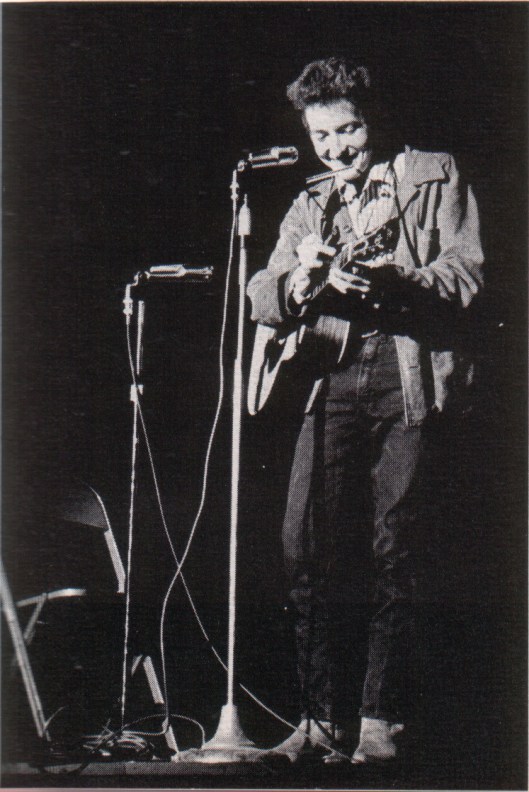
Bob Dylan performs an acoustic set at St. Lawrence University, November 26, 1963, just days after the Kennedy assassination and a year and a half before “going electric” at Newport in July 1965

Today is the 55th anniversary of Bob Dylan’s so-called plugging in and going electric at the 1965 Newport Folk Festival. Dylan at Newport in ’65 is one of those now Well Told Tales, recounted today by hundreds of thousands but witnessed in real time by a fraction of that number. The story has been mythologized, and to a large degree overblown, for more than half a century now. In the standard telling fans were outraged that Dylan would deign to forgo his folk roots and pollute the purity and sanctity of Newport with electronic sound. That doesn’t stand up to scrutiny. For one thing, there had already been electric music played at the 1965 Newport Folk Festival; the Paul Butterfield Blues Band had done that very thing, as had others.

What is more, Dylan’s most ardent followers would have already known the directions he was already taking; his fifth album, the half-electric Bringing It All Back Home, had been released four months earlier in March. It seems the real issue with any booing–and it’s not really evident that there was that much–had to do with the sound quality of the stage set. The festival had been growing exponentially each succeeding year and organizers were having difficulty accommodating the thousands of listeners who converged on that New England seaside community fifty-five summers ago.

Nineteen sixty-five was a tipping point in the decade. Malcolm X had been assassinated in February, the Johnson Administration was escalating the American presence in Vietnam, Watts burned just two weeks after the Newport Festival. By the years’s end the Beatles would release Help! and Rubber Soul, and Dylan himself came out with Highway 61 Revisited. I was talking to someone a few days ago about this heady time when the Beatles and Dylan were taking over popular culture and he described it saying that it felt like the world was transforming from black-and-white to color, which in many ways it was via photography and television. It is no wonder people remember–and misremember–the moment so “clearly.”

(image/1964 St. Lawrence University yearbook)


Opening Day 2020 redux

23 Thursday Jul 2020

Posted by Keith Muchowski in Baseball

≈ Comments Off on Opening Day 2020 redux

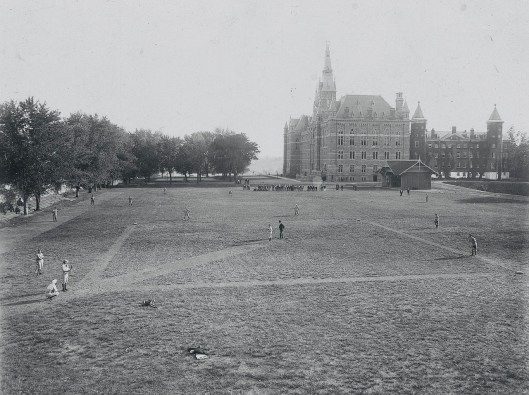
Baseball field before Healy Hall, Georgetown University 1900

Opening Day of the truncated sixty game MLB schedule starts tonight when the Yankees face off against the Nationals in Washington D.C. I’m turning the game on the radio in a few minutes. I posted on what was supposed to have been Opening Day in late March, almost four months ago now. I was talking to someone the other day about potential anomalies that might occur due to the truncated schedule and other issues. We speculated that someone, or someones, may even hit .400. It’s not unusual for someone to hit above that mark for 2+ months at the start of a normal season before the longevity of a full complement of games brings them back to the statistical norm. While any batters hitting .400 for the first time since Ted Williams nearly eighty years ago would not really constitute a record of any sort, would there be some type of asterisk in the recognition of the achievement? Who knows? The wait-and-see uncertainty is strangely apropos and symbolic of 2020 itself.

(image/Georgetown University Library)


Rufus King, part two

18 Saturday Jul 2020

Posted by Keith Muchowski in King family book manuscript, Rufus King

≈ Comments Off on Rufus King, part two

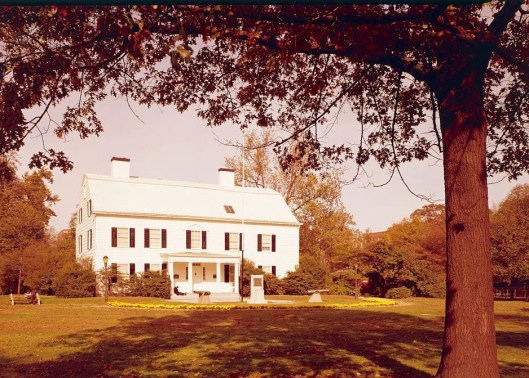
King Manor, Jamaica Queens circa mid-twentieth century

The editors at the Journal of the American Revolution have posted the second and concluding article I wrote about Rufus King. This article brings King from 1789 to 1805, the year he purchased the house we see above. It worked out well because the scope of the JAR ends in 1805. Anything beyond that isn’t so much part of the Revolutionary or Early American periods. In 1805 King had another third of his life to go, but that’s a story for another time and venue. Work has been progressing on the manuscript about the King family in which I am in the early stages of writing. When the pandemic ends, I intend to visit archives in Massachusetts, Milwaukee, and elsewhere to track down the lives and times of his children, grandchildren, and beyond. Thankfully, there is also a large amount of material related to various Kings here in New York as well.

I love this image that we see above of King Manor. It comes from the Historic American Buildings Survey (HABS) report. It never quite occurred to me until I wrote the article linked to above that Rufus and wife Mary purchased this hime in 1805 inspired not just by Rufus’s childhood experience in Scarborough, Massachusetts (today Maine), but by the grand manors they would have seen in England when Mr. King was the U.S. ambassador to the Court of St. James’s.

(image/Library of Congress)


Henry David Thoreau, 1817-1862

12 Sunday Jul 2020

Posted by Keith Muchowski in Those we remember, Walt Whitman

≈ 9 Comments

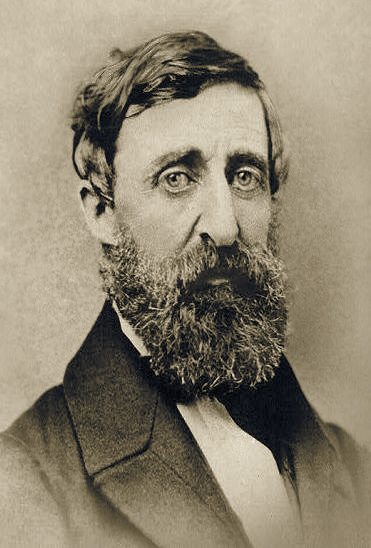
Henry David Thoreau was born in Concord, Massachusetts on this date in 1817. The writer and philosopher lived an incredibly short life; he died in May 1862 just shy of his 45h birthday. To put that into perspective, his death occurred in the middle of General McClellan’s Peninsula Campaign. I have always wondered what Thoreau might have had to say about the Civil War had he lived through its entirety. Walt Whitman gave us “Drum Taps” and “When Lilacs Last in the Dooryard Bloom’d” at the war’s end, and then went on to live another twenty-seven years after Appomattox. Thoreau was a mere two years older than Whitman.

Henry David Thoreau, August 1861

Perhaps intellectually Thoreau did not have the sensibility to live in and understand Gilded Age America, much in the way Theodore Roosevelt’s 1919 death spared him having to live through the Roaring Twenties and Jazz Age, to which Roosevelt would have been constitutionally unsuited. So, maybe it’s for the best that Thoreau died when he did before the full tragedy of the war unfolded. This was we remember him as we do with the transcendentalists and for the influence he later had on Gandhi, Martin Luther King Jr., and others.

A few weeks ago I began subscribing to The Atlantic. Given certain things taking place in our world today it has never been more important to support journalism. One of the things I find most beneficial about the periodical, in addition to its great stable of contributors, is its historical memory. The Atlantic has been in publication since 1857, the year of a great financial panic and depression. Three years later came  Lincoln’s 1860 presidential victory and soon thereafter the Civil War. Here is the magazine’s online author page for one Henry David Thoreau.

(photograph by George F. Parlow/Library of Congress)


Happy 4th

04 Saturday Jul 2020

Posted by Keith Muchowski in Uncategorized

≈ Comments Off on Happy 4th

(image/NYPL)

These Old Houses

02 Thursday Jul 2020

Posted by Keith Muchowski in Heritage tourism, King Manor Museum, New York City

≈ 1 Comment

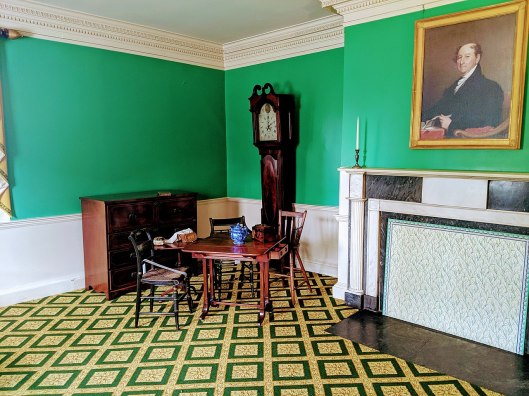
King Manor Museum interior, Jamaica, Queens

New York City is not a place known for preserving its architectural heritage. Since the arrival of the first Dutchmen centuries ago the city’s entire philosophy has been to tear down and create anew in pursuit of mammon. That creative destruction makes what indeed remains that much more precious. A friend of mine and I had intended to pick up where we left off last summer in our visits to the five boroughs’ few remaining historic homes, but that is not happening for obvious reason. My friend, another Park service volunteer, recently emailed me this New York Times piece from early June telling the stories of the men and women entrusted with the care of the dozen or so historic houses spread through New York City’s diverse neighborhoods. The caretakers live, either alone or with their nuclear families, in these houses, literally keeping the lights on and making certain nothing untoward occurs. All of their stories are intriguing. I was especially interested in the brief profile of eighty-year-old Roy Fox, who has been keeping watch at the Rufus King Manor for over three decades now dating back to the late 1980s. I have not yet met Mr. Fox, but would love to when the shutdown finally does end.

I am still adjusting to the reality of this most unusual summer; though I regard myself as among the fortunate, it is so difficult to be closed off from the wider world on beautiful summer days such as today. Under normal circumstances, who know where we might have been or what we might have seen? Historical homes such as King Manor and the Bartow-Pell Mansion Museum have been quiet for more than three months now. As the article itself points out however, these sites have been around for a long time–centuries in most cases–and been through a lot: world wars, economic depressions, civic unrest, blackouts, petty vandalism, and more. Someday this crazy era too will be part of these structures’ history, and thankfully there are people there right now to preserve that ongoing institutional memory.

(image/CaptJayRuffins via Wikimedia Commons))

Like Sands Through The Hourglass

01 Wednesday Jul 2020

Posted by Keith Muchowski in Uncategorized

≈ Comments Off on Like Sands Through The Hourglass

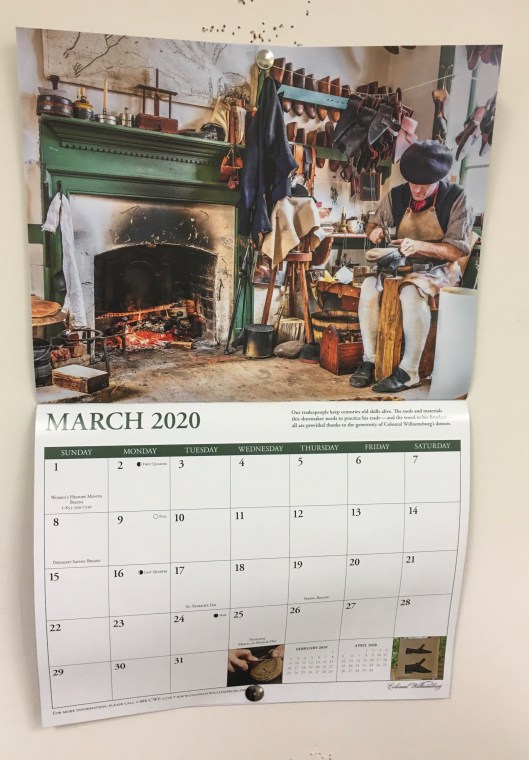
I was in my office at 7:45 this morning and the first thing I noticed when I opened the door and turned on the lights after being away for more than three months was the wall calendar still turned to March. Little did I know when I turned out the lights, closed the door and left way back in late winter that I would be gone for so long. The entire spring, with all its tumult and uncertainty, came and went. Now July is here and I went in to do a few things possible only in my office, pick up a few things, and go through some papers in preparation for the upcoming fall term. I only ran in to three people in the complex: one colleague, a construction worker, and two security officers. On my way out in the early afternoon I had a brief conversation with the officer at the entranceway about all the changes in the world since late spring, not least the deaths of several people from the college community who have perished from the virus.

← Older posts
Newer posts →

Enter your email address to subscribe to this blog and receive notifications of new posts by email.

Join 258 other subscribers

Categories

Archives

  • November 2023 (1)
  • October 2023 (3)
  • September 2023 (3)
  • August 2023 (4)
  • July 2023 (7)
  • June 2023 (10)
  • May 2023 (8)
  • April 2023 (6)
  • March 2023 (5)
  • February 2023 (4)
  • January 2023 (4)
  • December 2022 (4)
  • November 2022 (8)
  • October 2022 (2)
  • September 2022 (4)
  • June 2022 (1)
  • May 2022 (1)
  • April 2022 (13)
  • January 2022 (1)
  • December 2021 (2)
  • November 2021 (1)
  • October 2021 (3)
  • September 2021 (3)
  • August 2021 (5)
  • July 2021 (1)
  • June 2021 (1)
  • May 2021 (4)
  • April 2021 (3)
  • March 2021 (4)
  • February 2021 (7)
  • January 2021 (4)
  • December 2020 (4)
  • November 2020 (3)
  • October 2020 (4)
  • September 2020 (7)
  • August 2020 (5)
  • July 2020 (7)
  • June 2020 (11)
  • May 2020 (7)
  • April 2020 (9)
  • March 2020 (9)
  • February 2020 (7)
  • January 2020 (6)
  • December 2019 (7)
  • November 2019 (9)
  • October 2019 (4)
  • September 2019 (6)
  • August 2019 (10)
  • July 2019 (8)
  • June 2019 (6)
  • May 2019 (9)
  • April 2019 (8)
  • March 2019 (6)
  • February 2019 (8)
  • January 2019 (5)
  • December 2018 (10)
  • November 2018 (6)
  • October 2018 (9)
  • September 2018 (11)
  • August 2018 (11)
  • July 2018 (17)
  • June 2018 (10)
  • May 2018 (8)
  • April 2018 (9)
  • March 2018 (8)
  • February 2018 (5)
  • January 2018 (7)
  • December 2017 (11)
  • November 2017 (8)
  • October 2017 (9)
  • September 2017 (11)
  • August 2017 (12)
  • July 2017 (14)
  • June 2017 (18)
  • May 2017 (11)
  • April 2017 (10)
  • March 2017 (9)
  • February 2017 (11)
  • January 2017 (14)
  • December 2016 (7)
  • November 2016 (8)
  • October 2016 (8)
  • September 2016 (9)
  • August 2016 (6)
  • July 2016 (12)
  • June 2016 (8)
  • May 2016 (9)
  • April 2016 (6)
  • March 2016 (12)
  • February 2016 (10)
  • January 2016 (9)
  • December 2015 (9)
  • November 2015 (11)
  • October 2015 (8)
  • September 2015 (9)
  • August 2015 (13)
  • July 2015 (14)
  • June 2015 (11)
  • May 2015 (11)
  • April 2015 (18)
  • March 2015 (10)
  • February 2015 (8)
  • January 2015 (8)
  • December 2014 (12)
  • November 2014 (13)
  • October 2014 (16)
  • September 2014 (11)
  • August 2014 (16)
  • July 2014 (12)
  • June 2014 (13)
  • May 2014 (10)
  • April 2014 (10)
  • March 2014 (11)
  • February 2014 (12)
  • January 2014 (10)
  • December 2013 (11)
  • November 2013 (14)
  • October 2013 (14)
  • September 2013 (14)
  • August 2013 (13)
  • July 2013 (17)
  • June 2013 (9)
  • May 2013 (13)
  • April 2013 (13)
  • March 2013 (16)
  • February 2013 (15)
  • January 2013 (15)
  • December 2012 (18)
  • November 2012 (18)
  • October 2012 (21)
  • September 2012 (14)
  • August 2012 (16)
  • July 2012 (21)
  • June 2012 (22)
  • May 2012 (24)
  • April 2012 (20)
  • March 2012 (23)
  • February 2012 (22)
  • January 2012 (15)
  • December 2011 (23)
  • November 2011 (22)
  • October 2011 (23)
  • September 2011 (18)
  • August 2011 (19)
  • July 2011 (20)
  • June 2011 (29)
  • May 2011 (25)
  • April 2011 (18)
  • March 2011 (21)
  • February 2011 (11)

Meta

  • Create account
  • Log in
  • Entries feed
  • Comments feed
  • WordPress.com
Creative Commons License
This work is licensed under a Creative Commons Attribution-NonCommercial-ShareAlike 4.0 International License.

Enter your email address to subscribe to this blog and receive notifications of new posts by email.

Join 258 other subscribers

Categories

Archives

  • November 2023 (1)
  • October 2023 (3)
  • September 2023 (3)
  • August 2023 (4)
  • July 2023 (7)
  • June 2023 (10)
  • May 2023 (8)
  • April 2023 (6)
  • March 2023 (5)
  • February 2023 (4)
  • January 2023 (4)
  • December 2022 (4)
  • November 2022 (8)
  • October 2022 (2)
  • September 2022 (4)
  • June 2022 (1)
  • May 2022 (1)
  • April 2022 (13)
  • January 2022 (1)
  • December 2021 (2)
  • November 2021 (1)
  • October 2021 (3)
  • September 2021 (3)
  • August 2021 (5)
  • July 2021 (1)
  • June 2021 (1)
  • May 2021 (4)
  • April 2021 (3)
  • March 2021 (4)
  • February 2021 (7)
  • January 2021 (4)
  • December 2020 (4)
  • November 2020 (3)
  • October 2020 (4)
  • September 2020 (7)
  • August 2020 (5)
  • July 2020 (7)
  • June 2020 (11)
  • May 2020 (7)
  • April 2020 (9)
  • March 2020 (9)
  • February 2020 (7)
  • January 2020 (6)
  • December 2019 (7)
  • November 2019 (9)
  • October 2019 (4)
  • September 2019 (6)
  • August 2019 (10)
  • July 2019 (8)
  • June 2019 (6)
  • May 2019 (9)
  • April 2019 (8)
  • March 2019 (6)
  • February 2019 (8)
  • January 2019 (5)
  • December 2018 (10)
  • November 2018 (6)
  • October 2018 (9)
  • September 2018 (11)
  • August 2018 (11)
  • July 2018 (17)
  • June 2018 (10)
  • May 2018 (8)
  • April 2018 (9)
  • March 2018 (8)
  • February 2018 (5)
  • January 2018 (7)
  • December 2017 (11)
  • November 2017 (8)
  • October 2017 (9)
  • September 2017 (11)
  • August 2017 (12)
  • July 2017 (14)
  • June 2017 (18)
  • May 2017 (11)
  • April 2017 (10)
  • March 2017 (9)
  • February 2017 (11)
  • January 2017 (14)
  • December 2016 (7)
  • November 2016 (8)
  • October 2016 (8)
  • September 2016 (9)
  • August 2016 (6)
  • July 2016 (12)
  • June 2016 (8)
  • May 2016 (9)
  • April 2016 (6)
  • March 2016 (12)
  • February 2016 (10)
  • January 2016 (9)
  • December 2015 (9)
  • November 2015 (11)
  • October 2015 (8)
  • September 2015 (9)
  • August 2015 (13)
  • July 2015 (14)
  • June 2015 (11)
  • May 2015 (11)
  • April 2015 (18)
  • March 2015 (10)
  • February 2015 (8)
  • January 2015 (8)
  • December 2014 (12)
  • November 2014 (13)
  • October 2014 (16)
  • September 2014 (11)
  • August 2014 (16)
  • July 2014 (12)
  • June 2014 (13)
  • May 2014 (10)
  • April 2014 (10)
  • March 2014 (11)
  • February 2014 (12)
  • January 2014 (10)
  • December 2013 (11)
  • November 2013 (14)
  • October 2013 (14)
  • September 2013 (14)
  • August 2013 (13)
  • July 2013 (17)
  • June 2013 (9)
  • May 2013 (13)
  • April 2013 (13)
  • March 2013 (16)
  • February 2013 (15)
  • January 2013 (15)
  • December 2012 (18)
  • November 2012 (18)
  • October 2012 (21)
  • September 2012 (14)
  • August 2012 (16)
  • July 2012 (21)
  • June 2012 (22)
  • May 2012 (24)
  • April 2012 (20)
  • March 2012 (23)
  • February 2012 (22)
  • January 2012 (15)
  • December 2011 (23)
  • November 2011 (22)
  • October 2011 (23)
  • September 2011 (18)
  • August 2011 (19)
  • July 2011 (20)
  • June 2011 (29)
  • May 2011 (25)
  • April 2011 (18)
  • March 2011 (21)
  • February 2011 (11)

Meta

  • Create account
  • Log in
  • Entries feed
  • Comments feed
  • WordPress.com
Creative Commons License
This work is licensed under a Creative Commons Attribution-NonCommercial-ShareAlike 4.0 International License.

Enter your email address to subscribe to this blog and receive notifications of new posts by email.

Join 258 other subscribers

Categories

Archives

  • November 2023 (1)
  • October 2023 (3)
  • September 2023 (3)
  • August 2023 (4)
  • July 2023 (7)
  • June 2023 (10)
  • May 2023 (8)
  • April 2023 (6)
  • March 2023 (5)
  • February 2023 (4)
  • January 2023 (4)
  • December 2022 (4)
  • November 2022 (8)
  • October 2022 (2)
  • September 2022 (4)
  • June 2022 (1)
  • May 2022 (1)
  • April 2022 (13)
  • January 2022 (1)
  • December 2021 (2)
  • November 2021 (1)
  • October 2021 (3)
  • September 2021 (3)
  • August 2021 (5)
  • July 2021 (1)
  • June 2021 (1)
  • May 2021 (4)
  • April 2021 (3)
  • March 2021 (4)
  • February 2021 (7)
  • January 2021 (4)
  • December 2020 (4)
  • November 2020 (3)
  • October 2020 (4)
  • September 2020 (7)
  • August 2020 (5)
  • July 2020 (7)
  • June 2020 (11)
  • May 2020 (7)
  • April 2020 (9)
  • March 2020 (9)
  • February 2020 (7)
  • January 2020 (6)
  • December 2019 (7)
  • November 2019 (9)
  • October 2019 (4)
  • September 2019 (6)
  • August 2019 (10)
  • July 2019 (8)
  • June 2019 (6)
  • May 2019 (9)
  • April 2019 (8)
  • March 2019 (6)
  • February 2019 (8)
  • January 2019 (5)
  • December 2018 (10)
  • November 2018 (6)
  • October 2018 (9)
  • September 2018 (11)
  • August 2018 (11)
  • July 2018 (17)
  • June 2018 (10)
  • May 2018 (8)
  • April 2018 (9)
  • March 2018 (8)
  • February 2018 (5)
  • January 2018 (7)
  • December 2017 (11)
  • November 2017 (8)
  • October 2017 (9)
  • September 2017 (11)
  • August 2017 (12)
  • July 2017 (14)
  • June 2017 (18)
  • May 2017 (11)
  • April 2017 (10)
  • March 2017 (9)
  • February 2017 (11)
  • January 2017 (14)
  • December 2016 (7)
  • November 2016 (8)
  • October 2016 (8)
  • September 2016 (9)
  • August 2016 (6)
  • July 2016 (12)
  • June 2016 (8)
  • May 2016 (9)
  • April 2016 (6)
  • March 2016 (12)
  • February 2016 (10)
  • January 2016 (9)
  • December 2015 (9)
  • November 2015 (11)
  • October 2015 (8)
  • September 2015 (9)
  • August 2015 (13)
  • July 2015 (14)
  • June 2015 (11)
  • May 2015 (11)
  • April 2015 (18)
  • March 2015 (10)
  • February 2015 (8)
  • January 2015 (8)
  • December 2014 (12)
  • November 2014 (13)
  • October 2014 (16)
  • September 2014 (11)
  • August 2014 (16)
  • July 2014 (12)
  • June 2014 (13)
  • May 2014 (10)
  • April 2014 (10)
  • March 2014 (11)
  • February 2014 (12)
  • January 2014 (10)
  • December 2013 (11)
  • November 2013 (14)
  • October 2013 (14)
  • September 2013 (14)
  • August 2013 (13)
  • July 2013 (17)
  • June 2013 (9)
  • May 2013 (13)
  • April 2013 (13)
  • March 2013 (16)
  • February 2013 (15)
  • January 2013 (15)
  • December 2012 (18)
  • November 2012 (18)
  • October 2012 (21)
  • September 2012 (14)
  • August 2012 (16)
  • July 2012 (21)
  • June 2012 (22)
  • May 2012 (24)
  • April 2012 (20)
  • March 2012 (23)
  • February 2012 (22)
  • January 2012 (15)
  • December 2011 (23)
  • November 2011 (22)
  • October 2011 (23)
  • September 2011 (18)
  • August 2011 (19)
  • July 2011 (20)
  • June 2011 (29)
  • May 2011 (25)
  • April 2011 (18)
  • March 2011 (21)
  • February 2011 (11)

Meta

  • Create account
  • Log in
  • Entries feed
  • Comments feed
  • WordPress.com
Creative Commons License
This work is licensed under a Creative Commons Attribution-NonCommercial-ShareAlike 4.0 International License.

Blog at WordPress.com.

  • Subscribe Subscribed
    • The Strawfoot
    • Join 229 other subscribers
    • Already have a WordPress.com account? Log in now.
    • The Strawfoot
    • Subscribe Subscribed
    • Sign up
    • Log in
    • Report this content
    • View site in Reader
    • Manage subscriptions
    • Collapse this bar
 

Loading Comments...