• About

The Strawfoot

~ a New Yorker's American History blog

The Strawfoot

Category Archives: Historiography

Decoration Day 1886

27 Sunday May 2018

Posted by Keith Muchowski in General Grant National Memorial (NPS), Historiography, Memory

≈ Comments Off on Decoration Day 1886

They have my article up and running at the General Grant National Memorial (Grant’s Tomb) website. It is about Decoration Day 1886, the first Memorial Day to take place after Ulysses S. Grant’s death in July of the previous year. Alas it appears the pictures did not seem to go through, but we’ll figure that out. I hope everyone enjoys the piece as much as I enjoyed writing it.

(image/Museum of the City of New York)

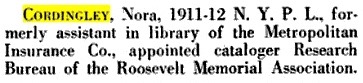
Nora E. Cordingley, 1888-1951

14 Wednesday Mar 2018

Posted by Keith Muchowski in Historiography, Libraries, Memory, Theodore Roosevelt Birthplace (NPS)

≈ Comments Off on Nora E. Cordingley, 1888-1951

An excerpt from the New York Times obituary that starkly but accurately captured the details of Nora E. Cordingley’s death.

In February 1966, Esquire magazine published an article by Gay Talese called “Mr. Bad News.” The subject of that piece was Alden Whitman, a still-very-much-alive obituary writer for the New York Times. Many obituaries are written months or even years prior to the individual’s death. That’s why one sees a 2000 word overview of someone’s life published literally within the hour after they have passed. March is Women’s History Month. To mark the occasion editors at the Gray Lady have created a series they are calling “Overlooked,” for which they are writing obituaries for prominent women who did not receive recognition in the newspaper when the women originally died. Charlotte Brontë, Emily Warren Roebling and Ida B. Wells are three of the first fifteen subjects. Hopefully this will become something like “The Lives They Lived” section that appears the final Sunday of the year. I would like to see them do some figures from the First World War such as Edith Cavell. They are soliciting potential future articles. For whatever they regard it to be worth, I may submit a few ideas to the Times editors.

December 15, 1921 Library Journal announcement

I once mentioned in passing here on The Strawfoot a woman named Nora E. Cordingley, a Canadian who worked at Roosevelt House on East 20th Street starting in the 1920s. I knew then that I wanted to expand on her story a bit more but was waiting for the time. That time came a few weeks back when something came through my feeds soliciting articles for the Women of Library History blog. They are currently running their sixth annual series on women who work in the library profession. When I saw the announcement, I knew the time had come and I started working on it right away. The editor and I agreed we should publish the article today. Nora E. Cordingley died on March 14, 1951, 67 years ago today. I am really proud to have written this article. Ms. Cordingley is one of the overlooked people who kept Theodore Roosevelt’s legacy alive and she deserves to be remembered. Read the article here.

The Vietnam War: a learnable moment?

24 Tuesday Oct 2017

Posted by Keith Muchowski in Film, Sound, & Photography, Great War centennial, Historiography, Vietnam War

≈ Comments Off on The Vietnam War: a learnable moment?

Lions led by donkeys? Despite many worthwhile books and public programs in recent years, the conventional understanding of the Great War has remained surprisingly static even during the Great War centennial.

An interesting article appeared in the New York Times a few weeks back about the Ken Burns/Lynn Novick Vietnam War documentary. Its authors, Andrew Wiest and Susannah Ural, wonder if the eighteen hour documentary will be a historiographical turning point in our understanding of the war in Southeast Asia. Or, they continue, will it be the culmination of the narrative we have been telling ourselves for the past four–five decades? The answer to that doesn’t lie with Burns and Novick, who with their colleagues have already done their part by giving us the film. As they themselves have said, the documentary’s ultimate purpose is to ask more question than provide answers.

Wiest and Ural draw an interesting comparison, arguing that the documentary might do for Vietnam what historians did for World War One historiography in the early 1990s. Others are better positioned than I am to make the call, but personally I don’t see the needle as having having moved that much over the past 20-25 years. Yes, some archives have opened up and that sort of thing, but our understanding of the Great War remains much as it has since at least the 1960s. The current narrative is still very much the “lions led by donkeys” story line that has been with us for at least half a century. Perhaps a better comparison for The Vietnam War might be The Sorrow and the Pity, the 1969 documentary that nearly thirty years after the fact led the French to more closely examine their role in the Second World War.

Wars often lead citizens to question their societies, often vehemently. Americans examined their country during and immediately after the Great War, which led Prohibition, Women’s Suffrage, and the New Negro Movement in the 1920s. The same thing happened in different ways in the 1960s and early 1970s. Civil Rights, Women’s Rights, Gay Rights, and much more all came out of the social upheaval. In addition it led to rifts that have yet to heal. So many of our current political and cultural divisions have their roots in the Vietnam War Era. Even militarily there is much that remains to explore regarding the Vietnam War. Time will tell over the next few years if we reach any new consensus on that turbulent period. Wiest and Ural make a strong case that this is the opportune time.

(image by Clara E. Laughlin from Foch: The Man)

Barbara Tuchman’s Vietnam War

27 Wednesday Sep 2017

Posted by Keith Muchowski in Great War centennial, Historiography

≈ 2 Comments

William Shirer (left), Barbara Tuchman, and John S.D. Eisenhower at the Conference on Research and World War II and the National Archives, 14-15 June 1971. Tuchman was actively engaged in the discourse about the Vietnam War throughout the 1960s-70s. Tuchman gave her commencement address at Williams College the year after this photograph was taken.

These past two weeks I have been watching the Lynn Novick/Ken Burns documentary abut the Vietnam War. I have a few friends who have been watching as well. Usually in the mornings we email with a few thoughts on the previous night’s episode. For each of us, watching has been draining. Earlier today I was searching the New York Times database for some things relating to the war in 1967. The headlines read like a history lesson. Some of the names I came across in my very cursory search included Dwight Eisenhower, Harry Truman, Martin Luther King Jr., Secretary-General of the United Nations U Thant, Charles De Gaulle, William Fullbright, Senator Albert Gore Sr. of Tennessee, Averell Harriman, and John Kenneth Galbraith. Needless to say all of these figures are now long gone, though Galbraith did not pass away until 2006.

During the Cuban Missile Crisis in 1962 President Kennedy turned to historian Barbara Tuchman’s The Guns of August for inspiration. Five years later, for the 5 March 1967 edition of the Times, Tuchman wrote an extended piece about America’s entry into the First World War. Remember, there were still hundreds of thousands of living doughboys alive at this time just fifty years after Wilson asked Congress to declare war on Germany. I remember seeing historian Gordon Wood on television several years ago expressing his admiration for Tuchman, though he added that she often saw her work as a historian as offering “lessons” for current times. History indeed can offer guidance, but Wood seemed to be arguing that Tuchman thought history offered a stronger template than Wood believes it does.

I knew that Tuchman’s work was often anthologized and so when I showed up at work today I searched the catalog and found a book titled Practicing History: Selected Essays, published by Knopf in 1981. Sure enough, it contains that New York Times article from 1967 that I had come across in the Times database. The anthology also contains a 1966 address to the Chicago Historical Society titled “Is History a Guide to the Future?”, in which she lays out her ideas on that subject. Her thesis, in a nutshell, is that History is more craft than science but that through due diligence it can guide and inform a way forward, at least to a degree. Practicing History includes articles about the Vietnam War that Tuchman wrote for New York Newsday in early March 1968, in the middle of the Tet Offensive; and the New York Times in May 1972. Tuchman advocated for withdrawal and explained ways the United States might have done that. In June 1972 she gave the commencement address at Williams College. Her topic that day was the war. While she was personally against it, she emphasized that people should demonize neither the military nor the soldiers. She explained why the military remained important, even when led poorly by its civilian overlords. She was particularly against the movement underway to ban the Reserve Officers Training Corps (ROTC) from college campuses.

(image.National Archives)

A man in the arena

23 Tuesday Aug 2016

Posted by Keith Muchowski in Historiography, Theodore Roosevelt Jr (President)

≈ 2 Comments

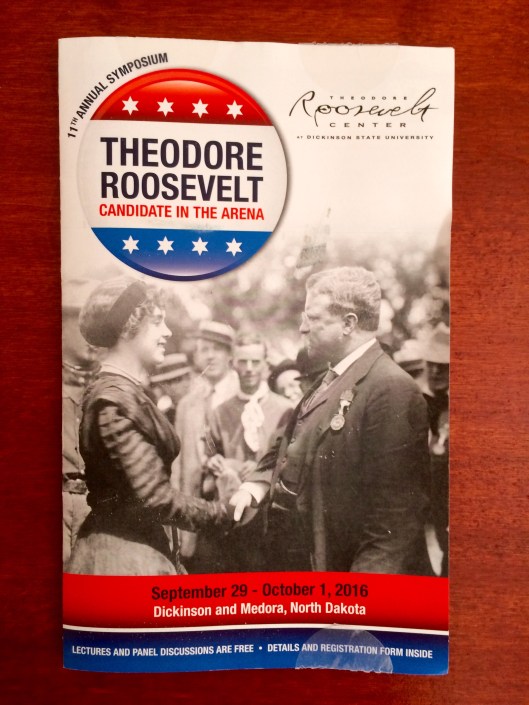
IMG_3408The other day I received the brochure you see here in the mail. It is for the 11th annual Roosevelt symposium at Dickinson State University in North Dakota. When one thinks of Roosevelt’s legacy the Birthplace in Manhattan and the house in Oyster Bay, Long Island immediately come to mind, along with the Theodore Roosevelt Association too of course. The staff at Dickinson State’s Theodore Roosevelt Center however have been doing an incredible job preserving TR’s legacy. I noted with interest that this year’s focus is Theodore Roosevelt as elective candidate. It is lost on some today how many constituencies to whom Roosevelt had to appeal to in his decades of public service. He entered the arena for the first time in 1884 and remained so more or less continuously until 1912. Like a good politician he could many things to many people: an old Knickerbocker to his Silk Stocking Manhattan neighbors, a Southerner below the Mason-Dixon line through his mother’s side of the family, and a cow poke out West.

In a presidential election year it is easy to see why organizers are focusing on Roosevelt as candidate. Of course his hat was not in the ring 100 years ago; after the fracture of the Republican Party in 1912 he sat out the campaign four years later. He was a perennial thorn in Woodrow Wilson’s backside in the lead-up to the 1916 election. Running on the mantra that he had kept America out of the European war, Wilson defeated Charles Evans Hughes fairly handily. Alas I will not be able to attend the symposium but I do intend to keep an eye on if the TRC will be live streaming the conference, which runs from September 29-October 1.

John Howland Lathrop’s Unitarian Church

20 Monday Apr 2015

Posted by Keith Muchowski in Heritage tourism, Historiography, Interpretation, Monuments and Statuary, New York City

≈ 2 Comments

IMG_2089Late last week I was walking though Brooklyn Heights on my way to meet a friend for lunch when I saw that the gates of the First Unitarian Congregational Society Church were open. I love to visit the many places of worship here in New York City, which depending on the era might have been built by Italian craftsmen who came through Ellis Island or were centers of Abolition during the Civil War Era. No, not all of them have such a dramatic provenance but one gets the idea. I had never been in the First Unitarian before, though I had walked past it dozens of times. The neo-gothic structure dates to 1844 and carries the years well.

IMG_2096I was only there for all of five minutes when, heading toward the door, I noticed a Great War marker on the wall in the vestibule. Of course I took a few pictures to research and submit to the World War 1 Memorial Inventory Project. The plaque itself was nothing out of the ordinary, nor would one expect it to be. With simple dignity it marked the contributions of those from the the congregation who served in war from 1917-18. A few of them made the ultimate sacrifice. I could not find too much information about when the plaque was dedicated. The church leader though turned out to be an interesting individual.

HowlandThe Reverend Dr. John Howland Lathrop led the First Unitarian from 1911-57. He was against American involvement in the war but when it came in April 1917 he made his own contribution: Lathrop helped bring the Red Cross into the United States Navy. When that initial work was done he led the Red Cross’s WW1 initiative within the Third Naval District. That jurisdiction covered most of the Northeast. He was successful in these endeavors and continued a life of public service until his retirement in the late 1950s. A lot of that work involved cleaning up the mess in Europe that resulted from the chaos and destruction of the Great War.

I intend t do a little more with Lathrop in the coming months. A little digging revealed that his papers are at the Brooklyn Historical Society, which is across the street from the church that he served for nearly half a century.


Spottswood Poles, 1887-1962

30 Monday Mar 2015

Posted by Keith Muchowski in Baseball, Great War centennial, Historiography, Those we remember

≈ Comments Off on Spottswood Poles, 1887-1962

Spottswood Poles, upper right, with the New York Lincoln Giants: May 1912

Spottswood Poles, upper right, with the New York Lincoln Giants: May 1912

As a general practice I do not link to things I write for the Park Service or WW1 Centennial Commission’s social media platforms. Tonight though I made an exception for a small piece about ball player and Harlem Hellfighter Spot Poles. It is up on the Strawfoot Facebook page on the left.

I have been reading Lawrence Ritter’s The Glory of Their Times over the past few weeks. Ritter’s oral history was a seminal event in baseball historiography, coming as it did in the mid-1960s when many of the early players were disappearing. Poles does not appear in the book and his name was only slightly familiar to me until recently. I suspect that he never got his due because he died in 1962, just before many of the players from organized Negro baseball were being rediscovered. Ritter published Glory in 1966. That same year Ted Williams famously said during his Hall of Fame induction that he hoped some day the old Negro players could be represented in Cooperstown in some way. Poles was four years gone by then and there was no one left to speak for him. He nearly did get in to the Hall some years later on the old timers ballot but fell short.

I did not know until writing the vignette that there were over 500 professional ball players who fought in the Great War. When we think of ball players and military service we think of WW2, because we always think of WW2 before WW1. Williams of course was one of the great war heroes of the Second World War. Poles too was a war hero. He reached France around New Years 1918 and fought in all of the major battles through the Armistice.

(image/By Staff Photographer (New York Lincoln Giants Publicity Office) [Public domain], via Wikimedia Commons)

A brief remembrance of John W. Thomason

29 Thursday Jan 2015

Posted by Keith Muchowski in Historiography, Memory, Writing

≈ 1 Comment

I was out-and-about not long ago when I saw something that instantly seemed familiar. It was a sketch by John W. Thomason. The name may not ring many bells but Colonel Thomason was one of the great sketch artists of the early twentieth century. He also authored what many consider to be the authoritative account of American involvement in the First World War. That was why the image looked so familiar, because I had seen his work decades ago when I first read Fix Bayonets! Naturally I bought the small, framed image. It now hangs in my office.

IMG_1876


The image shows a young French woman walking past a trio of weary marines. It is hard to make out, but the wear and tear on her shabby clothes are testimony to how difficult things had become in Europe by 1918. The duck is something of a Thomason trademark. He included them frequently in his work. Growing up in Texas, he was quite the hunter and outdoorsmen. Thomason was born in Huntsville in 1893.

I had not read or thought about Thomason for more than two decades until seeing the framed sketch. Eager to know more, I checked out a few books from the library.  His grandfather was Major Tom Goree, who had served on James Longstreet’s staff. The Lost Cause is an obvious cultural reference point for Thomason. How could it not?
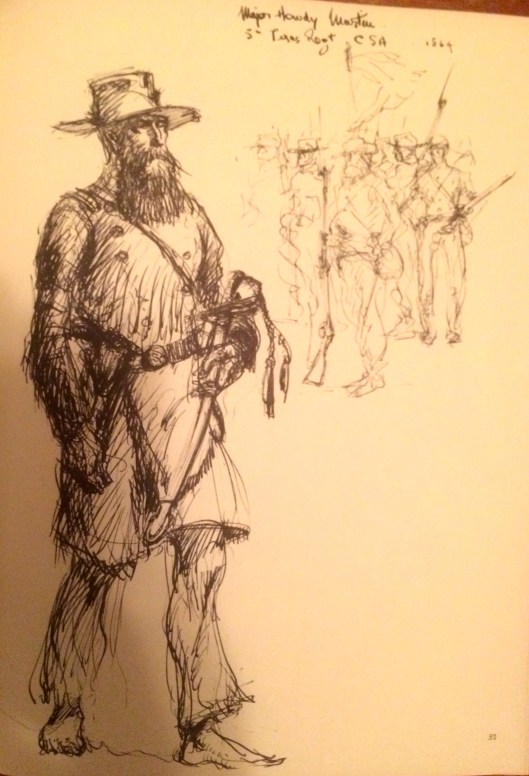
IMG_1878


The bare feet are a poignant touch. Thomason grew up surrounded by many men who had fought with Hood’s Texans.

IMG_1877


The editors of the sketchbook from which I took these photos were helpful in including the studies of the revolver, spurs, etc. Too often we think art “just happens,” not understanding how much thought and toil the artist invests in his work.

Thomason attended the Art Students League in 1914 and was a struggling artist for a few years. He found his calling as soldier/artist when the United States declared war on Germany in 1917. He was a marine with the 2nd Division and fought at Château-Thierry, Soissons, and the Meuse-Argonne.

IMG_1879


Thomason stayed in the military after the Armistice. He was a good friend of Hemingway’s, who called Thomason the best soldier he knew. In the ensuing decades Thomason short stories were much in demand in such places as the Saturday Evening Post. He even collaborated with Ted Roosevelt, who as an officer in the 1st Division had fought in many of the same battles as Thomason.

John W. Thomason died in 1944.

Thinking about the war’s legacies

07 Thursday Aug 2014

Posted by Keith Muchowski in Historiography, Memory, WW1

≈ 1 Comment

Europe as it was after being redrawn in 1919

Europe as it was after being redrawn in 1919

Yesterday a friend sent me something from the Wall Street Journal. It is one of those list type things in which the Journal chronicles 100 legacies of World War One. A few of the items cannot be truly credited/blamed on the First World War. Doctors were fitting wounded soldiers of the American Civil War for prosthetic devices decades prior to 1914. It is true, however, that the science of prosthesis took a great leap forward in the 1910s and 1920s. Give the whole thing a look. Among other things the list encourages us  to think beyond the minutiae of the battles–important though they are– and ask ourselves why the events of 1914-1919 are important to us today in the 21st century. I cannot think of a better lesson as the Centennial gets underway.

(image/National Archives, United Kingdom)

Hermann Hagedorn, 1882-1964

27 Sunday Jul 2014

Posted by Keith Muchowski in Historiography, Libraries, Memory, Theodore Roosevelt Birthplace (NPS), Theodore Roosevelt Jr (President), Those we remember, WW1

≈ 2 Comments

Hermann Hagedorn died fifty years ago today. The name may not ring many bells within the general populace. Hagedorn, however, was a towering figure within the world of Theodore Roosevelt memory and historiography. When the Roosevelt Memorial Association was formed weeks after the former president’s death, Hagedorn became the group’s first acting secretary. He eventually became the RMA’s executive director. Hagedorn dedicated a significant portion of his life to the Roosevelt legacy; the RMA formed in 1919 and Hagedorn was still going strong during the Roosevelt Centennial in the late 1950s.

13834Hagedorn met Theodore Roosevelt in 1916 when a small group of supporters were trying to convince him to make one final run at the White House. That of course did not come to pass. The son of a German immigrant, Hagedorn was born in New York City. Though the United States was not yet involved the Great War, the fighting was raging in Europe when Hagedorn and Roosevelt first met. One can see why they were drawn to each other. Roosevelt was advocating for Preparedness while Hagedorn was extolling the virtues of Americanism, especially with the German-American community.

The Men’s and Women’s Roosevelt Memorial Associations were responsible for rebuilding Roosevelt’s boyhood home on East 20th Street. As I often emphasize on tours this was a time before presidential libraries. In addition to the house itself there was, and is, a museum and substantial library on site. Hagedorn claimed in the August 1929 Bulletin of the American Library Association that officials from the New York Public Library had told him that the Theodore Roosevelt Birthplace’s collection was “the most extensive library built around one individual in the United States.” The library indeed includes a substantial collection of books and other materials. It is worth noting that the Birthplace library collected not just photographs but moving imagery as well. This was pioneering stuff in the 1920s.

The RMA and Hagedorn did a lot more than just the Birthplace though. They were responsible for constructing Roosevelt Island in Washington DC and transforming Sagamore Hill into the historic site it is today. These are just a few of their accomplishments.

Hagedorn wrote a number of biographies of Roosevelt written for children and adults. He authored his first Roosevelt biography, The Boys’ Life of Theodore Roosevelt,  in 1918 while the former president was still alive. In the mid 1920s Hagedorn edited Roosevelt’s Complete Works, a substantial undertaking given that Theodore Roosevelt authored over thirty books. Some people believed that Hagedorn became too involved in the Roosevelt legacy and that he sometimes stepped over the line into idolatry. Lewis Mumford and Oswald Garrison Villard were two of Hagedorn’s harshest critics. Hagedorn did sometimes lapse into hagiography but some of the criticism was shrill and unfair.

Hermann Hagedorn accomplished many things in his lifetime. There were plays, poetry, biographies of such figures as Leonard Wood and Albert Schweitzer, and other projects over his long life. Still, he is now most associated with the life and times of Theodore Roosevelt. So much of what Hagedorn did is still here today.

← Older posts
Newer posts →

Enter your email address to subscribe to this blog and receive notifications of new posts by email.

Join 258 other subscribers

Categories

Archives

  • November 2023 (1)
  • October 2023 (3)
  • September 2023 (3)
  • August 2023 (4)
  • July 2023 (7)
  • June 2023 (10)
  • May 2023 (8)
  • April 2023 (6)
  • March 2023 (5)
  • February 2023 (4)
  • January 2023 (4)
  • December 2022 (4)
  • November 2022 (8)
  • October 2022 (2)
  • September 2022 (4)
  • June 2022 (1)
  • May 2022 (1)
  • April 2022 (13)
  • January 2022 (1)
  • December 2021 (2)
  • November 2021 (1)
  • October 2021 (3)
  • September 2021 (3)
  • August 2021 (5)
  • July 2021 (1)
  • June 2021 (1)
  • May 2021 (4)
  • April 2021 (3)
  • March 2021 (4)
  • February 2021 (7)
  • January 2021 (4)
  • December 2020 (4)
  • November 2020 (3)
  • October 2020 (4)
  • September 2020 (7)
  • August 2020 (5)
  • July 2020 (7)
  • June 2020 (11)
  • May 2020 (7)
  • April 2020 (9)
  • March 2020 (9)
  • February 2020 (7)
  • January 2020 (6)
  • December 2019 (7)
  • November 2019 (9)
  • October 2019 (4)
  • September 2019 (6)
  • August 2019 (10)
  • July 2019 (8)
  • June 2019 (6)
  • May 2019 (9)
  • April 2019 (8)
  • March 2019 (6)
  • February 2019 (8)
  • January 2019 (5)
  • December 2018 (10)
  • November 2018 (6)
  • October 2018 (9)
  • September 2018 (11)
  • August 2018 (11)
  • July 2018 (17)
  • June 2018 (10)
  • May 2018 (8)
  • April 2018 (9)
  • March 2018 (8)
  • February 2018 (5)
  • January 2018 (7)
  • December 2017 (11)
  • November 2017 (8)
  • October 2017 (9)
  • September 2017 (11)
  • August 2017 (12)
  • July 2017 (14)
  • June 2017 (18)
  • May 2017 (11)
  • April 2017 (10)
  • March 2017 (9)
  • February 2017 (11)
  • January 2017 (14)
  • December 2016 (7)
  • November 2016 (8)
  • October 2016 (8)
  • September 2016 (9)
  • August 2016 (6)
  • July 2016 (12)
  • June 2016 (8)
  • May 2016 (9)
  • April 2016 (6)
  • March 2016 (12)
  • February 2016 (10)
  • January 2016 (9)
  • December 2015 (9)
  • November 2015 (11)
  • October 2015 (8)
  • September 2015 (9)
  • August 2015 (13)
  • July 2015 (14)
  • June 2015 (11)
  • May 2015 (11)
  • April 2015 (18)
  • March 2015 (10)
  • February 2015 (8)
  • January 2015 (8)
  • December 2014 (12)
  • November 2014 (13)
  • October 2014 (16)
  • September 2014 (11)
  • August 2014 (16)
  • July 2014 (12)
  • June 2014 (13)
  • May 2014 (10)
  • April 2014 (10)
  • March 2014 (11)
  • February 2014 (12)
  • January 2014 (10)
  • December 2013 (11)
  • November 2013 (14)
  • October 2013 (14)
  • September 2013 (14)
  • August 2013 (13)
  • July 2013 (17)
  • June 2013 (9)
  • May 2013 (13)
  • April 2013 (13)
  • March 2013 (16)
  • February 2013 (15)
  • January 2013 (15)
  • December 2012 (18)
  • November 2012 (18)
  • October 2012 (21)
  • September 2012 (14)
  • August 2012 (16)
  • July 2012 (21)
  • June 2012 (22)
  • May 2012 (24)
  • April 2012 (20)
  • March 2012 (23)
  • February 2012 (22)
  • January 2012 (15)
  • December 2011 (23)
  • November 2011 (22)
  • October 2011 (23)
  • September 2011 (18)
  • August 2011 (19)
  • July 2011 (20)
  • June 2011 (29)
  • May 2011 (25)
  • April 2011 (18)
  • March 2011 (21)
  • February 2011 (11)

Meta

  • Create account
  • Log in
  • Entries feed
  • Comments feed
  • WordPress.com
Creative Commons License
This work is licensed under a Creative Commons Attribution-NonCommercial-ShareAlike 4.0 International License.

Enter your email address to subscribe to this blog and receive notifications of new posts by email.

Join 258 other subscribers

Categories

Archives

  • November 2023 (1)
  • October 2023 (3)
  • September 2023 (3)
  • August 2023 (4)
  • July 2023 (7)
  • June 2023 (10)
  • May 2023 (8)
  • April 2023 (6)
  • March 2023 (5)
  • February 2023 (4)
  • January 2023 (4)
  • December 2022 (4)
  • November 2022 (8)
  • October 2022 (2)
  • September 2022 (4)
  • June 2022 (1)
  • May 2022 (1)
  • April 2022 (13)
  • January 2022 (1)
  • December 2021 (2)
  • November 2021 (1)
  • October 2021 (3)
  • September 2021 (3)
  • August 2021 (5)
  • July 2021 (1)
  • June 2021 (1)
  • May 2021 (4)
  • April 2021 (3)
  • March 2021 (4)
  • February 2021 (7)
  • January 2021 (4)
  • December 2020 (4)
  • November 2020 (3)
  • October 2020 (4)
  • September 2020 (7)
  • August 2020 (5)
  • July 2020 (7)
  • June 2020 (11)
  • May 2020 (7)
  • April 2020 (9)
  • March 2020 (9)
  • February 2020 (7)
  • January 2020 (6)
  • December 2019 (7)
  • November 2019 (9)
  • October 2019 (4)
  • September 2019 (6)
  • August 2019 (10)
  • July 2019 (8)
  • June 2019 (6)
  • May 2019 (9)
  • April 2019 (8)
  • March 2019 (6)
  • February 2019 (8)
  • January 2019 (5)
  • December 2018 (10)
  • November 2018 (6)
  • October 2018 (9)
  • September 2018 (11)
  • August 2018 (11)
  • July 2018 (17)
  • June 2018 (10)
  • May 2018 (8)
  • April 2018 (9)
  • March 2018 (8)
  • February 2018 (5)
  • January 2018 (7)
  • December 2017 (11)
  • November 2017 (8)
  • October 2017 (9)
  • September 2017 (11)
  • August 2017 (12)
  • July 2017 (14)
  • June 2017 (18)
  • May 2017 (11)
  • April 2017 (10)
  • March 2017 (9)
  • February 2017 (11)
  • January 2017 (14)
  • December 2016 (7)
  • November 2016 (8)
  • October 2016 (8)
  • September 2016 (9)
  • August 2016 (6)
  • July 2016 (12)
  • June 2016 (8)
  • May 2016 (9)
  • April 2016 (6)
  • March 2016 (12)
  • February 2016 (10)
  • January 2016 (9)
  • December 2015 (9)
  • November 2015 (11)
  • October 2015 (8)
  • September 2015 (9)
  • August 2015 (13)
  • July 2015 (14)
  • June 2015 (11)
  • May 2015 (11)
  • April 2015 (18)
  • March 2015 (10)
  • February 2015 (8)
  • January 2015 (8)
  • December 2014 (12)
  • November 2014 (13)
  • October 2014 (16)
  • September 2014 (11)
  • August 2014 (16)
  • July 2014 (12)
  • June 2014 (13)
  • May 2014 (10)
  • April 2014 (10)
  • March 2014 (11)
  • February 2014 (12)
  • January 2014 (10)
  • December 2013 (11)
  • November 2013 (14)
  • October 2013 (14)
  • September 2013 (14)
  • August 2013 (13)
  • July 2013 (17)
  • June 2013 (9)
  • May 2013 (13)
  • April 2013 (13)
  • March 2013 (16)
  • February 2013 (15)
  • January 2013 (15)
  • December 2012 (18)
  • November 2012 (18)
  • October 2012 (21)
  • September 2012 (14)
  • August 2012 (16)
  • July 2012 (21)
  • June 2012 (22)
  • May 2012 (24)
  • April 2012 (20)
  • March 2012 (23)
  • February 2012 (22)
  • January 2012 (15)
  • December 2011 (23)
  • November 2011 (22)
  • October 2011 (23)
  • September 2011 (18)
  • August 2011 (19)
  • July 2011 (20)
  • June 2011 (29)
  • May 2011 (25)
  • April 2011 (18)
  • March 2011 (21)
  • February 2011 (11)

Meta

  • Create account
  • Log in
  • Entries feed
  • Comments feed
  • WordPress.com
Creative Commons License
This work is licensed under a Creative Commons Attribution-NonCommercial-ShareAlike 4.0 International License.

Enter your email address to subscribe to this blog and receive notifications of new posts by email.

Join 258 other subscribers

Categories

Archives

  • November 2023 (1)
  • October 2023 (3)
  • September 2023 (3)
  • August 2023 (4)
  • July 2023 (7)
  • June 2023 (10)
  • May 2023 (8)
  • April 2023 (6)
  • March 2023 (5)
  • February 2023 (4)
  • January 2023 (4)
  • December 2022 (4)
  • November 2022 (8)
  • October 2022 (2)
  • September 2022 (4)
  • June 2022 (1)
  • May 2022 (1)
  • April 2022 (13)
  • January 2022 (1)
  • December 2021 (2)
  • November 2021 (1)
  • October 2021 (3)
  • September 2021 (3)
  • August 2021 (5)
  • July 2021 (1)
  • June 2021 (1)
  • May 2021 (4)
  • April 2021 (3)
  • March 2021 (4)
  • February 2021 (7)
  • January 2021 (4)
  • December 2020 (4)
  • November 2020 (3)
  • October 2020 (4)
  • September 2020 (7)
  • August 2020 (5)
  • July 2020 (7)
  • June 2020 (11)
  • May 2020 (7)
  • April 2020 (9)
  • March 2020 (9)
  • February 2020 (7)
  • January 2020 (6)
  • December 2019 (7)
  • November 2019 (9)
  • October 2019 (4)
  • September 2019 (6)
  • August 2019 (10)
  • July 2019 (8)
  • June 2019 (6)
  • May 2019 (9)
  • April 2019 (8)
  • March 2019 (6)
  • February 2019 (8)
  • January 2019 (5)
  • December 2018 (10)
  • November 2018 (6)
  • October 2018 (9)
  • September 2018 (11)
  • August 2018 (11)
  • July 2018 (17)
  • June 2018 (10)
  • May 2018 (8)
  • April 2018 (9)
  • March 2018 (8)
  • February 2018 (5)
  • January 2018 (7)
  • December 2017 (11)
  • November 2017 (8)
  • October 2017 (9)
  • September 2017 (11)
  • August 2017 (12)
  • July 2017 (14)
  • June 2017 (18)
  • May 2017 (11)
  • April 2017 (10)
  • March 2017 (9)
  • February 2017 (11)
  • January 2017 (14)
  • December 2016 (7)
  • November 2016 (8)
  • October 2016 (8)
  • September 2016 (9)
  • August 2016 (6)
  • July 2016 (12)
  • June 2016 (8)
  • May 2016 (9)
  • April 2016 (6)
  • March 2016 (12)
  • February 2016 (10)
  • January 2016 (9)
  • December 2015 (9)
  • November 2015 (11)
  • October 2015 (8)
  • September 2015 (9)
  • August 2015 (13)
  • July 2015 (14)
  • June 2015 (11)
  • May 2015 (11)
  • April 2015 (18)
  • March 2015 (10)
  • February 2015 (8)
  • January 2015 (8)
  • December 2014 (12)
  • November 2014 (13)
  • October 2014 (16)
  • September 2014 (11)
  • August 2014 (16)
  • July 2014 (12)
  • June 2014 (13)
  • May 2014 (10)
  • April 2014 (10)
  • March 2014 (11)
  • February 2014 (12)
  • January 2014 (10)
  • December 2013 (11)
  • November 2013 (14)
  • October 2013 (14)
  • September 2013 (14)
  • August 2013 (13)
  • July 2013 (17)
  • June 2013 (9)
  • May 2013 (13)
  • April 2013 (13)
  • March 2013 (16)
  • February 2013 (15)
  • January 2013 (15)
  • December 2012 (18)
  • November 2012 (18)
  • October 2012 (21)
  • September 2012 (14)
  • August 2012 (16)
  • July 2012 (21)
  • June 2012 (22)
  • May 2012 (24)
  • April 2012 (20)
  • March 2012 (23)
  • February 2012 (22)
  • January 2012 (15)
  • December 2011 (23)
  • November 2011 (22)
  • October 2011 (23)
  • September 2011 (18)
  • August 2011 (19)
  • July 2011 (20)
  • June 2011 (29)
  • May 2011 (25)
  • April 2011 (18)
  • March 2011 (21)
  • February 2011 (11)

Meta

  • Create account
  • Log in
  • Entries feed
  • Comments feed
  • WordPress.com
Creative Commons License
This work is licensed under a Creative Commons Attribution-NonCommercial-ShareAlike 4.0 International License.

Blog at WordPress.com.

  • Subscribe Subscribed
    • The Strawfoot
    • Join 229 other subscribers
    • Already have a WordPress.com account? Log in now.
    • The Strawfoot
    • Subscribe Subscribed
    • Sign up
    • Log in
    • Report this content
    • View site in Reader
    • Manage subscriptions
    • Collapse this bar
 

Loading Comments...