• About

The Strawfoot

~ a New Yorker's American History blog

The Strawfoot

Category Archives: New York City

Arthur Miller’s Brooklyn

19 Tuesday Apr 2016

Posted by Keith Muchowski in New York City

≈ Comments Off on Arthur Miller’s Brooklyn

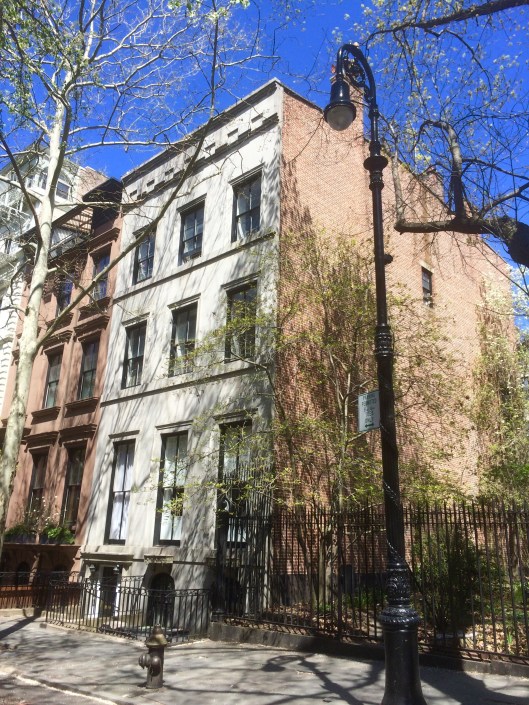
Arthur Miller's house in the Heights. The playwright lived in several Brooklyn locations before divorcing and marrying Marilyn Monroe.

Arthur Miller’s house in the Heights. The playwright lived in several Brooklyn locations before divorcing, marrying Marilyn Monroe, and leaving the borough.

I’m sorry about the lack of posts recently. Being the weeks before spring break, it has been a busy time. Plus I got sick with a cold I just could not shake for about two weeks; It really threw off my routine. Today my class and I went to Brooklyn Heights, where we had arranged for an Arthur Miller scholar to talk about the cultural significance of the neighborhood. Walt Whitman, Truman Capote, Hart Crane, and Miller himself are just a very few of the writers who lived in the area at one time or another. Incredibly the Heights as we know it would have been destroyed had Robert Moses gotten his highway where he wanted it. Personally I think Moses gets a bad rap, but in this case it’s tough to argue that his was the right position.

Arthur Miller lived in several houses in Brooklyn Heights, first as a renter and then as a homeowner when his plays began hitting it big on Broadway and the money started coming in. The house above is one that he owned until he sold it and bought a place a few blocks away. According to the story we heard today, he wanted a new place because his ground floor tenants were too demanding. The new house, which we also saw, was smaller but came with no renters to bother him. I’m sure he had way more money by then as well. Incredibly Arthur Miller sold the house you see above to none other than W.E.B. Dubois. Yes, that W.E.B. DuBois. The two knew each other from their mutual involvement in Civil Rights and other causes. That was the craziest story I have heard so far this week.

We always tell our students: history is all around you if you open your eyes to it.

The American Ambulance in Russia

10 Sunday Apr 2016

Posted by Keith Muchowski in New York City

≈ Comments Off on The American Ambulance in Russia

New Yorkers turn out at the the Russian Consulate, 22 Washington Square, for the blessing of Studebaker ambulances headed for the Eastern Front.

New Yorkers turn out at the the Russian Consulate, 22 Washington Square, for the blessing of Studebaker ambulances headed for the Eastern Front.

New York City’s centrality to the Great War effort is lost on many today. It should not be surprise anyone, though, that Gotham played an outsized role. The city, with its great ports and access to human and financial capital, is right here on the East Coast. What’s more, there were so many Europeans from the various belligerent nations already living here; the 20+ years prior to the war were the decades of the Great Migration. Immigrant communities often lived in their own enclaves with their own churches, schools, and home-language newspapers, and were tuned in to events overseas. Still it must have be an unusual sight when, on 10 April 1916, passersby in Washington Square came across the dedication and blessing of fifteen Studebaker ambulances soon headed for the Eastern Front. An American physician and West Pointer, Dr. Philip Newton, was to be put in charge of the ambulances on the Eastern Front. He had married a Russian the year before and would eventually be made a general by Czar Nicholas II. Russia of course would not remain in the war much longer. There was already growing unrest in the country and the Revolution took place the following year. Still in the spring of 1916 there was still hope.

21442v


(images/Library of Congress)


Coming across a piece of the First Army

22 Monday Feb 2016

Posted by Keith Muchowski in Governors Island, New York City

≈ Comments Off on Coming across a piece of the First Army

When we were in the city yesterday we ventured in to a thrift store after breakfast to see what treasures we might find. Such stores in New York can often reveal hidden gems; many people clean out their apartments after decades of living and bring it in without a second thought, not to mention wealthy folks who drop off their high quality clothes, mementoes and what have you just because they’ve become bored with it and are moving on to something else. There’s a whole other way to live.

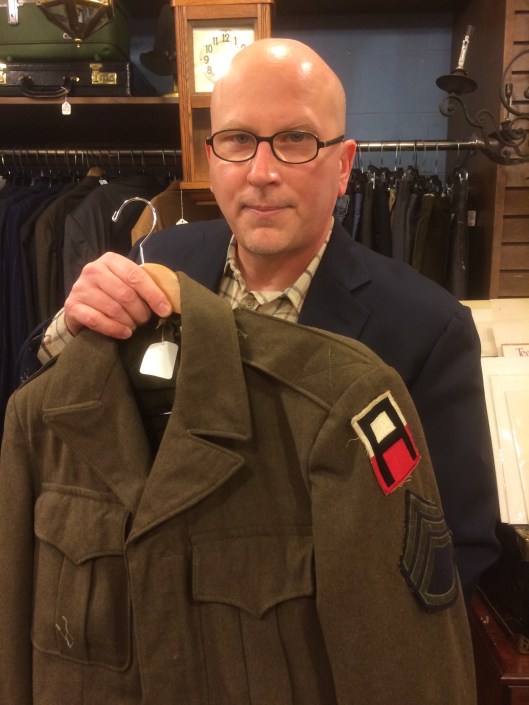
These did not come home with me but I could not help getting my picture taken with this First Army jacket and helmet. It was not clear if the two came from the same person but they were next to each other in the store. I imagine the jacket is from WWII, which means the wearer served in Europe. Note the thick weight of the garment and also its small size. Men were smaller back then, having grown up during the Depression as they did. The jacket itself is in very good condition, as are the First Army insignia and the staff sergeant stripes. The First Army of course dates back to the First World War when it was commanded by Pershing himself and later by Hunter Liggett. Those who have ever visited Governors Island will recognize the latter’s name. It was one of those small things that added an interesting moment to our Sunday.IMG_2969

IMG_2975

A quick peek at Borough Hall station

12 Friday Feb 2016

Posted by Keith Muchowski in New York City

≈ Comments Off on A quick peek at Borough Hall station

Borough Hall in 1908, the year the subway opened at this location. Note the two subway entrances.

Borough Hall in 1908, the year the subway opened at this location. Note the two transit entrances.

Our class was turing Cadman Plaza yesterday in the second installment of our walk-through of the site. After dipping in to Borough Hall for five minutes to talk and get out of the cold–it could not have been more than 28 degrees at the time–we wrapped up in the downtown Brooklyn subways station. The Borough Hall subway opened in May 1908, a full ten years after the consolidation of the five boroughs. A student noted that the plaque placed during the station’s opening contained the seals of both Brooklyn and New York City itself. This led to a discussion about how strategic and intentional the laying of the subways lines were when the tracks were being planned and laid out in the 1900s. The real answer is I don’t know–a student will be looking into that in the coming months–but it sounds feasible; the main purpose of the Brooklyn Bridge was to link Brooklyn and Manhattan’s city halls, which are only about two miles apart as the crow flies. In this sense the subway was a continuation of the Great Bridge’s main purpose.

The subway did more than ease movement however; it had the ancillary but still important purpose of binding Greater New York together. I made the point to the class that Staten Island is the least New York-like of the five boroughs culturally and politically. It’s more complicated than this, but what does Staten Island lack that the other four boroughs all have? . . . Subway lines.

The mayor at the time was none other than George B. McClellan, Jr., son and namesake of the Civil War general. It has never been clear to me why Mac Jr. gets so little recognition. He did so much to build New York City’s infrastructure and worked tirelessly to make Gotham a twentieth century city. He even served in World War One a few years after leaving city hall. I suspect he has never received his just due because his mayoralty came after that of Seth Low, who with LaGuardia and a few others is remembered as the top-tier of New York City leaders. It is strange how we fixate on some historical figures at the reputational expense of others.

(image/Irving Underhill, Library of Congress)


Brooklyn’s Daily Eagle and the Manhattan Pattern

28 Thursday Jan 2016

Posted by Keith Muchowski in New York City

≈ Comments Off on Brooklyn’s Daily Eagle and the Manhattan Pattern

Today marks an interesting day in Brooklyn history: the Daily Eagle published its last edition on this date in 1955. Students in my upcoming course will be studying the Brooklyn Daily Eagle and its significance to Brooklyn, New York City, and American history. The BDE dated back to the 1840s, when Walt Whitman was an editor for several years before leaving over political differences tied to his Free Soilist leanings. The Eagle seems to have been silent on Abraham Lincoln’s famous 1860 visit to Brooklyn’s Plymouth Church, where the soon-to-be presidential candidate attended services the day before his Cooper Union speech launched him to national prominence. The newspaper’s apparent silence on Lincoln’s visit is not surprising given its publisher’s Democratic leanings. The Eagle came into its own during the Gilded Age but took a blow with the consolidation of New York City in 1898. It was still a great paper–it lasted another half century and then some. Still, once Brooklyn was subsumed into Greater New York it could not compete with the papers across the East River.

The Brooklyn Daily Eagle building stood in what is now Cadman Plaza.

The Brooklyn Daily Eagle building stood in what is now Cadman Plaza.

The Eagle continued performing its yeoman service documenting local and national events. It was so successful that it eventually outgrew its original building and moved into a new facility in what is now Cadman Plaza. For those who know Brooklyn, the building you see above stood where the New York State Supreme Court building is today, across the street from the post office. The paper coverage was especially good during the Great War, which is fortunate given that the Brooklyn Navy Yard, Governors Island military base, and New Jersey piers shipping men and armaments across the Atlantic were all with a stone’s throw of Eagle offices. The paper continued doing well until, like the rest of Brooklyn, it became victim to Brooklyn’s decline and the mass exodus to the suburbs that took place after the Second World War. In its final edition the editors explained that the paper fell victim to the “Manhattan Pattern” that had been underway “since Brooklyn became part of New York City.” Indeed as the paper noted in that editorial sixty-one years ago today, the papers was always a step-child compared to Manhattan’s more privileged status within the municipal infrastructure. That’s true, but the Eagle’s demise was due also to trends taking place in the publishing industry at the time; many dailies were either going away or consolidating, a victim to the rise of television, frequent newspaper strikes, suburbanization, and other issues.

Brooklyn became a lesser place when the Eagle shut down. Even worse, the borough is saddled with the monstrous eyesore of a building that took its place when the Eagle building was then down. When the Brooklyn Dodgers finally broke through and won the World Series that October the Eagle was sadly not there to cover it. In a cruel irony, the iconographic headline “THIS IS NEXT YEAR” celebrating the Dodgers’ win appeared in the October 5, 1955 edition of the New York Daily News.

(image/Art and Picture Collection, The New York Public Library. “Brooklyn Daily Eagle.” The New York Public Library Digital Collections. 1903. http://digitalcollections.nypl.org/items/510d47e3-f806-a3d9-e040-e00a18064a99)


Sunday morning coffee

24 Sunday Jan 2016

Posted by Keith Muchowski in Memory, Monuments and Statuary, New York City

≈ Comments Off on Sunday morning coffee

IMG_2888I hope everyone is safe after the Great Blizzard of 2016. I have not been out since Friday evening and so have not yet seen it, but we got dumped with about three feet here in New York City. I took advantage of the weather yesterday by preparing the syllabus for the class I will be co-teaching this semester. It’s about 30% done. There are some holes to fill but it’s coming along. As I said the other day, I’m nervous and excited in equal measure. There’s that feeling of working without a net.

The other day I posted about the obscure Lincoln tablet affixed to the north face of Borough Hall. That same day I took this image of the World War II memorial in Cadman Plaza. Ironically, despite its size many people miss this one too because it is in a seldom-visited part of the plaza. The reason why it is so seldom-visited is something out students will learn and write about over the term. The way I understand it Robert Moses constructed this memorial in the early 1950s in response to what he saw as the excessive number of World War I memorials that sprung up throughout the city in the wake of the Great War. As Mark Levitch, the founder of the World War I Memorial Inventory Project notes, there are something like 10,000 Great War monuments of all types and sizes across the country. Every park in the five boroughs seems to have its doughboy and Moses was apparently determined that this not repeat itself after VE and VJ days. There is so much history surrounding us as we go about our daily lives. I will be writing more about the WW2 memorial as the semester goes along. The snow will hopefully have disappeared by then too!

Documenting Cadman Plaza

17 Sunday Jan 2016

Posted by Keith Muchowski in Civil War centennial, Monuments and Statuary, New York City, Theodore Roosevelt Jr (President)

≈ Comments Off on Documenting Cadman Plaza

Friday morning I was out and about taking photographs in Brooklyn’s Cadman Plaza for a class I will be co-teaching this coming spring semester. This is the first for-credit class I will be teaching and I am nervous and invigorated at the same time. Over the semester the students will be documenting a New York City locale; after some discussion my colleague and I chose Cadman Plaza. It is rife with interpretive possibilities. I have always known a fair amount about the area and am now boning up to bring myself up to full speed. I will talk about it here and there over the course of the term.

Brenner's plaque on the northern face of Brooklyn's Borough Hall

Brenner’s plaque on the northern face of Brooklyn’s Borough Hall

Here are two of the approximately twenty images I took the other day. This first one in on the north-facing wall of Borough Hall. It is hard to make out–my little phone camera will only do so much–but it is the Lincoln penny along with the full Gettysburg Address. When I first saw the tablet the other day–and I walked past it for years without ever noticing it–I figured the plaque was placed in either 1909 (centennial of Lincoln’s birth) or 1963 (centennial of the Gettysburg Address). With a little digging I learned via the Catalogue of the Works of Art Belonging to the City of New York, Volume 1 that the City of New York commissioned the 22″ x 28″ tablet from artist Victor D. Brenner for dedication in 1909. That is the year the Lincoln penny made its debut as well.

Communities large and small erected such works throughout that year to commemorate Lincoln’s 100th. President Roosevelt had commissioned Brenner to design the Lincoln penny a few years previously. Of course Roosevelt’s father was an acquaintance of Lincoln’s and a good friend of his personal secretary John Hay. Roosevelt always had an interest in coinage and medallic arts; TR was a good friend and patron of Augustus Saint-Gaudens as well. Downtown Brooklyn was doing poorly in these years, in large part due to the elevated train line that blighted the neighborhood and the new subway line that took commercial and residential traffic to other parts of the borough. Urban renewal efforts were in the works, but the onset of the Great War brought those plans to an end. I would go further into the story here, but that’s for the students to do this winter. I’m eager to see how the class goes.

The plaque and hall from a distance. The tablet is in the lower left corner above the white car.

The plaque and hall from a distance. The tablet is in the lower left corner above the white car.

A quick tie story

15 Thursday Oct 2015

Posted by Keith Muchowski in New York City

≈ 2 Comments

Navy grenadine

Navy grenadine

I was at the New York Public Library doing some work today when at lunchtime I took a break and ran around the corner to the storefront of Winston Tailors: it was my goal to–hopefully–buy one of Paul Winston’s ties. The name may not ring many bells outside the world of men’s clothing but Mr. Winston’s father was the founder of CHIPP, a clothing store once on Madison Avenue across the street from Brooks Brothers. J Press was right there as well. I assume they were where they were due to the proximity to Grand Central Station. Brooks Brothers opened its flagship store at 44th and Madison in 1915, two years after Grand Central opened. CHIPP outfitted Cy Vance and John F. Kennedy among others. I read in an interview after getting home that Mr. Winston accompanied his dad on fitting trips to the Carlyle Hotel when President Kennedy was in town.

CHIPP is gone now but the family tradition continues through Mr. Winston. Now in his mid-70s, he runs his tailor shop out of the lobby of a building on 44th Street between 5th and 6th. He also sells ties through what he apparently considers an entity separate from the tailoring itself; he calls the tie business CHIPP2. When I got to the building today I could not find it, and so asked the concierge. He couldn’t find CHIPP2 in the directory and with incredible graciousness looked it up on his own cell phone and called. (I didn’t know at that moment that the tailor shop was the site too for the ties.)

I did not want any tie but was specifically looking for a navy grenadine: the most conservative of conservative neckwear. Why can’t men dress the way they did between the world wars? As my luck would have it a shipment had come in an 1 1/2 hour earlier. When I told him what I wanted, he literally went behind the counter and pulled it out of the box that the postman had delivered that morning. In other words–as he told me–had I come in at 11:00 instead of 1:00 I would not have gotten the tie. What is more, many in the delivery were pre-orders that were already spoken for. I had never met Mr. Winston before but he is clearly a witty and charming raconteur. It was so strange that I had showed just after he had received the shipment that we had a brief discussion about fate and coincidence. On the way out I thanked the building concierge once again and also shared with him that right there in the building works the man who with his father once made John F. Kennedy’s suits.

“A public place”

21 Tuesday Jul 2015

Posted by Keith Muchowski in New York City, Theodore Roosevelt Sr (Father)

≈ 4 Comments

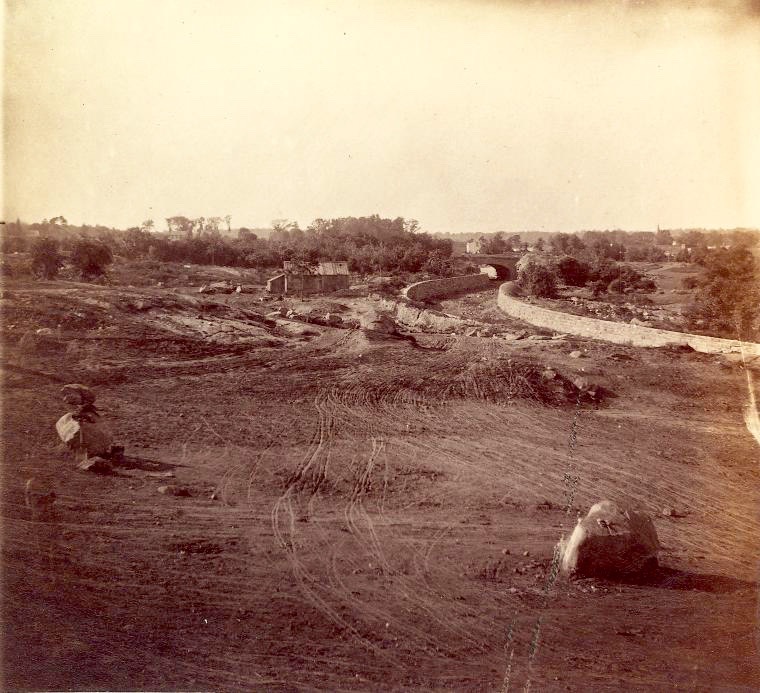
This 1862 photograph shows the construction of Central Park. Note how the soil has been raked and the boulders placed in preparation for the landscaping that would come later.

This 1862 photograph shows the construction of Central Park. Note how the soil has been raked, the boulders placed, and the stone walls laid in preparation for the landscaping that would come later.

This week, in between hacking from the cough I seemingly cannot shake, I have been making progress on the Theodore Roosevelt Senior book. I have been focusing my energies at the moment on the 1850s, when the sectional crisis was intensifying. Many New Yorker had strong Southern sympathies and were ambivalent at best about slavery one way or the other. New York was also a notoriously cramped and squalid place, with its own concerns and provinciality. Ultimately all politics is local and New Yorkers were most concerned about their own increasingly dangerous and crowded streets. Charles Loring Brace founded the Children’s Aid Society in 1853 to combat at least some of the city’s social ills. He and Theodore Roosevelt Senior were active with the Aid Society for decades. The CAS exists today in the 21st century, doing much of the same work it has always done.

On July 21, 1853, around the time Brace founded the Children’s Aid Society, the New York States Assembly passed the enabling legislation for what would eventually become Central Park. Five years later Frederick Law Olmsted and his colleague Calvert Vaux would win the design competition. It is lucky the park was ever finished, its construction coming as it did in the wake of the Panic of 1857 and the onset of the Civil War in 1861.

I say all this because Olmsted and Brace were best friends and shared many ideas about the city. For one thing, both passionately believed in the democratic and redemptive power that open land could have on a city’s populace. One must remember that there were few public parks in Manhattan at this time. It had no garden cemeteries either. Green-Wood Cemetery in Brooklyn had opened in 1838 as much to serve the needs of the living as the dead. Still that was a ways to come with no subways or Brooklyn Bridge to get you there. Thus a communal, public park was crucial for New York City’s future. These things are important to keep in mind when in a place such as Central or Prospect Parks. The tendency is to think they just put a fence around nature when nothing could be further from the truth. These are planned communities in every way.

(image/Rare Book Division, The New York Public Library. “View of the crossing in connection with 8th Ave. and 96th St. October 18, 1862.” The New York Public Library Digital Collections. 1862. http://digitalcollections.nypl.org/items/94b7acd9-dc7f-74f7-e040-e00a18063585)


Thinking of the French this 4th

04 Saturday Jul 2015

Posted by Keith Muchowski in Governors Island, New York City, Theodore Roosevelt Birthplace (NPS)

≈ Comments Off on Thinking of the French this 4th

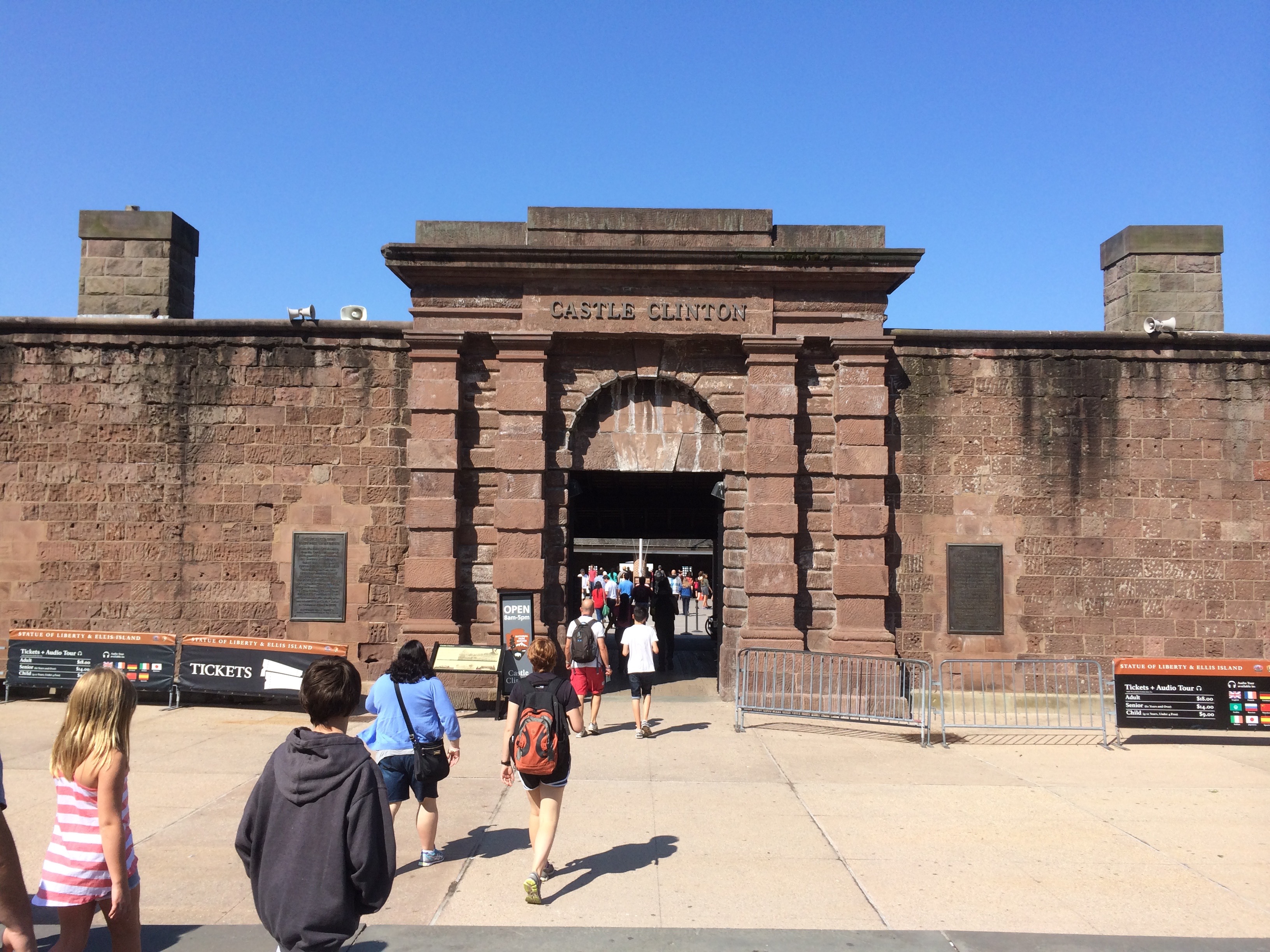
The Marquis de Lafayette arrived in Castle Garden, also called Castle Clinton in 1824. Today this is a unit of the National Park Service.

The Marquis de Lafayette arrived in Castle Garden, also called Castle Clinton in 1824. Today this is a unit of the National Park Service.

On my tours at the Roosevelt Birthplace I always told the story of Marshal Ferdinand Foch’s 1921 visit to the site, which was then still under reconstruction. The Great War had been over for three years and Foch was on East 20th Street paying his respects to Theodore and Quentin Roosevelt. Many of you will know that young Airman Quentin died in France on Bastille Day 1918. The wider story is that Foch was in the United States on a goodwill tour modeled in part on Marquis de Lafayette’s goodwill tour of 1824-25. Lafayette arrived in New York and landed at Castle Garden to great fanfare before venturing out across the still-young nation whose independence he had helped win.

One of the beautiful things about the Battery is its sense of the old and the modern, as this image of the castle with the Manhattan skyline attests.

One of the beautiful things about the Battery is its sense of the historic and the modern, as this image of the castle with the Manhattan skyline attests.

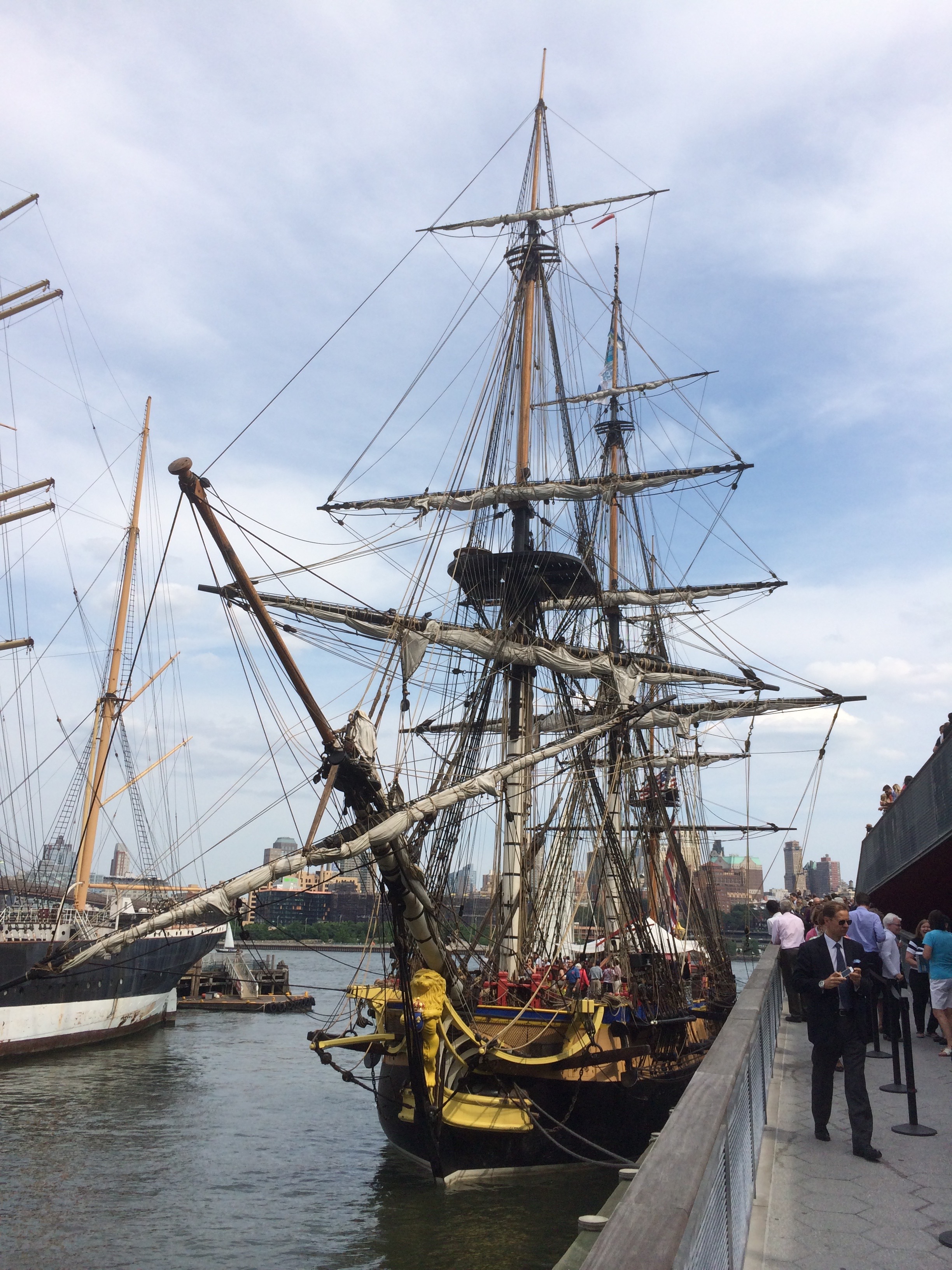
This all came back to me yesterday when, after the day at Governors Island, I ventured up to the South Street Seaport to see the Hermione. For those not aware, this is a reconstruction of the frigate that took Lafayette here. The ship sailed into New York earlier this week to mark the 4th of July. Interest was high and there were many people out enjoying the scene.

The Hermione docked at the South Street Seaport, July 2015

The Hermione docked at the South Street Seaport, July 3, 2015

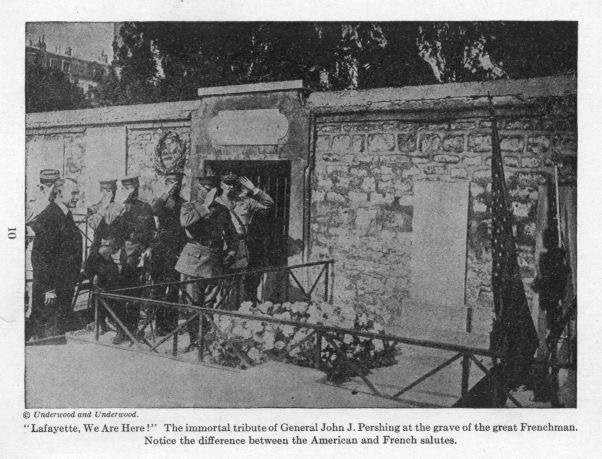
One of the most symbolic acts of the Great War took place on a Fourth of July. In 1917 members of the 16th Infantry Regiment led a contingent that included General Pershing on a five mile march ending at Lafayette’s tomb at Picpus Cemetery. The arrival of the Americans in summer 1917, though largely symbolic at this point in the war, could not have come a better time for the flagging morale of the French people. It was at Lafayette’s grave that Colonel Charles E. Stanton said the famous line: “Nous sommes ici, Lafayette.”

As the caption on this old photograph indicates, Colonel Stanton's famous words are often misattributed to John Pershing. General Pershing was in attendance and had previously approved Colonel Stanton's speech, including its most famous line. The 16th Infantry, part of the First Infantry Division, had led the highly publicized march.

As the caption on this old photograph indicates, Colonel Stanton’s words are often misattributed to John Pershing. General Pershing was in attendance however and had previously approved Colonel Stanton’s speech, including its most famous line. The 16th Infantry, part of the First Infantry Division, had led the highly publicized 4th of July march.

Happy 4th.


← Older posts
Newer posts →

Enter your email address to subscribe to this blog and receive notifications of new posts by email.

Join 258 other subscribers

Categories

Archives

  • November 2023 (1)
  • October 2023 (3)
  • September 2023 (3)
  • August 2023 (4)
  • July 2023 (7)
  • June 2023 (10)
  • May 2023 (8)
  • April 2023 (6)
  • March 2023 (5)
  • February 2023 (4)
  • January 2023 (4)
  • December 2022 (4)
  • November 2022 (8)
  • October 2022 (2)
  • September 2022 (4)
  • June 2022 (1)
  • May 2022 (1)
  • April 2022 (13)
  • January 2022 (1)
  • December 2021 (2)
  • November 2021 (1)
  • October 2021 (3)
  • September 2021 (3)
  • August 2021 (5)
  • July 2021 (1)
  • June 2021 (1)
  • May 2021 (4)
  • April 2021 (3)
  • March 2021 (4)
  • February 2021 (7)
  • January 2021 (4)
  • December 2020 (4)
  • November 2020 (3)
  • October 2020 (4)
  • September 2020 (7)
  • August 2020 (5)
  • July 2020 (7)
  • June 2020 (11)
  • May 2020 (7)
  • April 2020 (9)
  • March 2020 (9)
  • February 2020 (7)
  • January 2020 (6)
  • December 2019 (7)
  • November 2019 (9)
  • October 2019 (4)
  • September 2019 (6)
  • August 2019 (10)
  • July 2019 (8)
  • June 2019 (6)
  • May 2019 (9)
  • April 2019 (8)
  • March 2019 (6)
  • February 2019 (8)
  • January 2019 (5)
  • December 2018 (10)
  • November 2018 (6)
  • October 2018 (9)
  • September 2018 (11)
  • August 2018 (11)
  • July 2018 (17)
  • June 2018 (10)
  • May 2018 (8)
  • April 2018 (9)
  • March 2018 (8)
  • February 2018 (5)
  • January 2018 (7)
  • December 2017 (11)
  • November 2017 (8)
  • October 2017 (9)
  • September 2017 (11)
  • August 2017 (12)
  • July 2017 (14)
  • June 2017 (18)
  • May 2017 (11)
  • April 2017 (10)
  • March 2017 (9)
  • February 2017 (11)
  • January 2017 (14)
  • December 2016 (7)
  • November 2016 (8)
  • October 2016 (8)
  • September 2016 (9)
  • August 2016 (6)
  • July 2016 (12)
  • June 2016 (8)
  • May 2016 (9)
  • April 2016 (6)
  • March 2016 (12)
  • February 2016 (10)
  • January 2016 (9)
  • December 2015 (9)
  • November 2015 (11)
  • October 2015 (8)
  • September 2015 (9)
  • August 2015 (13)
  • July 2015 (14)
  • June 2015 (11)
  • May 2015 (11)
  • April 2015 (18)
  • March 2015 (10)
  • February 2015 (8)
  • January 2015 (8)
  • December 2014 (12)
  • November 2014 (13)
  • October 2014 (16)
  • September 2014 (11)
  • August 2014 (16)
  • July 2014 (12)
  • June 2014 (13)
  • May 2014 (10)
  • April 2014 (10)
  • March 2014 (11)
  • February 2014 (12)
  • January 2014 (10)
  • December 2013 (11)
  • November 2013 (14)
  • October 2013 (14)
  • September 2013 (14)
  • August 2013 (13)
  • July 2013 (17)
  • June 2013 (9)
  • May 2013 (13)
  • April 2013 (13)
  • March 2013 (16)
  • February 2013 (15)
  • January 2013 (15)
  • December 2012 (18)
  • November 2012 (18)
  • October 2012 (21)
  • September 2012 (14)
  • August 2012 (16)
  • July 2012 (21)
  • June 2012 (22)
  • May 2012 (24)
  • April 2012 (20)
  • March 2012 (23)
  • February 2012 (22)
  • January 2012 (15)
  • December 2011 (23)
  • November 2011 (22)
  • October 2011 (23)
  • September 2011 (18)
  • August 2011 (19)
  • July 2011 (20)
  • June 2011 (29)
  • May 2011 (25)
  • April 2011 (18)
  • March 2011 (21)
  • February 2011 (11)

Meta

  • Create account
  • Log in
  • Entries feed
  • Comments feed
  • WordPress.com
Creative Commons License
This work is licensed under a Creative Commons Attribution-NonCommercial-ShareAlike 4.0 International License.

Enter your email address to subscribe to this blog and receive notifications of new posts by email.

Join 258 other subscribers

Categories

Archives

  • November 2023 (1)
  • October 2023 (3)
  • September 2023 (3)
  • August 2023 (4)
  • July 2023 (7)
  • June 2023 (10)
  • May 2023 (8)
  • April 2023 (6)
  • March 2023 (5)
  • February 2023 (4)
  • January 2023 (4)
  • December 2022 (4)
  • November 2022 (8)
  • October 2022 (2)
  • September 2022 (4)
  • June 2022 (1)
  • May 2022 (1)
  • April 2022 (13)
  • January 2022 (1)
  • December 2021 (2)
  • November 2021 (1)
  • October 2021 (3)
  • September 2021 (3)
  • August 2021 (5)
  • July 2021 (1)
  • June 2021 (1)
  • May 2021 (4)
  • April 2021 (3)
  • March 2021 (4)
  • February 2021 (7)
  • January 2021 (4)
  • December 2020 (4)
  • November 2020 (3)
  • October 2020 (4)
  • September 2020 (7)
  • August 2020 (5)
  • July 2020 (7)
  • June 2020 (11)
  • May 2020 (7)
  • April 2020 (9)
  • March 2020 (9)
  • February 2020 (7)
  • January 2020 (6)
  • December 2019 (7)
  • November 2019 (9)
  • October 2019 (4)
  • September 2019 (6)
  • August 2019 (10)
  • July 2019 (8)
  • June 2019 (6)
  • May 2019 (9)
  • April 2019 (8)
  • March 2019 (6)
  • February 2019 (8)
  • January 2019 (5)
  • December 2018 (10)
  • November 2018 (6)
  • October 2018 (9)
  • September 2018 (11)
  • August 2018 (11)
  • July 2018 (17)
  • June 2018 (10)
  • May 2018 (8)
  • April 2018 (9)
  • March 2018 (8)
  • February 2018 (5)
  • January 2018 (7)
  • December 2017 (11)
  • November 2017 (8)
  • October 2017 (9)
  • September 2017 (11)
  • August 2017 (12)
  • July 2017 (14)
  • June 2017 (18)
  • May 2017 (11)
  • April 2017 (10)
  • March 2017 (9)
  • February 2017 (11)
  • January 2017 (14)
  • December 2016 (7)
  • November 2016 (8)
  • October 2016 (8)
  • September 2016 (9)
  • August 2016 (6)
  • July 2016 (12)
  • June 2016 (8)
  • May 2016 (9)
  • April 2016 (6)
  • March 2016 (12)
  • February 2016 (10)
  • January 2016 (9)
  • December 2015 (9)
  • November 2015 (11)
  • October 2015 (8)
  • September 2015 (9)
  • August 2015 (13)
  • July 2015 (14)
  • June 2015 (11)
  • May 2015 (11)
  • April 2015 (18)
  • March 2015 (10)
  • February 2015 (8)
  • January 2015 (8)
  • December 2014 (12)
  • November 2014 (13)
  • October 2014 (16)
  • September 2014 (11)
  • August 2014 (16)
  • July 2014 (12)
  • June 2014 (13)
  • May 2014 (10)
  • April 2014 (10)
  • March 2014 (11)
  • February 2014 (12)
  • January 2014 (10)
  • December 2013 (11)
  • November 2013 (14)
  • October 2013 (14)
  • September 2013 (14)
  • August 2013 (13)
  • July 2013 (17)
  • June 2013 (9)
  • May 2013 (13)
  • April 2013 (13)
  • March 2013 (16)
  • February 2013 (15)
  • January 2013 (15)
  • December 2012 (18)
  • November 2012 (18)
  • October 2012 (21)
  • September 2012 (14)
  • August 2012 (16)
  • July 2012 (21)
  • June 2012 (22)
  • May 2012 (24)
  • April 2012 (20)
  • March 2012 (23)
  • February 2012 (22)
  • January 2012 (15)
  • December 2011 (23)
  • November 2011 (22)
  • October 2011 (23)
  • September 2011 (18)
  • August 2011 (19)
  • July 2011 (20)
  • June 2011 (29)
  • May 2011 (25)
  • April 2011 (18)
  • March 2011 (21)
  • February 2011 (11)

Meta

  • Create account
  • Log in
  • Entries feed
  • Comments feed
  • WordPress.com
Creative Commons License
This work is licensed under a Creative Commons Attribution-NonCommercial-ShareAlike 4.0 International License.

Enter your email address to subscribe to this blog and receive notifications of new posts by email.

Join 258 other subscribers

Categories

Archives

  • November 2023 (1)
  • October 2023 (3)
  • September 2023 (3)
  • August 2023 (4)
  • July 2023 (7)
  • June 2023 (10)
  • May 2023 (8)
  • April 2023 (6)
  • March 2023 (5)
  • February 2023 (4)
  • January 2023 (4)
  • December 2022 (4)
  • November 2022 (8)
  • October 2022 (2)
  • September 2022 (4)
  • June 2022 (1)
  • May 2022 (1)
  • April 2022 (13)
  • January 2022 (1)
  • December 2021 (2)
  • November 2021 (1)
  • October 2021 (3)
  • September 2021 (3)
  • August 2021 (5)
  • July 2021 (1)
  • June 2021 (1)
  • May 2021 (4)
  • April 2021 (3)
  • March 2021 (4)
  • February 2021 (7)
  • January 2021 (4)
  • December 2020 (4)
  • November 2020 (3)
  • October 2020 (4)
  • September 2020 (7)
  • August 2020 (5)
  • July 2020 (7)
  • June 2020 (11)
  • May 2020 (7)
  • April 2020 (9)
  • March 2020 (9)
  • February 2020 (7)
  • January 2020 (6)
  • December 2019 (7)
  • November 2019 (9)
  • October 2019 (4)
  • September 2019 (6)
  • August 2019 (10)
  • July 2019 (8)
  • June 2019 (6)
  • May 2019 (9)
  • April 2019 (8)
  • March 2019 (6)
  • February 2019 (8)
  • January 2019 (5)
  • December 2018 (10)
  • November 2018 (6)
  • October 2018 (9)
  • September 2018 (11)
  • August 2018 (11)
  • July 2018 (17)
  • June 2018 (10)
  • May 2018 (8)
  • April 2018 (9)
  • March 2018 (8)
  • February 2018 (5)
  • January 2018 (7)
  • December 2017 (11)
  • November 2017 (8)
  • October 2017 (9)
  • September 2017 (11)
  • August 2017 (12)
  • July 2017 (14)
  • June 2017 (18)
  • May 2017 (11)
  • April 2017 (10)
  • March 2017 (9)
  • February 2017 (11)
  • January 2017 (14)
  • December 2016 (7)
  • November 2016 (8)
  • October 2016 (8)
  • September 2016 (9)
  • August 2016 (6)
  • July 2016 (12)
  • June 2016 (8)
  • May 2016 (9)
  • April 2016 (6)
  • March 2016 (12)
  • February 2016 (10)
  • January 2016 (9)
  • December 2015 (9)
  • November 2015 (11)
  • October 2015 (8)
  • September 2015 (9)
  • August 2015 (13)
  • July 2015 (14)
  • June 2015 (11)
  • May 2015 (11)
  • April 2015 (18)
  • March 2015 (10)
  • February 2015 (8)
  • January 2015 (8)
  • December 2014 (12)
  • November 2014 (13)
  • October 2014 (16)
  • September 2014 (11)
  • August 2014 (16)
  • July 2014 (12)
  • June 2014 (13)
  • May 2014 (10)
  • April 2014 (10)
  • March 2014 (11)
  • February 2014 (12)
  • January 2014 (10)
  • December 2013 (11)
  • November 2013 (14)
  • October 2013 (14)
  • September 2013 (14)
  • August 2013 (13)
  • July 2013 (17)
  • June 2013 (9)
  • May 2013 (13)
  • April 2013 (13)
  • March 2013 (16)
  • February 2013 (15)
  • January 2013 (15)
  • December 2012 (18)
  • November 2012 (18)
  • October 2012 (21)
  • September 2012 (14)
  • August 2012 (16)
  • July 2012 (21)
  • June 2012 (22)
  • May 2012 (24)
  • April 2012 (20)
  • March 2012 (23)
  • February 2012 (22)
  • January 2012 (15)
  • December 2011 (23)
  • November 2011 (22)
  • October 2011 (23)
  • September 2011 (18)
  • August 2011 (19)
  • July 2011 (20)
  • June 2011 (29)
  • May 2011 (25)
  • April 2011 (18)
  • March 2011 (21)
  • February 2011 (11)

Meta

  • Create account
  • Log in
  • Entries feed
  • Comments feed
  • WordPress.com
Creative Commons License
This work is licensed under a Creative Commons Attribution-NonCommercial-ShareAlike 4.0 International License.

Blog at WordPress.com.

  • Subscribe Subscribed
    • The Strawfoot
    • Join 229 other subscribers
    • Already have a WordPress.com account? Log in now.
    • The Strawfoot
    • Subscribe Subscribed
    • Sign up
    • Log in
    • Report this content
    • View site in Reader
    • Manage subscriptions
    • Collapse this bar
 

Loading Comments...