• About

The Strawfoot

~ a New Yorker's American History blog

The Strawfoot

Category Archives: Those we remember

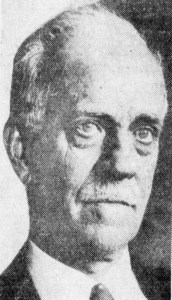
Frederick W. Whitridge, 1852-1916

02 Monday Jan 2017

Posted by Keith Muchowski in Theodore Roosevelt Jr (President), Theodore Roosevelt Sr (Father), Those we remember, WW1

≈ 2 Comments

The funeral of Frederick W. Whitridge was in Manhattan's Grace Church one hundred years ago today.

The funeral of Frederick W. Whitridge was in Manhattan’s Grace Church one hundred years ago today.

Theodore Roosevelt was in Manhattan on 2 January 1917 for the funeral of his friend Frederick W. Whitridge. Whitridge had been the long serving president of the Third Avenue Elevated Line and had died on 30 December. The funeral was at Grace Church on Broadway and 10th Street. Colonel Roosevelt was a pallbearer along with Joseph H. Choate, J.P. Morgan, British diplomat Cecil Spring-Rice and others. It was fitting that Ambassador Spring-Rice was there; Whitridge, an American, was the son-in-law of British poet Matthew Arnold.
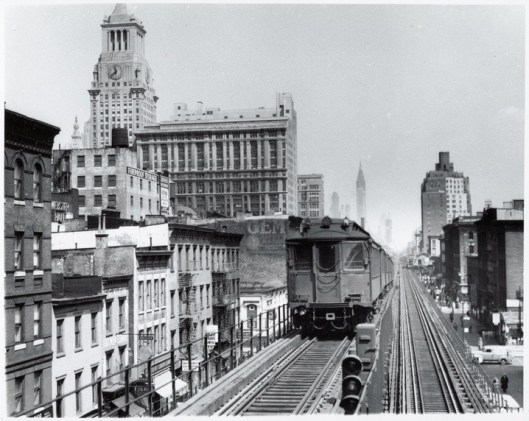
The Third Avenue El was part of New York life for decades.

The Third Avenue El was part of New York life for decades.

One can say this of anyone in any era but Whitridge’s funeral signaled an interesting before-and-after moment. Decades earlier Whitridge had been a supporter of Theodore Roosevelt Sr., coming to his aide after the powerful New York senator Roscoe Conkling blocked his appointment to the New York Custom House during the Hayes Administration. In the 1880s Whitridge was a Civil Service reformer, which is presumably where he came into Roosevelt’s orbit. As mentioned Whitridge was the president of the Third Avenue Elevated Line, one of the four commuter rails that took New Yorkers about their daily lives until being torn down after the Second World War. As leader he was charged with the thankless tasks of negotiating stock portfolios and handling worker strikes. This was no small thing: the elevated lines were part of the daily fabric of New York life and any disruption was duly noted by the public.

One person who missed the funeral was Frederick’s son, Captain Arnold Whitridge, who had been serving with the British Royal Field Artillery since 1915. Arnold was actually an American, a 1913 graduate of Yale, who was attending Oxford when the Great War broke out in summer 1914. With his father’s death he was back in the United States though not for long. When the U.S. entered the war in April 1917 he joined the A.E.F. and soon found himself in France once more.

(top image, Library of Congress; bottom NYPL)

Phil Chess, 1921-2016

23 Sunday Oct 2016

Posted by Keith Muchowski in Jazz, Those we remember

≈ Comments Off on Phil Chess, 1921-2016

I noted with interest the passing of Phil Chess earlier this week. Though I would not put too much into it, it was fitting that Chess, a fixture in the Chicago music scene for well over half a century, died the week the Cubs made it to the World Series for the first time since 1945. Phil and his older brother Leonard were the founders of Chess Records, one of the independent labels that sprung up after the Second World War to record the urban blues. The brothers started in what we’ll euphemistically call the entertainment industry when in 1938 they began operating juke joints catering to the South Side’s growing African-American community. I’m simplifying here but when their Macomba Lounge burned down in 1950 they used the insurance to fund what would become Chess. The brothers would spend the next decades recording Muddy Waters, Howlin’ Wolf, Chuck Berry, Sonny Boy Williamson, Little Walter, Etta James and scores of others.

Chess Records Studios as seen in 2012

Chess Records Studios as seen in 2012

The story truly began during World War One. In The Warmth of Other Sons Isabel Wilkerson notes that the Chicago Defender mentioned in passing in its February 5, 1916 edition that northern railroads were facilitating the movement of African-American laborers from the South to the North to work in the munitions plants. After the war the Chess brothers were part of that other Great Migration; their father, Yasef Czyz, came to the United States from Motal, Poland (today part of Belarus) just after the Great War. He soon sent for his wife and children. By the time Leonard and Philip reached their mid-twenties the blues too had come age. Leonard in particular spent much of the early 1950s traveling not only the South but through Northern industrial hubs such as Detroit, St. Louis and Gary, Indiana–essentially anywhere within driving distance from Chicago where Africans-Americans lived, worked, and socialized–to plug the Chess catalog and scout for new talent. Phil was the quieter, younger brother who kept things running.

I have always been conflicted about the Chess Brothers and their cohorts. On the one hand there is no question that they recorded, disseminated, and thus saved an essential component of American–and today, world–culture. On the other hand their enterprise was built on a foundation of exploitation of that talent. That exploitation became only more apparent when the Rolling Stones, Eric Clapton and others came along and began making real money; in the 1960s those once-pesky things like contracts, copyrights and royalties went from ancillary issues to matters of serious economic consequence. One can’t argue that it is not part of the story.

The Chess family has maintained–not without merit–that while their business practices were sometimes unorthodox, they looked after their artists in their own ways. This meant things like paying for funerals and medical expenses, occasionally bailing someone out of jail, and dirty work like paying for abortions in those years prior to Roe v Wade. Let’s not kid ourselves; we’re talking about bluesmen here. It is a messy and human story from a time when America was a harder place and people did what they had to do to get along. Today the blues is securely canonized, but such was not always the case. The life and times of Phil Chess were–and still are–part of why it is so mythologized.

(image/Steve Browne & John Verkleir via Wikimedia Commons)


Frederick Seward in winter

30 Wednesday Mar 2016

Posted by Keith Muchowski in Governors Island, Those we remember, Uncategorized

≈ 2 Comments

Frederick W. Seward helped found the Republican Party in New York.

Frederick W. Seward helped found the Republican Party in New York and lived long enough to see the first nine months of the Great War.

I was home working today. I was writing about the creation of the New York State Republican Party, which formed in Saratoga Springs in August 1854 as a response to the Kansas-Nebraska Act. Young Chester Arthur was one of the delegates. In September 1904 during the heat of the presidential race between Theodore Roosevelt and Alton B. Parker–two New Yorkers–the Republicans held a 50th reunion in Saratoga Springs. TR’s running mate, Charles W. Fairbanks, was one of the speakers in Saratoga at that 50th celebration. Members of John C. Frémont’s family were on hand as well, including his son Major Francis P. Fremont who five years later would be court-martialed for a third time in the waning months of the Roosevelt administration.

What caught my eye when reading the 50th anniversary Proceedings was this photograph of the aging Frederick W. Seward. Frederick was of course the son of William H. Seward. He graduated from Union College a year after Chester Arthur and he too would be at the Saratoga Convention in August 1854. Frederick later worked as Assistant Secretary of State for his father in the Lincoln and Johnson Administrations and served in the same capacity for William Evarts for a time during the Hayes’s years, eventually succeeded by John Hay. Seward thwarted the Booth conspirator who tried to assassinate his father and a half a century later was still around to tell the tale. He helped run the Hudson-Fulton Celebration in 1909, a forgotten event today but which among other things involved Wilbur Wright flying from Governors Island, around the Statue of Liberty, and back.Even more incredibly an article in the Smithsonian Air & Space Magazine informs us that passengers aboard the Lusitania witnessed that feat.

Seward died in April 1915, fifty years after the Civil War’s end and two years prior to American involvement in the First World War.

Louis Auchincloss, 1917-2010

23 Wednesday Mar 2016

Posted by Keith Muchowski in Those we remember, World War One Centennial Committee for New York City, Writing

≈ Comments Off on Louis Auchincloss, 1917-2010

Earlier this month I read Louis Auchincloss’s memoir, A Voice from Old New York: A Memoir of My Youth. I have always found it oddly comforting that cities like New York, Boston and Philadelphia still have remnants of the old families that ran things for, really, centuries. When one goes to a place like the University or Union League Club one can’t help but notice the names from these families of the sons who fought in our nation’s earlier wars. When I read the excerpt about his father and the training base in Kentucky I naturally had to do a small something about it.

Never Forgotten: the story of Sergeant Paul Maynard

13 Saturday Feb 2016

Posted by Keith Muchowski in Those we remember

≈ 7 Comments

It is a brutally cold day here. This morning I had the chance to watch the film below. It was produced by Michael Shipman for the American Battle Monuments Commission and tells the story of a young doughboy killed during the Meuse-Argonne Offensive on 11 November 1918, the last day of the war. The film showed at last year’s GI Film Festival over Memorial Day Weekend. Carve out 25 minutes this Presidents Day Weekend to watch the poignant documentary.


Franklin Delano Roosevelt, 1882-1945

30 Saturday Jan 2016

Posted by Keith Muchowski in Eleanor Roosevelt, Franklin Delano Roosevelt, Theodore Roosevelt Jr (President), Those we remember, Woodrow Wilson

≈ Comments Off on Franklin Delano Roosevelt, 1882-1945

A youthful Franklin Roosevelt as he was circa 1916 in his mid-30s. He loved performing these types of duties as assistant secretary of the Navy

A youthful Franklin Roosevelt as he was circa 1916 while in his mid-30s. He loved performing these types of duties as assistant secretary of the Navy

Franklin Delano Roosevelt was born on this day in 1882. It’s interesting how we commemorate Washington and Lincoln’s birthdays and then it drops off from there. I suppose with Washington commemoration had much to do with binding the tenuous nation together through the early decades of the republic; Lincoln then joined pantheon as the first president to be assassinated. That’s pretty much it. I thought it would be interesting to see what FDR was doing a century ago. His tenure as assistant secretary of the Navy is one of the least studied periods of his life, probably because he was not making policy per se but carrying out the orders of Naval Secretary Josephus Daniels and President Wilson.

In January 1916 Roosevelt was campaigning hard for Preparedness. He gave a talk in Binghamton, New York 100 years ago this week in which he averred that the U.S. Navy should give up “not one dollar” in appropriations. He was in accord with Wilson in many respects; the sinking of the Lusitania that past May had hardened Wilson’s stance. What is more, Secretary of State William Jennings Bryan was gone by this time, having resigned over what he saw as Wilson’s belligerent stance. In many ways Franklin Roosevelt was making the case better and more forcefully than Wilson, whose appeals to Congress and elsewhere were largely met with skepticism from all sides. FDR’s cousins Theodore Roosevelt for one was not impressed with Wilson’s proposals and called them “half-preparedness.” Of course as a former president he had more leeway than his cousin did to call it as he saw it.

Franklin Roosevelt returned to Washington after his Binghamton speech to get back to work and attend to Eleanor and his kids. He needed to be close to home. He and Eleanor’s last child, John Aspinwall Roosevelt, would be born just six weeks later. It is lost on us how young he was when so much of this was going on.

(image/Library of Congress)

George Clayton Johnson, 1929-2015

31 Thursday Dec 2015

Posted by Keith Muchowski in Rod Serling, Those we remember

≈ 2 Comments

George Clayton Johnson in 2006

George Clayton Johnson in 2006

I noted with sadness yesterday the passing of George Clayton Johnson. George actually died on Christmas Day but I had not heard the news until catching up on the news after the holiday. I earned the right to call him George after meeting him at the 2009 Rod Serling Conference at Ithaca College. He was the keynote speaker and as chance had it he was staying in our hotel; I recognized him immediately in the hotel restaurant in the morning. How could one not with the way he always wore his trademark hat? I was speaking an hour later at the conference about George Beaumont and as I was making my opening remarks who walked in but George himself. I realized instinctively that the pressure was one–I was talking about the guy’s best friend. He really could have called me out on any b.s. I might have spouted. It meant the world to me that he liked my talk. He even worked a few of my points into his keynote speech that evening.

I was talking to our houseguest earlier in the week about the Twilight Zone episode “Ninety Years Without Slumbering,” in which the elderly protagonist will die should the old grandfather clock he has owned for his lifetime should stop ticking. George Clayton Johnson wrote the episode. Death was a common theme in Clayton’s work. “Ninety Years,” “The Four of Us are Dying,” “Kick the Can,” “A Game of Pool,” and “Nothing in the Dark” all have mortality and immortality as central themes. I have always loved the photo of the young GCJ standing with Robert Redford on the set of “Nothing in the Dark.” In his memoir New York in the 50s Dan Wakefield makes a strong case that Redford was too good-looking for his own good, never receiving his full due as an actor.

Mr. Johnson did so much besides the Twilight Zone. He wrote the first episode of Star Trek, reams of short stories, the novel Ocean’s 11, and collaborated on the book Logan’s Run. He was working on a sequel when he died. George Clayton Johnson’s death marks the end of a Twilight Zone era. He was the last of the Big Four that included Beaumont (1967), Serling (1975), Richard Matheson (2013), and now George Clayton Johnson. I am glad to have met him when I had the opportunity.

Don’t forget that New Years means the annual Twilight Zone marathon. Happy 2016, and give a thought to George Clayton Johnson.

(By JaSunni Productions, LLC, at PicasaWeb [CC BY-SA 3.0 (http://creativecommons.org/licenses/by-sa/3.0)%5D, via Wikimedia Commons)


Remembering Millard Fillmore Cook

29 Tuesday Dec 2015

Posted by Keith Muchowski in Governors Island, Those we remember, WW1

≈ Comments Off on Remembering Millard Fillmore Cook

Millard Fillmore Cook served under General Pershing on the Mexican border in 1916. The following year he was discharged from the 106th (23rd) due to a broken leg. He served forty-one in the New York State militia.

Millard Fillmore Cook served under General Pershing on the Mexican border in 1916. The following year he was discharged from the 106th (23rd) Regiment due to a broken leg. He served forty-one years in the New York State militia.

This month marks one of the smaller but nonetheless poignant moments in the early months of America’s involvement in the Great War. Millard F. Cook was discharged from the 106th Infantry Regiment in December 1917. The 106th was the  designation for the old 23rd New York Infantry Regiment before its calling into national service for eventual deployment to France. Millard F. Cook had joined the 23rd in December 1876 and by time of the American declaration of war in April 1917 was the oldest officer in the entire New York State National Guard. Corporal Cook was in the militia during the Great Railroad Strike in 1877 and was an officer as part of the Punitive Expedition on the Mexican border in 1916.

One sees the two calls to national service. New York Governor John A. Dix appointed Cook a brevet captain in 1912. Five years later a Governors Island medical board recommended his honorable discharge on medical grounds.

One sees the two calls to national service. New York Governor John A. Dix also appointed Cook a brevet captain in 1912. Five years later a Governors Island medical board recommended Lieutenant Cook’s honorable discharge on medical grounds.

Cook (1855-1934) was born during the Franklin Pierce Administration six years prior to the onset of the Civil War.

Cook (1855-1934) was born during the Franklin Pierce Administration six years prior to the onset of the Civil War.

Cook was born in Detroit in 1855 but moved to Brooklyn, NY with his family as a young child. He apparently believed in commitment and longevity; Cook was an accountant with the New York Sun for sixty-two years, a national guardsmen for forty-one, and a church musician and musical director for much of that same time. Newspaper accounts show him directing such efforts as Gilbert and Sullivan’s H.M.S Pinafore, the Haydn Vocal Society of Brooklyn, and numerous congregational musical groups for decades. Cook was elected secretary of the 23rd Infantry’s Council of Officers in February 1917. However when the Great War came he was not destined to go to Europe with the men of his unit. The 23rd was nationalized as the 106th that spring, but Cook broke his leg in a car accident during a training exercise in Upstate New York on May 16. The recovery did not go well and he was eventually examined at Governors Island on December 5. Before the end of the year a panel of four physicians at Fort Jay recommended Lieutenant William F. Cook be honorably discharged. He is buried today in Uniondale, Long Island’s Greenfield Cemetery.

(top images via Ancestry.com and bottom from the Brooklyn Daily Eagle courtesy of Newspapers.com)

Georges de Paris, 1934-2015

27 Sunday Dec 2015

Posted by Keith Muchowski in Those we remember

≈ Comments Off on Georges de Paris, 1934-2015

Embed from Getty Images


I hope everyone is enjoying their holiday weekend. A friend is visiting from France and I gave him the official Trader Joe’s experience this morning. I picked up a New York Times on the way home as well. As I wrote a few years back, one of life’s small pleasures is reading the “Lives They Lived” section that appears the final Sunday of every year. The genius of it is that the focus is on people who who were not necessarily famous, per se, but who contributed to society in some important way. I have only had a chance to glance at it so far but I read with interest the vignette on Georges de Paris. de Paris was a tailor whose workshop was three blocks from the White House. He tailored suits for every president from LBJ to Obama. He even made the tan suit that President Obama was unjustly ridiculed–pilloried–for wearing two summers ago. It was all rather hysterical. Earlier this year the Administration had a little fun the day of the State of the Union speech and featured the suit on the White House twitter page.

Georges de Paris led a complicated life that was not all that he claimed it to be. Though he claimed to have been born in Marseille, France, de Paris was actually born Georgios Christopoulos of Kalamata, Greece. I would tell you more but then that would be depriving you of the captivating story.

Enjoy your holidays.

Frank Sinatra, 1915-1998

12 Saturday Dec 2015

Posted by Keith Muchowski in Governors Island, Those we remember

≈ 2 Comments

Today would have been Frank Sinatra’s 100th birthday. I linked over on the Facebook page to a bit I did for the Governors Island website about Sinatra’s 1945 visits to Fort Jay for his Army physical. His draft board had recalled the singer to see if his 4-F classification should be reconsidered. I’d tell you the rest but then you wouldn’t click on the link. I stumbled upon the story of Sinatra’s visit seventy years ago to Governors Island when reading Earl Wilson’s 1976 biography, which had been sitting unread on my shelves for a few years before I pulled it down last week.

It seems a little wartime Frank is in order. During the Second World War performers recorded these V Discs exclusively for distribution to soldiers overseas. They no doubt wanted to do it for the war effort, but their reasons were not entirely altruistic; the musicians strike that lasted from 1942-44 prevented artists from recording any material. These V Discs were the only exception. All the big names recorded them. The strike had other repercussions but, ironically and thankfully, it worked out to the benefit of the boys in France, Italy and the Pacific.

← Older posts
Newer posts →

Enter your email address to subscribe to this blog and receive notifications of new posts by email.

Join 258 other subscribers

Categories

Archives

  • November 2023 (1)
  • October 2023 (3)
  • September 2023 (3)
  • August 2023 (4)
  • July 2023 (7)
  • June 2023 (10)
  • May 2023 (8)
  • April 2023 (6)
  • March 2023 (5)
  • February 2023 (4)
  • January 2023 (4)
  • December 2022 (4)
  • November 2022 (8)
  • October 2022 (2)
  • September 2022 (4)
  • June 2022 (1)
  • May 2022 (1)
  • April 2022 (13)
  • January 2022 (1)
  • December 2021 (2)
  • November 2021 (1)
  • October 2021 (3)
  • September 2021 (3)
  • August 2021 (5)
  • July 2021 (1)
  • June 2021 (1)
  • May 2021 (4)
  • April 2021 (3)
  • March 2021 (4)
  • February 2021 (7)
  • January 2021 (4)
  • December 2020 (4)
  • November 2020 (3)
  • October 2020 (4)
  • September 2020 (7)
  • August 2020 (5)
  • July 2020 (7)
  • June 2020 (11)
  • May 2020 (7)
  • April 2020 (9)
  • March 2020 (9)
  • February 2020 (7)
  • January 2020 (6)
  • December 2019 (7)
  • November 2019 (9)
  • October 2019 (4)
  • September 2019 (6)
  • August 2019 (10)
  • July 2019 (8)
  • June 2019 (6)
  • May 2019 (9)
  • April 2019 (8)
  • March 2019 (6)
  • February 2019 (8)
  • January 2019 (5)
  • December 2018 (10)
  • November 2018 (6)
  • October 2018 (9)
  • September 2018 (11)
  • August 2018 (11)
  • July 2018 (17)
  • June 2018 (10)
  • May 2018 (8)
  • April 2018 (9)
  • March 2018 (8)
  • February 2018 (5)
  • January 2018 (7)
  • December 2017 (11)
  • November 2017 (8)
  • October 2017 (9)
  • September 2017 (11)
  • August 2017 (12)
  • July 2017 (14)
  • June 2017 (18)
  • May 2017 (11)
  • April 2017 (10)
  • March 2017 (9)
  • February 2017 (11)
  • January 2017 (14)
  • December 2016 (7)
  • November 2016 (8)
  • October 2016 (8)
  • September 2016 (9)
  • August 2016 (6)
  • July 2016 (12)
  • June 2016 (8)
  • May 2016 (9)
  • April 2016 (6)
  • March 2016 (12)
  • February 2016 (10)
  • January 2016 (9)
  • December 2015 (9)
  • November 2015 (11)
  • October 2015 (8)
  • September 2015 (9)
  • August 2015 (13)
  • July 2015 (14)
  • June 2015 (11)
  • May 2015 (11)
  • April 2015 (18)
  • March 2015 (10)
  • February 2015 (8)
  • January 2015 (8)
  • December 2014 (12)
  • November 2014 (13)
  • October 2014 (16)
  • September 2014 (11)
  • August 2014 (16)
  • July 2014 (12)
  • June 2014 (13)
  • May 2014 (10)
  • April 2014 (10)
  • March 2014 (11)
  • February 2014 (12)
  • January 2014 (10)
  • December 2013 (11)
  • November 2013 (14)
  • October 2013 (14)
  • September 2013 (14)
  • August 2013 (13)
  • July 2013 (17)
  • June 2013 (9)
  • May 2013 (13)
  • April 2013 (13)
  • March 2013 (16)
  • February 2013 (15)
  • January 2013 (15)
  • December 2012 (18)
  • November 2012 (18)
  • October 2012 (21)
  • September 2012 (14)
  • August 2012 (16)
  • July 2012 (21)
  • June 2012 (22)
  • May 2012 (24)
  • April 2012 (20)
  • March 2012 (23)
  • February 2012 (22)
  • January 2012 (15)
  • December 2011 (23)
  • November 2011 (22)
  • October 2011 (23)
  • September 2011 (18)
  • August 2011 (19)
  • July 2011 (20)
  • June 2011 (29)
  • May 2011 (25)
  • April 2011 (18)
  • March 2011 (21)
  • February 2011 (11)

Meta

  • Create account
  • Log in
  • Entries feed
  • Comments feed
  • WordPress.com
Creative Commons License
This work is licensed under a Creative Commons Attribution-NonCommercial-ShareAlike 4.0 International License.

Enter your email address to subscribe to this blog and receive notifications of new posts by email.

Join 258 other subscribers

Categories

Archives

  • November 2023 (1)
  • October 2023 (3)
  • September 2023 (3)
  • August 2023 (4)
  • July 2023 (7)
  • June 2023 (10)
  • May 2023 (8)
  • April 2023 (6)
  • March 2023 (5)
  • February 2023 (4)
  • January 2023 (4)
  • December 2022 (4)
  • November 2022 (8)
  • October 2022 (2)
  • September 2022 (4)
  • June 2022 (1)
  • May 2022 (1)
  • April 2022 (13)
  • January 2022 (1)
  • December 2021 (2)
  • November 2021 (1)
  • October 2021 (3)
  • September 2021 (3)
  • August 2021 (5)
  • July 2021 (1)
  • June 2021 (1)
  • May 2021 (4)
  • April 2021 (3)
  • March 2021 (4)
  • February 2021 (7)
  • January 2021 (4)
  • December 2020 (4)
  • November 2020 (3)
  • October 2020 (4)
  • September 2020 (7)
  • August 2020 (5)
  • July 2020 (7)
  • June 2020 (11)
  • May 2020 (7)
  • April 2020 (9)
  • March 2020 (9)
  • February 2020 (7)
  • January 2020 (6)
  • December 2019 (7)
  • November 2019 (9)
  • October 2019 (4)
  • September 2019 (6)
  • August 2019 (10)
  • July 2019 (8)
  • June 2019 (6)
  • May 2019 (9)
  • April 2019 (8)
  • March 2019 (6)
  • February 2019 (8)
  • January 2019 (5)
  • December 2018 (10)
  • November 2018 (6)
  • October 2018 (9)
  • September 2018 (11)
  • August 2018 (11)
  • July 2018 (17)
  • June 2018 (10)
  • May 2018 (8)
  • April 2018 (9)
  • March 2018 (8)
  • February 2018 (5)
  • January 2018 (7)
  • December 2017 (11)
  • November 2017 (8)
  • October 2017 (9)
  • September 2017 (11)
  • August 2017 (12)
  • July 2017 (14)
  • June 2017 (18)
  • May 2017 (11)
  • April 2017 (10)
  • March 2017 (9)
  • February 2017 (11)
  • January 2017 (14)
  • December 2016 (7)
  • November 2016 (8)
  • October 2016 (8)
  • September 2016 (9)
  • August 2016 (6)
  • July 2016 (12)
  • June 2016 (8)
  • May 2016 (9)
  • April 2016 (6)
  • March 2016 (12)
  • February 2016 (10)
  • January 2016 (9)
  • December 2015 (9)
  • November 2015 (11)
  • October 2015 (8)
  • September 2015 (9)
  • August 2015 (13)
  • July 2015 (14)
  • June 2015 (11)
  • May 2015 (11)
  • April 2015 (18)
  • March 2015 (10)
  • February 2015 (8)
  • January 2015 (8)
  • December 2014 (12)
  • November 2014 (13)
  • October 2014 (16)
  • September 2014 (11)
  • August 2014 (16)
  • July 2014 (12)
  • June 2014 (13)
  • May 2014 (10)
  • April 2014 (10)
  • March 2014 (11)
  • February 2014 (12)
  • January 2014 (10)
  • December 2013 (11)
  • November 2013 (14)
  • October 2013 (14)
  • September 2013 (14)
  • August 2013 (13)
  • July 2013 (17)
  • June 2013 (9)
  • May 2013 (13)
  • April 2013 (13)
  • March 2013 (16)
  • February 2013 (15)
  • January 2013 (15)
  • December 2012 (18)
  • November 2012 (18)
  • October 2012 (21)
  • September 2012 (14)
  • August 2012 (16)
  • July 2012 (21)
  • June 2012 (22)
  • May 2012 (24)
  • April 2012 (20)
  • March 2012 (23)
  • February 2012 (22)
  • January 2012 (15)
  • December 2011 (23)
  • November 2011 (22)
  • October 2011 (23)
  • September 2011 (18)
  • August 2011 (19)
  • July 2011 (20)
  • June 2011 (29)
  • May 2011 (25)
  • April 2011 (18)
  • March 2011 (21)
  • February 2011 (11)

Meta

  • Create account
  • Log in
  • Entries feed
  • Comments feed
  • WordPress.com
Creative Commons License
This work is licensed under a Creative Commons Attribution-NonCommercial-ShareAlike 4.0 International License.

Enter your email address to subscribe to this blog and receive notifications of new posts by email.

Join 258 other subscribers

Categories

Archives

  • November 2023 (1)
  • October 2023 (3)
  • September 2023 (3)
  • August 2023 (4)
  • July 2023 (7)
  • June 2023 (10)
  • May 2023 (8)
  • April 2023 (6)
  • March 2023 (5)
  • February 2023 (4)
  • January 2023 (4)
  • December 2022 (4)
  • November 2022 (8)
  • October 2022 (2)
  • September 2022 (4)
  • June 2022 (1)
  • May 2022 (1)
  • April 2022 (13)
  • January 2022 (1)
  • December 2021 (2)
  • November 2021 (1)
  • October 2021 (3)
  • September 2021 (3)
  • August 2021 (5)
  • July 2021 (1)
  • June 2021 (1)
  • May 2021 (4)
  • April 2021 (3)
  • March 2021 (4)
  • February 2021 (7)
  • January 2021 (4)
  • December 2020 (4)
  • November 2020 (3)
  • October 2020 (4)
  • September 2020 (7)
  • August 2020 (5)
  • July 2020 (7)
  • June 2020 (11)
  • May 2020 (7)
  • April 2020 (9)
  • March 2020 (9)
  • February 2020 (7)
  • January 2020 (6)
  • December 2019 (7)
  • November 2019 (9)
  • October 2019 (4)
  • September 2019 (6)
  • August 2019 (10)
  • July 2019 (8)
  • June 2019 (6)
  • May 2019 (9)
  • April 2019 (8)
  • March 2019 (6)
  • February 2019 (8)
  • January 2019 (5)
  • December 2018 (10)
  • November 2018 (6)
  • October 2018 (9)
  • September 2018 (11)
  • August 2018 (11)
  • July 2018 (17)
  • June 2018 (10)
  • May 2018 (8)
  • April 2018 (9)
  • March 2018 (8)
  • February 2018 (5)
  • January 2018 (7)
  • December 2017 (11)
  • November 2017 (8)
  • October 2017 (9)
  • September 2017 (11)
  • August 2017 (12)
  • July 2017 (14)
  • June 2017 (18)
  • May 2017 (11)
  • April 2017 (10)
  • March 2017 (9)
  • February 2017 (11)
  • January 2017 (14)
  • December 2016 (7)
  • November 2016 (8)
  • October 2016 (8)
  • September 2016 (9)
  • August 2016 (6)
  • July 2016 (12)
  • June 2016 (8)
  • May 2016 (9)
  • April 2016 (6)
  • March 2016 (12)
  • February 2016 (10)
  • January 2016 (9)
  • December 2015 (9)
  • November 2015 (11)
  • October 2015 (8)
  • September 2015 (9)
  • August 2015 (13)
  • July 2015 (14)
  • June 2015 (11)
  • May 2015 (11)
  • April 2015 (18)
  • March 2015 (10)
  • February 2015 (8)
  • January 2015 (8)
  • December 2014 (12)
  • November 2014 (13)
  • October 2014 (16)
  • September 2014 (11)
  • August 2014 (16)
  • July 2014 (12)
  • June 2014 (13)
  • May 2014 (10)
  • April 2014 (10)
  • March 2014 (11)
  • February 2014 (12)
  • January 2014 (10)
  • December 2013 (11)
  • November 2013 (14)
  • October 2013 (14)
  • September 2013 (14)
  • August 2013 (13)
  • July 2013 (17)
  • June 2013 (9)
  • May 2013 (13)
  • April 2013 (13)
  • March 2013 (16)
  • February 2013 (15)
  • January 2013 (15)
  • December 2012 (18)
  • November 2012 (18)
  • October 2012 (21)
  • September 2012 (14)
  • August 2012 (16)
  • July 2012 (21)
  • June 2012 (22)
  • May 2012 (24)
  • April 2012 (20)
  • March 2012 (23)
  • February 2012 (22)
  • January 2012 (15)
  • December 2011 (23)
  • November 2011 (22)
  • October 2011 (23)
  • September 2011 (18)
  • August 2011 (19)
  • July 2011 (20)
  • June 2011 (29)
  • May 2011 (25)
  • April 2011 (18)
  • March 2011 (21)
  • February 2011 (11)

Meta

  • Create account
  • Log in
  • Entries feed
  • Comments feed
  • WordPress.com
Creative Commons License
This work is licensed under a Creative Commons Attribution-NonCommercial-ShareAlike 4.0 International License.

Blog at WordPress.com.

  • Subscribe Subscribed
    • The Strawfoot
    • Join 229 other subscribers
    • Already have a WordPress.com account? Log in now.
    • The Strawfoot
    • Subscribe Subscribed
    • Sign up
    • Log in
    • Report this content
    • View site in Reader
    • Manage subscriptions
    • Collapse this bar
 

Loading Comments...