D-Day plus 69 years

WW2 ration book found on commuter train, July 1943

WW2 ration book found on commuter train, July 1943

I know I have been at this blogging this awhile now because I am again re-posting this piece about the Normandy landings I wrote in 2011. The passing of the WW2 cohort is a common theme of mine, in part because I am old enough to remember veterans not as infirm geriatrics but as robust, neighbors, teachers, and just general folks you saw everyday without thinking much about. The death earlier this week of Senator Frank Lautenberg only made their passing that much more real. He was the last sitting senator who also served in the war, following the death of Daniel Inouye late last year. (Bob Dole was a WW2 veteran as well, having served in Italy, though he of course left the Senate to run for the White House in 1996. He is still practicing law in DC a month away from his 90th birthday.) I believe we are diminished with no more of these individuals serving in the U.S. Senate. Part of our institutional memory is gone with them.

I was in Grand Central Station earlier today and in their small museum space they had an exhibit of items lost-and-found by a family whose members have served as conductors for four generations over the past century, since Grand Central’s founding in 1913. I could not resist taking the above photo of this ration card that some unfortunate commuter left behind on a train in July 1943.

And, again, from 2011:

I could not let the 67th anniversary of D-Day go unnoticed.  When I was younger this was a much bigger deal than it is today.  It is only a bit of a stretch to say that I have measured the events of my life according to the anniversaries of the Normandy invasion.  In June 1984 I was still in high school, getting ready to start my senior year at the end of the summer.  Ten years later I had graduated from college, but was unsettled and still trying to figure out what I wanted to do with my life.  By 2004 I had gone to graduate school and moved to New York City.  Now I am married and in full middle age.

The arc of D-Day presidential ceremonies, or lack thereof, paints a fascinating portrait of the postwar decades.  In 1954 President Eisenhower, the Supreme Allied Commander of the invasion a decade earlier, skipped France altogether and instead vacationed at Camp David.  His only public comment was a small proclamation about the Grand Alliance.  For the 20th anniversary Ike did record a television special with Walter Cronkite entitled D-Day Plus Twenty Years: Eisenhower Returns to Normandy.  The footage of the journalist and the retired president was filmed in August 1963 and is quite moving.  On June 6, 1964 Johnson, who had taken office only seven months earlier after the Kennedy assassination, was in New York City speaking to the Ladies Garment Workers Union.  In the waning days of Vietnam and the Nixon Administration in 1974 Americans were too tired and cynical to care about World War 2.  Reagan’s address in 1984 remains the most memorable of the anniversaries.  At Pointe du Hoc he addressed a sizable audience of veterans still young enough to travel but old enough to appreciate their own mortality.  President Clinton’s address on the beaches of Normandy during the 50th anniversary symbolized the passing of the baton from the Greatest Generation to the Baby Boomers.  In 2004 current events overshadowed the 60th anniversary and the ceremony painfully underscored tensions in the trans-Atlantic alliance.

Today only one person mentioned it to me.  Alas we have reached the tipping point where most of the veterans have either passed on or are too aged and infirm to participate in the observance.  In other words it has become part of history.  Makes me feel old and a little sad.

Dotting the I’s . . .

The Union League Club of New York funded the 20th USCT, along with other Negro regiments

The Union League Club of New York funded the 20th USCT.

I have spent the last few days putting the final touches on my upcoming talk at the New York History conference later this week. There were two parts to put together, the photographs I will use as visuals and the outline of the presentation. Cooperstown should be fun. I will be speaking about Theodore Roosevelt Senior,Williams E. Dodge Junior, and their cohort of New Yorkers, many of them Union League Club members, who helped Lincoln fight the Confederates, and then helped fight Boss Tweed, Tammany Hall, and municipal, state, and federal corruption in the Gilded Age. Along the way they also created many of the institutions New Yorkers take for granted today, such as the Metropolitan Museum of Art and New York Botanical Garden. I just got off the phone with the Hayfoot, who looked at my outline and, as always, gave me some sage advice.

With some exceptions, Civil War New York is a story that has not been told well. The major contributor is of course Barnet Schecter, whose The Devil’s Own Work should be on everyone’s reading list.

Along with my Joseph Hawley biography, this will be my big project for the next few years. In a way they are even the same project. In both cases my emphasis will be on creation of the Republican Party in each state (Hawley helped found the Party in Connecticut in response to the Kansas-Nebraska Act, while Chester Arthur was doing the same in the Empire State.) and continue through the early years of the Progressive Era when that generation died off. You could say I am putting the “era” in Civil War Era. Really one has too, though. So many people focus on Fort Sumter to Appomattox as if those four years happened in a vacuum. You cannot understand the war with that approach. I am fortunate that most 0f the materials I need are located in repositories here in New York and in Washington where the Hayfoot is working for the time being.

(image/NYPL)

Back on the island

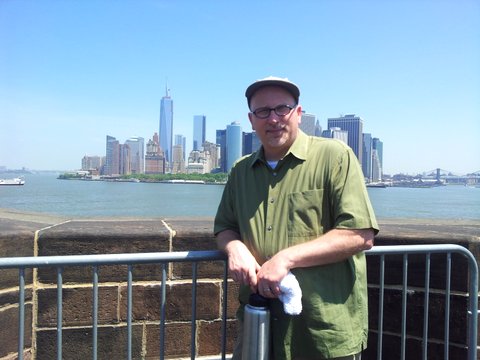
Today was orientation day at Governors Island for all volunteers. It was so good to be back and to see many folks I had not seen since last summer. Here are a few pics, some of which were taken by my great friend Sami Steigmann.

Castle Williams

Castle Williams

The view from atop the circular fort is stunning. Castle Williams opened to the public for the first time in two centuries just last year.

Freedom Tower

Freedom Tower

Here is a closer look at the Freedom Tower, which when finished will be the largest building in the Western Hemisphere. Coast Guard brats who lived on the island in the late 1960s and early 1970s recount watching the original World Trade Center structures going up little-by-little from the island.

Old Coast Guard barracks

Old Coast Guard barracks

This building, on the southern part of the island managed by the city, is set for demolition at 6:00 am next Sunday, June 9. A park is going up in its place.

Camp scene

Camp scene

A living history unit, of high schoolers from Rhode Island no less, is camping out and interacting with the public this weekend.

Fort Jay

Fort Jay

The orientation stopped at Fort Jay. This System Two fortification is at the highest point on the island and so thankfully suffered little damage during Superstorm Sandy, though there was some to the old sculpture atop the sally port.

Modeling with the park's new toy

Modeling with the park’s new toy

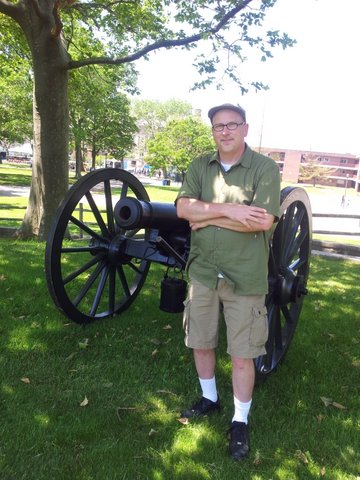
Last year there was much excitement that we would be getting a canon in time for the 2013 season. Rangers were unhitching this baby from the truck as we walked by.

It is going to be a great summer at Governors Island. Come see for yourself.

What a phone call can do

I had an extraordinary telephone conversation last night with a woman who I have never met before but, I learned late last week, is a distant relation. I began my genealogy in a casual way several years, beginning by sitting down with my father one summer evening to make sure that what he knew did not get lost to the sands of time. His health was in decline for several years and it was obvious his time was coming soon. With mom it has been more of a process. Let’s just say she is not the reflective type who enjoys putting the pieces together one by one. Getting details from my mother is done surreptitiously, usually a quick text or email to see if she can flesh out the outline of a life that to me is nothing more than a record on my computer. Done in this manner I have been able to get a fair amount of information. And at the risk of getting her mad I would dare say she enjoys it when kept to a minimum.

Some of you know that I am in the beginning stages of a biography of Union general Joseph Roswell Hawley. Hawley was a captain in the 1st Connecticut, a ninety day unit, and later a colonel and brigadier in the three-year 7th. Seeing where he fought at First Bull Run this pat Sunday was something special. He was something of a Zelig, always turning up where events were taking place. After the war he was the governor of Connecticut, and eventually a congressman and senator. The whole reason I found Hawley was because the urban legend in my family was that we were his direct descendants. If the legend had been true I would have been his great, great grandson. The short version of the story is that I am not.

That brings me back to the phone call last night. The reason for the family legend was that we indeed have Hawleys in our family tree, on my mother’s side of the family. We just never knew anything about them. As it turns out it was the other side of the Hawley family to which we are directly related. I had wondered how part of the family ended up in Nova Scotia way back when. From last night’s conversation I know that they were Loyalists during the Revolutionary War and that they fled shortly after the upstart colonists declared victory. I would label my own proficiency as a genealogist as high-beginner. I had put it aside for awhile, even letting my Ancestry account lapse early this month, because I had hit a wall. Sometimes when you least expect it the door opens again.

The biography is still very much in the early stages but is proceeding nicely. It is a story worth telling, and one that fell into my lap wrapped in a bow imploring me to tell it.

Monday evening winding down

I just got back from DC. The Hayfoot and I had a good time. Being in the nation’s capitol on Memorial Day Weekend is always special. It was a great beginning to the summer. For starters, I have made it my goal to dedicate Memorial through Labor Day to reading novels and short stories, fiction being something I have gotten away from in recent years. To that end, I kicked off by reading John Williams’s 1965 Stoner on the bus ride up ad down. It is sort of The Death of Ivan Ilych if the protagonist were a frustrated academic living in Middle America in the early to mid twentieth century. I think this fiction thing is going to work out well; there is a lot of literature, in different genres, I wasn’t ready for as a younger person that I think will speak to me now.

I also got an interesting email from my sister on Saturday. She received a phone call out of the blue from a woman who is distantly related to us. I began my genealogy in earnest about a year ago and have become something of the de facto family historian. My sister gave me the woman’s contact information and I intend to call her now that I am back in town.

As I mentioned the other day, we planned to visit the Old Soldiers Home/Lincoln Cottage on Saturday. We did, and had a great time. The wife surprised me by arranging a visit to Manassas on Sunday with some friends of ours. I had never visited Bull Run before. It was a special day.

Here, quickly, are a few pics from the weekend.

Abe and the Hayfoot, Lincoln Cottage

Abe and the Hayfoot, Lincoln Cottage

President and Mrs. Lincoln spent more than a quarter of their time at the Old Soldiers Home. The Home, the grounds of which include the presidential cottage, lies about 3 1/2 miles north of the White House. Here Lincoln was able to get away somewhat from the city’s oppressive heat and endless stream of supplicants asking for favors.

IMAG0023

There was little respite, however. In a painful reminder of the war’s human cost, this cemetery was within sight of the cottage. From the window of his study Lincoln could see the graves adding up.

IMAG0020

Manassas

Manassas

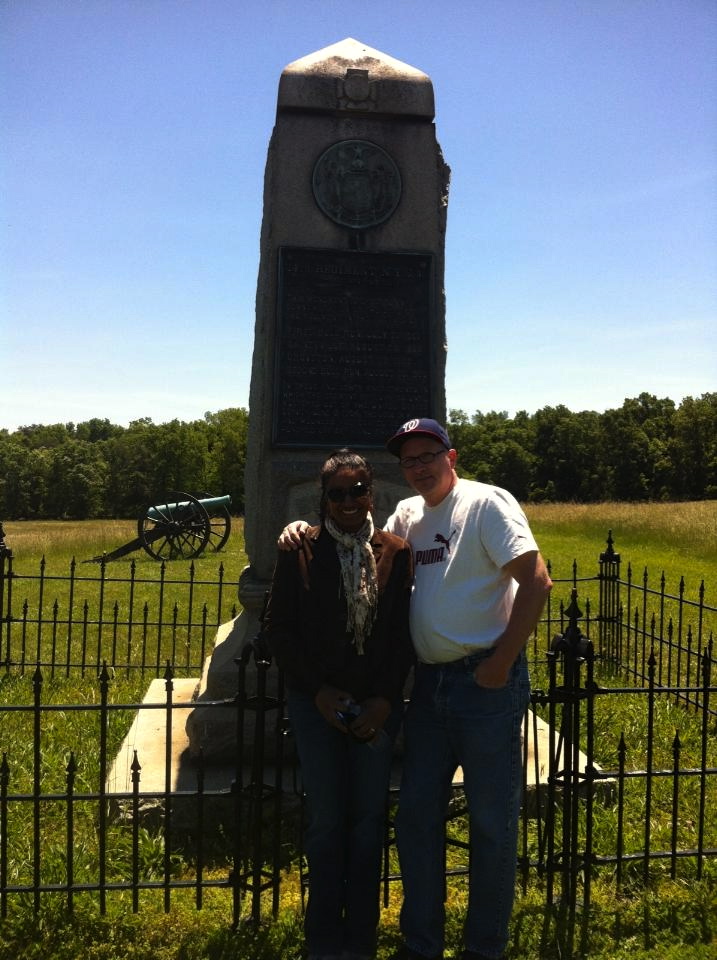
This monument atop Henry Hill was dedicated in June 1865 and was one of the very first constructed.

5934008-union_bull_run_monument_1865_Manassas_National_Battlefield_Park

IMAG0027

A living history unit representing the 14th Brooklyn was in attendance.

IMG950217

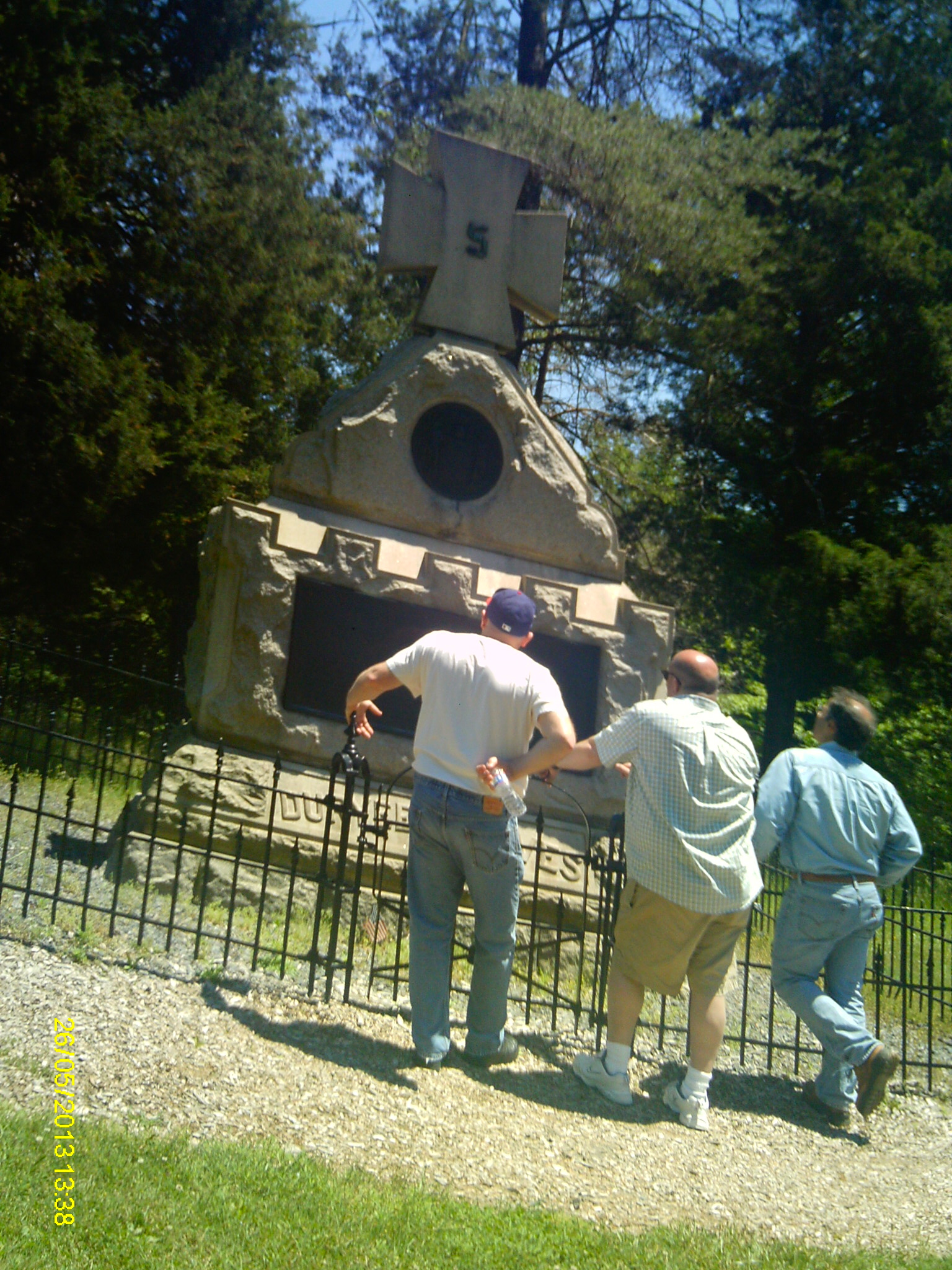
The 14th was one of many New York zouave units at both First and Second Manassas. In July 2011 I blogged about the rededication of the New York monuments at Bull Run during the Centennial fifty years ago. It meant a lot to finally see them in person.

IMAG0046

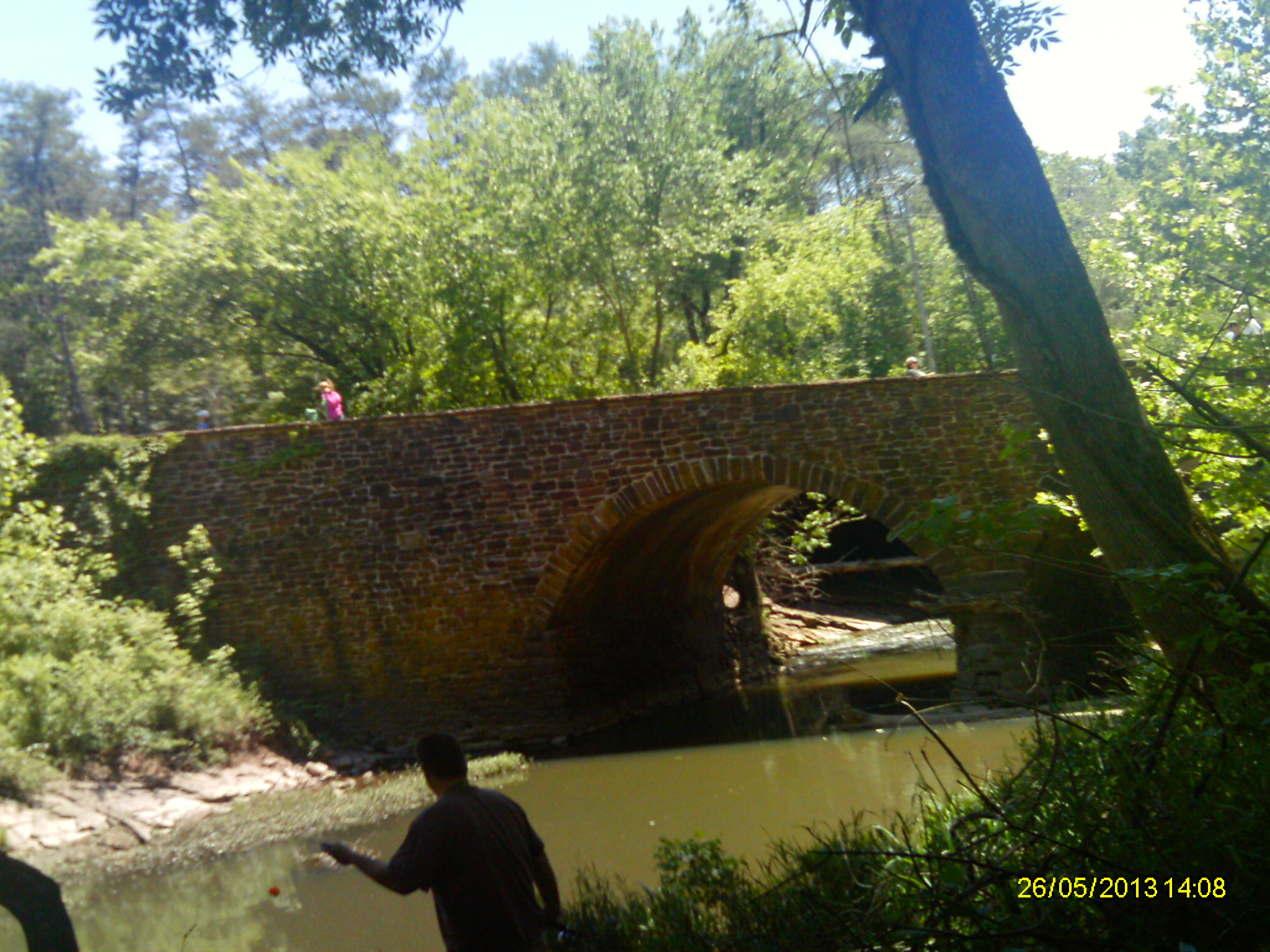
Bull Run Creek

Bull Run Creek

Overall it was some weekend. Thank you honey, and to everyone else who made it happen.

To Brooklyn Bridge

Hey all, I took the Boltbus to DC. The Hayfoot and I are going to Rock Creek Cemetery and the Old Soldiers Home tomorrow. I noticed that today is the 130th anniversary of the Brooklyn Bridge and thought I would repost this from 2011. The Bridge is one of the special places in NYC. Enjoy your Memorial Day Weekend.

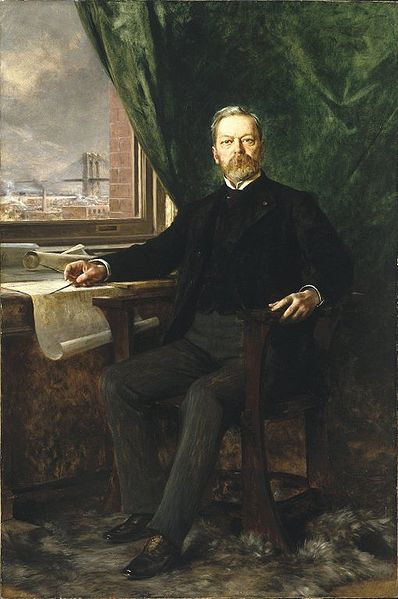
Earlier this spring I read The Great Bridge, David McCullough’s magnum opus about the creation of the span connecting Brooklyn and Manhattan.  One reason for doing so was because, after spending so much time reading about the death and destruction of the Civil War, I wanted to turn my attention to something being built not destroyed.  The bridge is down the street from where I work and I often have my lunch there.  It is also where I took my wife after our wedding reception.  Yesterday was the one hundred and twenty eighth anniversary of the opening of the Brooklyn Bridge.

Brooklyn Museum Collection

I sometimes think many New Yorkers assume the bridge has always “been there,” a natural part of the landscape.  Actually it was the brainchild of German-born John Augustus Roebling, who was wounded on the construction site and died prematurely years before the bridge’s completion.

Brooklyn Museum Collection, Gift of Paul Roebling

It was up to his son, Colonel Washington Augustus Roebling, to complete the task.  He did so, but at great personal expense.  Roebling contracted caisson disease, or the bends, from his frequent trips below the water to the excavation site and suffered in horrific pain the rest of his long life.  He lived until 1926.

Roebling was an officer in the Army of the Potomac and participated in many of the war’s most important events.  He fought at Antietam, Chancellorsville, Gettysburg, and the Wilderness among other places.  He also personally witnessed the engagement between the Monitor and the Merrimac in 1862.  Roebling married Emily Warren, the sister of General Gouverneur Kemble Warren, in January 1865.

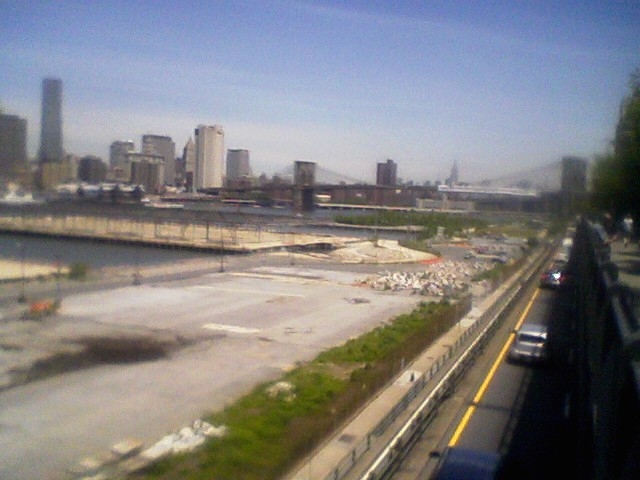
Looking at the bridge today…

Harpers, 1890

…it takes a leap of faith to imagine it as it was just after its completion.

The road in the top photograph is the Brooklyn-Queens Expressway.  Below that in the same photograph is a new park being built along the Brooklyn side of the East River.  The waterfront has not been part of the daily fabric of New York life for decades, since the collapse of the shipping industry in the mid-twentieth century.  The city has been working hard to change that in recent years with a number of adaptive reuse projects.

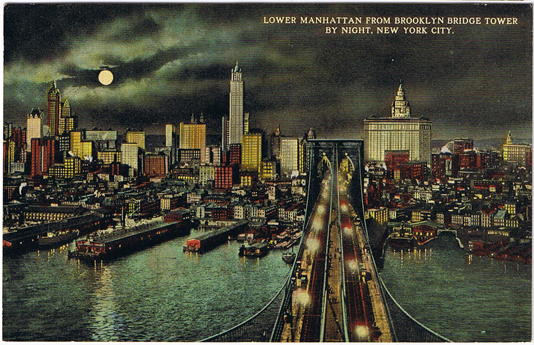
(Author: H. Finkelstein & Son; Source: Wikimedia Commons)

The bridge has always been a favorite of painters and poets.

May 24, 1883 (Source: Brooklyn Museum Collection)

May 24, 2011


First Day Issues 2013

2013 Civil War commemorative stamps

2013 Civil War commemorative stamps

In what has become a Strawfoot tradition I am here to announce that the 2013 Civil War sesquicentennial stamps have been released. In fact, they were released just today at ceremonies in Mississippi and Pennsylvania. I found out when I stepped into the Grand Central Station post office this morning on some other business. I was unable to buy them today though, because, as is the custom with all commemoratives, they will not be available nationally until tomorrow, the day after issuance in the city of release. Hearing this news today made me realize that the sesquicentennial is moving along. It is more than half over.

Last year I was speculating on which two subjects would make the cut. Vicksburg and Gettysburg really are the only logical choices, especially as Emancipation received its own seperate release a few months ago. I would strongly recommend buying a souvenir sheet, along with another set with which to make first day covers if one is so inclined.

As I posted in a comment on Kevin Levin’s Civil War Memory blog awhile back, the USPS has done a great job with this series. Each year-set of two stamps obviously fits aesthetically into the larger whole, which is what you want in such a project. The stamps also have a stateliness and gravitas that, sadly, went missing in some of USPS offerings over the past 15-20 years. A little frivolity and playfulness in philately is fine; ultimately however, a nation’s postage says something about what its people find important. This is especially true when the subject is as significant as a nation’s civil war. I am glad they got the message.

Interested parties have until July 23, 2013 to get their first day of issue covers. That is twice the normal time. Here are the addresses:

Civil War: 1863 Stamp (Vicksburg, MS)
Postmaster
3415 Pemberton Blvd.
Vicksburg, MS 39180-9998

Civil War: 1863 Stamp (Gettysburg, PA)
Postmaster
115 Buford Avenue
Gettysburg, PA 17325-9998

And here is the Postal Service’s press release with more information.

Warmer days

Last night I booked the hotel for the New York History conference in Cooperstown early next month. The NYSHA conference should be a lot of fun. With the cool weather we’d been having in New York, June seemed so far away until yesterday. Today, though, has been the warmest day of the year so far, and the rising temperatures had everyone talking about their summer plans. It is difficult to believe Memorial Day weekend is a few days away. This afternoon I submitted my annual leave requests for June-August. I will be splitting time between here and our place in DC. Today I also joined Shorewalkers, a group that hikes various points of interest in the New York area. There is a walk in August that covers the Civil War and other monuments of Hoboken and Jersey City that I am especially looking forward to. I intend to criss-cross the five boroughs this summer, in a group setting but also by myself, to explore New York history, especially out-of-the-way New York history. My list is growing.

Sunday morning coffee

It is a drizzly Sunday morning here in Brooklyn.

I noted with pleasure earlier this week that the bibliographic information for volume one of Mark Lewisohn’s three-part history of the Beatles has just been released here in the U.S. (It had been on Amazon’s UK website for some time now.) It is titled All These Years: Tune In and brings the Fabs up to 31 December 1962, on the cusp of Beatlemania. Tune In has been in the works for nearly a decade now and is destined to be a huge deal in the Beatles’s historiography. As with Civil War historiography, there is much we have to unlearn about the Beatles before we understand their true history and significance. So much of what we “know” is simply the same self-serving narratives and folk tales told again and again until becoming accepted as fact. That will not be a problem with Tune In and the two volumes that come after it. Lewisohn is one of a handful of people who can pull off such a magnum opus. I would say Bruce Spizer and Allan Kozinn are probably the only two others.

Lewisohn has said that there will be an “official cut” and longer “author’s cut” with greater detail. Unfortunately it appears there are no plans to release the author’s cut in the United States for the time being, though the publisher is leaving its options open. The smaller version still logs in at 1,200 pages. Interested parties may want to pre-order from their online bookseller.

Looking to summer

I had a meeting in the city today and afterward went to the nearby New York Central Library to do some research. The Conference on New York State History in Cooperstown is now just three weeks away. My presentation is on how Theodore Roosevelt Sr, William E. Dodge and other Republican leaders assisted in the Union war effort and then rebuilt the city in their own image when the fighting ended. A mistake many people make is to think of New York history, especially New York City history, in vacuum, placing it outside the scope of wider events in our national story. It is understandable in a way; the city is so complicated and densely layered that it is easy to think of it as its own thing. I am trying to avoid that in my discussion. Overall I feel pretty good about how the talk is coming along.

Another reason I was at the library was to get ready for the upcoming season at Governors Island National Monument. It reopens next Saturday, Memorial Day Weekend, and will be open to the public on weekends and holiday Mondays through the end of September. This week I re-read chunks of Barnet Schecter’s The Devil’s Own Work: The Civil War Draft Riots and the Fight to Reconstruct America. I find Schecter’s book helpful because he puts the draft riots into broad context without losing sight of the scale and human cost of the violence. It is difficult to wrap one’s mind around the idea that thousands of individuals battled in the streets of Manhattan against, not just police, but battle-conditioned American soldiers. And these weren’t just angry mobs. The rioters showed tremendous tenacity, organization, and unity of purpose, and sustained it for nearly a week before eventually succumbing to hastily-gathered greater force. The rioters also had, if not the support, at least the sympathy of many political and intellectual leaders, including important newspaper publishers. In all these ways the New York draft were similar to the fighting in Europe during the failed revolutions of 1848 and the carnage of the Paris Commune in 1871. I don’t know if it is a stretch–maybe not–but Schecter argues that Reconstruction began with the Emancipation Proclamation on 1 January 1863. He carries the story into the 1870s, which is something too few “Civil War” books manage to accomplish. I wanted to re-read the book to refresh my memory and get some new insights to incorporate into my Interpretation at Governors Island this season. Much of the military response to the rioting came from the Department of the East headquarters there in the harbor. These are the types of things I am exploring as I get ready for Cooperstown and for the Governors Island season.