Autumn in the air

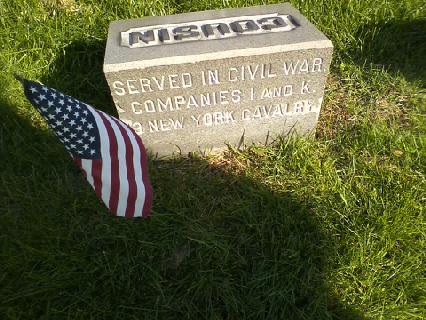
Hey everybody, it is Sunday evening.  I hope you had a good weekend.  I went to Greenwood Cemetery this morning, where I took these photos on my cellphone.  The leaves have not yet changed but the smell of fall was very much in the air.

We recently bought a used iPad 1 and I spent a good chunk of the weekend downloading various apps, syncing them with my Mac Air, and learning how to use them.  Becoming more technically proficient has been one of my goals for 2011.  I downloaded Dropbox, Evernote, and GoodReader, among other things.  I wanted to get these three in particular because I have a number of projects coming due and want to maximize my efforts.  If anyone has any productivity tips, feel free to pass them along.  It hasn’t been all work, though.  I subscribed to the NFL radio package and am listening to the last few minutes of the Packers-Vikings game as I write this.  We downloaded some Buddhist apps for the Hayfoot as well.

Have a good week.

Salt Peanuts

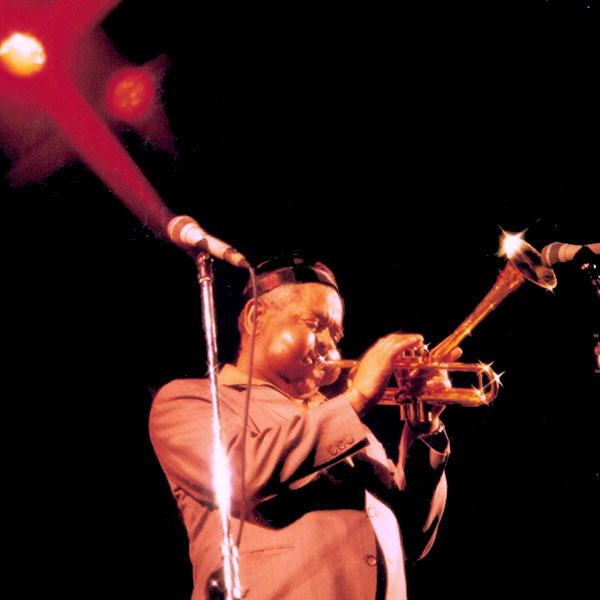
Dizzy Gillespie was born on this day in 1917.  I have always maintained that, if anything, Gillespie is an under-appreciated figure in the jazz pantheon.  His discipline kept Charlie Parker at least somewhat in check, and his mentoring is what helped the young Miles Davis reach his full potential.  Gillespie’s wisdom, erudition, and generosity were especially important in the bebop era, when jazz had largely left the dance halls but had not yet been institutionalized as an art form.  The temptations of 52nd Street proved too much for too many promising jazzmen.  We are fortunate for the measure of stability he brought to the scene, let alone his catalog.  Personally I have always been partial to his Afro-Cuban period.  In honor of the trumpeter’s birthday the Smithsonian tells us the tale of how it acquired one of the great man’s distinctive instruments.

 Dizzy Gillespie, 1988

(Image/Pino Alpino)

The Cherokee Freedmen

Last month I mentioned the ongoing fight within the Cherokee Nation whether to continue to recognize the Cherokee Freedmen as members of the tribe or to expel them for not being direct descendants tribe members.  The Freedmen’s ancestors were once slaves belonging to members of the Cherokee Nation.  My friend Susan Ingram is a former journalist who now works for a college in Oklahoma.  She wrote this guest post:

As for now, the Cherokee Nation has ruled that the Freedmen are not tribal citizens, but a final decision from the U.S. courts is yet to come. This is a complicated issue of which there are no winners. The Cherokee Nation claims it is a matter of tribal sovereignty and self governance, not race. An independent nation existing and governing within a state, in this case Oklahoma, can be a difficult concept to grasp but it is a fact of daily life in this area.  Oklahoma is home to 39 federally recognized Native American tribes (Oklahoma Indian Affairs Commission, http://www.ok.gov/oiac/Tribal_Nations/index.html) that coexist with many local cities, towns and communities.

The controversy of the Cherokee Freedmen began after the Civil War when the Nation was ordered by the U.S. government to grant citizenship to its former slaves. The Civil War affected the Five Civilized Tribes the same as everyone else, dividing loyalties and families alike. Most tribal members joined the Confederacy, since they came from the Deep South and their way of life resembled that of others in the region.  Many of them were also hostile to the federal government for its  long history of breaking treaties made with the native tribes. Small bands of each of the Five Civilized Tribes did join the Union, however. With Indian removal being a part of recent history at the time of the Civil War, many tribes were still dealing with internal division and conflict. The war served only to further divide arguing factions amongst the tribes. Some of the skirmishes fought in Oklahoma were more about rival tribal factions than Union vs. Confederacy.

The issue of Freedmen citizenship has been building since then, and perhaps has now come to a head due to the recent prosperity of the Cherokee Nation. As the tribe’s population and wealth grows there is more at stake as to who benefits. Another possibility is that the Nation believes it finally has enough power and/or sovereignty to stand up and say they–and only they–will dictate who is a citizen and who is not.

Unfortunately the issue is not as precise as whose ancestor was on the Dawes Roll and whose was not. The Freedmen have lived with the Cherokee people for several generations and have married and had children with the Cherokees. The customs of the Cherokee people are the same traditions and customs of the Freedmen. Comparing the amount of African American blood to Cherokee blood that someone has doesn’t take into account the emotions, relationships, and values of that person. Nor does it account for the sense of family, identity and security that is now being ripped away from the Freedmen.

As a backdrop to this issue, the Cherokee Nation has gone through a heated battle this summer to elect a new principal chief. (http://www.tulsaworld.com/news/article.aspx?subjectid=520&articleid=20111020_520_0_hrimgs257246)  At the heart of the election was the debate over including the votes of the Freedmen. The Freedmen won a legal victory when the courts determined that their vote for principal chief did count.  It will be interesting to see how this story progresses in the future and whether or not the newly elected principal chief will make a difference in the fate of the Cherokee Freedmen.

Should you happen to be in Brooklyn

U.S.S. Monitor

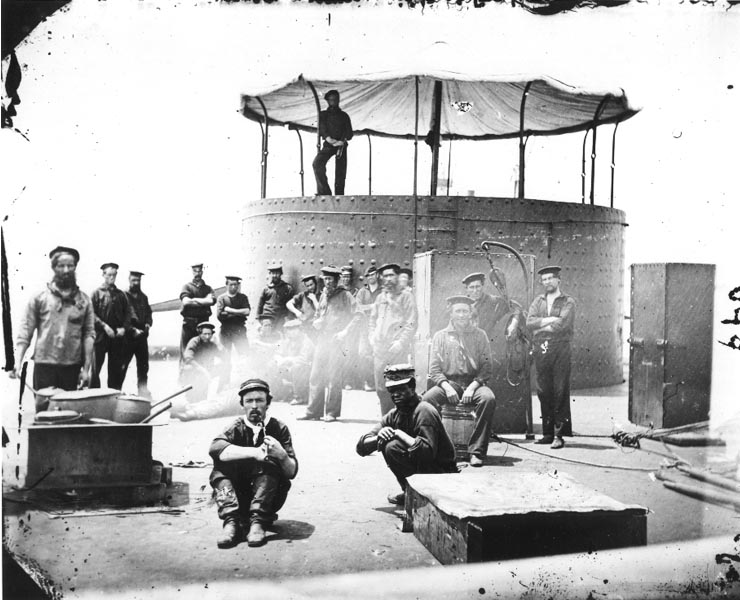
Like so much other matériel produced for the Union war effort, the USS Monitor was manufactured in Brooklyn.  This coming Saturday, in honor of the 150th anniversary of the construction of the ironclad, the Brooklyn Diggers are having this event in Greenpoint’s McGolrick Park.  More here.

(Image/Library of Congress and U.S. Naval Historical Center)

The economics of preservation

Finding the balance between preservation and development is a tough order.  On one hand, once historic land and structures are developed they are gone forever.  On the other, communities must have a tax base to thrive and prosper.  We all have a right to live in the present.  It is a mixed blessing, but the economic and housing crises have been playing a role in the preservation of Civil War battlefields.  A slower market means fewer buyers and lower property values, which in turn means owners are more willing to sell to preservationists.  This has been especially true at Gettysburg.

A family life

Pete Hamill

The first time I ever heard of Pete Hamill was when I was working for a large chain bookstore in Texas.  A customer came through my line and bought Hamill’s then just-released memoir A Drinking Life.  I told him that the book was selling briskly and asked who Hamill was.  The patron defined Hamill as “the Mike Royko of New York.”  Because it was always my goal to live in the ultimate big city, I read the book that week. Soon, I had read all the titles held by the library.  A few years after that, when something called the World Wide Web made it possible for all of us to obtain the previously unobtainable, Hamill’s remaining books were the first things I purchased online from the out-of-print booksellers.  It seems like so long ago, but wasn’t.

A few years later I had moved to New York and was living in Brooklyn not far from where Hamill grew up.  Many in my neighborhood remembered him from the time Park Slope was still a working class enclave in the 1940s-50s.  His brother Denis is also a writer and newspaperman. The younger Hamill chronicles the city from a subtly different perspective.  His New York was that of the flower children and protests of the 60s, tempered by the decline of New York City that began then and accelerated with seemingly no end in sight through the early 1990s. Thankfully both writers lived long enough to see the city’s revitalization. The Hamills are still going strong.  For my birthday this past June the Hayfoot gave me Tabloid City.

The immigration experience is another aspect of both Hamills’ writing.  Their mother and father both came to New York from Ireland in the early 20th century.  Anne Devlin landed on October 29, 1929–the day Wall Street crashed.  She was nineteen. Although she herself did not land at Ellis Island, I always told the immigration story through the personal narratives of individuals like her when I volunteered at the museum.  Now the Hamill brothers’ sister Kathleen has written a moving book about a unique woman.

Enjoy the rest of your Sunday.

(Image/David Shankbone)

The not-so-new South

The South has changed in many ways over the past half century and my own family has been part of that change.  My parents, brother, sister and I moved to Florida in the early 1970s, where I grew up and graduated from high school.  Literally a week later I relocated to Texas where I went to college and lived for a decade.  Eventually I came full circle and moved back to the Northeast, but I never left entirely.  Until he died two years ago I regularly visited my father in Arkansas.  He and I traveled throughout Louisiana, Mississippi, and elsewhere during these visits.  Despite being a proud New Yorker, I still consider myself a Southerner in many ways.  My wife and I have many friends in the region and we often talk about moving back when we retire.

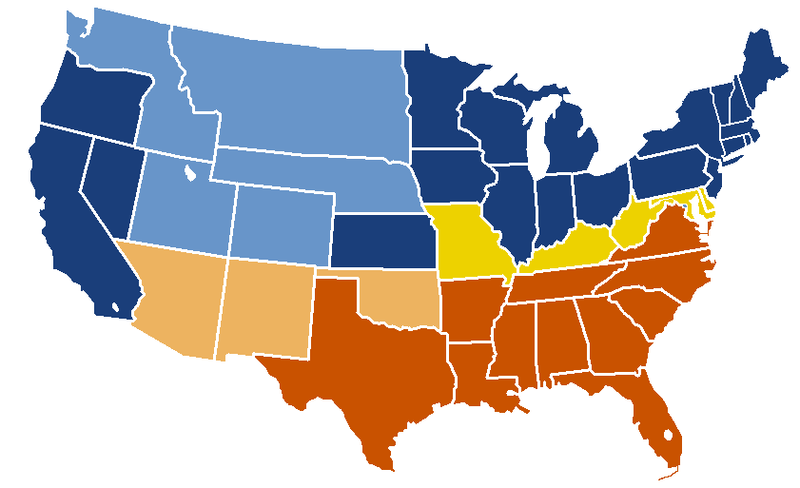
The demographic changes of which my family, and millions of others, were a part transformed the South from Heart of the Confederacy to Sunbelt Mecca.  Still, the South’s transformation is not as total as some might imagine.  The Center for a Better South has just released a report documenting the economic and other ways the region still lags behind the rest of the country.  Poor health and lower graduation rates are just two of the seemingly intractable problems found in pockets of the area.  The sobering report is here.

(Image/National Atlas of the United States)

Custer at West Point

One of the reasons for our fascination with the American Civil War is that it coincided with the nascent stages of photography.  Because we have photographs of Lincoln, Grant, and Lee we see them as more human–more like us–than Washington, Jefferson and Madison, for whom all that remain are artists’ renderings.  This sense of shared humanity allows us to relate to the citizens of 1861-65 in a way we never could with the Founding Fathers.  My own interest in the War of the Rebellion began when my uncle gave me a book of Brady photographs when I was ten.

Here is a vignette on the man who finished last in his West Point Class of ’61.