Dear reenactors…

I have always been ambivalent at best about reenacting.  When done well I suppose it can be a useful learning tool.  A demonstration of Civil War artillery carried out by guys in jeans and sneakers would look pretty silly for one thing.  Moreover, everyone deserves a hobby and a chance to relax and have fun however he or she prefers.  Personally I avoid reenacting for the same reason I avoid historical fiction.  The past is another place and any attempt to recreate it is futile.  We should do everything we can to understand the past on its own terms; we just shouldn’t succumb to the conceit that can return to it.  My biggest concern, though, is that some reenactors may be hiding behind the minutiae of camp life, clothing, and whatnot as a means to avoid the tough stuff of history.  Glenn W. LaFantasie has a thought provoking piece on the subject.

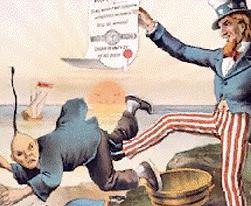
Chinese Exclusion Act

(Courtesy: Wikimedia Commons)

When I give my talks at Ellis Island I tell the story of America’s immigration history warts and all.  Anything less would be hagiography not history, and the twelve million brave souls who passed through Ellis Island from 1892-1954 deserve better than that.  For the most part the story is one of conscientious public servants and health officials working hard and well under difficult circumstances.  Processing 5,000-6,000 incoming immigrants day-after-day, year-after-year—all without the help of today’s technology—was a herculean and uniquely American endeavor for which we are rightfully proud. Today, however, is the anniversary of one of the darker moments of that history.  It was on this date in 1882 that Congress passed the Chinese Exclusion Act.  Chinese laborers had been in the United States for decades, working in mines and building the transcontinental railroad that was completed in 1869.  With that project done, there was great fear that these workers might take away American jobs.  The National Archives explains:

In the spring of 1882, the Chinese Exclusion Act was passed by Congress and signed by President Chester A. Arthur. This act provided an absolute 10-year moratorium on Chinese labor immigration. For the first time, Federal law proscribed entry of an ethnic working group on the premise that it endangered the good order of certain localities.

The Chinese Exclusion Act required the few nonlaborers who sought entry to obtain certification from the Chinese government that they were qualified to immigrate. But this group found it increasingly difficult to prove that they were not laborers because the 1882 act defined excludables as “skilled and unskilled laborers and Chinese employed in mining.” Thus very few Chinese could enter the country under the 1882 law.

Not a proud moment in our nation’s history, but one to remember.

Shepherdstown National Military Park?

The National Park Service is going to study the feasibility of a national military park in Shepherdstown, West Virginia.  The Battle of Shepherdstown, or Boteler’s Ford, of course ended the Maryland Campaign of 1862.  According to the May 3 press release:

The primary focus of this study will be on battlefield lands located about one mile southeast of Shepherdstown in Jefferson County, West Virginia. Most of these lands are privately owned. Some of the battlefield is also located in Washington County, Maryland on lands managed by the C&O Canal National Historical Park and nearby privately-owned farmlands that include special easements.

The study will obtain information from professional historians and the general public during the information gathering stage of this project, planned for this summer and fall 2011, and then again when the draft study alternatives are presented.

Given the urban sprawl in West Virginia and Washington County, Maryland I would say this is a wise decision.  More here.


The aging soldier, cont’d

(Hat tip Morris Hounion)

The other day I posted about aging veterans and linked to an article about the last two known living uniformed service personnel of the First World War.  I say last “known” because it is conceivable that a tommie, doughboy, ANZAC, or other veteran of the Great War may still be living without our knowledge that said person was a soldier in the conflict.  Amazingly two days after the article appeared one of the two people mentioned has passed on.  Australian Claude Stanley Choules died yesterday in Sydney.  He was the final combat veteran of the Great War.  This means that the last known surviving World War I uniformed service person is Florence Green, who was a waitress with the Women’s Royal Air Force in the months just prior to the Armistice.

The aging soldier

Stories of aging veterans have intrigued me for as long as I can remember.  I can recall watching Wimbledon with my sister in the early 1980s during the Bjorg/McEnroe/Connors era and seeing the elderly World War I veterans sitting together in their designated section.  There were fewer every year.  Aging soldiers are compelling, ironically enough, for their ordinariness.  The generals of the Great War, middle-aged during the conflict, died off in the 1930s and 1940s.  The same of course happened with the Second World War, when generals like Eisenhower (1969), de Gaulle (1970), and Montgomery (1976) passed on in the decades after the war.  Robert E. Lee died in 1870, just five years after Appomattox.  The young enlisted men of any conflict obviously live decades longer until, inevitably, the millions become thousands who become hundreds and then dozens until eventually there are a mere handful left.  Then the man who went over the top at the Somme or made it all the way to the Angle during Pickett’s Charge becomes noteworthy precisely because he is one of the last remaining to tell the story.  The few who live into true old age become anachronisms, living symbols of another time.  We are seeing this happen now with World War II veterans, who are roughly the same age today as Civil War veterans in the 1910s and 1920s.  Knowing that in a few short decades they too will be no more makes me feel old and a little sad.

Waugh on Grant

I have always known a fair amount about Ulysses S. Grant.  What I had not known until recently finishing Joan Waugh’s U. S. Grant: American Hero, American Myth was the level of respect held for him by his contemporaries.  This can be summed up in the slogan—“Washington the father, Lincoln the martyr, Grant the savior”—that appeared in print around the time of his death.  Americans were so keen for news on the president’s illness that reporters staked out his Manhattan and Mount McGregor homes for months leading up to his death from throat cancer in July 1885.  To give you a sense of the intensity here are select headlines from the New York Times, just one of the nearly twenty Gotham dailies of the time:

GEN. GRANT NOT SO COMFORTABLE.  March 8, 1885

GEN. GRANT MUCH BETTER.  March 12, 1885

GEN. GRANT’S CONDITION; THE CONTINUED PROGRESS OF THE DISEASE. THE LOCAL DIFFICULTY MARKEDLY INCREASED–BROWN, THE SPECIALIST, NOT ALLOWED TO SEE THE PATIENT.  March 13, 1885

GEN. GRANT’S CONDITION.; EARNEST REMARKS BY MR. BEECHER AT THE PLYMOUTH CHURCH PRAYER MEETING.  March 14, 1885

GEN. GRANT ABOUT THE SAME.  March 16, 1885

GEN. GRANT’S CONDITION.; ANOTHER NIGHT OF SLEEPLESSNESS, BUT RESTING DURING THE DAY.  March 18, 1885

GEN. GRANT’S WEAKNESS; A WEARISOME DAY AND NIGHT FOR THE SUFFERER. SLEEPING IN HIS CHAIR TO PREVENT A RECURRENCE OF THE PAINFUL COUGHING SPELLS–A GREAT LOSS OF STRENGTH.  March 31, 1885

GEN. GRANT MUCH WORSE; ANOTHER SEVERE ATTACK YESTERDAY MORNING.  April  2, 1885

OBTAINING MORE SLEEP; A QUIET NIGHT AND DAY IN THE GRANT HOUSEHOLD.  April 4, 1885

PASSING A WAKEFUL DAY; STILL DESPONDENT, BUT PHYSICALLY COMFORTABLE.  April 6, 1885

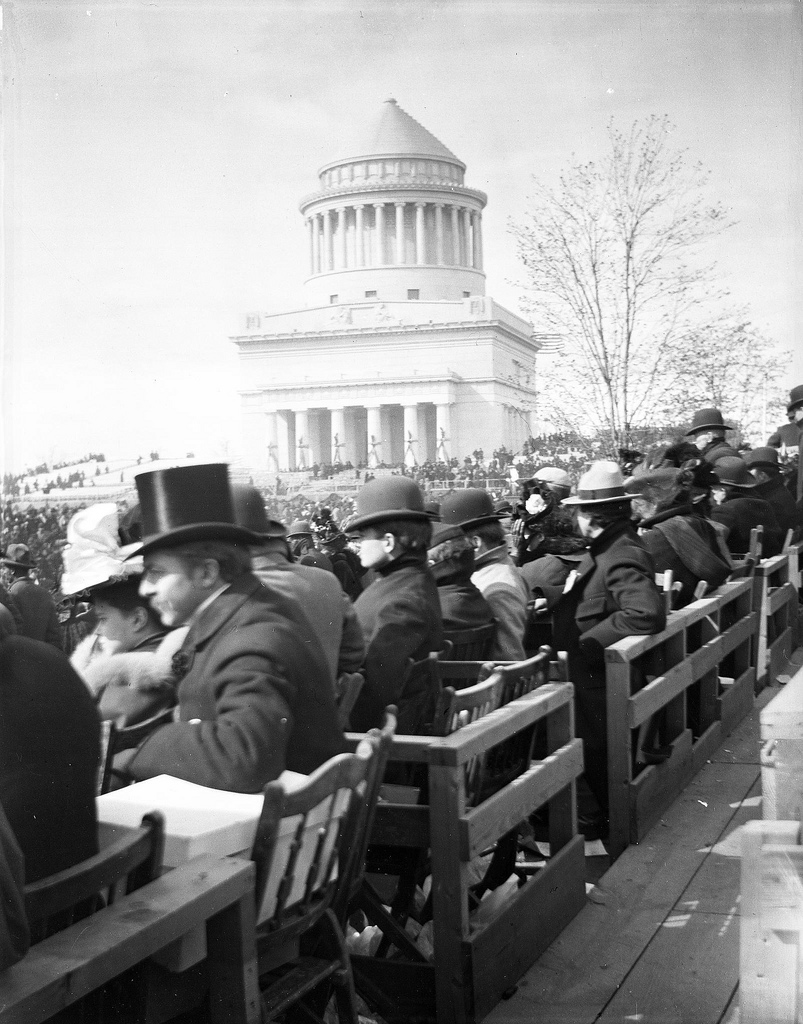
Dedication of Grant’s Tomb, April 27, 1897

Americans continued to hold Grant in high esteem until his popularity waned in the 1920s with the institutionalization of Lost Cause historiography and the public aversion to militarism after the carnage of the just-ended Great War.  I think she overstates the case, but Waugh offers an analysis of Grant and his place in history at Salon.  I say overstates because the reinterpretation of Grant has been underway for some time now, with Grant going from bumbling drunk to conscientious public figure in the estimation of most historians.  That said, it is not clear if the general public has caught up with these changes in scholarship;  when my wife and I visited his tomb this past winter I was saddened to see the paucity of visitors.

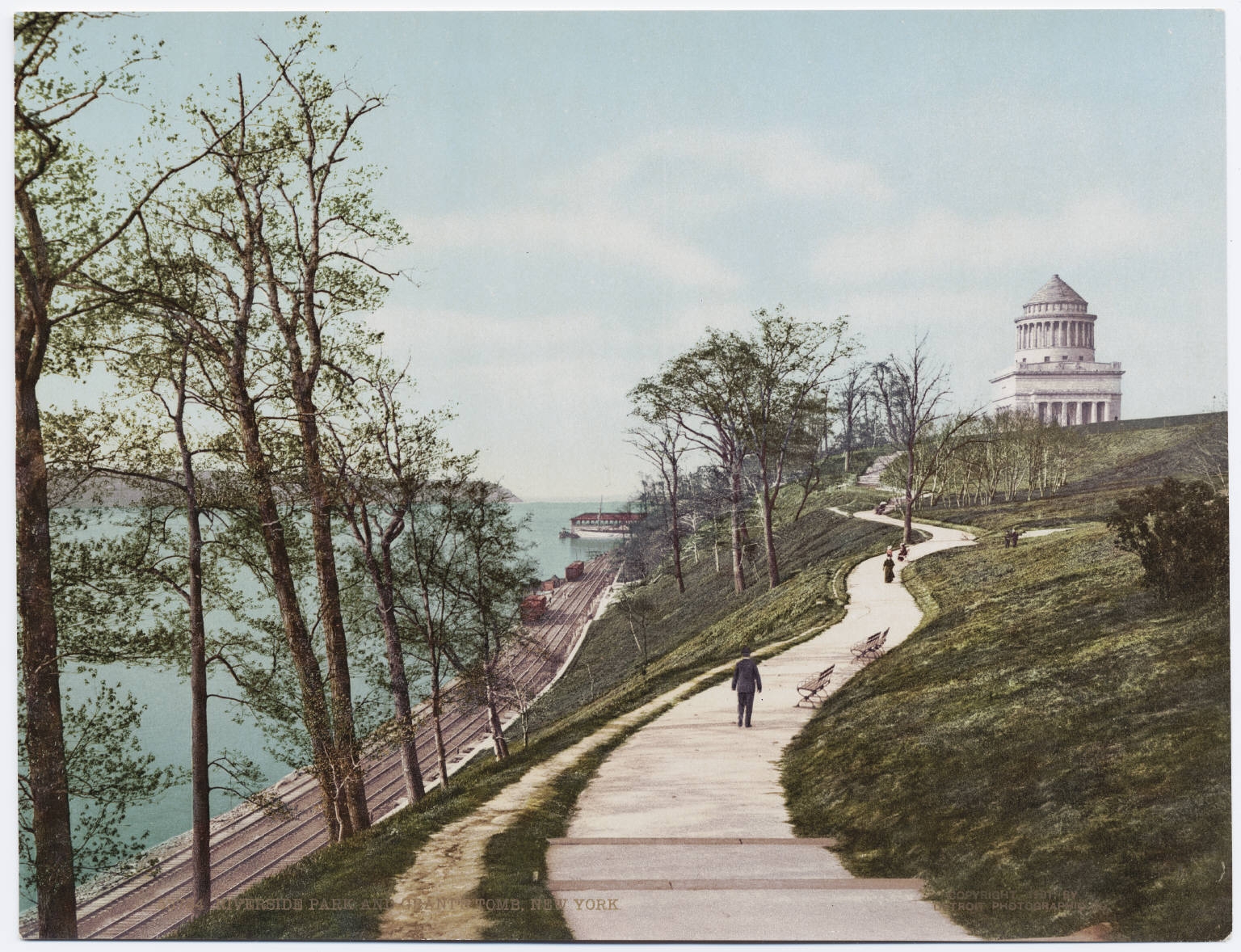
Waugh talks about the disrepair at various Grant sites across the country.  Thankfully, this is no longer the case at his final resting place.  Last week the new Visitor Center opened in the Overlook Pavilion at Grant’s tomb.

She concludes:

Perhaps the looming Sesquicentennial will bring many Americans to a more knowledgeable and appreciative judgment of the man. Ulysses S. Grant became the embodiment of the American nation in the decades after the Civil War. No living person symbolized both the hopes and the lost dreams of the war more fully than Grant. No living person more clearly articulated for posterity a powerful truth about the Civil War when he wrote in his “Personal Memoirs” of his feelings about Lee and the soldiers he had led and the slave republic they had defended:

“I felt like anything rather than rejoicing at the down fall of a foe who had fought so long and valiantly, and had suffered so much for a cause, though that cause was, I believe, one of the worst for which a people ever fought, and one for which there was the least excuse.”

Grant’s legacy to his own generation was deep and wide, and he became an icon in the historical memory of the war shared by a whole generation of men and women. They believed that an appreciation of Grant could only come with the recognition that he was both the heroic general that saved the Union, and the essential president who made sure that it stayed together.

Read the whole thing.

Grant in Brooklyn

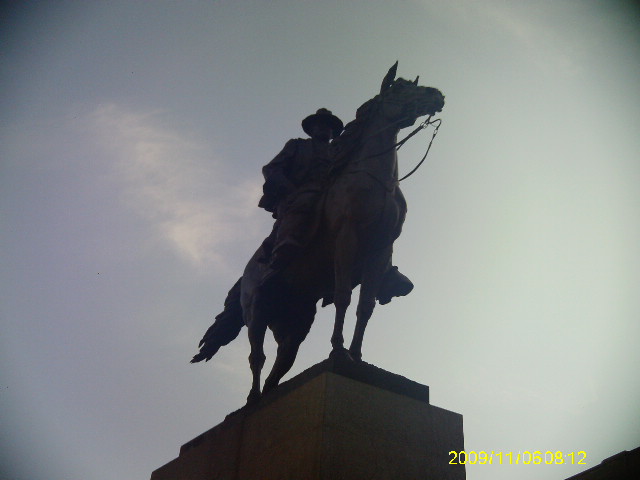
Hey everybody, today is Ulysses S. Grant’s birthday. Unfortunately I was not able to attend the ceremonies at Grant’s Tomb today.  Last night I did visit the W. O. Partridge statue in Crown Heights, Brooklyn.


This equestrian statue was designed by William Ordway Partridge.  It is one of two Grants in Brooklyn, the other being under the arch at Grand Army Plaza.

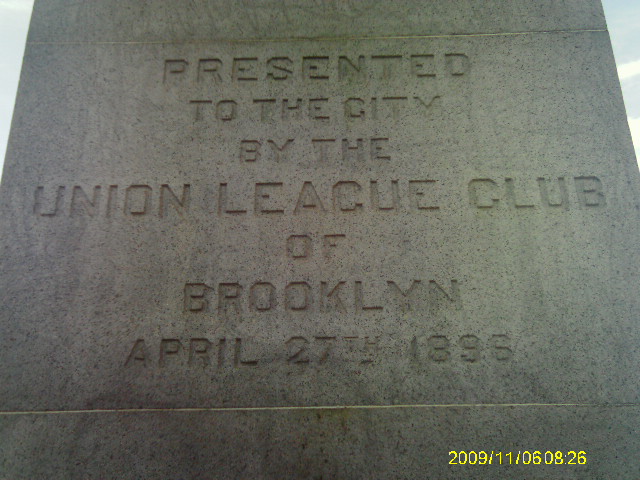
The Union League Club of Brooklyn gave the statue to the city in 1896, eleven years after Grant’s death and one year before the opening of his tomb.  “City” here means Brooklyn, not New York; our fair borough was its own municipality until the merger in 1898.

Technically the club donated the statue on Grant’s birthday, but the ceremony was actually held two days earlier, on the 25th .  Most of the immediate Grant family, including Julia, were in attendance.  The governor and mayors of Brooklyn and New York also shared the stage.  Thousands were on hand for the parade, music, and speeches.  General Horace Porter, who was doing so much in these years to make sure Grant’s mausoleum became reality, delivered the oration.  A teenaged Ulysses S. Grant III—yes, the man who later chaired the United States Civil War Centennial Commission—pulled the cord to unveil the statue.

It was chilly and somewhat rainy that Saturday, but an April day in Brooklyn is always beautiful.  This small garden is directly behind the statue.

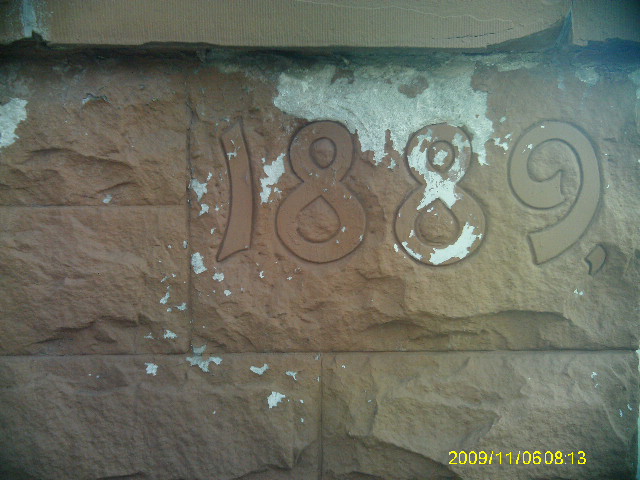
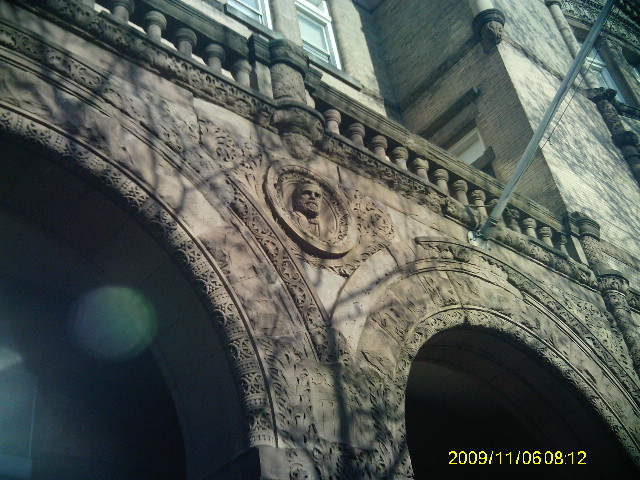
The statue stands in front of the Union Club, whose cornerstone was laid in 1889.  The building is a senior citizen home today.  An employee leaving for the day told me they are often asked about the building and statue but were unaware of its history.

These terra cotta reliefs of Lincoln and Grant decorate the exterior.  You can make these out if you look between the arches in the photograph of the Union Club entrance.

One word said it all a hundred and fifteen years ago.

Grant’s Overlook Pavillion

Okay, it is not that rare a discovery but nonetheless an interesting piece of Grant memorabilia turned up in New York last week.  Those who know me know that I love stories of Recently Found Long Lost Items.

(Source: Beinecke Rare Books & Manuscript Library, Yale University; Courtesy: Wikimedia Commons)

Grant’s 189th birthday is this coming Wednesday and the Park Service has scheduled a day’s worth of events at his tomb.  The best news is that the Overlook Pavilion will be rededicated after an extensive renovation.  The NPS has done a great job refurbishing the mausoleum after the dark years of the 1970s and 1980s.  Things had gotten so bad with crime and graffiti that in the early 1990s the general’s descendants began talking of moving his and Julia’s remains to Illinois if something were not done.  My wife and I went to Grant’s Tomb in the winter and I cannot recommend strongly enough that you visit.