A New York tragedy

Hey everybody,

I couldn’t let the 100th anniversary of the Triangle Shirtwaist Fire go unnoticed.  It was one hundred years ago today that a fire in the factory of the Triangle Shirtwaist Company took the lives of 146 workers.  Most of these were young Italian and Jewish immigrant women who had passed through Ellis Island in recent years.  These women, teenage girls in some cases, lived in nearby Little Italy and Lower East Side and worked a six-day schedule making ladies’ shirtwaists for about $10 per week.  The cause of death in many cases was not burning but asphyxiation and, tragically, trauma caused by victims leaping to their death to avoid the intense heat.  Mayor Bloomberg and other dignitaries were on hand at what was then the Asch and is today the Brown Building at 29 Washington Place in Greenwich Village.  There were also descendants of the Triangle victims present to pay their respects to their grandparents and great-grandparents.

More lives would have been saved if the factory owners had not violated regulations by locking various doors and putting heavy equipment in front of others.  The Fire Department responded quickly to the emergency but the factory was situated on the top floors, too high for the fire ladders.  It was at this time, in a scene similar to 9/11 ninety years later, that onlookers saw dozens of victims jumping to their deaths.  It was the costliest workplace mishap in New York City’s history and a quarter million New Yorkers looked on a few days later when 100,000 individuals marched in the memorial service.  The public nature of the tragedy led to an outcry that spurred new employee safety regulations.

Unfortunately I was unable to attend, but the Gotham Center for New York City History held a number of events this week analyzing and commemorating the event.  This past Monday PBS’s American Experience aired Triangle Fire, which they will certainly air again.  Home Box Office (HBO) is airing a documentary, Triangle: Remembering the Fire, through April.  Check your listings.


The naval war

I spend more time than any man probably should watching old Civil War documentaries on Youtube.  This four part documentary from 1958 focuses on the naval campaigns of the conflict.  What I find interesting in these films is not only the information contained in them but the look, feel, and sound of the documentaries themselves.  They are themselves primary artifacts in that they often tell us as much about their own era as they do the Civil War’s.  Of course some day they will say the same thing about us and the sesquicentennial.

Ruth and Gehrig in motion

I’ve always gotten a thrill from stories of recently found Long Lost Items.  What I love is that by definition the discovery is unexpected.  Someone is cleaning out the attic and comes across the love letters grandfather wrote to grandma from France all those years ago during the Great War.  A guy goes to a garage sale and finds the long lost 78 recording of an old bluesman that musicologists thought no longer existed.  Each discovery adds to the mosaic of our historical and cultural memory and gives us a deeper understanding our history.  This week something extra special has surfaced: 3 ½ minutes of moving images of Babe Ruth and Lou Gehrig.  And not just any moving images.  The high quality footage was taken less than two weeks after the 1927 World Series when the American League MVP (Gehrig) and Home Run Champ (Ruth) were on a barnstorming tour.  The 1927 Yankees are considered by many to be the greatest team in Major League history and both men were in their prime during this time.

It’s snowing in New York today, but the regular season is a mere eight days away!

Happy Bicentennial, New York City grid

https://i0.wp.com/upload.wikimedia.org/wikipedia/commons/a/a6/NYC-GRID-1811.png

Courtesy:  Jleon, Wikimedia Commons

I’m surprised this hasn’t gotten more attention than it has, but Tuesday is the 200th anniversary of the Commissioner’s Plan.  Many people over the centuries have derided the scheme that organized Manhattan into geometrically precise streets and avenues as soulless and cold.  I couldn’t disagree more.  It’s hard to imagine New York City becoming the de facto capital of the world without it.  Until the grid most New Yorkers were clustered below Houston Street in a confused maze of streets and lanes.  The Grid Plan facilitated transportation and trade, divided real estate into more easily salable parcels, and opened what were once woods and empty fields to residential and commercial development.  The numbering system on the streets (1st Street, 2nd Street, etc.) was—and is—especially helpful to immigrants who otherwise could not have read the street names.  The numbers tell the story.  There were only 100,000 New Yorkers in 1811; a century later there were 4.4 million; today there are approximately 8.2 million souls drawn to New York’s intellectual, financial, and cultural allure.

Mayor DeWitt Clinton created the Commission in 1807 and after four years of diligent work its plan was approved on March 22, 1811.  Clinton had served as a U.S. senator at the turn of the century and clearly had been inspired by Pierre L’Enfant’s layout of the nation’s new capital.  If he had only done the Grid Plan, DeWitt Clinton’s place in history would have been ensured.  Yet it was just the first of his important projects.  Later as governor he helped build the Erie Canal, which opened in 1825 and linked New York City and State to the mid West via that Great Lake.  One of the most awe inspiring things about Manhattan is looking up and seeing the avenues stretching like canyons for miles on end.  It always surprises me how little one hears about DeWitt Clinton and his design for the city.  I think many New Yorkers assume the city has always just been here as it is today.  In a way it is oddly fitting that so few have taken the time to notice the bicentennial.  As the saying goes, “If you want to see the man’s legacy, just look around you.”

The other Grand Army Plaza

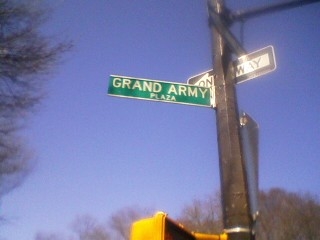
Ask most Brooklynites where Grand Army Plaza is and they will give you an answer, even if they have no notion of what Grand Army the plaza commemorates.  It is the area just before the entrance to Prospect Park, where Flatbush and Eastern Parkway divide.  One passes it all the time on the way to the greenmarket, the central library, the museum, or the botanical garden.  The other day I was in Manhattan on some non-Civil War related business when I came across the “other” Grand Army Plaza, the one virtually no New Yorker, however proud, would be able to identify as such.  I intend to do a more systematic series of posts on Civil War statuary in New York this spring and summer but couldn’t resist sharing a few snaps I took on the last day of winter 2011.


The plaza is at the corner of Fifth Avenue and Central Park South.

It was a crisp, bright day and there was a sizable crowd watching some street performers.  In the background is the General Sherman statue.

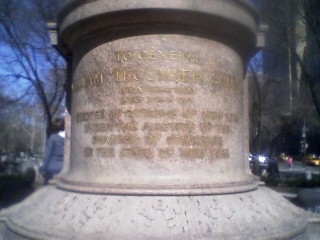
Augustus Saint-Gaudens designed the statue.  Charles McKim, a frequent collaborator, built the pedestal.

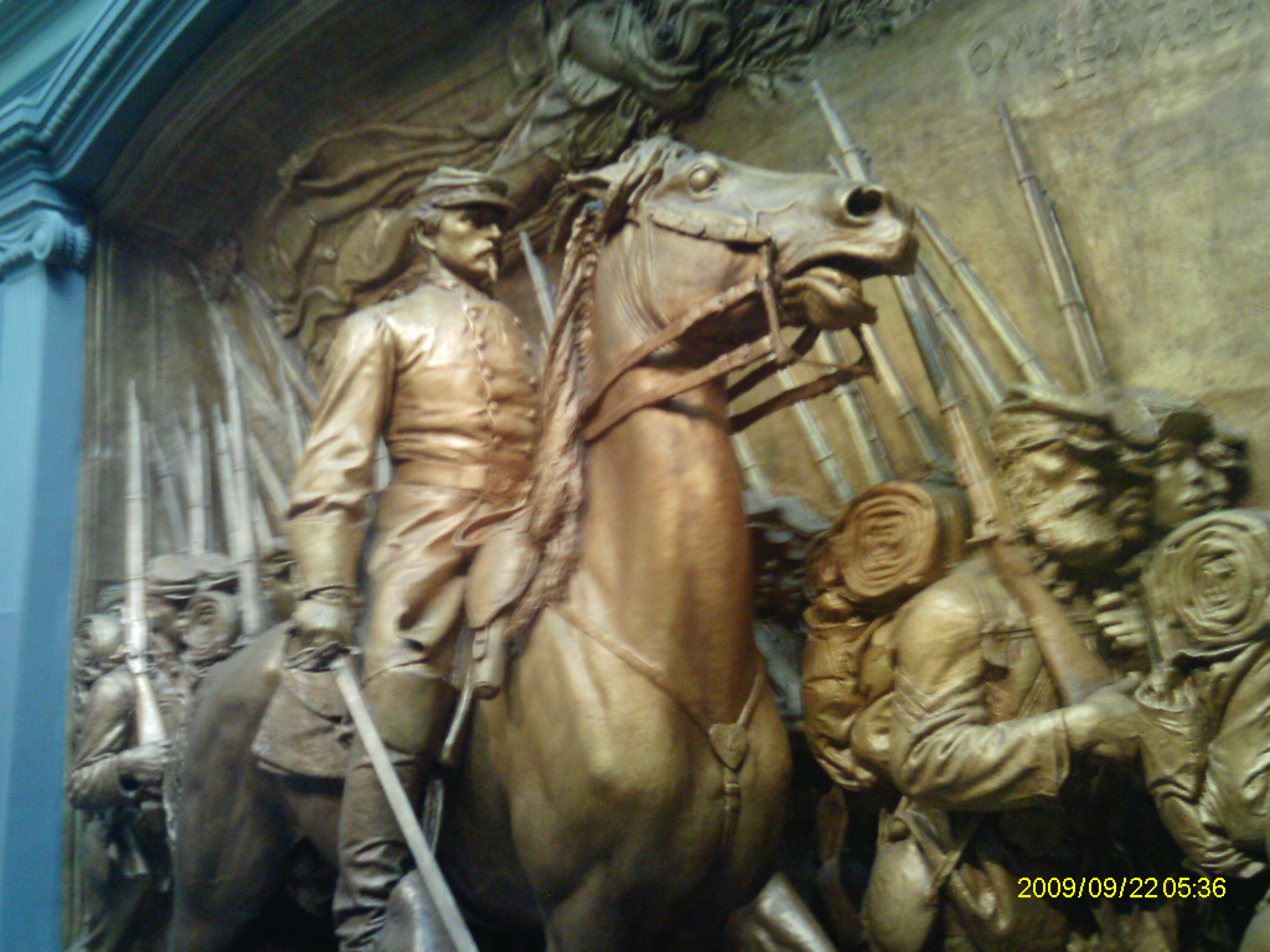
Most famously the two worked together on the Robert Gould Shaw Memorial which sits in Boston Common.  When I was in Washington two weeks ago I saw the plaster mold that the National Park Service has loaned longterm to the National Gallery of Art.  One can see the similarities.

Whatever the season this area just outside Central Park is always a happening spot.

That’s the Plaza Hotel in the background.  One reason the statue works so well is because it fits proportionally into its surroundings.  Saint-Gaudens and McKim hoped to put the work just outside Grant’s Tomb, but Sherman’s family disapproved.  The tomb and this statue are both representative of the City Beautiful movement.  Saint-Gaudens’ final masterpiece was dedicated in 1903, six years after Grant’s mausoleum.

I often wonder if the men and women of the Civil War era could have imagined the multicultural twenty-first century America they helped bequeath to us.

Thanks for checking in.

“Facts bend under pressure.”

The always worthwhile Edward Rothstein has spent the past week visiting various museums, plantations, and other sites in South Carolina.  In his latest piece he explains the evolving missions of institutions like Charleston’s Confederate Museum and says some are doing better than others at keeping current.  The most moving thing to me was the slave’s embroidered sack in the slide show.  I visited Arlington House last week and can attest that similar efforts are underway there as well.  The Park Service is doing great work telling the wider, more complicated history of the Lee-Custis estate and giving voice to the previously voiceless.

An earlier Rothstein piece, “Emancipating History,” is worth your time as well.

For heaven sakes read them now before the Times makes them part of its Digital Subscription Plan.

Rare performance at Ellis Island

After the slower months of January and February things start picking up at Ellis Island in March.  One reason is that many high school groups travel to New York City for spring break and visit Ellis Island and the Statue of Liberty.  I always enjoy seeing younger people at Ellis and other historical sites.  In case you happen to be visiting tomorrow be sure to check out the Staley High School Falcon Chorale performing in the Great Hall.  Choir director Tracy Resseguie will lead his students through a performance of a piece Mr. Resseguie commissioned to honor his great-grandfather, Peter Mandius Nerland, who passed through the immigration station 111 years ago.  After spending a few days in New York the group will travel to Norway for the rest of spring break, where among other things they will play the same piece in the church in which Nerland was baptized.

Happy St. Patrick’s Day

Neither of us has a drop of Celtic blood but the Irish Brigade monument near the Wheatfield in Gettysburg is a special place for me and my wife.  One summer evening in July 2009 we were heading back to our hotel after a long day in the field when yours truly took a wrong turn.  Completely lost, with the sun setting, we turned a corner where appeared the Irish Brigade monument, placed in tribute to the men of the 63rd, 69th, and 88th New York regiments on the 25th anniversary in 1888.  The Irish had a complicated relationship with the Civil War.  It was less than two weeks after Gettysburg that a predominantly Irish mob expressed their displeasure with the recent Enrollment Act by looting businesses and government offices, destroying millions of dollars in property, and killing dozens of mostly African-American citizens who they unfairly blamed for causing the war.  There were Irish on both sides of the conflict and, ironically, this monument was built by an Irish Confederate soldier, William R. O’Donovan, who was with the Army of Northern Virginia and thus found himself at Gettysburg that July.  For the most part the men of the Irish Brigade, and the Irish in general, fought well and honorably in the Civil War, whether at Fredericksburg, Antietam’s Bloody Lane, in the Wheatfield, during the siege of Petersburg, or the numerous other places they were engaged.

When we first traveled to Gettysburg we were not yet married and I don’t think my soon-to-be wife knew what to expect.  We had walked Pickett’s Charge, done Culp’s Hill and the Round Tops, and seen the Peace Light Memorial.  She had enjoyed it all, but nothing meant as much to her as this tribute to these brave men from the Empire State tucked away on a quiet road far from the crowds.

“work harder for final victory”

Hey everybody,

The Hayfoot and I went to Washington this past weekend.  We took in part two of the National Archives’ Discovering the Civil War exhibit.  I find primary documents evocative.  They make history more immediate and tangible.  Seeing the kids in the museum gallery I wondered how many will have their imaginations sparked by the sesquicentennial the way so many youngsters did during the 100th anniversary.  If you want to see it you had better hurry; the show ends on April 17th.  We love playing tourist in D.C.   We also went to Arlington National Cemetery.  The Lee Mansion was somewhat disappointing because the house is undergoing extensive renovation and there was not much to see.  Still, the work is necessary and it gives us reason to return in the future.

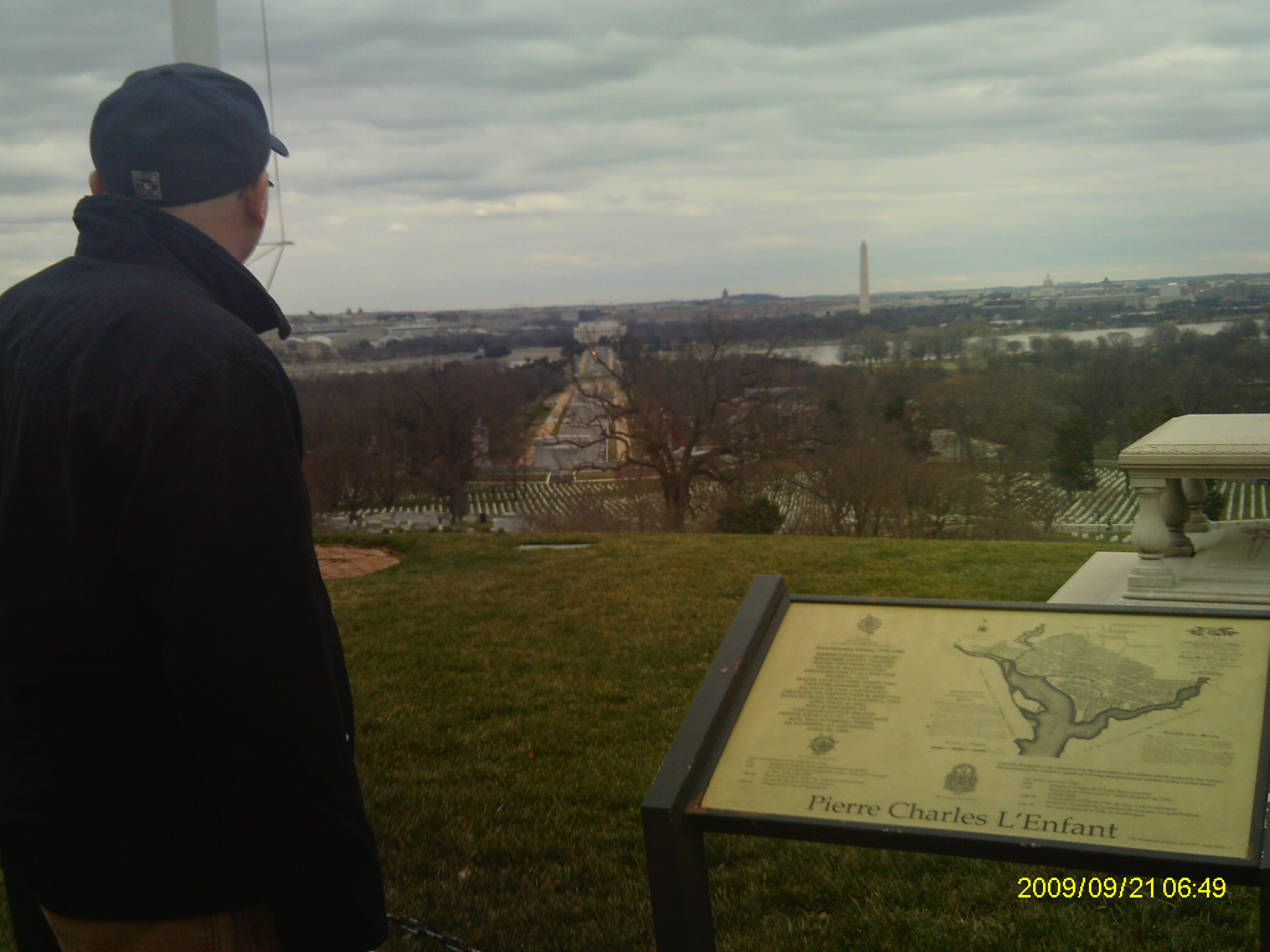
I have always known of course that the Lee residence is just across the Potomac and close to the capitol, but until standing in the front yard with its panoramic view of the District of Columbia I was not aware of how close.

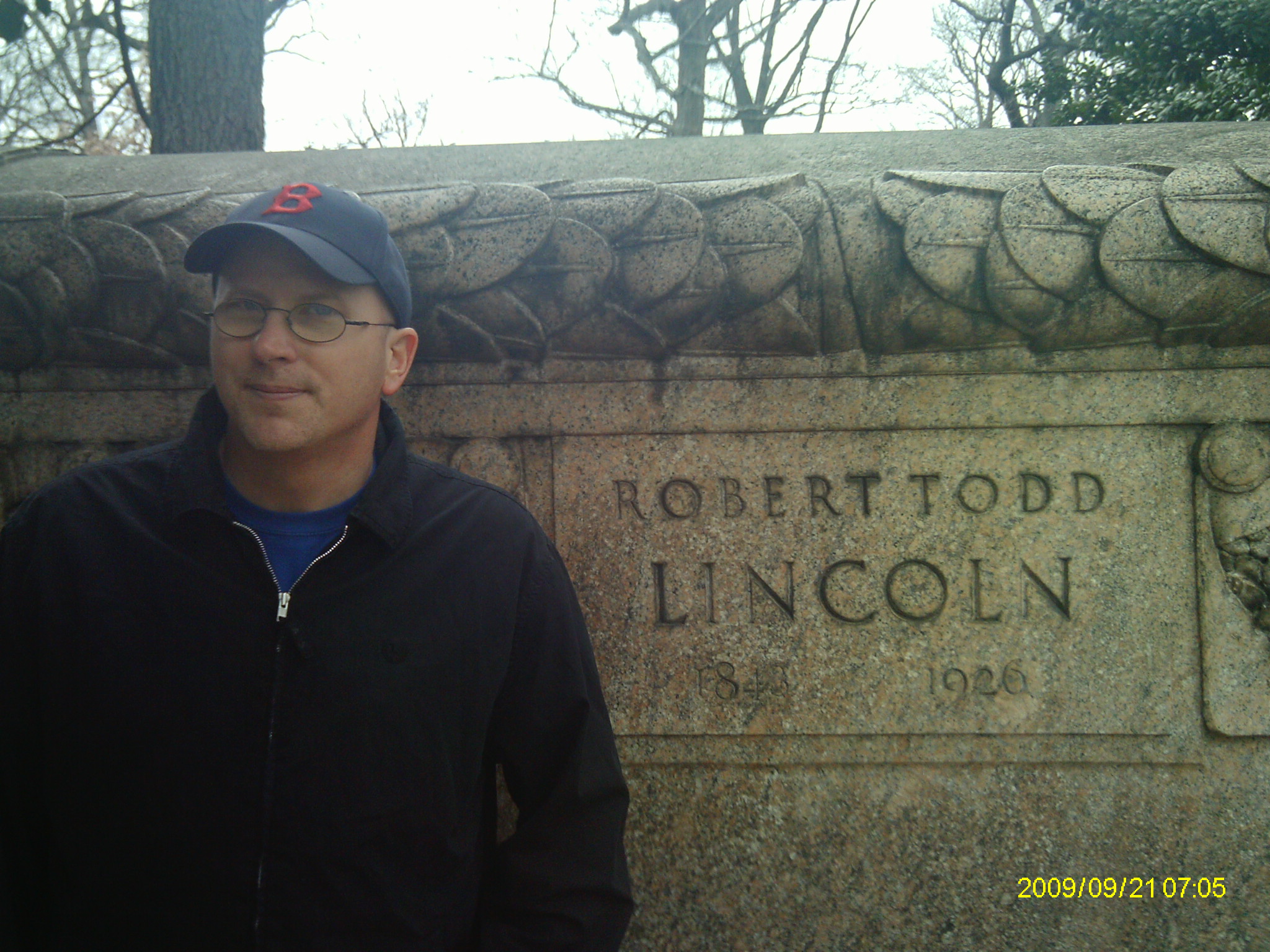
Walking down the hill we came across Robert Todd Lincoln, who rests within sight of his father’s memorial.

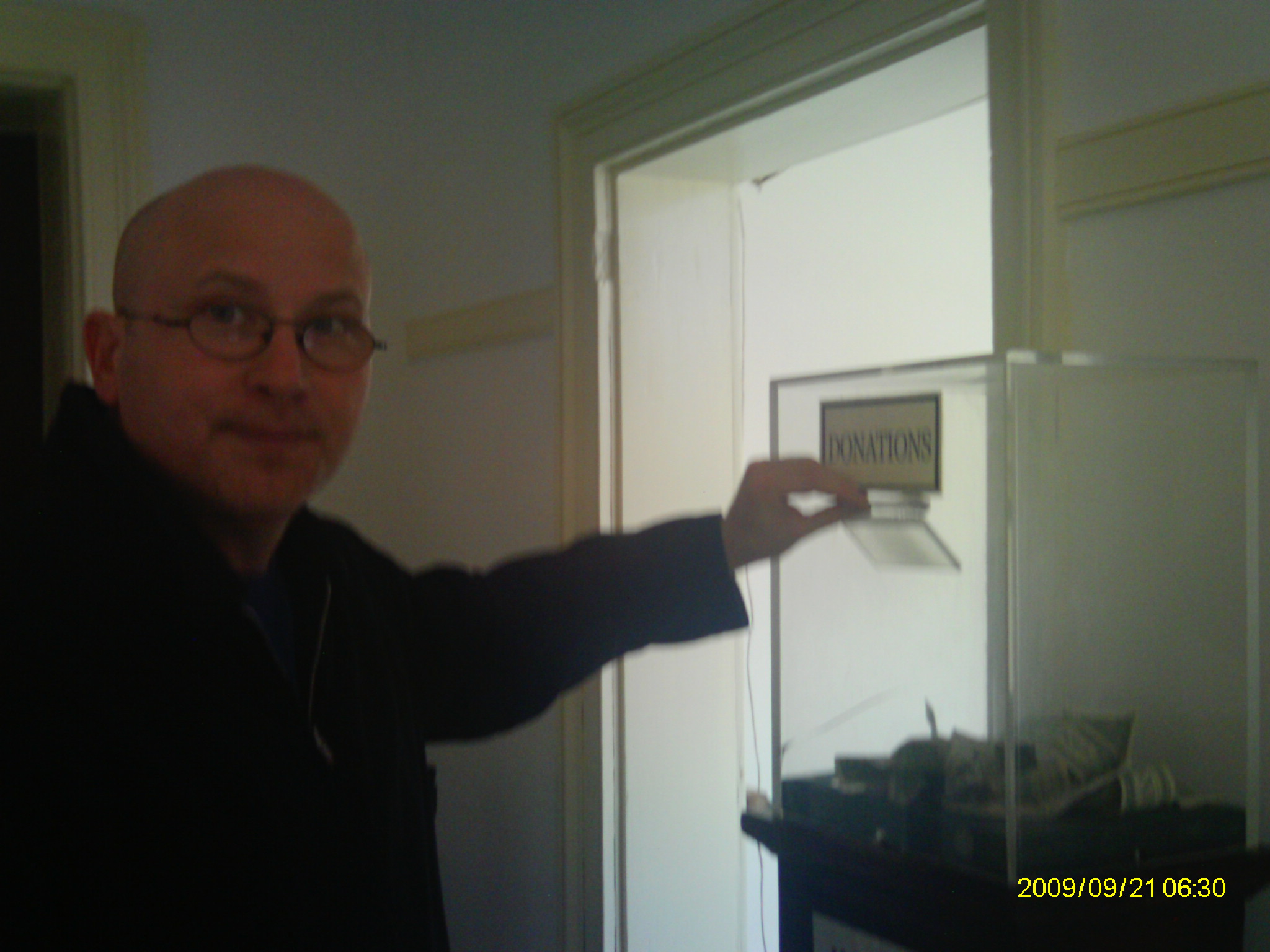
One yankee dollar for the restoration of the Lee estate.

We also watched the changing of the guard at the Tomb of the Unknowns.  I came across this Universal Newsreel with a brief snippet of the Tomb from Memorial Day 1945, less than a month after V-E Day but with the war against Japan still raging.  The National Cemetery in Brooklyn Ed Herlihy refers to in the second segment is Cypress Hills, one of the first fourteen such burial places created by President Lincoln in July 1862.  I sense a Civil War subway trip coming this spring.

Memorial Day 1945 marked the end of an era; it was the first time no Civil War veteran participated in any of New York City’s numerous Memorial Day parades.  Eighty years after Appomattox only 240 members of the Grand Army of the Republic remained.  Eleven were New Yorkers and their average age was 98, too old and infirm to participate.  In the newsreel’s part three Mayor Fiorello LaGuardia—a former translator at Ellis Island—presides over the parade in Manhattan, which ended at the Soldiers’ and Sailors’ Monument at 89th Street and Riverside Drive.  Many mistake this for Grant’s Tomb, which also lies on Riverside Drive but thirty-three blocks north.  The inside of the Soldiers’ and Sailors’ Monument is usually closed to the public.  One exception is each October when the public can tour the interior during Open House New York.  I missed it last year but already have it down on the calendar for fall 2011.

We have been to D.C. several times in the past few years and my only regret each visit is that we cannot stay longer.  Another trip is already in the works.

Thanks for checking in.