Sunday morning coffee

The New York City draft riots raged from July 13-17, 1863.

Good morning, all. I am having my coffee before setting out for Governors Island in a little bit. We are interviewing a lady who served in the Women’s Auxiliary Corps and after that a gentleman who was a high-level officer here during the Coast Guard years. It is always special to speak to people who lived and worked on the island. The lives people have led can be nothing short of extraordinary, even if they are unaware of it in the moment.

I was listening to the radio the other day on what turned out to be the 40th anniversary (July 13) of the 1977 New York City blackout. There was intense rioting and looting then and over the next several days. When I moved here and began working for the public library in the late 1990s, patrons in my branch told me that in the week after the riots, which at this time were only twenty years past, people were gathering in a sort of ersatz bazaar/flea market in the local park around the corner from the branch to exchange their ill-gotten gains. It would be three pairs of sneakers for a color television set, a gold chain for a transistor radio, or what have you. In my book about Civil War New York I am trying to put the July 1863 draft riots into perspective, explaining that such unrest has a long history in the city. There were several riots in the decades before the Civil War. There were major riots here and elsewhere in summer 1919 just after the First World War, and in New York City again in 1943 during the Second.

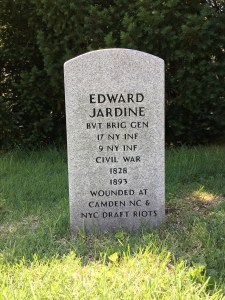
I was in Green-Wood Cemetery recently when I came across this new headstone for Edward Jardine, a Union officer from Brooklyn who was wounded in the Draft Riots. Jardine died 124 ago today, on 16 July 1893.

The 6th New York Division to move South

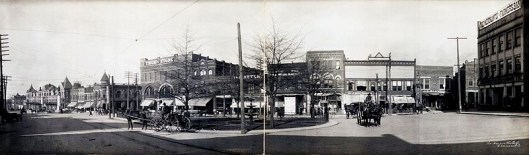
Spartanburg, South Carolina, circa 1909: On 13 July 1917 the War Department announced that the 6th New York State Militia Division would train in this mill town in the Carolina Piedmont region.

Secretary of War Newton Baker announced the fate of several state militias one hundred years ago today, releasing details of where certain state troops would be sent for training before being mustered into the National Army. One of the organizations Secretary Baker mentioned was the 6th New York Militia. The 6th, Baker said, would soon leave for Spartanburg, South Carolina. I have heard it argued that the Wilson Administration intentionally placed Great War training camps in Southern states as a way to appeal to his base and to co-opt any hesitant, isolationist Democrats within his party. That same day Baker also announced that state divisions would train in Texas (3 divisions), California (2 divisions), Alabama (2 divisions), Georgia (2 divisions), North Carolina, Louisiana, Oklahoma, New Mexico, Mississippi, and one additional division in the Palmetto State.

The theory about intentionality is entirely conjecture on my part, but based on these states this educated guess seems credible. Remember that this is just two generations removed from the American Civil War; any Southerners who fought in France would be the grandsons of Confederate veterans  Yes, some of them had fought in Cuba during the Spanish-American War, but this was to be something on another scale entirely. I am going to do a dive on this in the coming weeks. If anyone knows any authors/titles about the planning and placement of these training facilities, please let me know.

(image/Library of Congress)


Oh, sleep, that hast fled away

They fight, but we must weep
For our boys that are gone and dead,
God send the sleep we cannot sleep
To every soldier s bed!

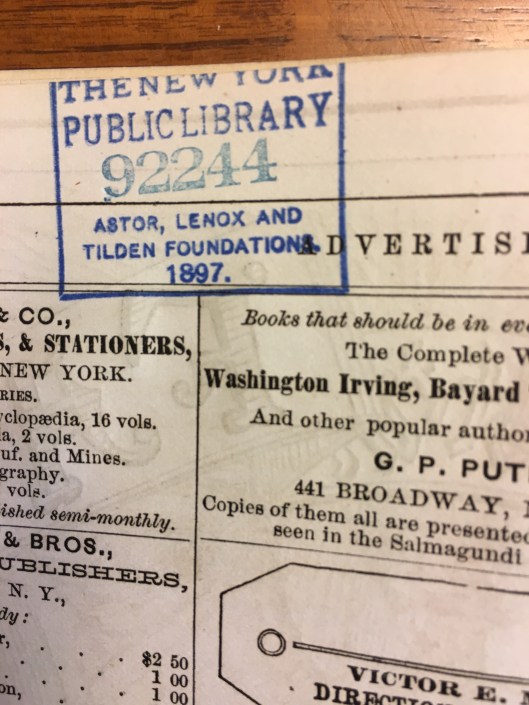
I was at the New York Public Library yesterday reading through issues of The Spirit of the Fair, the newspaper published during the Metropolitan Fair of April 1864. The fair was held by the Union League Club and U.S. Sanitary Commission, effectively the same thing, in April 1864 as a fundraiser for The Sanitary. The lines above are an excerpt from a poem published in the newspaper. Here are a few photos I took along the way.

They are available electronically but there is nothing like holding the real thing in your hands. The issues have held up quite well and show no signs of yellowing. I’m sure they used rag paper and not newspaper pulp.

The provenance of how these types of materials reach libraries and archives is a fascinating story in and of itself. The Reverend Henry Bellows donated the Sanitary Commission papers to NYPL around 1890. As we can see here, this item arrived independent of Bellows’s gift.

I love the stamp. That said, there were no “best practices” in the late nineteenth century to tell conservators not to mark up historical items. The ad for the Complete Works of Washington Irving is a nice touch. These books and other items were on sale at the fair, with the proceeds going to soldiers’ relief.


A third Roosevelt heads off to war

Kermit Roosevelt accepted an offer from the British Army one hundred years ago today to fight in the British Army in Mesopotamia. He was in Plattsburg, New York when he received the news and left immediately for Oyster Bay to make arrangements to sail for London later that very week. Kermit was the third Roosevelt son to head off for the Great War, Ted and Archie having left for France the previous month. Roosevelt would serve in Iraq under the command of British lieutenant general Sir Frederick Stanley Maude. It is interesting that most of the Roosevelt spouses ended up going to Europe during the war a well. Ted’s wife Anna spent a good portion of the war working for the Red Cross in London and Paris, for instance. Kermit’s better half Belle, with their son, sailed with him to London, where they would stay with her father Joseph Edward Willard, who happened to be Woodrow Wilson’s ambassador to Spain. Ambassador Willard had fought in the Spanish-American War under Fitzhugh Lee. He was a Willard of the “Willard Hotel” family. Joseph E. Willard was a wealthy Virginian and it is interesting that Kermit married into a Southern Democratic family.

The family arrived in London on July 26. There was a curious minor imbroglio involving the Associated Press. On the morning of June 28 the Committee on Public Information asked the AP not to run a longer story about the ship carrying Kermit and a large contingent of American troops. The article July 28 article had left out which troops specifically were on the transport and where it had docked, mentioning only the it was “A European Port.” A series of articles over the previous few weeks however did mention that Kermit was sailing for London. The article had already passed with the CPI censors in Europe and been approved for publication, and so the AP went with it. The CPI presumably became concerned because the story mentioned Kermit Roosevelt and careful followers could piece together where the ship had landed had they followed the newspaper trail over the course of July. That is my guess. Kermit Roosevelt was appointed an honorary captain in the BEF that September.

(image/Brooklyn Daily Eagle)


T.P. O’Connor visits America

Irish journalist and Parliamentarian T.P. O’Connor visited the United States in June-July 1917 to discuss America’s role in the Great War and the future of Irish Home Rule.

After the United States entered the Great War in 1917 diplomatic and military missions from various European nations came to speak to Wilson Administration officials and engage in public diplomacy with the American people. One hundred years ago today T.P. O’Connor of the Irish Nationalist Party met with President Wilson n the White House. The meeting seemed to go well. O’Connor had arrived in the United States on June 24 and set up headquarters at the Knickerbocker Hotel at 42nd and Broadway in Manhattan. The affable and indefatigable Irish politician and writer had audiences with as many as forty individuals on any given day before moving on to Washington. The war was an obvious topic of discussion wherever O’Conner went. One of his visitors was John Purroy Mitchel, the New York City mayor who was one of the strongest supporters on America’s entry into the war. In a speech in early July during the anniversary of the Battle of Gettysburg he went out of his way to mention the Irish Brigade and Thomas Francis Meagher. Meagher was not at Gettysburg but the audience understood the sentiment.

General Thomas Franics Meagher, born in Ireland in 1823, led the Irish Brigade from First Bull Run through Chancellorsville and was an inspiration to many Irish and Irish-Americans. He fell from a steamboat in the Montana Territory in 1867, 150 years ago this month, and his remains were never recovered. This memorial stands in Brooklyn’s Green-Wood Cemetery.

O’Connor’s primary objective, as he readily acknowledged, was garnering support for the Irish Nationalists in the lead-up to the Home Rule Convention to be held in London in late July. The reason for so many meetings was to gauge the sentiments of the Irish-American community. His was a difficult task. It was just fifteen months after the Easter Uprising and representatives from Sinn Féin were coming to the United States shortly after O’Connor returned to London.

(top image/New York Public Library)

Happy 4th

Happy 4th of July. General Pershing famously visited Lafayette’s resting place at Picpus Cemetery one hundred years ago today. It was part of a wider 4th of July observance in Paris in which a battalion from the 16th Regiment marched through Paris for review. Needless to say Americans at home saw the symbolism of Independence Day as they were gearing up to enter the war. I thought I would share this brief silent clip of French actress Sarah Bernhardt speaking to a gathering in Brooklyn’s Prospect Park on 4 July 1917.

Sunday morning coffee

July 1917: Bakers make war bread by the pound to feed hungry recruits at the Gettysburg training camp

Good morning, all. I have been thinking about Gettysburg all weekend. I was off all this past week and used the time productively to write 4500 words on my book about Civil War Era New York. The goal today is to write 750, which would put me in even better shape. Yesterday I went to the greenmarket on Union Square and pick up some things. The produce is almost in full season, though there is not yet sign of the heirloom tomatoes. I thought I would share this photo of an army baker taken in Gettysburg in July 1917. “War bread” was a concoction developed by the Army to hold the loaf’s freshness for several weeks. They needed the bread; thousands of troops were filing into Gettysburg for training in June – July 1917. This was not Camp Colt, the tank corps commanded by Captain Dwight Eisenhower in 1918, but a more general basic training facility similar to camps sprouting throughout the country that summer.

The Gettysburg army camp was constructed by Brooklyn architect Woodruff Leeming. Leeming attended Adelphi College in Brooklyn and later received his B.S. in Architecture from M.I.T. Five years prior to the Great War he designed the Beecher Memorial Building for Plymouth Church, which was constructed in recognition of the Henry Ward Beecher centennial. Leeming was active in the Brooklyn Institute of Arts & Sciences, what later became the Brooklyn Museum of Art. Woodruff was a major in the Officers’ Reserve Corps and it was under this jurisdiction that he traveled to Gettysburg in early June 1917 to build the camp.

Enjoy your holiday Sunday.

(image/Brooklyn Daily Eagle)

Route 15 to Gettysburg: a Strawfoot interview

Good morning, all. To mark the anniversary of the Battle of Gettysburg I wanted to post again this interview I did last July with John Thomas Ambrosi. Enjoy.
The_Penn_Motel,_U.S._Route_15_at_the_Penna._Turnpike_--_Gettysburg_Inter-change_--_5_miles_south,_Harrisburg,_Penna_(89308)
Over the weekend I read a fascinating memoir called Route 15 to Gettysburg: A Journey. The author is John Thomas Ambrosi, a retired Marine Corps officer who grew up in Rochester, New York. JT has traveled the road dozens of times over the past several decades and as seen many changes both on the battlefield and along the route to get there. Gettysburg is roughly equidistant from Rochester to Quantico, Virginia, which made visiting convenient during his military years. Gettysburg still resonates with JT today and continues to play a large role in his life. What I found so intriguing was the way he incorporates the battlefield and its rich history in with other events: his growing up years, his service in Desert Shield and Desert Storm, his family history, Rochester’s changing circumstances, and all the things he has seen over the years traveling Route 15 to Gettysburg. JT recently sat down and generously answered a few questions.

The Strawfoot: Your memoir is about Route 15. Where does this road begin and end, and what has it meant to you?

John Thomas (JT) Ambrosi: A lot of my life has been spent on and around the northern portion of Route 15 in New York and Pennsylvania but Route 15 extends much farther than that. It stretches almost 800 miles from Rochester,
NY to Walterboro, SC. Because of its proximity to my home and
Gettysburg, it became a natural focus for my memoir. The road acts as
a symbol tying together my childhood in Rochester, my love of studying
the battle of Gettysburg and my career in the US Marines as I used it
to travel to and from Marine training in Quantico, VA.

When did you decide to write the book?

I had just finished up a wonderfully productive decade at a local
telecommunications firm and wanted to try something else. So, while I
transitioned, I decided to put my thoughts on paper. It was a lot of
fun.

When you were younger were you conscious of Route 15 as
a heritage tourism destination?

No. Researching for the book opened my eyes, though. Route 15
intersects with quite a few remarkable geologic and historical places
in the eastern United States.

It is almost like there are two Route 15s, one through
scenic southern Pennsylvania, Maryland and Virginia and another
farther north through post-industrial America. You grew up in
Rochester in the 1970s. A major theme in your memoir is how towns like Rochester went from prosperity to Rust Belt malaise fairly quickly.

It’s so true. Rochester is a much different place now than it
was in the early part of the 20th Century. There are several complex
reasons why but mostly its because of the loss of manufacturing, white
flight to the suburbs and the concentration of poverty in the center
city. You see it in a lot of places in the northeastern United
States. The city is trying to make a come back, though. There are
lots of new developments and what is particularly exciting is the
number of new residential units going up in the city. But, it’s a
long, tough row to hoe. Route 15, the northern portion anyway, tells
the tale of Rust Belt America.
IMG_2454This was also the post-Vietnam era. Did you find your
interest in Gettysburg at the time to be anomalous?

In hindsight, interest in American military history would have
been anomalous but I was too immature to think about it that way in
high school and, frankly, probably wouldn’t have cared. As an aside,
my experience coming home from the First Gulf War was accentuated by
the number of Vietnam veterans who showed up to the airport and at our
parades/celebrations because they wanted us to feel welcome back in
our country. That was simply awesome. Those guys deserved so much
and the country treated them badly. But, they put their past in the
rearview mirror and said, “Never again.”

How, if at all, did being a Marine influence your
views on Gettysburg?

Quite a bit. Being in the military teaches you not only tactics
but how to understand terrain, weather, etc. and how those factors
influence a battle. You can better understand why the decision makers
at Gettysburg did what they did. For example, why did Dan Sickle’s
decide to disobey General Meade’s orders on July 2, 1863 and push his
3d Corps out to the Emmitsburg Road? You get a different perspective
of that when you look at the terrain through military eyes.

Uniformed Service Persons are a frequent sight on the
battlefield. Indeed staff rides were a stated reason for putting Civil
War battlefields under the jurisdiction of the War Department in the
1890s. Ways of war change over time, but did Gettysburg have any
lessons for you as a Marine officer?

Absolutely. The Marines call an attack like Pickett’s Charge
the “Hey, diddle, diddle, right up the middle.” It’s one of the
simplest, and deadliest, forms of maneuver. It’s not the preferred
way to go after bad guys but sometimes you have no choice. Also,
required reading at officer training was Michael Shaara’s “The Killer
Angels.” It’s a tired and, perhaps, trite phrase but those who forget
history are indeed condemned to repeat it. The Marines do a great job
making sure their officers study the past and learn from it.

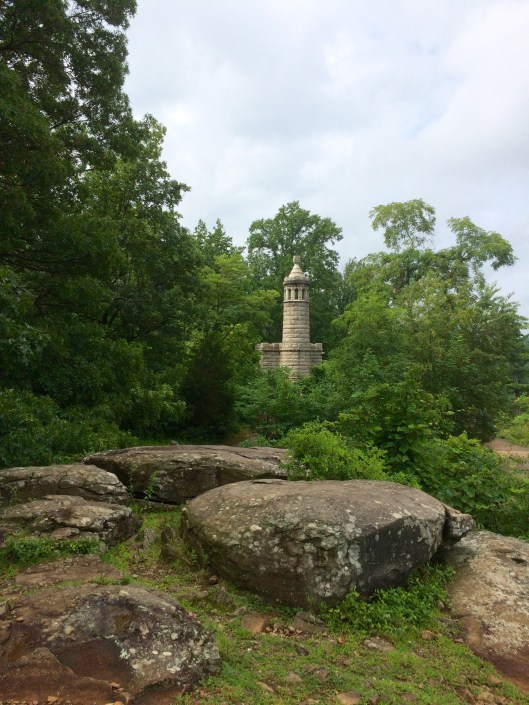
Col. Patrick H. O'Rorke memorial, on 140th NY Infantry monument (1889), Little Round Top

Col. Patrick H. O’Rorke memorial, on 140th NY Infantry monument (1889), Little Round Top

Tell us about Patrick O’Rorke and what he means to you?

A transplanted Irishman. His family made their home in
Rochester. He worked hard and got a ticket to West Point. He
excelled there and was quickly promoted after graduation. He was a
natural fit to command the 140th NYVI made up of men recruited in his
native Rochester. He and his regiment were headed out to bolster Dan
Sickle’s collapsing 3d Corps line on July 2, 1863, when the Union
Army’s Chief Engineer, seeing a bad situation developing on top of
Little Round Top, ordered him and his regiment to that peak’s defense.
It was in the nick of time too as Hood’s Texan’s were almost to the
peak. As he led the charge to repel them, a Confederate minie ball
hit him in the neck and he died on that hill. But, the 140th stopped
the attack. He is buried here in Rochester and I am a member of the
Patrick O’Rorke Memorial Society which keeps his name in the public
eye. He is a true American hero.

You were in Gettysburg the weekend after 9/11. What
was that like?

Two memories jump to the front. First, I remember the thousands
of people lining Route 15 in Pennsylvania just waving flags and
showing support for America. The second memory imprinted on my brain
is the eerie sight of contrails of jet aircraft back in the sky after
the attacks. The US had grounded all air travel for a couple of days.
But, when we arrived in Gettysburg on Friday evening the week of the
attacks, the jets traveling that particularly busy east-west corridor
painted a beautiful picture in the sky as the sun set over South
Mountain.

Since the publication of the book have you learned the
whereabouts of the banner from the U.S.S. Constellation?

I was serving as executive officer of the Marine Detachment on
board USS Constellation, a Vietnam era aircraft carrier. During a
visit to the Philippines, I had some local craftsman make me a banner
that we could hang in the Marine Detachment berthing. It was a
motivational piece of art quoting Henry’s band of brothers speech
before the battle at Agincourt. I never saw it again after I left the
ship and I’ve asked some of the Marines who served with me if they
recall where it went. No luck. Constellation is no longer around.
She was decommissioned and torn apart for scrap. I hope the banner is
in good hands!

Is there anything else you would like to add?

You too are a student of history and guys like me appreciate your
work in keeping people interested in it. Good luck with your work and
your blog and I appreciate you contacting me.

(images/Penn Motel by Mellinger Studios, Lancaster, PA; O’Rorke by Doug Kerr of Albany, NY, uploaded by GrapedApe; both via Wikimedia Commons; other image taken by The Strawfoot)

Dedicating Gettyburg’s Virginia Monument

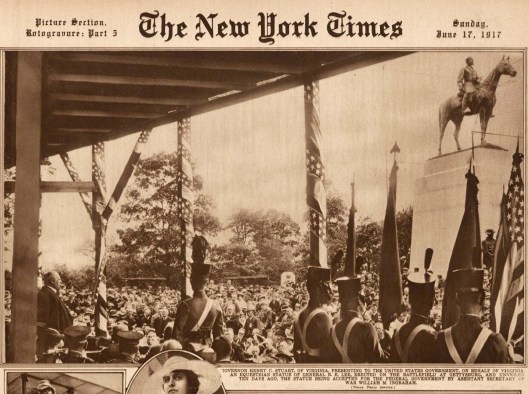
There were several speakers besides Ingraham at the unveiling of the Virginia Memorial in June 1917.

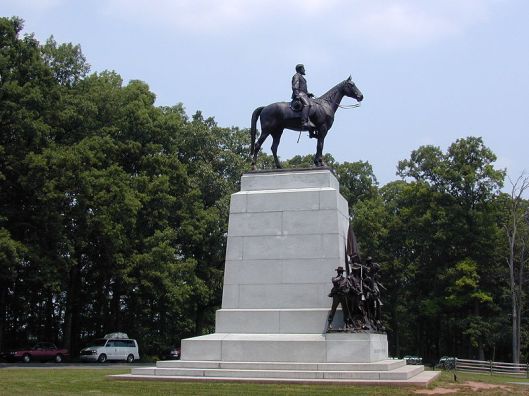
The Virginia Monument on Seminary Ridge was dedicated one hundred years ago this month, on 8 June 1917. The Gettysburg Battlefield is marked with considerably more Union than Confederate memorials but this is one of the most iconic, staring out as it does at the scene of Picketts Charge. In 1917 the Civil War battlefields were under the auspices of the War Department, who saw them not only as tourists attractions but living classrooms for soldiers. The unveiling was in June and not July because the event was combined with the United Confederate Veterans reunion held in Washington D.C. June 4-7. President Wilson reviewed the aging Confederate as they marched down Pennsylvania Avenue, which was apropos; the president was a Virginian with strong sympathies for the Confederacy and himself a member of the Sons of Confederate Veterans. As they passed, some of the men good-naturedly shouted that they were willing to go to France and fight the kaiser.

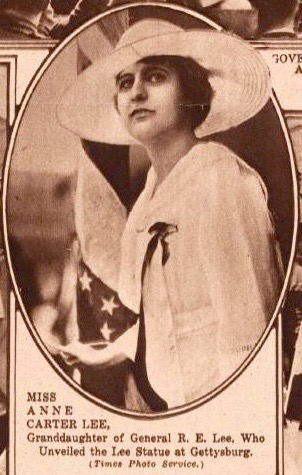
Since the April 6 declaration of war on Germany, many were politicizing the Civil War (more than usual) and trying to shape the past as they could for their own purposes. Speaker of the House Champ Clarke claimed to an audience at the National Security League in late April that Lee’s Army of Northern Virginia had contained no conscripts. The reason he said this was to influence the ongoing conversation about a draft for the Great War. Needless to say, he was corrected quite quickly. That the statue was being unveiled just as the United States was ramping up to fight in the Great War was a coincidence. The Virginia Monument had been in the works for almost a decade. The plinth was erected in 1913, Lee atop along with the three statues at the base representing the Infantry, cavalry, and artillery three years later in December 1916.

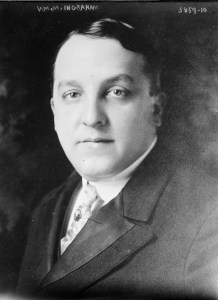
Assistant Secretary of War William M. Ingraham as he was during his time at the War Department.

Wilson did not attend the Virginia Monument unveiling on the 8th. It’s just as well. He had a poor showing at the 50th anniversary four years earlier, arriving late, shaking few hands, speaking tersely, and leaving as fast as he could. Assistant Secretary of War William M. Ingraham represented the Administration. Ingraham became Assistant War Secretary when Newton Baker took over that department in 1916. Prior to that he had been the mayor of Portland, Maine. One can imagine that Gettysburg had a special resonance for Ingraham; he was an 1895 graduate of Bowdoin College, the institution that Joshua Lawrence Chamberlain had overseen from 1871-83. As a Mainer, Bowdoin alum, and Assistant Secretary of War how could he not have known the story of the 20th Maine? Not surprisingly, Ingraham’s dedication had a strong reconciliationist tone. Early in he said of the present June 1917 moment, “We are now meeting at a critical time in the history of our country. War has once more come upon us, and all our manhood, wealth, and energy must be summoned to support the Government and bring to a successful termination the great struggle in which we are now involved.”

(images/top two, New York Times, middle, Jan Kronsell, bottom, LOC)

Beautiful day

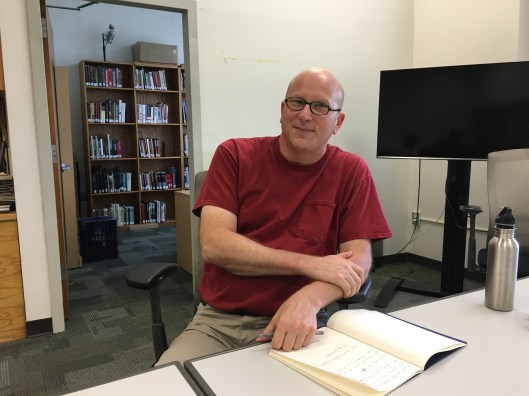
I was at Governors Island today where two other volunteers and I conducted some oral histories. We spoke to a Coast Guard man who worked on the island in the mid 1990s as the island was preparing to shut down. Closing down Governors Island was no small feat and the process took several months. Several thousand Coast Guard service persons and their dependents lived on the island until 1996. The process was well along for them to transfer. Everyone was gone by the end of that year, but in 1997 a few dozen workers, including the man to whom we spoke today, lived for a few months in Staten Island, commuting on the ferry and crossing over to do the mop up work mothballing the island. It’s strange that the mid 90s are part of history, but such is life.

The other interviewee was a First Army musician in the mid 1960s. He was actually stationed at Fort Dix but once came to the island for a First Army talent contest, which he and his bandmate won. The level of talent in the various military bands, even today, is more impressive than the general public might know. People like John Coltrane had extensive military band experience, in Coltrane’s case in the Navy. It is always special to speak to the people who served on Governors Island. Equally special is to collaborate with the volunteers and rangers who care for the island today.