Archiving the Great War

00046rI received confirmation late last week that the Library of Congress will be preserving The Strawfoot as part of the LOC’s Web Archiving initiative for the World War I Centennial. The Library of Congress’s goal is to collect and preserve materials born digitally during the Centennial. So much of what is online seems transitory and impermanent. I am very excited about the 100th anniversary of the Great War and think it offers all kinds of interpretive and other possibilities. That the blog will be included in the endeavor means a lot to me. Working on the website these past 3 1/2 years has been a labor of love, with equal emphasis on both words: love and labor. It was a lifestyle change. Writing the blog has its rewards; the site might not get the traffic that some others do but it does have a regular readership.

Longtime followers may have noticed a shift of emphasis in recent weeks and months. It may seem that way but to me it is all cut from the same cloth. I have never thought of myself as strictly a Civil War guy, though the events of 1861-65 have always been a source of interest and fascination for me. I have always been more interested  in the causes and consequences of the war; what came just before and after is equally important. That is why I have found volunteering at the Theodore Roosevelt Birthplace these past ten months rewarding. The Roosevelts–both side of the extended family–offer so many intellectual opportunities.

I am still plugging away on the Theodore Roosevelt Senior and Joseph Hawley biographies, still volunteering at Governors Island over the summers, still writing the content for the TRB social media platforms. There are more connections than might be apparent. For starters, General/Senator Hawley and Theodore Roosevelt knew and admired each other. I find it fascinating that the young Franklin Delano Roosevelt lost a power struggle with his boss, the unreconstructed Secretary of the Navy Josephus Daniels, over the naming of a new ship in 1917. Instead of Roosevelt’s choice, the destroyer was christened in honor of Confederate naval officer Matthew Maury. These types of things fall under what we now call Memory Studies, which I suppose is broader and more encompassing than just historiography. More of these types of things are going to come out here at The Strawfoot in the coming months.

(image: Theodore Roosevelt at Washington’s Union Station during the First World War, LOC)

The Guns of August

The guns of August began pounding 100 years ago this week as one by one the countries of Europe went to war. The United States would not enter the conflict for almost another three years. Two of the biggest advocates for Preparedness before and during the war were Theodore and Franklin Delano Roosevelt. Both had spent parts of their careers as Assistant Secretaries of the Navy, and Franklin was serving in that capacity when the war began. He was in a difficult spot; as a low ranking member of the Woodrow Wilson Administration he did not have the freedom to speak the way his cousin, and wife’s uncle, did. Still FDR worked indefatigably, in that way the Roosevelts had, to help modernize the U.S. Navy, much as Uncle Ted had organized the Great White Fleet and sent it around the world a few years earlier. Naval power only became more important after the opening of the Panama Canal on August 15, 1914. Throughout the war Franklin also kept Theodore informed of the palace intrigues within the State, War, and Navy Building.

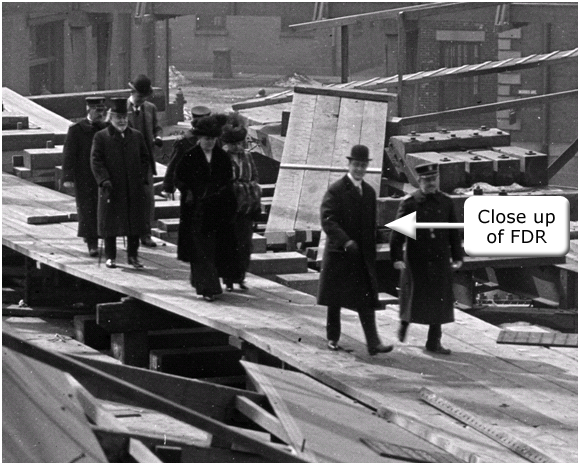
FDR-Brooklyn-Navy-Yard-Close-up

Here is an incredible image from the National Archives of FDR at the laying of the keel of “Number 39,” the ship that would become the USS Arizona. (Learn more about the image’s provenance.) This was in the Brooklyn Navy Yard, March 16, 1914, exactly one full year into his assistant secretaryship. The Arizona began its sea trials in 1916. I don’t know if ironic is the word for it but, in a twist, the Arizona would be sunk at Pearl Harbor in 1941.

The monument to Washington’s Great War veterans

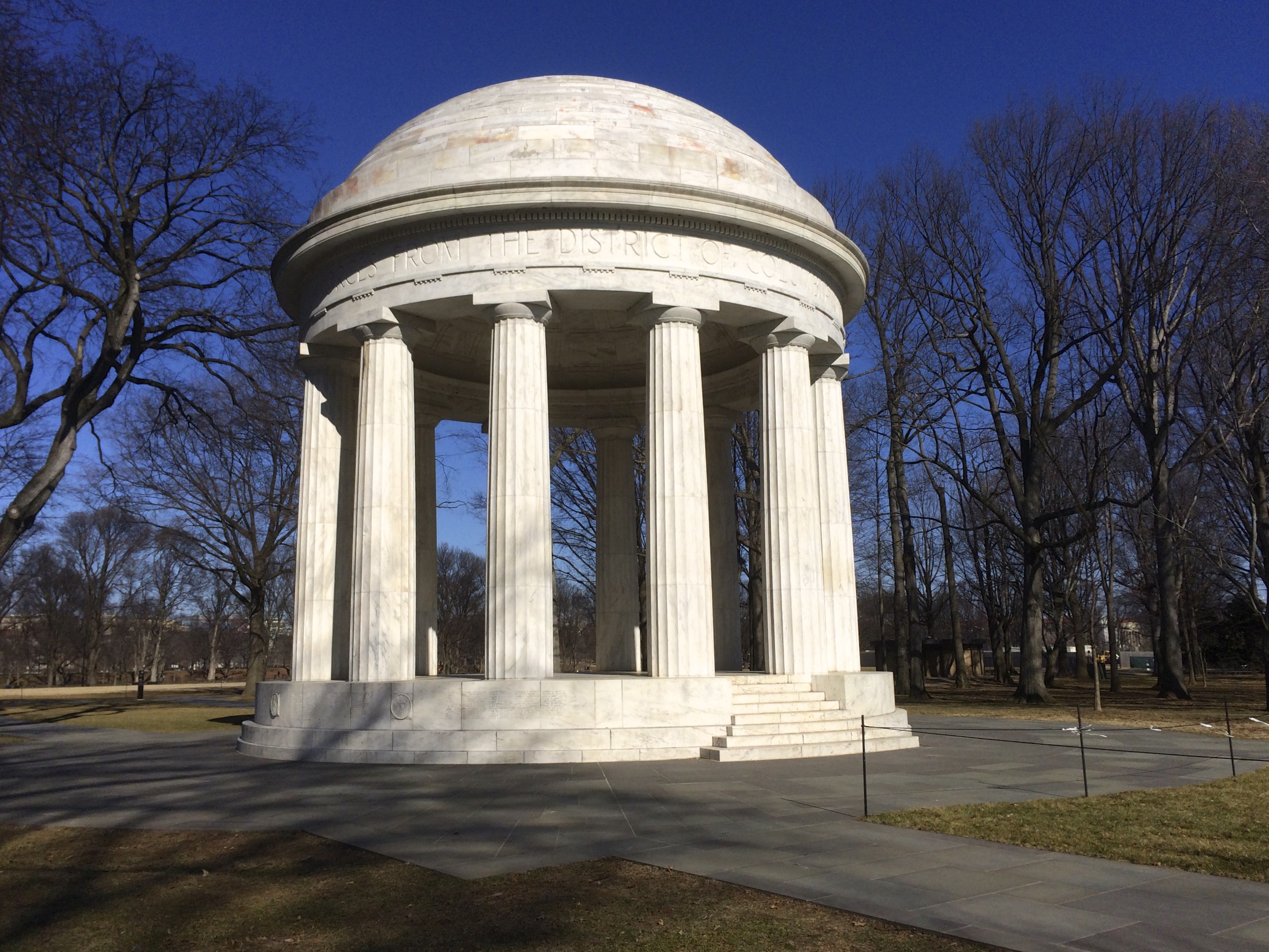
The District of Columbia War Memorial

The District of Columbia War Memorial

I took this photograph of the Great War Memorial a few months back.  It was restored a few years ago and looks fabulous. As you can tell by the image however, it does not get too much pedestrian traffic. That it is a tad off the beaten path explains part of it. Still, that can’t be the whole reason. It is less remote than it was even just three years ago when the Martin Luther King, Jr. Memorial was built; one walks through this general area when passing from the Mall to the MLK statue or vice versa. Even with the extra foot traffic, people do not seem inclined to stop and look. Maybe that will change during the Centennial.

detail

detail

I met historian Mark Levitch at the World War One Centennial Commission Trade Show in June. Since then I have contributed a few memorials to his World War I Memorial Inventory Project with a few more in the hopper. Earlier this week Mark was interviewed by CBS News about the project. Check out the video here.

The restoration of Richard Theodore Greener, a further update

AR-140729811.jpg&maxw=368&q=100&cb=20140731000233&cci_ts=20140730130001I have been following the story of the personal papers of Richard Greener off and on for a few years now. As you can read from previous posts below, the papers were discovered during a home restoration in Chicago a few years ago. Since then the documents have been sold incrementally. I am glad the worker who found them did not get ripped off and that he has managed maintain control. Next week on August 6 one of the most prized artifacts–Greener’s 1865 Harvard College diploma–is going on the auction block. It is expected to fetch $10,000-15,000. We shall see what happens.

A year and a half ago I wrote the post below about the rediscovery of some of the effects of Richard T. Greener. There was great interest and speculation about where these things would end up. Appropriately, they have returned to the University of South Carolina. Find a half hour over the weekend to watch the ceremony that took place earlier this week.

Further update: This was a more complicated story than I first realized. Boston Magazine has more on the story, including a threat to burn the documents. Crazy.

(Hat tip David Jensen)

I have written before of my appreciation for the recovery of Long Lost Items. The stories are exciting precisely because of their unexpectedness. You are reading the newspaper one day and learn, for instance,  that a WW2 German U-boat has been discovered off the coast of New Jersey, as actually happened about a decade ago. The other day a friend forwarded me this piece about the discovery of a cache of personal effects once belonging to Richard T. Greener. That many readers might not know who Greener was is unfortunate, because he was very much the equal of Frederick Douglass, Booker T. Washington, and even W.E.B DuBois. Greener was the first African American graduate of Harvard College, entering that institution in September 1865 as a member of the first class to enroll after the Civil War’s end that April.

In the early 1870s Greener was the principal of the Male Department in the Philadelphia Institute for Colored Youth. He soon took a similar post at a school in Washington DC. Eventually Greener earned his law degree from the University of South Carolina. While studying there he traveled through the heart of the fire eating Palmetto State preaching the gospel of racial equality, often under considerable threat of violence. Wisely, Greener left South Carolina as Reconstruction was ending. He moved back to Washington where he served as Dean of Howard University’s Law School, but left after a few years to open his own highly successful practice on T Street. Greener was a Republican and a close friend of U.S. Grant’s. He was secretary of the Grant Monument Association and was thus largely responsible for the creation of Grant’s Tomb. He even procured funds from African nations such as Sierra Leone for this endeavor. Later he served in India, China, and Russia in the McKinley and Roosevelt Administrations. (It is always surprising to read/hear of Americans serving in such far flung regions in the nineteenth century.)

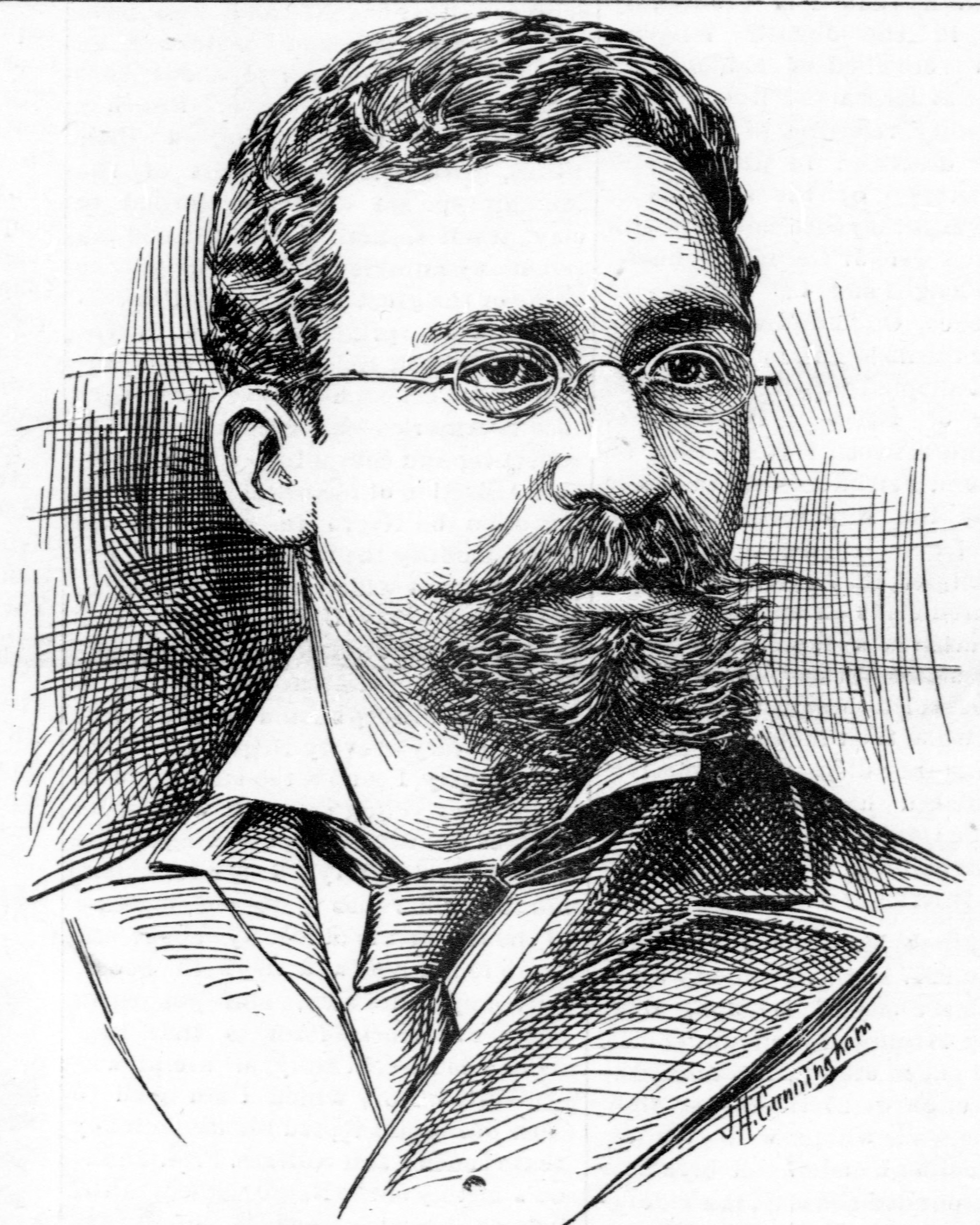
Richard T. Greener

In the earlier twenthieth century Greener had fallen into obscurity, eventually moving to Chicago. That so few know who Richard T. Greener is today is partly because his family was not there to protect his legacy. Many had changed their name to Greene and lived their lives passing in White America. Greener died in 1922.

The documents that came to light the other day were found in a derelict house in a rough neighborhood on Chicago’s South Side. A construction worker found them in a trunk in 2009 and saved them by stuffing them in a paper bag. Included are Greener’s Harvard diploma and his personal correspondence with President Grant. How these items came to be found in  a derelict home open to drug addicts is one of the story’s great mysteries. Time will tell where these items will eventually settle. Wherever they do end up, we can only hope they restore Greener to his rightful place in the pantheon of Great Americans.

(image/J.H. Cunningham for The Colored American)

Hermann Hagedorn, 1882-1964

Hermann Hagedorn died fifty years ago today. The name may not ring many bells within the general populace. Hagedorn, however, was a towering figure within the world of Theodore Roosevelt memory and historiography. When the Roosevelt Memorial Association was formed weeks after the former president’s death, Hagedorn became the group’s first acting secretary. He eventually became the RMA’s executive director. Hagedorn dedicated a significant portion of his life to the Roosevelt legacy; the RMA formed in 1919 and Hagedorn was still going strong during the Roosevelt Centennial in the late 1950s.

13834Hagedorn met Theodore Roosevelt in 1916 when a small group of supporters were trying to convince him to make one final run at the White House. That of course did not come to pass. The son of a German immigrant, Hagedorn was born in New York City. Though the United States was not yet involved the Great War, the fighting was raging in Europe when Hagedorn and Roosevelt first met. One can see why they were drawn to each other. Roosevelt was advocating for Preparedness while Hagedorn was extolling the virtues of Americanism, especially with the German-American community.

The Men’s and Women’s Roosevelt Memorial Associations were responsible for rebuilding Roosevelt’s boyhood home on East 20th Street. As I often emphasize on tours this was a time before presidential libraries. In addition to the house itself there was, and is, a museum and substantial library on site. Hagedorn claimed in the August 1929 Bulletin of the American Library Association that officials from the New York Public Library had told him that the Theodore Roosevelt Birthplace’s collection was “the most extensive library built around one individual in the United States.” The library indeed includes a substantial collection of books and other materials. It is worth noting that the Birthplace library collected not just photographs but moving imagery as well. This was pioneering stuff in the 1920s.

The RMA and Hagedorn did a lot more than just the Birthplace though. They were responsible for constructing Roosevelt Island in Washington DC and transforming Sagamore Hill into the historic site it is today. These are just a few of their accomplishments.

Hagedorn wrote a number of biographies of Roosevelt written for children and adults. He authored his first Roosevelt biography, The Boys’ Life of Theodore Roosevelt,  in 1918 while the former president was still alive. In the mid 1920s Hagedorn edited Roosevelt’s Complete Works, a substantial undertaking given that Theodore Roosevelt authored over thirty books. Some people believed that Hagedorn became too involved in the Roosevelt legacy and that he sometimes stepped over the line into idolatry. Lewis Mumford and Oswald Garrison Villard were two of Hagedorn’s harshest critics. Hagedorn did sometimes lapse into hagiography but some of the criticism was shrill and unfair.

Hermann Hagedorn accomplished many things in his lifetime. There were plays, poetry, biographies of such figures as Leonard Wood and Albert Schweitzer, and other projects over his long life. Still, he is now most associated with the life and times of Theodore Roosevelt. So much of what Hagedorn did is still here today.

Textiles and the Civil War

Yesterday a friend and I visited the New-York Historical Society to see the exhibit about textiles and the Civil War. Textiles, in this case cotton, obviously were a major cause of the secession crisis and the war. The exhibit though went beyond cotton’s role in the conflict. Included were quilts, flags, housewives (hand stitched sewing kits), clothes, and other items. Among the most touching artifacts were swatches from the Jordan Marsh catalog in various textures and shades of black from which to make mourning clothes. Jordan Marsh is yet one more thing from my past that no longer exists but that is another story.

I do not know if this is true or not, but the exhibit states that there were no hidden messages within quilts for fugitives on the Underground Railroad. It’s funny how these types of stories get propagated and then never entirely go away. More than once I myself have readjusted what I say in tours and public talks after discovering a long-held assumption is false. One that comes to mind off the top of my head was that there was once a tax on having closets in one’s home.

It is an extraordinarily thoughtful show and runs through August 24.

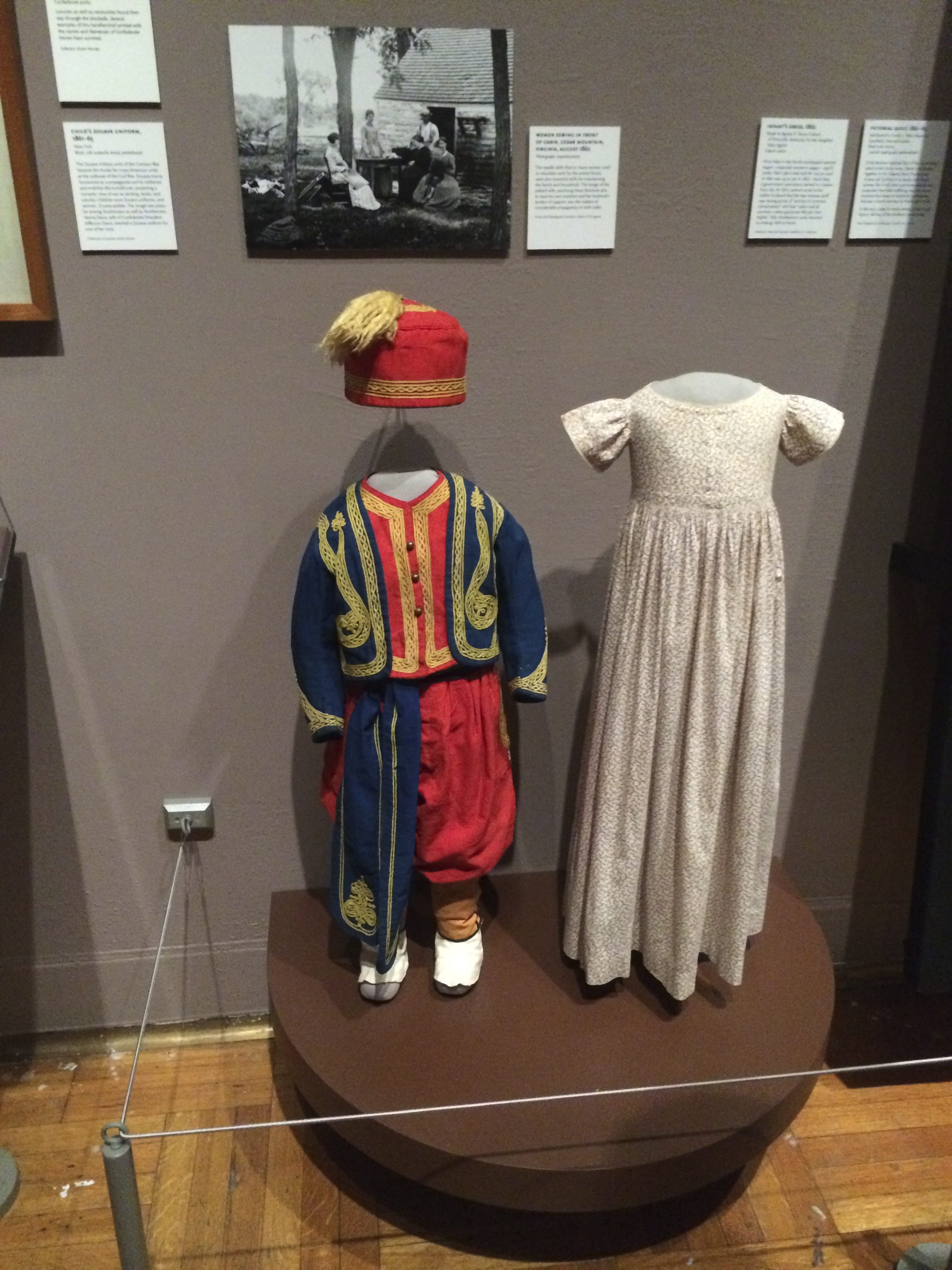
One thing that caught my eye was this little Zouave uniform made for a little boy. The reason it stuck out, besides the fact that it is beautiful is because little Theodore Roosevelt had one that was similar. (See it here.)

similar Zouave uniform on display at the New-York Historical Society

a girl’s dress and little boy’s Zouave uniform on display at the New-York Historical Society

Speaking of the New-York Historical Society keep in mind that the museum has an exhibit about New York City and the Civil War running through September 28 in Building 18 on Governors Island. I still have yet to check this out. There is still two months to go in the Governors Island season.


Franklin Updike’s Great War

IMG_1108I was in Green-Wood Cemetery on Sunday when I came across the headstone of Franklin P. Updike. These WW1 headstones are much rarer than the ubiquitous Civil War markers one sees so often in old garden cemeteries. For one thing, there were fewer American deaths in the First World War than there were during the Rebellion. what’s more, a significant portion of doughboys were interred overseas where they were killed.

Updike, I later learned, lived in Brooklyn Heights and enlisted in the Army a month after the U.S. entered the Great War.

Updike death  copy

Updike is somewhat unusual in that he died during the war and was brought home. Note that the headstone was ordered in April 1942, just as the U.S. was entering the Second World War.

Updike grave marker copy

The young private was a wagoner, that is he tended horses and carts. This was a dangerous task; the enemy understood the importance of the enemy’s transport and so did everything to neutralize–kill–it. In his Memoirs George Marshall wrote of the wagoners in his division that at certain periods “the most dangerous duty probably fell to the Quartermaster Sergeants and teamsters who went forward each night.”

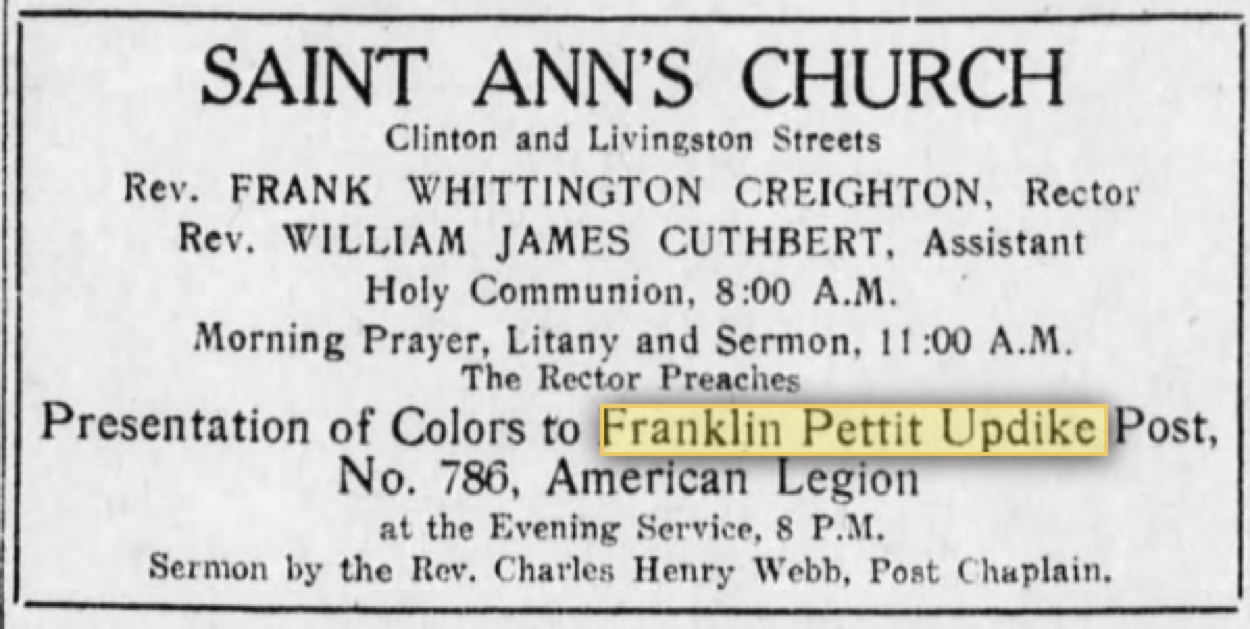
The people of St. Ann’s Church held a service for Updike at Thanksgiving 1918. The war had been over for two weeks by this time. This announcement and the one below are from the Brooklyn Daily Eagle.

Updike St Ann's announcement copy

This afternoon on my lunch break I went to the Heights and took this photo of St. Ann’s as it is today.

IMG_1110

The people of Brooklyn did not forget Updike. Alas I don’t believe it still exists today but they named the local American Legion Post after him. This was in January 1924, ninety year ago this year.

Updike color presentation copy

Framing New York

Framing New York

Framing New York

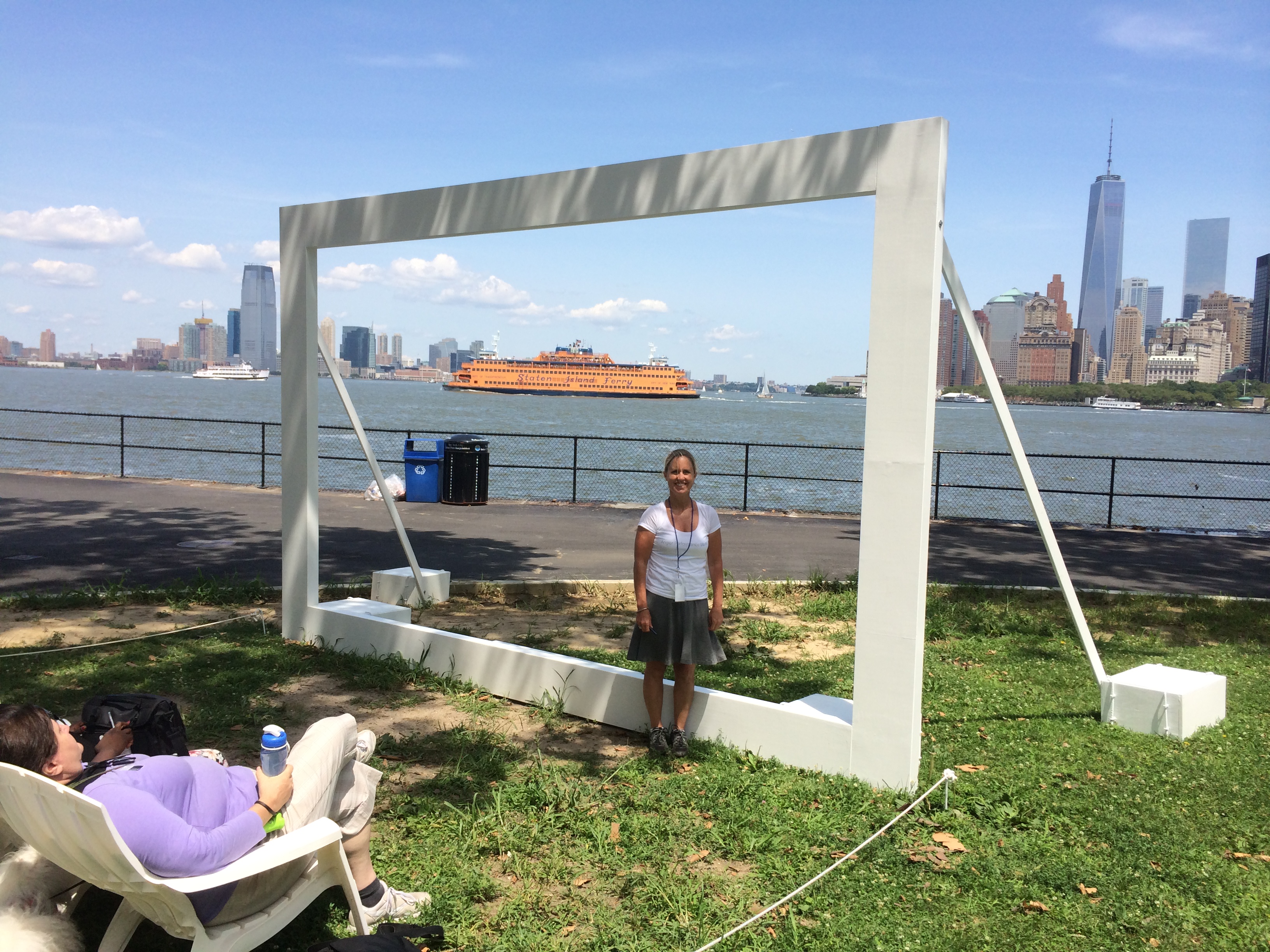
This past Friday I was leaving Castle Williams after doing a tour when I noticed an art installation to the immediate left. It turned out to be “Framing New York.” After a few minutes enjoying the view of the Harbor and Lower Manhattan, I struck up a conversation with the artist, D. Chase Angier. She graciously agreed to answer a few questions.

The Strawfoot: Where did you get the inspiration for “Framing New York?”

D. Chase Angier: From New York itself – the rapid rate in which it changes, its history, beauty, art, and stories. I have a deep love for this city as many of us do who have either grown up here, transplanted here, or even just visit.

Inspiration for this project came from my complicated love for New York City coupled with my deepening concern for our future. What is New York City today and how does that reflect who we are and where we are headed?

One of the elements that makes New York City unique is the unusually rapid rate at which it is changing. The rate of change coupled with the extreme density of buildings and people living in New York, creates an intense energy that is distinctive. “Framing New York” asks the audience to pay attention together to one select place in New York City at a particular time.

How would you describe your approach to your art?

I have many different approaches to art but if I need to reduce it down to one thing, I am a site specific choreographer.

Artist D. Chase Angier in front of her creation. The orange boat is the Staten Island Ferry sailing by.

D. Chase Angier in front of her creation. The orange boat is the Staten Island Ferry.

Tell us a little bit about your background?

I received my BA in Dance from UCLA and my MFA in Choreography from The Ohio State University. Basically, I am an interdisciplinary artist who specializes is site specific choreography. I am a dance professor and director of the dance program at Alfred University. I also create and perform site-specific performances, performance installations, dance-theater, and walking performances. My works have been performed internationally in Japan, the Czech Republic, Germany, Mexico, the United Kingdom and throughout the different regions of the United States.

What other “Framing” projects, if any, have you done in the past?

I framed Edgewood Farms, owned by Harold and Beverly Snyder in Alfred, New York. That was different in that it was a one time 2.5 hour event. The audience watched him hay his field. I placed ten matching white Adirondack chairs in front of the white frame for the small invited audience. The audience had to remain small and invited, in fact, because they were put on call to view this work. Certain weather conditions had to work together (wind, temp, humidity) to make it possible to hay on a particular day.

The frame captured the shapes of the tall grass contrasting the cut hay, the tubular windrows, and the spiral “floor” patterns on the field. The lighting for the work was the sometimes indirect sunlight that filtered through the clouds creating interesting moving shadows, and the sometimes direct sunlight that not only brought out the gold color and the smell of the hay but also created the heat which added to the sensory experience. All of this activity happened against the beauty of the subtly changing landscape – the clouds, birds, cows, and hills.

Framing Edgewood Farms was the first in a series: http://www.angierperformanceworks.com/index.php/projects/framing-series

Had you spent time on Governors Island previously?

Yes. I have been going almost every summer since it reopened. My favorite experience was the three day New Island Festival in 2009 with the Dutch. I enjoyed the art work, lectures, parties. It was three days of incredible madness.

Two visitors take in the view

Two visitors take in the view from the installation

You mentioned in our conversation that the New York skyline changes depending on the weather, time of day, and other circumstances. Explain.

Every day is dramatically different. The clouds, light, temperature, water traffic, people walking/biking by. The shadows crawling up the buildings – or no shadows at all on a cloudy day. How the light and sky reflect on the mirrored buildings, making some of them look as it they are disappearing. The dramatic dark thunder clouds versus a hazy hot light day. The color of many of the buildings change. The events change – Obama coming to NYC and landing close to Pier 11 as his military helicopters through the frame; the fireboat shooting out water the next day; the lack of people in the frame during the week on a rainy day, versus the crazy amount of people on the weekends.

In addition to the light, color and sky –  I have been fascinated by the choreography of the harbor. The different shapes, tempos, directions, rhythms, colors, size, levels, of all of the various boats. Tall ships, clipper ships, kayaks, repetitive orange staten island ferry, circle line, garbage boats, tug boats, oil tankers, jet skies, shark motor boats, cruise ships, etc.

It is a participatory artwork in which people can sit in the chairs and watch the harbor and skyline.

What has the public’s reaction been?

So far extremely positive. My favorite part about New Yorkers is that they like to talk to strangers (me) and they like to tell stories. I had heard a lot of stories about 9/11 as they look and no longer see the twin towers. Firemen, construction workers, lawyers, financial analysts etc. Tourists have been moved as they are seeing the city live from a great perspective (across the water) that they have only seen in movies and photos. Skeptics, teenagers, and people not exposed to a lot of art have used the word “actually” a lot, as in “I actually like this”, “This is actually cool”, etc.

For how long can visitors see “Framing New York?”

Through July 27th

What can one say in 2:00 minutes?

I am sorry about the lack of posts recently. I have been so busy on other projects that something had to give. I have been making strides these past few weeks on the manuscript of the book about Theodore Roosevelt Senior. He was was quite the man. It feels good to be making progress. I promise to share as I get farther along.

Here is something special. I first saw this add for a UK bread company years ago. Earlier today it popped up when I was searching for something else. My favorite part is when he comes across the 1953 coronation party for Queen Elizabeth, turns the corner and meets the Mod girls. The carload of blokes celebrating the 1966 World Cup victory is the icing on the cake.

I am assuming the fireworks toward the end are for 2000 New Year Celebration. Wow, that was a long time ago now. Enjoy.