• About

The Strawfoot

~ a New Yorker's American History blog

The Strawfoot

Author Archives: Keith Muchowski

The diary of an unknown poilu

26 Thursday Feb 2015

Posted by Keith Muchowski in Writing

≈ Comments Off on The diary of an unknown poilu

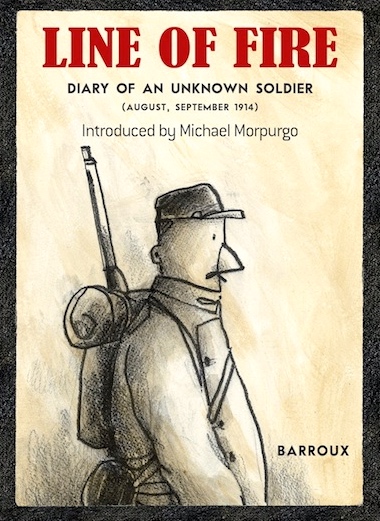
1391111287358Barroux is a French illustrator who has a number of children and adult graphic novels to his credit. A few years ago on a cold winter day like today he was walking from the Bastille to the Place de la République when he came across some workers emptying an apartment. The men invited him to take anything he wanted, and being a good artist he stopped to check out what if anything might be of interest. Incredibly there in the detritus were some almost-century-old notebooks written by a poilu during the Great War. The notebooks covered August-September 1914 and proved authentic. This French soldier was in the war for just two months but had an eventful series of episodes. As he describes it, he and his comrades had their “great send off” at 5:00 am on August 5. This was very early–the first week–in the war.

Frustratingly very little is known of this diarist. We know he was married and that he had a friend named Fernand, and that’s about it. The diary ends on September 12, 1914, but there is extraneous material and ephemera up through 1917. Why he stopped writing in 1914 and what became of him are mysteries that will never be solved.

Barroux illustrated the text with bold, dark sketchings that render the journal entries that much more poignant. He clearly did a great deal of work to capture a French society that is now long gone. The beaks drawn as noses offer just the right amount of absurdity to the tale. And of course the whole situation was absurd. How Europe went from peace to suicidal cataclysm in six short weeks is something we will never fully comprehend.

I hope more things like things come to light and during the centennial. It seems an opportune time for publishers to take advantage of the public interest. The London Guardian has some excerpts.

Clark Terry, 1920-2015

23 Monday Feb 2015

Posted by Keith Muchowski in Jazz, Those we remember

≈ Comments Off on Clark Terry, 1920-2015

I was saddened to read the other day of the passing of Clark Terry. The great trumpeter was ninety-four and had been active well into his 10th decade. Just last fall he was the subject of a documentary, Keep On Keepin’ On. That film captures Mr. Terry mentoring a young protege, a role to which Terry was well suited. He was a mentor to many of the leading jazz figures of the day. Pupils included Quincy Jones and Miles Davis. Terry he had an illustrious career in his own right also. Over the decades he worked with Duke Ellington and Frank Sinatra to name two.

Terry was born in 1920. To put this in perspective: this was one year after the Harlem Hellfighters returned from France. James Reese Europe, the leader of the 369th Regimental Band that had done so much to bring jazz across the Atlantic during the Great War, died just a few months after the Hellfighters returned to the United States. During the Second World War Terry himself would play in a military jazz band, just as Europe and his men had done during the First. Terry went through basic training in Waukegan, Illinois, the site north of Chicago on Lake Michigan reserved for the training of African-American troops. He then played in bands on bases throughout the country.

After the war Terry settled in New York and was part of the jazz scene. He joined what one might call the African-American expatriate community in Corona, Queens. Corona in the 1940s-50s was an enclave of detached houses to which many black musicians moved to enjoy a quieter lifestyle away from the nightclubs of the city. Neighbors included Louis Armstrong, Dizzy Gillespie, Ella Fitzgerald, and saxophonist Cannonball Adderley.

Here is some hot music for a cold evening.


Sunday morning coffee

22 Sunday Feb 2015

Posted by Keith Muchowski in Uncategorized

≈ 3 Comments

I’m sorry for the lack of posts this past week. The semester is now in full swing and I have been focusing on getting things in order on the work front. I did manage to get to DC over Presidents Day Weekend, where I saw One Life: Grant and Lee: “It is well that war is so terrible. . .” at the National Portrait Gallery. The NPG put together a number of worthwhile exhibitions over the Civil War sesquicentennial. This one concentrated more on the events of the Wilderness Campaign through Appomattox. Focusing on this period was a wise move, and not just because of the sesquicentennial; a few years ago the New-York Historical Society already had a show that focused on the two men’s lives in their entirety.

General Wood in his dress white, Cuba 1905. Wood was a longtime friend of the Roosevelt family.

General Wood in his dress whites, Cuba early 1900s. Wood was a longtime friend of the Roosevelt family. If I am not mistaken that is a poster from the 1900 presidential election behind Wood. It reads “The Governor and the Governor,” meaning Roosevelt and McKinley.

I was doing some work on the Roosevelt Senior project the other day. As I mentioned last week I am fascinated with the provenance of the house itself. One of the unique aspects of the Birthplace was the Roosevelt Medals the RMA awarded each year. They were so serious about this that they awarded the first awards before the house even re-opened. The RMA announced on June 1, 1923 that Henry Fairfield Osborn, Leonard Wood, and Louisa Lee Schuyler would be the inaugural recipients. Things then moved quickly. President Warren G. Harding presided over the ceremony himself in the East Room of the White House on June 15. The Birthplace opened as a historic site on October 27. It is a testimony to how serious the RMA was taking its work.

Wood himself was not there in the White House that day. He was attending his duties in the Philippines. It was probably just as well. He had of course made a presidential run in 1920 and lost the Republican nomination to Harding.

(image/NYPL)

Image

Happy President’s Day

16 Monday Feb 2015

2a13860r

Posted by Keith Muchowski | Filed under Uncategorized

≈ Comments Off on Happy President’s Day

The War Department’s Gettysburg

13 Friday Feb 2015

Posted by Keith Muchowski in Gettysburg, Theodore Roosevelt Birthplace (NPS)

≈ Comments Off on The War Department’s Gettysburg

In my Interp at the Theodore Roosevelt Birthplace one of my central themes is the story of how the house became a historic site. The evolution of 28 East 20th Street under the care of first the Roosevelt Memorial Association, then the Theodore Roosevelt Association, and finally the National Park Service is fascinating. I find that when told the right way people respond to the narrative; it gives them a sense of time and place that they did not have until that moment. Ultimately people visit historic sites for a connection and  better understanding of where they themselves fit into the larger picture. My take is not unique. The study of the hows and why of heritage tourism sites has become a cottage industry over the past 12-15 years.

The reason I mention all this is because last night I finally began reading Jennifer M. Murray’s On a Great Battlefield: The Making, Management, and Memory of Gettysburg National Military Park, 1933-2013. It had been sitting on my shelf for some months and Lincoln’s birthday seemed as good a day as any to dive in. As its subtitle indicates the book focuses on the period when the site came under the management of the National Park Service. In the introductory chapter she provides background on the battlefield’s first eighty years, when it was under the care of the Gettysburg Battlefield Memorial Association and the War Department. What struck my eye was that the Congressional legislation authorizing the transfer from the GBMA to the War Department was approved on February 11, 1895. That was 120 years ago this week.

the young Eisenhower with other military personnel at Gettysburg Camp Colt, 1918

the young Eisenhower (far left) with other military personnel at Gettysburg’s Camp Colt, 1918

As many of you probably know, Dan Sickles, the American Scoundrel himself, led the charge to transfer the battlefield to the War Department. I have been doing a little digging but have not been able to figure out if the legislation coincided with nearness to Lincoln’s birthday intentionally or not. In 1895 American would have been aware of the significance of February 12. (My current place of work may be the only place in America where one still gets Lincoln’s Birthday as a holiday.) Sickles was not the only Civil War veteran in the Capitol. The Senate had no less than thirty-five members who were veterans of the War of the Rebellion. Note that there were only forty-four states at the time. That’s forty percent. There were sizable numbers of Civil War veterans in the House as well.

Placing Gettysburg under the auspices of the War Department could not have come at a better time. The Spanish-American War was just three years off. The Great War began less than two decades later. Prior to American involvement in the First World War, Army Chief of Staff Leonard Wood used Gettysburg for the first of the Preparedness camps. In 1918 Eisenhower ran his tank school at Camp Colt on the site of Pickett’s Charge. Ike wanted nothing more than to go to France. It was his misfortune to be so good at his job that the higher brass would not send him overseas.

Nothing concerned Dan Sickles more than the legacy of Dan Sickles. Still, it is difficult to imagine how Gettysburg would look today, or how our military would study the military craft, without these living laboratories that are our Civil War battlefields.

(image/Eisenhower National Historic Site)

Thirty five Februaries ago

12 Thursday Feb 2015

Posted by Keith Muchowski in Uncategorized

≈ 6 Comments

The USA-USSR medal game: 22 February 1980

The USA-USSR medal game: 22 February 1980

Last night for the second evening in a row I watched the ESPN 30 for 30 documentary Of Miracles and Men. The film recounts the history and aftermath of the 1980 Olympic hockey match between the United States and the Soviet Union from the Soviet players’ perspective. It is an especially moving film and one that you can watch online at least for the time being.

Because I grew up in South Florida hockey was never much on my radar. I do vividly remember the game though, including some incidents that many people forgot or never knew. First of all, as ESPN anchor Bob Ley reminds us in a tie-in, the game was not live on American television. It was shown on tape delay a few hours later. Also—and I don’t recall the film mentioning this—the underdog Americans did not beat the powerful Soviets for the gold medal. The Olympic hockey tournament at this time was a round robin contest in which each of the teams that made the medal round played each other once. The US-USSR game was the penultimate match. If the Americans had lost to Finland in the final game and the Soviets defeated the Swedes by a certain margin the United States would not have medaled in the tournament. Think about it.

This is the second of two documentaries about Soviet hockey that have been released in the past several weeks. I still have yet to see Red Army, which has been playing at festivals and on big screens in some cities. From what I understand that film too uses Slava Fetisov as its main protagonist. I don’t know much about Fetisov—again, I grew up far removed from hockey—but in this film he comes across as thoughtful and courageous. He had to be; Fetisov was one of the first players from the Soviet national team to play in the NHL. The generals and politicians, not to mention coach Viktor Tikhonov, did everything they could to prevent that. Fetisov nonetheless paved the way and eventually won two Stanley Cups with the Detroit Red Wings as part of the Russian Five.

The other hero was original Soviet hockey coach Anatoli Tarasov. The Soviets came to power after the First World War and Russian Civil War. When the country emerged as a full-blown superpower in 1945 the Soviet leadership tasked Tarasov to create a hockey program. The thing was, the game had never been played in the USSR. Starting from the ground up, Tarasov built a program based as much on chess and the Russian ballet as it was hockey. He intentionally avoided watching game film from the U.S. and Canada because he wanted to create a program based on his own vision. He succeeded beyond anyone’s wildest imagination and then, for political reasons, it was all cruelly taken away from him in 1972. Tarasov was only fifty-four.

The worst thing that happened to the Soviets—other than that 4-3 loss in Lake Placid—was their 10-3 win over the same American squad in Madison Square Garden just two weeks before. The New York Daily News uploaded the original article a few days ago. The Soviets arrived in upstate New York overconfident. Still things were going well until that match with the Americans. Many still see Coach Tikhonov’s decision to take goalie Vladislav Tretiak out of the USA-USSR medal game as an act of panic and desperation. I always thought it demonstrated his arrogance. Tikhonov believed the whole time that his team would beat the Americans with or without Tretiak. If he could teach the great goalie a lesson at the same time so much the better. Tikhonov’s putting back-up Vladimir Myshkin in the net makes the Seahawks’ decision to pass from the one-yard line look trivial.

It is hard to believe the Miracle on Ice was thirty-five years ago. So much has changed in the world since then. These winter days are a good time to look back on that era that now seems so far away.

(image/Henry Zbyszynski)


Remembering the Great War Down Under

08 Sunday Feb 2015

Posted by Keith Muchowski in Great War centennial, Memory

≈ 4 Comments

A friend returned from an extended trip to Australia and New Zealand and brought back some handouts of places he visited relating to the Great War.

IMG_1915

The brochure states that the eternal flame was first lit by Queen Elizabeth II in 1954.

Shrine_of_Remembrance_1930

The memorial itself was built in the late 1920s and early 1930s.

IMG_1908

IMG_1905

As you can see, heritage tourism is very much a part of the centennial. When we think of the Australians and New Zealanders in the Great War, we think automatically of Gallipoli. It is important to remember that they and others from the Dominions fought on the Western Front as well. I have seen my share of them in Flanders. The war did much toward severing the umbilical cord with London and creating modern Australia and New Zealand.

It is fascinating how the war penetrated the tiniest corners of the world and touched the lives of millions.

IMG_1912

IMG_1918

bookmark

bookmark

Unlike during the 50th and even 75th anniversary of the Great War, there are no longer living survivors to tell their tale. The events of 1914-18 now belong to the next generations.

The conversation continues . . .

IMG_1922


A brief remembrance of John W. Thomason

29 Thursday Jan 2015

Posted by Keith Muchowski in Historiography, Memory, Writing

≈ 1 Comment

I was out-and-about not long ago when I saw something that instantly seemed familiar. It was a sketch by John W. Thomason. The name may not ring many bells but Colonel Thomason was one of the great sketch artists of the early twentieth century. He also authored what many consider to be the authoritative account of American involvement in the First World War. That was why the image looked so familiar, because I had seen his work decades ago when I first read Fix Bayonets! Naturally I bought the small, framed image. It now hangs in my office.

IMG_1876


The image shows a young French woman walking past a trio of weary marines. It is hard to make out, but the wear and tear on her shabby clothes are testimony to how difficult things had become in Europe by 1918. The duck is something of a Thomason trademark. He included them frequently in his work. Growing up in Texas, he was quite the hunter and outdoorsmen. Thomason was born in Huntsville in 1893.

I had not read or thought about Thomason for more than two decades until seeing the framed sketch. Eager to know more, I checked out a few books from the library.  His grandfather was Major Tom Goree, who had served on James Longstreet’s staff. The Lost Cause is an obvious cultural reference point for Thomason. How could it not?

IMG_1878


The bare feet are a poignant touch. Thomason grew up surrounded by many men who had fought with Hood’s Texans.

IMG_1877


The editors of the sketchbook from which I took these photos were helpful in including the studies of the revolver, spurs, etc. Too often we think art “just happens,” not understanding how much thought and toil the artist invests in his work.

Thomason attended the Art Students League in 1914 and was a struggling artist for a few years. He found his calling as soldier/artist when the United States declared war on Germany in 1917. He was a marine with the 2nd Division and fought at Château-Thierry, Soissons, and the Meuse-Argonne.

IMG_1879


Thomason stayed in the military after the Armistice. He was a good friend of Hemingway’s, who called Thomason the best soldier he knew. In the ensuing decades Thomason short stories were much in demand in such places as the Saturday Evening Post. He even collaborated with Ted Roosevelt, who as an officer in the 1st Division had fought in many of the same battles as Thomason.

John W. Thomason died in 1944.

The Burning of the World: a Strawfoot interview

23 Friday Jan 2015

Posted by Keith Muchowski in Interviews, WW1

≈ Comments Off on The Burning of the World: a Strawfoot interview

burning of the world cover.inddBéla Zombory-Moldován was a soldier in the Austro-Hungarian Army during the Great War. His grandson, Peter Zombory-Moldovan, spent the past few years carefully and lovingly translating the written account his grandfather left behind. The Burning of the World: A Memoir of 1914 was released last year by New York Review Books. This week Mr. Zombory-Moldovan took time from his busy schedule to answer some questions.

The Strawfoot: Your grandfather, Béla Zombory-Moldován, was a soldier in the Austro-Hungarian Army in the Great War. What was his experience?

He was called up on 28 July 1914, the day that Austria-Hungary declared war on Serbia. An artist aged 29, he was a junior officer in the reserve, having done a year’s military service after graduation. He reported for duty on 4 August in Veszprém, in the west of Hungary, with the 31st infantry regiment of the Royal Hungarian Army, the Honvéd.

His battalion was sent to Galicia on 2 September 1914, where they were immediately thrown into action against the Russians at the battle of Rava-Russka – the climax of a titanic clash of four Austro-Hungarian and five Russian armies around what is now the Polish-Ukrainian border. The Russians had broken through, and Béla’s unit was ordered into a last-ditch attempt to hold up their advance. Hopelessly ill-prepared, poorly equipped, outnumbered, and comprehensively out-gunned, the Hungarians were pinned down in open ground by enemy artillery, without cover or prepared positions. Standing orders forbade the digging of fox-holes, on the grounds that these “undermined discipline and led to cowardice”; nonetheless, Béla – determined to survive – dug himself in, as best he could, with a discarded tin-lid, telling his men to do likewise. Between dawn and dusk on 11 September, under a relentless barrage of shrapnel and high-explosive shells, Béla’s company were cut to pieces. He was the only officer in the company to survive that day unscathed. Continue reading →

Rod Serling: a daughter’s appreciation

21 Wednesday Jan 2015

Posted by Keith Muchowski in Rod Serling

≈ Comments Off on Rod Serling: a daughter’s appreciation

Rod_Serling_Twilight_Zone_premiere_1959The other day I finished As I knew Him: My Dad, Rod Serling. The memoir was written by his younger daughter Anne. Rod Serling became so identified with The Twilight Zone that most people believe they know the man through the show’s beginning and closing monologues. Ms. Serling seems eager to dispel any possible misconceptions and give a fuller, better rounded description of who her father was. In this she succeeded.

Serling was first and foremost a member of the Greatest Generation and his children were very much baby boomers. I remember meeting his widow Carol when I spoke at the Rod Serling conference in 2009 and how sharp and good-natured she was. Daughter Anne shares with her father a sense of lost time that seems straight out of Proust. Two of Serling’s teleplays–“Walking Distance” from Twilight Zone and Night Gallery’s “They’re Tearing Down Tim Riley’s Bar”–are the best examples of his yearning for things past. The latter starred William Windom, who a decade earlier appeared in TZ episode “Five Characters in Search of an Exit”; it is always jarring seeing actors one thinks forever preserved in Twilight Zone amber wearing the styles of the 1970s.

Ms. Serling speaks at length about her father’s WW2 experiences in the Pacific. He seems to have suffered from post traumatic stress disorder on some level. This was more common among WW2 (and WW1) veterans than we tend to realize. I have a good friend whose father was also in the Pacific. Like Serling, he too did not speak much of his experiences. Still, he had a fear of snakes to such a degree that when he took his family to the zoo he would never enter the snake room.

Serling was always a better dramatist than comedic writer. His attempts at humor and satire almost always fell flat. Personally however, he was exceptionally funny and always gracious with others. He was especially good with young people, never condescending to them. This was true in his encounters with child actors or the friends of his two daughters. The world Serling grew up in in the 1920s-40s was vanishing rapidly in the years after he returned from the war. So many of the Twilight Zone take place in dingy bars, cold water flats, and neighborhood stoops. It is easy to forget that by 1959 Serling and family were living on the West Coast, where the show was filmed on Hollywood soundstages.

Rod Serling himself has been gone forty years now. He died in 1975. In his work he captured so much of the essence of post-WW2 America. Now his daughter has captured some of that world forever lost to us.

(image/”Rod Serling Twilight Zone premiere 1959″ by CBS Television via the Bureau of Industrial Service. During the 1950s and 1960s, television networks, program sponsors and studios often used either advertising or public relations agencies to distribute publicity materials. The Bureau was a division of ad agency Young & Rubicam. – eBay itemphoto frontpress release for photos. Licensed under Public Domain via Wikimedia Commons – http://commons.wikimedia.org/wiki/File:Rod_Serling_Twilight_Zone_premiere_1959.JPG#mediaviewer/File:Rod_Serling_Twilight_Zone_premiere_1959.JPG)

← Older posts
Newer posts →

Enter your email address to subscribe to this blog and receive notifications of new posts by email.

Join 255 other subscribers

Categories

Archives

  • November 2023 (1)
  • October 2023 (3)
  • September 2023 (3)
  • August 2023 (4)
  • July 2023 (7)
  • June 2023 (10)
  • May 2023 (8)
  • April 2023 (6)
  • March 2023 (5)
  • February 2023 (4)
  • January 2023 (4)
  • December 2022 (4)
  • November 2022 (8)
  • October 2022 (2)
  • September 2022 (4)
  • June 2022 (1)
  • May 2022 (1)
  • April 2022 (13)
  • January 2022 (1)
  • December 2021 (2)
  • November 2021 (1)
  • October 2021 (3)
  • September 2021 (3)
  • August 2021 (5)
  • July 2021 (1)
  • June 2021 (1)
  • May 2021 (4)
  • April 2021 (3)
  • March 2021 (4)
  • February 2021 (7)
  • January 2021 (4)
  • December 2020 (4)
  • November 2020 (3)
  • October 2020 (4)
  • September 2020 (7)
  • August 2020 (5)
  • July 2020 (7)
  • June 2020 (11)
  • May 2020 (7)
  • April 2020 (9)
  • March 2020 (9)
  • February 2020 (7)
  • January 2020 (6)
  • December 2019 (7)
  • November 2019 (9)
  • October 2019 (4)
  • September 2019 (6)
  • August 2019 (10)
  • July 2019 (8)
  • June 2019 (6)
  • May 2019 (9)
  • April 2019 (8)
  • March 2019 (6)
  • February 2019 (8)
  • January 2019 (5)
  • December 2018 (10)
  • November 2018 (6)
  • October 2018 (9)
  • September 2018 (11)
  • August 2018 (11)
  • July 2018 (17)
  • June 2018 (10)
  • May 2018 (8)
  • April 2018 (9)
  • March 2018 (8)
  • February 2018 (5)
  • January 2018 (7)
  • December 2017 (11)
  • November 2017 (8)
  • October 2017 (9)
  • September 2017 (11)
  • August 2017 (12)
  • July 2017 (14)
  • June 2017 (18)
  • May 2017 (11)
  • April 2017 (10)
  • March 2017 (9)
  • February 2017 (11)
  • January 2017 (14)
  • December 2016 (7)
  • November 2016 (8)
  • October 2016 (8)
  • September 2016 (9)
  • August 2016 (6)
  • July 2016 (12)
  • June 2016 (8)
  • May 2016 (9)
  • April 2016 (6)
  • March 2016 (12)
  • February 2016 (10)
  • January 2016 (9)
  • December 2015 (9)
  • November 2015 (11)
  • October 2015 (8)
  • September 2015 (9)
  • August 2015 (13)
  • July 2015 (14)
  • June 2015 (11)
  • May 2015 (11)
  • April 2015 (18)
  • March 2015 (10)
  • February 2015 (8)
  • January 2015 (8)
  • December 2014 (12)
  • November 2014 (13)
  • October 2014 (16)
  • September 2014 (11)
  • August 2014 (16)
  • July 2014 (12)
  • June 2014 (13)
  • May 2014 (10)
  • April 2014 (10)
  • March 2014 (11)
  • February 2014 (12)
  • January 2014 (10)
  • December 2013 (11)
  • November 2013 (14)
  • October 2013 (14)
  • September 2013 (14)
  • August 2013 (13)
  • July 2013 (17)
  • June 2013 (9)
  • May 2013 (13)
  • April 2013 (13)
  • March 2013 (16)
  • February 2013 (15)
  • January 2013 (15)
  • December 2012 (18)
  • November 2012 (18)
  • October 2012 (21)
  • September 2012 (14)
  • August 2012 (16)
  • July 2012 (21)
  • June 2012 (22)
  • May 2012 (24)
  • April 2012 (20)
  • March 2012 (23)
  • February 2012 (22)
  • January 2012 (15)
  • December 2011 (23)
  • November 2011 (22)
  • October 2011 (23)
  • September 2011 (18)
  • August 2011 (19)
  • July 2011 (20)
  • June 2011 (29)
  • May 2011 (25)
  • April 2011 (18)
  • March 2011 (21)
  • February 2011 (11)

Meta

  • Create account
  • Log in
  • Entries feed
  • Comments feed
  • WordPress.com
Creative Commons License
This work is licensed under a Creative Commons Attribution-NonCommercial-ShareAlike 4.0 International License.

Enter your email address to subscribe to this blog and receive notifications of new posts by email.

Join 255 other subscribers

Categories

Archives

  • November 2023 (1)
  • October 2023 (3)
  • September 2023 (3)
  • August 2023 (4)
  • July 2023 (7)
  • June 2023 (10)
  • May 2023 (8)
  • April 2023 (6)
  • March 2023 (5)
  • February 2023 (4)
  • January 2023 (4)
  • December 2022 (4)
  • November 2022 (8)
  • October 2022 (2)
  • September 2022 (4)
  • June 2022 (1)
  • May 2022 (1)
  • April 2022 (13)
  • January 2022 (1)
  • December 2021 (2)
  • November 2021 (1)
  • October 2021 (3)
  • September 2021 (3)
  • August 2021 (5)
  • July 2021 (1)
  • June 2021 (1)
  • May 2021 (4)
  • April 2021 (3)
  • March 2021 (4)
  • February 2021 (7)
  • January 2021 (4)
  • December 2020 (4)
  • November 2020 (3)
  • October 2020 (4)
  • September 2020 (7)
  • August 2020 (5)
  • July 2020 (7)
  • June 2020 (11)
  • May 2020 (7)
  • April 2020 (9)
  • March 2020 (9)
  • February 2020 (7)
  • January 2020 (6)
  • December 2019 (7)
  • November 2019 (9)
  • October 2019 (4)
  • September 2019 (6)
  • August 2019 (10)
  • July 2019 (8)
  • June 2019 (6)
  • May 2019 (9)
  • April 2019 (8)
  • March 2019 (6)
  • February 2019 (8)
  • January 2019 (5)
  • December 2018 (10)
  • November 2018 (6)
  • October 2018 (9)
  • September 2018 (11)
  • August 2018 (11)
  • July 2018 (17)
  • June 2018 (10)
  • May 2018 (8)
  • April 2018 (9)
  • March 2018 (8)
  • February 2018 (5)
  • January 2018 (7)
  • December 2017 (11)
  • November 2017 (8)
  • October 2017 (9)
  • September 2017 (11)
  • August 2017 (12)
  • July 2017 (14)
  • June 2017 (18)
  • May 2017 (11)
  • April 2017 (10)
  • March 2017 (9)
  • February 2017 (11)
  • January 2017 (14)
  • December 2016 (7)
  • November 2016 (8)
  • October 2016 (8)
  • September 2016 (9)
  • August 2016 (6)
  • July 2016 (12)
  • June 2016 (8)
  • May 2016 (9)
  • April 2016 (6)
  • March 2016 (12)
  • February 2016 (10)
  • January 2016 (9)
  • December 2015 (9)
  • November 2015 (11)
  • October 2015 (8)
  • September 2015 (9)
  • August 2015 (13)
  • July 2015 (14)
  • June 2015 (11)
  • May 2015 (11)
  • April 2015 (18)
  • March 2015 (10)
  • February 2015 (8)
  • January 2015 (8)
  • December 2014 (12)
  • November 2014 (13)
  • October 2014 (16)
  • September 2014 (11)
  • August 2014 (16)
  • July 2014 (12)
  • June 2014 (13)
  • May 2014 (10)
  • April 2014 (10)
  • March 2014 (11)
  • February 2014 (12)
  • January 2014 (10)
  • December 2013 (11)
  • November 2013 (14)
  • October 2013 (14)
  • September 2013 (14)
  • August 2013 (13)
  • July 2013 (17)
  • June 2013 (9)
  • May 2013 (13)
  • April 2013 (13)
  • March 2013 (16)
  • February 2013 (15)
  • January 2013 (15)
  • December 2012 (18)
  • November 2012 (18)
  • October 2012 (21)
  • September 2012 (14)
  • August 2012 (16)
  • July 2012 (21)
  • June 2012 (22)
  • May 2012 (24)
  • April 2012 (20)
  • March 2012 (23)
  • February 2012 (22)
  • January 2012 (15)
  • December 2011 (23)
  • November 2011 (22)
  • October 2011 (23)
  • September 2011 (18)
  • August 2011 (19)
  • July 2011 (20)
  • June 2011 (29)
  • May 2011 (25)
  • April 2011 (18)
  • March 2011 (21)
  • February 2011 (11)

Meta

  • Create account
  • Log in
  • Entries feed
  • Comments feed
  • WordPress.com
Creative Commons License
This work is licensed under a Creative Commons Attribution-NonCommercial-ShareAlike 4.0 International License.

Enter your email address to subscribe to this blog and receive notifications of new posts by email.

Join 255 other subscribers

Categories

Archives

  • November 2023 (1)
  • October 2023 (3)
  • September 2023 (3)
  • August 2023 (4)
  • July 2023 (7)
  • June 2023 (10)
  • May 2023 (8)
  • April 2023 (6)
  • March 2023 (5)
  • February 2023 (4)
  • January 2023 (4)
  • December 2022 (4)
  • November 2022 (8)
  • October 2022 (2)
  • September 2022 (4)
  • June 2022 (1)
  • May 2022 (1)
  • April 2022 (13)
  • January 2022 (1)
  • December 2021 (2)
  • November 2021 (1)
  • October 2021 (3)
  • September 2021 (3)
  • August 2021 (5)
  • July 2021 (1)
  • June 2021 (1)
  • May 2021 (4)
  • April 2021 (3)
  • March 2021 (4)
  • February 2021 (7)
  • January 2021 (4)
  • December 2020 (4)
  • November 2020 (3)
  • October 2020 (4)
  • September 2020 (7)
  • August 2020 (5)
  • July 2020 (7)
  • June 2020 (11)
  • May 2020 (7)
  • April 2020 (9)
  • March 2020 (9)
  • February 2020 (7)
  • January 2020 (6)
  • December 2019 (7)
  • November 2019 (9)
  • October 2019 (4)
  • September 2019 (6)
  • August 2019 (10)
  • July 2019 (8)
  • June 2019 (6)
  • May 2019 (9)
  • April 2019 (8)
  • March 2019 (6)
  • February 2019 (8)
  • January 2019 (5)
  • December 2018 (10)
  • November 2018 (6)
  • October 2018 (9)
  • September 2018 (11)
  • August 2018 (11)
  • July 2018 (17)
  • June 2018 (10)
  • May 2018 (8)
  • April 2018 (9)
  • March 2018 (8)
  • February 2018 (5)
  • January 2018 (7)
  • December 2017 (11)
  • November 2017 (8)
  • October 2017 (9)
  • September 2017 (11)
  • August 2017 (12)
  • July 2017 (14)
  • June 2017 (18)
  • May 2017 (11)
  • April 2017 (10)
  • March 2017 (9)
  • February 2017 (11)
  • January 2017 (14)
  • December 2016 (7)
  • November 2016 (8)
  • October 2016 (8)
  • September 2016 (9)
  • August 2016 (6)
  • July 2016 (12)
  • June 2016 (8)
  • May 2016 (9)
  • April 2016 (6)
  • March 2016 (12)
  • February 2016 (10)
  • January 2016 (9)
  • December 2015 (9)
  • November 2015 (11)
  • October 2015 (8)
  • September 2015 (9)
  • August 2015 (13)
  • July 2015 (14)
  • June 2015 (11)
  • May 2015 (11)
  • April 2015 (18)
  • March 2015 (10)
  • February 2015 (8)
  • January 2015 (8)
  • December 2014 (12)
  • November 2014 (13)
  • October 2014 (16)
  • September 2014 (11)
  • August 2014 (16)
  • July 2014 (12)
  • June 2014 (13)
  • May 2014 (10)
  • April 2014 (10)
  • March 2014 (11)
  • February 2014 (12)
  • January 2014 (10)
  • December 2013 (11)
  • November 2013 (14)
  • October 2013 (14)
  • September 2013 (14)
  • August 2013 (13)
  • July 2013 (17)
  • June 2013 (9)
  • May 2013 (13)
  • April 2013 (13)
  • March 2013 (16)
  • February 2013 (15)
  • January 2013 (15)
  • December 2012 (18)
  • November 2012 (18)
  • October 2012 (21)
  • September 2012 (14)
  • August 2012 (16)
  • July 2012 (21)
  • June 2012 (22)
  • May 2012 (24)
  • April 2012 (20)
  • March 2012 (23)
  • February 2012 (22)
  • January 2012 (15)
  • December 2011 (23)
  • November 2011 (22)
  • October 2011 (23)
  • September 2011 (18)
  • August 2011 (19)
  • July 2011 (20)
  • June 2011 (29)
  • May 2011 (25)
  • April 2011 (18)
  • March 2011 (21)
  • February 2011 (11)

Meta

  • Create account
  • Log in
  • Entries feed
  • Comments feed
  • WordPress.com
Creative Commons License
This work is licensed under a Creative Commons Attribution-NonCommercial-ShareAlike 4.0 International License.

Blog at WordPress.com.

  • Subscribe Subscribed
    • The Strawfoot
    • Join 226 other subscribers
    • Already have a WordPress.com account? Log in now.
    • The Strawfoot
    • Subscribe Subscribed
    • Sign up
    • Log in
    • Report this content
    • View site in Reader
    • Manage subscriptions
    • Collapse this bar

Loading Comments...