Sunday morning coffee

Midway Plantation

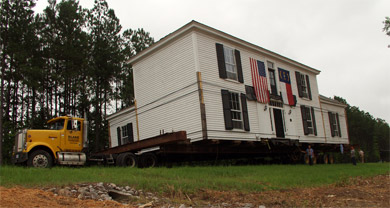
It is bright and early Sunday morning. I am off to Governors Island in a few minutes. It will be interesting to see how many people come out on what will be a steamy July day. It was so hot yesterday that I stayed in the house and watched the Gettysburg coverage I missed earlier in the week. I also re-watched Moving Midway, Godfrey Cheshire’s film about the moving of his family’s antebellum plantation. If you have not seen it, I recommend. Here is my review from a year or two back. Enjoy your Sunday.

My wife and I watched an extraordinary film last night called Moving Midway.  Midway is a plantation built in 1848 on land bequeathed to the Hinton family of North Carolina decades prior to the American Revolution.  Concerns over urban sprawl led the current owner, Charles Hinton Silver, to a dramatic decision in 2003: he would literally lift the house from its foundation and move it several miles across country to a more secluded spot.  The undertaking is documented by his cousin Godfrey Cheshire, a New York film critic who grew up in a Raleigh and cherishes the memories of his boyhood visits to the place his mother called “out home.”

Cheshire discovered something unexpected halfway through the project—he has over one hundred African American relatives.  Here the film takes a dramatic turn.

Cheshire is aided by Robert Hinton, a professor of Africana Studies who also grew up in Raleigh and whose ancestors were slaves on Midway Plantation.  The two did not meet until the relocation project was underway but share an immediate rapport.  Struggling to make sense of it all Hinton confesses to Cheshire that, “This would be easier if didn’t like you.”  Still, the underlying tension is at times palpable.  Robert and Godfrey do not appear to be themselves related.

Both men struggle with their identity.  Professor Hinton explains that he has always been conflicted between his African American and Southern identities, with the Southern often winning out.  He also recounts that as a young college student in the 1960s he felt more comfortable in the presence of white graduate students than the Black Power crowd he briefly embraced.  Cheshire’s struggles are only beginning, as he explores the implications of the complicated story for himself, his family, the region, and even the nation itself.  He concludes that the only way to see the South today is as a mixed race society.

Moving Midway is many things: a meditation on the meaning of home; an exploration of family; an examination of American history; and even a short course on cinematic history.  (As a film critic Cheshire is well positioned to examine the Moonlight and Magnolias version of the Plantation South offered up by Hollywood during the years of the Studio System.)  Above all it is an example of what some call courage history, the willingness to look closely even at the people and things we love and ask the difficult questions.

I could go on but won’t.  Moving Midway is available on dvd and Netflix.
Bruce Catton, Michigander

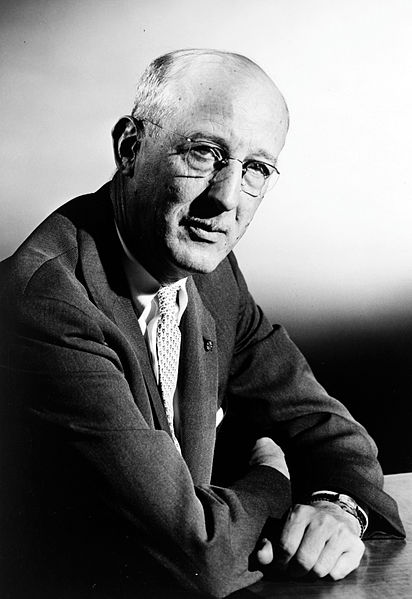
Bruce Catton 1960sA small vignette about Bruce Catton passed through my inbox that I thought I would pass along. It is adapted from a Michigan State University book called Ink Trails: Michigan’s Famous and Forgotten Authors. It is not clear from the excerpt how long the piece was in the original. I find it interesting that Catton would be included in a collection about writers from a particular state; being from the Midwest certainly influenced his worldview, despite the number of decades he lived in Washington DC and New York City. It is revealing that he went back when it was his time to die. His boyhood house in Benzonia is now the home of the local public library.

As I have noted in the comments sections of other blogs, there has been a lot of piling on to Catton in recent years. Some of the criticism is fair. For one thing, he downplayed slavery as a cause of the war in an effort not to offend a portion of his readership. Reconciliation was what 1950s readers wanted and that is what they found in Catton’s offerings. He was also unfair to certain players, most especially George McClellan. Your humble writer remembers visiting Antietam for the first time a few years ago and pronouncing to our licensed battlefield guide that the Federals should have taken Burnside’s Bridge with no problem. It was not until our guide took us there that I realized that, well, it was not as simple as I had read in the Army of the Potomac trilogy. I consider it a teachable moment, with the lesson in humility duly learned.

I no longer read Catton but I still believe there is much there for readers to enjoy and profit from. One would have to balance out Catton’s lyrical prose with the more recent scholarship of Ethan Rafuse, Tom Clemens, the interpretive ranger staff at Antietam, and elsewhere to get a fuller picture of the war. In American Oracle David Blight has an especially lucid chapter on Catton‘s strengths and weaknesses. Whatever his failures, there is no denying the man’s writing talents and his influence, for better and worse, on our understanding of our civil war.

(image/Bruce Catton in the 1960s, LOC)

Made in the USA?

made-in-americaI am not sure how I feel about this, but two congresspersons from New York have introduced legislation that would make it mandatory for all merchandise sold at National Park Service and other sites to be made in America. Part of me is dismayed when I see items on sale at a historic site that are made outside the country; another part of me takes it in stride as a reality of contemporary life. I am not looking for authenticity in my keychain; that comes from the site itself. It is difficult to tell at this stage if this is a bit of political grandstanding or if it is intended to go anywhere. If it is the latter, I hope they think it through. I would not mind seeing a lot of the cheap trinkets gone from the shops of our various cultural institutions, but who know what worthwhile may get excluded if such legislation were to pass? It seems there are many considerations to work out. The way I understand it, superintendents at the over 400 national parks and monuments currently have the authority to select what can be sold in their Eastern National stores. More guidelines could take away their flexibility and autonomy. It will be especially interesting to see how this one turns out with the NPS centennial just three years away. This is a story I will be following.

The Civil War in my life

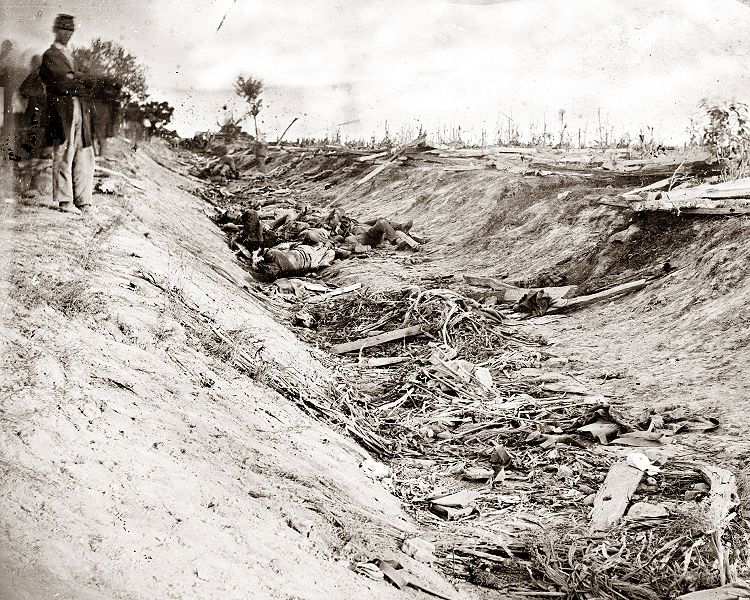
Alexander Gardner image of Antietam’s Sunken Road

I wrote the piece below for the Antietam 150th and decided to republish it today for the anniversary of the Battle of Gettysburg. Between now and 2015 I will probably re-post it yet again for the remaining major milestones of the war. It is hard to believe that the sesquicentennial is more than half over.

Today is the 150th anniversary of the Battle of Antietam, the bloodiest day in American history. Last night my wife and I were watching some of the C-SPAN and other coverage, which led to a conversation about the Civil War’s role in my life. Some things have the ability to captivate us always. My list includes the Beatles, New York City, Elvis, both World Wars, Rod Serling’s The Twilight Zone, Sinatra, and the American Civil War. Don’t ask me to explain; how does anyone know from where in the human imagination such interests arise? Now middle-aged, I have nonetheless reached that point where I am so removed from the events of my younger days to see where the roads turned. For me, the Civil War path has taken several twists.

The first was when I was ten and my uncle gave me a book of Matthew Brady photographs. I was too young to pick up on at the time but the book was a reprint of Benson J. Lossing’s History of the Civil War. Thankfully I was also too young to read the dense prose. If I had I might still be influenced by its early 20th century take on the War of the Rebellion. It was something like the Time-Life books about the Second World War many people had in their living rooms in the 1970s and 80s. Fun to look at, but not especially reliable. Still, the Civil War photo were captivating, especially to a latchkey kid whose parents had uprooted him from his home in Connecticut and transplanted to Florida before divorcing two years later. I lost the book over the years until seeing it again for $10 in a Border’s a few years ago. I shelled out the money but eventually gave the book away, worried about the accuracy not just of the text but even the captions on the photographs themselves. For starters, we now know that many “Brady” photos were actually taken by Alexander Gardner, Timothy H. O’Sullivan, or other members of Brady’s studio. The captions on old photographs are often wrong as well. I have read my Frassanito.

I got away from the Civil War during my high school and college years but had my interest piqued again when Ken Burns’s documentary was released in 1990. It is a dramatic film, beautifully choreographed, that inspired many of us to delve more into the literature. This in turn led me to purchase Bruce Catton’s American Heritage Picture History of the Civil War when it was re-released with updated maps, art work, and photographs in 1996. At this time I was going to graduate school and working fullltime at a large chain bookstore to make ends meet. Often I worked until midnight and came home too wound up to go to sleep immediately. I would sit at my tiny kitchen table eating my 1:00 am dinner and reading Catton’s lyrical prose. I was still too young and unaware that Catton was part of any historiographical “school.” Ironically, I never took a Civil War class in either grad or undergraduate school. This is especially unfortunate because I did my undergraduate work at the University of Houston and could have studied with Joseph Glatthaar.

The next turn came with the release of Tony Horowitz’s Confederates in the Attic in 1998. Many readers enjoyed it for its anecdotes about the levels of farbiness one finds at Civil War reenactments. What I most took from the book though was how little we know about the war, despite the tens of thousands of books written on the subject. Self serving regimental histories. Lost Cause mythology. The foggy memories of aging veterans visiting the battlefields of their youth. Flaws in the Official Records of the War of the Rebellion. It was all new to me. It was (and is) terrifying also to think that everything one knows about something could be wrong. Even worse is realizing that there might be no way ever to know the full story of something, even by extension one’s own life. The next year I visited Shiloh for the first time when I went out to visit my dad. Other than a quick one hour stop at Fredericksburg in 1997 when I got off the freeway during my move to New York, I had never visited a Civil War battlefield before. After that we visited Pea Ridge, Vicksburg, and Shiloh again. This is where I became fixated on the myths and memory of the war.

In 2008 I visited Gettysburg for the time, and the following year I went back with the woman who became my wife a few months later. That year we also went to Sharpsburg in what has become something of an annual pilgrimage. There is no substitute to walking a Civil War battlefield. On that same trip we also visited Harper’s Ferry on what was the anniversary year of John Brown’s raid. This got me thinking harder about the sesquicentennial and the opportunity it presented to think harder about American Civil War and its place in our history. I never romanticized the Civil War–and I was certainly never a Lost Causer–but I believe I think more critically and less sentimentally about that conflict than I might have when I was younger. This in turn led to another path, the one I am on now, where I started this blog to make the leap from buff to serious writer. I feel I am now finding my niche, which include the Civil War in New York, and Civil War veterans in the Gilded Age among other aspects.

In a nutshell that is the Civil War in my life. Last night, looking at the images from over the weekend on the Antietam NPS Facebook page, I couldn’t help but wonder how many of the children taken to the event by their parents will become captivated by this tragic event in our history. Some will forget almost immediately, but years from now others will look back on the commemoration of 2011-2015 as the spark that started it all.

Gettysburg sesquicentennial is on

Hey all, I thought I would send off a quick missive before heading back to New York City. I am typing this from our apartment in DC. About an hour ago I dropped off the rental car before hopping on the Shady Grove metro. We had a great time in Gettysburg this past week. We did it right by going the week before the battle anniversary. The crowds were heavy but manageable up until yesterday. Thursday (yesterday) morning it suddenly became REALLY busy, as in Times Square busy. That said, I must say that the Park Service had things under control; the hard work of the last several years made a clear difference. It was fun being in the VC and talking to folks from all over the country. Many of the people there were reenactors in town for the first of two events taking place in the next couple of weekends. Reenacting is not my thing, but to each his own. The only hiccup so far was a power outage at the Visitor Center on Wednesday morning caused by a powerful summer storm the evening before. People milling around said traffic lights were not working in parts of town as well. When I came back later in the afternoon everything was back to normal. Yesterday afternoon as I was coming down Taneytown Road I noticed workers building a huge stage near the Leister Farm (Meade’s Headquarters). The adjacent Ziegler’s Grove looks great sans the old cyclorama building. When we picknicked there one day I wondered aloud how many 2013 first timers will be unaware it ever existed. Such is the evolution of the park.

The battle anniversary is of course July 1-3, which is next Monday-Wednesday. The downside to that is that the weekday schedule may impact television coverage. I am going to check the tv listings to see what C-SPAN has scheduled over the weekend through next week. This is really a once-in-a-lifetime thing. Make time.

Summer officially begins

Gettysburg 150 logoI am sorry about the dearth of posts this week, but I have been getting ready to go to Gettysburg for the sesquicentennial. I have been to Gettysburg several times over the years, including a memorable trip with my soon-to-be-wife in 2009, and must say that I have never been more excited about being there than I am for the 150th. Usually we make the drive to Antietam as well, but I think this year it will probably be all Gettysburg, all the time. Last year was the first year I felt I understood how the battle, the town, and even the region all fit together; this year I want to expand on that. I intend to take some of the extended ranger hikes and things like that. I am also planning on tracking the ground walked by the Florida regiments who fought in the battle, which is of interest to me because I grew up in the Sunshine State. This is a manageable undertaking because there only 2-3 such regiments, ideal for an afternoon of tramping. The trick in 2013 is to stay off-the-beaten-path because the crowds are going to be so big, especially now that the anniversary of the campaign is underway. I am intentionally putting off reading Allen Guelzo’s Gettysburg: The Last Invasion until I return. There may be a quick visit to Monocacy in there as well. I have always wanted to the site of The Battle That Saved Washington, and it happens to be on the way back to where we are headed the final day.

When I get back I will have a lot on my plate, including volunteering at Governors Island National Monument and my book proposal. It should be a fun summer. FYI, it will be light posting, if any, between now and the end of the month.

The Library Lawn

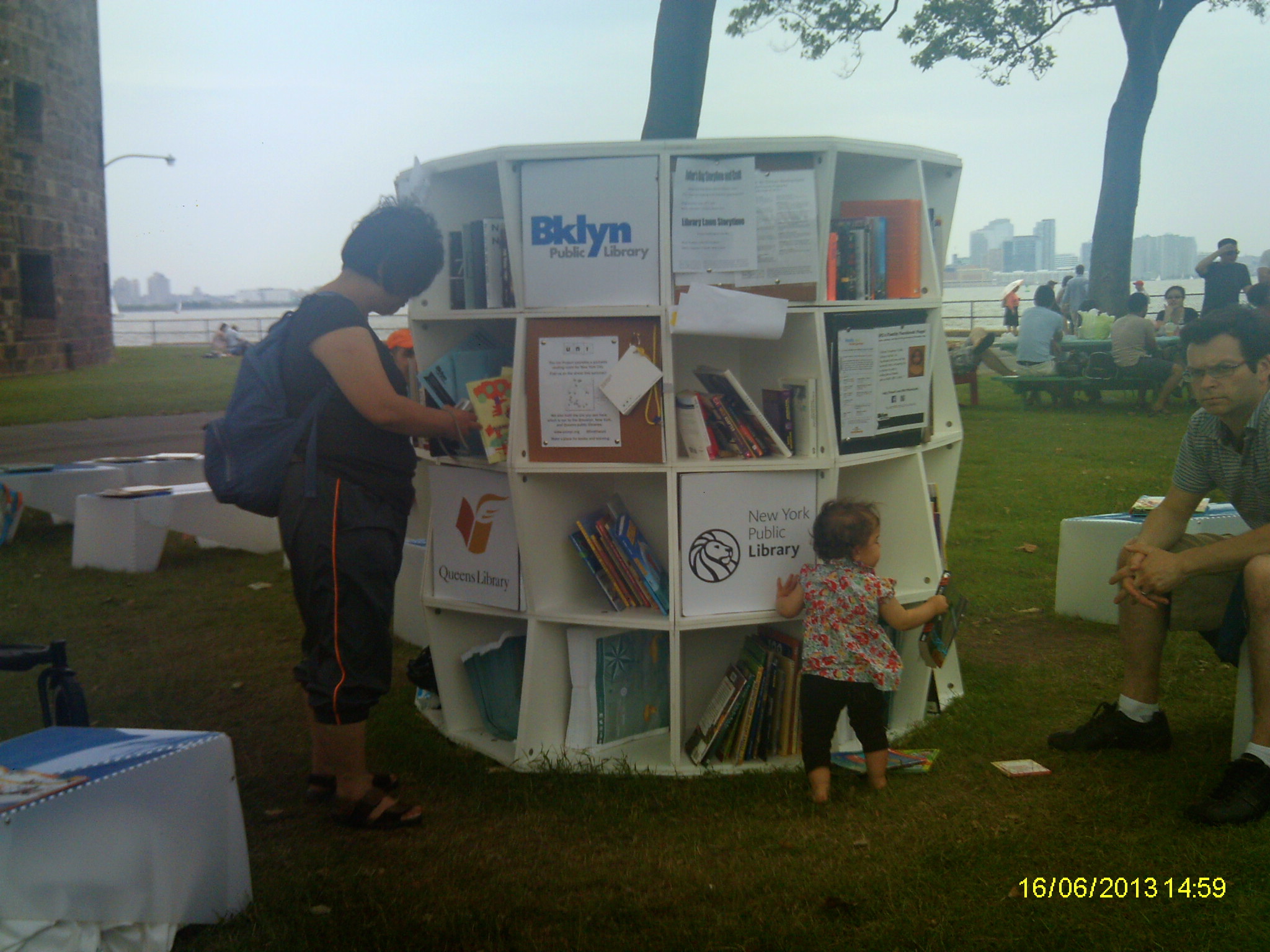
Governors Island Library Lawn, 16 June 2013

Governors Island Library Lawn, 16 June 2013

I did my first interpretive tour of the season at Governors Island this morning. It always feels good to have the first one of the year under one’s belt. Heading to Castle Williams for my shift after lunch, I happened upon something new to the island this season: an outdoor library. Being a librarian myself, I of course had to check it out. The Library Lawn, it turns out, is a coordinated effort of the Uni Project. All three library systems in New York City–New York Public, Queensborough, and Brooklyn Public–are participating in the summer-long effort. People can get library cards, enjoy programming, and other activities. As you can see from the picture above, people are enjoying this pretty cool endeavor. Note Castle Williams and New York Harbor in the upper left hand corner.

The only negative of being in Cooperstown last weekend was that I missed the demolition of Building 877. Everyone was talking about it this week. A friend of mine woke early last Sunday and rode her bike to Red Hook to watch from Brooklyn. Here is some footage I found on Youtube. Enjoy.

The philatelic war

800px-Gettysburg_Centenial_1963-5c

The name Roy Gjertson did not mean anything to me until earlier today, after reading this U-T San Diego piece that happened across my in-box. As it turns out, the now eighty-seven year old Californian was the designer of the 1963 Gettysburg centennial stamp pictured above. It is one of the great stamps of the 1960s and not something I ever considered particularly controversial.

Along with a thousand or so other graphic artists, Gjertson entered the design competition and then waited to see what happened. He had been preparing for awhile, in particular by reading the works of Centennial doyen Bruce Catton. The stamp really works. For one thing the colors, blue and grey, are right. Inexplicably, the GAR and UCV stamps issued in 1949 and 1951, respectively, are red and grey. It is also cinemagraphic, capturing the intensity of the July 1863 fighting in dramatic fashion. The scene just . . . flows.

So why the controversy? It turns out some folks got pissed because the blue shading takes up more than half the stamp, therefore slighting the Cause. Objectors also did not like what they interpreted as Johnny Reb’s disheveled look in relation to Billy Yank’s cleaner and better accoutered appearance. Topping the imbroglio off was that the Post Office published Gjertson home address, the better for people to write for autographs. Instead, what he got was an earful from those who chose to be angry. Judging from the glint in his eye, he looks like the type who would take such controversy in stride.

(image/US Post Office)

LaGuardia’s New York, in technicolor

I just got back from the Mets-Cardinals game at Citi Field. Not surprisingly the Mets lost, 8-2.

Earlier today I received an email from my good friend Susan in Oklahoma with a link to some recently found video of New York City life in 1939. This was an important year in the city’s history. For starters, the World’s Fair began that April. I always think about that when going to Citi Field/Shea Stadium because the fair took place in Flushing Meadows-Corona Park, located at the same subway station for what is now the ballpark. (The 1964 World’s Fair was held there as well.) April 1939 was the same month Lou Gehrig retired from the Yankees; three months later he made his “luckiest man on the face of the earth” speech on the Fourth of July. That September Germany and the Soviet Union invaded Poland, increasing tension in the city, though as you will see life as always has a way of going on. My favorite part of the video is the footage of the elevated subway lines (now gone in Manhattan) and the line of passenger cruise ships along the Hudson (gone as well) seen from atop Rockefeller Center. Still, much remains as it did seventy-four years ago. Alas I could not embed the video so check it out here. It is all of three minutes.

And Susan, we have not forgotten about visiting Oklahoma, and when we do we expect to be given the grand tour of the CIvil War sites. So start brushing up.

Cooperstown

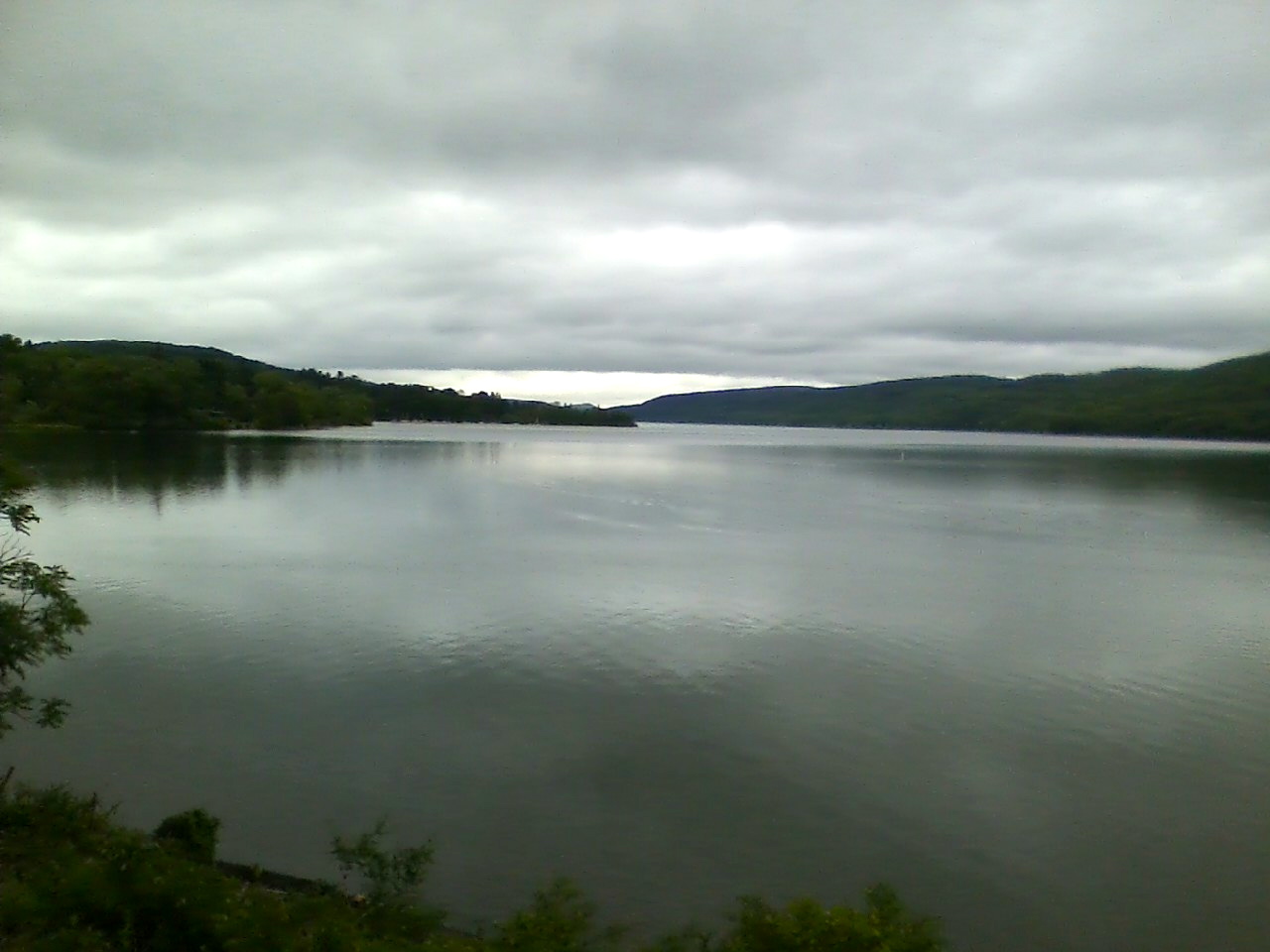
Otsego Lake, Cooperstown, New York; June 8, 2013

Otsego Lake, Cooperstown, New York; 8 June 2013

I got back earlier this afternoon from Cooperstown, the site for this year’s Conference on New York State History. I spoke yesterday on the role that Theodore Roosevelt Sr. and other wealthy New Yorkers played in both the war and its aftermath. When I was at the Teddy Roosevelt Birthplace in Manhattan in February, my friend Ranger Sam and I were discussing the lack biographies, or even articles, about the great philanthropist and reformer. Yes, he was the father of the future president, but he was much more than that. It is a ripe topic, and I believe I may be the one to tell the story. There are even many parallels with the life and career of  Joseph Hawley.

There were two of us on the panel. The other speaker was Christopher Fobare of Utica College, who I had not met until yesterday. Christopher gave an exceptionally thoughtful presentation about Horatio Seymour, Roscoe Conkling, and the presidential election of 1868. His talk explored the elections of 1872, in which Horace Greeley ran against the incumbent Grant, and 1876 (New York’s Samuel J. Tilden vs. Hayes) as well. It is a very misunderstood time in American history. Christopher really got to the heart of the matter and explained why it is important.

I had not been to Cooperstown in fifteen years. A friend and I visited in 1998, coincidentally just a few weeks after Mark McGwire and Sammy Sosa broke Roger Maris’s single season home run. This time their memorabilia was not on display as it was then. Cooperstown–the Hall and the village–is such a great place. No, Abner Doubleday did not invent baseball there but the region has the pastoral feel of the game’s early nineteenth century origins. As the image above reflects, James Fenimore Cooper did not call Otsego Lake Glimmerglass for no reason. Getting there is part of the experience. It was a great weekend all the way around.