Seminary Ridge Museum

index

The Hayfoot was home for an all-too-brief visit this weekend. We intended to go to the New York Botanical Garden yesterday but decided to stay near the house instead. Waking early and getting all the way to the north Bronx just didn’t seem worth it. The weekend was for catching up, and catching our breath after the many changes of the last two months. It was good to hang out with those we care about. One thing we discussed yesterday was the logistics of our annual June trip to Gettysburg. It is going to be a little complicated, but things have a way of falling into place.

Today, as if on cue, I opened the mailbox and found an envelope from the Seminary Museum Museum. This new institution is located on the campus of Gettysburg’s Lutheran Theological Seminary and will open, appropriately enough, on July 1. I remember driving past the old building last year and seeing the renovations underway. They are doing a beautiful job. Unfortunately we will be missing the museum this year, as our visit falls before the battlefield anniversary. I would love to see it, but it is probably just as well; the museum will undoubtedly be a mad house in its opening weeks, which is without question wonderful but a pain for someone averse to crowds. This year in particular we are going to see some of the off-the-beaten-path sites, parts of Culp’s Hill, East Cavalry Field, and the like. (The evolution of why once heavily-visited parts of the battlefield now receive so little interest, and vice versa, is fascinating in and of itself.) The Gettysburg sesquicentennial seems an opportune time to see the more obscure locales.

Maybe if we are lucky we’ll talk friends into going to Gettysburg later in the year, when the crowds will be smaller. Whenever you are planning to go to Gettysburg, make certain to add the Seminary Ridge Museum to your must-see list.

(image by Tyson brothers, courtesy NYPL)
Quote of the day

One of the most tender and compassionate of men, he was forced to give orders which cost thousands of lives; by nature a man of order and thrift, he saw the unutterable waste and destruction which he could not prevent. The cry of the widow and the orphan was always in his ears; the awful responsibility resting upon him as the protector of an imperilled republic kept him true to his duty, but could not make him unmindful of the intimate details of that vast sum of human misery involved in civil war.

–John Hay on Lincoln

Chers amis

IMAG0001

Salut,

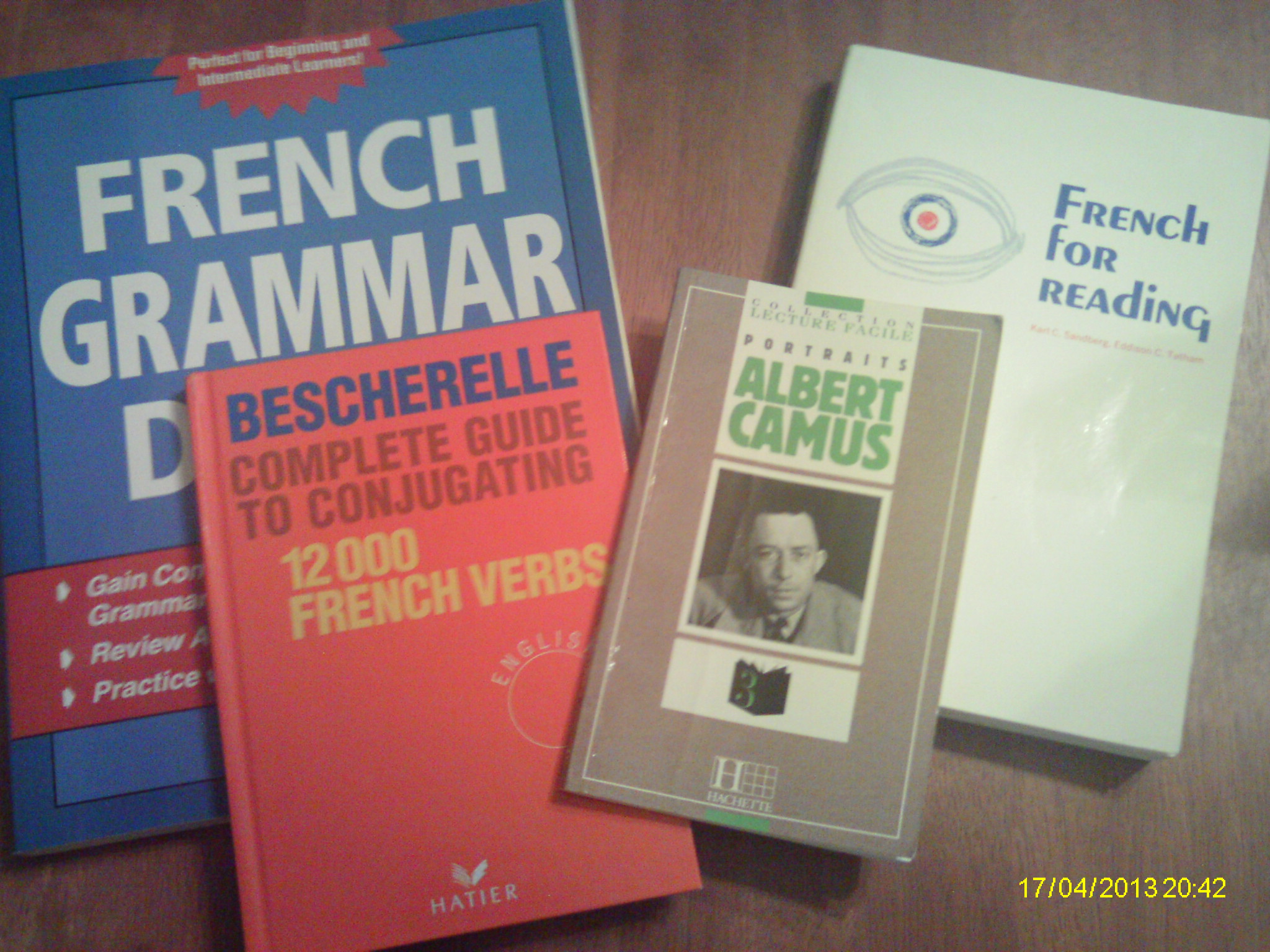
When I was wrapping up my second masters degree at the CUNY Graduate Center in the fall of 2005 I vowed that when I finished I would take it upon myself to learn a second language. I had actually minored in Russian as an undergrad, but that had been a decade and a half earlier and my Russian was, to put it mildly, rusty. I chose Russian because my brother and I had made a trip to Europe in November 1989 that included West and East Germany, Poland, and the Soviet Union; when I returned to my studies in spring 1990, six weeks or so after the fall of the Berlin Wall, I had vague notions of learning the language and being part of the post-Cold War period in a direct and  immediate way. As you might imagine, it did not work out that way.

Maybe it is living in New York, or perhaps it is that my brother now lives in France, but I realized as I was finishing school in ’05 that one needs, if not full-fledged bilingualism, at least a working knowledge of another language. In the winter of 2006 when it was time to begin I narrowed it down to French and German. I chose French because I thought it could help me in more of the world than German probably could. I would still like to travel within the Francophone world. Things were going well in my studies until some major life changes required me to focus–quite happily–on other things.

Today, after a long hiatus, I pulled out my lesson books and came up with a plan to brush off the dust and bring my French up to where I want it to be. My goals are 1) to be able to converse in basic French when entering a hotel, restaurant, or similar social setting, and 2) to read and write at at the high-intermediate level. Certainly I can find 45 minutes a day to make this happen.

As I said in my post the other day about the 1960s, I have become increasingly aware of the need to think holistically and not pigeon-hole oneself. Currently, I am about a quarter of the way through the late Warren Zimmermann’s First Great Triumph: How Five Americans Made Their Country a World Power. Triumph tells the story of how Teddy Roosevelt, Elihu Root, John Hay, Henry Cabot Lodge, and Alfred T. Mahan did just that in the late nineteenth and early twentieth century. The reason I say all this is because to me the book is reinforcing the importance of thinking wider than 1861-1865 to understand the Civil War. Hay is an especially interesting character because he started of course working for Lincoln in 1860 and was still serving his country and president three and a half decades later. This included several stints overseas. Often we think the people who fought in the Civil War, or who served in whatever capacity in which the served, lived hermetically sealed in those four years. Of course, they did not.

So, here I am up to my elbows in the imparfait and  passé composé yet again. It feels pretty good.

À bientôt

Sunday morning coffee

This morning I finished Eve of Destruction: How 1965 Transformed America by James T. Patterson. I often read in cycles, and Eve was the third of a three-part installment, if you will, in a project to read more about contemporary history. Five years ago, just prior to my first visit to Gettysburg, I made a conscious effort to raise my game regarding Civil War history. I feel I have done that, though I still have a ways to go. I have gained a great deal, but recently I felt I was losing my mojo in other areas. There are only so many hours in the day; every time you are doing one thing by definition you are not doing something else.I believe so many focus so intently on the Civil War, especially those who dwell on the minutiae of the battles, that they lose something. One cannot understand the war, or our complicated history, without context.

In his preface Patterson makes clear that no one year can “change everything,” as the blurbs and  subtitles often shout to us when we walk the aisles of the local bookstore. Life just doesn’t follow the calendar like that. Still, as Patterson shows, 1965 was a transforming year in American history. The assassination of Malcolm X, Selma, Vietnam escalation, Watts rioting, Voting Rights Act, immigration reform, the alphabet soup of Great Society programs that President Johnson felt secure to create after being given a mandate during his landslide victory in November 1864 and inauguration in January 1965. Not for nothing did Johnson proclaim during the lighting of the national Christmas tree in December 1964  that we were living in “the most hopeful times in all the years since Christ was born in Bethlehem.” It was typical LBJ hyperbole, but as was the case with many of Johnson’s pronouncements it had a ring of truth. Ironically, America’s prosperity and hopefulness are what led to to the anger and cynicism of the era as it became clear that our many problems were not so easy to fix.

Culturally things were changing as well. The Beatles released Rubber Soul at the end of the year. It is hard not to believe that 1965 was the year that the sixties became The Sixties. I have added Patterson’s Grand Expectations, the United States, 1945-1974 to my short list.

Jews and the Civil War

index

I just back from the city. This evening I went with a friend from work to see Passages through the Fire: Jews and the Civil War at the Jewish Museum on 16th Street. The recently opened exhibit is co-sponsored by Yeshiva University Museum and the American Jewish Historical Society. It was quite the New York evening, complete with dinner afterward at a coffee shop down the street from the museum as the rain pounded down outside. Tonight was actually the curator’s walk-through. Last month, a few days after the exhibit began, I tried to rsvp for what I thought was the only such event; to my surprise the coordinator emailed back to say they were booked. Again to my surprise, she said I could book for April. The curator talks are apparently once a month affairs. I was glad we went tonight to get the curator’s perspective. It is a part of Civil War and United States history we do not hear too much about. When we think “Jewish American history” we think Ellis Island, Lower East Side, and The Jazz Singer, not Shiloh, Chancellorsville, and the March to the Sea. The show is fascinating on its own. It is also a lesson in letting go of one’s preconceived notions whatever the topic.

I had been looking forward to Passages since hearing about it over two years ago. The show is a continuation of sorts of a similar exhibition put on by the Jewish Museum fifty years ago during the Centennial. That 60s show, The American Jew in the Civil War, was a pioneering exhibit that examined the role of American Jewry in the War of the Rebellion, borrowing heavily from the expertise of the late Rabbi Bertram Korn. His is still the authoritative book on the subject. There were 125,000 Jews living in the United States in 1860, up from the 15,000 twenty years earlier. Approximately 10,000 Jews, many of them recent immigrants, fought in the war. They fought for myriad reasons, and as with all other groups the Jewish community had its share of heroes and scoundrels. The exhibit does not shy away from the complicated story. I was already intending to go back in the summer before it ends in August. I was only more excited to do so after hearing that they will be tinkering with the artifacts and signage in the coming days. If in New York try to see this one before it ends.

Getting our sesquicentennial on, Gotham style . . .

(postcard circa 1907-1915, New York Public Library)

Sunday morning coffee

I was listening to the Dodgers-Pirates game last night when Charlie Steiner mentioned that a Honus Wagner T206 baseball card sold yesterday for a cool $2.2 million. The card is so valuable because Wagner was an anti-tobacco advocate in the early twentieth century, a time when such sentiments were less common than they are today. After several hundred were produced the baseball legend legend forced the company to cease and desist. Tobacco cards were common at the time, and not just for baseball; I have written about them a bit before. Ironically, Wagner’s actions are what make his card rare and valuable today.

One of the reasons I love baseball on the radio is because the audio incarnation of the game lends itself to digression. Though I have the television option on my MLBTV package, I end up listening to the radio broadcast more often than not. It was a great piece of serendipity that Los Angeles was playing Pittsburgh the day the Wagner card was sold. Discussing the card led Steiner and radio battery-mate Rick Monday into a discussion of who was the best Pirate of all time. The two quickly got it down to Wagner and Roberto Clemente. It’s difficult to argue with that, and it’s so good to see baseball back.

Enjoy your Sunday.

A Brooklyn Monitor museum?

When I first moved to Brooklyn 15+ years ago one of the signature aspects of the shoreline was the rotting piers that dotted both the East and Hudson rivers. The piers were remnants of the city’s past, when shipping and ocean lining were still major components of the local economy. The piers lay exposed to the wind and tides for decades after the airplane rendered the ocean liners obsolete and the container closed the Brooklyn docks, along with the jobs that went with them. It seems like so long ago and yet in the grand scheme of things it was not. It is still living memory for hundreds of thousands of New Yorkers. We are talking the Brooklyn as depicted in Marlon Brando’s On the Waterfront. In recent decades newer New Yorkers had become so removed from their shoreline that many didn’t realize in any real sense that they live on island, or more properly an archipelago. Now the rotted  piers are just about gone, themselves part of a New York City that is disappearing, the New York of post-industrial blight. People are finding the water again. I was on the Brooklyn Heights Promenade the other day on my lunch break for the first time since last autumn. I saw that the construction of the riverfront parkland is proceeding steadily. One of the victims of this progress may be a potential museum dedicated to the history of the U.S.S. Monitor on the site in Brooklyn where the ironclad was built. The museum is the dream of a husband and wife team, one of whom had an ancestor who served on the vessel. It will be interesting to see how this plays out.

The quote of the day

. . . during this annual rite in which the National Pastime returns belongs to David Eisenhower:

Following baseball is like keeping tabs on the neighbors. Attending a game is like dropping by for a visit to see how everyone is getting along. Sustaining interest is easy because of the ever-present potential for an abrupt change of fortune.

Going Home to Glory: A Memoir of Life with Dwight D. Eisenhower, 1961-1969

I am right now listening to the Indians-Bluejays opener from Toronto on MLBTV. So good to have baseball back.

Easter morning coffee

Ad Meskens

Happy Easter. I am sitting in the living room with my coffee and Kind of Blue is on the turntable. The windows open to the early spring warmth.

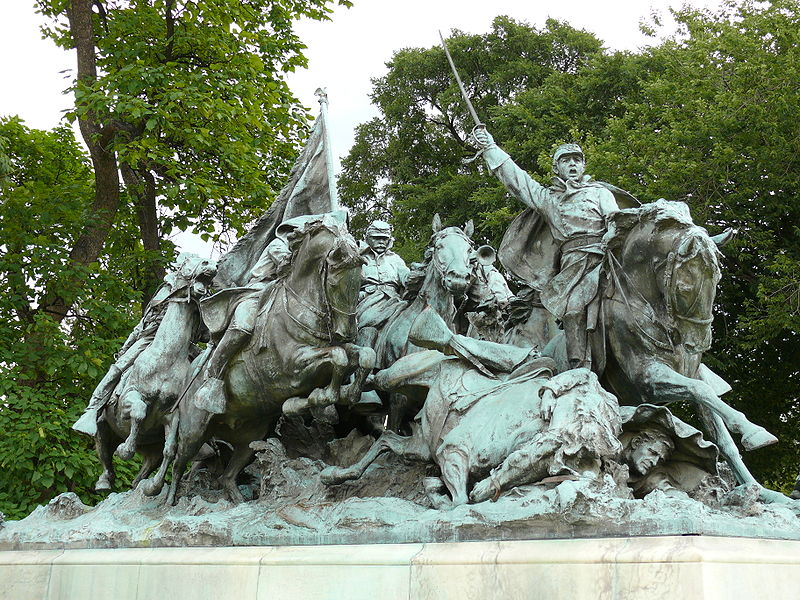
I was having a brief back-and-forth online the other day with someone about Grant’s Tomb. Specifically, we were talking about how far the monument had fallen during New York City’s lost years in the 1970s and 1980s. This excellent piece in yesterday’s Wall Street by Dennis Montagna of the Park Service about the Grant Memorial on the grounds of the national capitol got me thinking even harder about various Grant statues and monuments I have seen over the years. Built from roughly 1885-1922, the monuments initially reflected the nation’s sentiments for the man many put in the same class with Washington and Lincoln. After the horrors of the First World War the Grant the Butcher meme took hold and his standing went down precipitously in the coming decades. To visit Grant Cottage in Upstate New York one must enter the grounds of a medium security prison. People walk past the beautiful Grant statue in Brooklyn, across the street from what was the Union Cub, everyday without think twice about it. When I visited two years ago a woman who worked in the adjacent building said they always wondered who it was, which struck me as odd because his name in on the pedestal. Oh well.

In a sense these things are inevitable. It is not even just Grant. I have seen beautiful statues of Lincoln in places like Newark and Jersey City that are visited by no one except the homeless who now inhabit those areas. Time moves on. Demographics change. Once thriving industrial areas that could afford a statue in, say, 1913 have better thing to worry about a hundred years later. The recent immigrants of Flatbush–and it is the immigrants who have revitalized Brooklyn in the past 25-30 years–are concerned with educating there kids and moving on to bigger and better things, not the particulars of the old statuary in their neighborhood.

The major ones deserve are our attention, though. Great things have been done to revitalize the vicinity around Grant’s Tomb in Upper Manhattan. Hopefully, strides will be taken with the Grant Memorial on the capitol grounds. It would be great if they got rid of the ugly reflecting pool for starters. The Grant bicentennial (1822-2022) is just nine short years away.

(image/Ad Meskens)