Summer 2012 now in session

Governors Island, May 2012

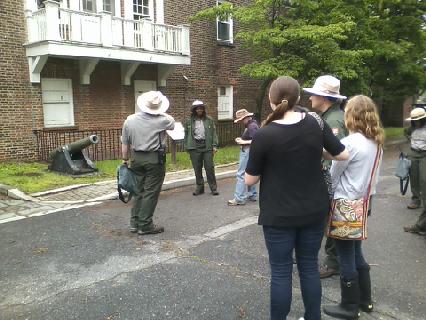
Hey everybody, it is Memorial Day weekend. I took the day off today to go to Governors Island for the annual island walk around. Each year just before the start of the season the Interpretation Division schedules an interpretive tour of the island with primarily other staff and volunteers serving as the audience. The purpose is to give rangers experience in front of a live audience before the opening of the island for the season. Each of about ten rangers speaks for 10-15 minutes on a certain aspect of the island’s long and rich history. It is great fun and quite informative. The rangers and volunteers are all dynamic and bring their own personality to what they do. It was especially good today because we got to see the inside of Castle Williams, which will be open to the public as of tomorrow after an extensive renovation. One will even get to visit the roof, with its million dollar views of New York Harbor. Tours of Castle Williams are free, but tickets are required. If you have never been t0 Governors Island, you are in for something special. It is even more meaningful this year with the bicentennial of the War of 1812 now upon us.

Castle Williams with Manhattan in the background

Whatever you do between now and Labor Day, make the National Park Service part of your summer.

Paul Fussell, 1924-2012

Paul Fussell has died. His The Great War and Modern Memory (1975) is the ur-text on how the people of the twentieth century chose to remember and mythologize the Great War, and war in general. As an infantry officer in the Second World War and, later, a literary theorist, Fussell was uniquely positioned to explain the writings of Siegfried Sassoon, Wilfred Owen, and the rest of the War Poets. Modern Memory is to World War 1 what David Blight’s Race and Reunion is to the Civil War, seminal books one must confront for a fuller understanding of those conflicts. That is not to say one must agree with everything each scholars says. Even when disagreeing, however, one must analyze their arguments, take them seriously, and think hard in formulating a response. That is a greater tribute than mere agreement.

Fussell was a provocateur who also wrote about travel, class, anti-intellectualism, and whatever else was on his mind. His most notorious piece was Thank God for the Atom Bomb, which the New Republic published in the early 1980s.

(image/a young Lieutenant Fussell, May 15, 1945, one week after V-E Day; U.S. Army)

A reading copy

This past Saturday I was at the public library doing some preliminary research for a longterm project I am about to undertake. I was taking notes from a regimental history published in the early years of the twentieth century. (Aside: Though many were indeed released by honest to goodness publishing houses, these tomes are the essence of vanity publications; read any one and you would swear that particular regiment saved the Union single-handedly and that its colonel was the bravest, most noble individual ever to put on his country’s uniform.) I was taking copious notes and decided that if I were to for on this project properly I would need my own copy. At about 7:00 pm that night I ordered it from Amazon. It was a print-on-demand title, offered in this case from BookPrep. It is a so called reading copy, a fresh printing of a rare book to be used for highlighting and writing in the margins.  Sure enough, the book says on the back flap that it was printed on Saturday May 19. The next day, of course, was Sunday. Well, today is Tuesday and because of my Amazon Prime my book was waiting for me at the front door. So, I ordered the title late on Saturday; it was printed that day and shipped free via two day air. Here it is next to me on my desk as I write this. I tell the story not to flog the products and services of any organization, but to demonstrate how quickly things can be disseminated in today’s world. Incredible.

(image of rare books/F.O. Morris)

Intrepid grounded

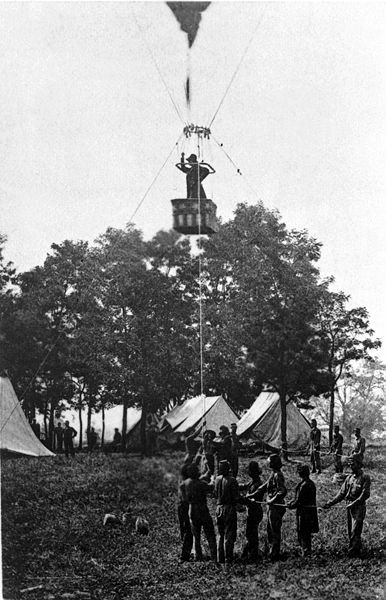
Many undoubtedly know that a replica of the Civil War hot air balloon Intrepid is supposed to sail this summer. The story has been in the sesquicentennial news for some months now. Well, put the emphasis on the supposed to. An unforeseen helium shortage may ground the project before it takes off.

(image/inventor and aeronaut Thaddeus Lowe rises to witness the fighting at Seven Pines, June 1862; Matthew Brady studio)

The Homestead Act: A Short History

The Ingalls family: Caroline, Carrie, Laura, Charles, Grace, Mary

The other day when I posted on the 150th anniversary of the creation of the Department of Agriculture I mentioned that it was one of several pieces of legislation passed in 1862. Today is the sesquicentennial of the Homestead Act. That these and other measures were enacted one after the other is not coincidental. The Republican Party and its antecedents had wanted to enact public works legislation for decades, only to be stymied by their Southern opponents. Secession assured the Republicans a majority in Congress, allowing them the pass the laws they had long desired for internal improvements. Hence the Agriculture Department, and the Homestead, Morrill, and Pacific Railway Acts. There was also the Second Confiscation and Militia Acts for the prosecution of the war. And of course the Emancipation Proclamation that September. One could make a strong case that 1862 was the pivotal year in American history.

The Homestead Act went into effect on 1 January 1863, the same day as the Emancipation Proclamation. It was responsible, literally, for giving us the country we live in today. 270 million acres–10% of the nation’s land mass–were given away during the 123 years the Homestead Act was in effect. Land was distrubuted under the act’s provisions under every president from Lincoln to Ronald Reagan. Immigration, expanding before and even during the war, exploded in the decades after Appomattox. That is why they eventually built Ellis Island in the 1890s. It was not just immigrants; individuals like Charles Ingalls moved westward by the thousands, in his case from Upstate New York, in search of greener pastures. It is important when studying our civil war to think beyond the drums and bugles if one wants to understand the country we live in today. President Kennedy believed it was the most important document in American history.

For the first time ever, all four of the Homestead Act’s parchment pages have left Washington and are on exhibit. Appropriately the document is currently at Homestead National Monument of America in Nebraska, through May 28th. The Park Service and National Archives collaborated on this video that one can watch in less time that an episode of any sit com.

The other Ellis islands

It is Sunday morning. I am having my coffee and listening to a cd of Gregorian chants we bought at the Cloisters. I am headed to Greenwood in a bit before coming home to get some work done. This small piece about islands two and three at Ellis came through my inbox. One of the highlights of my time there was when one of the senior rangers received permission to take newer staff over to these islands that the public cannot yet visit. The Save Ellis Island group has done great work over the past few years giving tours and raising the funds necessary to renovate and open the WPA-era Ferry Building. It is a daunting task, but SEI and the Park Service are now working to open more structures in the coming year. The best source on the hospitals at Ellis Island is Lorie Conway’s Forgotten Ellis Island and its accomapnying film. There are layers and layers of history in New York Harbor.

Enjoy your Sunday.

Another Wal-Mart controversy

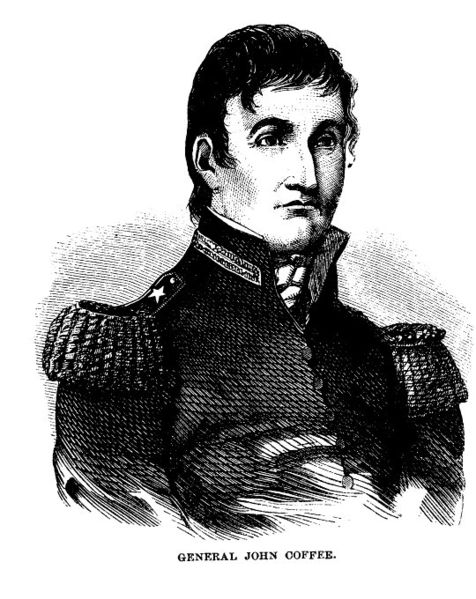
General John R. Coffee, soldier in the War of 1812

I have always maintained that the tension between preservationists and developers is more complicated that the good vs. evil narrative we usually hear. Change is inevitable, and individuals have a right to live in the present how they wish. That said, there is another Wal-Mart controversy developing in Alabama that is especially sensitive; the organization hopes to build a store in the small town of Florence that may or may not impinge upon a slave cemetery dating back to the early nineteenth century. The property was originally owned by General John R. Coffee, a veteran of the War of 1812 and friend of Andrew Jackson. Surveys so far have been inclusive and historical records, as one might imagine, are sketchy at best. This is one we will be watching.

(Hat tip Susan Ingram)

The People’s Department

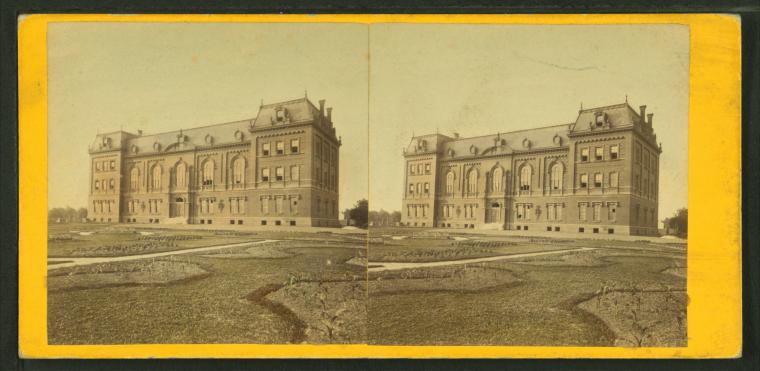
Department of Agriculture Building, constructed 1865-1870

Last July the Hayfoot and I were walking down the National Mall when we happened upon the Department of Agriculture building. The Agriculture Department not being something I have thought much about over the years, its size and grandeur startled me. It was a lesson in the importance of traveling and actually seeing where history is made and events take place. As it turns out today is the 150th anniversary of the USDA; President Lincoln created the organization on May 15, 1862. This was one of many pieces of legislation the Republicans passed in 1862. These included the Homestead Act, which gave away Federal land in the West; the Morrill Act that created the Land Grant colleges; and the Pacific Railway Act that tied it all together. These were the internal improvements for which the fledgling party had advocated throughout the 1850s and in the 1860 election. The idea was to create a better fed, better educated population linked together by transportation (railroad) and communication (the already existing telegraph) technology. Of course this was all contingent on the Union actually winning the war, no small thing. That’s why they passed the Militia and Second Confiscation Acts that July. The war gave us so much of the world we live in today. That is why it is endlessly fascinating.

(image/G.D.Wakely stereograph courtesy NYPL)

From Brooklyn to Harlem

The transition from Brooklyn to Manhattan has been a subject of novelists, filmmakers, and essayists for well over a century. The culture shock that can overtake a person with such force was especially marked in the twentieth century, before gentrification came to our fair borough and rendered us bridge and tunnelers more like our cousins across the river. This is not to say that the shock does not exist even today; nothing will ever replace or equal Manhattan. Pete Hamill, Woody Allen, and Alfred Kazin are three artists who captured the confusion, joy, and wonder that inherently come with leaving behind the old neighborhood and everything you know to find your place in the Big City. Filmmaker Monique Velez is making  a documentary about the move from Brooklyn to Manhattan. In her case, however, the story begins in tiny Brooklyn, Alabama where her great-grandmother Lucille lived before coming to Harlem during the Great Migration. I have been following the evolution of this project for some time, and am happy to report that things are moving steadily. Velez was in Alabama filming earlier in the spring and is now getting ready to shoot in New York. Ironically, she is part of the reverse migration in which African Americans are moving back to the South; Velez was born in New York and now lives in North Carolina. Watch the trailer. This should be something special. I will be certain to announce when the film is released.

The Arsenal of Democracy

On what turned out to be the warmest day of the year so far, a friend and I ventured to the Brooklyn Navy Yard on Saturday. From 1801 until its closure in the mid-1960s the BNY was where most of the ships for the United States Navy were built and maintained. Its locale, Wallabout Bay, was also the site of the infamous British prison ships during the Revolutionary War. For decades the Navy Yard sat mostly vacant, but has been revitalized in recent years through adaptive reuse. The city of New York now owns the 300 acre site and has done much to lure local businesses. Furniture makers, high tech entrepreneurs, fashion designers, and even a movie studio are all part of the new economy.

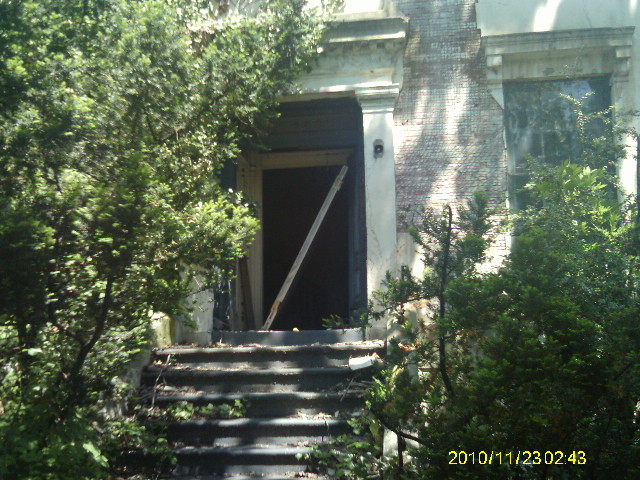
The site has come a long way, but you can still see the old Navy Yard if you look hard and pay attention. Here is a building waiting for renovation.

…and another. As you might imagine, I’m a big fan of ruin porn.

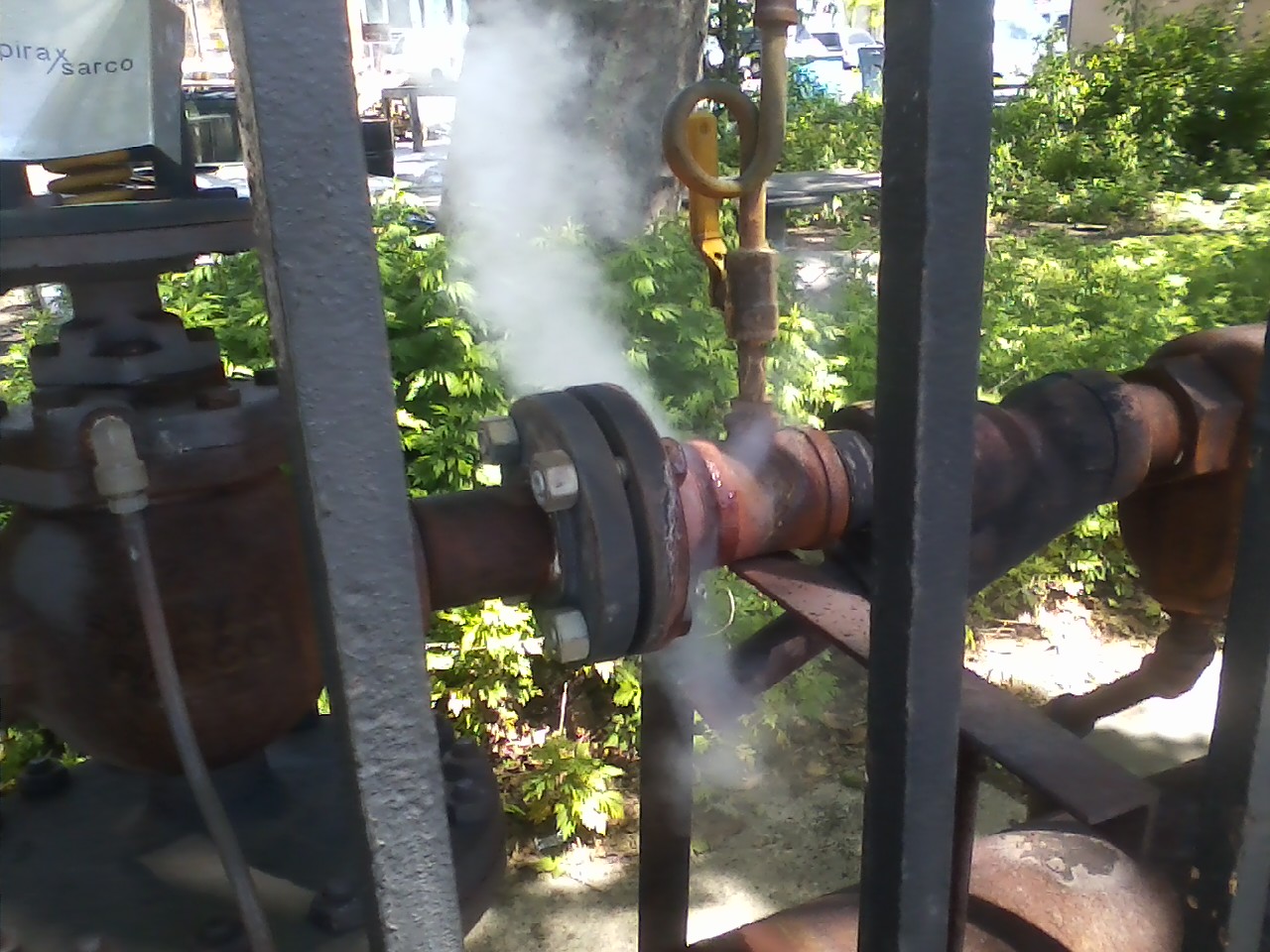
Here is an old pipe.

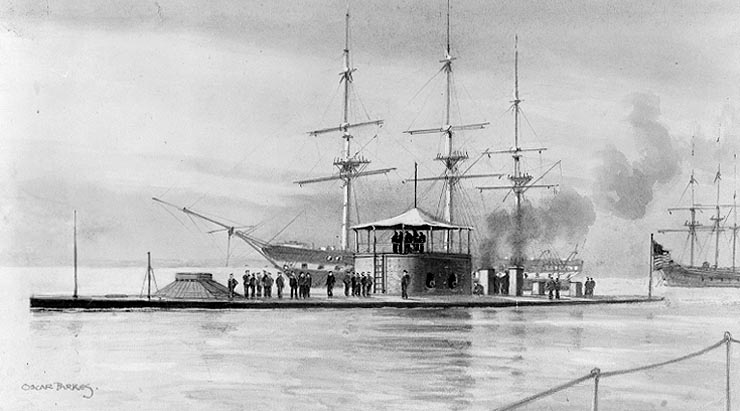
Many will know that the USS Monitor was built at the Navy Yard. It is worth noting that Brooklyn was its own city at this time. It did not became part of New York until the merger in 1898.

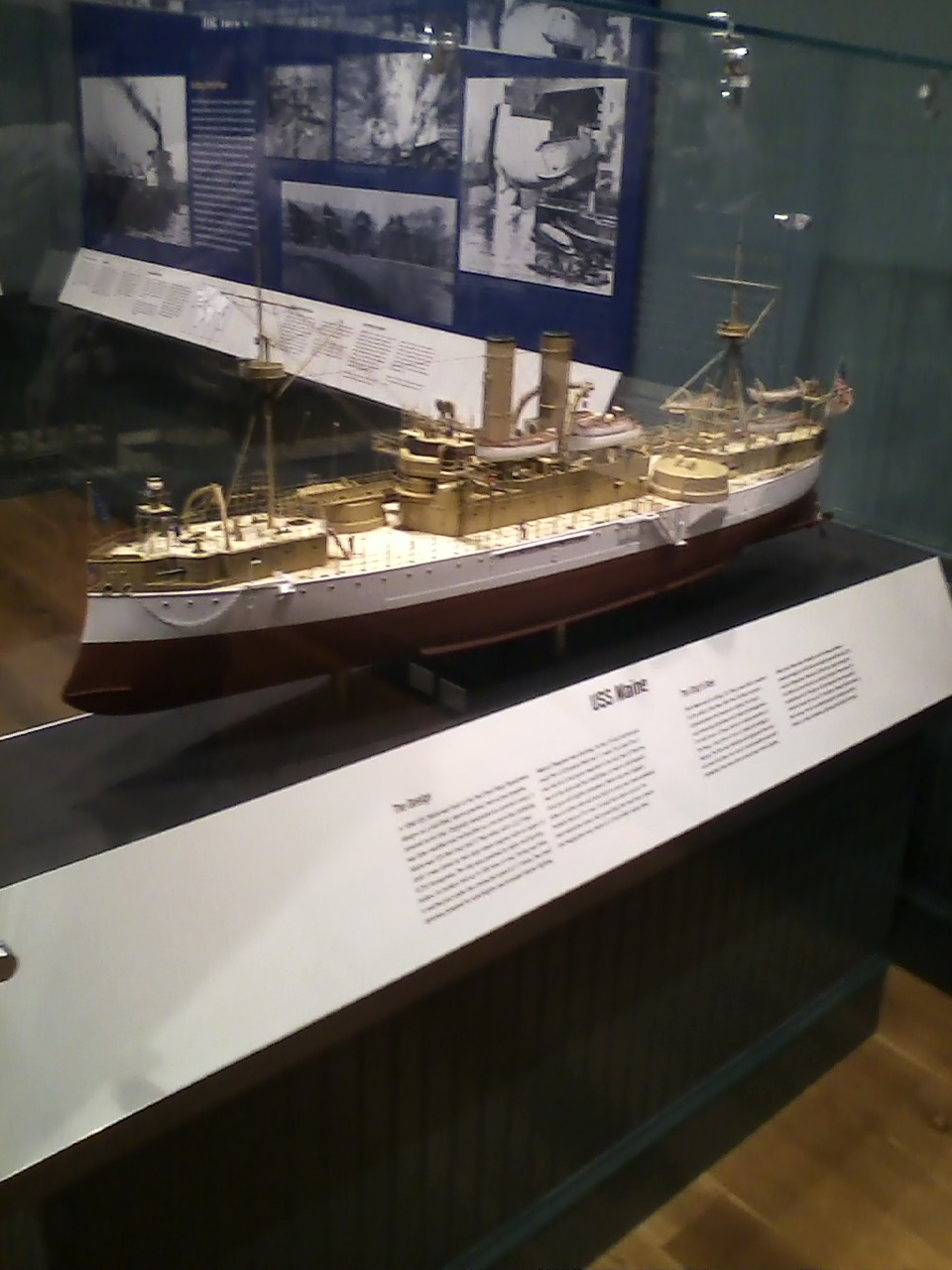
The same year as the consolidation another ship built in the Navy Yard made history…

…the USS Maine. The museum had beautiful models of a number of ships built by Brooklynites over the decades.

Assistant Secretary of the Navy Franklin Delano Roosevelt visited the Navy Yard in March 1914. Note that he is standing without the assistance of others; he did not contract polio for another seven years. I had no idea how tall he was. Roosevelt exudes strength and virility. If I am not mistaken that is Andrew Carnegie standing on his left. Carnegie campaigned hard for peace before and during the Great War, but in one of history’s cruel ironies it was his steel that built many of the ships used in the war.

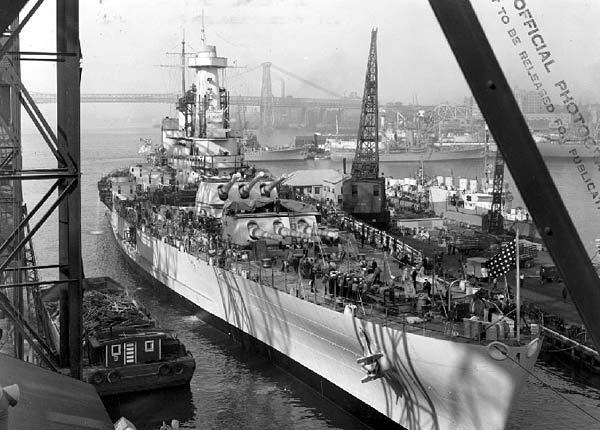
When Roosevelt talked about the Arsenal of Democracy as president he was referring in large part to the Navy Yard. This is the USS North Carolina on the site in April 1941. Navy Yard workers built the battleship in 1937.

And of course there was the USS Missouri, on whose decks the Japanese surrendered in September 1945.

This is the Navy Yard today.

(image/Jim Henderson)

Not a bad way to spend part of the weekend. We already have plans for other sites in the area. It is going to be a New York City summer for us.