Rainy Sunday coffee

It is a rainy Sunday here in Brooklyn. My gosh, has it been a full seven days since the last post? It has been a busy week.

I noted with pleasure on Monday that Dan Carlin just released part v of Blueprint for Armageddon. I am listening to the fourth hour of the broadcast as I type this. If you have not heard Carlin’s series on the Great War, I can testify that this is an extraordinary work of interpretation. I stumbled upon the series when the centennial began last summer and listened to them over a weeks-long period going into the fall. I cannot imagine how much time it takes to put these together. It is extraordinarily thoughtful and shows what a passionate generalist can bring to a subject.

Though the United States has not yet entered the fray, the Americans play a larger role in Part v than they do in i-iv. There is an eloquent breakdown of Woodrow Wilson and his role in the leader-up to American involvement. Fittingly Carlin’s Wilson is inscrutable, neither saint nor scapegoat. Carlin understands that history is complicated.

Blueprint requires a significant time commitment–three to five hours apiece–but the reward is high. If you think of how much time you spend on other internet and television content though, it is not that much. One can find them on iTunes and elsewhere too. I usually listen in 30-45 minute chunks when I’m doing something else. As you are stuck inside this January-March, make Blueprint for Armageddon part of your winter.

Governors Island in January

I was on Governors Island this past Friday and  took a few quick photos before heading to the NPS office . The timing could not have been better because it had snowed the night before.

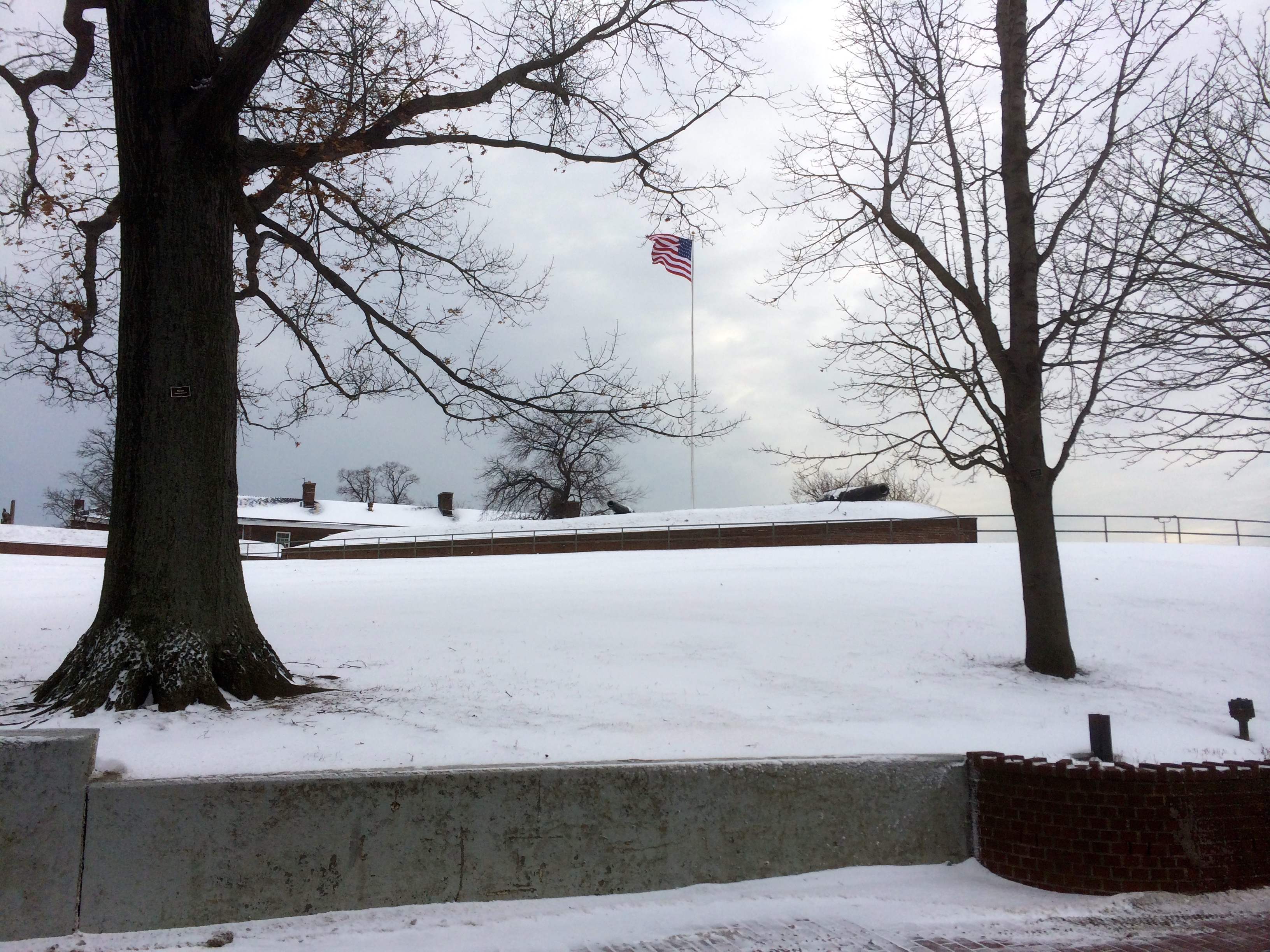
Fort Jay, flying the 48 star flag

Fort Jay, flying the 48 star flag

Nolan PArk

Nolan Park

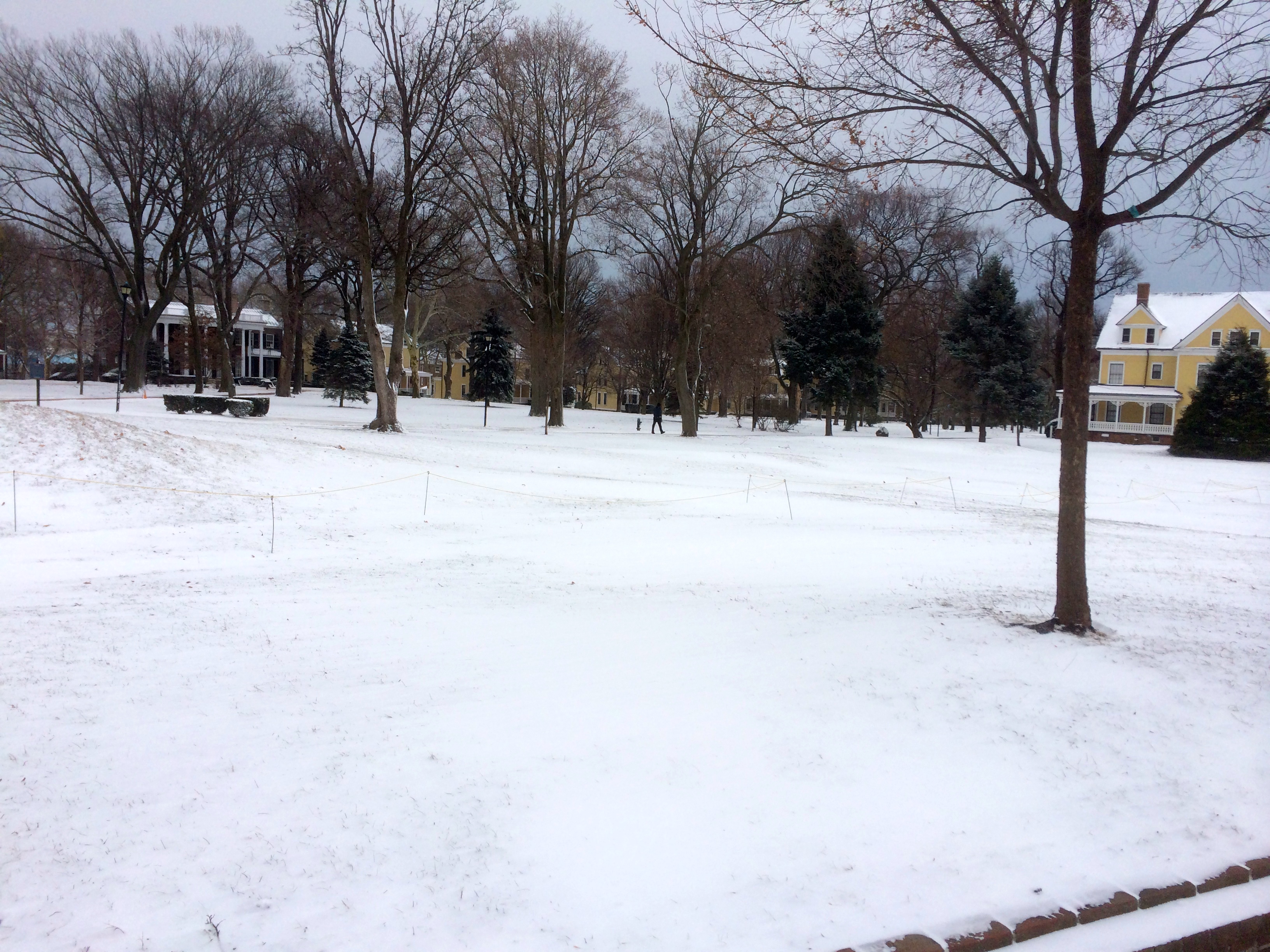
Parade Ground

Parade Ground

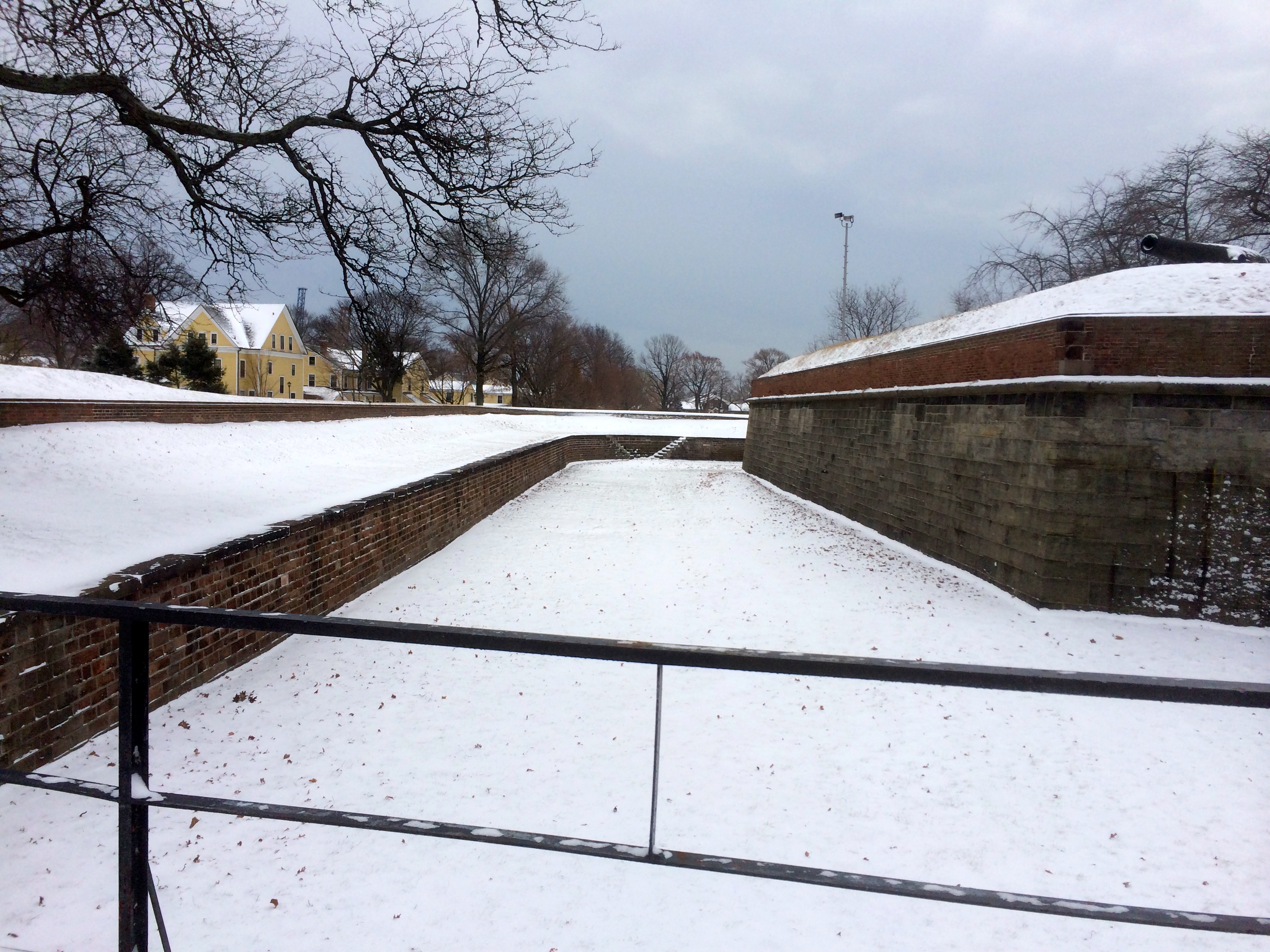
Fort Jay moat looking north. One doesn't get such a dramatic view of the Manhattan skyline from this vantage point when the leaves are on the trees.

Fort Jay moat looking north. One doesn’t get such a dramatic view of the Manhattan skyline from this vantage point when the leaves are on the trees.

Fort Jay moat looking south

Fort Jay moat looking south

It was ever thus . . .

index.php

I spent much of the evening working on the second of my two encyclopedia articles. They are not due until mid-February but I am determined to hammer them out and move on to other things. Besides, when it’s this cold out what else is there to do? This one is about the early years of the Y.M.C.A. I am really killing three birds with one stone. First, there is the article itself. Then, it ties in with the Roosevelt Sr. project; Roosevelt was not a major factor in the history of the Y, but good friends like William E. Dodge Jr. were. Finally, the YMCA ties into something I am hoping to do at Governors Island this summer. The Y faded a little during the Civil War when its membership fell. It was probably just as well. Many of its leaders were preoccupied with important work for the U.S. Christian Commission at the time.

Things were different a half century later. By 1917 the YMCA was fully entrenched and better able to help in a larger, more systematic was than it was in 1861 when it was only a decade old. The Y contributed here in the United States, and in France as well. It was hugely influential. The Governors Island YMCA, for one, helped so much in the war effort during the First World War.

I have been having too much fun reading old reports in Google books and the like. I have also been reading old New York Times articles to cross-check facts and get a sense of the spirits of the period. Brooklyn was an independent city until 1898. So, in the early 1850s its YMCAs had their own bureaucracies and infrastructure.  About 120,000 lived here. It was a large city, but its residents prided themselves on its small time feel. One letter to the editor from April 1854 caught my eye and made me laugh out loud. Alas it is not signed but the writer opines of the city across the river: “Brooklyn, so near to New-York, the focus of all good and bad influences.”

(image/NYPL)

Schuyler, Olmsted, and Roosevelt

I submitted an encyclopedia article to the editor earlier tonight. It was a small, 500 word piece about Frederick Law Olmsted. My Olmsted was a little rusty and I thought it would be an opportunity to refresh myself. My great friend Charles Hirsch used to say that writing the occasional encyclopedia piece was good training in how to write to spec, work within tight guidelines, and give an editor what he/she wants.

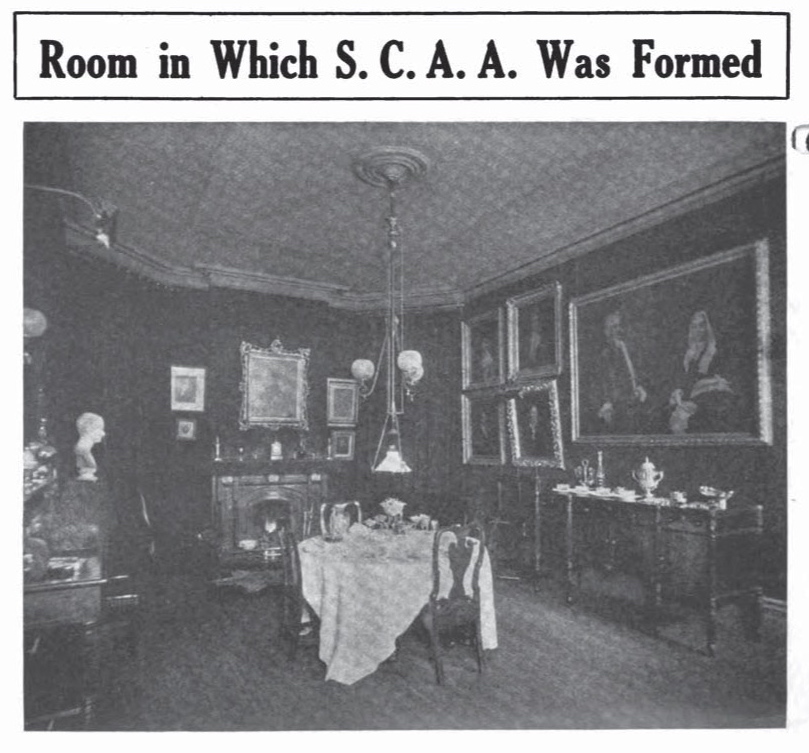
19 West 31st Street: the home of Louisa Lee Schuyler's parents. This is where Ms. Schuyler founded the S.C.A.A. in 1872. Olmsted and Roosevelt Sr., were both executive members.

19 West 31st Street: the home of Louisa Lee Schuyler’s parents. This is where Ms. Schuyler founded the S.C.A.A. in 1872. Olmsted and Roosevelt Sr., were both executive members.

It did not make its way into the piece, but Frederick Law Olmsted was a great friend of both Louisa Lee Schuyler and Theodore Roosevelt Senior. The three worked together in the U.S. Sanitary Commission during the Civil War; later they collaborated in the New York State Charities Aid Association. Roosevelt Senior died in 1878, and Olmsted in 1903. It is incredible to think, but Schuyler was still very much active when the Great War started in 1914. Indeed she continued in some of the same capacities she had with her old friends during the Civil War. New York State suffered greatly during the First World War, which had disrupted the economy and negatively impacted the social fabric of life in New York City. Schuyler was in her seventies by this time, and though her old friend were long gone she picked up the mantle yet again.

The Roosevelts’ Union Square

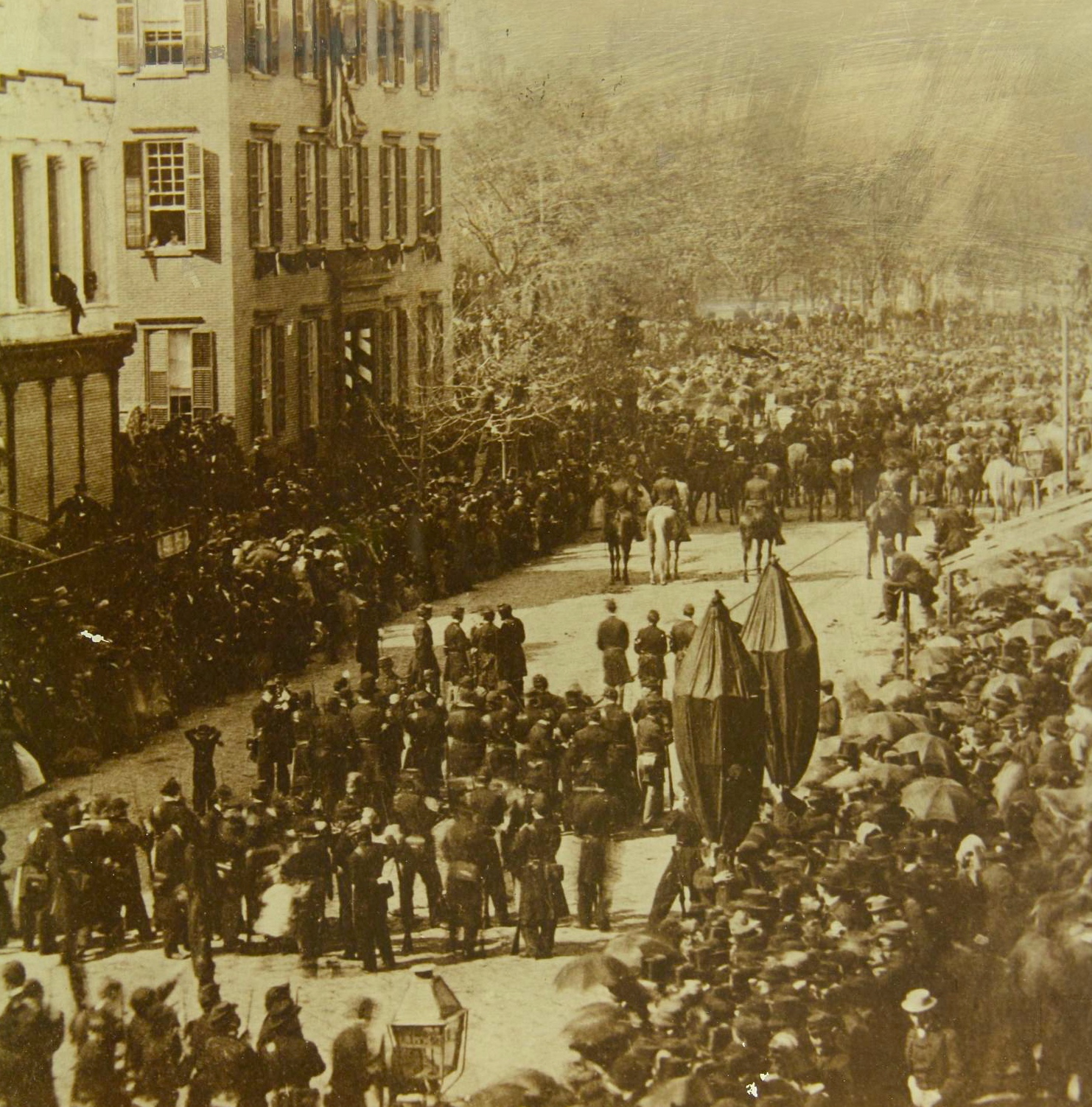
Lincoln's funeral procession passing Cornelius Roosevelt's house, 25 April 1865

Lincoln’s funeral procession passing Cornelius Roosevelt’s house, 25 April 1865

A few of us got talking yesterday afternoon at the TRB about the famous image of Theodore and Elliott watching Lincoln’s funeral from their grandparents’ window. This is a well-known photograph and very much part of both the Lincoln and Roosevelt iconography. Still, I had always had trouble visualizing the exact spot, in part because Broadway does not run a straight line but cuts diagonally through Union Square. It’s hard to visualize but the southwest corner of Broadway stands adjacent to the northeast corner of the southern tip of Union Square. See what I mean?

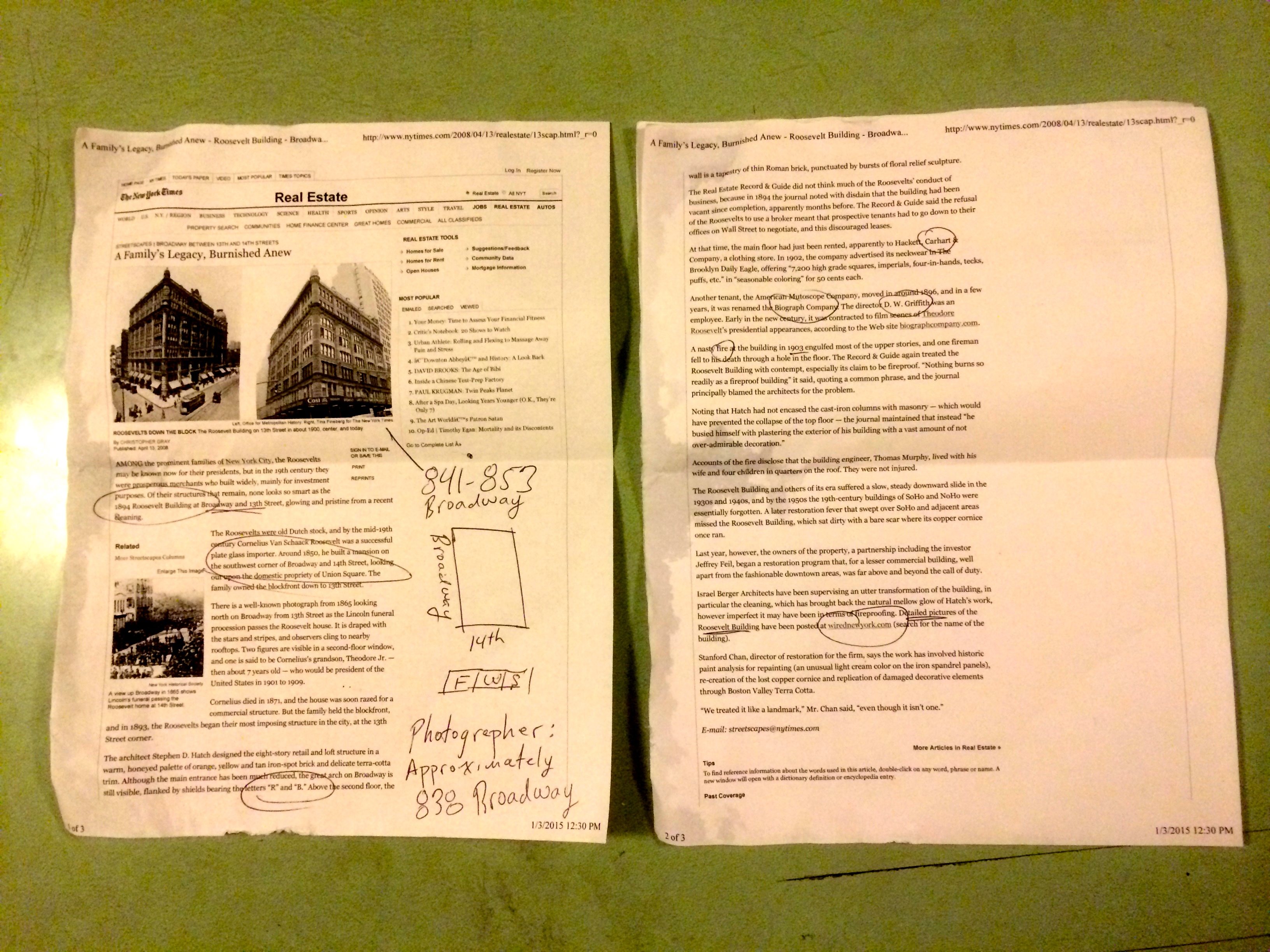
Anyways I printed out a NYT article about a building that stands today on this same property. Oddly enough, one of the rangers just wrote a Facebook post about 841 Broadway that will appear in the next week or so. With printed article in hand and a few scribbled notes I headed out after the 1:00 tour to get to the bottom of things.

My water-logged article

My water-logged article, complete with faulty map of Broadway

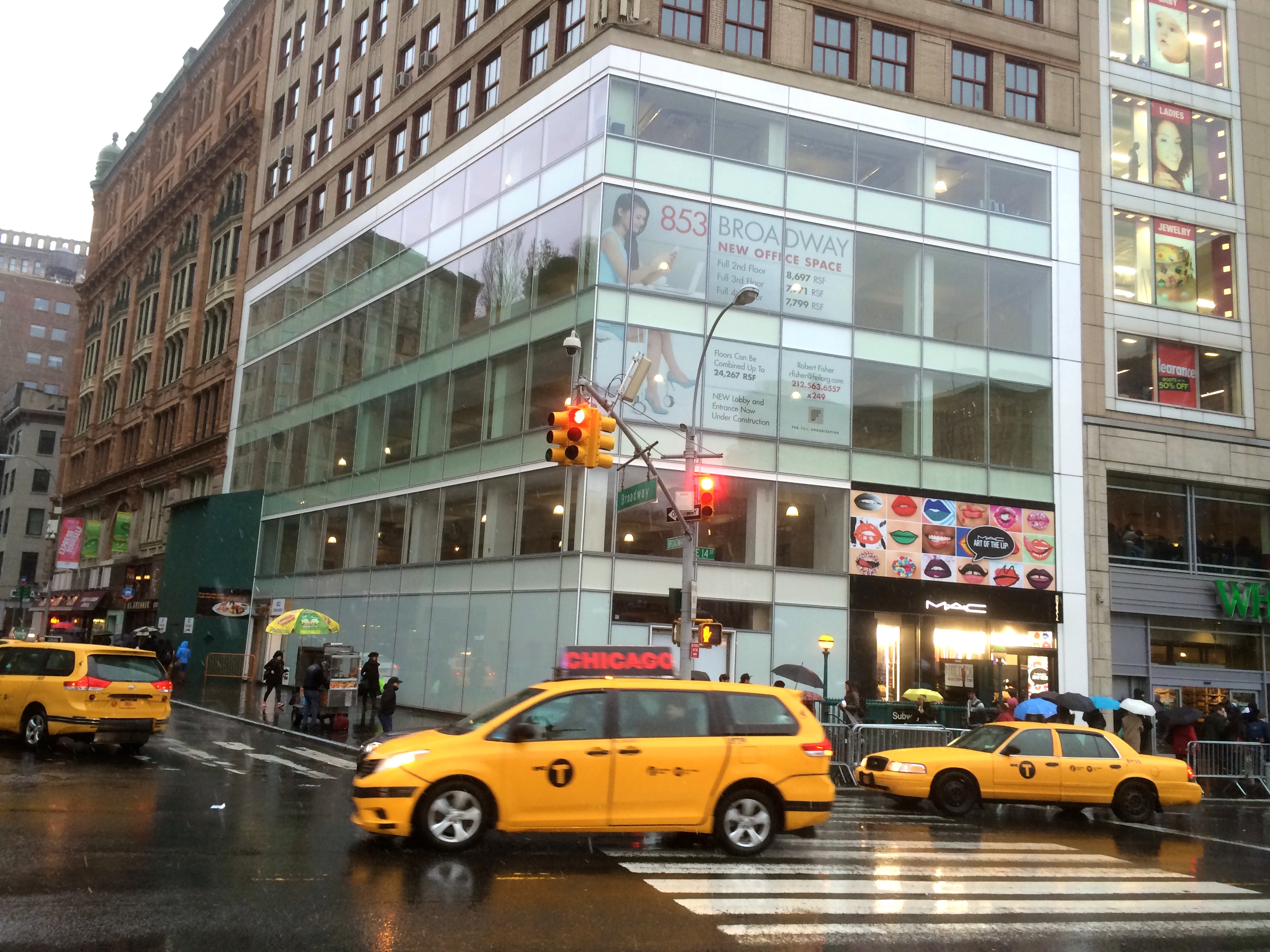
Looking south from Union Square, 14th Street and Broadway. Cornelius and Margaret Roosevelt's house stood where the white building is today.

Looking south from Union Square, 14th Street and Broadway. Cornelius and Margaret Roosevelt’s house stood where the glass, white building is today.

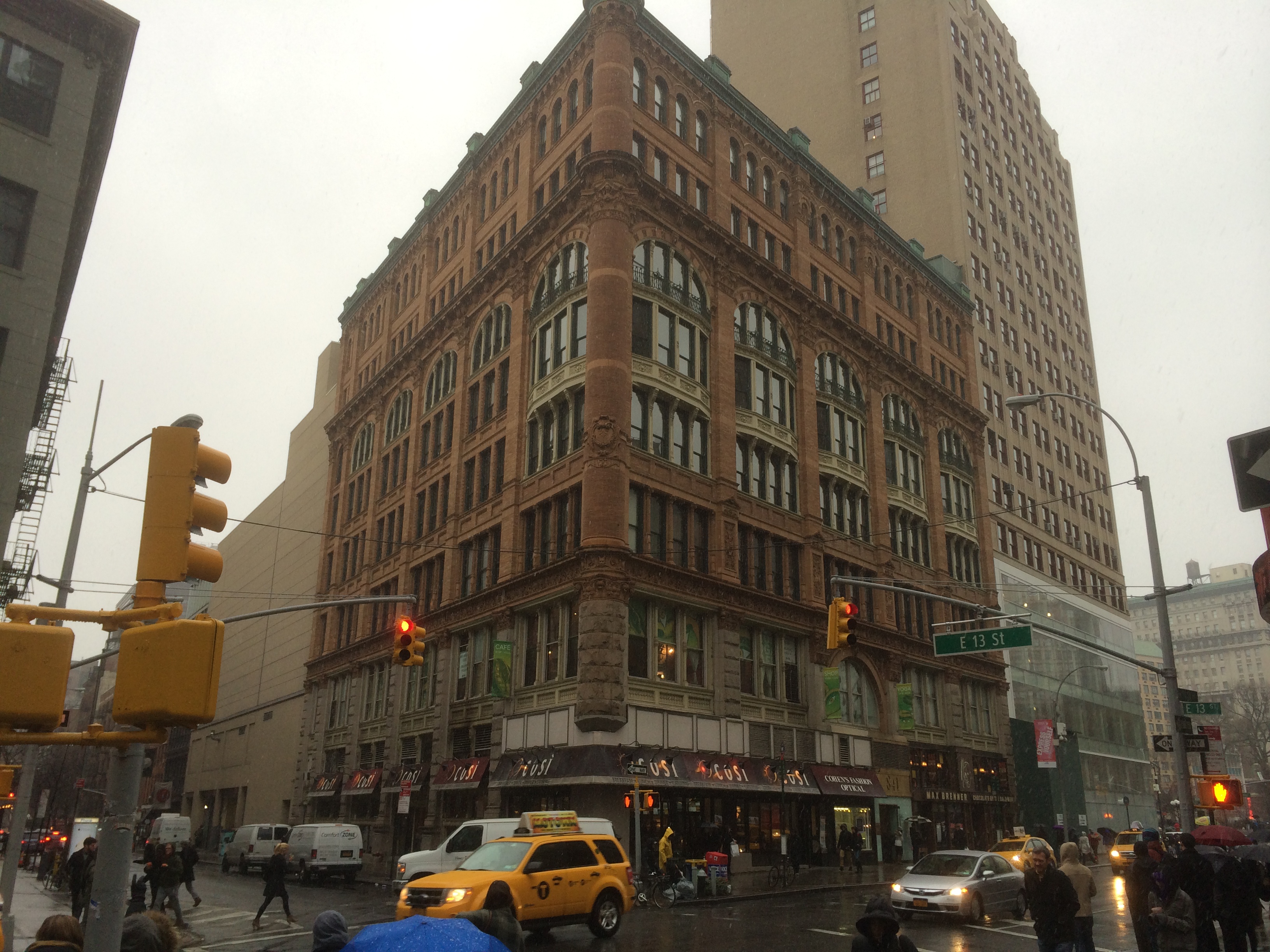
Here is the view looking north from 13th Street and Broadway.

Here is the view looking north from 13th Street and Broadway.

The building here in the foreground was built on the Roosevelt property in the 1890s. For more, here is a link to the article I pictured above. When I got back one of the rangers and I began investigating on Google maps and figured the funeral image was taken south of where I took this photo. I intend to do more digging but the Lincoln/Roosevelt photograph was taken at approximately 838 Broadway. If you know this area, that would be just north of the Strand Bookstore.

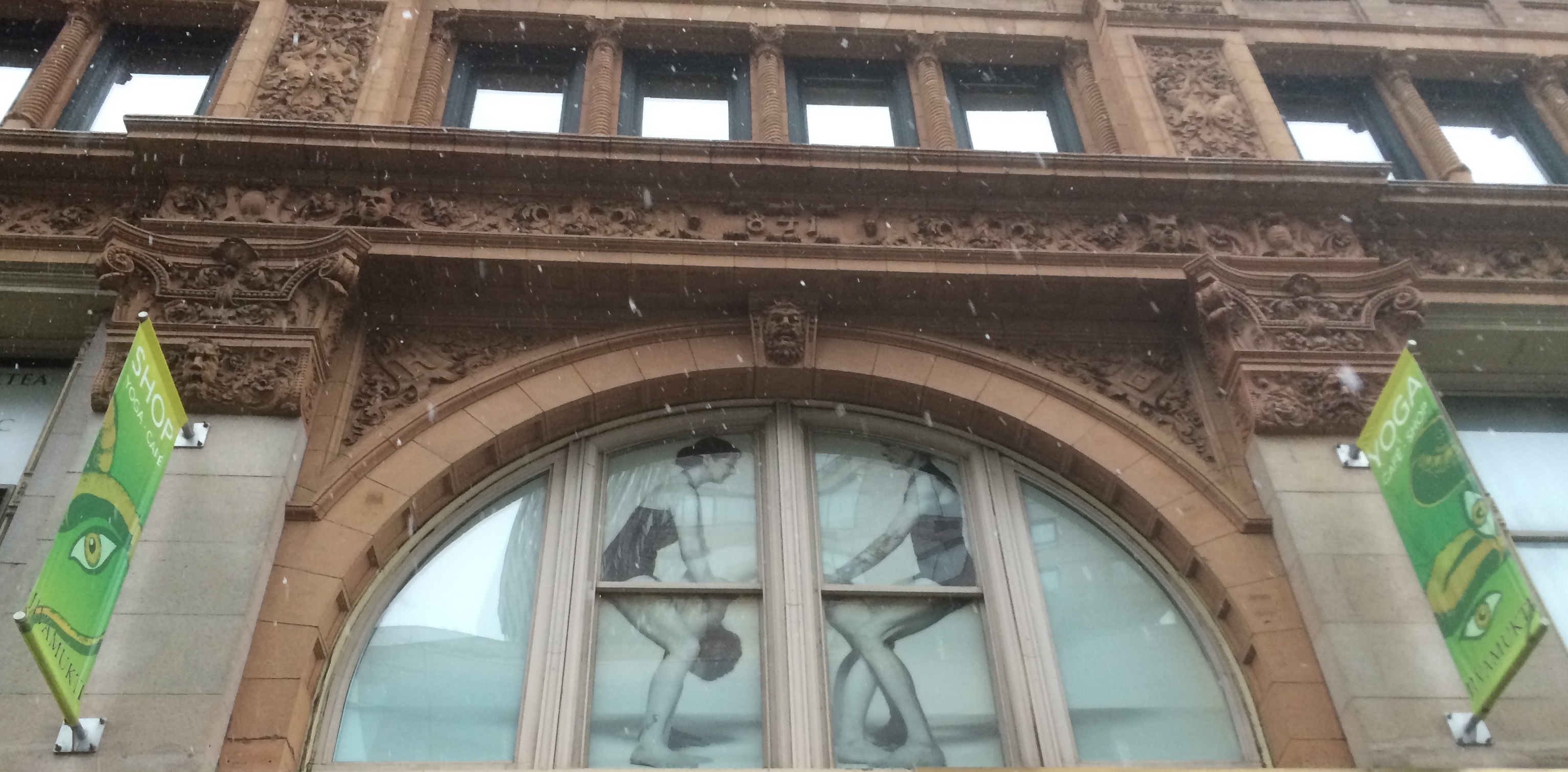
A detail on 841 Broadway:. Look closely above the arch. On the left is an R and on the right a B, which stand for Roosevelt Building.

A detail on 841 Broadway:. Look closely above the arch. On the left is an R and on the right a B, which stand for Roosevelt Building. Yes, that is falling snow that you see.

(funeral image/Dickinson State University and NPS)


Sunday evening coffee

You know New Years is close when The Lives They Lived hits the stands.

You know New Years is close when The Lives They Lived hits the stands.

I hope everyone had a good holiday. Posting will continue to be light between now and the first of the new year. A friend from outside the country was visiting us these past few days. After he left for the airport I walked up to the newsstand to get the Sunday Times. Because it is the final Sunday of the year the magazine has its annual The Lives They Lived edition. I have written about this before and so will not go into the details again. Looking quickly through the contents I see that they have covered Red Klotz, the owner of the Washington Generals; Tony Gwynn, and together Casey Kasem and Don Pardo. As I get older the end of the year is increasingly a time of introspection. This is especially true since my father and father-in-law died. At their best the vignettes in the Times end of the year special evoke moments and worlds that no longer exist. The strangest thing is that I am now old enough to remember many of them. I suppose it was ever thus.

Details will be forthcoming if it comes to pass, but I am trying to get Park Service permission to write and conduct a program for the sesquicentennial of the Lincoln assassination. The next step is to write the outline and explain the scope and parameters. I am really hoping this comes to pass. If it does I will announce it here. It is hard to believe the Civil War sesquicentennial will be coming to an end in April. The Hayfoot and I began marking the 150th over five years ago with the anniversary of John Brown’s raid. The Roosevelt Sr. books proceeding apace. I have what I think are some good ideas for the Great War centennial.

Enjoy the rest of your holiday season.


The USS Jason’s Christmas voyage

Workers and volunteers pack the last of toys donated to the children of Europe rendered homeless in the early months of the Great War, 14 November 1914

Workers and volunteers in Brooklyn pack the last of the toys donated to the children of Europe rendered homeless in the early months of the Great War, 14 November 1914

Millions of children in Europe had at least a semblance of Christmas a century ago today in part due to the people of the United States. The USS Jason left Brooklyn’s Bush Terminal on 14 November 1914 en route to Europe. Its mission was to deliver six million toys to the children of war-ravaged Europe. The Jason was the first Christmas ship of the Great War. It left so early because it had many stops to make. British torpedo boats escorted the Jason into Devonport England in late November. The toy project maintained strict neutrality. After unloading toys for the children of England, the Jason sailed to Holland to drop off a shipment for the Belgians. Then it was on to Genoa Italy in mid-December for a final unloading intended for the children of Germany, Russia, and Austro-Hungary.

(image/Library of Congress)

The Grey Lady’s technicolor Christmas

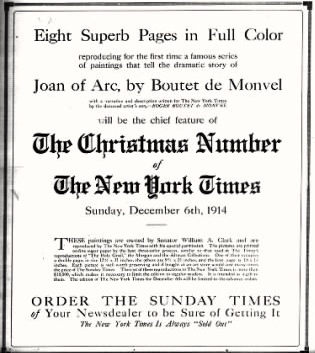
The Times understood the significance of the Monvel prints and advertised them heavily in the weeks prior to their release.

The Times understood the significance of the Monvel prints and advertised them heavily in the weeks prior to their release.

As you can see from the advertisement above the New York Times published a special Christmas supplement in early December 1914. What made it so special was the inclusion of several full color plates from artist Louis Boutet de Monvel’s Joan of Arc series. Monvel (1851-1913) had done numerous commissions about The Maid of Orléans over the years. Most famously these projects included a best selling children’s book and a ten panel masterwork in the church of the heroine’s hometown of Domrémy. Illness forced Monvel to abandon the latter project when it was twenty percent complete. The images published in the Times were reproductions of six much smaller panels Monvel had completed for Senator William A. Clark just before Monvel died. Clark hung them in his Fifth Avenue home.
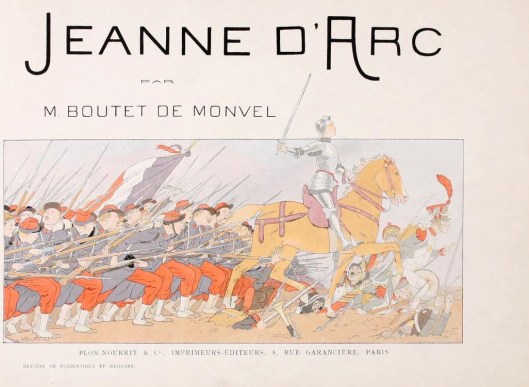
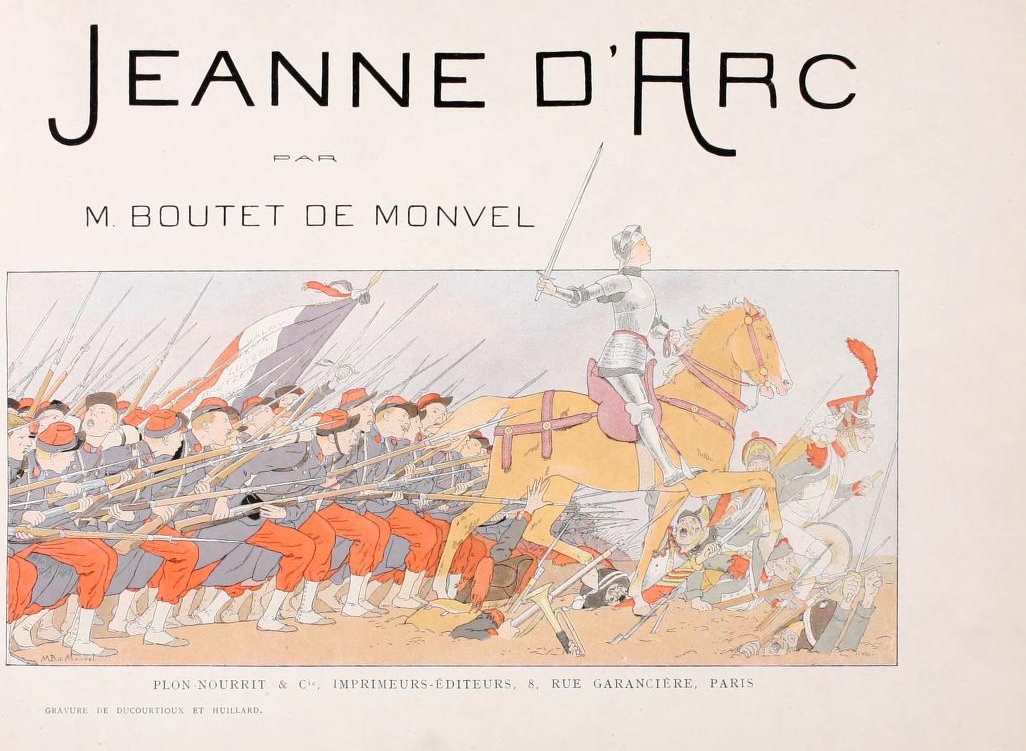
Monvel published the children book in 1895. The 15th century French soldiers depicted here look suspiciously like the zouave units of Monvel's time. French soldiers first started wearing these in the mid nineteenth century and continued through the first months of the Great War.

Monvel published the children’s book in 1895. The 15th century French soldiers depicted here look suspiciously like the zouave units of Monvel’s time. French soldiers first started wearing these uniforms in the mid nineteenth century and some continued through the first months of the Great War.

For the prints to be in the New York Times was a big deal. No one knew this more than the New York Times. The article accompanying the supplement describes the project as “The finest single issue of a newspaper ever seen in the world.” That is some serious hyperbole, but it has a ring of truth to it. The public snapped up 335,000 issues of the special edition, and would have bought at least 40,000 more if the printing presses could have handled the demand. Gushing letters of praise poured in from curators and directors at the National Academy of Design, the Metropolitan Museum of Art, and what would eventually become the Brooklyn Museum of Art. People wrote in from as far away as Indiana.

The inserts were indeed beautiful, but there was more to the intense public demand than that. By December 1914 the Great War had settled into a stalemate on the Western Front. The war that everyone had thought would be over by Christmas now a muddy stalemate. Joan of Arc, that heroine of the Hundred Years War, was emerging as a potent symbol of Gallic resolve.
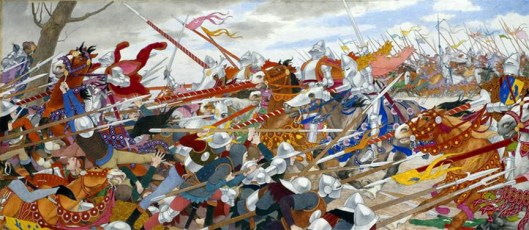
War as it is. This is one of the panels Monvel painted for Clark just a few years prior to the Great War. It is easy to see why readers in December 1914 would have been intrigued by the series.

War as it is. This is one of the panels Monvel painted for Clark just a few years prior to the Great War. It is easy to see why readers in December 1914 would have been moved and inspired by the series.

It is unfortunate that the Times did not do something with these prints for the Great War Centennial. Indeed it is not even clear if the plates they commissioned a century ago–and paid a small fortune to reproduce–still exist. Thankfully the six panels from which they originated are still here. Senator Clark died in 1925 and bequeathed them to the Corcoran Gallery in Washington.

437px-Joan_of_Arc_WWI_lithograph2

The Great War took all of France’s human resources. Among the poilus were Monvel’s son Roger and at least one descendent of Joan of Arc herself.


Roosevelt’s two cents

unnamedImagine Theodore Roosevelt’s likeness on a two cent piece. It sounds funny and yet almost happened. In September 1919 the Women’s Roosevelt Memorial Association petitioned the Treasury Department for such a coin. The last two cent piece had gone out of circulation in 1874. The proposal passed the U.S. Senate in May 1920. It stalled in the House when, curiously, a congressman from New Jersey pushed for a two ½ cent Roosevelt coin. This new proposal opened a whole new can of worms. The American Bankers Association threw their, uh, two cents in and came out against the proposal. The bankers argued that a 2 ½ center would necessitate the creation of a half cent piece to make change. The stalemate proved too much and the whole thing died soon thereafter.

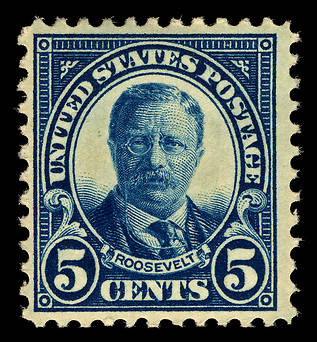
Still something came of the measure. On October 27, 1922 the Postal Service issued a 5 cent Roosevelt stamp. It was the first time Theodore Roosevelt’s likeness appeared on an American postage stamp. His widow Edith was present at the ceremony held in Oyster Bay. Ted Jr. and Alice also received some. The stamps went on sale in a limited run in Long Island, Washington, and right here at the Theodore Roosevelt Birthplace. Note that this was while the site was under still under construction. The 5 cent Roosevelt proved especially popular for international mail.

image/Roosevelt missed his chance at the 2 cent piece but made up for it with this gorgeous five cent stamp first issued in 1922.