Summer rolls along . . . into fall

Update: Some of you may remember this excerpt from a post I wrote back in July. Well, the wheels of justice sometimes grind slowly but it is good to know that they are still grinding. Today I received news that my request to do research at the site mentioned below has indeed been approved. I am really happy that this is now going to move forward. I wish I could be more forthcoming at the moment but the time being I think it’s for the best that I not discuss the institution itself, as it is a private organization. The final product will hopefully be a book about New York City’s role in the Civil War. I had all but given up on this particular project.

Yesterday I had an appointment at a cultural institution in one of the five boroughs of the city. This is an organization that goes back to the nineteenth century and maintains a strong sense of institutional memory. The purpose of my visit was to seek permission to research said institution’s archives this fall. It is hard to believe Labor Day is just five weeks away. My host was very gracious and knowledgeable, and showed me not only items that may be of interest on my subject but also gave me a quick look at some of the artwork and Americana on display. To say I was impressed would be an understatement. Officials will not be making any decisions until they meet in mid-August. It would be a privilege to research at this organization, and I am really hoping it goes through.

The Roosevelt’s Armistice Day

The grave of Quentin Roosevelt, France. Lieutenant Roosevelt later received the Croix de Guerre.

The grave of Quentin Roosevelt, France. Lieutenant Roosevelt later received the Croix de Guerre.

As many undoubtedly know, Veterans Day began as Armistice Day. It was on this date in 1918 that the carnage at last came to an end during the Great War. Nearly ten million people were killed in the conflict, and the Roosevelt household was not immune to the suffering. Theodore and Edith’s youngest child, Quentin, was among those who lost their lives. The young lieutenant’s fighter plane went down on Bastille Day 1918 during the Second Battle of the Marne. He was twenty.

Theodore Roosevelt was always proud of his son, but in many ways he never recovered from his son’s death. Already weak from numerous ailments, the former president died just six months later. He too died young, a mere sixty. The history books do not put it quite this way, but in a very real sense he died of a broken heart.

One November day . . .

West Virginia . . . waiting fro AAA

West Virginia . . . waiting for AAA

We were halfway to Antietam yesterday, driving through West Virginia on what was a gorgeous fall day, when alas our friend’s car broke down in the middle of nowhere. The idea was to have breakfast in Shepherdstown, see the remnants of the last battle of the Maryland Campaign there by the Potomac, and then make our way to Sharpburg. Fate had other ideas, however. The most important thing is that we all made it home safely.

I promise more posts here this week.

Battle lines tightening in Florida

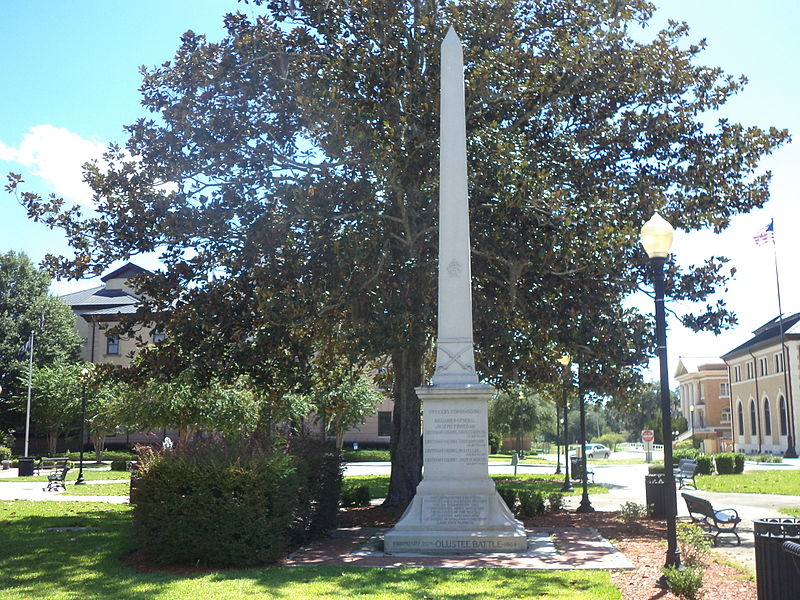
Olustee_Park_Olustee_Battle_Monument

From the “War that never ends” department, a curious story is emerging in Florida in which people are getting angry about a proposed Federal monument to be placed at the Battle of Olustee state park. It seems there are three Confederate, but no Union, memorials at the site. I have never understood these imbroglios. Here is a small piece, complete with video, explaining more. Olustee is actually one of the places I will be visiting as I retrace the steps of Joseph Roswell Hawley in the writing of my biography of him. I really want to see what comes of this story.

(image/Michael Rivera)

One Sunday in Hackensack

Yours truly was up and out of the house early yesterday on his Sunday morning for the annual Hackensack Toy Soldier show. Getting there is indeed half the fun. It involves a subway to 42nd Street followed by a walk across an all-but-deserted Times Square, to the Port Authority for the 8:30 bus to New Jersey. What I love about these shows is that you never know what you are going to see, or what it might be even if you bring it home. Here are Exhibits A, B, and C.

When I was looking through a case of pins and whatnot, the lady said I could choose any three for ten bucks. So, I chose these.

American Legion and War Work tokens

The first is from the 1931 American Legion convention held in Detroit in September 1931. I am not sure what purpose it served, but the hole is part of the original. This is common in such tokens. Surfing the internet, I learned that President Hoover himself addressed the legionnaires. Here is a photo from the convention. I love the sign for the Cadillac Hotel. Who brought the token home from Detroit, and how did it eventually find its way to a vendor table in Hackensack, New Jersey? I’m just glad he held onto it.

1931 American Legion gathering, Detroit Michigan

1931 American Legion gathering, Detroit, Michigan

I have always been a big tchotchke guy. In these years of the sesquicentennial I have been making certain to pick up brochures, handouts, tokens, and other small things wherever the Hayfoot and have traveled. They will never be worth millions, but they are tomorrow’s pieces of Americana. The Hayfoot even bought me a box just for this kind of thing.

I assumed that the United War Work Campaign pin was from one of the Alphabet Soup agencies during the New Deal/WW2 Era, with the 7 representing a union chapter. The blue star seemed further evidence of WW2 provenance. As it turns out, this UWWC pin was from the First World War. The 7 represents that number of organizations who pooled their resources for the war effort. Click here for some cool ass pics. I am not sure who would have worn such a pin. If it was for workers on an assembly line or something along those lines I don’t know.

That brings us to the third item.

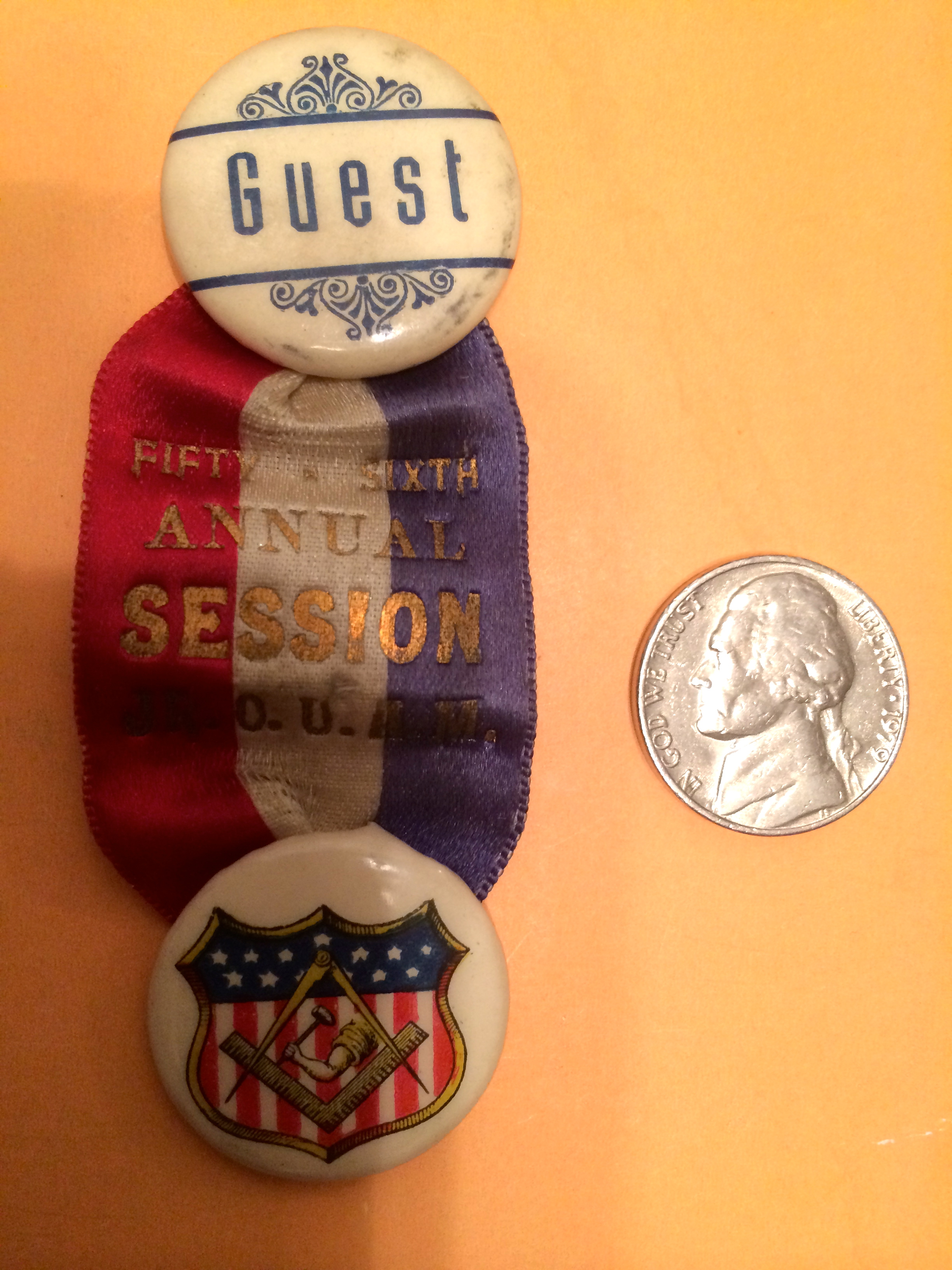
O.U.M.M.

I was hoping this was Civil War-related–and maybe it is–but no matter how much I search I cannot find anything about it. It is a little hard to make out, but it seems to say it is the 56th annual meeting of the Jr. O.U.M.M.  What that is I have no idea. If anyone does, I would love to know more.

So, into the box these will go, to be forgotten until pulled out on a winter’s night for an hour or so of perusing over a cup of coffee.

Remember, you are making history right now. Make sure to save a little part of it.

(middle image/Donald Harrison)

Mornings with Theodore

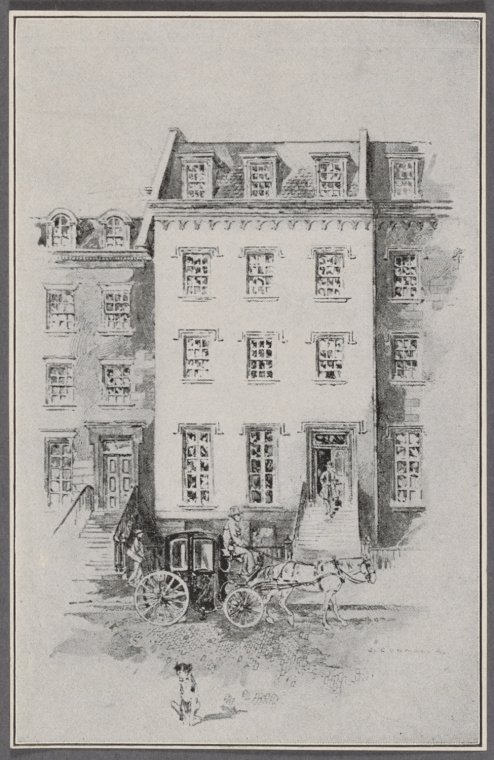
Theodore Roosevelt Birthplace

Theodore Roosevelt Birthplace

I finished David McCullough’s Mornings on Horseback last night. This is the ur-text for anyone who works or volunteers at the Theodore Roosevelt Birthplace. As McCullough points out in the introduction, Mornings is not so much a biography as an exploration of how this man born just prior to the CIvil War became the man he did. The book ends in the mid-1880s with Theodore’s life less than half lived. It hardly seemed that way however, given how much he managed to pack in before his 30th birthday. The White House is still fifteen years in the distance.

This is the prep work leading up to my own Interpretive programs, which I am looking forward to doing once I have the narrative down firmly. What I am finding I love about the Roosevelt story is the number of ways it can be told. Walk around the Flatiron District in the East Twenties and you are stepping back into an Edith Wharton novel. Tell the story of how his mother Mittie, raised in Georgia, was an unreconstructed Southerner and you have the Cvil War. Assemblyman Roosevelt? That’s him taking on Tammany Hall. And oh yes, it is a human story too. His wife and mother did die on the same day in the same house–two days after his daughter was born. That does not even get you to San Juan Hill, the Albany governors mansion, the White House or the decade of his life that came afterward. It is hard to believe he died at sixty. I can’t tell you how much I am enjoying this.

Make the TRB part of your New York City experience. It’s the real deal.

(image by J. Conacher/NYPL)

Ike Skelton, 1931-2013

Rep Ike SkeltonI did not know much about Ike Skelton but I was saddened to learn that he died this week. The former congressman from Missouri had been elected chairman of the U.S. World War 1 Centennial Commission just last month. Skelton served in the U.S. House for thirty-four years, rising to chairman of the Armed Services Committee. As a teenager he once met Harry Truman. Talk about making an impression. Skelton lost his seat in 2010 and was practicing law for a Kansas City firm when President Obama tapped him for the Centennial Commission. Skelton was an excellent choice; his decades of experience in Washington had given him a firm understanding both politics and the military. I was eager to see what direction he intended to take the organization.

The Centennial Commission is something worth keeping an eye on. There are so many directions in which they can take their mandate. Way back, I speculated how they might interpret that mission. It seems they are leaning more toward events from 2017 (The U.S. entered the conflict in April 1917) through 2019, with the Versailles anniversary. I suppose that is fine, but there is a lot else in there as well. The Lusitania (1915) is one example that pops into mind. Yes, it is the United States World War One Centennial Commission but I hope they think wider and put the events of 1914-1919 into their full context. Sadly, the work will happen without the wisdom and guidance of Mr. Skelton.

(image/U.S. Congress)

Old soldiers never die

Longtime readers of The Strawfoot know that I have a special interest in aging veterans. As I have pointed out before, what is so fascinating about them is that, pretty much by definition, the last ones remaining were the ones most ordinary during the conflict. The last soldier of the Great War died a few years ago to great fanfare. Now, we are seeing the process play of again with WW2 vets, a phenomenon that will become even more pronounced in the next few years as their numbers dwindle into the single digits. Just recently we saw them being cynically used as symbols on the National Mall during the shutdown.

Last night I finished Richard A. Serrano’s just-released Last of the Blue and Gray. Serrano tells the tale of the last few dozen or so Civil War soldiers and how they became living monuments during the Cold War and Civil Rights Movement. Many of these aged men, just young boys between ’61-’65, had only the most tenuous of military careers. Typically, they had been drummer boys or, if a bit older, foragers for a few months during the Civil War. I don’t think I understood the level of fraud involved in many of these cases until reading the book. Many “soldiers” had never seen service at all but were now so old that they had come to believe the tall tales they had spun on courtyard squares and back porches for decades to eager audiences. Others intentionally faked it to receive a pension during the hardscrabble years of the Great Depression. Whatever the circumstances of each case, the American public was naturally eager for that human connection to the past. So much so, that many people chose not to believe the news when a case proved to be fraudulent.

In the 1940s and 50s each Civil War soldier’s death was bigger news than the one that came before until, finally, the last one remaining was Walter Williams of Texas. When he passed on in December 1959 the nation took note. His body lay in state in Houston for two days. The White House issued an official proclamation. The only problem was, Williams had never served in the Confederate Army as he had claimed. Serrano does a great job explaining the hows and why of this fascinating and quite human story that took place not that long ago.

Will there be a Mission ’16?

Antietam National Military Park's Mission 66 visitor center

Antietam National Battlefield’s Mission 66 visitor center

There were larger issues at stake during the government shutdown, but one of the most distressing things about the episode was the treatment of the Park Service and its personnel. The finger-pointing and grandstanding were painful to watch, and I don’t think it is melodramatic to say they may leave permanent scars on the agency and on the parks themselves. There have been spectacular successes during the Sesquicentennial. I was in Washington DC in July 2011 and remember watching the nearby Manassas coverage on television; the Hayfoot and I were in Gettysburg in person in the days leading up to the Gettysburg 150th and can attest to the level of preparedness on display. The electricity in the air was palpable and you understood that you were seeing history in the making. Despite these triumphs, the Service has struggled with budget cuts and other issues in recent years.

The NPS centennial is now just three short years away and given the current climate one cannot help wondering if and how the current tension might affect that anniversary. In the 1950s President Eisenhower enacted Mission 66, a decade-long initiative to improve the parks. America’s national parks had received internal improvements in the 1930s during the New Deal, especially under the auspices of the Civilian Conservation Corps. By the 1950s, however, sites were under considerable strain as an increasingly prosperous and mobile population  toured the USA in their Chevrolets. More visitors means the need for more better roads & trails, more sewage & sanitation facilities, increased food & lodging, and all the rest. Hence, Mission 66. Given current realities, a Mission ’16 is probably not in the cards. Still, one hopes something with lasting benefit comes out of it.  It is an issue worth watching and the next several months will tell us a lot about how it plays out.

(image/Acroterion)