• About

The Strawfoot

~ a New Yorker's American History blog

The Strawfoot

Category Archives: New York City

Green-Wood’s Harper Brothers

27 Monday May 2019

Posted by Keith Muchowski in Brooklyn, New York City

≈ Comments Off on Green-Wood’s Harper Brothers

I hope everyone is enjoying their three-day weekend. Whatever one does today, please remember the true spirit and meaning of Decoration/Memorial Day.

Harper Brothers headstone, Green-Wood Cemetery. James Harper, the oldest of the four, died as the result of a carriage accident in Central Park.

My friend and I had a good time in Green-Wood yesterday. While I don’t want to give away too much right now, we came up with what might be an interesting small summertime project. Over the course of the day, which we split in half with lunch to replenish ourselves and get out of the heat for a bit, we came across this headstone here. I found it striking and could not help but notice that the individual died in 1869, one hundred and fifty years ago. So, we stopped and took the pic you see here. It turns out that James Harper is none other than the oldest of the Harper Brothers, the siblings who two centuries ago founded the publishing empire that still exists today. Their father came to New York from Philadelphia around 1790 and opened a grocery store on Maiden Lane, which means he most certainly knew the Roosevelts, whose hardware concern was on that same Lower Manhattan street. Young James worked with Thurlow Weed for a time before founding J & J Harper in 1817 with his brother John. They brought younger siblings Joseph and Fletcher into the publishing business in the 1820s and eventually named the company Harper & Brothers. All are buried in this Green-Wood plot. Indeed, the other brothers are represented on the other three sides of this monument.

Brothers Fletcher, James (standing), John, and Joseph Harper founded the publishing empire that still bears their name. All are interred today on a quiet hill in Brooklyn’s Green-Wood Cemetery.

James Harper was a notorious anti-Catholic who in 1844 successfully ran for New York City mayor on the nativist American Republican ticket. He served one term. His administration is noted for something that did not happen within Manhattan itself. In 1844 nativist riots, sometimes called the Bible or Prayer Riots, took place in Philadelphia ninety miles away. Closer to home there was anti-Catholic in Brooklyn just across the water as well. The fighting there was especially intense, with pitched clashes between nativists and Irishmen. Brooklyn however was still an independent city, and thus beyond Mayor Harper’s jurisdiction. The Nativist Riots caused great concern. Thankfully the violence did not spread to Manhattan, in part because of the vigilance of Archbishop “Dagger John” Hughes. The pugnacious cleric met Mayor Harper and warned him in stiff language of potential consequences should goons attack people or churches. James wisely left politics after his one term in office and focused again on the family publishing business, which only grew in the ensuing decades. The brothers’ most important vehicle was of course Harper’s Weekly, which made its debut in 1857.

(bottom image/Library of Congress)


Fiorello La Guardia’s Memorial Days

26 Sunday May 2019

Posted by Keith Muchowski in Franklin Delano Roosevelt, Incorporating New York (book manuscript project), John Purroy Mitchel, Memory, New York City, Preparedness (WW1)

≈ Comments Off on Fiorello La Guardia’s Memorial Days

I hope everyone’s Memorial Day Weekend is going well. I’m meeting someone on the far end of Green-Wood Cemetery in about an hour. We’re going to explore the cemetery and then get lunch before the true heat of late spring kicks in. We submitted final grades the other day but there is still some detail work and mopping up in the coming days as we cap off the academic year. I started John Strausbaugh’s Victory City: A History of New York and New Yorkers During World War II. Last year after completing the manuscript for Incorporating New York I read his 2016 book about Civil War New York. I intentionally held off on reading it until finishing the draft of INY because I wanted to follow my own vision for the narrative and did not want others’ ideas seeping in.

I am profiting greatly from reading Victory City, which voters many of the themes my colleague and I covered with our class this just-concluded semester. One of the major figures–how could he not be?-of the book is Fiorello La Guardia. I know so much more about La Guardia than I did at the beginning of the calendar year. I thought in recognition of Memorial Day Weekend I would re-up this post from last year.

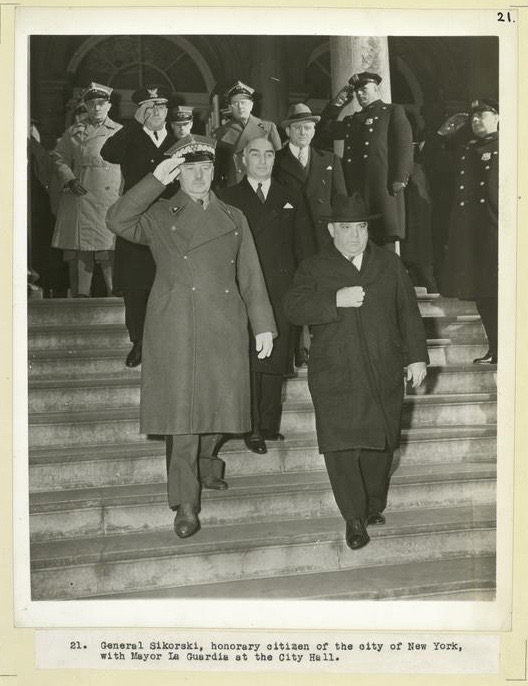
General Wladyslaw Sikorski (saluting) with Mayor Fiorello La Guardia (right) at New York City Hall, 1942

John Purroy Mitchel, New York’s boy mayor, died 100 years ago this coming July. Mitchel was in office from 1914-17, thus overlapping almost entirely with the early years of the Great War. Mitchel was a proponent of Preparedness and as such became a natural ally of Theodore Roosevelt, Leonard Wood, and others advocating for American readiness to join the fight. After Mitchel left office he joined the Army Air Service and was killed in Lake Charles, Louisiana when he fell out of an airplane during a training exercise in July 1918. Friends dedicated a memorial to him in Central Park near 90th Street and Fifth Avenue in November 1928. For years, especially throughout the 1930s and 1940s, the Mitchel monument was a focal point of Memorial Day commemorations in New York City. One regular attendee was Fiorello La Guardia, who over the course of his tenure in office from 1934-45 observed at least nine of twelve Memorial Days at the monument to his mayoral forerunner, Fusion Party associate, and fellow World War 1 aviator.

New York Times, May 31, 1934: La Guardia is second from the right.

The photograph above shows La Guardia at the Mitchel monument on Memorial Day 1934. This would have been just over a year into the FDR Administration and with the Great Depression in full effect. This was also La Guardia’s first Memorial Day as mayor. There were still Civil War veterans marching in New York City’s Memorial Day parades in these years, about 25 this year. In the years after this their numbers dwindled into the single digits.

New York Times, May 31, 1944: La Guardia was pressing for full Axis surrender in the tense days before the Normandy Invasion.

The headline here in which La Guardia advocates for an “aviator’s peace” comes from the 1944 Memorial Day observation. While obviously the public did not know the exact day that the offensive to liberate France would begin, Memorial Day 1944 took place one week before D-Day. Thus we see La Guardia pressing for all out victory. Poignantly, 1944 also happened to be the first year that a Civil War veterans did not participate in Manhattan’s Memorial Day observation. Brooklyn and Queens each had one G.A.R. veteran in the ranks. Spanish-American War veterans, doughboys from the First World War now well into middle age, and active duty servicepersons including WACS, WAVES, and SPARS were all represented.

La Guardia was on hand again at the Mitchel memorial on Memorial Day 1945. He had gotten his “aviator’s peace,” at least in Europe. By Memorial Day 1945 V-E Day had passed and everyone was waiting anxiously to see what would happen in the Pacific.

(top image/NYPL)

A little Sunday reading

17 Sunday Mar 2019

Posted by Keith Muchowski in 23rd (106th) New York State National Guard Regiment, Fiorello La Guardia, Memory, Monuments and Statuary, New York City, Robert Moses

≈ Comments Off on A little Sunday reading

The New York City Mayor’s Committee on Permanent War Memorial’s official rendering for the unrealized enduring monument.

Here is a little something to read over the remainder of one’s weekend: my piece at Roads to the Great War about the temporary Victory Arch built in Madison Square in the winter of 1919. This is the article I was alluding to last week when I posted the pictures of the return of the 27th Division. I have always found it interesting the way civic leaders built such ornate edifices knowing they would be used hard for a few short months or years and then torn down. Almost all of the facilities built for the 1893 World’s Columbian Exposition in Chicago for instance, were temporary assemblies built not of marble or granite but timber and plaster of Paris. The White City in all its majesty appeared poised to stand for centuries when in reality its wood and plaster would not have withstood more than one or two Chicago winters. At least we have the stories and photographs to remember them by.

Enjoy your Sunday.

(image/New York State Library, Manuscripts and Special Collections)


Sunday morning coffee

24 Sunday Feb 2019

Posted by Keith Muchowski in Franklin Delano Roosevelt, New York City

≈ Comments Off on Sunday morning coffee

A young girl’s poem written in winter 1939 in anticipation of the coming spring and opening of the World’s Fair. The poem appeared in the 21 February 1939 edition of the Brooklyn Daily Eagle.

I hope everyone’s weekend has been good. Yesterday afternoon I tried to see They Shall Not Grow Old at a theater in Brooklyn but alas it was sold out. The man at the counter told me today’s one showing would also likely fill up, so I bought a ticket for this afternoon’s showing. I’ve spent the morning continuing with this week’s lesson plans. Among other things I intend to focus much on the 1939-40 World’s Fair in Queens. Basically it was two fairs, one in 1939 focusing on an optimistic “world of tomorrow” and another in 1940 that played out after the German and Soviet invasion of Poland and onset of the Second World War. The Brooklyn Daily Eagle dedicated a great deal of space to the fair in the lead-up to its opening on 30 April 1939 when President Roosevelt gave the dedication address. That coverage included things like this poem we read above.

Unscaffolding the Trylon and Perisphere

23 Saturday Feb 2019

Posted by Keith Muchowski in Federal Hall National Memorial, Franklin Delano Roosevelt, George Washington, New York City, Robert Moses

≈ Comments Off on Unscaffolding the Trylon and Perisphere

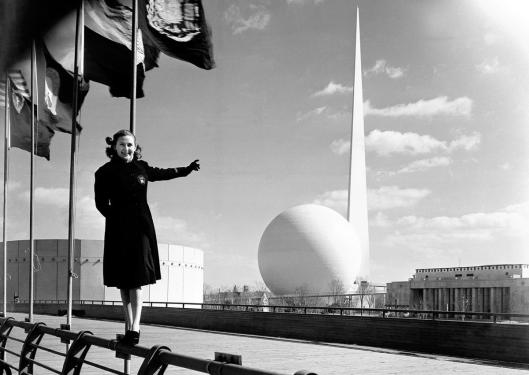
A 1939 World’s Fair guide shows off the Trylon and Perisphere after the scaffolding came down, February 22, 1939

I don’t have much to add but wanted to share this photograph I discovered this morning while preparing for next week’s classes. Here we see a young woman standing before the Trylon and Perisphere after the remainder of their scaffolding was taken off on 22 February 1939. The World’s Fair coincided with the sesquicentennial of George Washington’s First Inaugural; President Roosevelt opened the Fair on 30 April, 150 years to the day after Washington took the oath of office in Lower Manhattan at Federal Hall. In winter 1939 Robert Moses’s crews were working long shifts to prepare the fair grounds in Queens in time to ensure the event opened on time come spring. Presumably they took the scaffolding off on Washington’s Birthday intentionally to promote the upcoming fair and emphasize the tie-in to the first president.

(image/Associated Press)

Sunday morning coffee

10 Sunday Feb 2019

Posted by Keith Muchowski in Herbert Hoover, New York City

≈ Comments Off on Sunday morning coffee

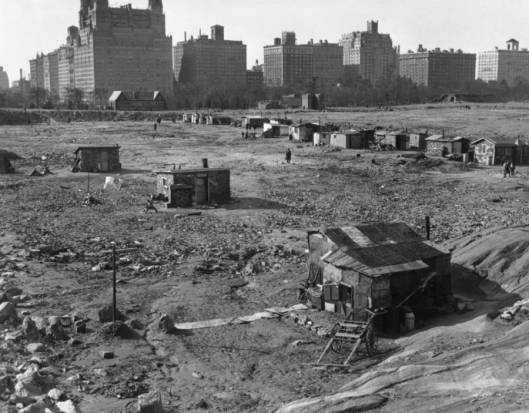
Depression Era Hooverville in New York’s Central Park, circa early 1930s

Good morning, all. I have spent a good portion of the morning putting together this week’s presentations for our class on the life, times, and legacy of Robert Moses. I have learned a tremendous amount already this year. I thought I would share this incredible image I intend to show tomorrow in class. This is a so-called Hooverville in Central Park during the Great Depression. These squatter camps were ubiquitous across the United States and were so named in derisive “tribute” to President Herbert Hoover, who Americans unfairly blamed for the onset of the financial crisis.

I am often taken aback looking at old photographs of such cities as New York, London and Paris and seeing how dirty and chaotic they were not so very long ago. Yes, this was the era of the Great Depression and a Hooverville to boot; still, the early twentieth century cities were not the gleaming metroplises we know today. When I moved to New York City twenty-two years ago in 1997 the Bowery still had the last of its flop houses. Today those are gone and in their place are boutiques selling expensive retail goods.

(image/skyscrapercity.com)

The United War Work Campaign of November 1918

18 Sunday Nov 2018

Posted by Keith Muchowski in New York City, Theodore Roosevelt Jr (President)

≈ Comments Off on The United War Work Campaign of November 1918

The YMCA was one of the seven organizations involved in The United War Work Campaign in November 1918.

The Armistice of November 11, 1918 coincided with the start of The United War Work Campaign, a national initiative to raise a staggering $170,500,000 in 1918 dollars to aid the American Expeditionary Forces. The project began back in the summer and was, to put it mildly, a massive undertaking; in addition to raising that extraordinary sum, organizers hoped to marshal one million Victory Boys between the ages of 12 and 20 to feed, entertain, and provide educational instruction to doughboys. The United War Work Campaign was the effort of seven agencies: the YMCA, the YWCA, the National Catholic War Council of the Knights of Columbus, the Jewish Welfare Board, Salvation Army, American Library Association, and the War Camp Community Community Service. Clearly the intent was to involve as many constituencies as possible across religious and other lines. The chairman of the initiative in New York City was none other than John D. Rockefeller  Jr., who spoke at various functions around the city in early October drumming up interest. Another prominent New Yorker involved in the campaign was Theodore Roosevelt, who spoke at the Manhattan Opera House on November 1 for that same purpose. Colonel Roosevelt implored his audience that while the kaiser was on his heels there was still much work to be done in winning the war.

As mentioned above the campaign began on November 11 just as news of the Armistice was coming in. For much of the the next week while the celebrated Americans still went out and participated in charity gold tournaments, bake sales, benefit concerts, and so many others things besides. When it became obvious that the funding goal would be a bit short come the November 18 deadline organizers pushed the date back, first to the 20th and then to the 25th. This had the desired results. In those two weeks just after the German surrender Americans donated $203,179,038 to the campaign.

(poster/Library of Congress, designed by Neysa McMein)


On the cusp of the Armistice

10 Saturday Nov 2018

Posted by Keith Muchowski in Great War centennial, Incorporating New York (book manuscript project), New York City

≈ Comments Off on On the cusp of the Armistice

I hope everyone’s autumn has been good. These first ten days of November have been busy, thus the lack of posts here.

Readers may recall when I posted just after Memorial Day that I sent a proposal to an academic press regarding “Incorporating New York,” my book project about Civil War Era New City. I heard back earlier this week from the editor asking for the full manuscript. I sent it in this past Thursday. We shall see what happens. I have also been putting the final touches on a talk and interview I will be doing tomorrow for Armistice Day at All Souls Church in Manhattan. It all came about quickly when I got asked to do it a few weeks back. There is a nice bit of serendipity in the thing because All Souls plays a significant role in my history of Civil War Era New York. As Kramer would say, my worlds are colliding. The concert begins at 5:00 pm with my talk and interview an hour before that.

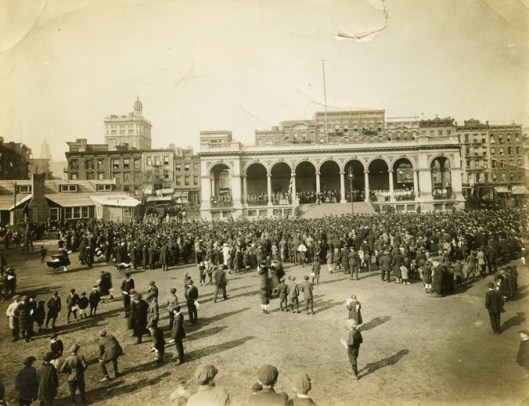
Seward Park, Canal and Essex Streets, November 10, 1918

The image we see above was taken in Seward Park on the Lower East Side 100 years ago today. It is the dedication of the J.W.B. Canteen Hut sponsored by the Jewish Welfare Board. Attorney, reformer, and American Ambassador to the Ottoman Empire in the early years of the Wilson Administration Abram L. Elkus oversaw the proceedings. Present also was banker and philanthropist Jacob H. Schiff. Organizers knew that the war was about to end, though they certainly were not aware that it would be the following day. Schiff told the crowd we see here “Now that the war is ending happily for everybody . . . war work organizations will for many months need our support more than ever, our soldiers and sailors will demand more attention when the grim business of battle is over and the guns have ceased. When the boys come back we want them to feel that we did what we could for them.”

The J.W.B. Canteen did its part; in just the next two months alone the site served over 8000 meals to returning servicemen. The Seward Park canteen continued its work for much of 1919 as men continued coming from Europe en route home.

(image/Records of the National Jewish Welfare Board, Center for Jewish History)

Pennsylvania Station, 1910-1963

28 Sunday Oct 2018

Posted by Keith Muchowski in John Purroy Mitchel, New York City, Theodore Roosevelt Jr (President)

≈ Comments Off on Pennsylvania Station, 1910-1963

They began tearing down the original New York Pennsylvania Station fifty-five years ago today. It was a mammoth undertaking that would go on for three years into 1966. When built in 1910 everyone assumed it would stand on the west side of Manhattan for the ages, and yet it lasted just barely more than half a century. In some ways it lasted less than half a century: a major renovation in 1958 had already obliterated much of Charles McKim’s original design. Penn Station’s destruction was a tragedy from which we have never fully recovered and yet its demolition made sense in a way. First of all it was private property, built by the Pennsylvania Railroad Company to tie Manhattan to the continental United States. Before Penn Station opened in 1910 passengers traveling eastward by rail had to disembark in New Jersey and ferry across the Hudson River. It was a perilous undertaking; the ferry boats zigzagged their way between other ferries, around tug boats, and dangerously close to the huge ocean liners that came into New York Harbor daily.

The first act in the demolition of the original New York Pennsylvania Station on October 28, 1963 was the removal this eagle. It was one of twenty-two granite eagles that adorned the structure.

The Pennsylvania Railroad Company, like all the major railroad companies, was hugely powerful and profitable. It would have been difficult to imagine when the station opened just a decade into the twentieth century that it and most other railroads would be rendered obsolete by the 1960s. By this time however, the highway were largely built. Trucks and automobiles, not locomotives, now moved people and products. For longer travel, why spend five days on a train when an airplane could get you there in five hours? Like Kodak after the invention of digital photography, the railroad company’s demise happened swiftly.

New York City and the nation were fortunate Pennsylvania Station opened when it did. It proved hugely important to the Allied war effort, moving men and materiel across the country. Interpreted a certain way it can be seen as a triumvirate of public works projects done in time for the war: Pennsylvania Station in 1910, Grand Central in 1913, and the Panama Canal in 1914 just as the Guns of August began going off. On one day in June 1918 alone over 4,000 men were inducted into the U.S. Army and shipped off from Pennsylvania Station to training camps in various locales. Just a few weeks after his tragic plane accident John Purroy Mitchel’s remains were brought back from Louisiana on a train that pulled into Pennsylvania Station. Theodore Roosevelt, his health rapidly declining in that same summer of 1918, traveled to and from Pennsylvania Station on various trips out West to advocate for the American war effort. I could go on but one gets the idea.

This eagle is one of four from the original New York Penn Station that was moved to Philadelphia’s Market Street Bridge after the destruction of the iconic Manhattan train station. Philadelphia Penn Station is in the background.

Fourteen of the twenty-two eagles that once adorned New York Pennsylvania Station are still known to exist. A few remain in New York and others got sent elsewhere. Four of them decorate the Market Street Bridge in Philadelphia, which is where I took the photo one sees directly above a few summers ago.

(top image/New York Times)


The 1902 Rochambeau Delegation

13 Saturday Oct 2018

Posted by Keith Muchowski in Antietam, General Grant National Memorial (NPS), Henry Cabot Lodge, Horace Porter, Monuments and Statuary, New York City, Spanish-American War, Theodore Roosevelt Jr (President), Ulysses S. Grant (General and President), Washington, D.C., William McKinley

≈ Comments Off on The 1902 Rochambeau Delegation

One of the most famous moments in American diplomatic history was the Viviani-Joffre Mission to the United States in April-May 1917. This was when the French politician René Viviani and Field Marshal Joseph Joffre, among others, came to America to discuss military and diplomatic details after the United States declared war on Germany that spring. Viviani, Joffre and officials from other Allied governments toured the entire United States for several weeks to meet the American people, many of whom, especially in the South and Midwest, were suspicious of European leaders’ intentions. Fifteen years earlier there was a lesser known diplomatic mission: the 1902 Rochambeau Delegation.

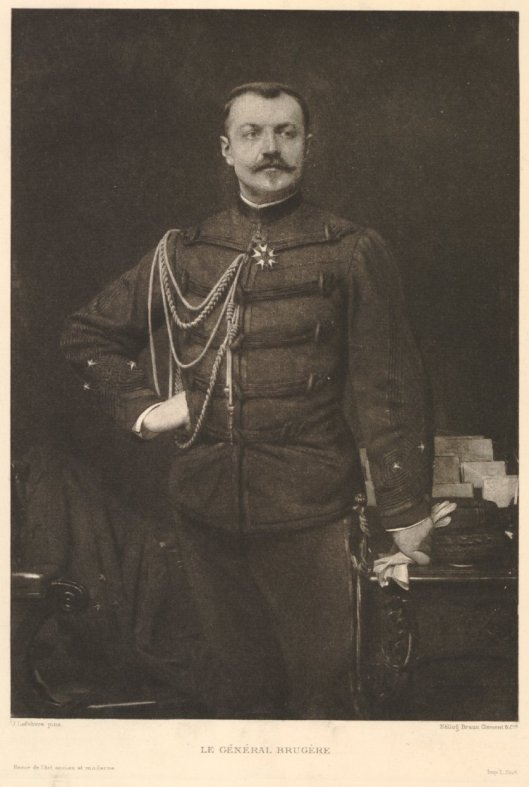
The British Museum acquired this painting of General Joseph Brugère in 1902, the same year this French military leader led a goodwill tour to the United States solidifying Franco-American relations. Many of the individuals involved would go on tour serve in the Great War.

The event was so-called because the central moment of the mission was the May 24, 1902 dedication in Washington D.C.’s Lafayette Park of a memorial to Jean-Baptiste-Donatien de Vimeur, Comte de Rochambeau, the French military leader who had fought with George Washington during the American Revolution. The early 1900s were an interesting moment in diplomatic relations. The United States had recently won the Spanish-American War and was becoming a true world power; the brutal Philippine Insurrection, the final phase in the Spanish-American War, ended on June 2, 1902. One month earlier, on May 6, General Joseph Brugère boarded Vice Admiral Ernest François Fournier’s Gaulois in Toulon and sailed for Washington. One of the driving forces of this mission was Horace Porter, the United States ambassador to France.

Porter had served under Ulysses S. Grant during the American Civil War and went on to serve in various capacities over the next several decades. He was the driving force to fund and build Grant’s Tomb, which finally came to fruition on April 27, 1897 when William McKinley dedicated his predecessor’s final resting place. Several weeks after that dedication Porter was off to Paris, where he would be President McKinley’s representative to France. Civil War veterans were still very much running American life; the president himself had been in the Battle of Antietam; his Secretary of State, John Hay, had been one of Lincoln’s personal secretaries; and right then in 1902 Secretary of War Elihu Root was putting Ambassador Porter in for the Congressional Medial of Honor for his actions at the Battle of Chickamauga.

Brugère, Fournier and a sizable contingent visited George Washington’s resting place at Mount Vernon on the afternoon of May 22 and were hosted that evening by Theodore Roosevelt at the White House. The big event came two days later when Ambassador Porter, President Roosevelt, General Brugère, Vice Admiral Fournier, scores of dignitaries, and thousands of others turned out at Lafayette Square Park for the Rochambeau statue dedication. Henry Cabot Lodge was the featured speaker. It was all a huge success.

A few days later the Brugère/Fournier contingent would be fêted across New York City. Among other things they got a look at the Brooklyn Navy Yard, dined with mayor Seth Low, and received a tour of Columbia University from college president Nicholas Murray Butler. Columbia is conveniently located next to Grant’s Tomb and on May 28 Ambassador Porter took Brugère, Fournier and the rest of the French delegates to the mausoleum that he had done so much to build. At the time the general public could not walk down to the sarcophagi as one can today. As leader of the Grant Monument Association however Porter was naturally able to take the Rochambeau delegates down the marble steps, where they all stood in hushed stillness for ten minutes. (At the time it was still only Ulysses; Julia passed away seven months later in December 1902.) After the visit, the delegation walked north of the tomb to the Claremont Inn, where several dozen people had a sumptuous meal.

(image/The British Museum)


← Older posts
Newer posts →

Enter your email address to subscribe to this blog and receive notifications of new posts by email.

Join 258 other subscribers

Categories

Archives

  • November 2023 (1)
  • October 2023 (3)
  • September 2023 (3)
  • August 2023 (4)
  • July 2023 (7)
  • June 2023 (10)
  • May 2023 (8)
  • April 2023 (6)
  • March 2023 (5)
  • February 2023 (4)
  • January 2023 (4)
  • December 2022 (4)
  • November 2022 (8)
  • October 2022 (2)
  • September 2022 (4)
  • June 2022 (1)
  • May 2022 (1)
  • April 2022 (13)
  • January 2022 (1)
  • December 2021 (2)
  • November 2021 (1)
  • October 2021 (3)
  • September 2021 (3)
  • August 2021 (5)
  • July 2021 (1)
  • June 2021 (1)
  • May 2021 (4)
  • April 2021 (3)
  • March 2021 (4)
  • February 2021 (7)
  • January 2021 (4)
  • December 2020 (4)
  • November 2020 (3)
  • October 2020 (4)
  • September 2020 (7)
  • August 2020 (5)
  • July 2020 (7)
  • June 2020 (11)
  • May 2020 (7)
  • April 2020 (9)
  • March 2020 (9)
  • February 2020 (7)
  • January 2020 (6)
  • December 2019 (7)
  • November 2019 (9)
  • October 2019 (4)
  • September 2019 (6)
  • August 2019 (10)
  • July 2019 (8)
  • June 2019 (6)
  • May 2019 (9)
  • April 2019 (8)
  • March 2019 (6)
  • February 2019 (8)
  • January 2019 (5)
  • December 2018 (10)
  • November 2018 (6)
  • October 2018 (9)
  • September 2018 (11)
  • August 2018 (11)
  • July 2018 (17)
  • June 2018 (10)
  • May 2018 (8)
  • April 2018 (9)
  • March 2018 (8)
  • February 2018 (5)
  • January 2018 (7)
  • December 2017 (11)
  • November 2017 (8)
  • October 2017 (9)
  • September 2017 (11)
  • August 2017 (12)
  • July 2017 (14)
  • June 2017 (18)
  • May 2017 (11)
  • April 2017 (10)
  • March 2017 (9)
  • February 2017 (11)
  • January 2017 (14)
  • December 2016 (7)
  • November 2016 (8)
  • October 2016 (8)
  • September 2016 (9)
  • August 2016 (6)
  • July 2016 (12)
  • June 2016 (8)
  • May 2016 (9)
  • April 2016 (6)
  • March 2016 (12)
  • February 2016 (10)
  • January 2016 (9)
  • December 2015 (9)
  • November 2015 (11)
  • October 2015 (8)
  • September 2015 (9)
  • August 2015 (13)
  • July 2015 (14)
  • June 2015 (11)
  • May 2015 (11)
  • April 2015 (18)
  • March 2015 (10)
  • February 2015 (8)
  • January 2015 (8)
  • December 2014 (12)
  • November 2014 (13)
  • October 2014 (16)
  • September 2014 (11)
  • August 2014 (16)
  • July 2014 (12)
  • June 2014 (13)
  • May 2014 (10)
  • April 2014 (10)
  • March 2014 (11)
  • February 2014 (12)
  • January 2014 (10)
  • December 2013 (11)
  • November 2013 (14)
  • October 2013 (14)
  • September 2013 (14)
  • August 2013 (13)
  • July 2013 (17)
  • June 2013 (9)
  • May 2013 (13)
  • April 2013 (13)
  • March 2013 (16)
  • February 2013 (15)
  • January 2013 (15)
  • December 2012 (18)
  • November 2012 (18)
  • October 2012 (21)
  • September 2012 (14)
  • August 2012 (16)
  • July 2012 (21)
  • June 2012 (22)
  • May 2012 (24)
  • April 2012 (20)
  • March 2012 (23)
  • February 2012 (22)
  • January 2012 (15)
  • December 2011 (23)
  • November 2011 (22)
  • October 2011 (23)
  • September 2011 (18)
  • August 2011 (19)
  • July 2011 (20)
  • June 2011 (29)
  • May 2011 (25)
  • April 2011 (18)
  • March 2011 (21)
  • February 2011 (11)

Meta

  • Create account
  • Log in
  • Entries feed
  • Comments feed
  • WordPress.com
Creative Commons License
This work is licensed under a Creative Commons Attribution-NonCommercial-ShareAlike 4.0 International License.

Enter your email address to subscribe to this blog and receive notifications of new posts by email.

Join 258 other subscribers

Categories

Archives

  • November 2023 (1)
  • October 2023 (3)
  • September 2023 (3)
  • August 2023 (4)
  • July 2023 (7)
  • June 2023 (10)
  • May 2023 (8)
  • April 2023 (6)
  • March 2023 (5)
  • February 2023 (4)
  • January 2023 (4)
  • December 2022 (4)
  • November 2022 (8)
  • October 2022 (2)
  • September 2022 (4)
  • June 2022 (1)
  • May 2022 (1)
  • April 2022 (13)
  • January 2022 (1)
  • December 2021 (2)
  • November 2021 (1)
  • October 2021 (3)
  • September 2021 (3)
  • August 2021 (5)
  • July 2021 (1)
  • June 2021 (1)
  • May 2021 (4)
  • April 2021 (3)
  • March 2021 (4)
  • February 2021 (7)
  • January 2021 (4)
  • December 2020 (4)
  • November 2020 (3)
  • October 2020 (4)
  • September 2020 (7)
  • August 2020 (5)
  • July 2020 (7)
  • June 2020 (11)
  • May 2020 (7)
  • April 2020 (9)
  • March 2020 (9)
  • February 2020 (7)
  • January 2020 (6)
  • December 2019 (7)
  • November 2019 (9)
  • October 2019 (4)
  • September 2019 (6)
  • August 2019 (10)
  • July 2019 (8)
  • June 2019 (6)
  • May 2019 (9)
  • April 2019 (8)
  • March 2019 (6)
  • February 2019 (8)
  • January 2019 (5)
  • December 2018 (10)
  • November 2018 (6)
  • October 2018 (9)
  • September 2018 (11)
  • August 2018 (11)
  • July 2018 (17)
  • June 2018 (10)
  • May 2018 (8)
  • April 2018 (9)
  • March 2018 (8)
  • February 2018 (5)
  • January 2018 (7)
  • December 2017 (11)
  • November 2017 (8)
  • October 2017 (9)
  • September 2017 (11)
  • August 2017 (12)
  • July 2017 (14)
  • June 2017 (18)
  • May 2017 (11)
  • April 2017 (10)
  • March 2017 (9)
  • February 2017 (11)
  • January 2017 (14)
  • December 2016 (7)
  • November 2016 (8)
  • October 2016 (8)
  • September 2016 (9)
  • August 2016 (6)
  • July 2016 (12)
  • June 2016 (8)
  • May 2016 (9)
  • April 2016 (6)
  • March 2016 (12)
  • February 2016 (10)
  • January 2016 (9)
  • December 2015 (9)
  • November 2015 (11)
  • October 2015 (8)
  • September 2015 (9)
  • August 2015 (13)
  • July 2015 (14)
  • June 2015 (11)
  • May 2015 (11)
  • April 2015 (18)
  • March 2015 (10)
  • February 2015 (8)
  • January 2015 (8)
  • December 2014 (12)
  • November 2014 (13)
  • October 2014 (16)
  • September 2014 (11)
  • August 2014 (16)
  • July 2014 (12)
  • June 2014 (13)
  • May 2014 (10)
  • April 2014 (10)
  • March 2014 (11)
  • February 2014 (12)
  • January 2014 (10)
  • December 2013 (11)
  • November 2013 (14)
  • October 2013 (14)
  • September 2013 (14)
  • August 2013 (13)
  • July 2013 (17)
  • June 2013 (9)
  • May 2013 (13)
  • April 2013 (13)
  • March 2013 (16)
  • February 2013 (15)
  • January 2013 (15)
  • December 2012 (18)
  • November 2012 (18)
  • October 2012 (21)
  • September 2012 (14)
  • August 2012 (16)
  • July 2012 (21)
  • June 2012 (22)
  • May 2012 (24)
  • April 2012 (20)
  • March 2012 (23)
  • February 2012 (22)
  • January 2012 (15)
  • December 2011 (23)
  • November 2011 (22)
  • October 2011 (23)
  • September 2011 (18)
  • August 2011 (19)
  • July 2011 (20)
  • June 2011 (29)
  • May 2011 (25)
  • April 2011 (18)
  • March 2011 (21)
  • February 2011 (11)

Meta

  • Create account
  • Log in
  • Entries feed
  • Comments feed
  • WordPress.com
Creative Commons License
This work is licensed under a Creative Commons Attribution-NonCommercial-ShareAlike 4.0 International License.

Enter your email address to subscribe to this blog and receive notifications of new posts by email.

Join 258 other subscribers

Categories

Archives

  • November 2023 (1)
  • October 2023 (3)
  • September 2023 (3)
  • August 2023 (4)
  • July 2023 (7)
  • June 2023 (10)
  • May 2023 (8)
  • April 2023 (6)
  • March 2023 (5)
  • February 2023 (4)
  • January 2023 (4)
  • December 2022 (4)
  • November 2022 (8)
  • October 2022 (2)
  • September 2022 (4)
  • June 2022 (1)
  • May 2022 (1)
  • April 2022 (13)
  • January 2022 (1)
  • December 2021 (2)
  • November 2021 (1)
  • October 2021 (3)
  • September 2021 (3)
  • August 2021 (5)
  • July 2021 (1)
  • June 2021 (1)
  • May 2021 (4)
  • April 2021 (3)
  • March 2021 (4)
  • February 2021 (7)
  • January 2021 (4)
  • December 2020 (4)
  • November 2020 (3)
  • October 2020 (4)
  • September 2020 (7)
  • August 2020 (5)
  • July 2020 (7)
  • June 2020 (11)
  • May 2020 (7)
  • April 2020 (9)
  • March 2020 (9)
  • February 2020 (7)
  • January 2020 (6)
  • December 2019 (7)
  • November 2019 (9)
  • October 2019 (4)
  • September 2019 (6)
  • August 2019 (10)
  • July 2019 (8)
  • June 2019 (6)
  • May 2019 (9)
  • April 2019 (8)
  • March 2019 (6)
  • February 2019 (8)
  • January 2019 (5)
  • December 2018 (10)
  • November 2018 (6)
  • October 2018 (9)
  • September 2018 (11)
  • August 2018 (11)
  • July 2018 (17)
  • June 2018 (10)
  • May 2018 (8)
  • April 2018 (9)
  • March 2018 (8)
  • February 2018 (5)
  • January 2018 (7)
  • December 2017 (11)
  • November 2017 (8)
  • October 2017 (9)
  • September 2017 (11)
  • August 2017 (12)
  • July 2017 (14)
  • June 2017 (18)
  • May 2017 (11)
  • April 2017 (10)
  • March 2017 (9)
  • February 2017 (11)
  • January 2017 (14)
  • December 2016 (7)
  • November 2016 (8)
  • October 2016 (8)
  • September 2016 (9)
  • August 2016 (6)
  • July 2016 (12)
  • June 2016 (8)
  • May 2016 (9)
  • April 2016 (6)
  • March 2016 (12)
  • February 2016 (10)
  • January 2016 (9)
  • December 2015 (9)
  • November 2015 (11)
  • October 2015 (8)
  • September 2015 (9)
  • August 2015 (13)
  • July 2015 (14)
  • June 2015 (11)
  • May 2015 (11)
  • April 2015 (18)
  • March 2015 (10)
  • February 2015 (8)
  • January 2015 (8)
  • December 2014 (12)
  • November 2014 (13)
  • October 2014 (16)
  • September 2014 (11)
  • August 2014 (16)
  • July 2014 (12)
  • June 2014 (13)
  • May 2014 (10)
  • April 2014 (10)
  • March 2014 (11)
  • February 2014 (12)
  • January 2014 (10)
  • December 2013 (11)
  • November 2013 (14)
  • October 2013 (14)
  • September 2013 (14)
  • August 2013 (13)
  • July 2013 (17)
  • June 2013 (9)
  • May 2013 (13)
  • April 2013 (13)
  • March 2013 (16)
  • February 2013 (15)
  • January 2013 (15)
  • December 2012 (18)
  • November 2012 (18)
  • October 2012 (21)
  • September 2012 (14)
  • August 2012 (16)
  • July 2012 (21)
  • June 2012 (22)
  • May 2012 (24)
  • April 2012 (20)
  • March 2012 (23)
  • February 2012 (22)
  • January 2012 (15)
  • December 2011 (23)
  • November 2011 (22)
  • October 2011 (23)
  • September 2011 (18)
  • August 2011 (19)
  • July 2011 (20)
  • June 2011 (29)
  • May 2011 (25)
  • April 2011 (18)
  • March 2011 (21)
  • February 2011 (11)

Meta

  • Create account
  • Log in
  • Entries feed
  • Comments feed
  • WordPress.com
Creative Commons License
This work is licensed under a Creative Commons Attribution-NonCommercial-ShareAlike 4.0 International License.

Blog at WordPress.com.

  • Subscribe Subscribed
    • The Strawfoot
    • Join 229 other subscribers
    • Already have a WordPress.com account? Log in now.
    • The Strawfoot
    • Subscribe Subscribed
    • Sign up
    • Log in
    • Report this content
    • View site in Reader
    • Manage subscriptions
    • Collapse this bar
 

Loading Comments...