• About

The Strawfoot

~ a New Yorker's American History blog

The Strawfoot

Category Archives: Writing

Hemingway and Roosevelt: cub reporters

27 Friday Mar 2015

Posted by Keith Muchowski in Baseball, Theodore Roosevelt Jr (President), Writing

≈ Comments Off on Hemingway and Roosevelt: cub reporters

Theodore Roosevelt officially began his journalism career with the Kansas City Star on October 1, 1917. With typical Rooseveltian vigor however, he wrote a few stories in the weeks leading up to his official start date; Roosevelt was typing away at a desk at Star headquarters on Saturday September 22nd. He used his platform at the newspaper primarily as a vehicle to excoriate Woodrow Wilson and his Great War policies. After that brief September stay Roosevelt returned to Oyster Bay, where he dutifully filed dispatches until his death in January 1919. Roosevelt’s collected output for the Star, published in book form in 1921, runs 295 pages.

A few weeks after Roosevelt’s debut with the Star another cub reporter joined the staff: Ernest Hemingway. Hemingway began on October 18th, less than three weeks after Roosevelt. For the next six months he wrote the types of stories—fires, accidents, petty crime—to which young reporters are invariably assigned. He was only a teenager. Hemingway always maintained that the Star’s daily grind was the best thing that happened to his writing career.

Grover Cleveland Alexander was the ninth inductee and fourth pitcher inducted into the Baseball Hall of Fame

Grover Cleveland Alexander was the ninth honoree, and fourth pitcher, inducted into the Baseball Hall of Fame. He entered Cooperstown in 1938.

It had its moments. In March 1918 young Hemingway met pitching great Grover Cleveland Alexander at Kansas City’s Union Station. The right hander was en route to California to join the Cubs in spring training. Hemingway dutifully filed a report. After all he had a scoop on his hands: The pitcher wanted a $10,000 signing bonus. The Cubs saw things differently and the two sides were at an impasse. That Alexander was even thinking of going to California to join the team was a story.

Alexander only pitched three games for Chicago that season, though he did go 2-1 with a 1.73 ERA. Hemingway was not long for the Star. He left the newspaper a month later. By mid-summer both were in Europe helping the Allied cause. Hemingway was driving an ambulance in Italy and “Old Pete” Alexander—now in his thirties—was wearing an A.E.F. uniform in France.

The war was hard on Alexander. He already suffered from epilepsy and his military experiences exacerbated an already growing drinking problem. He almost certainly suffered from post-traumatic stress disorder. Still, when he returned Alexander had plenty of baseball left in him. In 1926 he led the St. Louis Cardinals to a World Series title over Babe Ruth’s Yankees. Alexander went 2-0 (two complete games) and had a game seven save to seal the deal. He pitches 20 1/3 innings and had a 1.33 era. Babe Ruth ended the series when, with Alexander on the mound, he unsuccessfully tried to steal second base.

That same year Ernest Hemingway published The Sun Also Rises, his story of the disilussioned Lost Generation living in Paris after the war. Future decades proved difficulty for both men but the Twenties were good years. Alexander was a twenty-one game winner at the age of forty in 1927. The aging star posted winning records in 1928 and again the following year. Hemingway’s career was now in full swing. He published A Farewell to Arms in 1929.

(image/Library of Congress)

Erik Larson at Roosevelt House

16 Monday Mar 2015

Posted by Keith Muchowski in Lusitania, Writing

≈ 2 Comments

IMG_2050I just got back from Roosevelt House on East 65th Street, where Erik Larson spoke about his just-released book Dead Wake: The Last Crossing of the Lusitania. I have not yet read the book, though I intend to before the 100th anniversary of the ship’s sinking on May 7. I always found it strange that we pay so much attention to the Lusitania and yet neglect other maritime incidents from the war. This is so true that many believe the sinking of the Cunard ship was the direct cause of American involvement in the war. The Americans of course did not come in for another twenty-three months, and even then U.S. troops were slow to mobilize. As Larson pointed out, many ships went down under similar circumstances and are all but forgotten today.

Larson was quite the engaging speaker, telling funny anecdotes but never losing control of the narrative or forgetting the seriousness of the topic. He is one of those writers who has managed to achieve independence and give all his time to writing and researching. That is no mean feat. As befits the topic, he went to many places to find the story. The Hoover Institute and elsewhere here in the United States, and also an extended stay in Europe. He told the audience that he made Paris his base and took research trips to London, Cambridge, Liverpool and Denmark. In that last place he saw the remnants of U-20, the u-boat that sank the Lusitania and grounded a year later on the Danish coast. He described the remnants as looking anticlimactically like “a used refrigerator.”

Material culture seems to be a muse for Larson; he described the poignancy of an archivist bringing out a plank of wood and explaining that it had once been part of the ship. The archivist told him it had washed ashore and was found next to a victim of the sinking. This was the ah-ha moment when Larson realized he had a story to tell and that it wasn’t just about memorizing dates as he once had back in high school. There was worse, including photos taken in British morgues in the days just after the attack.

The subtitle describes the book’s contents. Larson explained that he did not cover too much of the diplomatic wrangling that went over the following months and years. I don’t know if that is good or bad–again, I have not read the book yet. But if he tells the story of this cataclysmic event as well as he described it tonight, he has added something to our understanding of this human tragedy.

The Lost Sketchbooks of Edward Shenton

12 Thursday Mar 2015

Posted by Keith Muchowski in Writing

≈ 2 Comments

Camp Meade, Maryland, where 21-year old Edward Shenton and the men in his company arrived on 4 July 1917

Camp Meade, Maryland, 1917: 21-year old Edward Shenton and the men in his company arrived here on July 4 of that year

When I got home from work late on Monday evening there in the mailbox was The Lost Sketchbooks: A Young Artist in the Great War. Its author, Rex Passion, sent it to me after seeing something I had written recently about John W. Thomason. I intend to write more in depth about Rex’s new book after I finish and fully absorb it. I have spent the past few days reading it on the subway during my daily commute. Rex has written the book around the drawings of Edward Shenton. Shenton, who had not heard of until Rex’s initial email, enlisted in the Pennsylvania National Guard in 1917 and served as an engineer in France. Like John W Thomason he was both soldier and artist. Their styles are similar, though I would say Shenton had a greater command of depth while Thomason better depicted motion. Both left a strong visual record of the war as they saw it, from the mundane to the horrific.

Shenton’s sketchbooks were tucked away in family closets and basements before being rediscovered by his descendants a few years ago. Thus began the project to tell Shenton’s story and bring his work to a larger audience. I hope his artwork finds the reception it deserves over the next few years during the centennial.

(image/Library of Congress)

The diary of an unknown poilu

26 Thursday Feb 2015

Posted by Keith Muchowski in Writing

≈ Comments Off on The diary of an unknown poilu

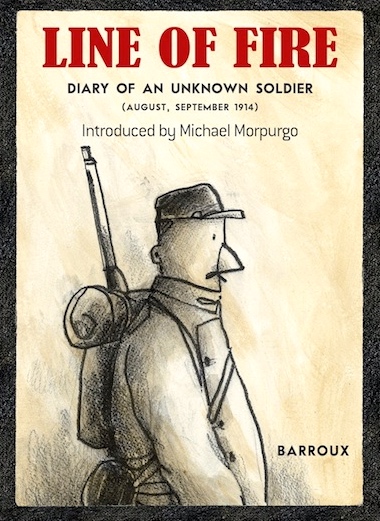
1391111287358Barroux is a French illustrator who has a number of children and adult graphic novels to his credit. A few years ago on a cold winter day like today he was walking from the Bastille to the Place de la République when he came across some workers emptying an apartment. The men invited him to take anything he wanted, and being a good artist he stopped to check out what if anything might be of interest. Incredibly there in the detritus were some almost-century-old notebooks written by a poilu during the Great War. The notebooks covered August-September 1914 and proved authentic. This French soldier was in the war for just two months but had an eventful series of episodes. As he describes it, he and his comrades had their “great send off” at 5:00 am on August 5. This was very early–the first week–in the war.

Frustratingly very little is known of this diarist. We know he was married and that he had a friend named Fernand, and that’s about it. The diary ends on September 12, 1914, but there is extraneous material and ephemera up through 1917. Why he stopped writing in 1914 and what became of him are mysteries that will never be solved.

Barroux illustrated the text with bold, dark sketchings that render the journal entries that much more poignant. He clearly did a great deal of work to capture a French society that is now long gone. The beaks drawn as noses offer just the right amount of absurdity to the tale. And of course the whole situation was absurd. How Europe went from peace to suicidal cataclysm in six short weeks is something we will never fully comprehend.

I hope more things like things come to light and during the centennial. It seems an opportune time for publishers to take advantage of the public interest. The London Guardian has some excerpts.

A brief remembrance of John W. Thomason

29 Thursday Jan 2015

Posted by Keith Muchowski in Historiography, Memory, Writing

≈ 1 Comment

I was out-and-about not long ago when I saw something that instantly seemed familiar. It was a sketch by John W. Thomason. The name may not ring many bells but Colonel Thomason was one of the great sketch artists of the early twentieth century. He also authored what many consider to be the authoritative account of American involvement in the First World War. That was why the image looked so familiar, because I had seen his work decades ago when I first read Fix Bayonets! Naturally I bought the small, framed image. It now hangs in my office.

IMG_1876


The image shows a young French woman walking past a trio of weary marines. It is hard to make out, but the wear and tear on her shabby clothes are testimony to how difficult things had become in Europe by 1918. The duck is something of a Thomason trademark. He included them frequently in his work. Growing up in Texas, he was quite the hunter and outdoorsmen. Thomason was born in Huntsville in 1893.

I had not read or thought about Thomason for more than two decades until seeing the framed sketch. Eager to know more, I checked out a few books from the library.  His grandfather was Major Tom Goree, who had served on James Longstreet’s staff. The Lost Cause is an obvious cultural reference point for Thomason. How could it not?

IMG_1878


The bare feet are a poignant touch. Thomason grew up surrounded by many men who had fought with Hood’s Texans.

IMG_1877


The editors of the sketchbook from which I took these photos were helpful in including the studies of the revolver, spurs, etc. Too often we think art “just happens,” not understanding how much thought and toil the artist invests in his work.

Thomason attended the Art Students League in 1914 and was a struggling artist for a few years. He found his calling as soldier/artist when the United States declared war on Germany in 1917. He was a marine with the 2nd Division and fought at Château-Thierry, Soissons, and the Meuse-Argonne.

IMG_1879


Thomason stayed in the military after the Armistice. He was a good friend of Hemingway’s, who called Thomason the best soldier he knew. In the ensuing decades Thomason short stories were much in demand in such places as the Saturday Evening Post. He even collaborated with Ted Roosevelt, who as an officer in the 1st Division had fought in many of the same battles as Thomason.

John W. Thomason died in 1944.

Rediscovering Geoffrey Ward

02 Tuesday Dec 2014

Posted by Keith Muchowski in Franklin Delano Roosevelt, Theodore Roosevelt Birthplace (NPS), Writing

≈ Comments Off on Rediscovering Geoffrey Ward

Springwood: the birthplace and home of Franklin Delano Roosevelt, Hyde Park, New York

Springwood: the birthplace and lifelong home of Franklin Delano Roosevelt, Hyde Park, New York

Now that a few months have gone by since its premier, visitors to the Theodore Roosevelt Birthplace have come to the house with a chance to absorb Ken Burns’s The Roosevelts: An Intimate History. Many folks, including yours truly, found it exhausting to take in two hours nightly for almost a week when it first showed. This past Saturday a couple visited who were in town for the long Thanksgiving Weekend. They had done Hyde Park on Friday and were now getting a dose of Theodore. That is becoming less unusual.

One of my favorite aspects of the Roosevelt documentary is that Geoffrey Ward received a considerable amount of facetime. I have always maintained that Ward plays the role of Larry David to Ken Burns’s Jerry Seinfeld. That is, Ward and Burns work together much in the way David and Seinfeld did. The public knows Seinfeld and Burns because they are the brand names. Behind the scenes though, Ward and David are very much equals to their more famous colleagues. Much of what you see on screen is theirs, even if the public doesn’t realize that.

I noted with pleasure yesterday that two of Ward’s long out-of-print titles are now back. My Kindle tells me that I am now 8% finished with Before the Trumpet: Young Franklin Roosevelt, 1882-1905 after having downloaded it last night from my local library. That’s good because after that there is A First-Class Temperament: The Emergence of Franklin Roosevelt, 1905-1928 waiting in the wings. These were just re-published in September, presumably to coincide with the PBS documentary’s release.

The “1928” brings FDR up to the election where he takes the New York governor’s mansion. I cannot help but wonder if Ward intended to write additional volumes that would bring the story up to 1945. If so, here is hoping he picks up the project. In the meantime, these two works will hopefully get the attention they deserve.


Sunday morning coffee

17 Sunday Aug 2014

Posted by Keith Muchowski in Uncategorized, Writing

≈ Comments Off on Sunday morning coffee

I was at a social gathering a few weeks ago when I mentioned that linguist Steven Pinker has a new style guide coming out in September. My story of Pinker and his thoughts on grammar fell flat, though that was my fault. Broaching the ins and outs of split infinitives on a Saturday night was probably not the way to go.

In a nutshell, Pinker tries to split the difference between prescriptivists and descripivists. Grammarians and editors who fall into the prescriptivist camp believe that there are rigid rules to follow in writing and that deviation should be avoided at all costs. Yes, language evolves, they allow, but change should be slow and cautious. Descriptivists take a more relaxed approach and believe that language is more flexible and fluid. Language, they argue, is whatever people say it is. It is more complicated than that, but that is the gist of it. You can read more about it yourself; the London Guardian published an excerpt on Friday.

Ironically people generally–and lazily–call Pinker a descriptivist, which I think misses the point. His whole argument is that good communication is the goal and that style is an important part of the process. Otherwise why would he waste his time writing a book on usage? The point is to communicate effectively without being a prig.

I am looking forward to Pinker’s book, which will be released in September. Writing well and clearly is important. I wrote about this a few years back. Like Pinker, I too fall in the middle area between presriptivist and descriptivist. Standards matter. There is nothing more frustrating than reading something–an email, text message, newspaper article, whatever–in which the meaning is vague or unclear. It cannot be a total free-for-all. At the same time, we should not become totally captive to the rules, as if they exist just for themselves. The idea is to understand the rules of style and grammar well enough to be able to break them occasionally when necessary.

When Audrey Met Alice: an author interview, part 2

29 Tuesday Apr 2014

Posted by Keith Muchowski in Interviews, Theodore Roosevelt Birthplace (NPS), Theodore Roosevelt Jr (President), Writing

≈ Comments Off on When Audrey Met Alice: an author interview, part 2

Here is the second installment of the interview with Rebecca Behrens, author of When Audrey Met Alice. In case you missed yesterday’s segment, this just-releaed novel tells the story of first daughter Audrey Rhodes, who discovers the secret diary of Theodore Roosevelt’s teenage daughter Alice in the floorboards of her White House bedroom.

The Strawfoot: And your novel’s protagonist, Audrey Lee Rhodes, Tell us about her and her family.

Rebecca Behrens: After Audrey’s mother becomes the first female president of the United States, her family relocates from the Twin Cities to Washington. Her father takes on the role of “First Gentleman” as well as maintaining her career in scientific research at a university. Unlike Alice Roosevelt, Audrey is an only child, and a few years younger than Alice was during her time at the White House. But Audrey still forms a real connection with Alice by reading the diary entries—their emotional experiences of living in the White House and being the children of important politicians is similar, despite the century separating them.

You visited the Theodore Roosevelt Birthplace with your parents, both of whom knew a fair amount about the twenty-sixth president. Did they inspire your interest in history?

Alice Roosevelt as she was in 1902

Alice Roosevelt as she was in 1902

Absolutely! I was very lucky to be raised by two history-loving parents. We were also a family that enjoyed travel, and our road trips always included stops at historic sites. Specifically, interest in Theodore Roosevelt runs in my family—my great-grandfather was present at the famous speech TR gave in Milwaukee, Wisconsin, right after having been shot in an assassination attempt. My father has done a lot of reading and independent research on the Roosevelts (and has visited almost all of the Roosevelt NPS and NHS sites, from the Inaugural Site in Buffalo to Sagamore Hill on Long Island to Theodore Roosevelt National Park in North Dakota). I first learned about Alice from my dad’s Roosevelt stories. I found her fascinating and decided I needed to find a way to write about her, one day.

What other historic sites, especially Roosevelt sites, have you visited?

I’ve visited Sagamore Hill and Youngs Memorial Cemetery in Oyster Bay, and I’ve spent time in Washington, DC, although I need to look up Alice’s house there. I also unknowingly visited where Alice’s Auntie Bye (TR’s sister Bamie/Anna Roosevelt Cowles) lived in New York City, at what once was 689 Madison Ave and 62nd Street. It was while I taking a walk and stopped for a break at that very intersection that I came up with the initial idea for the plot of When Audrey Met Alice. Later I found out that not only was that a Roosevelt family site, but Alice spent a fair amount of time there as a young person. Weird!

You are a children’s book editor. What advice might you have for aspiring writers?

I think that the most important qualities you need to be a writer are patience, dedication, and curiosity. Writing and publishing a book is a wonderful experience—but it’s also a long haul! Curiosity can lead you to a great concept, dedication is necessary to see it through, and patience is essential because writing is often slow, at all stages of the publishing process. I’m not a historian, so I had to work hard to try to do this setting and subject justice. But because I found the subject so fascinating, it was easy to keep trying.

Did your recent trip to the White House live up to expectations?

Absolutely! It was thrilling to be there in person. Looking out toward the Washington Monument from the inside of the South Lawn was a surreal, fantastic moment. My visit was also very useful in terms of improving the factual accuracy of my book. I got to experience visitor security firsthand, understand the scope of the space (I expected the lawn to feel larger and more exposed than it does), and soak up sensory details—like how the grounds smell and what ambient noise is around.

Where can people go to find out more about When Audrey Met Alice?

There is more information about the book as well as links to resources like an educator’s guide and an annotated version of Alice’s diary on my website, www.rebeccabehrens.com.

(image/Library of Congress)


When Audrey Met Alice: an author interview

28 Monday Apr 2014

Posted by Keith Muchowski in Interviews, Theodore Roosevelt Birthplace (NPS), Theodore Roosevelt Jr (President), Writing

≈ 1 Comment

Early this spring children’s book editor and first time author Rebecca Behrens visited the Theodore Roosevelt Birthplace National Historic Site. After the house tour she introduced herself and told me about her first novel. When Audrey Met Alice. I read the book recently and enjoyed it a great deal. Here is the first of a two part interview.

The Strawfoot: Your new book, When Audrey Met Alice, tells the story of Audrey Rhodes and her experiences as first daughter. What inspired you to write the novel?

When Audrey Met Alice final coverRebecca Behrens: The White House seems like such a serious, powerful place—but it’s both a historic site and a home, one where first kids can have tea parties, build tree houses, and play hide-and-seek. When I made that connection as a kid, after seeing photographs of the Kennedy children playing in the Oval Office, I became fascinated by the idea of families in the White House. After President Obama was elected in 2008, I wondered how the lives of his daughters would change as they headed to Washington. I imagined that there would be a lot of wonderful and exciting opportunities for them in the coming years—and probably some hardships, too. The idea of a “first daughter” feeling a little isolated and constrained stuck with me, and soon developed into Audrey’s character.

Audrey is thirteen and discovers the fictional diary of the very real Alice Roosevelt in the floorboards of her closet in the Yellow Bedroom. Alice was also a teenage first daughter, or FIDO. How did you research and write the diary?

author Rebecca Behrens

author Rebecca Behrens

Much of my research was done the old-fashioned way: heading to the public library and checking out lots and lots of books on Alice Roosevelt and White House life. I used many online resources, including official White House websites, the White House Historical Association, National Parks Service sites, newspaper archives, and unofficial pages that detail White House history. I also read fiction set around Alice’s time to get a feel for how language was used. And I looked up a lot of words in etymology dictionaries to try to figure out if they were ones Alice Roosevelt and her family might have used. To write the diary entries, I started by making a timeline of events and experiences during the real Alice’s life. Then I retold them in the fictional Alice’s voice. Occasionally, I even worked in a real quote from Alice or her father.

Alice was a teenager more than a century ago and yet her experiences were similar to young people’s of every generation, minus the White House bit. What advice do you think she might give to twenty-first century teens?

While researching Alice’s White House years, I was really struck by how universal many of her experiences and concerns were. I wasn’t expecting that! She worried about her looks, her friends, and her future—just like girls who weren’t the daughter of the president, and girls today. What made Alice very unique, though, was her brave (and, at the time, pretty unconventional) commitment to living authentically. She embraced the idea of doing things differently and being true to herself—even if that ruffled some feathers. I think her famous phrase, “eat up the world!” is a great message for teens today.

There were no paparazzi as we know them today during Alice’s time but in many ways she was one of the original modern celebrities. Describe the world she lived in.

There is a great line from one of Alice’s interviews: “Woe betide the girl who emerged from the conservatory at a dance with her hair slightly disheveled. As one’s hair tended to fall down at the best of times it was frightfully difficult trying to keep up appearances.” (Mrs. L: Conversations with Alice Roosevelt Longworth by Michael Teague, p. 66) Girls in her time period were subject to intense scrutiny about their appearances and activities. It’s interesting that while famous people today are subject to invasive paparazzi and a huge amount of attention online, there is much more protection for the first family’s privacy.

The media has an unofficial agreement to not report on the first daughters outside of official events and appearances. Alice, however, had “camera fiends” appearing on the White House doorstep to take her picture. Enormous crowds showed up at her public appearances. Newspapers reported breathlessly about her activities, including her dating life. And they reported a fair number of lies: like false stories about her getting engaged or dancing on a roof in her undergarments.

Tomorrow, part 2

A check in the mail

07 Monday Apr 2014

Posted by Keith Muchowski in Writing

≈ 1 Comment

Whitney_Bank_New_Orleans_Check_1905When I got home this rainy evening I found a check in the mail. It was payment from a publisher for an encyclopedia article I had written 1 1/2 years ago. It totaled $12.50. I have written about a dozen such articles over the past 2-3 years to build my resume and improve my writing chops.  Usually these projects are 1,000 words. My great friend Charles Hirsch always told me that these were great projects because they teach you how to write to spec. As usual he was correct.

If it is for a non-profit publication, which a few of them have been, I usually forgo the symbolic payment. Still I figure for the ones published by a publishing house I might as well take the cash. I have already told the Hayfoot that the burgers and fries will be on me this weekend.

(image/Whitney Bank)

← Older posts
Newer posts →

Enter your email address to subscribe to this blog and receive notifications of new posts by email.

Join 258 other subscribers

Categories

Archives

  • November 2023 (1)
  • October 2023 (3)
  • September 2023 (3)
  • August 2023 (4)
  • July 2023 (7)
  • June 2023 (10)
  • May 2023 (8)
  • April 2023 (6)
  • March 2023 (5)
  • February 2023 (4)
  • January 2023 (4)
  • December 2022 (4)
  • November 2022 (8)
  • October 2022 (2)
  • September 2022 (4)
  • June 2022 (1)
  • May 2022 (1)
  • April 2022 (13)
  • January 2022 (1)
  • December 2021 (2)
  • November 2021 (1)
  • October 2021 (3)
  • September 2021 (3)
  • August 2021 (5)
  • July 2021 (1)
  • June 2021 (1)
  • May 2021 (4)
  • April 2021 (3)
  • March 2021 (4)
  • February 2021 (7)
  • January 2021 (4)
  • December 2020 (4)
  • November 2020 (3)
  • October 2020 (4)
  • September 2020 (7)
  • August 2020 (5)
  • July 2020 (7)
  • June 2020 (11)
  • May 2020 (7)
  • April 2020 (9)
  • March 2020 (9)
  • February 2020 (7)
  • January 2020 (6)
  • December 2019 (7)
  • November 2019 (9)
  • October 2019 (4)
  • September 2019 (6)
  • August 2019 (10)
  • July 2019 (8)
  • June 2019 (6)
  • May 2019 (9)
  • April 2019 (8)
  • March 2019 (6)
  • February 2019 (8)
  • January 2019 (5)
  • December 2018 (10)
  • November 2018 (6)
  • October 2018 (9)
  • September 2018 (11)
  • August 2018 (11)
  • July 2018 (17)
  • June 2018 (10)
  • May 2018 (8)
  • April 2018 (9)
  • March 2018 (8)
  • February 2018 (5)
  • January 2018 (7)
  • December 2017 (11)
  • November 2017 (8)
  • October 2017 (9)
  • September 2017 (11)
  • August 2017 (12)
  • July 2017 (14)
  • June 2017 (18)
  • May 2017 (11)
  • April 2017 (10)
  • March 2017 (9)
  • February 2017 (11)
  • January 2017 (14)
  • December 2016 (7)
  • November 2016 (8)
  • October 2016 (8)
  • September 2016 (9)
  • August 2016 (6)
  • July 2016 (12)
  • June 2016 (8)
  • May 2016 (9)
  • April 2016 (6)
  • March 2016 (12)
  • February 2016 (10)
  • January 2016 (9)
  • December 2015 (9)
  • November 2015 (11)
  • October 2015 (8)
  • September 2015 (9)
  • August 2015 (13)
  • July 2015 (14)
  • June 2015 (11)
  • May 2015 (11)
  • April 2015 (18)
  • March 2015 (10)
  • February 2015 (8)
  • January 2015 (8)
  • December 2014 (12)
  • November 2014 (13)
  • October 2014 (16)
  • September 2014 (11)
  • August 2014 (16)
  • July 2014 (12)
  • June 2014 (13)
  • May 2014 (10)
  • April 2014 (10)
  • March 2014 (11)
  • February 2014 (12)
  • January 2014 (10)
  • December 2013 (11)
  • November 2013 (14)
  • October 2013 (14)
  • September 2013 (14)
  • August 2013 (13)
  • July 2013 (17)
  • June 2013 (9)
  • May 2013 (13)
  • April 2013 (13)
  • March 2013 (16)
  • February 2013 (15)
  • January 2013 (15)
  • December 2012 (18)
  • November 2012 (18)
  • October 2012 (21)
  • September 2012 (14)
  • August 2012 (16)
  • July 2012 (21)
  • June 2012 (22)
  • May 2012 (24)
  • April 2012 (20)
  • March 2012 (23)
  • February 2012 (22)
  • January 2012 (15)
  • December 2011 (23)
  • November 2011 (22)
  • October 2011 (23)
  • September 2011 (18)
  • August 2011 (19)
  • July 2011 (20)
  • June 2011 (29)
  • May 2011 (25)
  • April 2011 (18)
  • March 2011 (21)
  • February 2011 (11)

Meta

  • Create account
  • Log in
  • Entries feed
  • Comments feed
  • WordPress.com
Creative Commons License
This work is licensed under a Creative Commons Attribution-NonCommercial-ShareAlike 4.0 International License.

Enter your email address to subscribe to this blog and receive notifications of new posts by email.

Join 258 other subscribers

Categories

Archives

  • November 2023 (1)
  • October 2023 (3)
  • September 2023 (3)
  • August 2023 (4)
  • July 2023 (7)
  • June 2023 (10)
  • May 2023 (8)
  • April 2023 (6)
  • March 2023 (5)
  • February 2023 (4)
  • January 2023 (4)
  • December 2022 (4)
  • November 2022 (8)
  • October 2022 (2)
  • September 2022 (4)
  • June 2022 (1)
  • May 2022 (1)
  • April 2022 (13)
  • January 2022 (1)
  • December 2021 (2)
  • November 2021 (1)
  • October 2021 (3)
  • September 2021 (3)
  • August 2021 (5)
  • July 2021 (1)
  • June 2021 (1)
  • May 2021 (4)
  • April 2021 (3)
  • March 2021 (4)
  • February 2021 (7)
  • January 2021 (4)
  • December 2020 (4)
  • November 2020 (3)
  • October 2020 (4)
  • September 2020 (7)
  • August 2020 (5)
  • July 2020 (7)
  • June 2020 (11)
  • May 2020 (7)
  • April 2020 (9)
  • March 2020 (9)
  • February 2020 (7)
  • January 2020 (6)
  • December 2019 (7)
  • November 2019 (9)
  • October 2019 (4)
  • September 2019 (6)
  • August 2019 (10)
  • July 2019 (8)
  • June 2019 (6)
  • May 2019 (9)
  • April 2019 (8)
  • March 2019 (6)
  • February 2019 (8)
  • January 2019 (5)
  • December 2018 (10)
  • November 2018 (6)
  • October 2018 (9)
  • September 2018 (11)
  • August 2018 (11)
  • July 2018 (17)
  • June 2018 (10)
  • May 2018 (8)
  • April 2018 (9)
  • March 2018 (8)
  • February 2018 (5)
  • January 2018 (7)
  • December 2017 (11)
  • November 2017 (8)
  • October 2017 (9)
  • September 2017 (11)
  • August 2017 (12)
  • July 2017 (14)
  • June 2017 (18)
  • May 2017 (11)
  • April 2017 (10)
  • March 2017 (9)
  • February 2017 (11)
  • January 2017 (14)
  • December 2016 (7)
  • November 2016 (8)
  • October 2016 (8)
  • September 2016 (9)
  • August 2016 (6)
  • July 2016 (12)
  • June 2016 (8)
  • May 2016 (9)
  • April 2016 (6)
  • March 2016 (12)
  • February 2016 (10)
  • January 2016 (9)
  • December 2015 (9)
  • November 2015 (11)
  • October 2015 (8)
  • September 2015 (9)
  • August 2015 (13)
  • July 2015 (14)
  • June 2015 (11)
  • May 2015 (11)
  • April 2015 (18)
  • March 2015 (10)
  • February 2015 (8)
  • January 2015 (8)
  • December 2014 (12)
  • November 2014 (13)
  • October 2014 (16)
  • September 2014 (11)
  • August 2014 (16)
  • July 2014 (12)
  • June 2014 (13)
  • May 2014 (10)
  • April 2014 (10)
  • March 2014 (11)
  • February 2014 (12)
  • January 2014 (10)
  • December 2013 (11)
  • November 2013 (14)
  • October 2013 (14)
  • September 2013 (14)
  • August 2013 (13)
  • July 2013 (17)
  • June 2013 (9)
  • May 2013 (13)
  • April 2013 (13)
  • March 2013 (16)
  • February 2013 (15)
  • January 2013 (15)
  • December 2012 (18)
  • November 2012 (18)
  • October 2012 (21)
  • September 2012 (14)
  • August 2012 (16)
  • July 2012 (21)
  • June 2012 (22)
  • May 2012 (24)
  • April 2012 (20)
  • March 2012 (23)
  • February 2012 (22)
  • January 2012 (15)
  • December 2011 (23)
  • November 2011 (22)
  • October 2011 (23)
  • September 2011 (18)
  • August 2011 (19)
  • July 2011 (20)
  • June 2011 (29)
  • May 2011 (25)
  • April 2011 (18)
  • March 2011 (21)
  • February 2011 (11)

Meta

  • Create account
  • Log in
  • Entries feed
  • Comments feed
  • WordPress.com
Creative Commons License
This work is licensed under a Creative Commons Attribution-NonCommercial-ShareAlike 4.0 International License.

Enter your email address to subscribe to this blog and receive notifications of new posts by email.

Join 258 other subscribers

Categories

Archives

  • November 2023 (1)
  • October 2023 (3)
  • September 2023 (3)
  • August 2023 (4)
  • July 2023 (7)
  • June 2023 (10)
  • May 2023 (8)
  • April 2023 (6)
  • March 2023 (5)
  • February 2023 (4)
  • January 2023 (4)
  • December 2022 (4)
  • November 2022 (8)
  • October 2022 (2)
  • September 2022 (4)
  • June 2022 (1)
  • May 2022 (1)
  • April 2022 (13)
  • January 2022 (1)
  • December 2021 (2)
  • November 2021 (1)
  • October 2021 (3)
  • September 2021 (3)
  • August 2021 (5)
  • July 2021 (1)
  • June 2021 (1)
  • May 2021 (4)
  • April 2021 (3)
  • March 2021 (4)
  • February 2021 (7)
  • January 2021 (4)
  • December 2020 (4)
  • November 2020 (3)
  • October 2020 (4)
  • September 2020 (7)
  • August 2020 (5)
  • July 2020 (7)
  • June 2020 (11)
  • May 2020 (7)
  • April 2020 (9)
  • March 2020 (9)
  • February 2020 (7)
  • January 2020 (6)
  • December 2019 (7)
  • November 2019 (9)
  • October 2019 (4)
  • September 2019 (6)
  • August 2019 (10)
  • July 2019 (8)
  • June 2019 (6)
  • May 2019 (9)
  • April 2019 (8)
  • March 2019 (6)
  • February 2019 (8)
  • January 2019 (5)
  • December 2018 (10)
  • November 2018 (6)
  • October 2018 (9)
  • September 2018 (11)
  • August 2018 (11)
  • July 2018 (17)
  • June 2018 (10)
  • May 2018 (8)
  • April 2018 (9)
  • March 2018 (8)
  • February 2018 (5)
  • January 2018 (7)
  • December 2017 (11)
  • November 2017 (8)
  • October 2017 (9)
  • September 2017 (11)
  • August 2017 (12)
  • July 2017 (14)
  • June 2017 (18)
  • May 2017 (11)
  • April 2017 (10)
  • March 2017 (9)
  • February 2017 (11)
  • January 2017 (14)
  • December 2016 (7)
  • November 2016 (8)
  • October 2016 (8)
  • September 2016 (9)
  • August 2016 (6)
  • July 2016 (12)
  • June 2016 (8)
  • May 2016 (9)
  • April 2016 (6)
  • March 2016 (12)
  • February 2016 (10)
  • January 2016 (9)
  • December 2015 (9)
  • November 2015 (11)
  • October 2015 (8)
  • September 2015 (9)
  • August 2015 (13)
  • July 2015 (14)
  • June 2015 (11)
  • May 2015 (11)
  • April 2015 (18)
  • March 2015 (10)
  • February 2015 (8)
  • January 2015 (8)
  • December 2014 (12)
  • November 2014 (13)
  • October 2014 (16)
  • September 2014 (11)
  • August 2014 (16)
  • July 2014 (12)
  • June 2014 (13)
  • May 2014 (10)
  • April 2014 (10)
  • March 2014 (11)
  • February 2014 (12)
  • January 2014 (10)
  • December 2013 (11)
  • November 2013 (14)
  • October 2013 (14)
  • September 2013 (14)
  • August 2013 (13)
  • July 2013 (17)
  • June 2013 (9)
  • May 2013 (13)
  • April 2013 (13)
  • March 2013 (16)
  • February 2013 (15)
  • January 2013 (15)
  • December 2012 (18)
  • November 2012 (18)
  • October 2012 (21)
  • September 2012 (14)
  • August 2012 (16)
  • July 2012 (21)
  • June 2012 (22)
  • May 2012 (24)
  • April 2012 (20)
  • March 2012 (23)
  • February 2012 (22)
  • January 2012 (15)
  • December 2011 (23)
  • November 2011 (22)
  • October 2011 (23)
  • September 2011 (18)
  • August 2011 (19)
  • July 2011 (20)
  • June 2011 (29)
  • May 2011 (25)
  • April 2011 (18)
  • March 2011 (21)
  • February 2011 (11)

Meta

  • Create account
  • Log in
  • Entries feed
  • Comments feed
  • WordPress.com
Creative Commons License
This work is licensed under a Creative Commons Attribution-NonCommercial-ShareAlike 4.0 International License.

Blog at WordPress.com.

  • Subscribe Subscribed
    • The Strawfoot
    • Join 229 other subscribers
    • Already have a WordPress.com account? Log in now.
    • The Strawfoot
    • Subscribe Subscribed
    • Sign up
    • Log in
    • Report this content
    • View site in Reader
    • Manage subscriptions
    • Collapse this bar
 

Loading Comments...